
15 Game-Changing Easy Softball Hairstyles to Try Now

A good softball hairstyle should do more than look cute. It should stay in place through every swing, sprint, catch, and inning!
Finding easy softball hairstyles that are comfortable, practical, and still look stylish can be tricky, especially when you have long hair or layers that keep falling around your face. The right hairstyle can help you feel more prepared and avoid constant adjustments during practice or game day.
From classic Dutch braids and playful bubble ponytails to sleek buns and creative twists, these 15 ideas offer something for different hair lengths, skill levels, and personal styles. I’ve found that simple details like secure elastics, comfortable braids, and keeping loose strands away from your face can make a big difference. Get ready to find a look you’ll love wearing on and off the field!
1. Braided High Ponytail

A high braided ponytail keeps long hair gathered while giving a classic game-day style a little extra detail. Start with a firm high ponytail, then braid the loose length and secure the end with a soft elastic. The braid limits loose strands that can brush your face during warmups.
For extra hold, smooth the sides with a little water or lightweight styling cream before tying the ponytail. For players collecting easy softball hairstyles, this style is a useful starting point because it controls long hair without pins or complicated sections. Check that the elastic feels comfortable under your helmet.
2. Double Dutch Braids
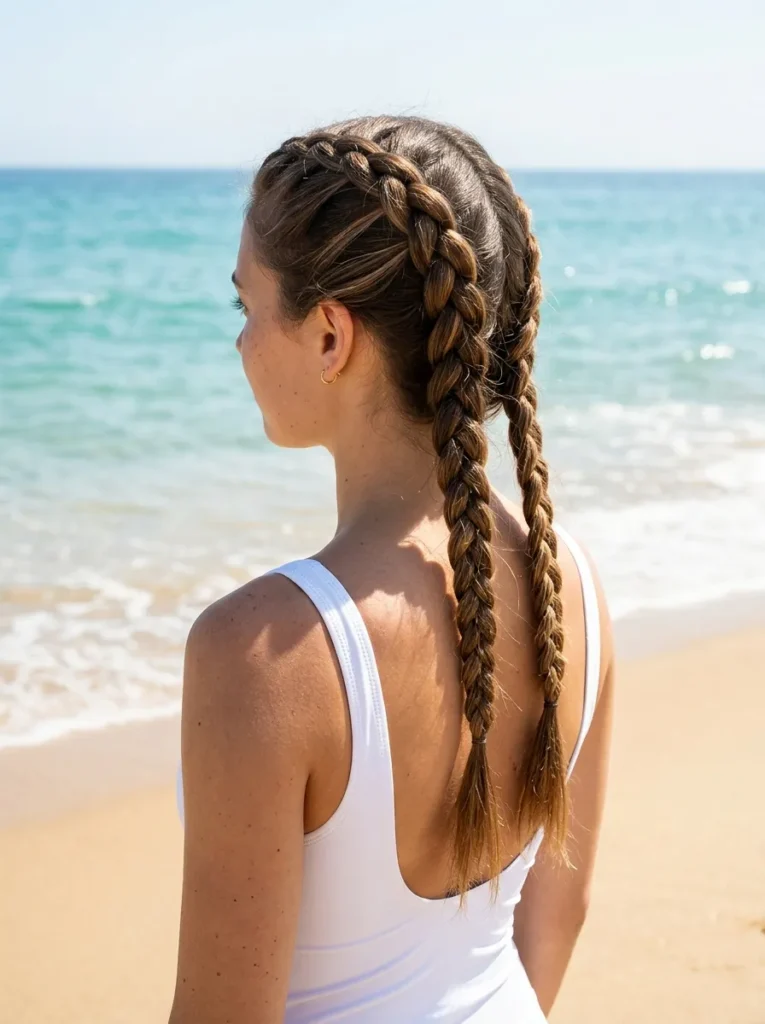
Two Dutch braids are a reliable choice when loose hair becomes distracting during practice or a competitive game.
- Create a middle part: Divide your hair into two equal sections from the forehead to the nape.
- Start braiding: Take three small sections near your hairline and cross the outer strands underneath the middle strand.
- Add hair gradually: Pick up a little extra hair with each crossover to keep the braids close to your scalp.
- Secure the ends: Use small, snag-free elastic bands that match your hair color.
The finished style distributes your hair evenly and keeps flyaways controlled. I recommend keeping each braid comfortably snug rather than pulling tightly at the roots. Double Dutch braids also work well under most softball helmets because the hair stays close to your head.
3. Low Bubble Ponytail

Quick Tip:
Space your elastics evenly along the ponytail to create balanced, rounded sections. Use soft hair ties without metal connectors to reduce snagging and keep the style comfortable during movement.
A low bubble ponytail adds playful detail without requiring advanced braiding skills. Gather your hair at the nape, then place elastics every few inches along the length. Gently pull each section outward to create rounded bubbles. It is especially useful for medium to long hair that needs to stay organized throughout practice.
4. French Braid Ponytail
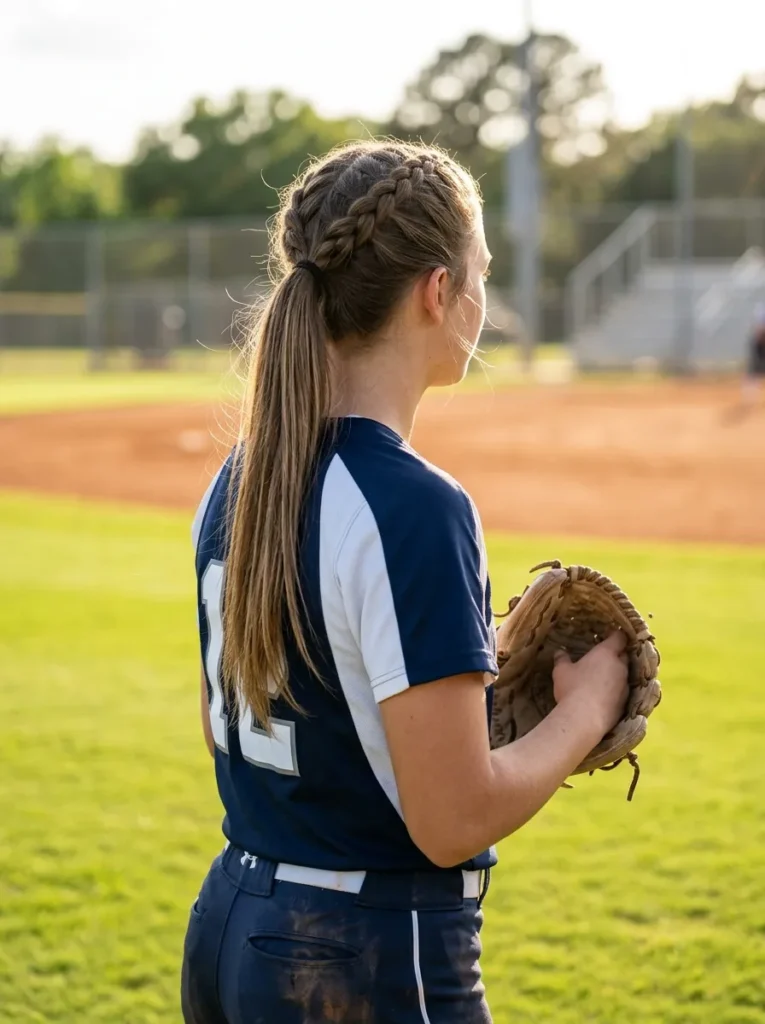
BEFORE:
A regular ponytail can leave shorter front layers falling around your face while running or fielding. Loose strands may also become distracting when you are sweating during a long practice.
AFTER:
A French braid leading into a ponytail keeps the top and sides more controlled. The remaining hair stays gathered behind your head, creating a neat and sporty finish.
The secret is starting with small sections near your hairline and gradually adding hair as you braid toward the crown. Secure the finished braid and remaining length together with an elastic. This hairstyle works especially well for players with long layers who need extra control without wearing their hair completely braided.
5. Twin Rope Braids

- Part your hair: Create a straight middle part and divide your hair into two equal sections.
- Make two ponytails: Secure each section near the back of your head with comfortable elastics.
- Divide each ponytail: Separate the hair into two strands and twist both strands in the same direction.
- Wrap together: Cross the twisted strands around each other in the opposite direction.
- Secure the ends: Add small elastics to prevent the twists from unraveling.
Twin rope braids offer a simple alternative to traditional three-strand braids. They create a textured finish while keeping both sides of your hair organized. Apply a little styling cream before twisting to reduce flyaways. The style is particularly handy for players who are still learning more complicated braiding techniques.
Also Visit : 20 Effortless Beachy Hairstyles for Sun-Ready Hair
6. Fishtail Side Braid
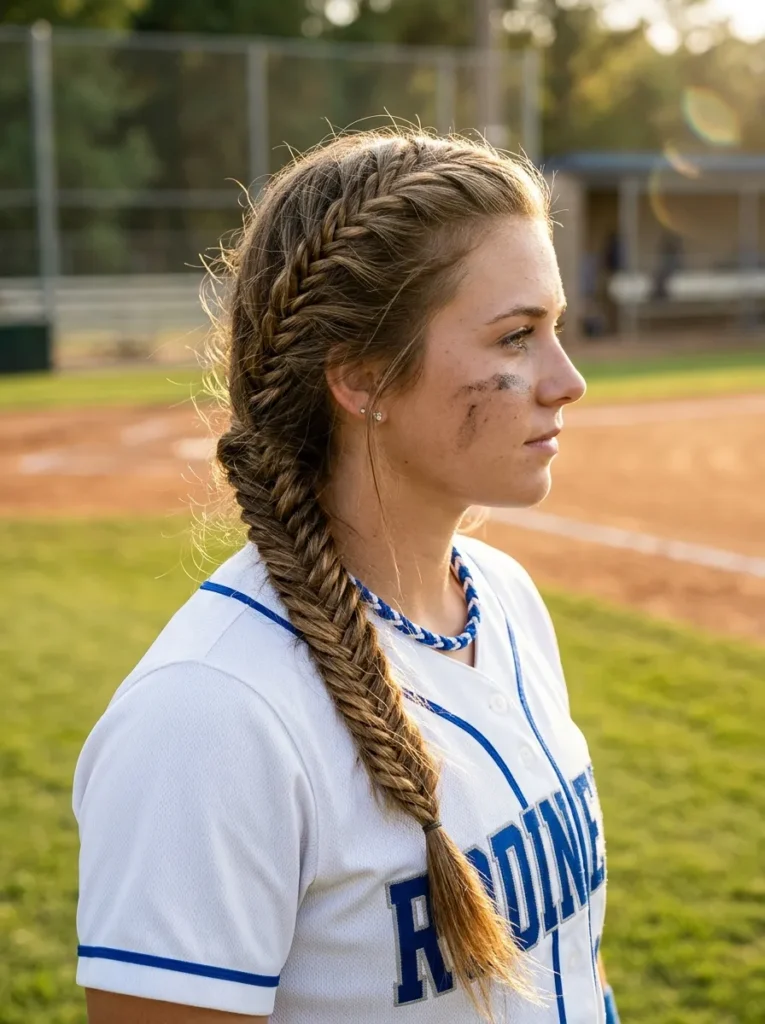
A little extra texture can make a simple braid look much more interesting!
| Feature | Classic Three-Strand | Fishtail Braid |
| Technique | Three sections crossed over | Two sections with small alternating pieces |
| Appearance | Traditional woven pattern | Fine, detailed texture |
| Styling Time | Usually faster | Takes slightly longer |
| Best For | Quick everyday practice | A more decorative game-day look |
A fishtail side braid gathers your hair into one secure-looking style while adding a distinctive woven pattern. Keep the braid comfortably snug and secure the bottom with a small elastic. For softball, tuck the finished braid behind your shoulder or down your back so it does not interfere with throwing or movement.
7. Braided Pigtails
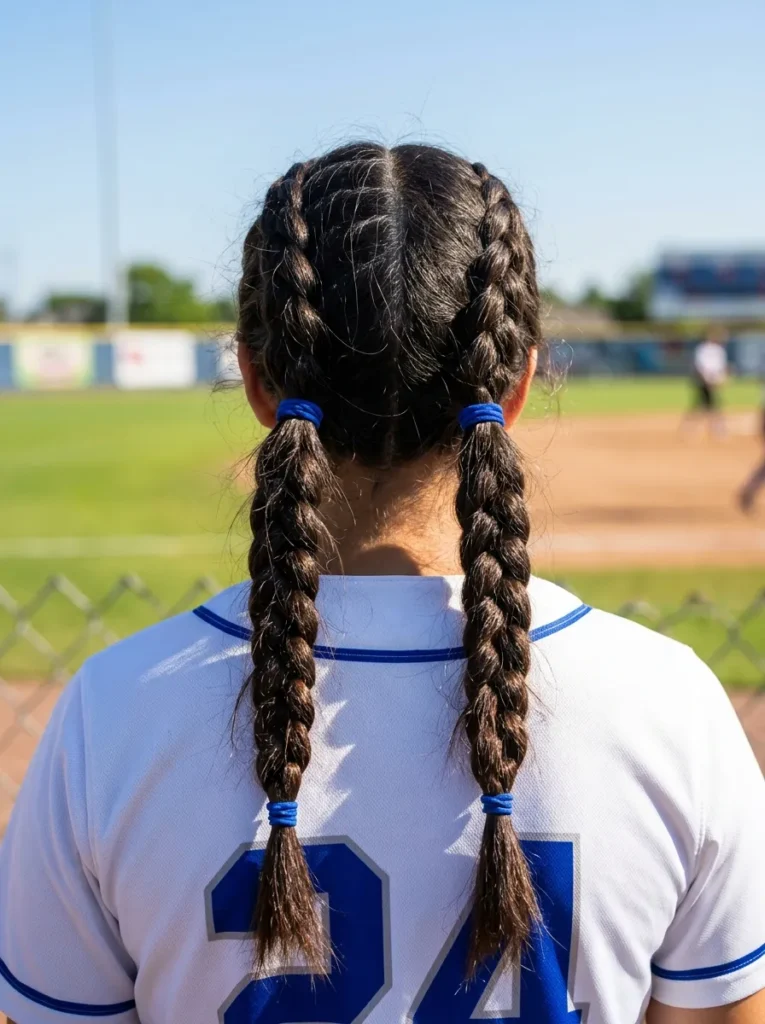
DO:
- Part your hair evenly down the middle before braiding.
- Secure both braids with soft, snag-free elastics.
- Keep the braids snug around the crown without pulling your roots.
- Use a little styling cream to control shorter layers.
DON’T:
- Leave loose strands around your ears and forehead.
- Make the braids painfully tight.
- Use heavy accessories that can catch on equipment.
Braided pigtails keep your hair divided into two manageable sections, making them especially practical for long practices and busy tournament days. They also stay organized when you are running between bases or warming up. For extra comfort, check that both braids sit naturally beneath your softball helmet.
8. Sleek Headband Ponytail
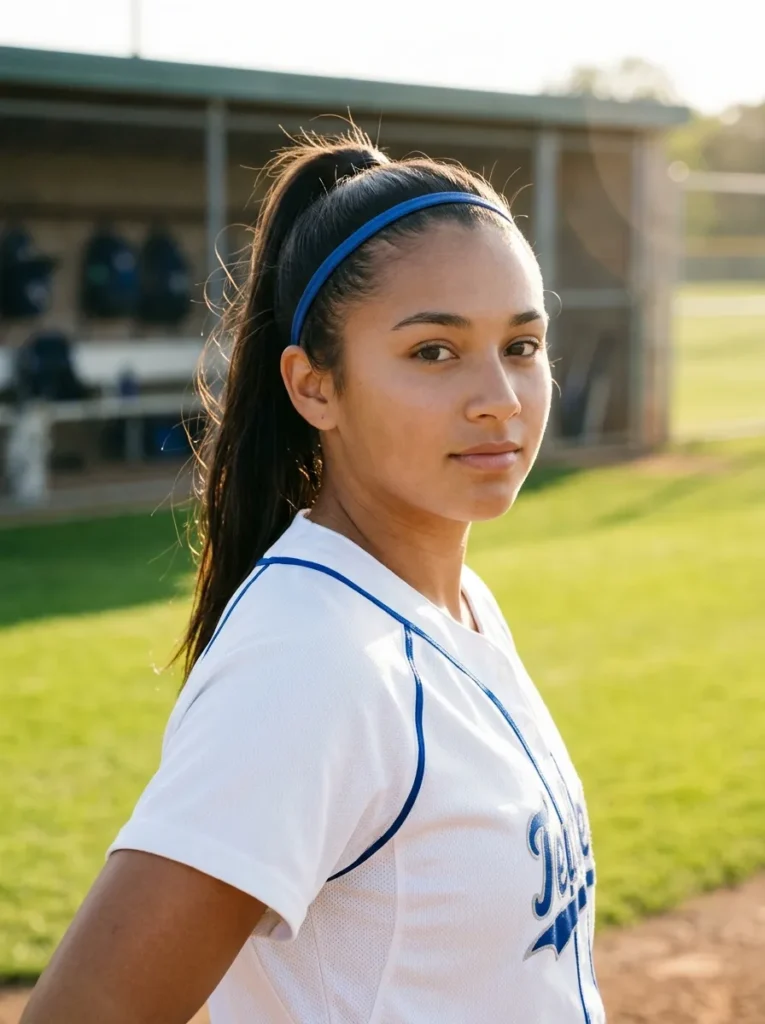
Time: 5 to 7 minutes
Skill Level: Beginner
Best For: Medium and long hair
Accessories: Athletic headband, elastic, lightweight styling cream
Result: Smooth hairline with a secure ponytail
A sleek ponytail paired with an athletic headband is a practical combination for players who struggle with shorter front layers. Start by positioning a comfortable, non-slip headband behind your hairline, then gather the rest into a high ponytail. Choose a breathable headband that stays in place without creating pressure. It is a simple choice for warm afternoons and energetic practice sessions.
9. Mini Front Braids

Short front layers can become surprisingly distracting when you are tracking a fly ball or moving quickly across the field. Mini front braids offer a simple solution by securing those pieces before they fall into your eyes. Create two or four small braids along your hairline, then gather the remaining hair into a ponytail.
I’ve noticed that leaving the rest of the hair simple makes these tiny braids stand out without making the overall style complicated. Secure each braid with a small elastic and avoid pulling tightly around your temples. This combination works particularly well for layered hair and players who enjoy a little extra detail.
10. Low Braided Bun
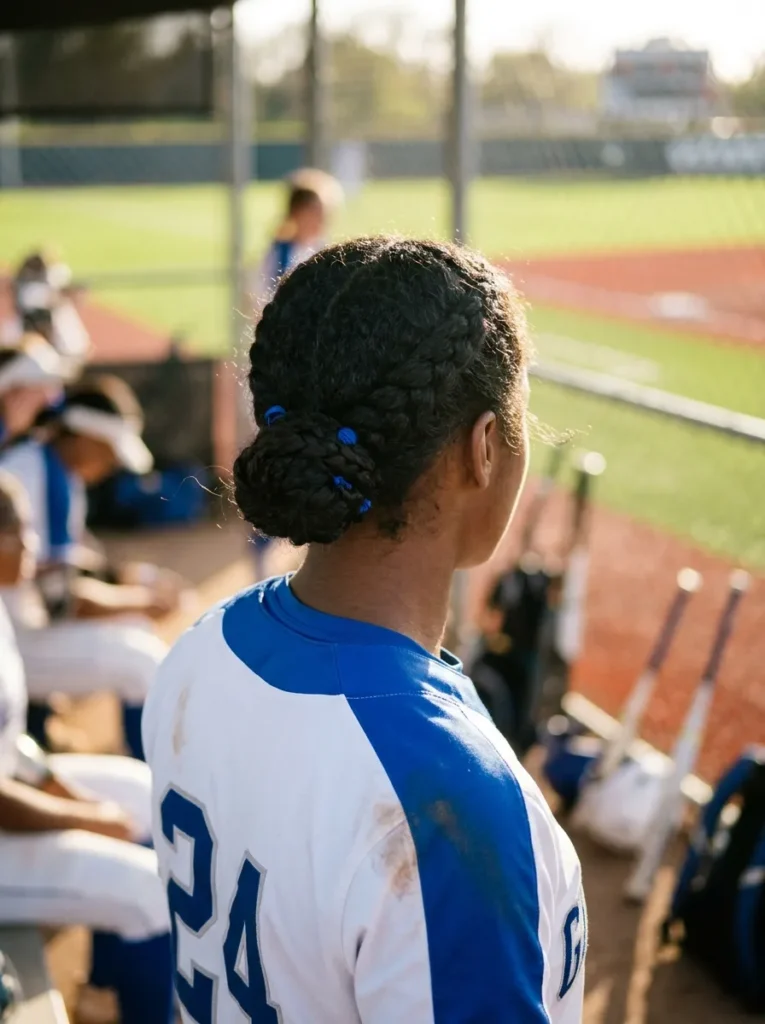
- Start with a ponytail: Gather your hair at the nape and secure it with a strong elastic.
- Braid the length: Create a regular three-strand braid using the ponytail.
- Wrap into a bun: Coil the braid around its base to form a compact bun.
- Secure firmly: Use bobby pins and an additional elastic to hold everything in place.
- Check helmet comfort: Make sure the bun sits low enough to avoid uncomfortable pressure.
Long hair does not always need to hang loose during a game. A low braided bun keeps the length gathered and prevents the ends from swinging around while you run. Keep the bun compact, use secure pins, and avoid placing hard accessories where your helmet rests against your head.
Also Visit : 16 Witch Hairstyles That Bring Enchanting Dark Glamour
11. Crisscross Ponytail

Quick Tip:
Use small elastics that match your hair color for a clean, polished finish. Keep each section comfortably snug, and check that the crossed pieces do not pull at your scalp.
The crisscross ponytail adds visual interest to an ordinary athletic hairstyle without requiring complicated braiding. Divide the front sections of your hair, cross them toward the back, and secure them before gathering everything into a ponytail. The result keeps shorter layers organized and gives your game-day look a distinctive finish.
12. Wrapped High Ponytail

BEFORE:
A basic high ponytail can look unfinished when the elastic is clearly visible. Shorter layers around the crown may also slip out during running and jumping.
AFTER:
A wrapped ponytail creates a cleaner finish by concealing the elastic with a small section of your own hair. The gathered length stays in one place, while the wrapped base adds a polished detail.
Start by securing a high ponytail with a strong elastic. Take a thin section from underneath, wrap it around the base, and tuck the end underneath using a bobby pin. Choose a pin that sits flat and comfortably away from your helmet contact points. This simple detail gives your softball hairstyle a professional-looking finish.
13. Twist-Back Ponytail

- Create a middle part: Brush your hair and divide the front into two sections.
- Twist both sides: Take a small section near each temple and twist it backward toward the crown.
- Secure the twists: Bring both sections together at the back and secure them with a small elastic.
- Gather your hair: Add the remaining hair to create a high ponytail.
- Finish the style: Tighten gently and smooth any loose strands with lightweight styling cream.
Twist-back ponytails are especially helpful for players with face-framing layers that refuse to stay in place. The front twists add a little texture while the high ponytail keeps the remaining length organized. Choose soft elastics and avoid pulling the twists too tightly around your temples.
14. Pull-Through Braid
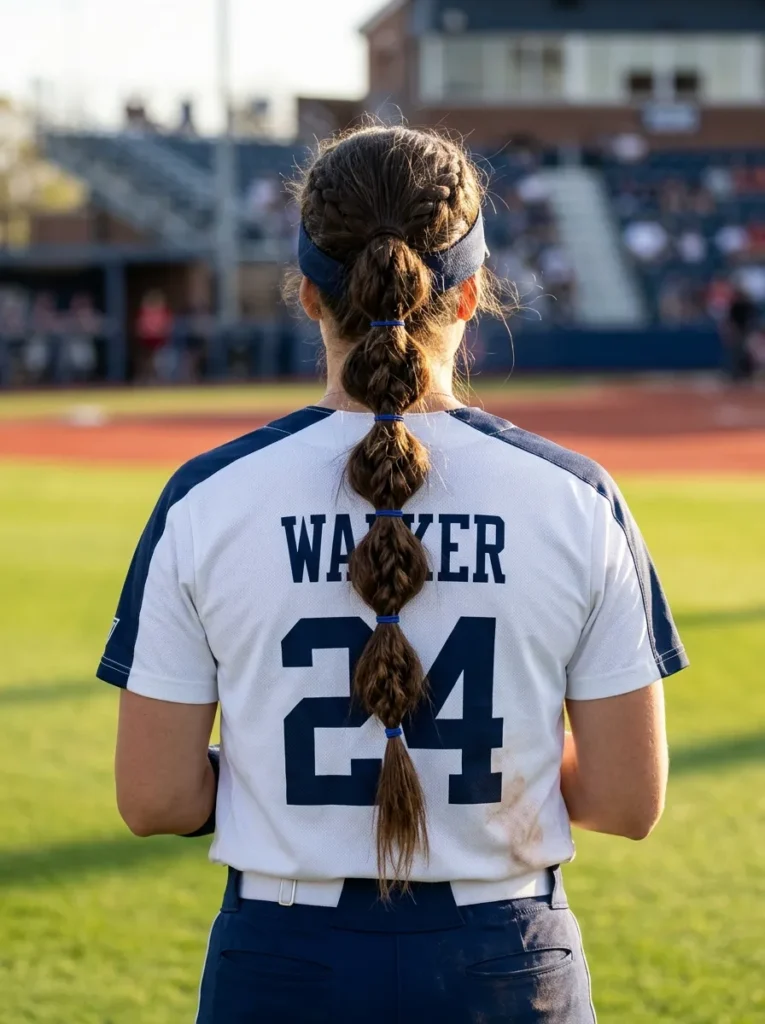
| Feature | Traditional Braid | Pull-Through Braid |
| Technique | Three sections woven together | Ponytail sections looped through one another |
| Appearance | Flat, woven texture | Fuller, rounded texture |
| Styling Tools | Small elastic | Multiple small elastics |
| Best For | Classic sporty styling | Creating a thicker-looking braid |
A pull-through braid creates the appearance of a thick, voluminous braid without requiring traditional braiding skills. Start with a ponytail, divide it into sections, and secure smaller ponytails as you work down the length. Keep the sections evenly spaced for a balanced finish. Among easy softball hairstyles, this is a fun choice for players who enjoy extra texture.
15. Reinforced Low Ponytail

DO:
- Brush your hair thoroughly before gathering it.
- Position the ponytail comfortably at the nape.
- Use two strong, snag-free elastics for additional hold.
- Smooth shorter layers with a small amount of styling cream.
DON’T:
- Pull the elastics so tightly that your scalp feels uncomfortable.
- Use brittle or damaged hair ties.
- Leave loose sections that fall into your eyes.
Sometimes the simplest style is the most practical choice. A reinforced low ponytail takes only a few minutes and keeps your hair gathered during batting practice, running drills, and warmups. The second elastic provides extra security for long hair, making this a dependable option for players who prefer minimal styling before a game.
Also Visit : 19 Gorgeous Brunette Hairstyles You’ll Save Forever
Conclusion
The right hairstyle can make getting ready for softball easier, more comfortable, and a little more fun. These easy softball hairstyles offer plenty of inspiration, whether you prefer classic braids, sporty ponytails, or creative buns. Choose a style that suits your hair length, feels comfortable under your helmet, and stays secure while you play. You don’t need complicated techniques to create a polished game-day look. Save this collection on Pinterest so you can revisit your favorites, try a new hairstyle at your next practice, and share the ideas with your softball teammates. Your next favorite look might be just one braid away!


