18 Stunning Burgundy Highlights to Transform Your Look
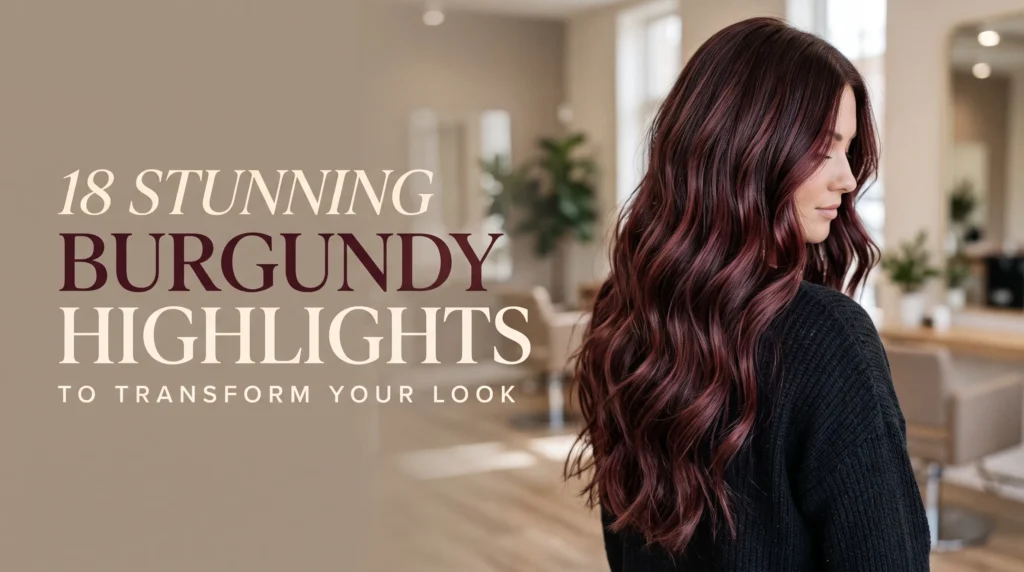
A fresh hair color does not have to mean a dramatic change from root to tip. Burgundy highlights bring rich wine, berry, and cherry tones into your natural base, adding depth and flashes of color that look different in sunlight and indoors.
This collection of 18 ideas covers a range of finishes, from barely-there wine babylights to bold face-framing pieces and vivid accents through long layers. Whether your hair is black, dark brown, or a lighter brunette, the right placement and shade can help you find a look that feels personal rather than overdone.
You will also find inspiration for choosing between warm mahogany reds and cooler plum tones. Before booking, consider your current hair color, previous chemical treatments, and how much upkeep you are comfortable with. A stylist can use those details to recommend a realistic result and protect your hair’s condition.
1. Deep Burgundy Balayage
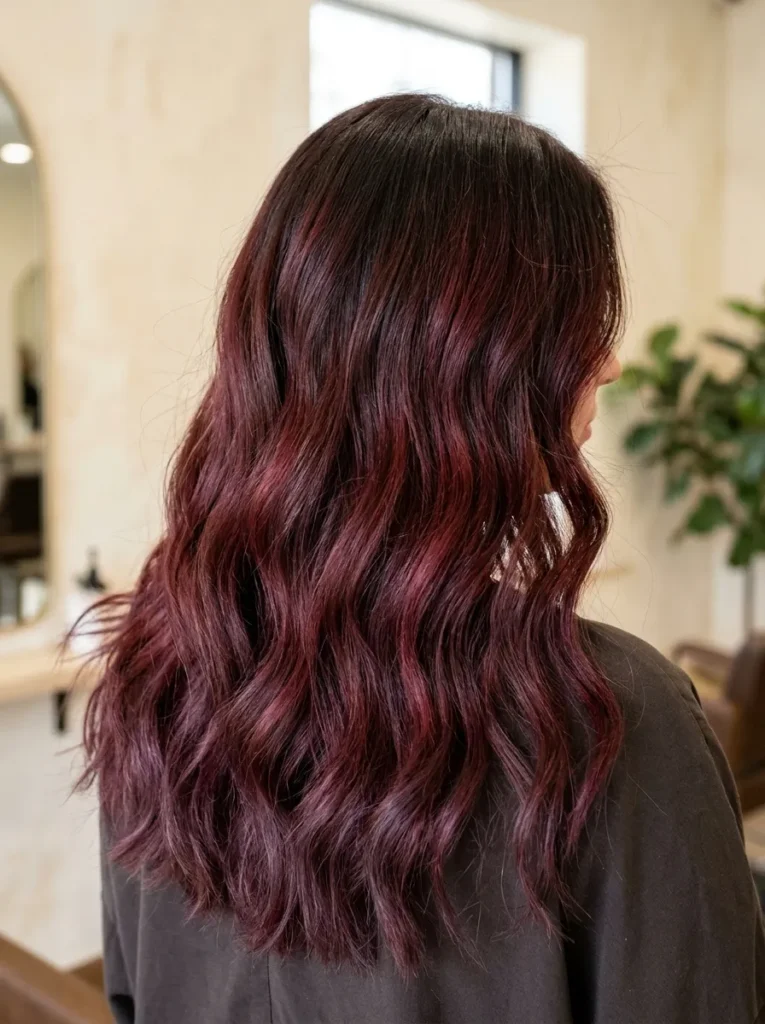
Burgundy highlights in a balayage pattern give hair a rich, dimensional finish without creating a block of color. The shade is painted through mid-lengths and ends, leaving the roots close to natural tone. That placement makes regrowth less obvious and lets red-violet tones catch the light as the hair moves.
Ask your colorist for a blend of deep wine and subtle plum, then choose a gloss that keeps the finish shiny rather than bright. Balayage works well on wavy or textured lengths, where the color variation is easy to see. Keep the application restrained; more saturation can be added later.
2. Cherry Red Ribbons
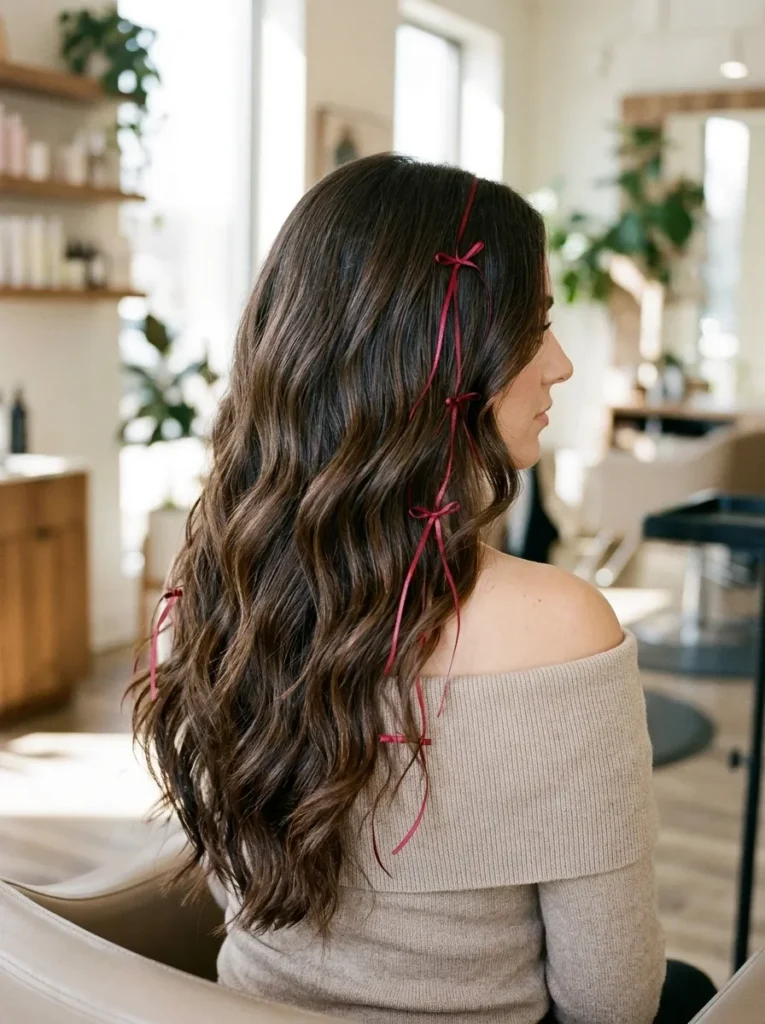
A few cherry-red ribbons can make dark lengths look brighter without changing the overall brunette base.
- Choose fine, hand-painted sections for a delicate, dimensional finish.
- Ask for slightly brighter pieces around the cheekbones to highlight your facial features.
- Keep the root area close to your natural shade for softer regrowth.
- Choose a red-berry toner for a cooler finish or a warmer cherry gloss for a more vivid result.
These fine accents are especially flattering on dark brown hair because the contrast stays rich rather than stark. Ask for a strand test first if your hair has been colored before, since existing pigments can shift the final red. A gloss between appointments helps maintain shine.
3. Plum Face Framing

Quick Tip:
Keep the face-framing pieces only one or two levels lighter than your base for a subtle result. Ask for a soft blend at the roots so the color does not form a harsh stripe.
Against a dark brown or black base, plum-toned pieces create a cooler, softer contrast than bright red. Place the lightest strands beside the cheekbones and blend them into the layers below. This placement draws attention toward the face while keeping most of the hair deep and glossy.
4. Burgundy Peekaboo Layers

BEFORE:
Dark brunette hair can sometimes look flat, especially when all the color sits on the surface. Bright highlights may also feel too noticeable for someone who prefers a subtle style.
AFTER:
Hidden wine-red sections beneath the top layers create a beautiful surprise of color. The burgundy appears naturally as the hair moves, curls, or is tied into a ponytail.
This placement works particularly well for anyone who wants a little creativity without committing to an all-over color change. Ask your stylist to concentrate the lighter sections around the underneath layers, especially near the sides. Keep the top layer natural for a more understated finish.
5. Burgundy Ombre Ends

A darker root with wine-colored ends creates a striking contrast that looks especially beautiful on long hair.
- Choose your base: Keep the natural roots dark brown or black for depth.
- Select your shade: Pick deep burgundy, cherry wine, or dark plum for the lower lengths.
- Create the blend: Ask your stylist to gradually transition the color through the middle sections.
- Finish the ends: Add slightly richer pigment toward the tips for a noticeable color effect.
Ombre coloring is particularly useful when you prefer less frequent root maintenance. The darker top keeps the overall look grounded, while the red-toned ends bring movement to long layers. Regular color-safe conditioning helps prevent the lighter sections from looking dry or dull.
Also Visit : 19 Radiant Spring Hair Color Ideas You’ll Crave Now
6. Burgundy and Black Blend
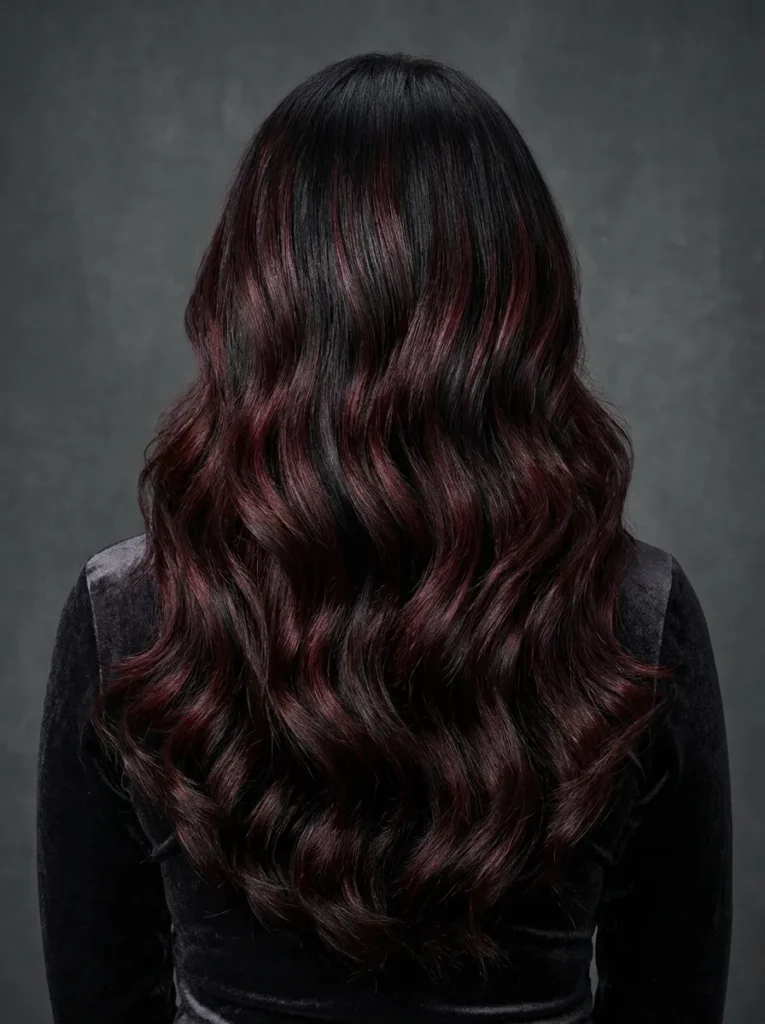
Dark hair and burgundy create two beautiful color combinations, but the placement changes the overall effect.
| Feature | Option A: Subtle Blend | Option B: Bold Contrast |
| Burgundy shade | Deep wine | Bright cherry burgundy |
| Placement | Fine scattered strands | Wider highlighted sections |
| Overall effect | Soft and understated | Rich and noticeable |
| Best for | Natural-looking color | Statement hairstyles |
For a refined finish, choose the subtle blend and keep most of your natural black base untouched. For a more dramatic result, ask for brighter sections around the crown and lower layers. A professional colorist can adjust the intensity to suit your starting hair color and condition.
7. Burgundy Money Pieces

DO:
- Place brighter wine-red sections on both sides of the face.
- Blend the color slightly into the surrounding layers.
- Choose a shade that complements your natural hair depth.
- Finish with loose curls to show the color dimension.
DON’T:
- Choose sections that are excessively thick if you prefer a soft finish.
- Apply bright red directly from the roots without considering regrowth.
- Overuse heat styling without a heat protectant.
- Ignore color fading when choosing your maintenance routine.
These face-framing accents are especially striking on long, layered hairstyles. They bring attention to the eyes and cheekbones while keeping the rest of the hair relatively dark. For a wearable everyday look, ask your stylist for a deep berry shade rather than an overly bright red.
8. Mahogany Burgundy Blend
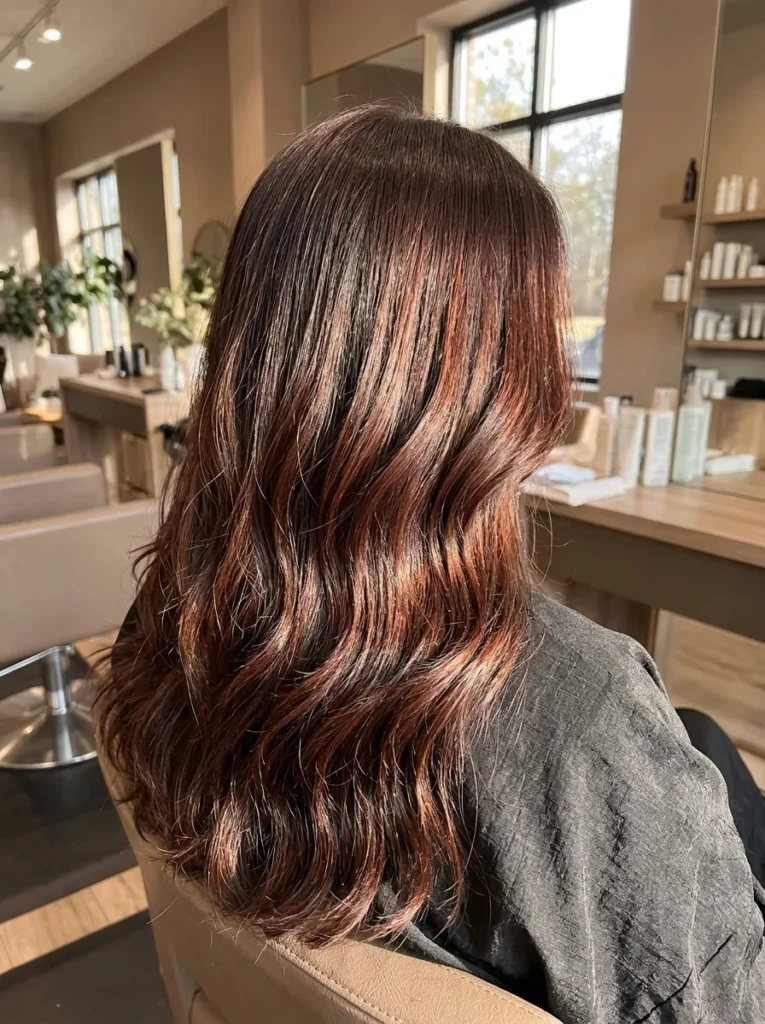
Best Shade: Warm mahogany mixed with deep burgundy.
Best Base: Medium brown, dark brown, or natural brunette.
Placement: Fine highlights throughout the mid-lengths and ends.
Result: Warm reddish dimension with a soft, glossy finish.
Mahogany tones are an excellent choice for anyone who finds cool purple-red shades too dramatic. Their warm brown undertones create a softer transition against natural brunette hair. I’ve noticed that combining narrow mahogany sections with slightly deeper wine-colored pieces gives long layers more visual depth without making the overall color look too red.
9. Rose Burgundy Highlights

Rose-toned accents offer a softer alternative to traditional dark red coloring. The combination of muted berry and rosy burgundy creates delicate dimension, especially through long layers and loose curls. Ask your stylist for a customized rose-wine formula that works with your natural base rather than choosing a shade that appears too pink.
The placement matters just as much as the color. Concentrate the lighter pieces around the front and upper layers, then keep the underneath sections slightly darker. This creates a balanced finish that looks interesting from different angles. A color-depositing conditioner recommended by your stylist can help maintain the rosy undertones.
10. Copper Burgundy Blend

- A warm copper and wine-red combination creates noticeable dimension without making the entire hairstyle look bright.
- Place copper accents around the upper layers to catch natural light.
- Blend deeper burgundy through the underneath sections for a richer finish.
- Choose this combination for medium brown or dark brunette bases, with the formula adjusted to your starting color.
- Finish with loose waves to reveal the contrast between warm and cool tones.
The secret to this combination is balancing the two shades. Too much copper can overpower the wine-red effect, while excessive burgundy can make the result look darker than expected. Ask your colorist to keep the copper accents delicate and distribute the deeper shades throughout the lengths.
Also Visit : 20 Cinnamon Hair Color Ideas for a Rich, Radiant Glow
11. Dark Cherry Highlights

Quick Tip:
Ask for a dark cherry formula with deep red-violet undertones rather than a bright red shade. A gloss can help maintain the richness and shine between color appointments.
Dark cherry is an excellent choice for brunettes who want noticeable color without losing the depth of their natural base. The highlights look particularly attractive when distributed through long layers instead of concentrated in one area. In my experience, loose curls make these darker red tones easier to appreciate because the changing angles reveal different color reflections.
12. Burgundy Balayage Waves
BEFORE:
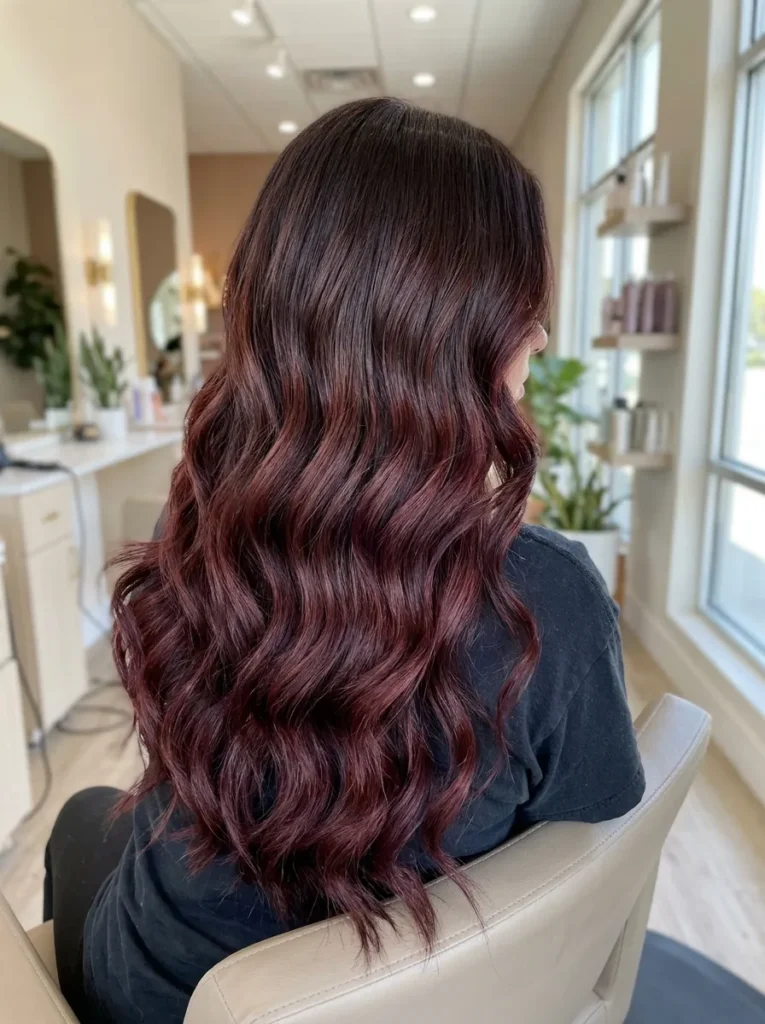
Long, single-tone brunette hair can lack visible dimension, particularly when styled straight. Traditional highlights may also create noticeable lines if the placement is too uniform.
AFTER:
Hand-painted wine-red sections create a softer transition from the natural roots to the lighter lengths. Loose waves reveal the different shades of burgundy as they overlap and reflect light.
For the most natural result, request a freehand application with varied section thickness rather than evenly spaced stripes. Keep the color concentrated around the mid-lengths and ends, with a few delicate pieces near the face. This approach works especially well for long hair that already has layers or natural movement.
13. Burgundy Foil Highlights

- Choose the shade: Select a deep burgundy or dark cherry tone that complements your natural hair color.
- Section the hair: Divide the hair into manageable sections, focusing on the crown, sides, and back.
- Apply the highlights: Ask your colorist to use foils for controlled, defined sections of color.
- Blend the finish: Request a toner or gloss to balance the red tones and add shine.
Foil placement gives your stylist more control over the brightness and distribution of the color. It works particularly well when you want visible red accents throughout long, thick hair. For a softer appearance, choose fine sections instead of thick, uniform streaks. The final result should have dimension without looking striped.
14. Velvet Wine Tones

| Feature | Option A: Deep Merlot | Option B: Bright Wine |
| Color tone | Dark red and brown | Rich red and berry |
| Contrast | Subtle and understated | More noticeable |
| Best base | Dark brunette | Medium or dark brunette |
| Overall finish | Soft and luxurious | Bold and vibrant |
Velvet wine shades are especially appealing for anyone who prefers rich color over bright red highlights. Deep merlot creates a subtle reflection under natural light, while brighter wine tones are easier to notice indoors. Consider your everyday styling preferences before choosing. A slightly darker formula is often easier to maintain between salon visits.
15. Berry-Toned Layers
DO:
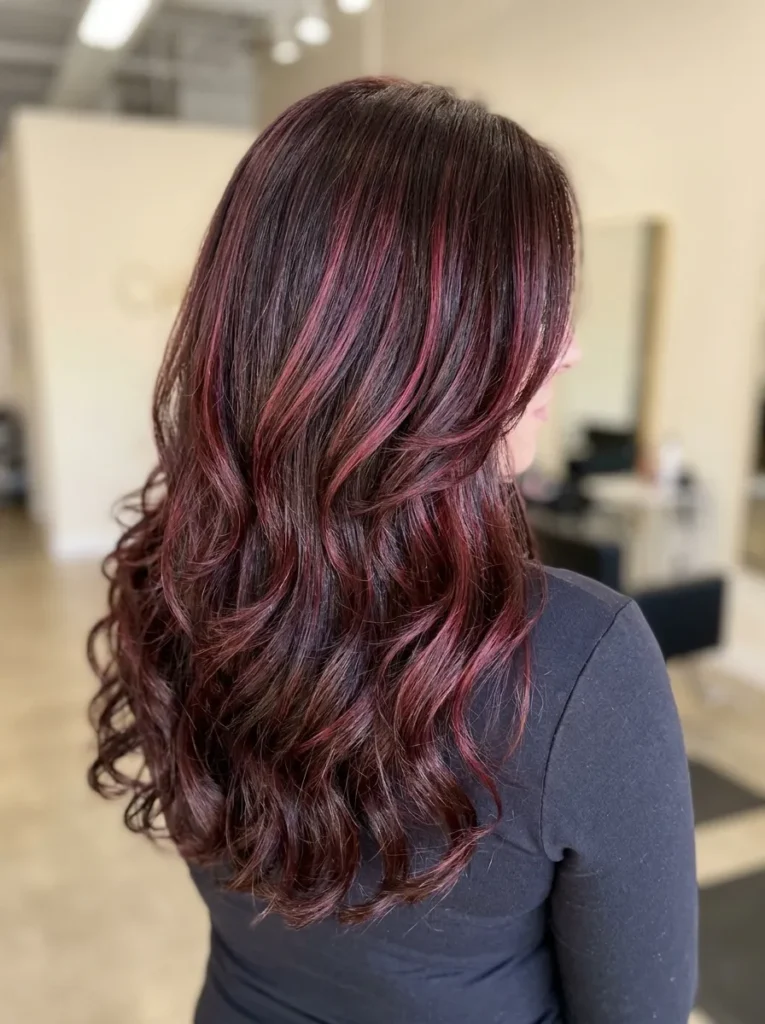
- Distribute berry-red accents across different hair layers.
- Keep the roots close to your natural color.
- Add delicate highlights around the front sections.
- Use a color-safe shampoo to preserve the red tones.
DON’T:
- Apply identical highlight thickness throughout the hair.
- Choose extremely bright red without considering your natural base.
- Overuse hot styling tools without heat protection.
- Skip conditioning treatments after chemical coloring.
Layered hair gives berry-colored accents plenty of opportunities to catch the light. The shorter sections around the face reveal subtle red reflections, while the longer pieces create depth through the ends. Ask your stylist to vary the highlight placement so the result looks blended rather than overly symmetrical.
Also Visit : 17 Light Copper Hair Ideas for a Radiant, Sunlit Look
16. Burgundy Chunky Highlights
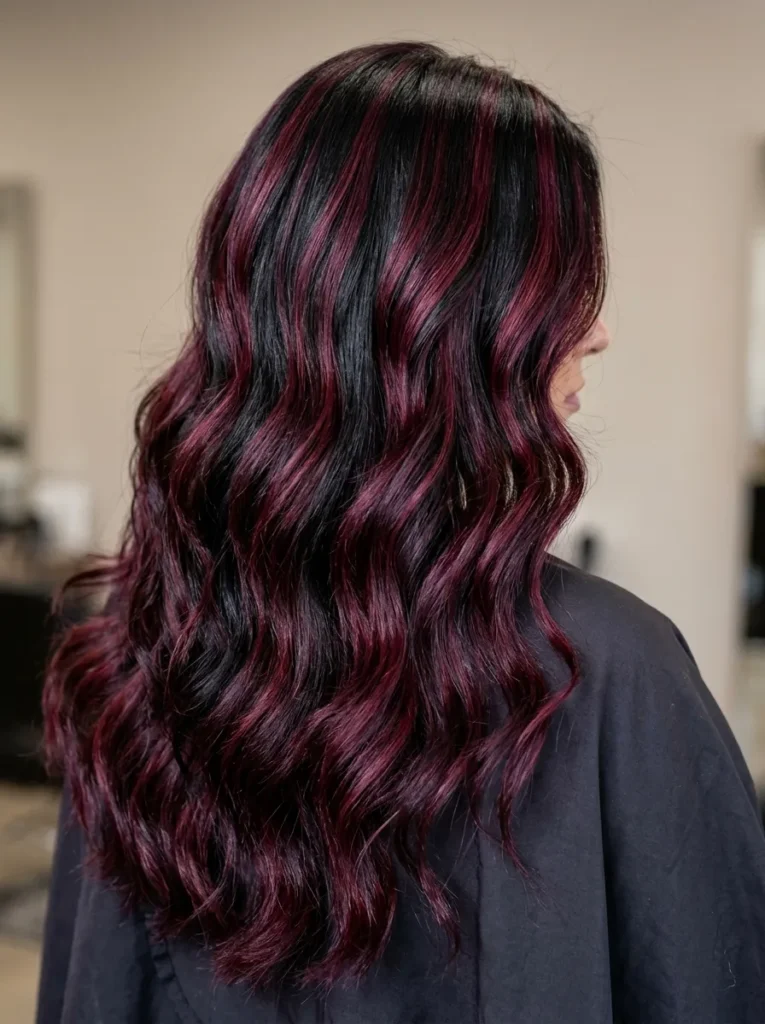
Best Base: Dark brown or natural black hair.
Color Choice: Deep cherry, merlot, or rich plum burgundy.
Placement: Wider sections around the crown and lower lengths.
Result: Noticeable color contrast with bold dimension.
For a more dramatic finish, burgundy highlights in wider sections create an eye-catching contrast against dark hair. The thicker placement makes the red tones more visible, even when the hair is worn straight. Ask your stylist to vary the section sizes slightly so the final result looks intentional rather than like uniform stripes.
17. Soft Wine Babylights
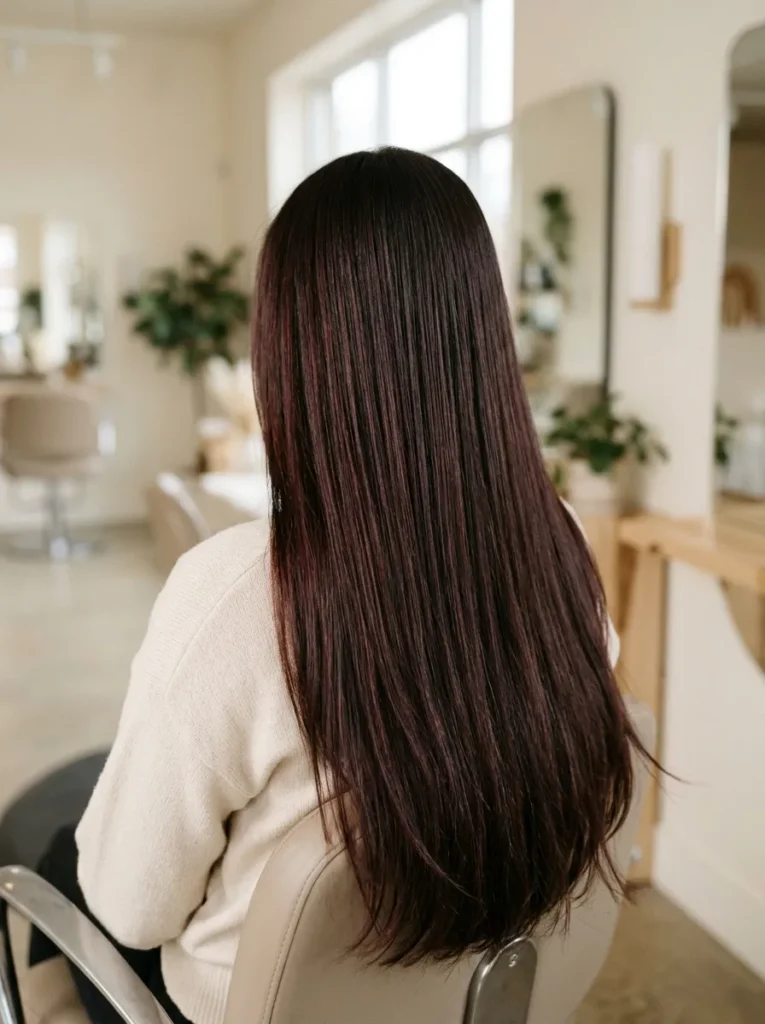
Sometimes the smallest color details create the most sophisticated finish. Fine wine-colored babylights add delicate red reflections throughout long brunette hair without creating a strong contrast. They are especially attractive for anyone trying reddish shades for the first time.
Ask your colorist to use very fine sections and distribute them evenly around the head. Keep the shade close to your natural base for a blended appearance. These subtle accents work beautifully with straight hairstyles, soft waves, and layered cuts. A gloss treatment can help maintain the richness of the color.
18. Burgundy Curly Layers
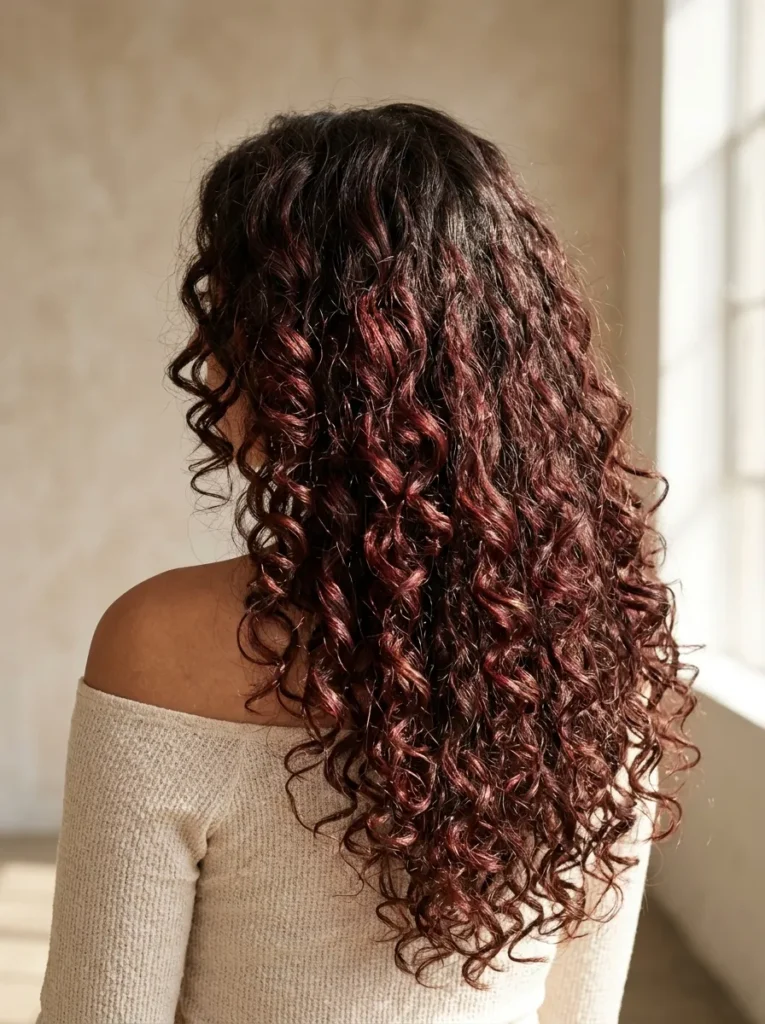
- Choose a deep wine-red shade that complements your natural hair color.
- Place brighter accents around the upper layers to make individual curls stand out.
- Keep some darker sections between the highlights to maintain depth and dimension.
- Ask your stylist to consider your natural curl pattern when selecting highlight placement.
- Use a moisturizing, color-safe conditioner to help maintain softness and shine.
Curly hair reveals color differently from straight hair because each spiral catches light from another angle. Scattered red-violet accents can make the curls look more defined and dimensional. Avoid over-highlighting fragile or previously damaged curls. A few strategically placed sections can create plenty of color without compromising the overall appearance.
CONCLUSION
The right burgundy highlights can add warmth, depth, and a fresh point of interest while allowing your natural base to remain part of the look. From soft wine babylights to bold cherry ribbons, these 18 styles offer ideas for different hair colors, textures, and levels of contrast.
Save this article on Pinterest so your favorite shades and placements are easy to find before your salon appointment. Choose one look that suits your everyday style, then discuss the color plan and maintenance with your stylist. Share the inspiration with a friend who is ready for a little change. A beautiful new look can start with one thoughtful detail.