20 Adorable Toddler Boy Braids for Fresh Little Looks
Finding a cute hairstyle for your little boy should be fun, not stressful! The right braids can keep his hair neat while showing off his natural texture and personality.
These 20 adorable toddler boy braids offer plenty of inspiration for parents who want fresh, stylish looks that are also practical for everyday life. From straight-back cornrows and zigzag parts to mini box braids, braided mohawks, and playful designs with beads, there is something to suit different hair lengths and textures.
Choosing a style also means thinking about your child’s comfort, styling time, and hair care needs. Toddlers rarely sit still for long, so simpler patterns can often make grooming easier. Look for gentle techniques, avoid tight braiding, and choose styles that are easy to maintain between wash days. Save your favorite ideas and find a fresh little look for your next salon visit!
1. Straight-Back Cornrows
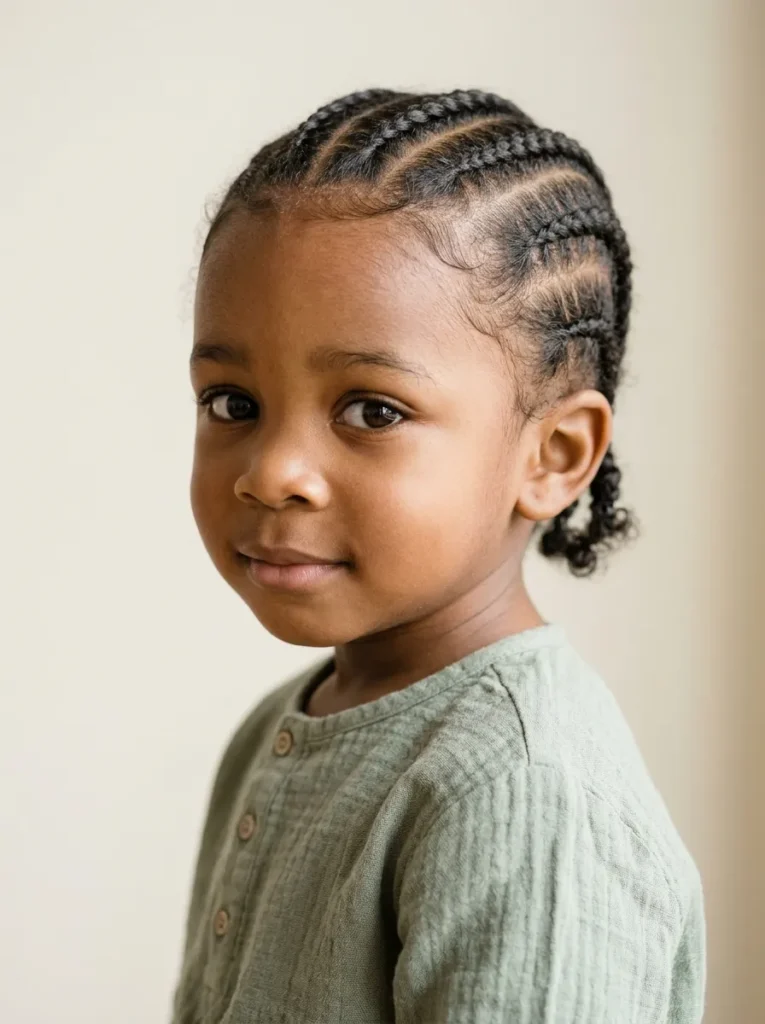
Neat rows running from the forehead toward the nape give little hairstyles a tidy shape without extra accessories. For toddler boy braids, ask for medium-width sections that follow the natural direction of his hair and leave the hairline comfortable.
A little leave-in conditioner can help the stylist part textured hair smoothly, but the braids should never feel tight or pull at the temples. Keep the style clean with a satin bonnet at nap time, and undo it if he complains or rubs his scalp. This simple pattern suits short-to-medium hair and busy mornings.
2. Zigzag Part Braids

- A zigzag part adds a playful detail while keeping the braid layout organized.
- Use a rat-tail comb to draw wide, gentle angles before sectioning the hair.
- Keep each braid medium-sized so the pattern stays clear without creating too many small sections.
- Ask the stylist to follow the scalp’s natural contours and avoid pulling at the edges.
- Finish with a tiny amount of lightweight moisturizer on exposed parts, not a heavy coating.
The result is a fresh look that stands out in photos but still feels neat for everyday play. Zigzag sections work best when the hair is long enough to hold a clean part. Keep the angles simple, especially for a first salon visit with your toddler.
3. Curved Crown Braids

Quick Tip:
A curved braid pattern looks intricate, but the parting can stay simple. Choose a braid direction that follows the natural curve of the crown, and keep the sections broad enough to avoid excess tension. For a toddler who moves often, pause between rows and allow breaks.
Curved rows create movement without needing beads or clips, which can be more comfortable for little ones who dislike accessories. Ask for smooth, rounded partings rather than sharp, crowded lines. A soft satin pillowcase can reduce friction during naps and overnight rest after the first day.
4. Side-Swept Cornrows

BEFORE:
Loose front sections can fall into his eyes during play, while uneven partings make the hairstyle look untidy. Constantly brushing the hair away can become frustrating during busy mornings.
AFTER:
Side-swept cornrows direct the front sections toward one side, creating a clean and structured appearance. The remaining hair can stay naturally textured or be trimmed evenly for a balanced finish.
This pattern works especially well for toddlers with enough length on top to create visible diagonal rows. Ask the stylist to keep the braids flexible around the temples and avoid pulling the hairline backward. A simple side-swept arrangement gives a little boy a polished appearance without requiring daily styling.
5. Mini Box Braids

- Detangle gently: Start with clean, moisturized hair and remove knots using a wide-tooth comb.
- Create sections: Divide the hair into small, square-shaped sections with a comfortable amount of space between them.
- Braid individually: Divide each section into three strands and braid downward without pulling tightly at the roots.
- Finish naturally: Secure the ends gently without adding heavy extensions or tight elastic bands.
Mini box braids give natural curls a defined, organized appearance while keeping individual sections easy to manage. Choose slightly larger squares for younger children because very small sections take longer to install. Keep the finished style lightweight, check the scalp regularly, and remove the braids before tangling or discomfort develops.
Also Visit : 16 Adorable Toddler Boy Haircuts for Busy Mornings
6. Braided Top Knot
| Styling Detail | Option A: Loose Top Knot | Option B: Compact Top Knot |
| Appearance | Soft and relaxed | Neat and structured |
| Hair Length | Medium to long | Medium to long |
| Finish | Slightly casual | More defined |
| Best For | Everyday outings | Special occasions |
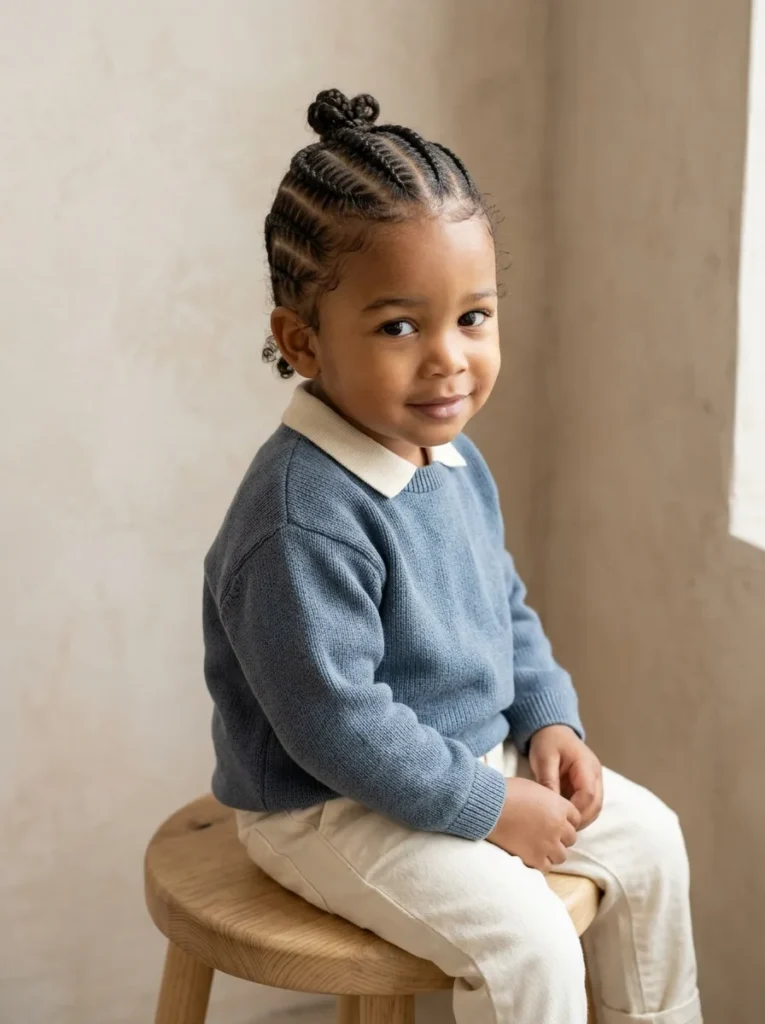
A braided top knot keeps longer hair gathered away from the face while adding a distinctive detail to traditional cornrows. Choose a soft, fabric-covered hair tie instead of a tight elastic. The knot should sit comfortably without pulling the scalp, making this a lovely choice for toddlers who enjoy having their hair styled.
7. Two-Row Cornrows
DO:
- Choose two clearly defined sections with a straight center part for a balanced appearance.
- Keep each row wide enough to avoid excessive tension on delicate toddler hair.
- Moisturize the scalp lightly before styling to make sectioning easier.
- Leave the edges soft and natural rather than pulling every strand tightly.
DON’T:
- Don’t make the center part too narrow or complicated.
- Don’t braid tightly around the temples or forehead.
- Don’t use heavy styling gels that leave buildup on the scalp.
- Don’t keep the braids installed if irritation or discomfort develops.
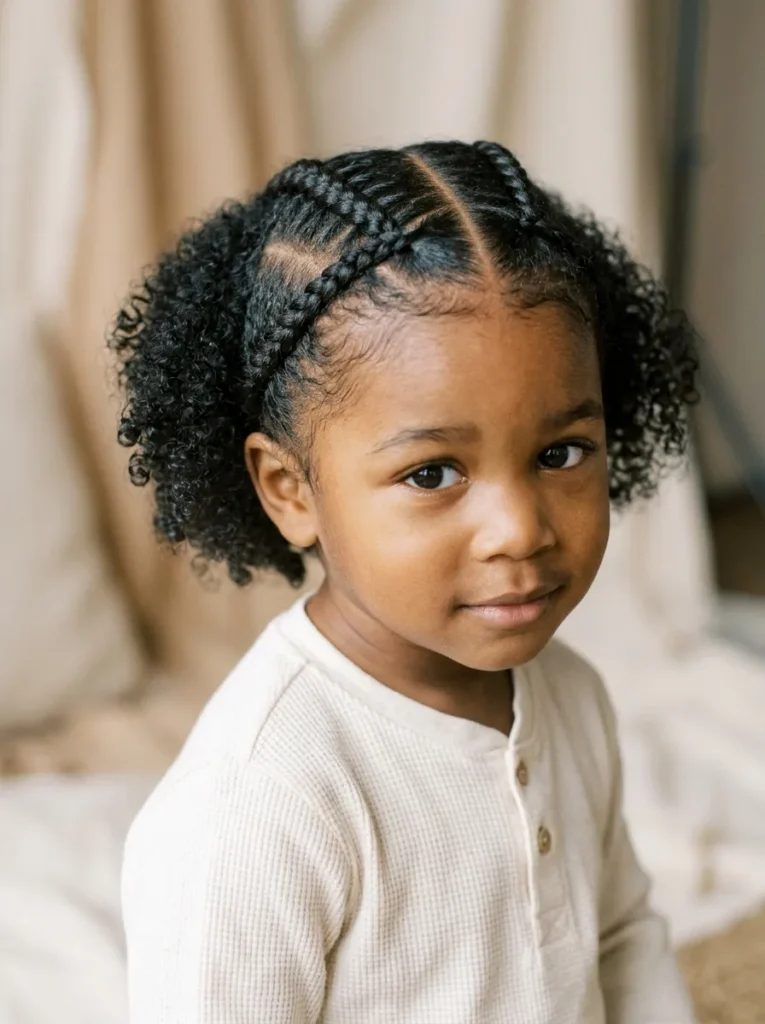
Two-row styling is a practical choice for parents who prefer simple grooming without complicated patterns. The symmetrical design looks particularly neat with short sides and naturally textured hair on top. It’s also easier to maintain than designs with numerous tiny sections, making it a sensible everyday option.
8. Braided Mohawk

Style: Bold central braid pattern with neatly arranged sides.
Hair Length: Medium length or longer on top.
Skill Level: Intermediate, best completed by an experienced braider.
Best For: Family photos, birthday celebrations, and everyday styling.
Maintenance: Keep the scalp clean, moisturize lightly, and avoid excessive tension.
A braided mohawk gives a toddler’s hairstyle a distinctive shape without requiring extra accessories. The center section creates visual height, while the side cornrows keep the overall appearance organized. Ask the stylist to leave enough natural volume in the middle so the finished style looks full rather than overly flattened.
9. Braids with Curly Ends

Curly ends add a softer finish to traditional braided styles, especially when a little boy has naturally textured hair. Instead of braiding all the way to the tips, leave a comfortable length of hair loose at the bottom. This creates a lovely contrast between structured rows and bouncy curls.
For a more defined appearance, apply a small amount of lightweight leave-in conditioner to the loose ends and gently separate curls with your fingers. Avoid brushing them dry, as this can create frizz and tangles. In my experience, leaving some natural curl visible makes the overall hairstyle look fuller and less restrictive.
10. Triangle Part Cornrows
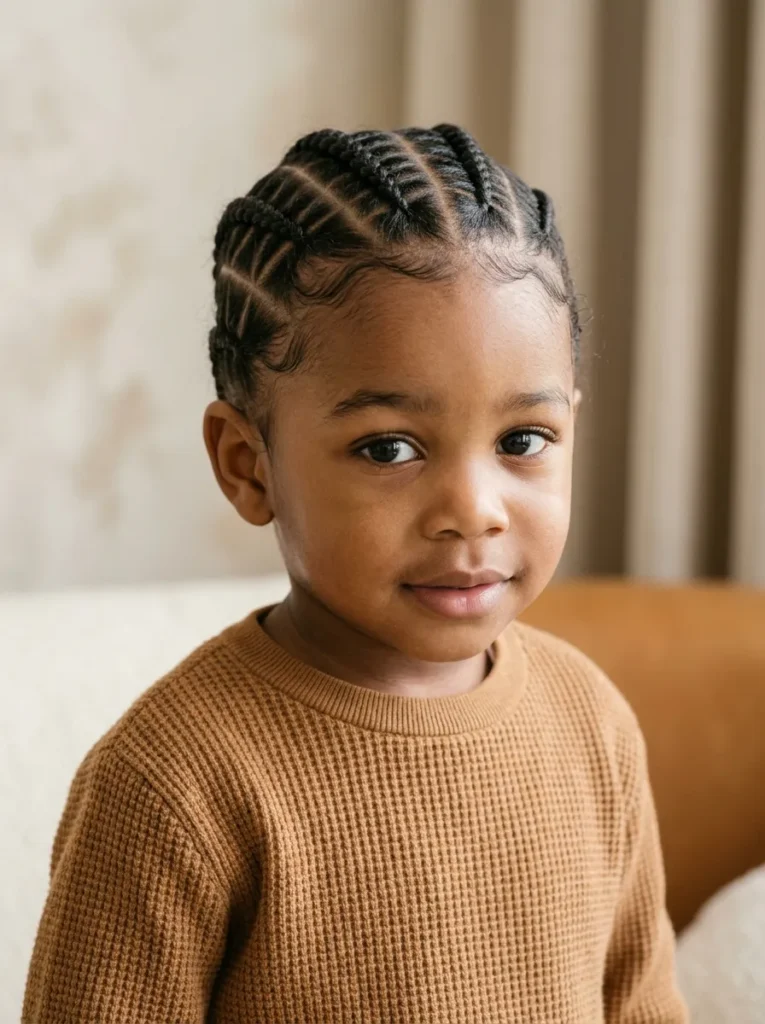
- Triangle-shaped sections bring an interesting geometric detail to ordinary cornrows without needing accessories.
- Ask the stylist to create evenly sized triangles before beginning the braiding process.
- Keep the braids medium-sized so the pattern remains visible on a toddler’s head.
- Use a lightweight moisturizer to keep the natural hair soft and manageable between washes.
- Avoid very small sections or tight pulling around the temples and hairline.
The geometric pattern gives little boys a distinctive hairstyle that looks especially neat from above and from the front. It works best when the hair has enough length to hold each section securely. For younger toddlers, choose fewer, larger triangles to reduce styling time and protect delicate hair.
Also Visit : 20 Super Cute Toddler Braid Styles Moms Will Adore
11. Feed-In Braid Rows
Quick Tip:
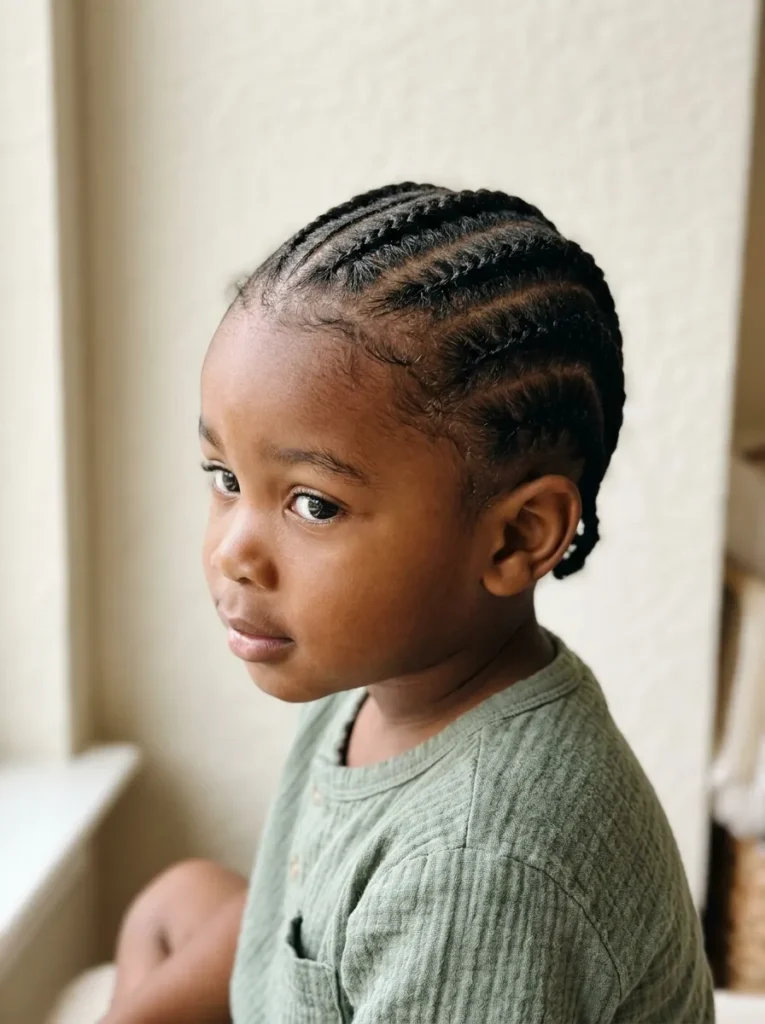
Ask the braider to build each row gradually using small sections of the toddler’s own natural hair. The finished braids should feel secure but never tight, especially around the forehead and temples.
Feed-in styling creates a smooth, gradual appearance instead of starting each braid with a bulky section at the hairline. It gives the hairstyle a balanced finish and works nicely with medium-length textured hair. Natural hair is enough for this look, so extensions are not necessary for a toddler.
12. Parallel Side Braids
BEFORE:
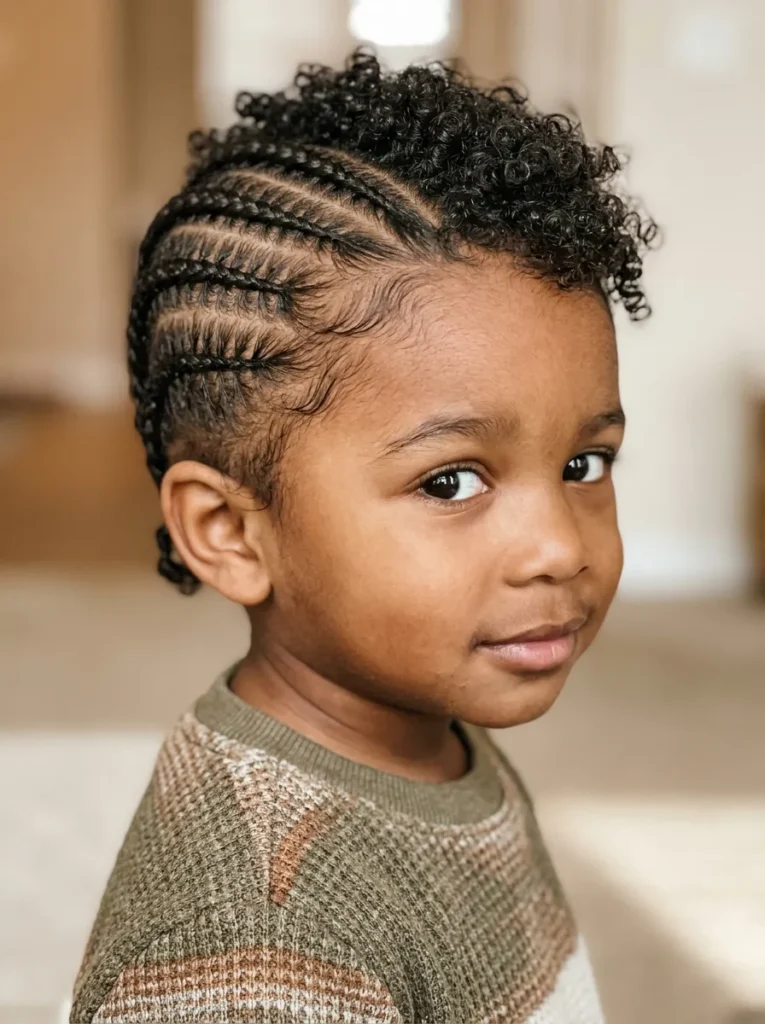
Unstyled side sections can become uneven and difficult to manage, especially when a toddler has thick, naturally curly hair. Loose strands may also fall around the ears during active play.
AFTER:
Two or three parallel braids create clean lines along the side of the head. The remaining hair can stay naturally curly, giving the hairstyle a balanced combination of texture and structure.
Choose the braid direction according to your child’s natural hair growth and head shape. Medium-width rows are easier to maintain than tiny, tightly packed sections. Keep the opposite side soft and comfortable, and ask the stylist to avoid excessive tension near the ears.
13. Center-Part Cornrows
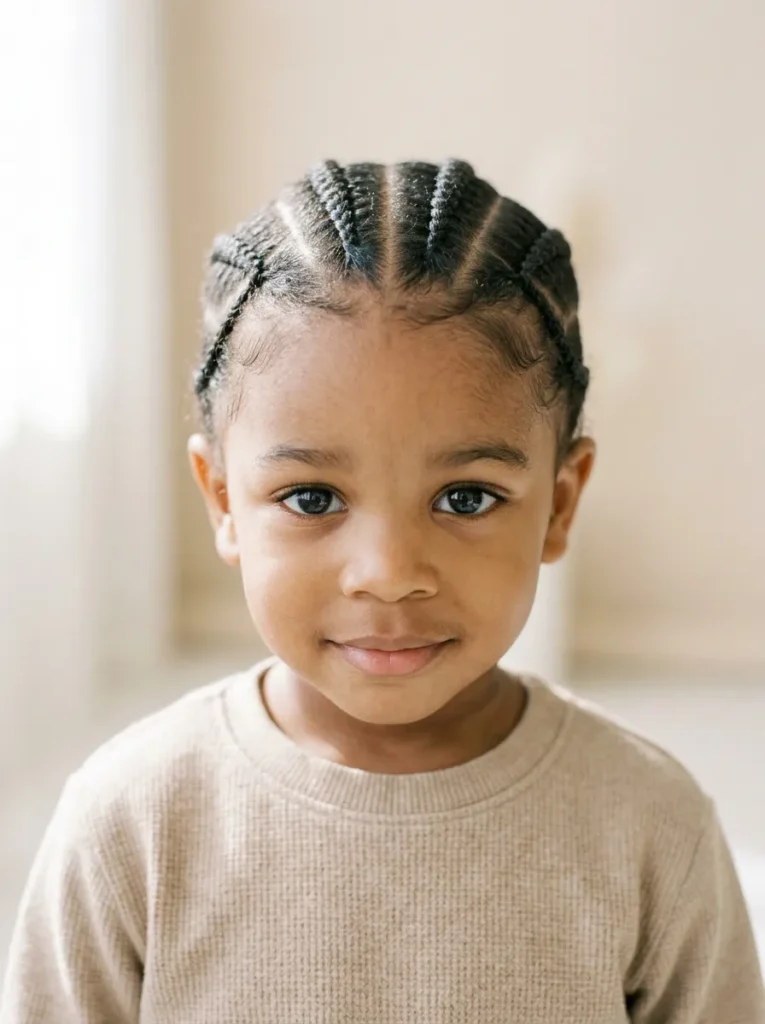
- Prepare the hair: Gently detangle freshly washed, moisturized hair using a wide-tooth comb.
- Create the center part: Use a rat-tail comb to divide the hair into two balanced sections.
- Section the rows: Create two or three cornrows on each side, keeping the spacing consistent.
- Braid gently: Follow the natural direction of the hair without pulling tightly at the roots.
Center-part styling creates a balanced appearance that looks especially neat in front-facing photographs. These toddler boy braids work well for children with short-to-medium textured hair. Ask the stylist to keep the middle part clean but comfortable, with enough space between rows to prevent unnecessary tension and make scalp cleaning easier.
14. Braids with Tapered Sides
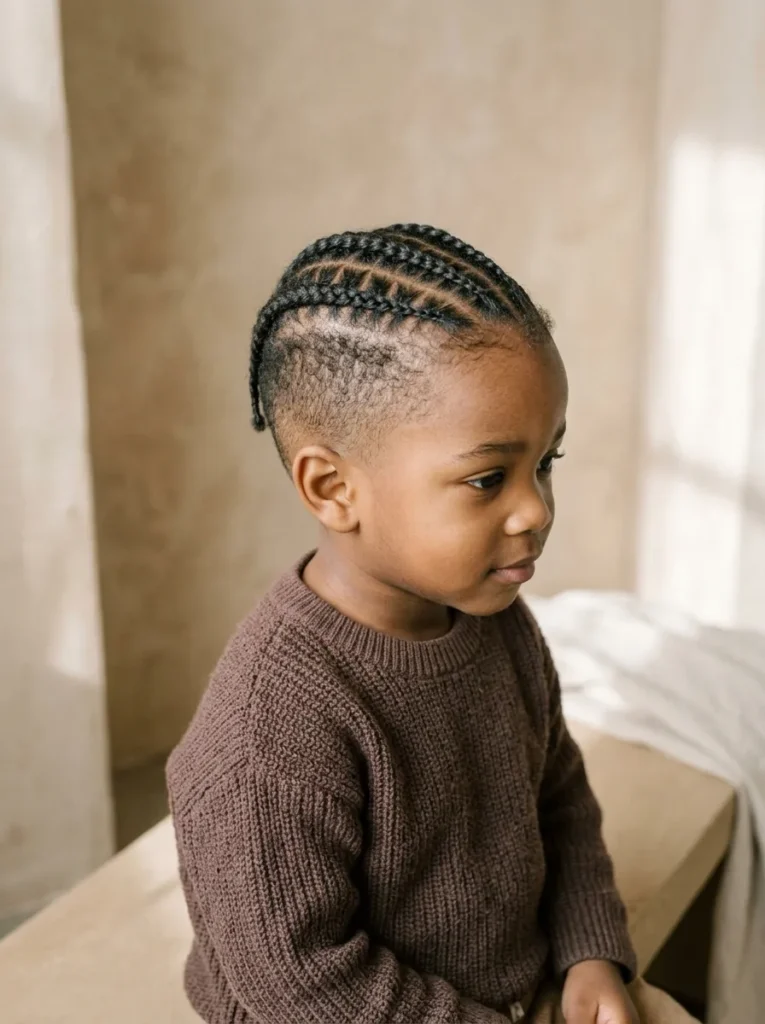
| Styling Feature | Option A: Low Taper | Option B: Soft Temple Taper |
| Side Finish | Gradually shortened sides | Light shaping around temples |
| Overall Look | Clean and balanced | Subtle and natural |
| Top Styling | Cornrows or straight-back braids | Side-swept or curved braids |
| Maintenance | Occasional trimming | Light edge maintenance |
Braids with tapered sides combine defined patterns on top with a clean, natural finish around the ears. A low taper keeps the overall look balanced without exposing too much scalp. Ask an experienced barber to use gentle clipper settings and coordinate the shape with the braider for a comfortable finish.
15. Short Stitch Braids

DO:
- Choose medium-width sections that suit the child’s hair density and length.
- Ask for clean, evenly spaced stitch lines between the braid rows.
- Keep the hair moisturized with a lightweight, child-friendly product.
- Allow breaks during styling if your toddler becomes restless.
DON’T:
- Don’t pull the stitch sections tightly against the scalp.
- Don’t use excessive gel to create unnaturally sharp partings.
- Don’t add heavy extensions to make the braids appear thicker.
- Don’t leave the style in if redness, bumps, or itching develops.
Stitch braids have a distinctive appearance because the small, visible parting lines create a precise finish. They look especially attractive on short-to-medium natural hair. For toddlers, prioritize wider sections and gentle braiding techniques rather than extremely detailed patterns. Comfort should always come before achieving a perfectly sharp design.
Also Visit : 20 Cute Little Toddler Braided Hairstyles Mom Will Love
16. Braided Front Fringe
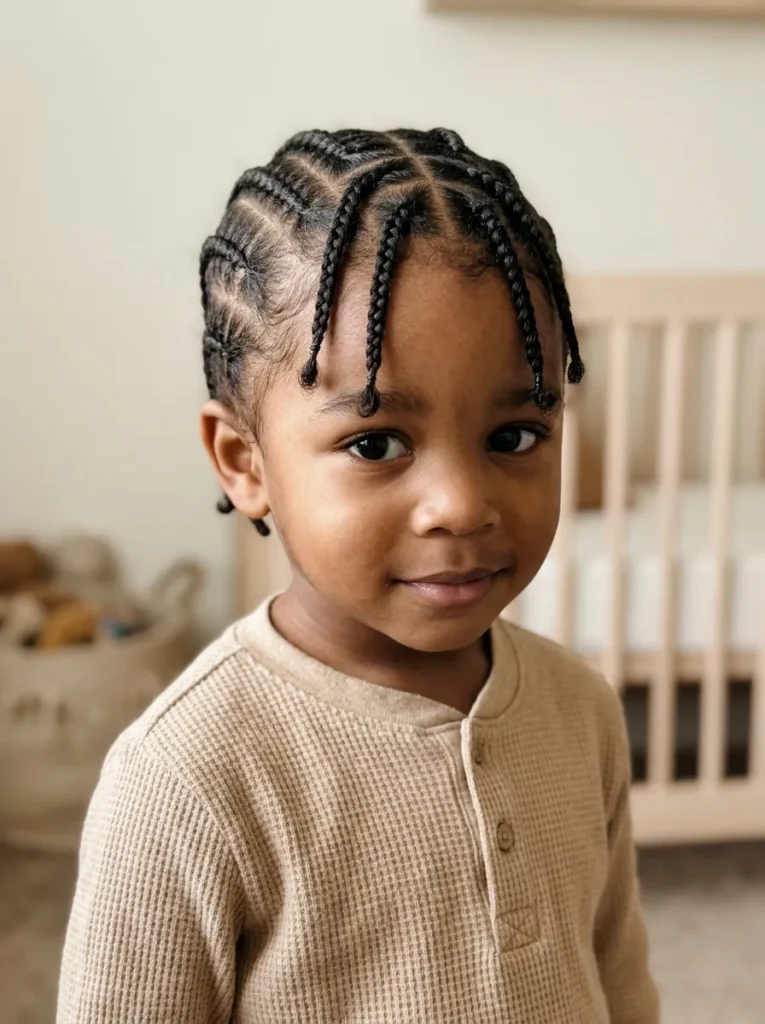
Hair Length: Short to medium, with enough length at the front.
Skill Level: Intermediate, depending on the braid pattern.
Best For: Toddlers who prefer a little styling detail around the forehead.
Styling Time: Approximately 30 to 60 minutes, depending on hair density and design.
A braided fringe gives a little boy’s hairstyle a playful appearance while keeping the sides and crown neatly arranged. The front braids can follow the natural hairline without hanging too close to the eyes. Ask the stylist to leave comfortable space around the forehead, especially if your child dislikes hair touching his face.
17. Alternating Cornrow Patterns
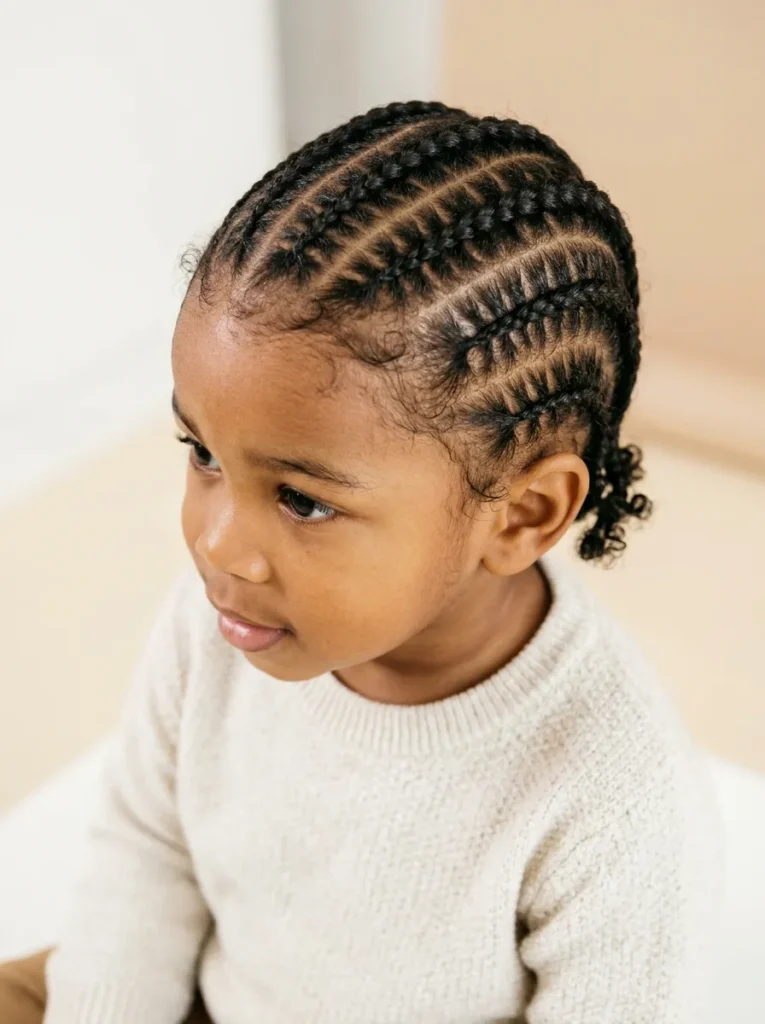
Alternating braid directions create a more detailed hairstyle without making every section complicated. Straight rows can run toward the back while diagonal sections add variety around the crown. The combination gives natural hair a structured appearance and makes the pattern interesting from different viewing angles.
For a comfortable finish, choose three or four larger sections rather than filling the entire scalp with tiny braids. I’ve noticed that simpler alternating patterns are easier to maintain when children are constantly moving, playing, and taking naps. A little lightweight moisturizer between wash days helps keep exposed hair soft and manageable.
18. Braids with Wooden Beads
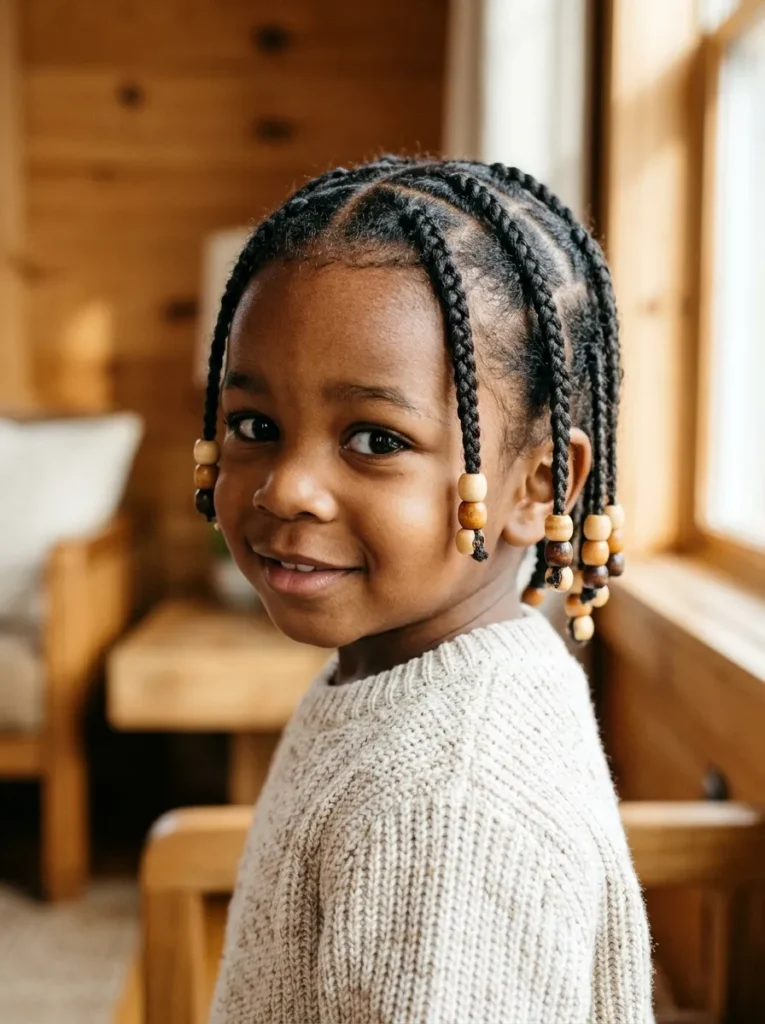
- Select small, lightweight wooden beads designed specifically for children’s hairstyles.
- Choose natural brown or honey-colored beads for a subtle finish.
- Secure the braid ends without using tight elastics.
- Check that every bead is firmly attached and cannot easily detach.
- Remove the beads if your toddler pulls at them or tries to put them in his mouth.
Wooden beads add a charming finishing detail to simple individual braids, especially for birthday pictures and family celebrations. Keep decorations minimal because toddlers often touch their hair throughout the day. Small detachable accessories can pose choking risks, so supervise closely and remove them during sleep or whenever they become loose.
19. Crisscross Cornrows

Styling Time: Approximately 40 to 60 minutes, depending on hair length and pattern complexity.
Skill Level: Intermediate, best handled by an experienced braider.
Best For: Family photographs, birthday celebrations, and everyday hairstyles with distinctive detailing.
Maintenance: Moisturize exposed scalp lightly and protect the braids with a soft satin covering during rest.
Crisscross sections create an eye-catching geometric pattern that makes ordinary cornrows look more detailed. The intersecting lines add visual interest without requiring colorful accessories or extensions. Keep the design relatively simple for younger children, and ask the stylist to leave enough space between sections for comfortable scalp care.
20. Star-Shaped Part Braids

A star-shaped part brings a playful geometric detail to a little boy’s braided hairstyle. The design usually works best near the crown, with surrounding cornrows following the natural direction of the hair. Choose a simple star outline rather than multiple tiny sections to keep styling comfortable and manageable.
For the neatest result, ask the braider to map out the shape with a comb before starting. The surrounding rows should complement the central design without pulling the hair in different directions. This pattern looks especially striking in birthday photographs, but a smaller version can also work for everyday wear. Always prioritize a relaxed scalp over sharply defined partings.
Also Visit : 20 Easy and Stylish Protective Hairstyles for Kids
CONCLUSION
The right hairstyle can make your little boy look neat, stylish, and ready for any occasion. These 20 ideas offer plenty of inspiration, whether you prefer simple cornrows, creative geometric patterns, individual braids, or charming finishes with natural curls.
Remember that comfort and healthy hair should always come before complicated designs. Choose toddler boy braids that suit his hair texture, length, and daily routine. Save this collection on Pinterest so your favorite styles are easy to find later, and share it with other parents looking for fresh hairstyle inspiration. A little creativity can make everyday grooming more enjoyable!