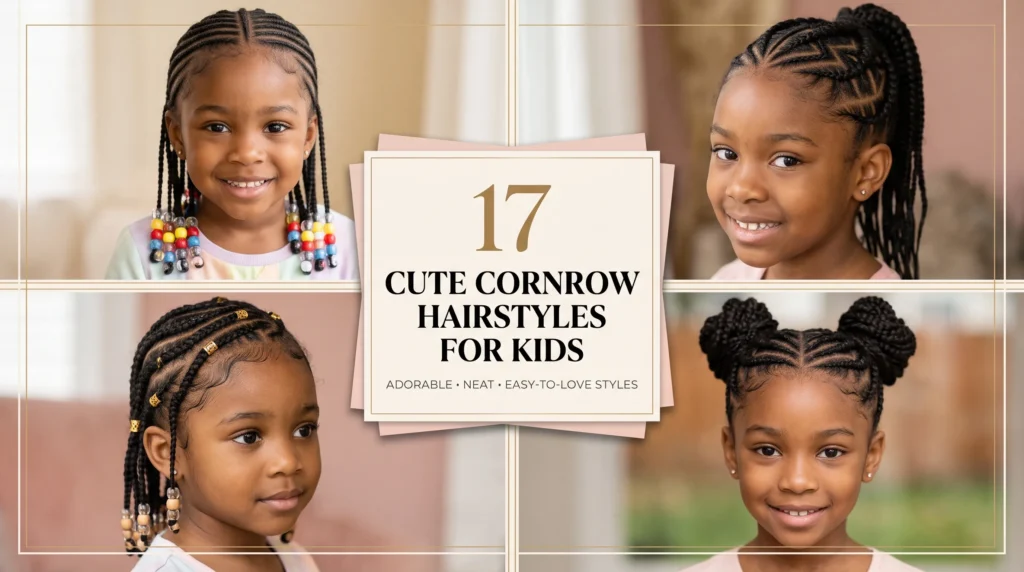
17 Cute Cornrow Hairstyles for Kids That Stay Neat
Finding a hairstyle that looks cute, feels comfortable, and stays tidy through a busy day can take a little planning.
These cornrow hairstyles for kids offer plenty of inspiration, from simple straight-back rows to playful beads, buns, and creative partings.
Whether you’re getting ready for school pictures, a birthday party, or another week of busy mornings, the right braid pattern can help keep hair neatly arranged while showing off its natural texture. The ideas below include different finishes and levels of detail, so you can choose a look that suits your child’s hair length, preferences, and patience for styling. Keep comfort first: braids should feel secure, never painful, and a style should be loosened if the scalp feels sore.
1. Straight-Back Rows
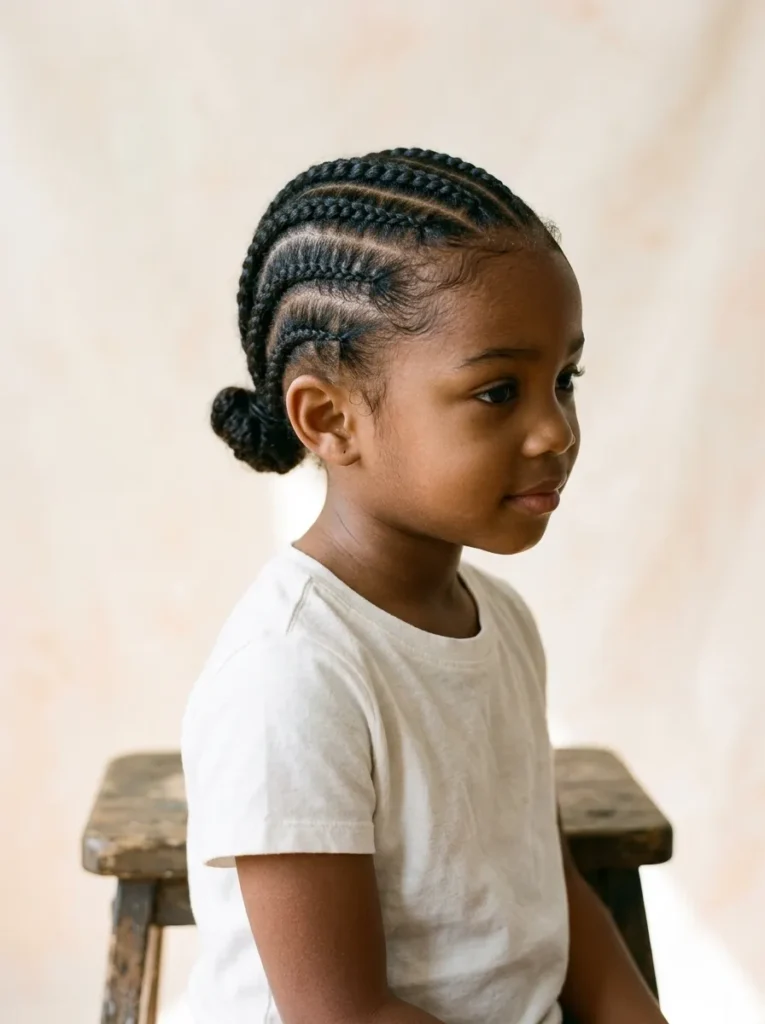
Neat, straight-back rows are a dependable starting point for cornrow hairstyles for kids, especially when mornings are busy. Part the hair into even sections from the forehead toward the nape, then braid each row with gentle, steady tension. A little leave-in conditioner helps the hair stay manageable while you work.
Keep the number of rows suited to the child’s hair density; fewer, slightly wider braids can be easier to maintain than many tiny ones. Smooth the ends into a low bun or leave short natural ends tucked neatly. Check the hairline for pulling, and loosen any braid that feels uncomfortable.
2. Side-Swept Beads

A side-swept pattern gives simple cornrows a playful finish without making the hairstyle too complicated.
- Create a deep side part that guides the braids diagonally across the head.
- Direct the rows toward one ear instead of braiding straight backward.
- Add two or three lightweight beads to selected braid ends for a colorful detail.
- Secure the ends with small, snag-free elastics if needed.
- Choose lightweight accessories that will not pull on delicate hair.
For a tidy finish, ask the child which side they prefer before you begin. A few soft beads or simple covered elastics can add personality, but keep accessories lightweight and secure. At bedtime, a satin bonnet or pillowcase helps reduce friction, so the rows stay neater between wash days.
3. Zigzag Parting

Quick Tip:
Keep the parts clean, but do not pull tightly at the temples or nape. A child should be able to move their forehead and sleep comfortably without scalp soreness.
These curved rows suit children who like a little detail without a complicated design. Ask the braider to follow the head’s natural shape and leave enough space between each row for comfortable movement. A small amount of lightweight moisturizer on exposed parts can help the scalp feel comfortable.
4. Crown Cornrow Braids

BEFORE:
Loose sections and uneven rows can make a braided hairstyle look unfinished. Hair may also fall around the face during school activities and playtime.
AFTER:
Curved cornrows following the shape of the head create a neat crown effect. The remaining hair can be gathered into a small bun or ponytail for a complete finish.
Crown patterns work especially well for children who prefer their hair away from their face. Ask the braider to follow the natural curve of the head rather than pulling the rows too tightly. A few small accessories near the back can add detail without making daily maintenance difficult.
5. Heart-Shaped Parting
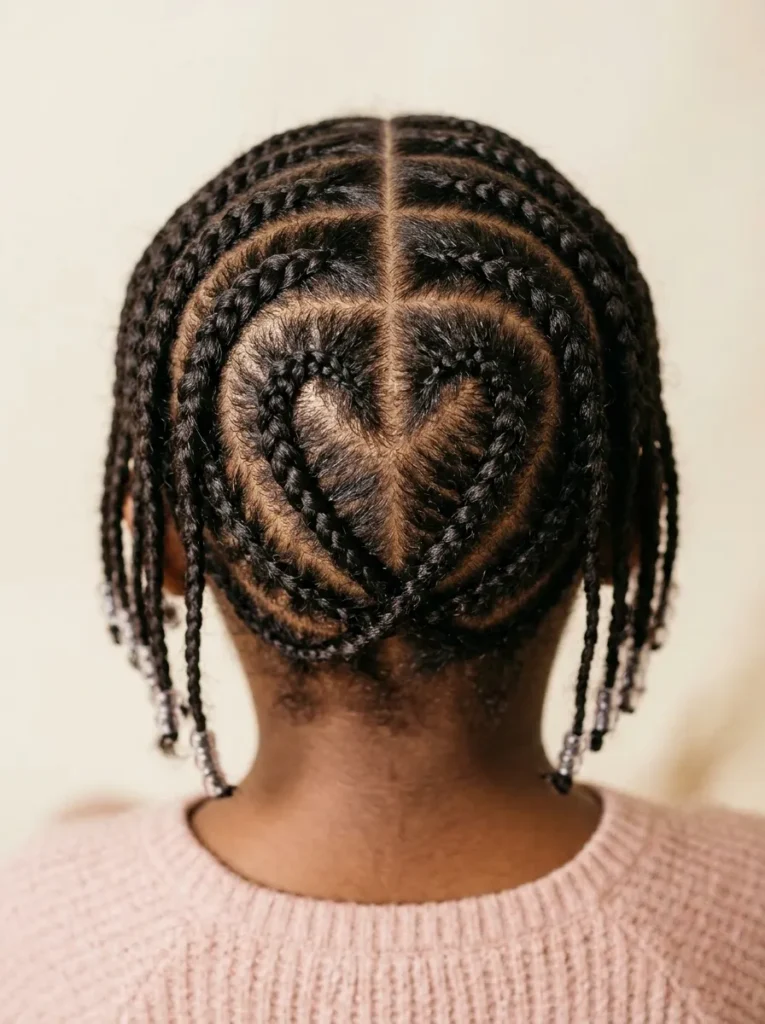
- Create the heart outline: Start with a clean center part and carefully section the hair into two curved lines that meet at the bottom.
- Divide the remaining hair: Separate the surrounding sections into manageable portions for the cornrows.
- Braid along the shape: Follow the curved sections with controlled, gentle braiding to keep the heart recognizable.
- Finish the ends: Secure the braids with small elastics or gather them into a low ponytail.
The heart detail makes an ordinary braided style feel more personalized. It works best when the parting is planned before braiding begins, as correcting the shape afterward can be difficult. Keep the design relatively simple for younger children, and check that every section feels comfortable around the scalp.
Also Visit : 20 Cute Winter Protective Natural Hairstyles for Kids
6. Twin Braid Buns
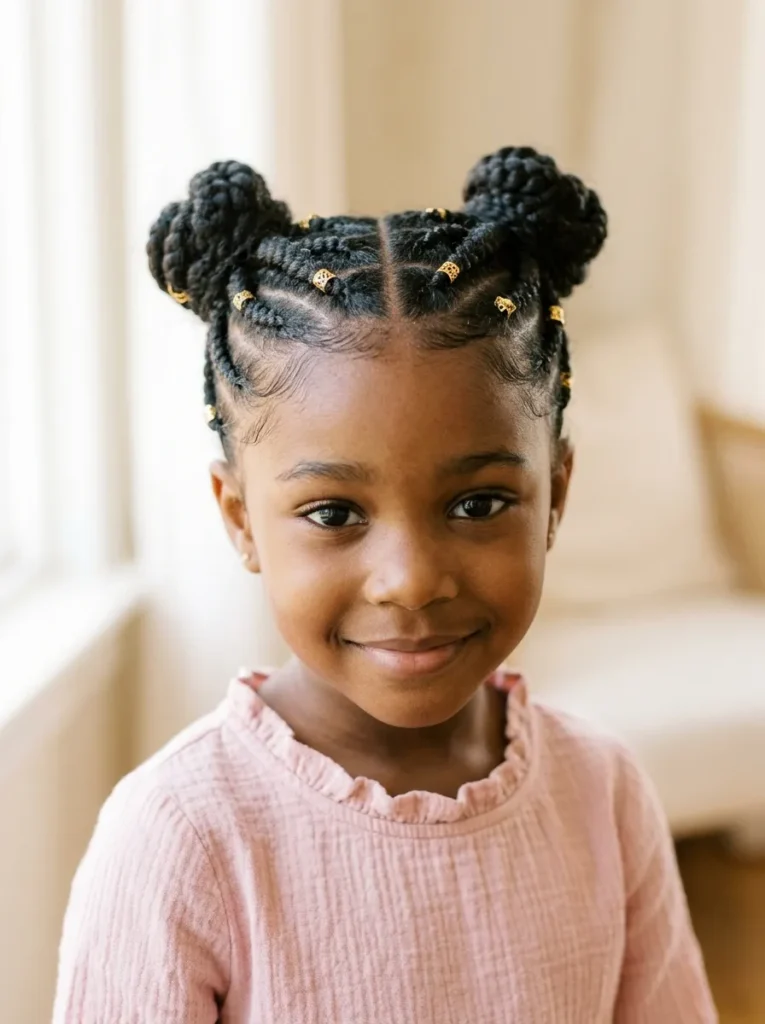
Two matching buns give braided hairstyles a playful shape while keeping the ends tucked away neatly.
| Detail | High Braid Buns | Low Braid Buns |
| Placement | Near the crown | Behind the ears |
| Appearance | Playful and youthful | Simple and classic |
| Best for | Shorter active days | Everyday schoolwear |
| Maintenance | Secure both buns gently | Protect buns during sleep |
Both versions are practical for school mornings, family outings, and casual weekends. Ask the braider to distribute the hair evenly between the two sides before creating the buns. Use soft elastics and avoid wrapping them too tightly. The finished style should feel secure without causing scalp tension.
7. Crisscross Cornrows
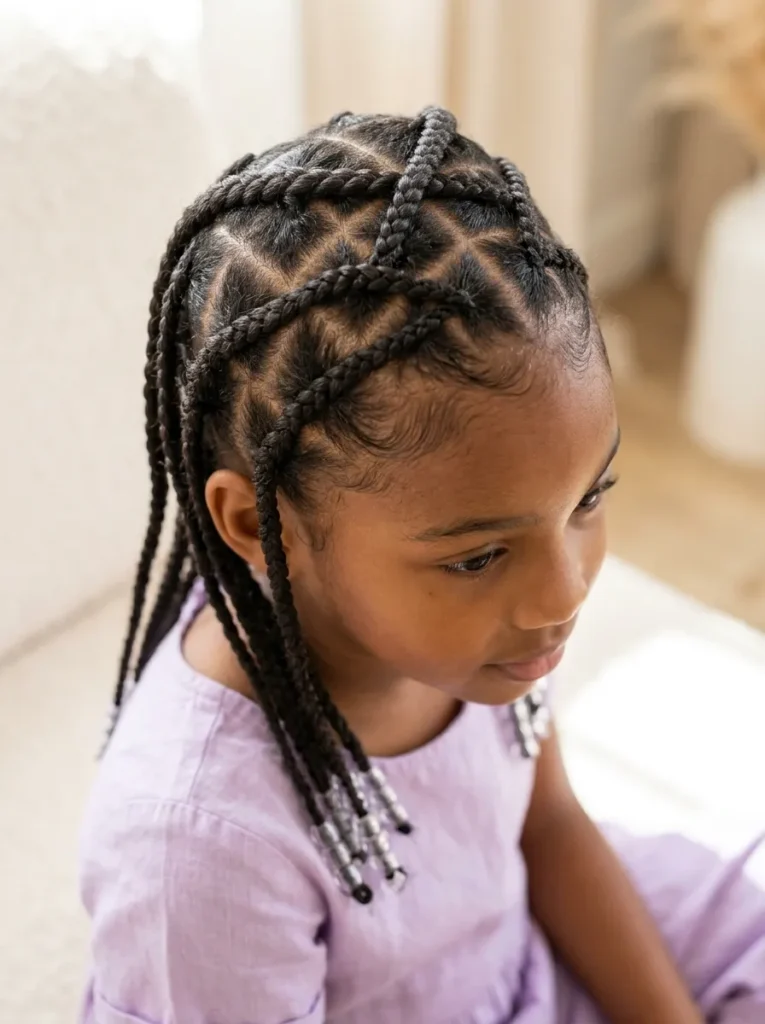
Crisscross sections add a little variety to traditional braids while keeping the overall hairstyle organized.
DO:
- Divide the hair into clean diagonal sections before braiding.
- Keep the crossing points symmetrical for a balanced design.
- Use a little leave-in conditioner to make sections easier to manage.
- Secure the ends with soft, child-friendly elastics.
DON’T:
- Pull tightly where the braids cross.
- Make too many tiny sections on delicate hair.
- Use heavy beads or oversized accessories.
- Ignore discomfort around the temples.
This pattern looks especially attractive on medium to long hair because there is enough length to show the crossing details clearly. For younger children, keep the design simple with fewer intersections. A satin bonnet at bedtime can help reduce friction and preserve the neat appearance.
8. Ponytail Cornrow Pattern
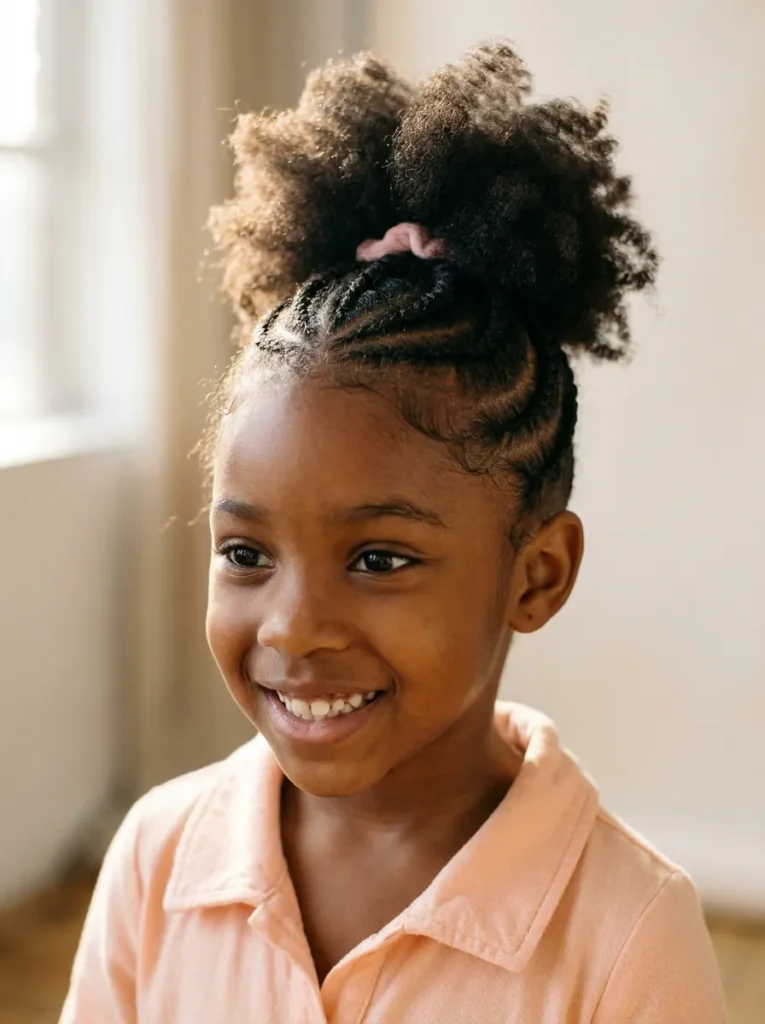
Best For: Active children who prefer their hair away from their face.
Styling Time: Depends on the number of sections and hair length.
Skill Level: Beginner to intermediate, depending on the curved parting pattern.
Finishing Style: High ponytail, curly puff, or compact braided ponytail.
A ponytail finish keeps the loose hair gathered while allowing the scalp pattern to remain the main feature. Direct the cornrows toward one central point, then secure the remaining hair with a soft, covered elastic. Avoid pulling the ponytail too tightly, especially around the front hairline. This style works nicely for school, sports, and weekend activities.
9. Half-Up Cornrow Style

A half-up arrangement offers a lovely balance between braided detail and natural curls. The front sections are divided into neat rows and directed toward the crown, while the remaining hair is left loose at the back. This creates a soft hairstyle that keeps hair away from the face without hiding its natural texture.
For a comfortable finish, secure the gathered braids with a fabric-covered elastic or gently wrapped braid. Apply a little moisturizer to the loose ends to help reduce dryness and tangling. This design is especially useful for children who enjoy wearing their natural curls but need a tidier front section for everyday activities.
10. Feed-In Cornrows
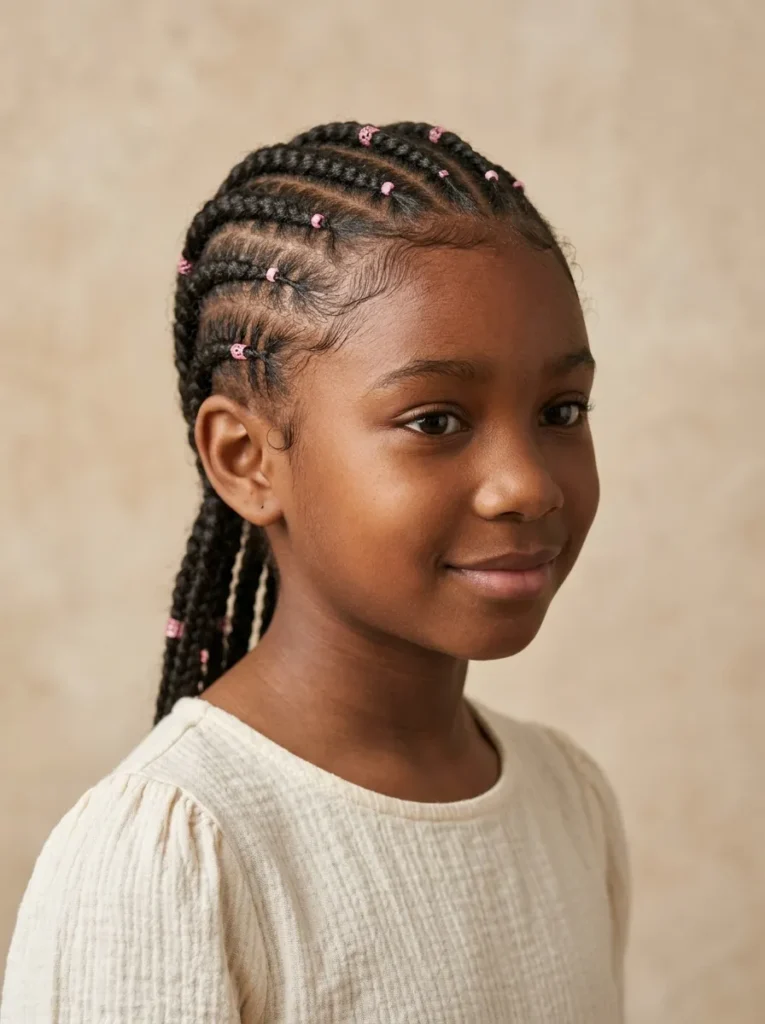
- Start with small sections: Begin each braid with a small amount of natural hair for a smooth, gradual appearance.
- Add hair gradually: Feed in small sections of additional hair as you continue braiding toward the back.
- Maintain even rows: Keep the parts consistent so the finished hairstyle looks balanced and tidy.
- Secure the ends: Use soft elastics or gather the braids into a ponytail.
- Protect the hairline: Keep the initial sections gentle to avoid unnecessary tension.
Feed-in braids create a smooth finish without making every row look bulky from the beginning. They are particularly useful for children with fine or medium-density hair. In my experience, choosing fewer, slightly wider rows often makes the finished style easier to maintain and more comfortable for everyday wear.
Also Visit : 20 Kids and Teens Cornrows Styles for School Goals
11. Mini Side Braids

Quick Tip:
Keep the mini braids limited to one side rather than covering the entire scalp with tiny sections. Use lightweight accessories and avoid tight braiding near the temples.
Small side braids add interesting detail while allowing most of the child’s natural hair to remain visible. They work particularly well for shorter hairstyles and children who dislike having all their hair tied back. Refresh the loose curls with a little water-based moisturizer and gently detangle the ends between styling sessions.
12. Low Bun Cornrows

BEFORE:
Loose braid ends can become tangled during playtime and make the hairstyle look untidy. Hair falling around the neck may also become uncomfortable during warm weather.
AFTER:
Gathering the cornrow ends into a low bun creates a compact, organized finish. The braids stay directed toward the nape, while the secured bun keeps loose ends together.
This style is particularly practical for school days, family gatherings, and special occasions. Use a soft elastic to secure the bun and avoid wrapping it too tightly. A little moisturizer on the exposed hair and a satin covering at bedtime help maintain the style without excessive daily handling.
13. Double Ponytail Rows
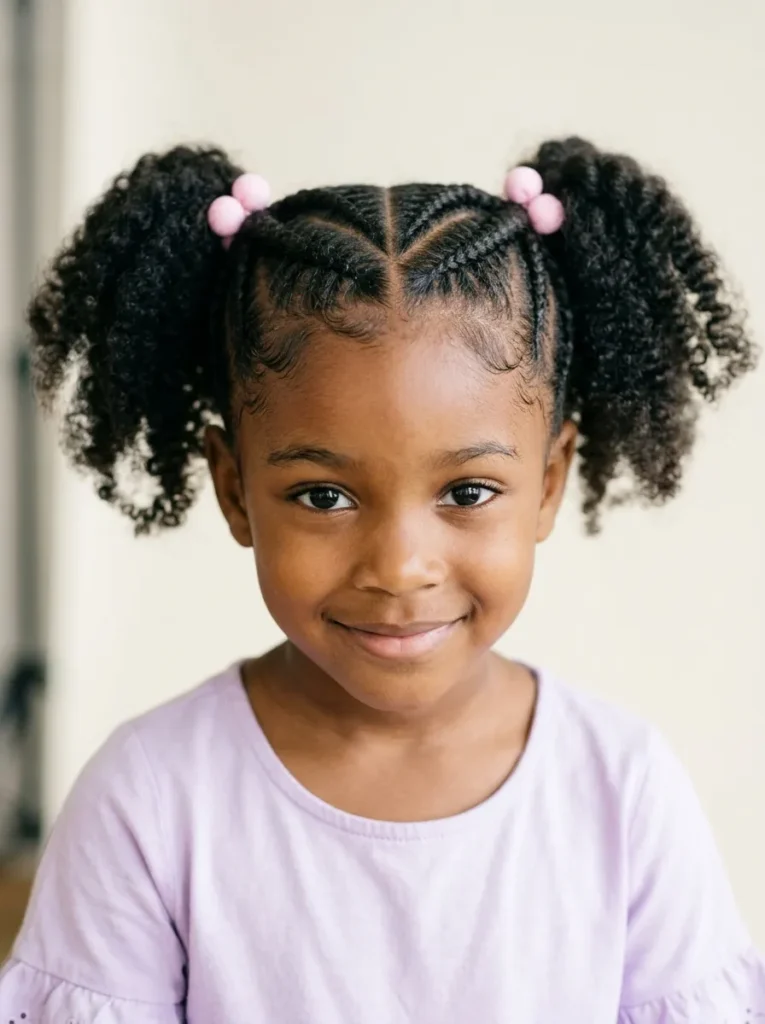
- Divide the hair: Create a clean center part from the forehead to the nape, separating the hair into two equal sides.
- Section each side: Divide both halves into smaller, evenly spaced sections for the cornrows.
- Braid backward: Work from the front toward the crown, keeping the rows smooth and comfortably tensioned.
- Gather the ends: Secure each side into a high ponytail using soft, fabric-covered elastics.
- Finish the look: Leave the ends naturally curly or create two small braided ponytails.
Matching ponytails give children a playful hairstyle that stays organized during school, outdoor activities, and family outings. The center part helps create a balanced appearance, while the gathered ends keep loose hair under control. For a softer finish, leave a little natural volume in both ponytails.
14. Basketweave Cornrows

Interlocking sections create a distinctive woven appearance that makes the braid pattern stand out.
| Feature | Simple Woven Rows | Detailed Basketweave |
| Pattern | Larger crossing sections | Multiple interlocking sections |
| Appearance | Clean and minimal | Intricate and decorative |
| Styling Time | Usually shorter | Usually longer |
| Skill Level | Intermediate | Advanced |
For younger children, a simplified woven design is often the more comfortable choice. Discuss the pattern with the braider before starting, especially if the child has a sensitive scalp. Keep the sections reasonably large and avoid excessive tension at the crossing points. The final look should be neat without feeling restrictive.
15. Beaded Braid Ends

DO:
- Choose lightweight, smooth-edged hair beads.
- Match two or three bead colors for a coordinated appearance.
- Secure accessories with suitable braid elastics.
- Check the beads regularly to ensure they remain firmly attached.
DON’T:
- Use heavy beads that pull on the braid ends.
- Choose accessories with sharp edges or rough surfaces.
- Leave detachable small beads within reach of toddlers.
- Allow uncomfortable accessories to remain in place.
Colorful beads can make even simple cornrows feel special without changing the actual braid pattern. Coordinate the accessories with the child’s favorite outfit or school colors for a personalized finish. Remove decorative accessories before bedtime when practical, and always prioritize comfort and age-appropriate safety over elaborate styling.
Also Visit : 20 Cute School Hairstyles for Brighter School Days
16. Floral Parting Design

Best For: Children who enjoy decorative braided patterns.
Skill Level: Intermediate to advanced.
Styling Time: Depends on the flower design and number of cornrows.
Finishing Style: Small ponytail, braided bun, or secured braid ends.
Floral partings bring a creative touch to traditional children’s braids without requiring lots of colorful accessories. A skilled braider can create petal-like sections using curved parts that meet near the center. Keep the surrounding cornrows simple so the flower remains the main detail. This design is especially lovely for birthdays, family photographs, and special occasions.
17. Side-Part Ponytail Braids

Side-parted cornrows offer a simple way to give an everyday braided hairstyle a fresh appearance. Start with a deep side part, then create several neat rows that follow the natural direction of the hair. Direct the braids toward one side of the head and gather the ends into a low ponytail. The diagonal pattern creates movement without requiring an overly complicated design.
For school mornings, this arrangement keeps most of the hair away from the face while allowing the ponytail to retain some natural volume. A soft elastic helps secure the ends without unnecessary pulling. Among the many cornrow hairstyles for kids, this design is particularly useful for children who prefer a simple, comfortable finish with a little extra detail.
CONCLUSION
The right cornrow hairstyles for kids can make busy mornings easier while giving children a chance to enjoy patterns, beads, buns, and ponytail finishes that suit their personality. Choose a design that fits your child’s hair length and daily routine, and always put a comfortable, gentle braid tension first.
Save this collection on Pinterest so your favorite ideas are easy to find before the next salon visit or braid day. Try one of the styles, adjust the details to suit your child, and share the article with another parent looking for fresh, practical hairstyle inspiration.