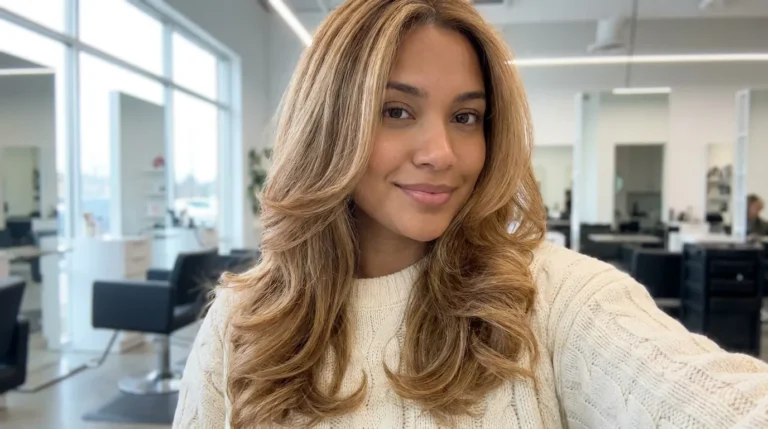
16 Stunning Grey Hair Blending Ideas for Soft Grow-Out

Grey roots do not have to mean constant touch-ups or a dramatic color change. The right grey hair blending approach can soften the contrast between natural silver strands and your existing shade while keeping your hairstyle looking dimensional.
Whether you are just noticing a few greys around your temples or are ready to move away from all-over dye, choosing a thoughtful blend can make the grow-out feel more manageable. This collection brings together 16 ideas, including smoky balayage, fine babylights, ash blonde tones, and natural silver cuts. You will also find practical details to discuss with your stylist, such as highlight placement, root shadows, toning, and hair condition. Use these looks as inspiration, then choose a technique that suits your starting color, maintenance routine, and comfort level.
1. Smoky Silver Balayage

Soft silver balayage lets grey strands blend into a luminous mix of cool highlights and deeper roots. Rather than covering every silver hair, the colorist paints fine ribbons through the mid-lengths and ends, keeping the root area close to its natural shade. This creates a transition as new growth appears.
For believable grey hair blending, ask for delicate placement instead of chunky, high-contrast streaks. The result is flattering on naturally dark blonde or light brown hair with scattered greys. A violet-toning shampoo used occasionally can help limit yellow tones, but avoid overusing it because silver can turn dull.
2. Face-Framing Silver Ribbons
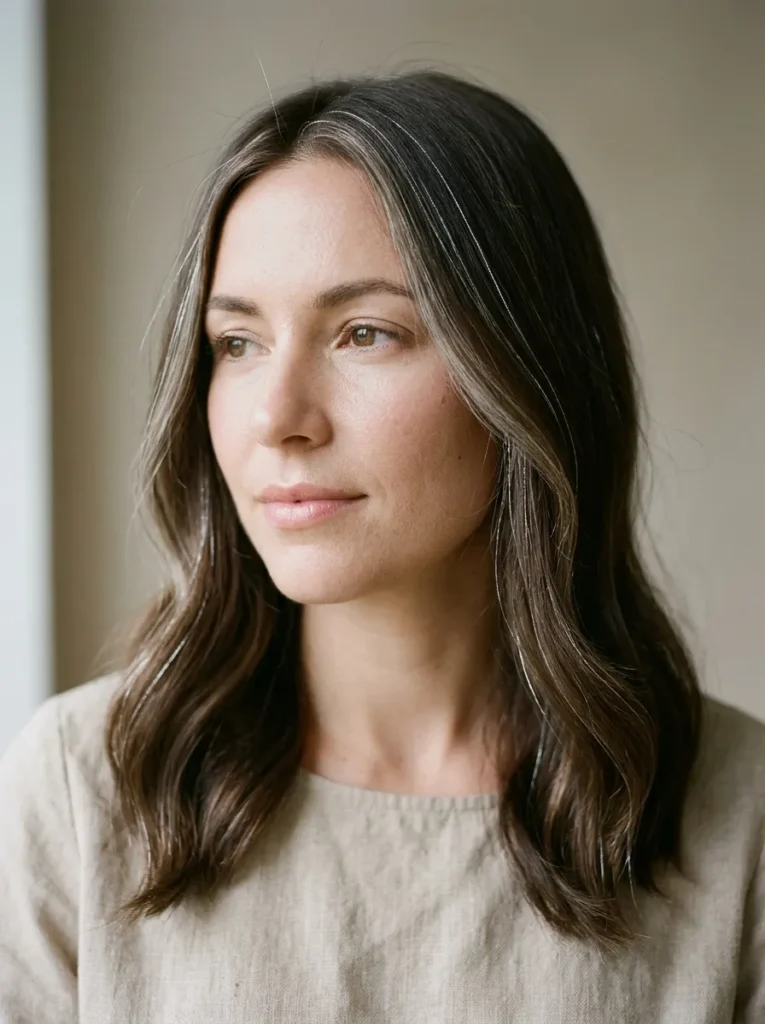
A few silver strands around the face can brighten your entire hairstyle without changing your overall color.
- Choose fine highlights: Ask your colorist for delicate silver ribbons rather than thick, contrasting sections.
- Focus on the temples: These areas often show grey first, making them a natural starting point.
- Keep the base soft: Maintain your natural brunette or dark blonde shade between the highlights.
- Blend the roots: Subtle root shading helps prevent a noticeable line as your hair grows.
Face-framing pieces brighten the complexion while leaving most of the hair close to its natural shade. Ask your colorist to keep the ribbons fine and softly diffused, especially around the parting and temples, so the effect grows out gracefully rather than forming a hard stripe.
3. Mushroom Brown Highlights
Quick Tip:
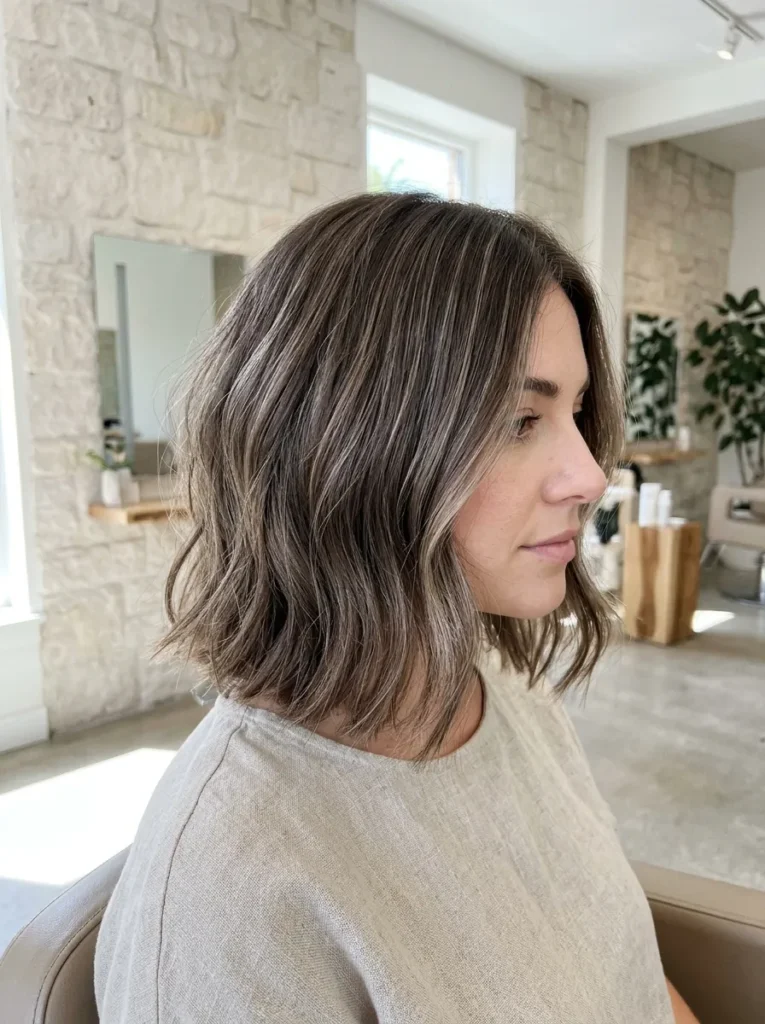
Choose mushroom brown tones with cool beige undertones to complement naturally emerging silver strands. Ask your colorist to avoid overly warm caramel shades if your goal is a cooler, more balanced finish.
Mushroom brown creates a balanced bridge between warm brunette hair and cool grey strands. The muted beige undertone softens contrast without making the overall color look flat. It suits people who prefer a natural finish and want dimension that does not require frequent root touch-ups.
4. Soft Silver Babylights
BEFORE:
Dark hair with scattered grey strands can create a noticeable contrast, especially around the crown and parting. The individual silver hairs may appear more prominent against a solid brunette base.
AFTER:
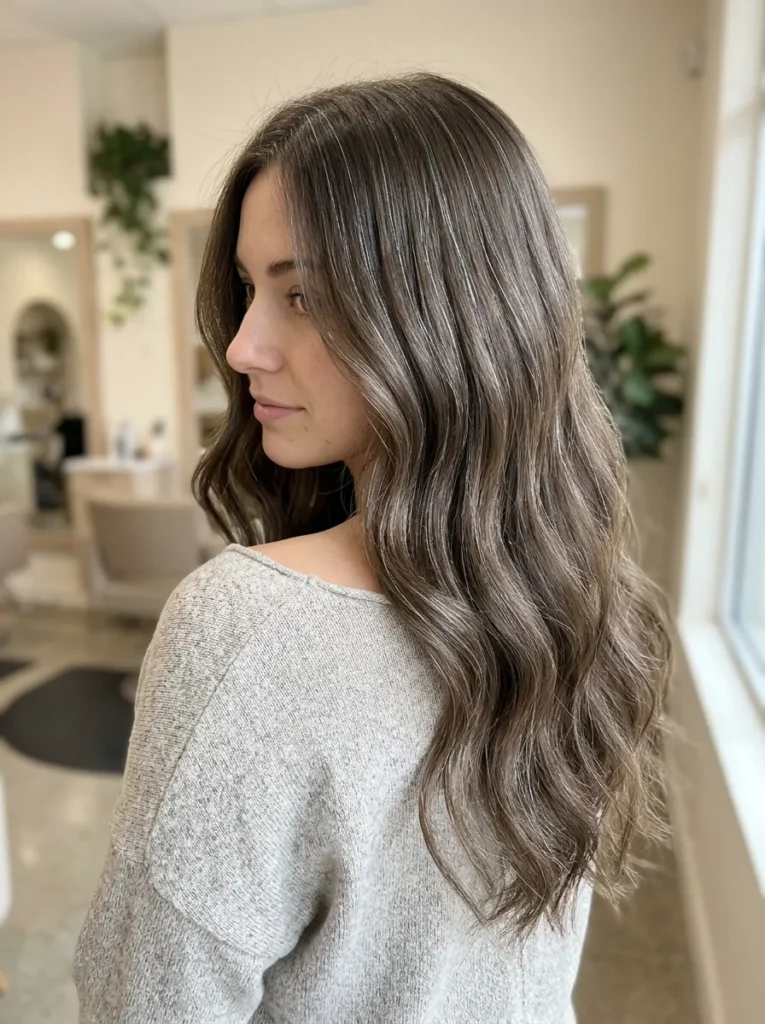
Fine silver babylights soften that contrast by spreading lighter strands throughout the hair. The result looks naturally dimensional, with no obvious blocks of artificial color.
Ask your stylist for very fine highlights placed close together, particularly around the top layers where grey is most visible. Keeping the natural root shade intact makes maintenance easier. This technique works especially well for brunettes who want a gradual transition without committing to an all-over lighter color.
5. Ash Blonde Blend
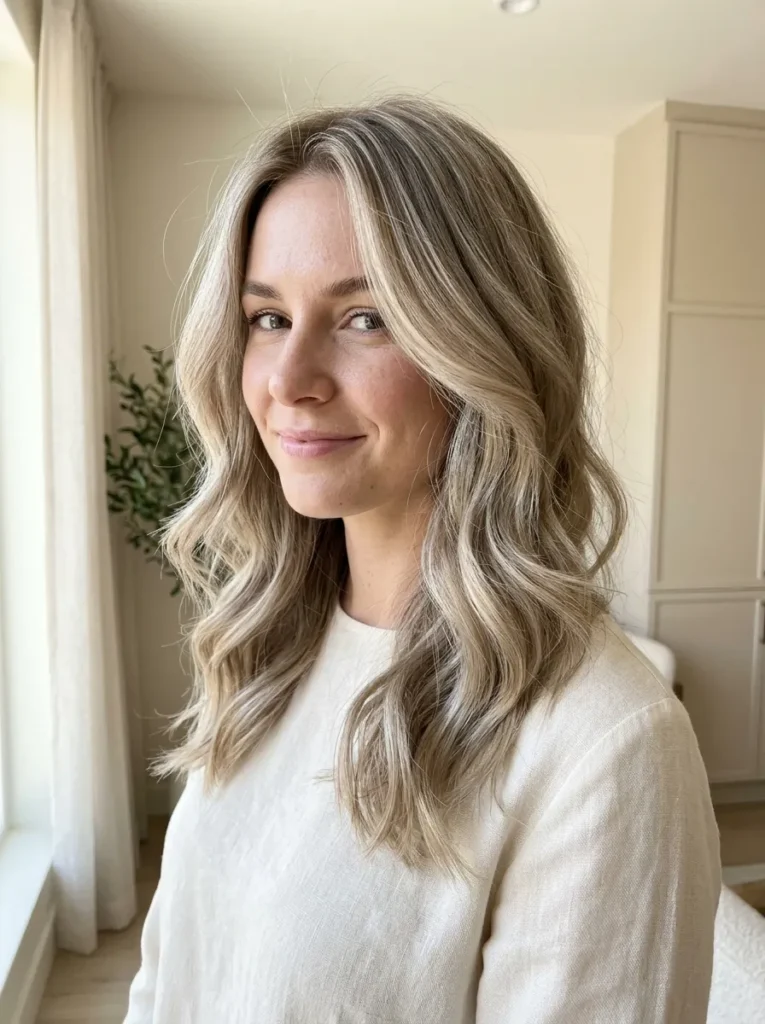
Ash blonde creates a soft meeting point between natural grey strands and lighter blonde hair.
- Assess your base: Ask your colorist whether your natural shade can transition comfortably into ash blonde.
- Add fine highlights: Place cool blonde sections throughout the mid-lengths and ends.
- Blend the roots: Use a root shadow close to your natural color for softer regrowth.
- Tone carefully: Choose a cool toner that complements your existing silver strands.
The beauty of this approach is its gradual appearance. As your natural roots grow, the lighter sections help disguise the contrast. Purple shampoo can maintain the cooler finish, while regular conditioning helps protect highlighted hair from dryness. It suits people ready for a brighter overall look.
Also Visit : 18 Stunning Burgundy Highlights to Transform Your Look
6. Silver and Charcoal Blend

| Comparison Point | Option A: Solid Charcoal | Option B: Silver and Charcoal |
| Overall Color | Deep, consistent grey | Mixed charcoal and silver |
| Grey Coverage | More uniform appearance | Natural strands remain visible |
| Dimension | Mostly single-tone | Multi-tonal depth and contrast |
| Grow-Out | Root contrast can be obvious | Softer transition between shades |
The combination of charcoal lowlights and silver highlights creates depth without hiding every natural grey strand. Ask your colorist to concentrate darker pieces underneath and lighter sections around the crown. This placement keeps the hairstyle balanced, especially for naturally dark brunettes transitioning away from regular root coverage.
7. Salt And Pepper Layers

DO:
- Keep your natural silver strands visible to create an authentic salt-and-pepper effect.
- Add subtle charcoal lowlights underneath to give darker areas more depth.
- Choose soft layers that allow different shades to move and catch the light.
DON’T:
- Avoid applying one flat dark color over the entire head.
- Don’t add overly thick silver streaks that create harsh contrast.
- Avoid frequent permanent root coloring if your goal is natural regrowth.
The layered finish makes individual shades look intentional rather than scattered. Ask your stylist to place darker tones beneath the top layers while keeping natural silver visible around the parting. This approach is especially flattering for medium-density hair that needs extra visual depth without heavy coloring.
8. Root Shadow Silver
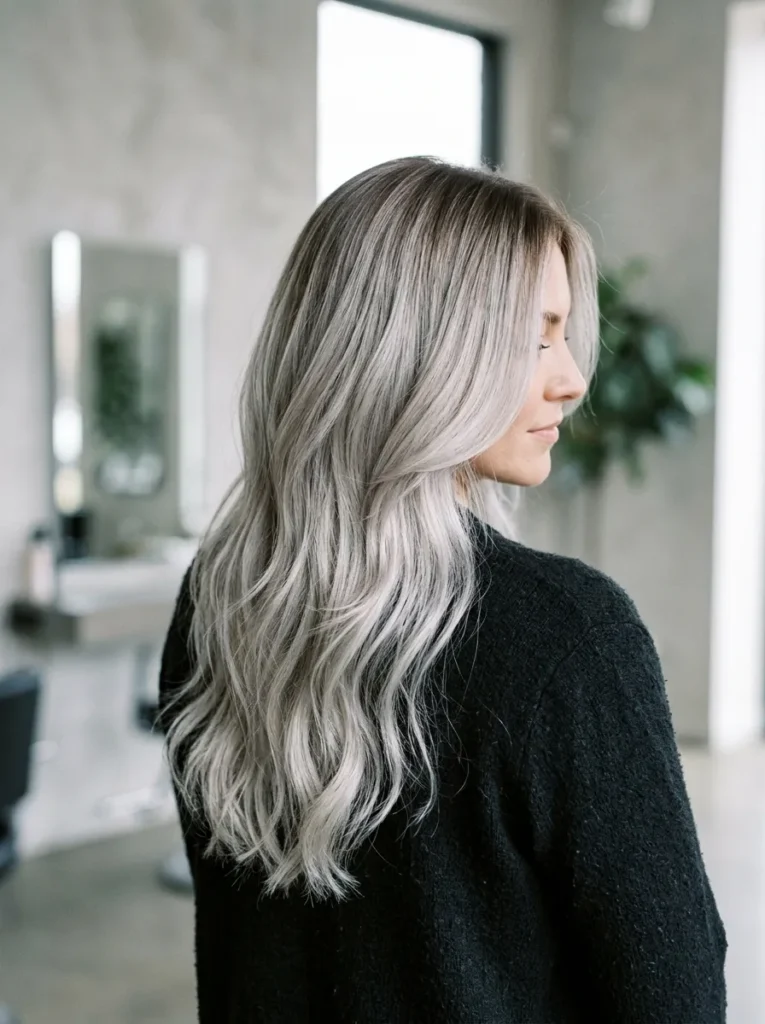
Best For: Brunettes transitioning to silver or grey blonde.
Color Placement: A soft shadow at the roots with lighter mid-lengths and ends.
Maintenance: Root touch-ups are generally less frequent than with solid all-over coloring.
Overall Result: A gradual transition with natural-looking depth and softer regrowth.
The beauty of a root shadow is that it removes the sharp line between your natural roots and lighter hair. Your stylist can match the darker shade to your natural base, then blend it gradually into silver lengths. This creates a polished finish without requiring constant root maintenance.
9. Greige Blonde Highlights
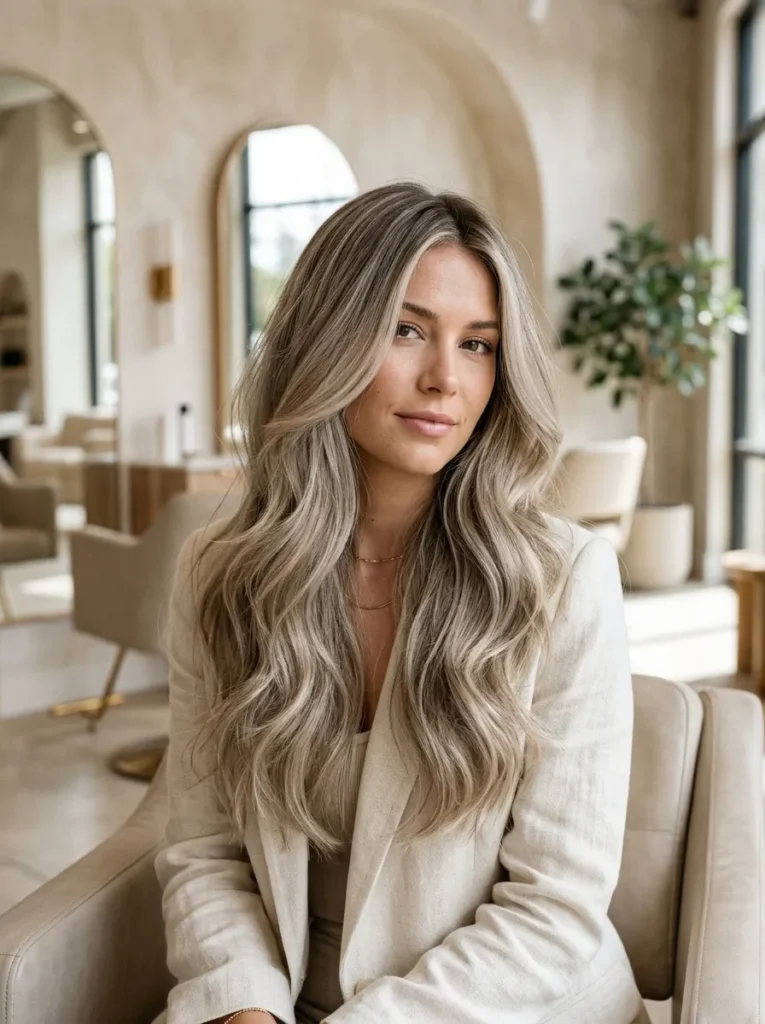
Cool beige and soft silver create a refined color combination that looks natural rather than overly icy. Greige highlights work particularly well for people with a mixture of blonde, brunette, and grey strands. The blend adds brightness while keeping enough neutral depth to prevent the hair from looking flat.
For successful grey hair blending, ask your stylist to combine fine beige highlights with cooler silver pieces instead of choosing one uniform blonde shade. Keep the roots slightly deeper than the lengths to soften regrowth. A gloss treatment can refresh the tones between salon visits and maintain a balanced finish.
10. Pearl Blonde Melt

- Keep the roots natural: Allow your original grey and darker root shades to remain visible.
- Choose pearl tones: Ask for cool pearl blonde highlights that complement your existing silver strands.
- Blend the mid-lengths: Use finer highlights near the roots and brighter sections toward the ends.
- Add a glossy finish: A professional toner or gloss helps keep the blonde looking fresh.
- Protect the color: Use a moisturizing shampoo and conditioner designed for color-treated hair.
Pearl blonde works beautifully for anyone who prefers a lighter hairstyle with soft dimension. I’ve noticed that combining several cool shades often looks more natural than choosing one icy blonde tone. Keep the highlights delicate around the crown for a softer grow-out and easier maintenance.
Also Visit : 16 Dreamy Milky Brown Hair Looks for a Glossy Glow
11. Silver Money Pieces
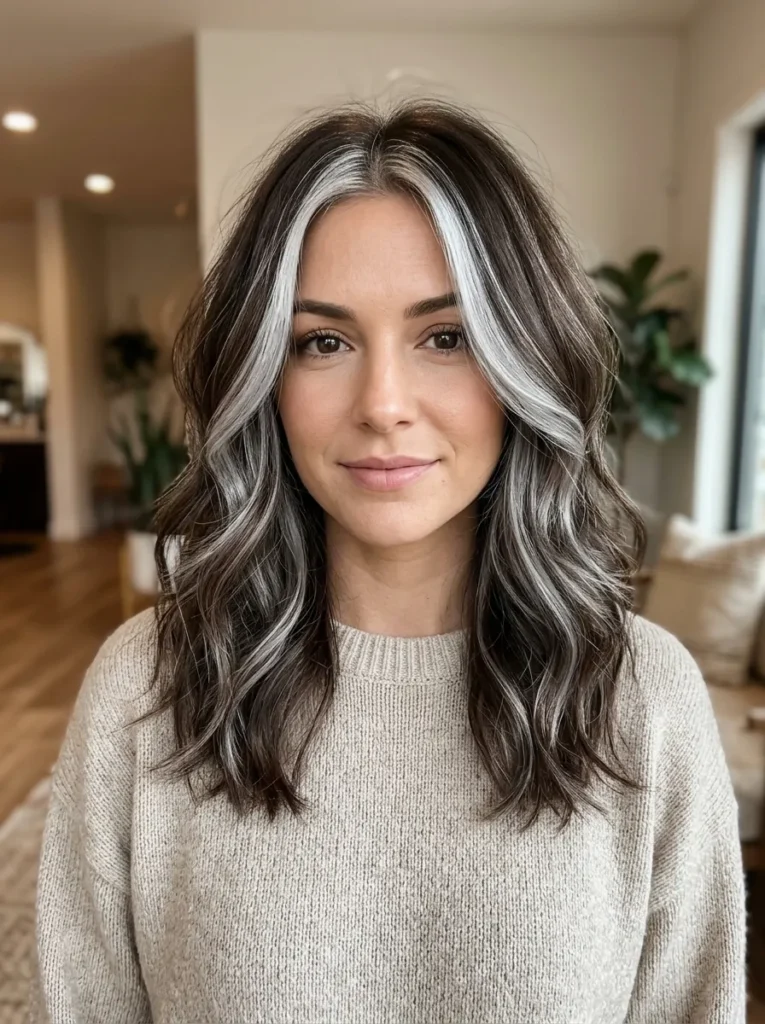
Quick Tip:
Ask your colorist to keep the silver face-framing sections fine and softly blended into the surrounding hair. Choose a shade that complements your natural grey instead of creating an extremely bright contrast.
Silver money pieces draw attention to the front of your hairstyle while allowing the rest of your natural color to remain untouched. They work particularly well for people whose grey strands are concentrated around the temples and hairline. A few connected highlights behind the front sections create a more balanced finish.
12. Dimensional Grey Lob

BEFORE:
A single dark shade can make growing grey roots look particularly noticeable. The contrast becomes more obvious as silver strands appear along the parting and around the temples.
AFTER:
A dimensional lob combines natural silver strands with carefully placed ash brown and charcoal tones. The shorter layers create movement, while the mixed shades soften the difference between new growth and previously colored hair.
Ask your stylist for a shoulder-length cut with light internal layers and subtle highlights around the crown. Keep the ends healthy with regular trims, especially if they have been chemically colored. This combination is a practical choice for anyone who wants manageable length with a natural-looking transition.
13. Smoky Silver Ombre
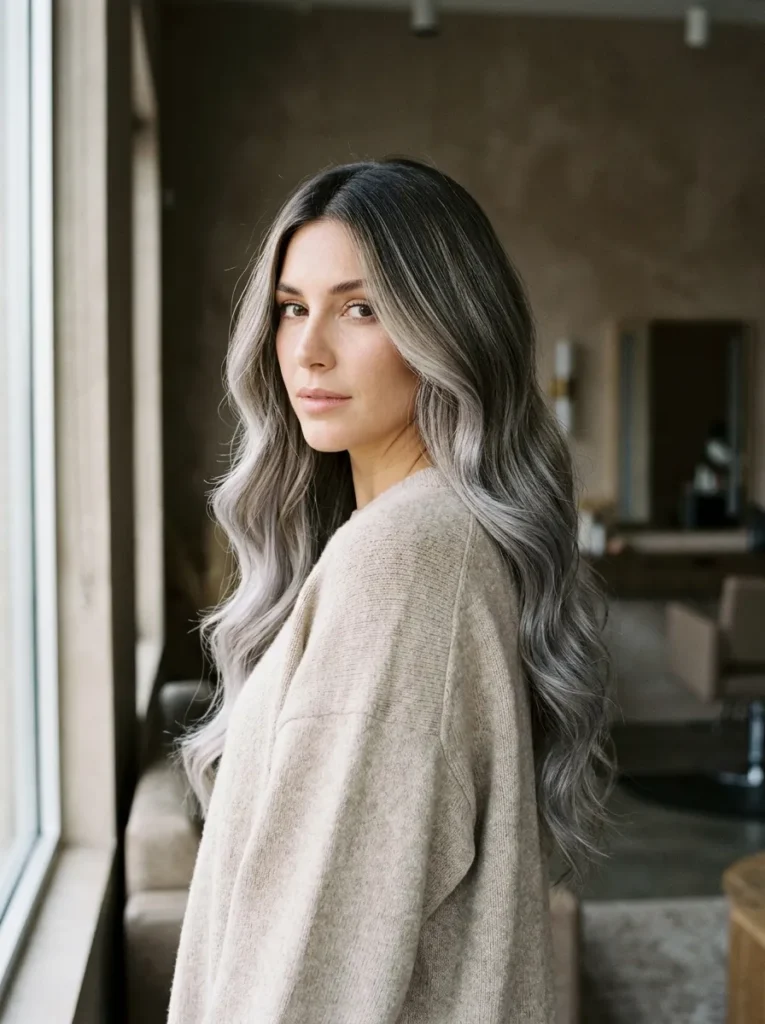
- Start with a soft base: Keep your natural brunette or dark blonde roots rather than coloring them completely silver.
- Lighten gradually: Ask your stylist to create a gradual transition through the mid-lengths.
- Blend the ends: Apply smoky silver toner to the lighter sections for a cool, misty finish.
- Maintain the shine: Use moisturizing treatments to keep chemically lightened ends smooth and healthy.
The beauty of this color placement is the gradual movement from darker roots to lighter ends. It creates dimension without making regrowth look like a problem. Smoky silver ombre is especially suitable for longer hair, where the different shades have enough space to blend naturally.
14. Ash Brown Lowlights

| Comparison Point | Option A: Extra Highlights | Option B: Ash Brown Lowlights |
| Color Effect | Brighter overall appearance | Deeper, cooler dimension |
| Grey Contrast | Reduces contrast through lightness | Softens contrast through depth |
| Hair Appearance | Lighter and airier | Richer and more dimensional |
| Best Placement | Around the crown and sides | Between silver and blonde sections |
Ash brown lowlights bring back depth when your hair starts looking too light or overly uniform. Ask your stylist to weave fine darker sections between existing silver highlights rather than applying a solid dark color. This creates a balanced finish that complements natural grey growth beautifully.
15. Defined Silver Curls
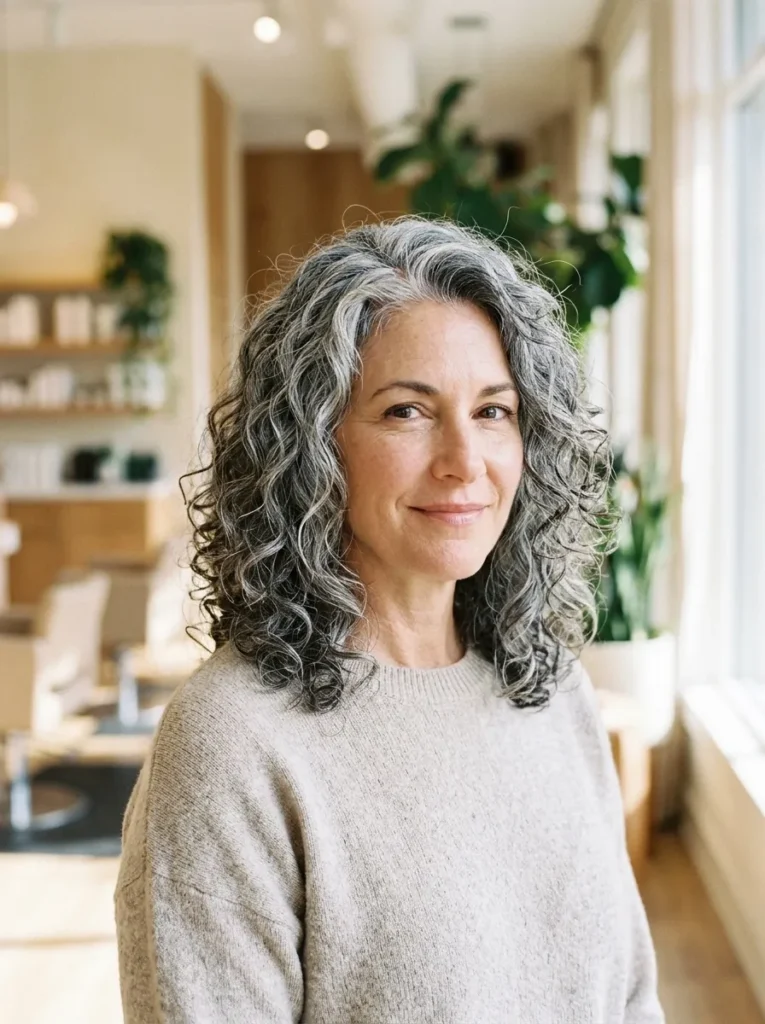
DO:
- Keep highlights fine to preserve the natural depth of your curls.
- Place lighter silver pieces around the crown and front sections.
- Use a moisturizing leave-in conditioner to maintain curl definition.
- Choose a layered haircut that allows curls to fall naturally.
DON’T:
- Avoid thick, chunky highlights that create harsh color blocks.
- Don’t overuse purple shampoo, as it can leave some silver tones looking dull.
- Avoid excessive heat styling on lightened curls.
- Don’t lighten fragile ends repeatedly without assessing their condition.
Curly hair reflects multiple shades beautifully because each curl catches the light differently. A mixture of charcoal, natural grey, and silver creates depth without hiding your curl pattern. Ask for strategically placed highlights that follow the natural movement of your curls, especially around the face.
Also Visit : 19 Radiant Dirty Blonde Highlights for Sunlit Dimension
16. Natural Silver Pixie

Best For: Women embracing their natural grey with shorter hair.
Haircut: Textured pixie with soft feathered layers.
Color Technique: Natural silver strands with subtle charcoal lowlights.
Maintenance: Occasional trims and moisturizing treatments.
Result: A dimensional silver finish with soft natural regrowth.
Short hair can make the transition to natural silver feel much simpler. A textured pixie allows grey and darker strands to blend throughout the haircut without requiring frequent root coloring. Ask your stylist to preserve natural dimension around the crown and temples for a soft, flattering finish.
CONCLUSION
Grey hair can become part of a beautiful, dimensional look without hiding every silver strand. From delicate babylights to smoky blends and textured silver cuts, the right approach can soften regrowth and make your color feel more like you. Choose an idea that works with your natural base, and discuss the upkeep and lightening process with a qualified stylist before making a change. Save this guide on Pinterest so your favorite looks are easy to revisit, try the one that feels right, and share it with someone exploring their own grey transition. Your next chapter can look wonderfully natural.