How to Choose Hair Growth Products That Fit Your Hair
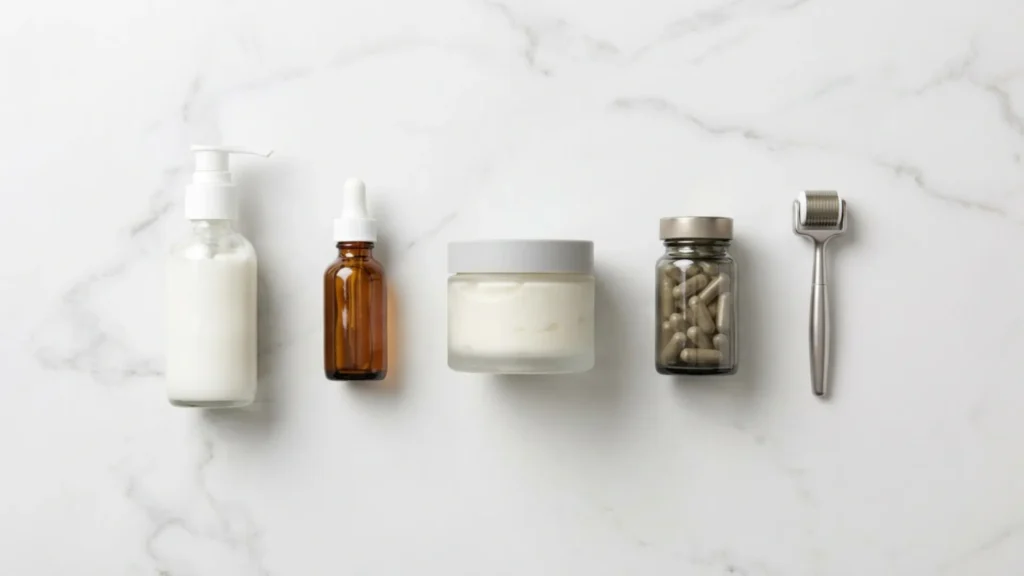
Stand in the hair-care aisle for five minutes and you’ll see it: shelves of hair growth products promising the same thing in a dozen different bottles, from oils and serums to pills and prescription foams. Almost none of them tell you which problem they’re actually solving, so most people end up buying based on packaging and hoping for the best.
Quick answer: the fastest way to choose hair growth products that actually help is to figure out what’s slowing your hair down first, breakage, general shedding, pattern thinning, or a diet gap, then pick the product category built for that specific cause. A mask won’t fix hormonal thinning, and a prescription treatment is overkill for split ends. Match the tool to the problem and skip everything else.
Most people have never sorted their hair concern into one of these categories, which is exactly why the aisle feels so overwhelming.
Key Takeaways
- Sort your problem before you sort your products: breakage, shedding, pattern thinning, and diet gaps each need a different category of hair growth product.
- A hair mask can’t make your follicles produce hair faster; what a good mask does is cut breakage so length survives instead of snapping off.
- Iron deficiency and other nutrient gaps can slow hair down, but supplements only help if a blood test confirms you’re actually deficient.
- Minoxidil is the one product on this list backed by real evidence for pattern thinning, but it’s a medication that needs months of consistent use.
- Sudden, patchy, or rapidly worsening hair loss is a job for a dermatologist, not a product aisle.
The Four Real Causes Behind “Slow” Hair
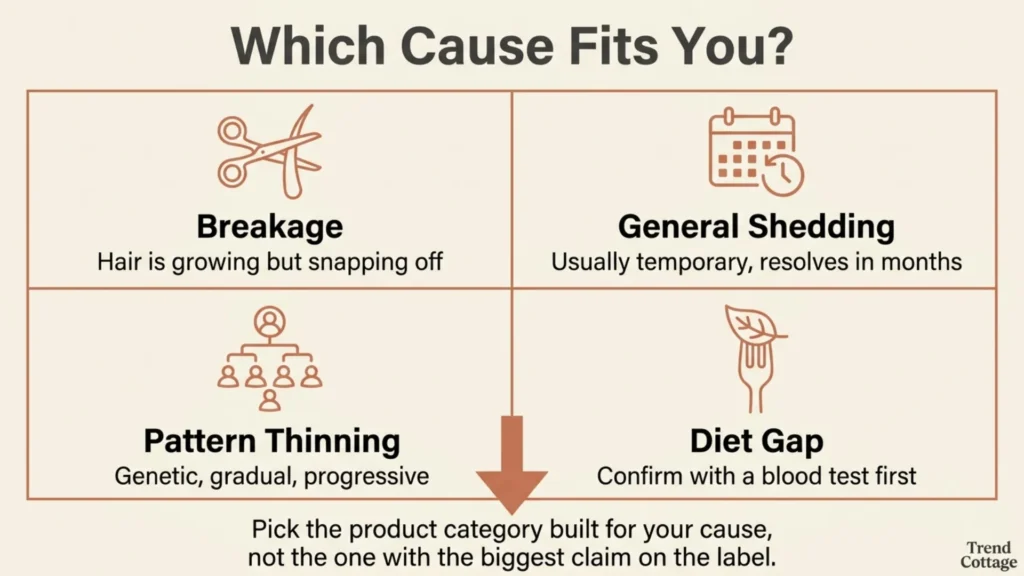
Almost every hair growth product on the market is built to address one of four underlying causes, and they rarely overlap. The first is breakage: hair that’s growing fine but snapping off before it gets long, usually from heat, chemical treatment, or rough handling. The second is general shedding, a temporary hair loss tied to a stressor such as illness, stress, or a big life change. It’s usually reversible on its own within a few months once the trigger passes.
The third cause is pattern thinning, a gradual, genetically driven miniaturization of hair follicles that runs in families and affects men and women differently. The fourth is a diet or nutrient gap, where the body simply doesn’t have the raw materials, iron, protein, certain vitamins, to build hair at full capacity.
Each of these needs a different kind of product, and that’s the sorting step most shopping guides skip entirely.
Products for Breakage and Damage

Breakage is the easiest category to fix and the one most hair growth products quietly target, even when the label says otherwise. Rinse-out masks with proteins and fatty acids patch up a damaged cuticle so it stops catching and snapping. Leave-in treatments do a lighter version of the same job for everyday wear, protecting hair from heat and friction between washes.
Look for hydrolyzed keratin or silk protein if your hair is chemically treated or heat-styled often, and richer oils like argan or jojoba if it’s naturally dry or coarse. These products won’t touch a hormonal or nutritional cause of thinning, but if breakage is your actual issue, they’ll show results faster than almost anything else on this list.
Also Visit : Hair Growth Tips That Actually Change Your Rate
Products for General Shedding and Scalp Circulation
General shedding and mild thinning are where scalp-focused products come in: growth serums, scalp massagers, and at-home microneedling or derma-rolling tools. The idea behind most of these is improving blood flow to the follicle, which may create a slightly better environment for hair that’s already trying to grow.
The evidence for at-home devices is thinner than the marketing suggests, and results vary a lot between people. They’re a reasonable low-risk addition to a routine, but they’re not a substitute for treating an underlying cause like stress, illness, or a nutrient deficiency if one is actually present.
Minoxidil and Other Products for Pattern Thinning
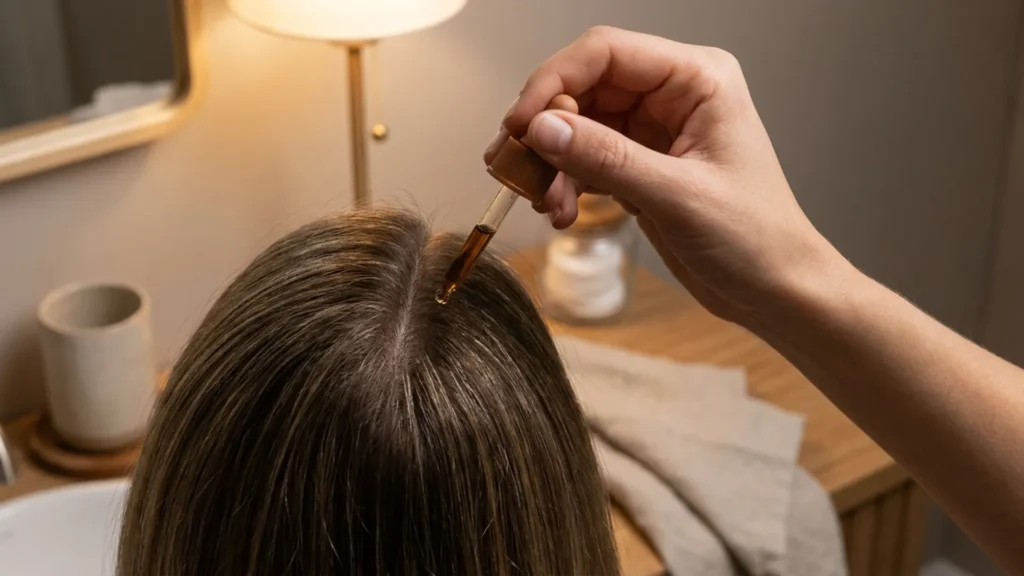
Minoxidil is the one hair growth product with real backing behind it, and it’s worth treating differently from everything else on a shelf, because it’s an actual medication rather than a cosmetic formula. It’s used to stimulate hair growth in adult men and women with pattern thinning, and it needs to be applied consistently, usually twice a day, for months before results show up.
It doesn’t work for every kind of hair loss. It won’t help receding hairlines in most cases, and it does nothing for scarring alopecia or hair loss caused by tight hairstyles. Side effects can include scalp irritation and a temporary increase in shedding when you first start, which surprises people who expect it to only add hair. Anyone pregnant, breastfeeding, or managing a heart condition should talk to a doctor before starting it, since it was originally developed as a blood pressure medication.
Also Visit : How to Pick a Hair Mask for Growth That Works
Do Supplements Belong on This List?
Supplements are the most heavily marketed and least individually useful category on this whole list, mostly because most people taking them aren’t actually deficient in anything. Biotin is the most common ingredient, and true biotin deficiency is rare in people eating a normal diet, which limits how much a supplement can realistically add.
Iron is a more useful one to know about. Low iron can genuinely contribute to hair thinning, particularly in women, and it’s reversible once treated. The only way to know if this applies to you is a blood test showing your ferritin level, not a guess based on symptoms. Buying an iron supplement without confirming a deficiency first risks overloading your system instead of helping your hair.
How Long Before You’ll Actually See a Difference

Results show up on completely different timelines depending on the category, which is where a lot of frustration comes from. Breakage-focused products like masks and leave-ins tend to show a difference within four to six weeks, since you’re only reversing damage that’s already visible.
| Product category | Best for | Realistic timeline |
|---|---|---|
| Masks and leave-in treatments | Breakage and damaged ends | Four to six weeks |
| Scalp serums and derma-rolling tools | General shedding and circulation support | Eight to twelve weeks, results vary widely |
| Topical minoxidil | Genetically driven pattern thinning | Twelve to twenty-four weeks for a noticeable change |
| Iron or nutrient supplements | A confirmed, blood-test-verified deficiency | Three to six months |
Scalp treatments and minoxidil work much slower, because they’re influencing a growth cycle that runs in months, not weeks. Most people using minoxidil consistently see initial changes around twelve weeks and a fuller picture closer to four to six months. Stopping early, which is extremely common, is the single biggest reason these products get written off as not working.
When to See a Professional Instead
A product-based routine has limits, and it’s worth knowing where they are. Hair that’s falling out in clumps, leaving round bald patches, or thinning unusually fast over a few weeks isn’t something any hair growth product is designed to fix on its own.
Persistent or worsening hair loss is worth seeing a GP about before spending more on products, since ruling out a medical cause changes what actually helps. A dermatologist can also confirm whether you’re dealing with pattern thinning, telogen effluvium, or something else entirely, which saves months of guessing with the wrong product category.
Also Visit : Does Hair Growth Serum Really Work, or Is It Marketing?
Frequently Asked Questions
Do hair growth products actually work?
Some do, depending on what’s causing your hair concern in the first place. Products aimed at breakage and damage tend to work reliably because the problem is mechanical. Products aimed at pattern thinning or shedding work less consistently, since they’re competing with genetics or an underlying health factor.
How long do hair growth products take to show results?
It depends entirely on the category. Masks and leave-in treatments can show a difference within a month. Minoxidil typically needs twelve weeks before you see anything and several months for a full picture. Supplements, if a deficiency is actually present, usually take three months or longer.
Are hair growth products worth the money?
It depends on whether you’ve matched the product to your actual cause. A well-matched mask or scalp treatment is usually worth it for the problem it targets. An expensive serum bought without identifying the underlying cause first is the most common way people waste money in this category.
Can you use more than one hair growth product at a time?
Often, yes. A leave-in for breakage and a scalp serum for circulation target different problems and can be used together. Minoxidil and a mask can also be combined, though it’s worth introducing new products one at a time so you can tell what’s actually working.
Do natural hair growth products work as well as minoxidil?
Not for pattern thinning specifically. Natural oils and scalp treatments can genuinely help with breakage, dryness, and scalp comfort, but minoxidil is the only widely available option with strong evidence behind it for genetically driven thinning.
What’s the biggest mistake people make when choosing hair growth products?
Buying based on the word growth on the label instead of identifying the actual cause first. A product built for breakage won’t touch hormonal thinning, and a product built for pattern thinning is unnecessary and expensive if breakage was the real issue all along.
This article is for general information only and isn’t medical advice. Minoxidil is a medication; talk to a doctor before starting it, especially if you’re pregnant, breastfeeding, or managing a heart condition. For sudden, patchy, or rapidly worsening hair loss, see a dermatologist.
Written by Anna Anderson for Trend Cottage.