Which Hair Growth Methods Are Worth Your Time?

There’s a persistent idea that hair growth methods work like a diet: pile on enough of them and something is bound to stick. Try the serum, add the supplement, book the laser cap, and hope one of the five combines into results. That’s not how any of this works. A handful of methods have real evidence behind them. Most of what shows up on a typical list doesn’t.
Quick answer: only two widely available hair growth methods have solid clinical trial support behind them for actual regrowth, minoxidil and low-level laser therapy. A few others, like scalp massage and rosemary oil, have real published research, just smaller and less dramatic. Everything else on the usual list, biotin gummies, cold rinses, “100 brushstrokes,” mostly helps you keep the hair you already have rather than grow new hair, or does nothing measurable at all.
So which ones are actually worth your time? This breaks each method down by how much real evidence stands behind it, not by how often it shows up in a Pinterest caption.
Hair Growth Methods That Actually Move the Needle
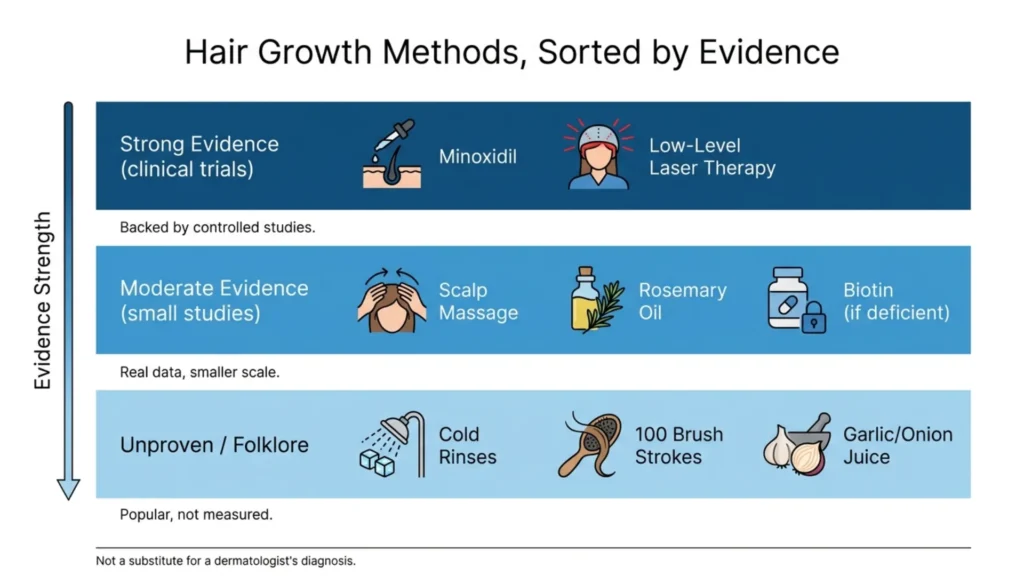
Sort every hair growth method you’ve heard of into three groups and the picture gets a lot clearer. The first group has real clinical trials behind it, with measured hair counts and control groups. The second has genuine research, just smaller studies or less dramatic results. The third is popular because it’s cheap and easy to try, not because anyone has measured what it does.
That sorting matters more than most people think. A method with weak evidence isn’t necessarily useless, it’s just not going to outperform one with strong evidence, no matter how many times it shows up in your feed. Knowing which tier something sits in helps you set the right expectations before you spend three months and forty dollars finding out the hard way.
| Method | Evidence tier | Typical timeline |
|---|---|---|
| Minoxidil | Strong (clinical trials) | 4–6 months |
| Low-level laser therapy | Strong (clinical trials) | 4–6 months |
| Scalp massage | Moderate (small studies) | 12–24 weeks |
| Rosemary oil | Moderate (one comparative trial) | 12–24 weeks |
| Biotin (if deficient) | Moderate, deficiency-specific | Varies |
| Cold rinses, brushing, garlic juice | Unproven | Not established |
The Ones Backed by Real Clinical Research
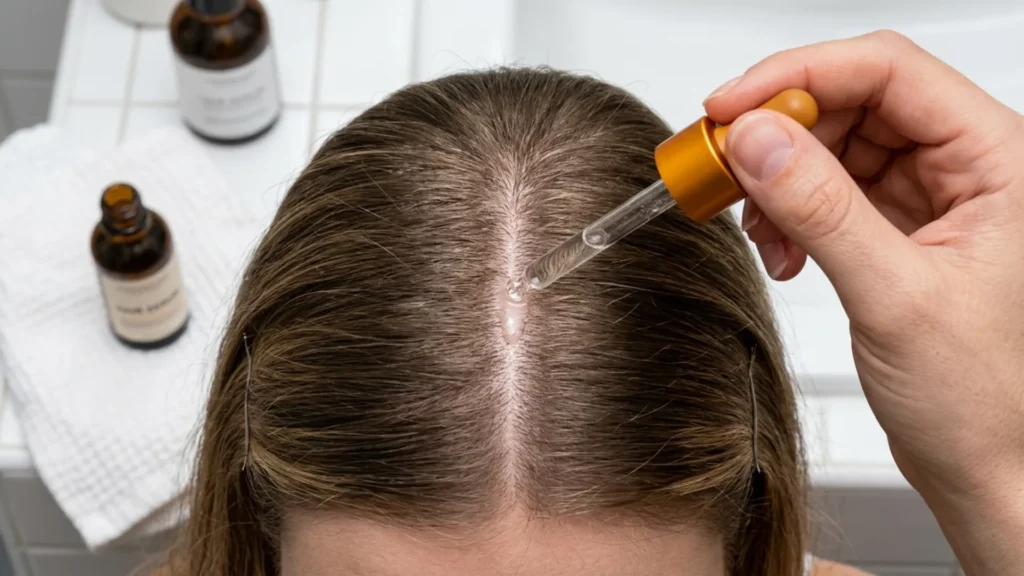
Minoxidil is the one most people already know by its brand name, Rogaine. It’s applied to the scalp once or twice a day, and it works by extending the growth phase of the hair cycle. The catch: it doesn’t work for everyone, results usually take four to six months to show, and hair loss picks back up if you stop using it. The American Academy of Dermatology’s guide to hair loss treatment lists it as one of the few at-home options with consistent supporting research.
Low-level laser therapy, delivered through combs, caps, or helmets, is the other method with real trial data. It’s thought to work by stimulating cellular activity in the follicle, though the exact mechanism is still debated. Results tend to be modest and slow, closer to thicker-looking hair over several months than a dramatic before-and-after.
Microneedling paired with minoxidil shows better results in small trials than minoxidil alone, likely because tiny punctures help the treatment absorb and may trigger a mild wound-healing response that supports growth. It’s not a method to try alone though; it’s an add-on to something that already works.
Also Visit : Biotin Hair Growth: What It Actually Does to Your Hair
Worth Trying — the Evidence Is Real, Just Modest
Scalp massage and rosemary oil are the two hair growth methods most likely to get dismissed as folklore, but scalp massage actually has data behind it. A study using a standardized massage device found that four minutes of daily scalp massage over 24 weeks increased hair thickness in a small group of men, likely by putting mechanical stress on the cells at the base of the follicle. Four minutes a day, with your fingertips and firm pressure, costs nothing and carries essentially no risk.
Rosemary oil has picked up a reputation as a natural stand-in for minoxidil, based mostly on one small trial that found it performed similarly over six months. That’s a real, published result, but it’s one study with a hundred participants, not a mountain of confirming research. Diluted in a carrier oil and massaged into the scalp, it’s low-risk to try. Just don’t expect it to outperform an actual medication because one study said so.
Platelet-rich plasma injections, where a concentrate of your own blood is injected into the scalp, also show promising small-trial results for some types of hair loss. It’s a procedure you’d get from a dermatologist though, not something you do at home, and the cost and time commitment are real considerations.
Growth vs. Breakage: The Mix-Up That Wastes Everyone’s Time
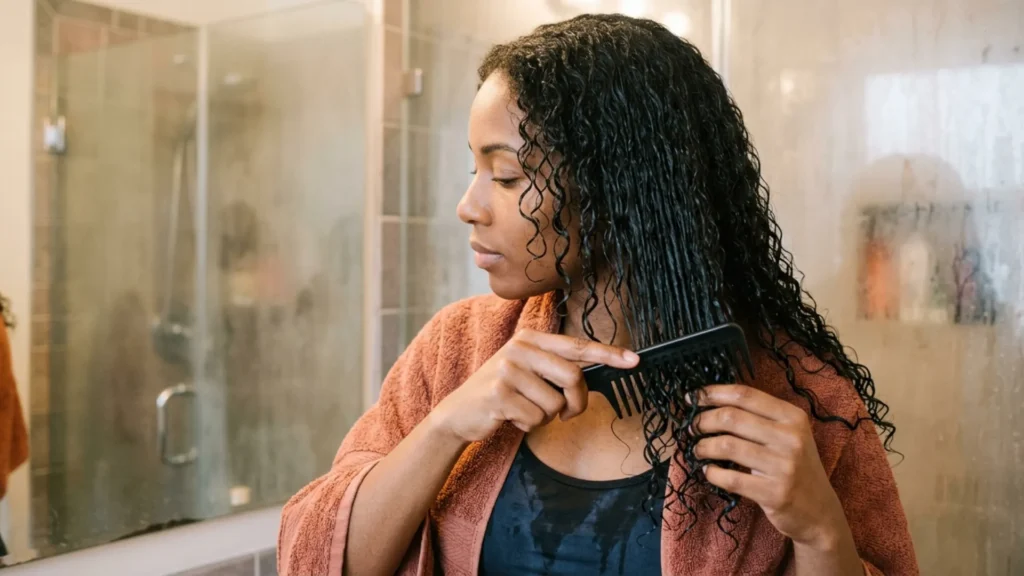
Here’s where most hair growth advice quietly changes the subject. Protein treatments, deep conditioning, silk pillowcases, gentle detangling, trims to remove split ends, none of these grow hair faster. What they do is stop the hair you already have from snapping off before it reaches the length you want.
That distinction sounds small, but it changes everything about how you should spend your time and money. If your hair grows at a normal rate but keeps breaking at the same length, no method on this page will fix that. You need to stop the breakage instead, through gentler handling, less heat, and fewer tight styles that put tension on the hair shaft.
If your hair is genuinely growing slower, thinner, or falling out at the root, breakage-focused care won’t touch that either. It’s a different problem with a different set of solutions, the ones covered in the two sections above. Figuring out which situation you’re actually in, before you buy anything, saves months of using the wrong fix for the wrong problem.
A simple way to tell the difference: check where the hair is coming from. Hair falling out with a small white bulb at the root points to a growth-cycle issue. Hair snapping mid-strand, leaving short frizzy pieces, points to breakage.
Also Visit : 4c Hair Growth: Why It’s Really About Retention
Popular but Unproven
Biotin supplements are everywhere in the hair growth conversation, but the research backing them applies almost entirely to people with an actual biotin deficiency, which is rare. If your levels are already normal, taking more doesn’t appear to speed anything up. It’s not dangerous in reasonable doses, it’s just unlikely to do what the packaging implies.
Cold water rinses supposedly “seal the cuticle” and boost shine, but there’s no evidence they affect how fast hair grows. Cold water can make hair feel smoother temporarily, and that’s a real effect, just not a growth one.
Onion juice and garlic-based scalp treatments show up constantly in home-remedy lists, usually citing one small older study on onion juice and alopecia areata specifically, not general thinning. The smell alone stops most people before the six-week mark anyway.
The “100 brush strokes a day” advice is a holdover from a much older era of hair care and has nothing to do with growth. Over-brushing, if anything, adds unnecessary friction and can contribute to the breakage covered above.
How Long Before You Actually See Results

Hair grows in cycles, and that’s the main reason nothing on this page works overnight. A single follicle spends two to six years actively growing, then rests, then sheds, then starts over. Any hair growth method meant to influence that cycle needs to be in place through at least one full growth phase to show up in the mirror.
In practice, that means giving minoxidil or laser therapy a genuine four to six months before deciding it isn’t working. Scalp massage and rosemary oil operate on a similar timeline, closer to twelve to twenty-four weeks in the studies that measured them. Anything promising visible results in two weeks is selling a feeling, not a follicle change.
Hair also grows at roughly half an inch a month on average, regardless of what you’re doing to it, so length gains will always look gradual. The methods above affect thickness, density, and whether hairs stay in the growth phase longer, not the raw speed at which a single strand gets longer.
Also Visit : How to Track Your Hair Growth Journey Without Guessing
When It’s Time to See a Dermatologist
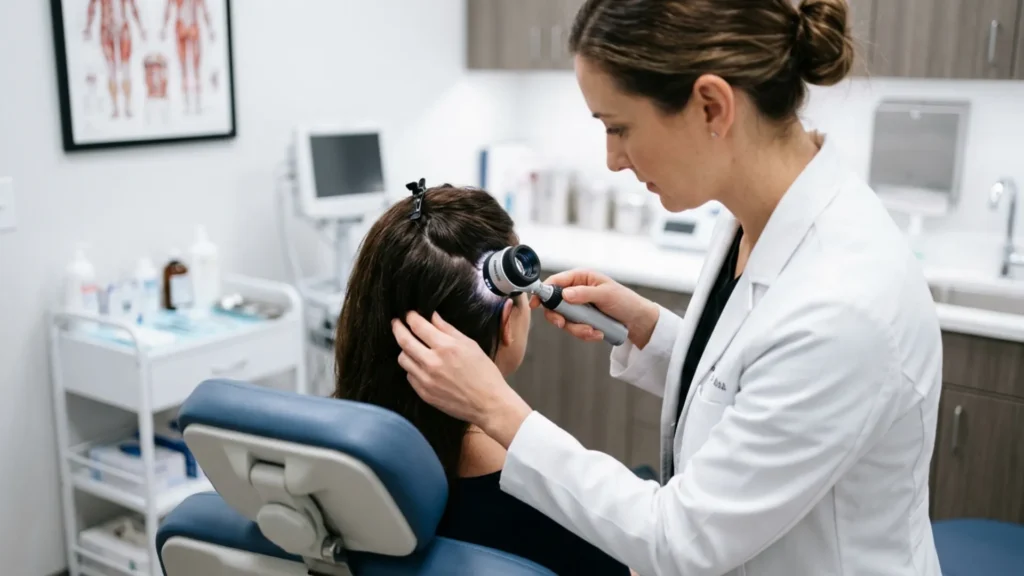
None of the methods above are a substitute for a diagnosis. Hair loss has a long list of possible causes, from genetics to thyroid issues to iron deficiency to certain medications, and the underlying cause determines which treatment actually has a chance of working. Trying rosemary oil for six months when the real issue is a thyroid condition just delays the fix.
See a dermatologist if you notice sudden or patchy bald spots, hair coming out in clumps rather than gradually thinning, scalp pain, redness, or itching alongside the hair loss, or shedding that’s clearly accelerating rather than holding steady. A proper diagnosis takes a few minutes of scalp examination and sometimes bloodwork, and it saves you from guessing with over-the-counter methods for months.
Frequently Asked Questions
What actually stimulates hair growth?
Anything that extends the active growth phase of the hair cycle or improves blood flow and cell activity at the follicle. Minoxidil and low-level laser therapy do this with the strongest evidence; scalp massage and rosemary oil do it with weaker but real support.
Can biotin help you grow hair faster?
Only if you’re actually deficient, which most people with a typical diet aren’t. Without a deficiency, extra biotin doesn’t appear to change growth speed.
Does trimming your hair make it grow faster?
No. Hair grows from the root, not the ends, so cutting it has no effect on growth speed. Regular trims do prevent split ends from traveling up the strand and causing breakage.
Is hair loss from stress permanent?
Usually not. Stress-related shedding, sometimes called telogen effluvium, typically resolves within several months once the stressor passes, though it can take a full growth cycle to look fully recovered.
Can you regrow hair that’s already thinning?
Sometimes, depending on the cause and how long the follicle has been miniaturizing. Early intervention with an evidence-backed method gives you a better shot than waiting, which is part of why a diagnosis matters before thinning gets worse.
Key Takeaways
- Only minoxidil and low-level laser therapy have strong clinical support among hair growth methods for actual regrowth.
- Scalp massage and rosemary oil have real, published research behind them, just smaller and more modest than people assume.
- Most everyday hair care prevents breakage rather than growing hair faster, and mixing up the two wastes time.
- Give any method a full growth cycle, roughly four to six months, before judging whether it’s working.
- Sudden, patchy, or rapidly worsening hair loss needs a dermatologist’s diagnosis, not another product.
This article is for general information only and isn’t medical advice. For persistent hair loss, scalp pain, or sudden shedding, see a dermatologist or trichologist.
Written by Anna Anderson for Trend Cottage.