20 Lemonade Braids That Grow Out Without Losing Shape
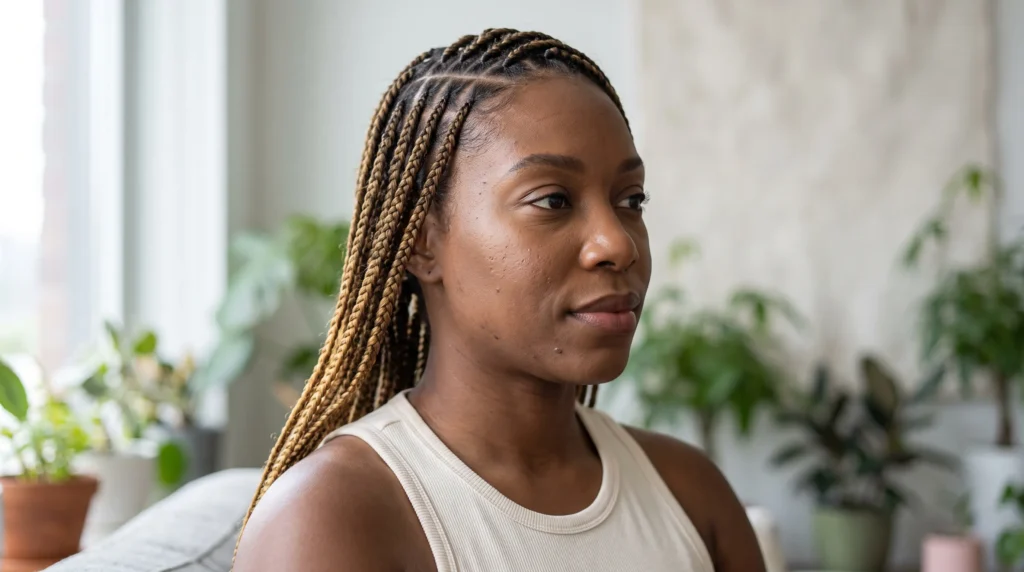
Lemonade braids have outlasted nearly every braid trend of the last decade, and the reason has less to do with the original Beyoncé moment than with how they age. Because the parts run diagonally across the head, new growth lifts unevenly and reads as texture rather than as a fuzzy line. That single structural detail is why some sets still look intentional in week five. This guide walks through twenty variations, from micro parts to jumbo knotless sets, and each one comes with the details that actually decide whether you keep the style in: who the pattern suits, honest maintenance windows, realistic daily styling minutes, face-shape fit, and a tip specific to that pattern rather than braids in general.
Quick Picks at a Glance
| Style | Best For | Maintenance |
|---|---|---|
| Classic Side-Swept Feed-In | Most hair densities | Medium, 5 weeks |
| Jumbo Waist-Length | Thick, strong hair | Low, 4 weeks |
| Micro-Parted Set | Fine or sparse hair | High, 6 weeks |
| Curly Loose Ends | Softer, rounder look | Medium, 4 weeks |
| Bob-Length Set | Short-braid first-timers | Low, 5 weeks |
| Knotless Tapered Ends | Tender scalps, fine edges | Medium, 6 weeks |
20 Lemonade Braids Ideas Worth Booking
1. Classic Side-Swept Feed-In Lemonade Braids
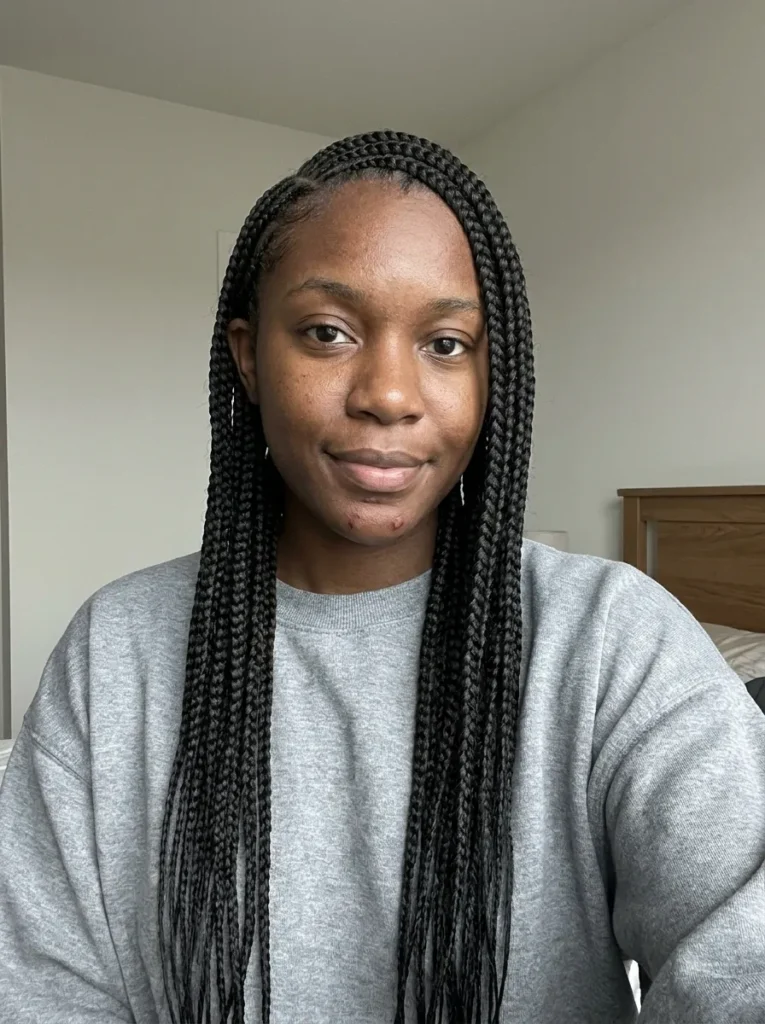
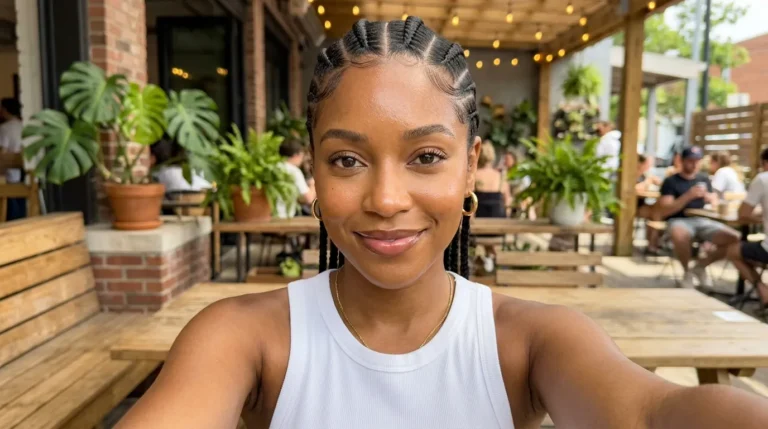
Every braid sits on a clean part that angles from one temple across the crown and sweeps the full set to a single side. Feed-in sections begin thin at the hairline and thicken gradually, so each braid looks like it grows from the scalp instead of sitting on top of it.
Ask for gradual feed-ins with soft tension at the hairline, especially around the temples where most breakage starts. Because the parts run diagonally, new growth lifts across the pattern rather than in one obvious line, which buys you an extra week or two before the set reads as grown out.
- Best For: Medium-density natural hair of any curl pattern
- Maintenance: Medium — five weeks, edges refreshed weekly
- Styling Time: 2 minutes daily
- Face-Shape Fit: Universally flattering, softest on square jawlines
- Pro Tip: Have the first braid at the part line braided slightly tighter than the rest so the diagonal stays crisp as the set relaxes.
2. Jumbo Lemonade Braids With Waist-Length Ends
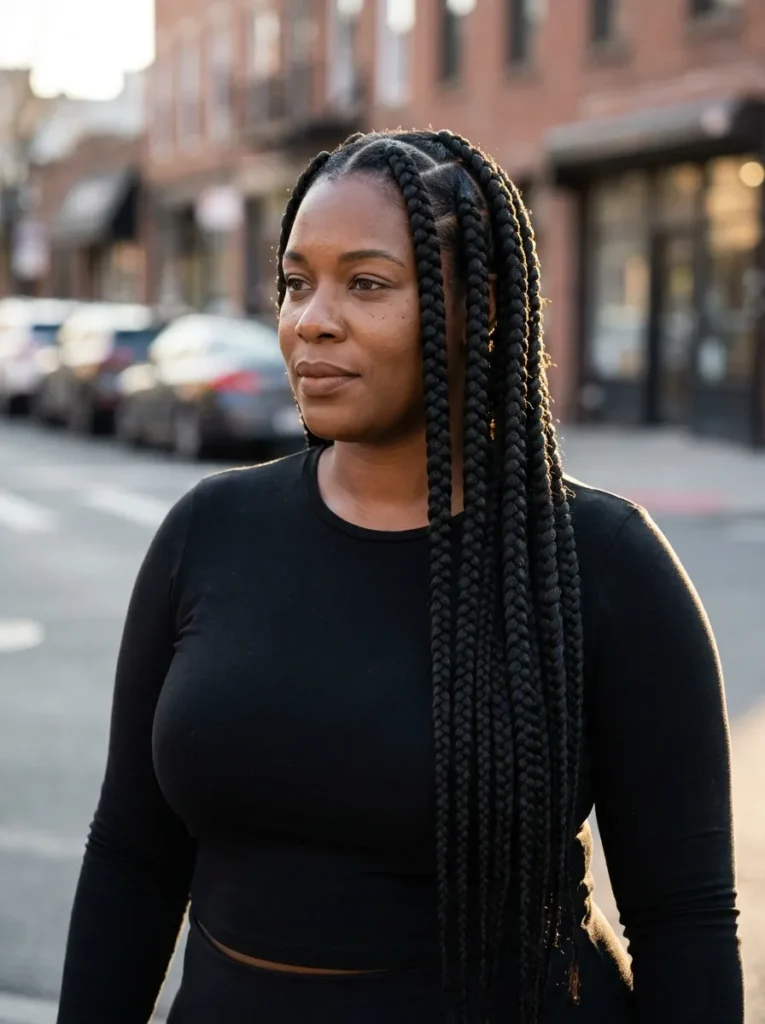
Six to eight thick braids replace the usual ten or twelve, with wide parts between them and heavy extension hair carrying the length down past the waist. The scalp shows generously between rows, which is part of the look rather than a flaw.
Fewer braids means a faster install, often under three hours, but the weight sits on fewer anchor points. If your edges are fragile, ask the braider to start the front two rows with your own hair only and feed extensions in after the second pass to spread the pull.
- Best For: Thick, strong hair with a resilient hairline
- Maintenance: Low — four weeks maximum wear
- Styling Time: 1 minute daily
- Face-Shape Fit: Balances round and heart shapes with vertical length
- Pro Tip: Sleep with the length gathered loosely over the pillow, not under your shoulder, or the weight drags on the crown rows overnight.
3. Micro-Parted Lemonade Braids
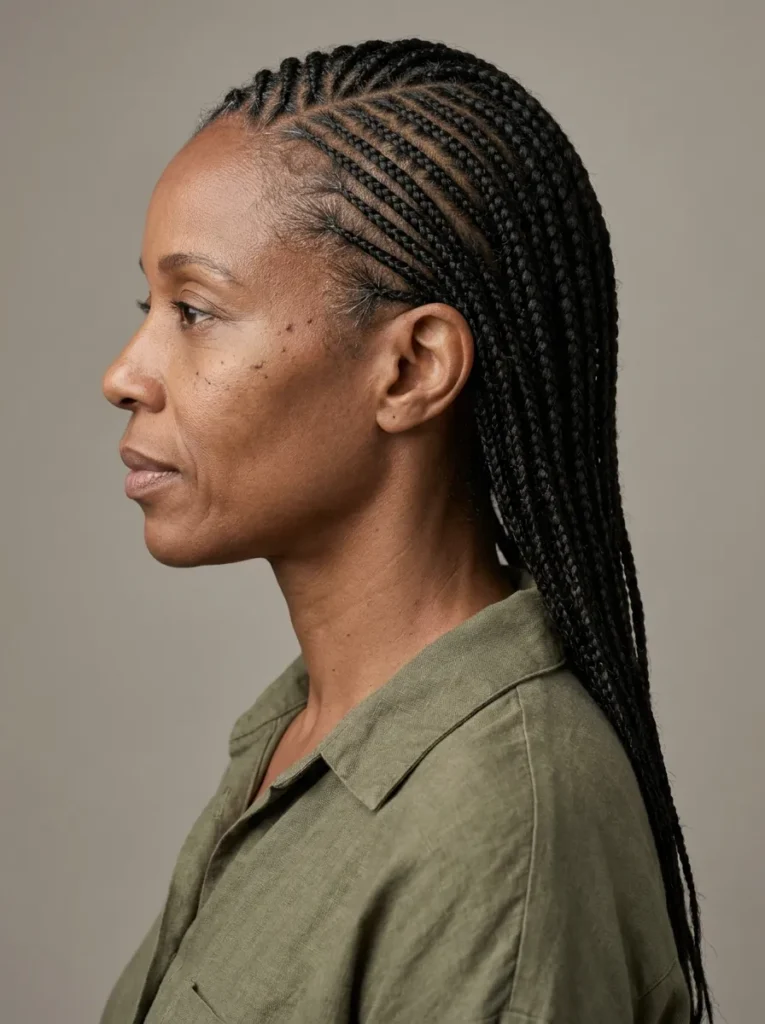
Twenty or more slim braids run in tight diagonal rows, each barely a finger’s width apart. The parting grid becomes the design, creating a dense, almost woven surface across the scalp that catches light differently than chunkier sets do.
This is the version that suits fine or thinning hair, because the small sections distribute tension across many points instead of a few. Expect a long appointment, five to seven hours, and plan a low-activity day afterwards while the scalp settles.
- Best For: Fine, low-density, or postpartum-thinning hair
- Maintenance: High — six weeks, weekly scalp oiling
- Styling Time: 3 minutes daily
- Face-Shape Fit: Suits long and oval faces without adding width
- Pro Tip: Use a pointed applicator bottle rather than fingers for scalp oil, since the narrow parts close up fast and trap product on the braid instead.
4. Lemonade Braids With Curly Loose Ends
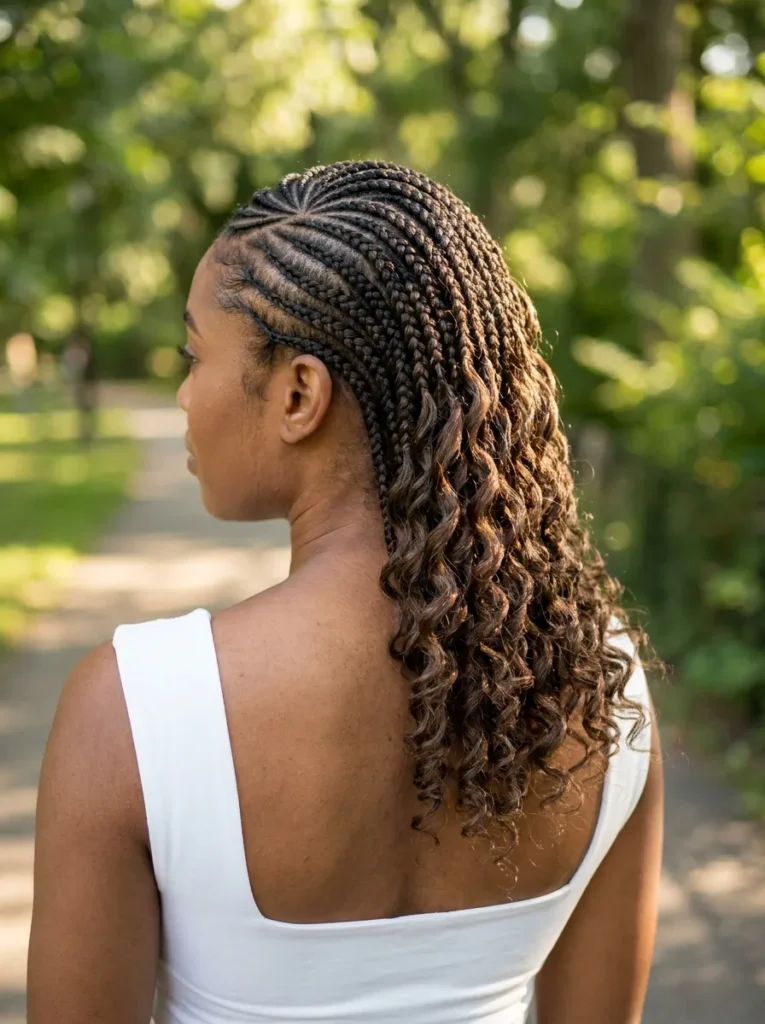
Each braid stops around the shoulder and releases into loose spiral curls, usually water-wave or deep-wave extension hair. The top half keeps the sharp cornrow structure while the bottom half breaks into volume and movement.
Unlike a fully braided set, the curled portion needs actual upkeep: a light leave-in and finger-separation every morning, plus a satin bonnet at night. Ends tangle where the braid meets the curl, so a small amount of mousse at that junction keeps the transition clean.
- Best For: Anyone wanting braids with a softer silhouette
- Maintenance: Medium — four weeks before curls dull
- Styling Time: 5 minutes daily
- Face-Shape Fit: Curls widen a narrow or angular jaw pleasantly
- Pro Tip: Dip the curled ends in warm water for ten seconds to reset the pattern instead of re-wetting the braided sections, which take hours to dry.
5. Half-Up Lemonade Braids Into a High Bun
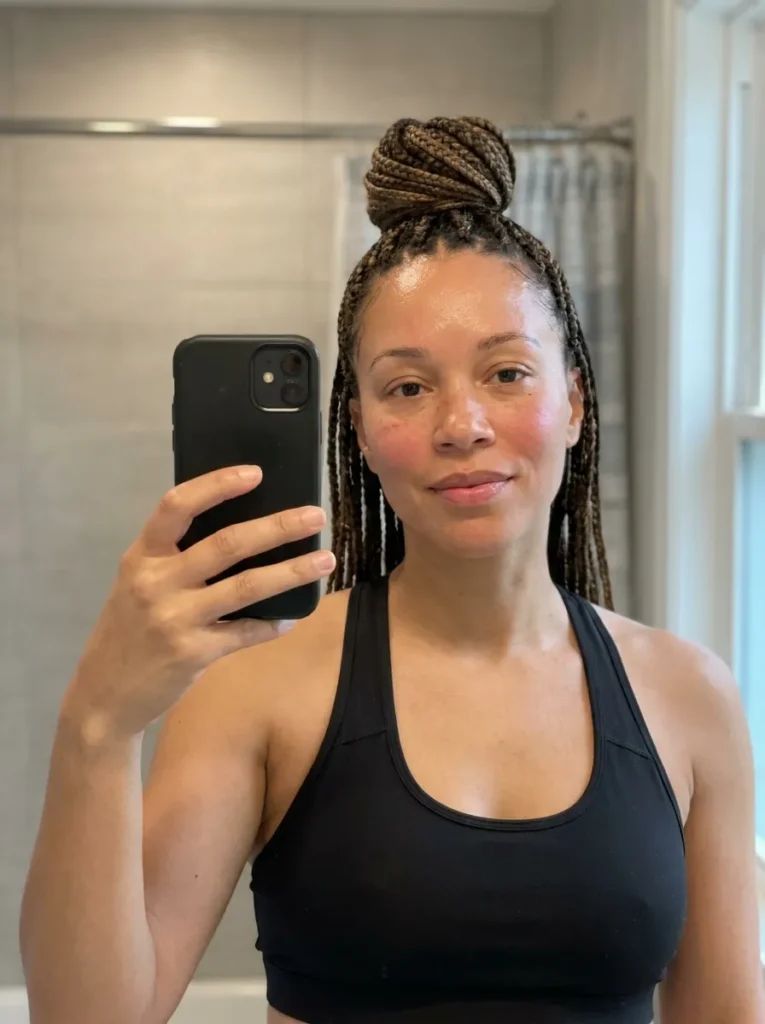
The front and crown rows sweep diagonally as usual, then the upper half gathers into a sculpted bun at the top of the head while the remaining braids hang loose down the back and side.
This is the practical shape for gym sessions and hot afternoons, since the bulk lifts off the neck without disturbing the parting. Secure the bun with a spiral hair tie rather than a coated elastic, which grips braid extensions and snaps them at the base over time.
- Best For: Active routines and long braiding lengths
- Maintenance: Medium — five weeks, bun rewrapped daily
- Styling Time: 4 minutes daily
- Face-Shape Fit: Adds height, best on round and square faces
- Pro Tip: Alternate the bun position slightly left and right week to week so the same crown braids are not pulled upward every single day.
6. Beaded Lemonade Braids With Metal Cuffs

Gold or silver cuffs are clamped at staggered heights along the braids, with a few wooden or glass beads threaded near the ends. The metal catches light as the braids move, drawing the eye along the diagonal sweep.
Stagger the cuffs at different heights rather than lining them up, which looks more considered and keeps the weight spread out. Metal cuffs can snag on knitwear and seatbelts, so many people cluster them on the outer braids only and leave the underlayer plain.
- Best For: Medium to long braids on relaxed or natural hair
- Maintenance: Medium — five weeks, cuffs re-tightened as needed
- Styling Time: 2 minutes daily
- Face-Shape Fit: Neutral, though low-placed cuffs elongate round faces
- Pro Tip: Squeeze each cuff with flat-nose pliers over a folded tissue so the metal grips without scoring a mark into the finish.
Also Visit : 20 Small Box Braids Looks That Are Insanely Pretty
7. Zig-Zag Parted Lemonade Braids
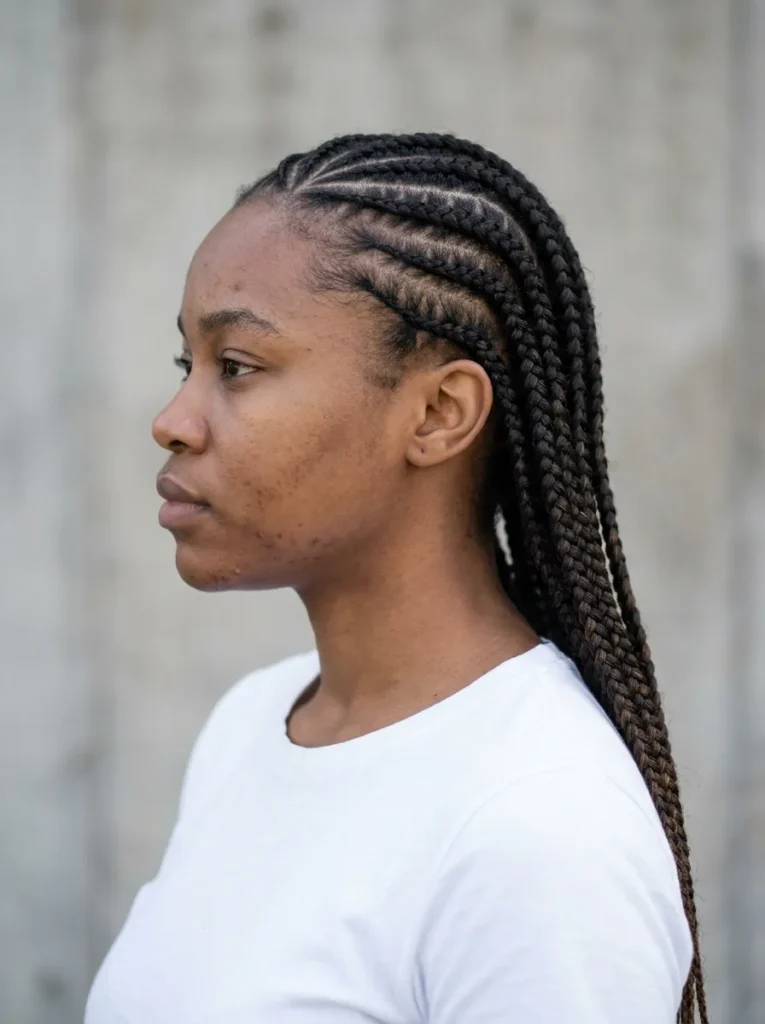
Instead of straight diagonal lines, the parts travel in sharp zig-zags across the scalp before the braids resolve into the usual side sweep. The angular pattern is most visible across the crown, where the sections are widest.
Zig-zag parts are forgiving as they grow, since the eye reads the angles rather than the regrowth. Bring a reference photo and ask specifically for a mirrored zig-zag on both sides, otherwise the two halves can end up on different scales.
- Best For: Dense hair that shows crisp parting lines
- Maintenance: Low — six weeks, very forgiving regrowth
- Styling Time: 2 minutes daily
- Face-Shape Fit: Sharp angles counterbalance very round faces
- Pro Tip: Skip heavy grease along the zig-zag lines, as build-up settles in the corners of each angle and dulls the pattern within days.
8. Heart-Shaped Crown Part Lemonade Braids
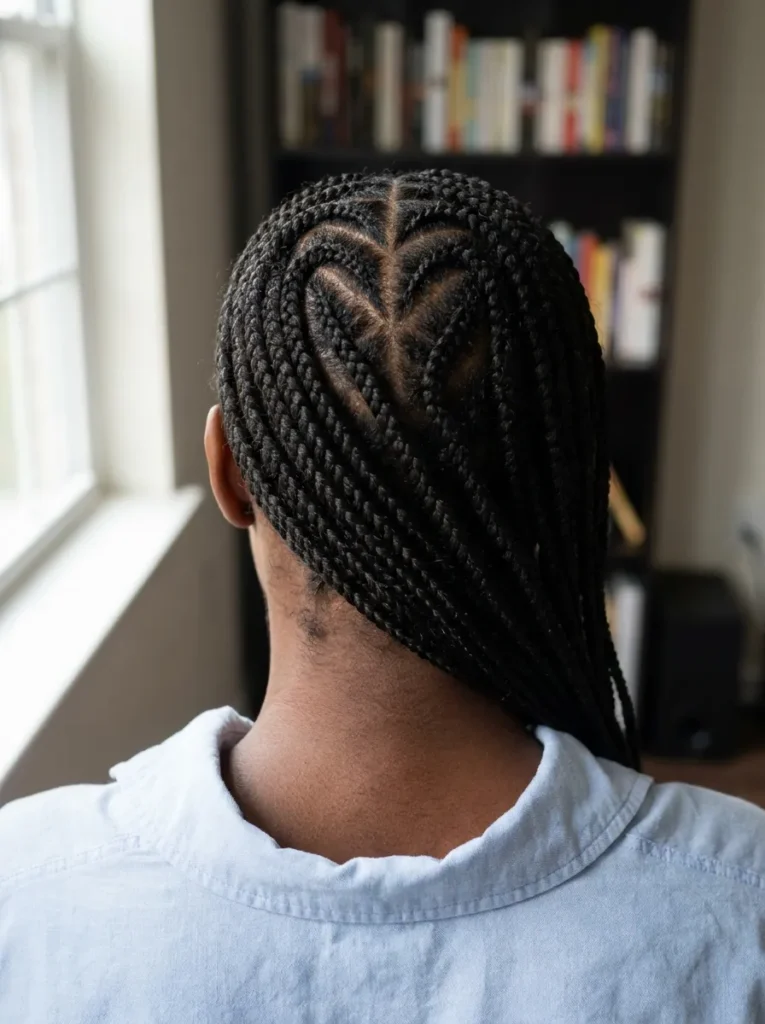
A heart outline is carved into the parting at the back of the crown, formed by two curved rows meeting at a point. The rest of the braids continue in standard lemonade fashion, swept to one side below it.
The heart only shows when hair is pulled forward or worn to one side, which makes it a nice detail rather than a statement. Curved parts require a braider comfortable with freehand sectioning, so check portfolio photos for shaped designs before booking.
- Best For: Long braids worn swept over one shoulder
- Maintenance: Medium — five weeks before the shape blurs
- Styling Time: 2 minutes daily
- Face-Shape Fit: Works on all shapes, as the detail sits behind
- Pro Tip: Photograph the back on install day, then use that photo when you go for a touch-up so the curve is recut on the same lines.
9. Honey Blonde Ombre Lemonade Braids
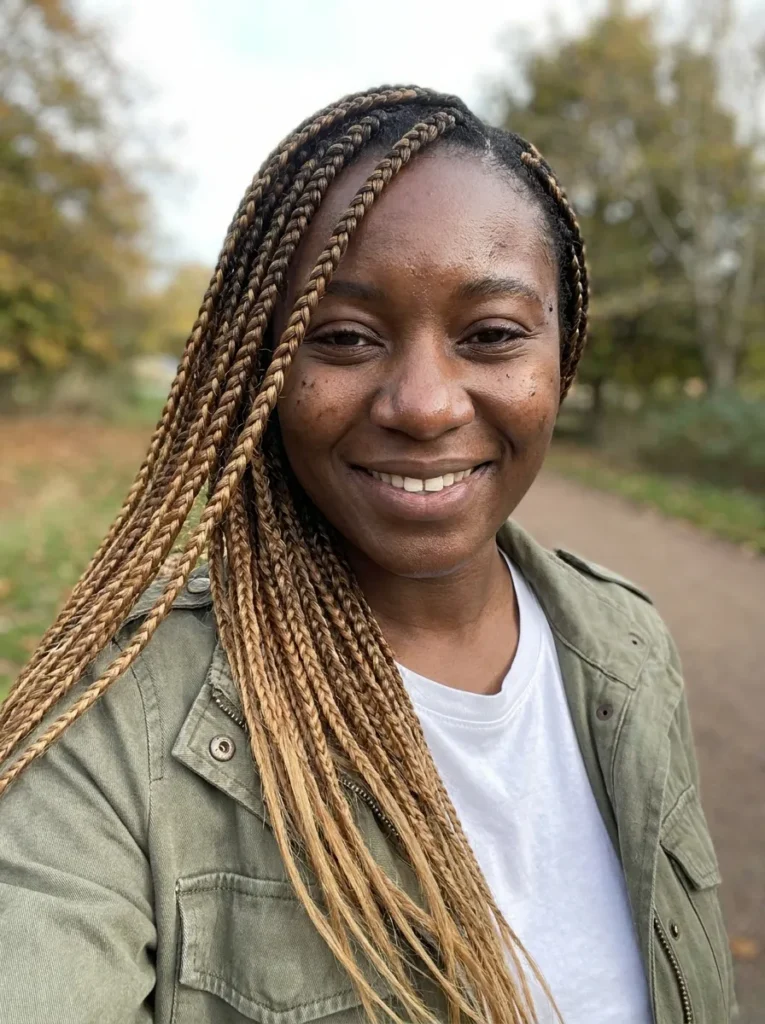
Roots stay dark for the first several inches, then the braids shift through caramel into a warm honey blonde by the ends. The gradient reads strongest on the outer braids where light hits the sweep directly.
Because the colour lives in the extension hair, none of it touches your natural strands. Pre-wash the blonde bundles in cool water with a splash of apple cider vinegar before the appointment, since lighter tones tend to carry more dye residue than dark ones.
- Best For: Warm and olive undertones, medium to deep skin
- Maintenance: Medium — five weeks, blonde ends dull sooner
- Styling Time: 2 minutes daily
- Face-Shape Fit: Lighter ends widen the lower half of long faces
- Pro Tip: Keep the blonde section off your shoulders on sunscreen days, since white-cast SPF transfers onto pale extension hair and grey-casts it.
10. Burgundy Lemonade Braids With Copper Ends

Deep wine-red braids run the full length with a copper flash appearing only in the last few inches. Two adjacent warm tones sit close enough to read as depth rather than as a two-tone contrast.
Red-family extension hair bleeds more than any other shade, so wash the bundles until the water runs clear and avoid pale collars for the first week. If you sweat heavily, a satin scarf around the neckline during workouts saves a few shirts.
- Best For: Cool undertones and anyone avoiding full blonde
- Maintenance: Medium — five weeks, colour fades gradually
- Styling Time: 2 minutes daily
- Face-Shape Fit: Rich tones flatter diamond and heart shapes
- Pro Tip: Ask for the copper to begin below the collarbone, because a higher transition sits near the jaw and can wash out the face.
11. Lemonade Braids With a Swooping Face-Frame Braid
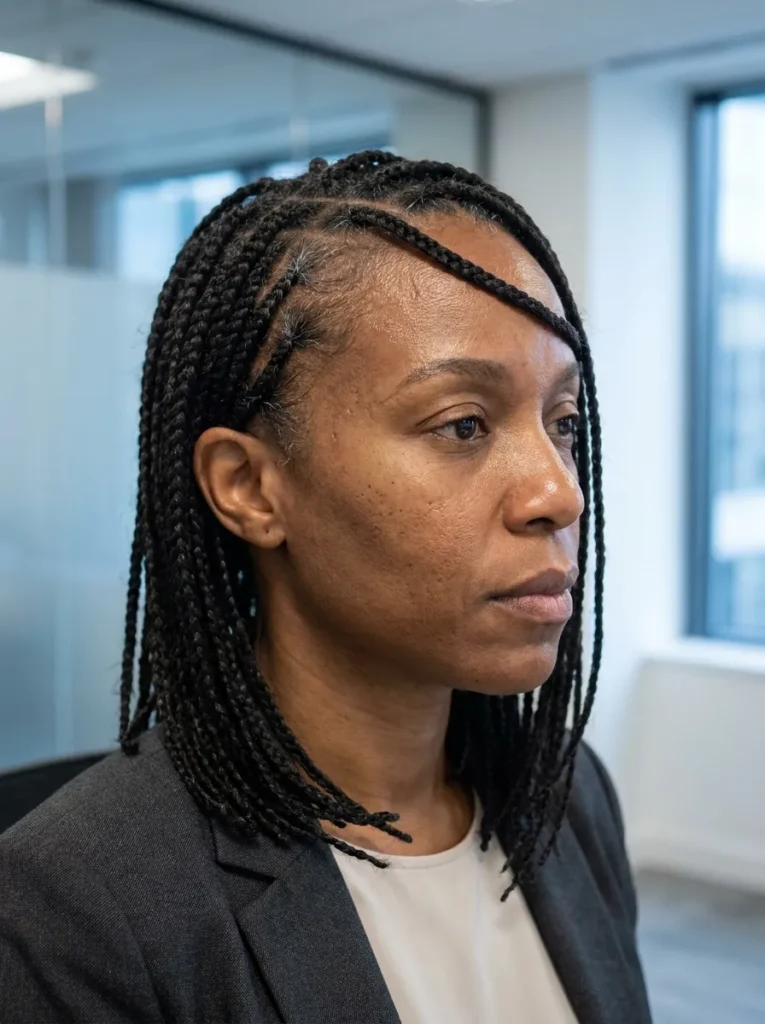
One slim braid is lifted from the front row and curved across the forehead like a soft fringe before rejoining the side sweep. It sits just above the brow, following the natural arc of the hairline.
This detail does the work of bangs without cutting anything, and it softens a high or receding hairline convincingly. Ask for it to be braided a touch looser than the rest, since a tight braid pressed against the forehead marks the skin by evening.
- Best For: High foreheads and thinning front hairlines
- Maintenance: Medium — five weeks, front braid resets sooner
- Styling Time: 3 minutes daily
- Face-Shape Fit: Shortens long and oblong faces noticeably
- Pro Tip: Pin the swoop braid back at night with a soft satin scrunchie so it does not flatten into a crease against the pillow.
12. Stacked Thick-and-Thin Lemonade Braids
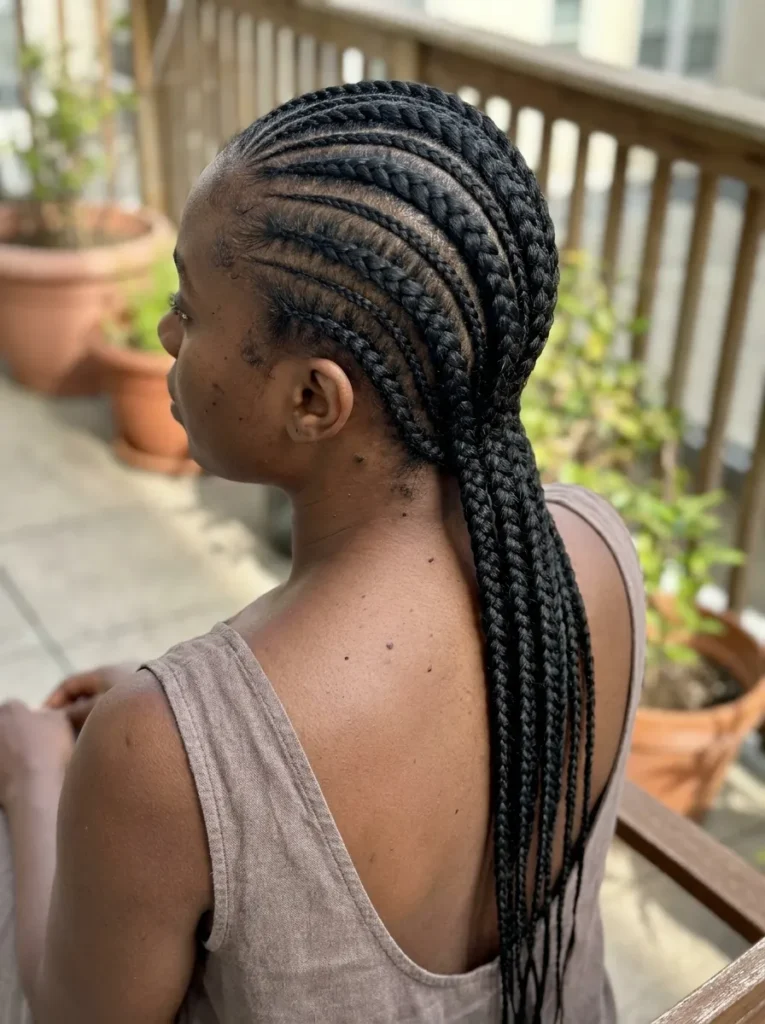
Wide braids alternate with pencil-thin ones in a repeating rhythm across the head. The contrast in thickness creates a striped effect along the diagonal, with the slim braids reading almost as parting lines.
The alternating widths help hide the scalp on days two through thirty, which suits anyone self-conscious about visible parts. It also spreads tension unevenly by design, so mention any tender spots and have the thin braids placed away from them.
- Best For: Medium density where full jumbo looks sparse
- Maintenance: Medium — five weeks, thin braids frizz first
- Styling Time: 2 minutes daily
- Face-Shape Fit: Visual texture suits square and oval shapes
- Pro Tip: Refresh only the thin braids at the three-week mark instead of redoing the whole set, which restores the striped effect in about an hour.
Also Visit : 20 Nubian Twist Hairstyles That Are Absolute Goals
13. Lemonade Braids Gathered Into a Low Side Ponytail

All the braids continue their diagonal path and collect into a single low ponytail behind the ear, wrapped with a braid to hide the tie. The gathered point sits below the ear rather than at the nape.
Because the ponytail follows the direction the braids already travel, there is no counter-pull against the parting. This is the version most people default to for weddings and long events, since it holds for hours without needing a mirror check.
- Best For: Shoulder-length or longer braid sets
- Maintenance: Medium — five weeks, tie moved daily
- Styling Time: 3 minutes daily
- Face-Shape Fit: Low placement softens strong angular jawlines
- Pro Tip: Gather the ponytail on the same side the braids sweep toward, since pulling them across the head lifts the front rows away from the scalp.
14. Criss-Cross Crown Lemonade Braids
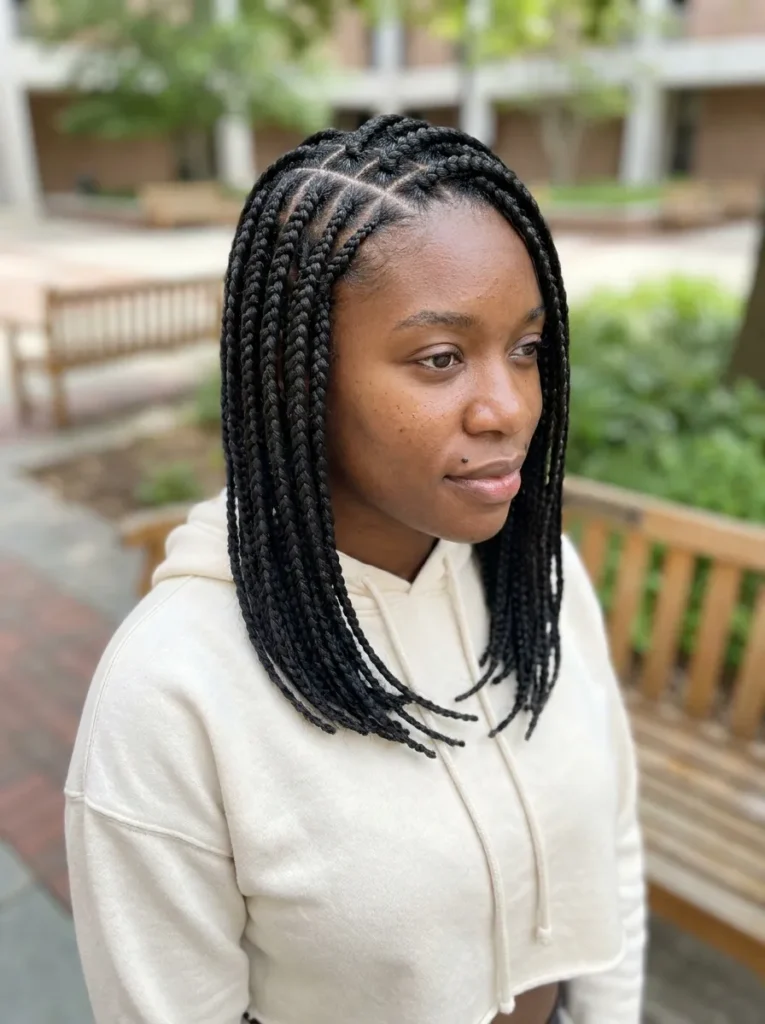
Two or three braids cross over each other near the crown, forming an X or lattice before merging back into the side sweep. The crossing points sit high enough to be visible from the front.
Crossed braids add visual interest without extra length or bulk, which makes this a good pick for shorter sets. The crossover points loosen faster than the rest, so expect to have those two or three braids redone midway through the wear.
- Best For: Shorter braid lengths needing more interest
- Maintenance: Medium — four weeks at the crossings
- Styling Time: 2 minutes daily
- Face-Shape Fit: Crown detail lengthens round and full faces
- Pro Tip: Ask for the crossings to be anchored with a tiny clear elastic underneath, which is invisible and doubles how long the lattice holds.
15. Bob-Length Lemonade Braids
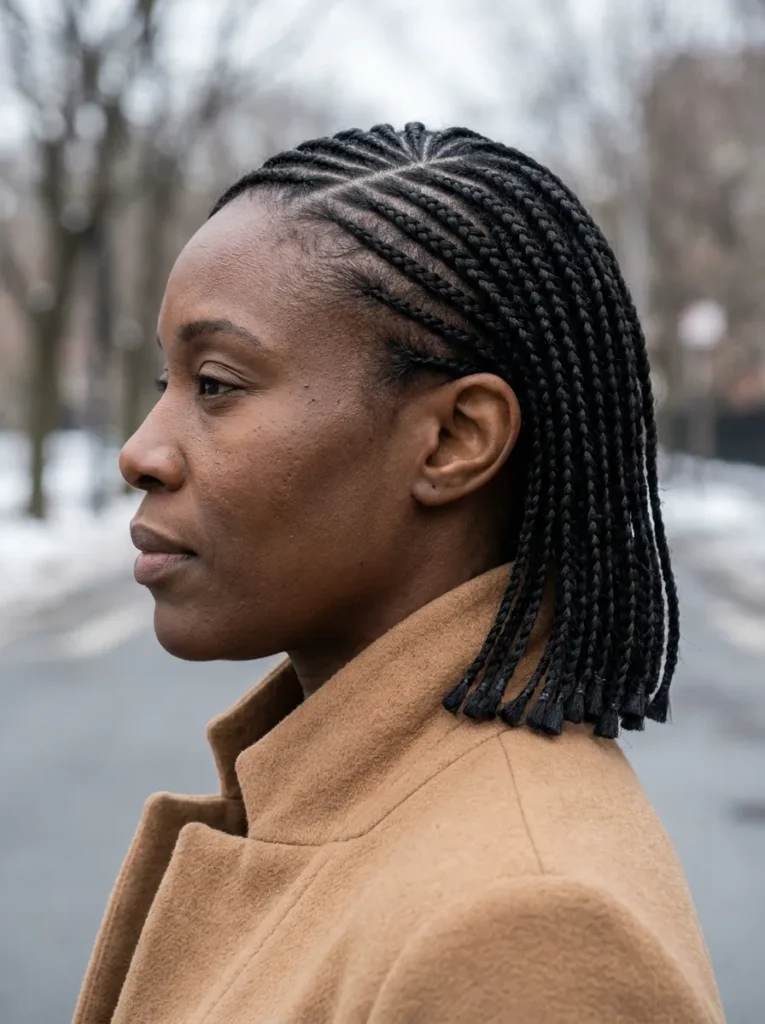
The full diagonal pattern is kept, but the braids stop at the jaw or just below it, ending in blunt sealed tips. The result is a braided bob with a strong horizontal line at the bottom.
Short sets weigh far less, which makes them the sensible starting point if you have never worn braids or have delicate edges. Ends can be sealed in hot water or with a small knot, and hot-water sealing gives a cleaner line on a blunt shape.
- Best For: First-time braid wearers and fragile hairlines
- Maintenance: Low — five weeks, minimal daily handling
- Styling Time: 1 minute daily
- Face-Shape Fit: Sharpens oval and heart shapes, widens round ones
- Pro Tip: Have the underneath row cut a half-inch shorter than the top so the bob line stays visible instead of collapsing into one thick block.
16. Lemonade Braids Finished in Bantu Knots
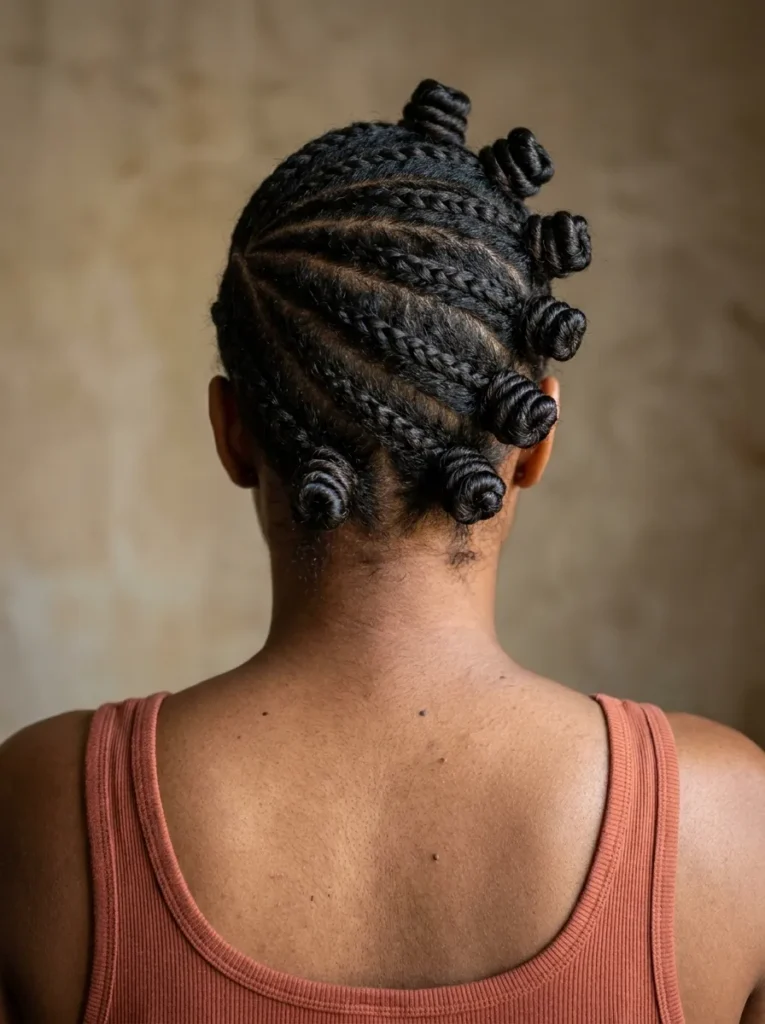
Rather than hanging loose, the braids are coiled into small knots along the back and side, forming a row of tight spirals where the length would normally fall. Six to ten knots is typical.
Knotting the ends removes almost all tangling and shortens the silhouette dramatically, which is useful in humid weather. The knots can be released and re-coiled at home once you get the wrapping direction right, so this is a shape you can switch in and out of.
- Best For: Humid climates and tangle-prone longer sets
- Maintenance: Low — six weeks, knots re-coiled weekly
- Styling Time: 6 minutes when re-coiling
- Face-Shape Fit: Compact shape flatters oval and long faces
- Pro Tip: Wrap every knot in the same direction as the braid was plaited, otherwise the coil fights the twist and unravels within an hour.
17. Fulani-Inspired Lemonade Braids With Cowrie Shells
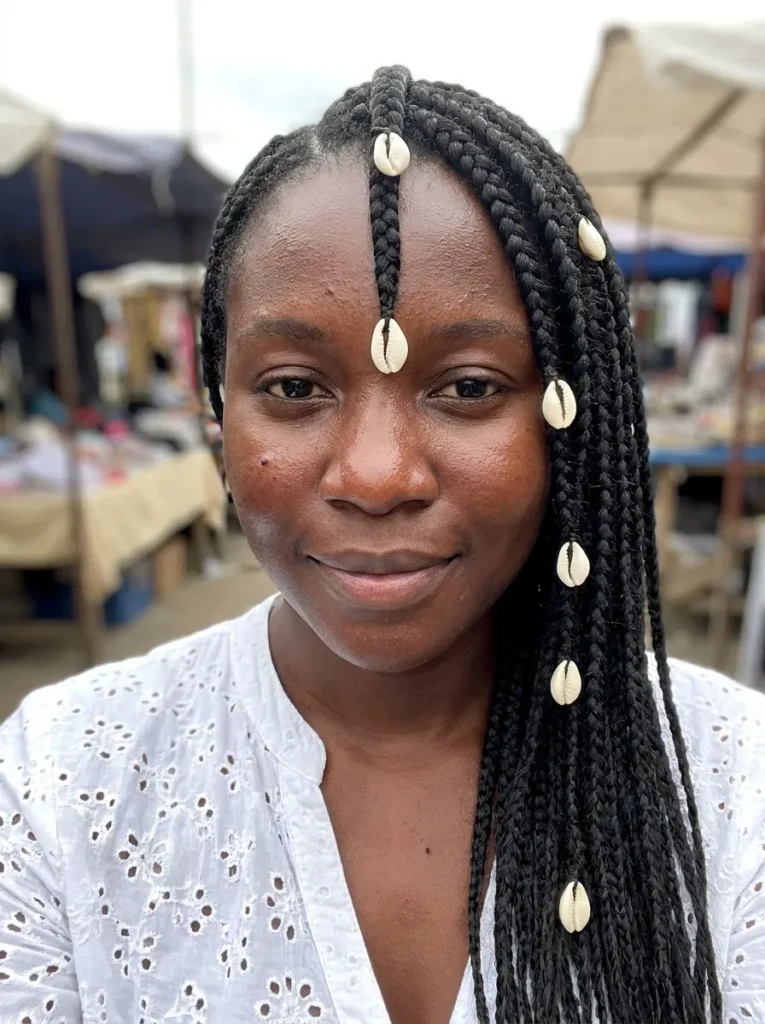
A single braid runs down the centre part front to back while the remaining rows sweep sideways, and cowrie shells are threaded along the centre braid and a few outer ones. The centre line breaks up the diagonal sweep deliberately.
Shells sit heavier than metal cuffs, so limit them to five or six on any one braid. The style draws on Fulani braiding traditions from West Africa, and braiders who specialise in it usually place the shells with more restraint than a general portfolio suggests.
- Best For: Medium to long braids with strong crown density
- Maintenance: Medium — five weeks, shells removed for washing
- Styling Time: 3 minutes daily
- Face-Shape Fit: Centre line narrows and balances wide foreheads
- Pro Tip: Thread shells onto the braid before sealing the ends, since forcing them over a finished tip splits the extension fibre.
18. Triangle-Parted Lemonade Braids

Each braid begins from a triangular section rather than a rectangular one, so the base of every braid comes to a point. Viewed from above, the scalp shows a repeating grid of triangles feeding into the side sweep.
Triangle bases hold their shape unusually well, because the pointed section resists the spreading that squares off over time. Sectioning takes longer than a standard set, adding roughly an hour to the appointment, which is worth confirming when you book.
- Best For: Anyone prioritising a long, tidy-looking wear
- Maintenance: Low — six weeks with clean regrowth
- Styling Time: 2 minutes daily
- Face-Shape Fit: Geometric parting suits oval and diamond shapes
- Pro Tip: Point the triangle apexes toward the sweep direction rather than the hairline, which keeps the grid reading as intentional from the front.
19. S-Curve Parted Lemonade Braids
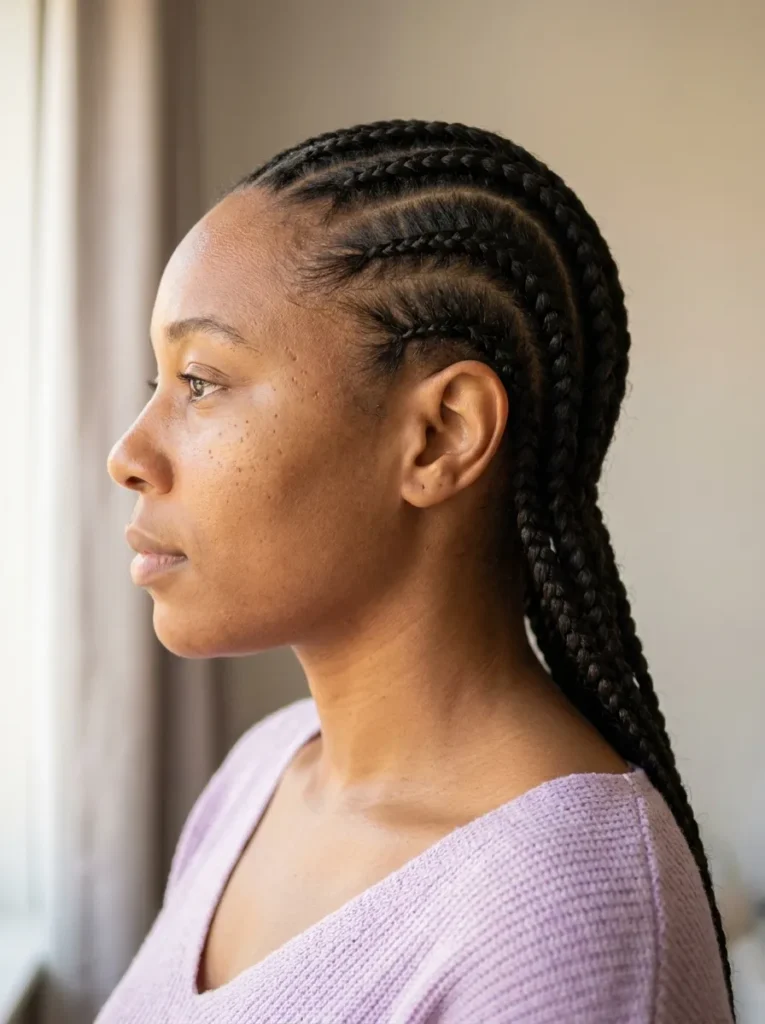
The parts curve in long S-shapes from hairline to nape, so each braid follows a wave rather than a straight diagonal. The effect softens the whole head shape and looks fluid when the braids move.
Curved braiding needs consistent tension through the bends, and a braider who rushes the curve will leave visible bumps where the direction changes. Ask to see a healed set at three weeks if you can, since curves reveal sloppy work as they grow.
- Best For: Looser curl patterns and softer overall styling
- Maintenance: Medium — five weeks before curves flatten
- Styling Time: 2 minutes daily
- Face-Shape Fit: Curves soften square and strongly angular faces
- Pro Tip: Rest a wide-tooth comb along one curve when oiling so you follow the same line instead of cutting across it and fluffing the braid.
20. Knotless Lemonade Braids With Tapered Ends
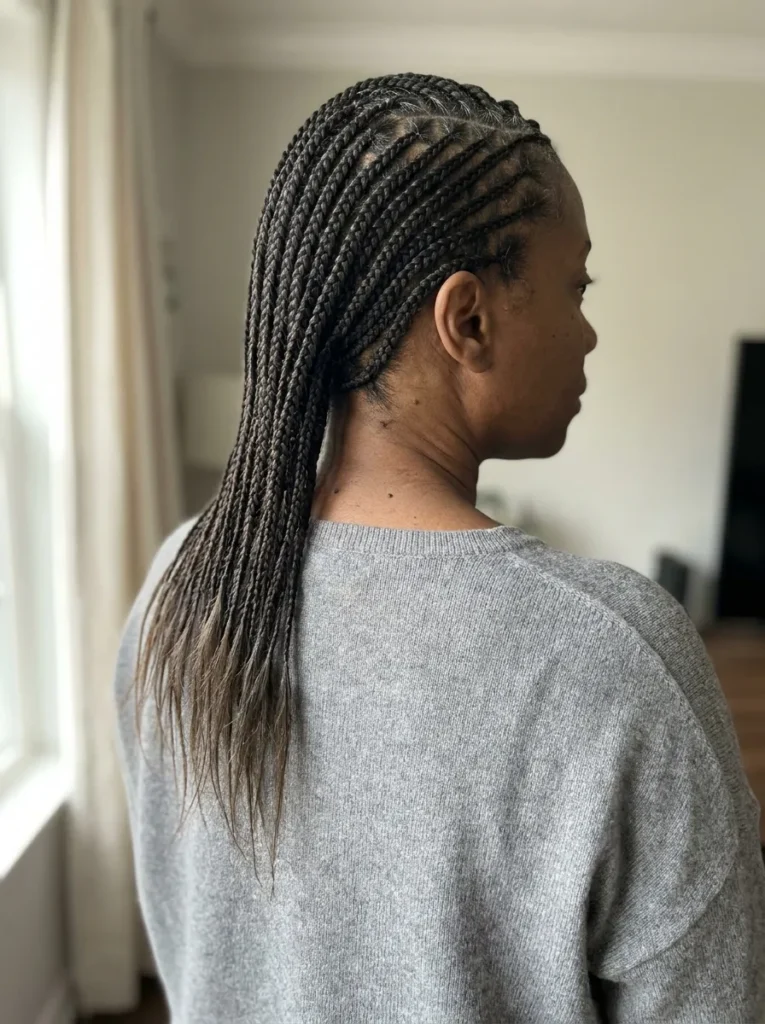
Extension hair is fed in gradually with no knot at the root, and the braids thin steadily toward wispy, feathered ends instead of finishing at a uniform thickness. The whole set moves more like loose hair.
Knotless installs put the least strain on the scalp of any version here, and the tapered finish removes the blunt weight that pulls at the ends. If you get headaches from braids, this is the combination worth asking for by name.
- Best For: Tender scalps, fine edges, and headache-prone wearers
- Maintenance: Medium — six weeks, ends trimmed once
- Styling Time: 2 minutes daily
- Face-Shape Fit: Feathered ends flatter round and full-cheeked faces
- Pro Tip: Have the taper start around the elbow rather than the shoulder, since a high taper leaves the ends too sparse to hold a ponytail.
Frequently Asked Questions
How long do lemonade braids last?
Most sets look their best for four to six weeks. Jumbo and curly-ended versions tend to reach the shorter end of that window because of weight and tangling, while micro-parted, triangle-parted and knotless sets often stay presentable closer to six. Beyond six weeks, matting at the roots becomes harder to detangle safely, so removal gets slower and riskier for your own hair.
How much do lemonade braids usually cost?
Pricing varies widely by city and by braider experience, but salon rates typically fall somewhere between roughly $120 and $300, with longer or more intricate parting patterns sitting at the higher end. Extension hair is often billed separately. Shaped parts, cowrie shells and very small sections all add hours to the appointment, and most braiders price by time rather than by style name.
Can lemonade braids work on fine or thinning hair?
Yes, with the right version. Smaller sections spread tension across more anchor points, so micro-parted and knotless installs suit fine hair far better than jumbo sets do. Avoid heavy waist-length extensions, ask for feed-ins to start gradually, and speak up during the appointment if anything stings. Tension that hurts on day one does not settle down later.
How do you wash lemonade braids without ruining the parts?
Dilute a clarifying shampoo in a squeeze bottle and apply it directly along the parts rather than lathering the length. Massage with fingertips, not nails, then rinse thoroughly and press the braids with a microfibre towel. Let them air-dry completely before covering your head, since damp braids left wrapped overnight develop a sour smell within a couple of days.
What should I ask for at the salon?
Name the parting pattern, the braid size, the finished length and the install method. A clear request sounds like: side-swept knotless feed-ins, ten braids, mid-back length, tapered ends. Bring two photos, one showing the parting from above and one showing the length, because braiders read the parting far more accurately from a top-down shot.
Bringing It Together
The versions that stay looking deliberate the longest are the ones with structure built into the parting. Triangle-Parted Lemonade Braids and Zig-Zag Parted Lemonade Braids both let regrowth read as texture, while Knotless Lemonade Braids With Tapered Ends protect the hairline that makes every future set possible. If you are choosing your first, start shorter and simpler than you think you want. A Bob-Length set teaches you how your scalp handles tension, and the longer, heavier patterns will still be there next time.
Also Visit : Best Way to Take Care of Natural Hair (Simple 2026 Guide)