20 Protective Hairstyles You Probably Haven’t Tried Yet
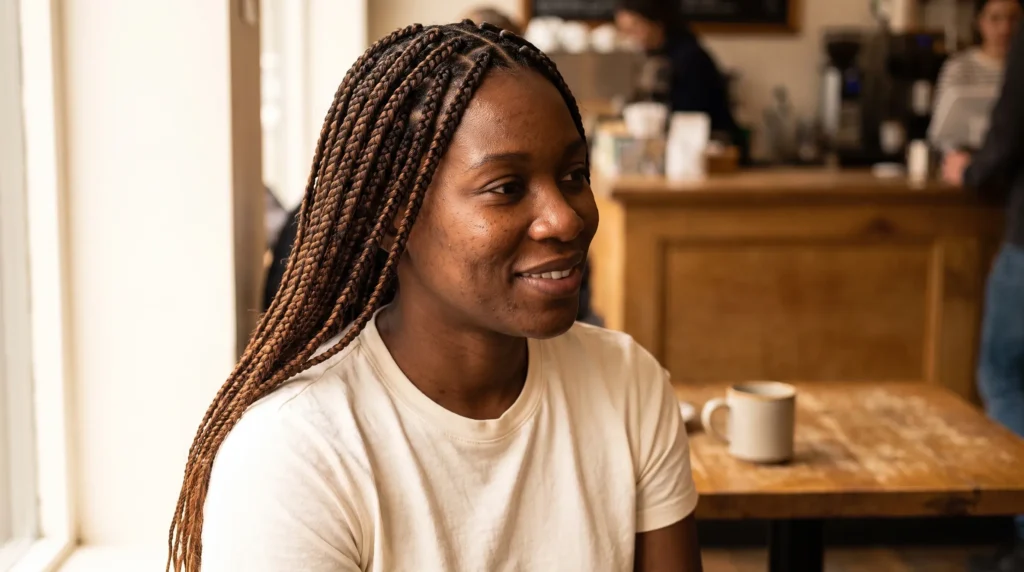
Most searches for protective hairstyles land on the same three results: box braids, twists, a bun. Useful, but there is a much wider catalogue sitting just outside that default, and a lot of it is far easier to live with day to day.
This list covers 20 styles that actually differ from one another in structure, not just in name. Threading, basket-weave cornrows, halo braids that use no extensions at all, and installs that hide your ends completely. For each one you get what the style physically looks like, who it suits, honest maintenance and trim timing, realistic daily styling minutes, face-shape notes, and one tip specific to that look.
Nothing here is padded. If a style is high commitment, it says so.
Quick Picks: Protective Hairstyles at a Glance
| Style | Best For | Maintenance |
|---|---|---|
| Knotless Jumbo Box Braids | Fine hairlines, tension worries | Low, 5–6 weeks |
| Shoulder-Length Passion Twists | Loose curl patterns | Medium, 4–6 weeks |
| Flat-Twist Updo | Short to mid natural hair | Low, refresh weekly |
| Butterfly Faux Locs | Thick, dense hair | Low, 6–8 weeks |
| Threaded Hair Wrapping | Fragile ends, no extensions | Low, 5–7 days |
| Roll, Tuck and Pin Updo | Grown-out braid-outs | Very low, 3–4 days |
1. Knotless Jumbo Box Braids
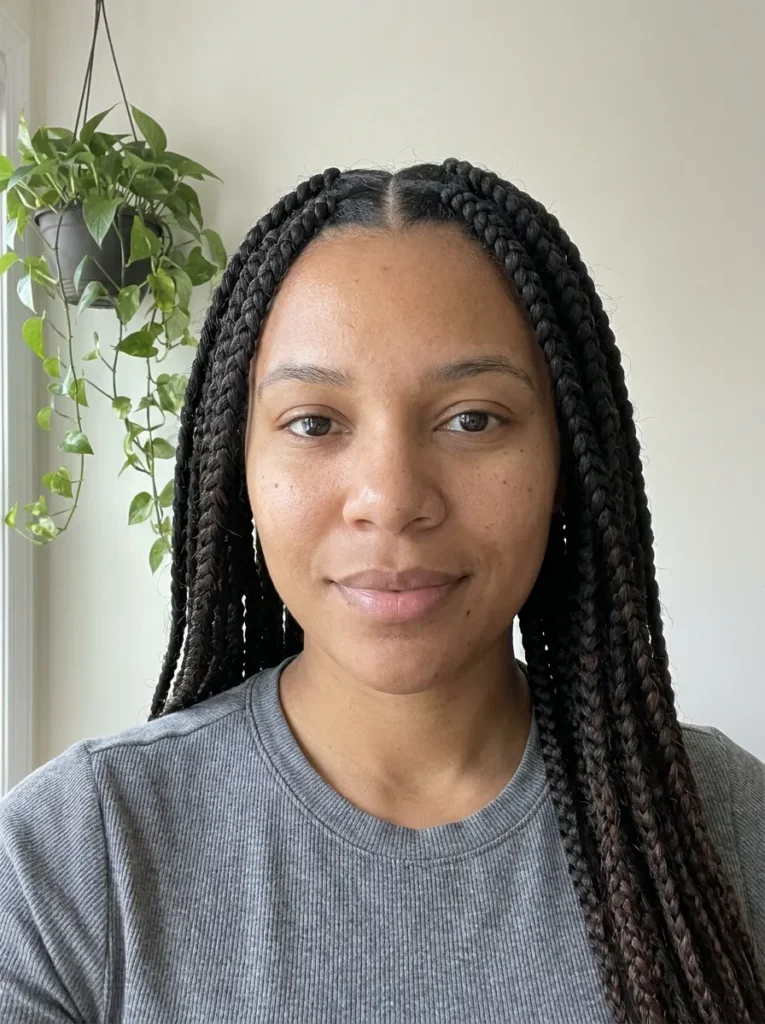
Wide, clean square partings hold braids roughly a finger’s width thick. Each one starts with your own hair and feeds extension in gradually, so the root sits flat against the scalp instead of forming a hard knot. The result is a soft, swingy length line that moves at the shoulder.
Because there is no bulky base, the install feels lighter from day one. Ask for medium-to-jumbo sections and a mid-back length to keep the weight sensible. Cleanse the scalp with a nozzle-tip bottle rather than lathering the braids, and wrap at night to stop the mid-lengths frizzing.
- Best For: Fine or delicate hairlines that react badly to tight roots
- Maintenance: Low — refresh the perimeter at 3 weeks, take down at 5–6
- Styling Time: 2–3 minutes daily
- Face-Shape Fit: Softens square and angular jawlines because the braids fall past the chin
- Pro Tip: Ask for the first three feed-ins to be smaller than the rest — jumbo hair added too early is what makes knotless braids look bulky at the part
2. Boho Goddess Braids With Curly Ends
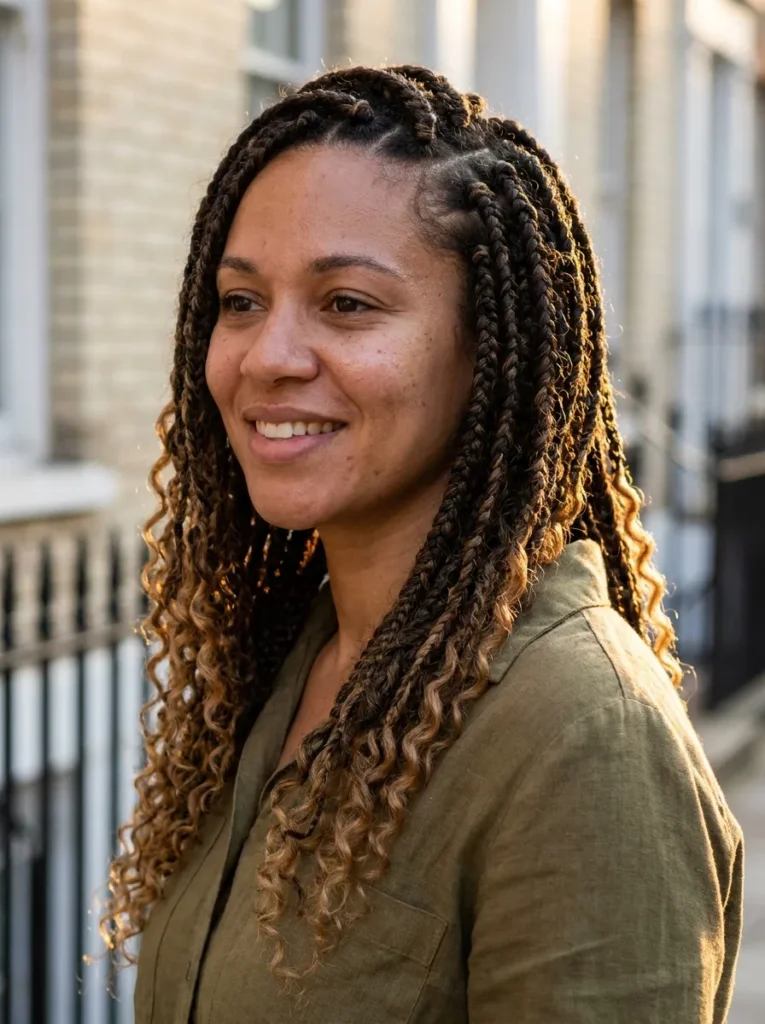
Standard braids with deliberate pieces of loose curly hair left free along the length, usually starting a few inches down from the root. The braid stays crisp near the scalp while the free strands spiral outward, giving a half-braided, half-undone texture that reads soft rather than sculpted.
This one suits anyone who finds full braids too severe against their features. Choose a curl pattern close to your own so the loose pieces blend. The curly sections tangle faster than the braid itself, so separate them with fingers and a leave-in mist every second morning rather than brushing.
- Best For: Anyone transitioning from relaxed to natural who wants texture on show
- Maintenance: Medium — the curls need reviving weekly, full takedown at 5 weeks
- Styling Time: 5 minutes daily
- Face-Shape Fit: Flattering on long or oblong faces, since the loose curls add width at the cheek
- Pro Tip: Dip the curly ends in hot water for ten seconds after install — it sets the spiral and stops the first-week fluff
3. Fulani-Inspired Cornrows With Beads
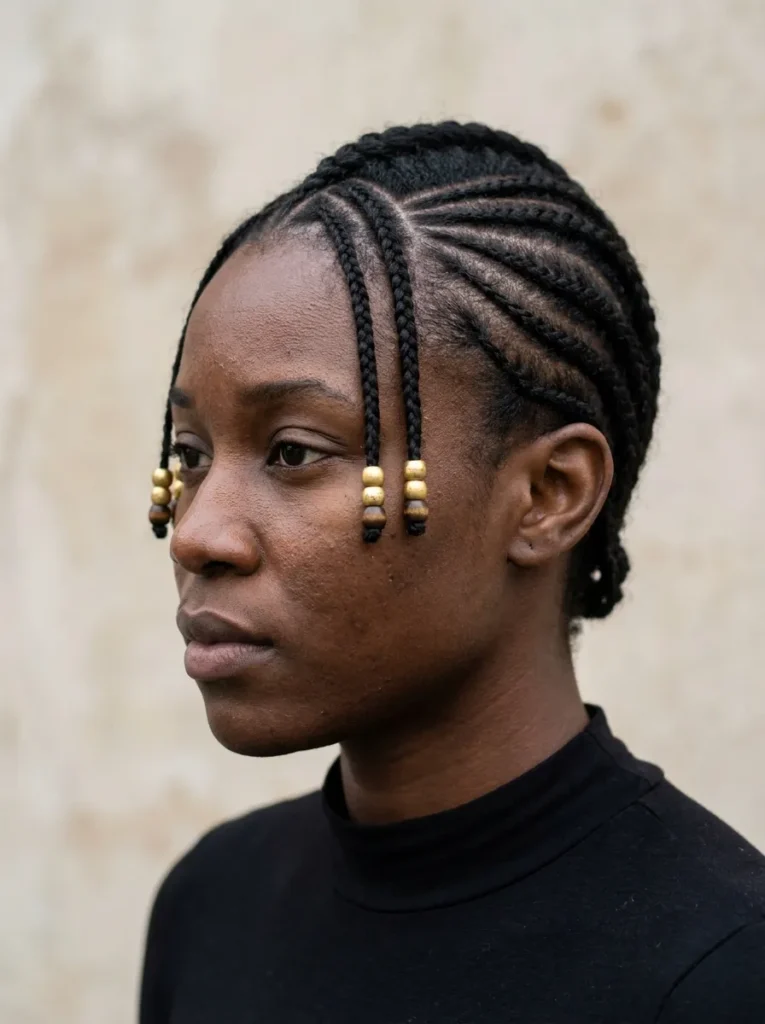
A centre cornrow runs front to back while side rows sweep diagonally toward the ears, often with one or two braids falling forward across the temples. Small metal or wooden beads finish selected ends. The pattern is geometric and highly visible, so the parting work is the whole point.
The style holds well on hair that has some grip, and the beads add just enough weight to keep the front braids sitting where they should. Bring reference photos to the salon, because pattern placement varies enormously. Rinse beads separately and dry them before they sit against damp hair.
- Best For: Medium-density hair with enough length at the crown to cornrow cleanly
- Maintenance: Low — 4 weeks, though the front rows fuzz sooner
- Styling Time: Under 2 minutes daily
- Face-Shape Fit: Diamond and heart shapes benefit, as the diagonal rows draw the eye across a narrow chin
- Pro Tip: Thread beads onto the extension hair before braiding starts, not after — sliding them up a finished braid is what snaps ends
4. Stitch Feed-In Braids Into a Low Bun
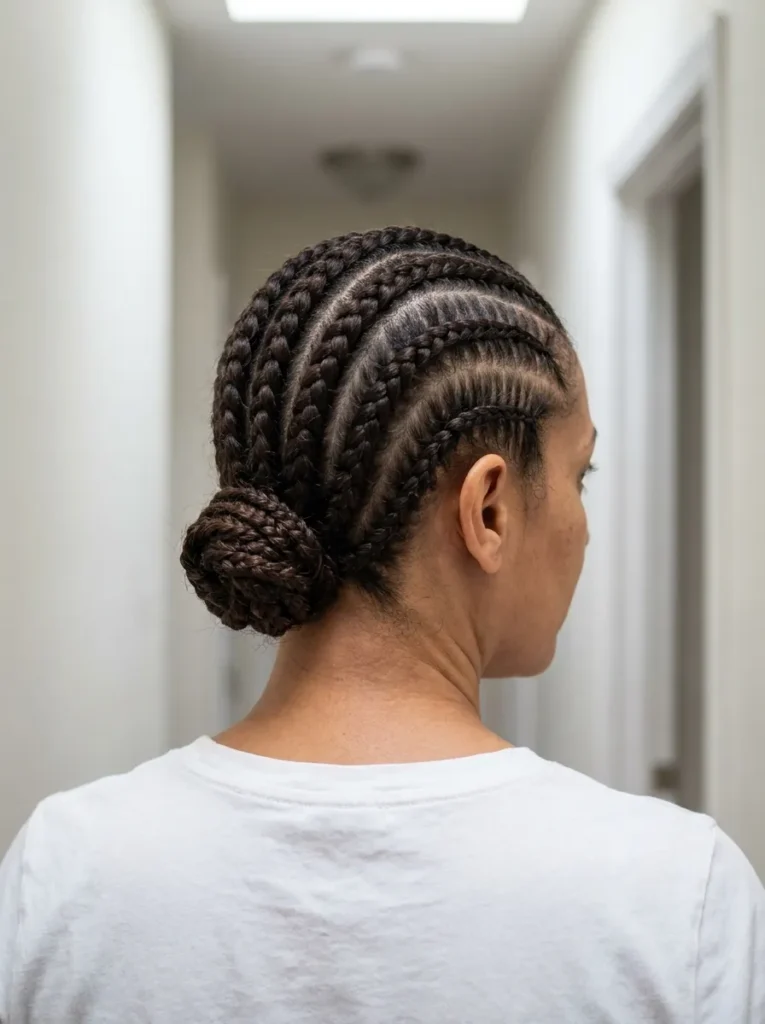
Cornrows braided with the visible horizontal “stitch” ridge, all directed backward and gathered into a coiled bun at the nape. Each row shows tiny even segments like stitching on fabric, and the partings between rows stay razor sharp from hairline to crown.
Stitch braids read polished enough for work and hold their definition longer than standard feed-ins. The bun keeps your ends completely enclosed, which is the actual protective benefit here. Keep the bun pinned rather than elastic-bound, and re-oil the exposed parting lines twice a week so they do not look ashy.
- Best For: Office settings and anyone who wants ends fully tucked away
- Maintenance: Medium — 3–4 weeks before the stitch definition softens
- Styling Time: 1 minute daily
- Face-Shape Fit: Strong on oval and heart shapes; backward tension can look severe on very round faces
- Pro Tip: Ask for the two rows framing your face to curve slightly rather than run dead straight — it stops the style pulling your features flat
Also Visit : 20 Curtain Bangs Redhead Ideas That Are Insanely Chic
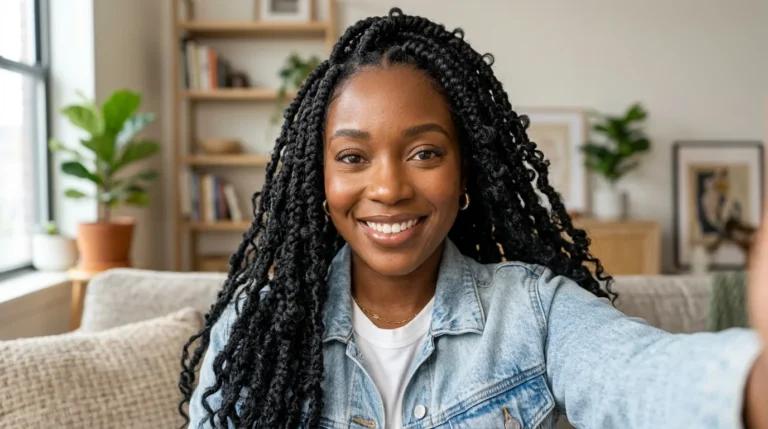
5. Shoulder-Length Passion Twists
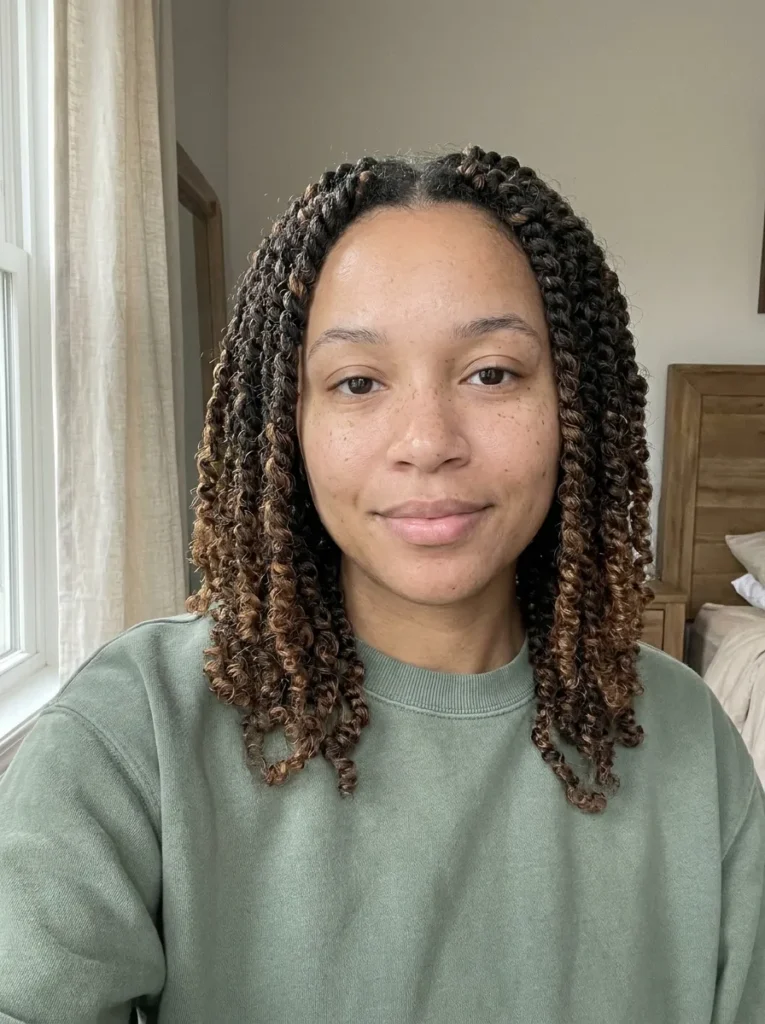
Two-strand twists built with wavy, water-textured extension hair that keeps a loose spiral instead of a smooth rope finish. Cut at the shoulder, they sit light and bouncy, with a slightly undone, airy surface that catches light differently from a tight twist.
Shorter passion twists are noticeably kinder to the roots than waist-length versions, and they dry fast after washing. Section size matters more than length — medium sections keep the wave visible without looking sparse. A weekly mousse-and-water mix on the mid-lengths keeps them from matting where they rub your collar.
- Best For: Looser curl patterns that struggle to hold traditional twists
- Maintenance: Medium — 4–6 weeks, with frizz appearing around week three
- Styling Time: 3 minutes daily
- Face-Shape Fit: Round faces gain length here because the twists stop below the jaw rather than at it
- Pro Tip: Sleep with the twists gathered high in a loose pineapple, not spread across the pillow — friction at the shoulder is what flattens the wave first
6. Senegalese Rope Twists
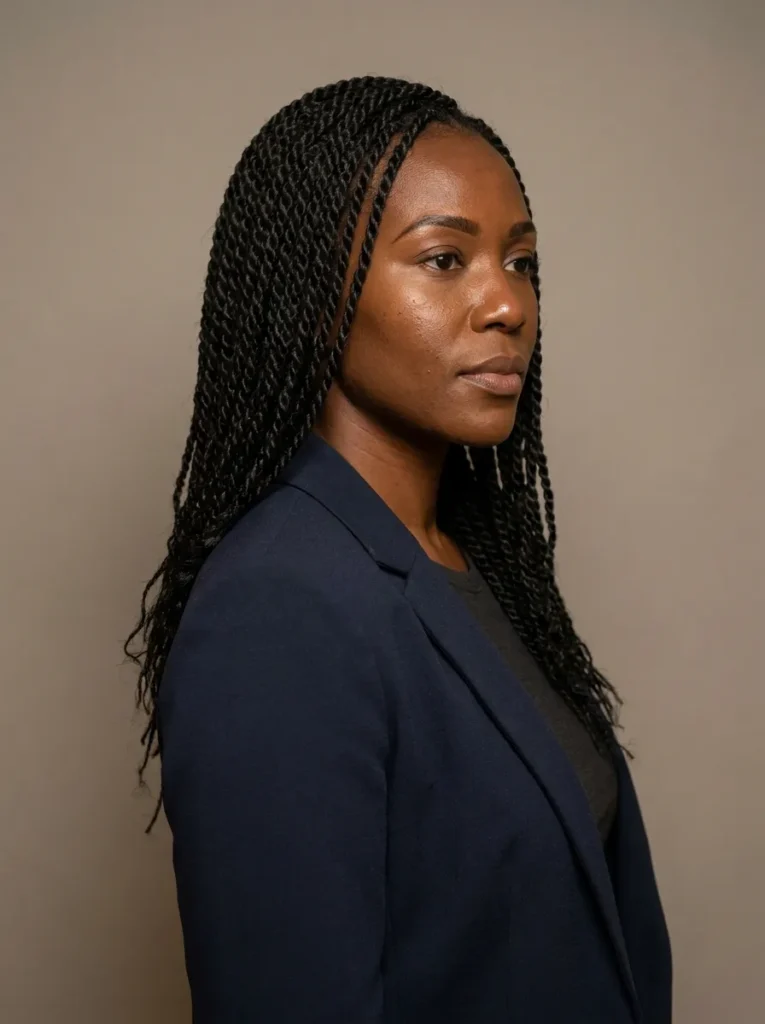
Sleek, glossy twists made with smooth kanekalon so the two strands wind into a rope with a clean, uniform surface. No wave, no fluff — the finish is deliberately polished, and the twists hang with a slight weight that keeps them straight rather than springy.
The smoothness is what makes them shine, and also what makes them slip, so twists need sealing at the ends with hot water or a knot. They suit anyone who wants a formal alternative to braids. Avoid heavy butters on the length; they dull the surface and attract lint within days.
- Best For: Coarse, dense hair that grips extension hair firmly
- Maintenance: Low — 6–8 weeks, with root touch-ups optional at 4
- Styling Time: 2 minutes daily
- Face-Shape Fit: The straight vertical line suits round and full faces by adding visual length
- Pro Tip: Check the twist direction before you commit — twists wound in the opposite direction to your natural coil unravel within a fortnight
7. Marley Twist Halo Crown
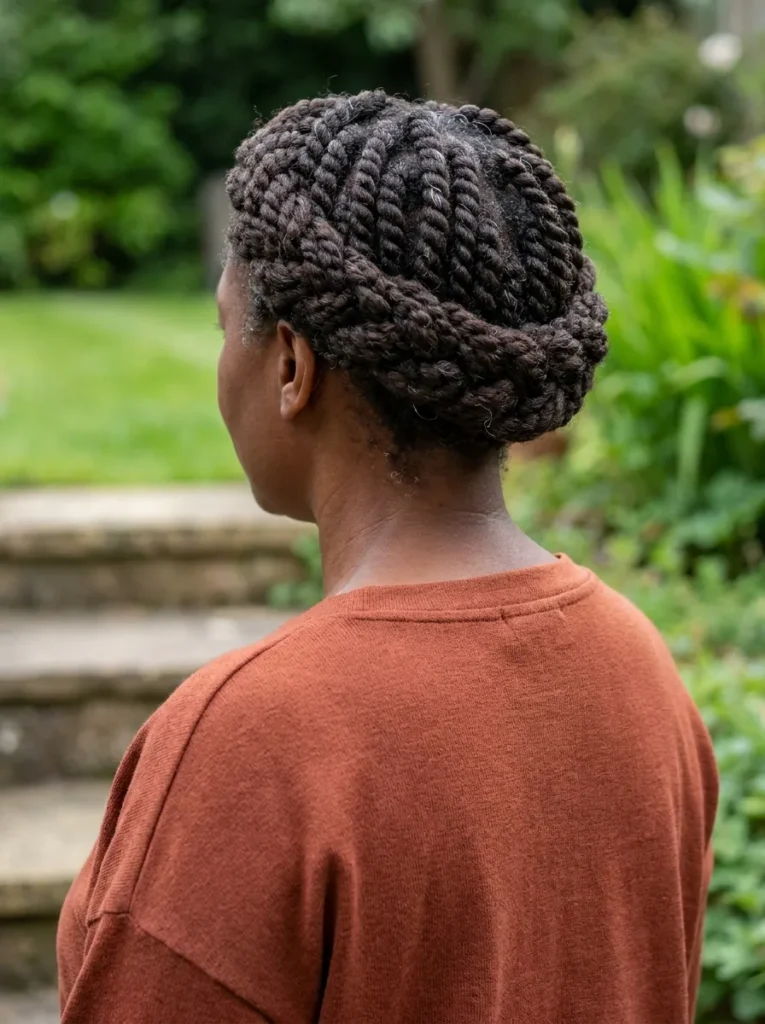
Chunky Marley-hair twists installed at medium length, then wrapped around the head and pinned into a continuous circle above the ears. The matte, kinky texture of Marley hair gives the crown a thick, sculpted look with no visible slick or shine.
Because the twists are already installed, you can wear them down for weeks and switch to the halo whenever you want the ends off your neck. Pin from underneath with U-pins rather than bobby pins so nothing shows. Reposition the crown every few days to stop one section carrying all the weight.
- Best For: Thick, high-density hair that can support chunky twists
- Maintenance: Low — twists last 6 weeks; the crown itself resets in minutes
- Styling Time: 6–8 minutes to build the halo
- Face-Shape Fit: Adds height above square and heart-shaped faces without widening the sides
- Pro Tip: Separate Marley hair into thirds and stretch each piece before twisting — pre-stretched hair sits flatter in a crown and stops the halo bulking out at the back
8. Flat-Twist Updo With Tucked Ends
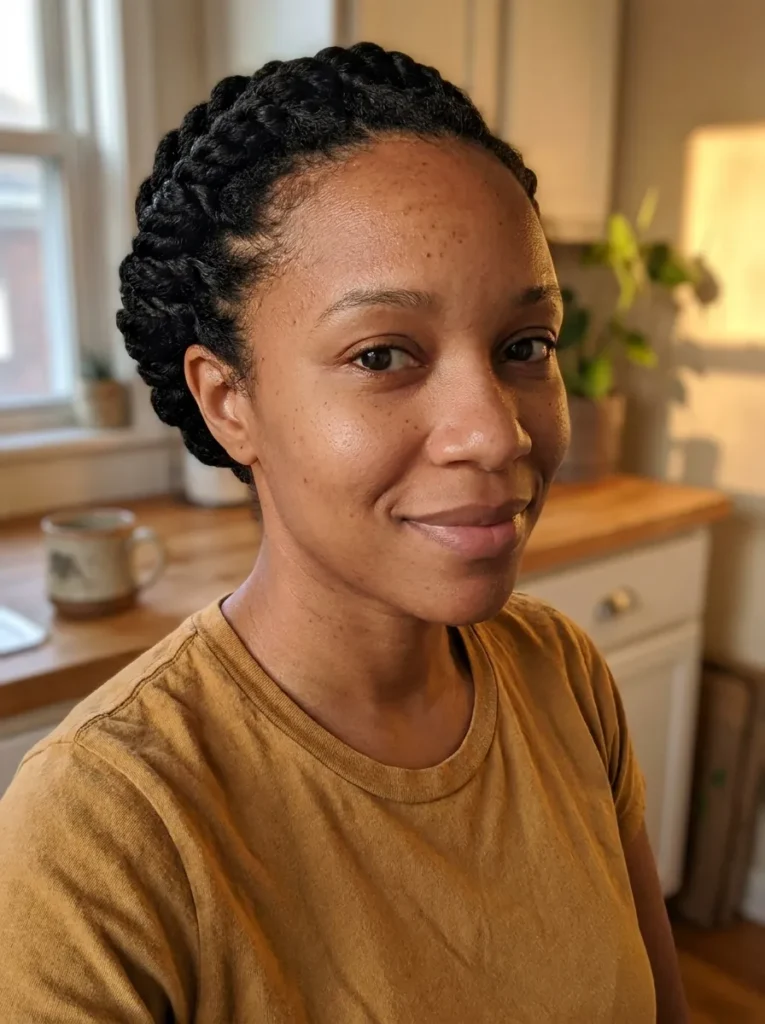
Flat twists lie against the scalp like cornrows but use two strands instead of three, giving a softer, ropier ridge. Rows curve toward the back, and every end is tucked and pinned under the twist above it, leaving no loose hair anywhere on the head.
This is one of the few genuinely low-cost protective hairstyles, since it needs no added hair at all. It works from about four inches of length upward. Damp hair with a light gel grips best. Re-twist only the front two rows midweek instead of taking the whole style down.
- Best For: Short to mid-length natural hair with no extensions
- Maintenance: Low — refresh the front weekly, full redo every 10–14 days
- Styling Time: 25–35 minutes to install, 2 minutes daily after
- Face-Shape Fit: Exposing the hairline flatters oval faces and anyone with strong cheekbones
- Pro Tip: Twist each row slightly tighter for the last inch before tucking — loose tails are the reason flat-twist updos unravel overnight
9. Coiled Bantu Knot Set
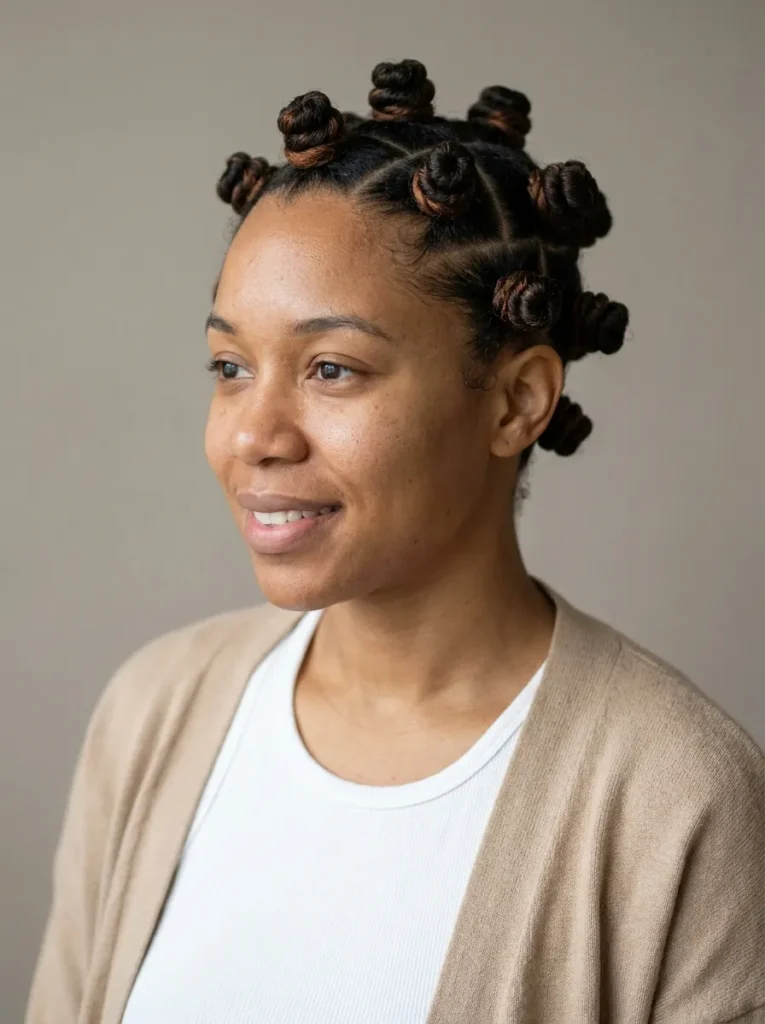
Sections of hair are twisted from root to tip, then coiled around their own base into compact knots that sit close to the scalp. A full head might carry eight to twenty knots depending on section size, arranged in a visible geometric grid across the head.
Worn as a finished style, knots keep every inch of hair coiled and off your clothes. Take them down after a few days and you have a defined curl set underneath. Apply a light cream to damp hair before coiling; anything heavy leaves the knots wet and prone to a sour smell.
- Best For: Medium-length hair, roughly chin to collarbone
- Maintenance: Low — wear 3–5 days, then unravel
- Styling Time: 30–40 minutes to set, no daily styling
- Face-Shape Fit: Balances longer faces by drawing attention across the crown rather than downward
- Pro Tip: Wrap the final half inch of each knot underneath the base and pin there — knots tucked on top pop open the moment you lie down
10. Two-Strand Twist French Roll
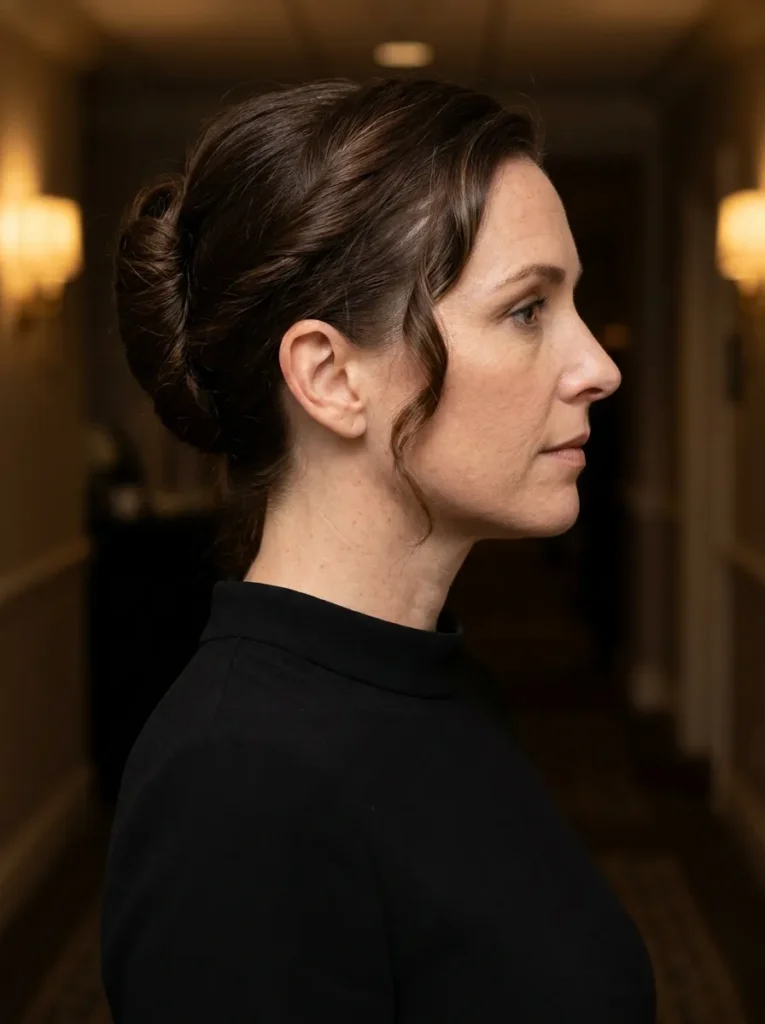
Your own two-strand twists gathered to one side, folded vertically up the back of the head, and pinned into a long seam. The roll runs from nape to crown, with the twist ends hidden inside the fold and a few pieces left out at the front for softness.
It gives you a formal, upswept shape without heat or extensions, and the ends stay completely enclosed. Set the twists a day ahead so they are dry and stretched. Pins should cross in an X along the seam; parallel pins slide out as the roll settles through the day.
- Best For: Collarbone-length or longer natural hair, weddings and events
- Maintenance: Low — holds 2–3 days over an existing twist set
- Styling Time: 10–12 minutes
- Face-Shape Fit: The lifted back suits round faces; leave temple pieces out if your forehead is broad
- Pro Tip: Roll around a rolled-up sock or hair rat if your twists are thin — the roll needs internal bulk or it flattens into a lump by mid-afternoon
Also Visit : 20 Nubian Twist Hairstyles That Are Absolute Goals
11. Kinky Straight Crochet Braids
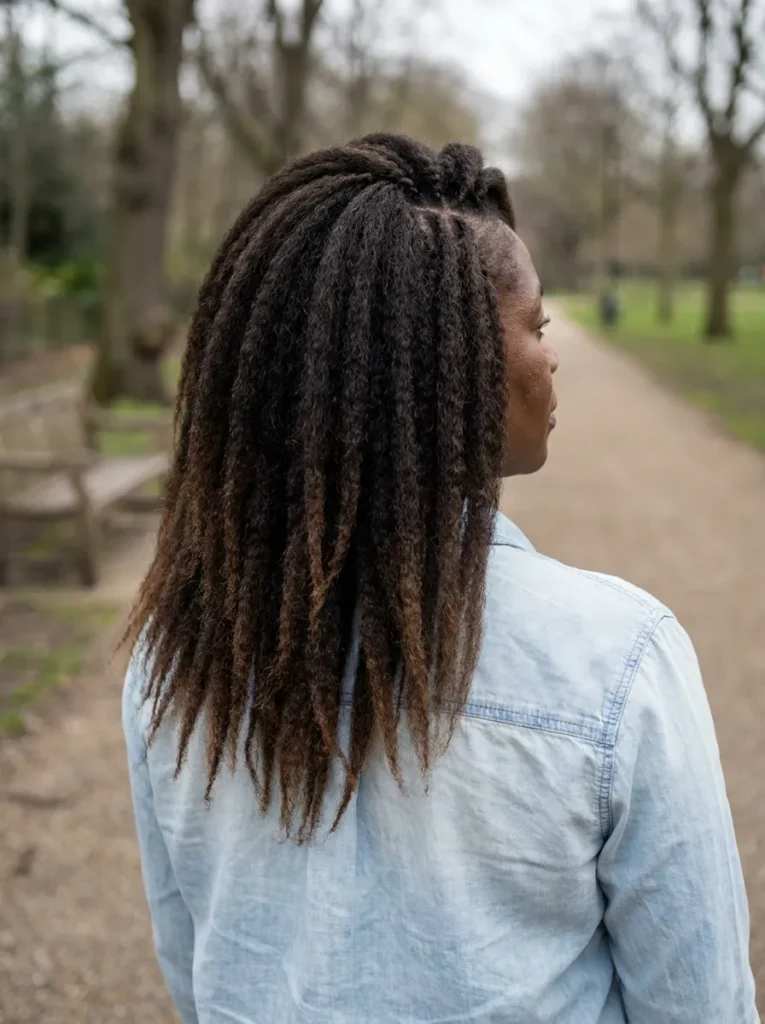
Pre-textured straight hair with a slight blown-out kink is looped through a cornrowed base with a crochet hook. The finished look reads as straightened natural hair, with body at the root and a soft, slightly coarse surface rather than a glassy one.
The appeal is getting a straight look with zero heat on your own strands. Installation takes an hour or two rather than a full day. Keep the cornrow base flat and small so the crochet hair lies naturally. Trim the ends after install to remove the blunt, factory-cut line.
- Best For: Anyone avoiding heat damage but wanting a straight silhouette
- Maintenance: Medium — 4–6 weeks, base cornrows loosen first
- Styling Time: 4 minutes daily
- Face-Shape Fit: Straight length narrows round and full faces, especially with a deep side part
- Pro Tip: Loop the front row with smaller pieces and knot them under, not over — visible knots at the hairline are the giveaway that separates a good crochet install from an obvious one
12. Butterfly Faux Locs
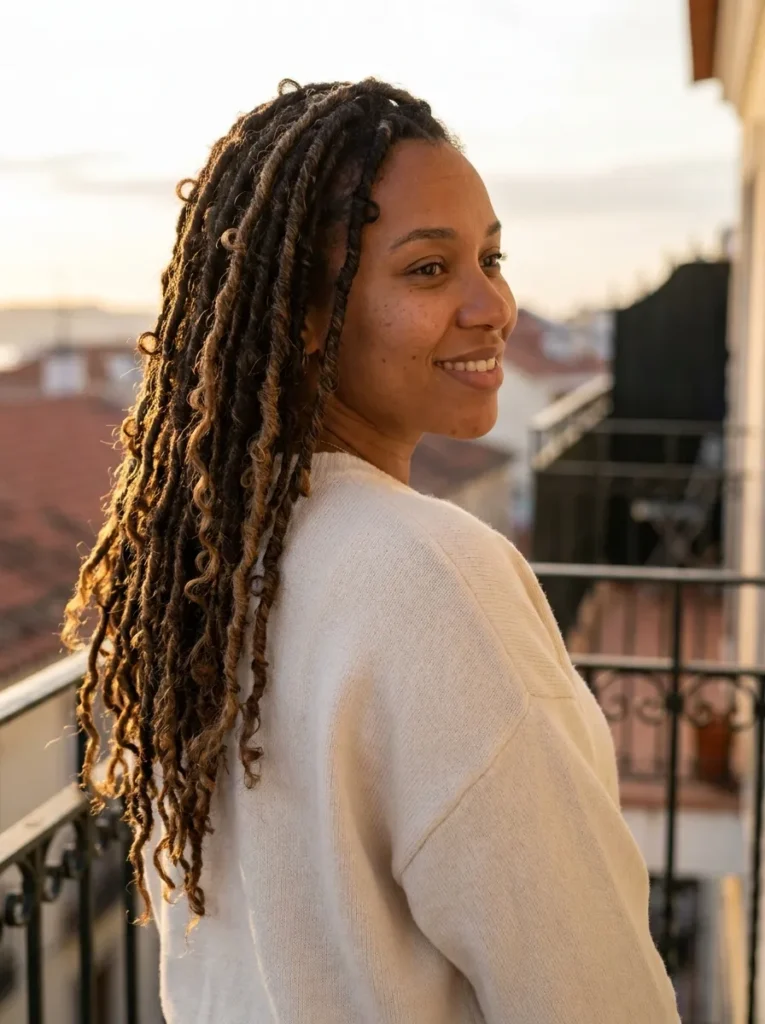
Distressed locs with deliberate loops and pulled-out fibres along the length, creating a soft, textured surface rather than a smooth cylinder. The loops sit at irregular intervals, so no two locs look identical and the overall effect is intentionally messy.
These are lighter than wrapped faux locs because the hair is wound loosely rather than tightly bound. That makes them comfortable for long wear, but it also means they shed fibres onto dark clothing early on. Rinse before wearing, and pinch each loop back into place after washing rather than combing.
- Best For: Thick, dense hair that can anchor longer locs comfortably
- Maintenance: Low — 6–8 weeks with a root refresh around week five
- Styling Time: 2 minutes daily
- Face-Shape Fit: The uneven texture softens strong jawlines and suits square face shapes well
- Pro Tip: Ask for locs no longer than mid-back on a first install — the loops catch on bag straps and chair backs, and long butterfly locs pull far more than their weight suggests
13. Micro Basket-Weave Cornrow Pattern
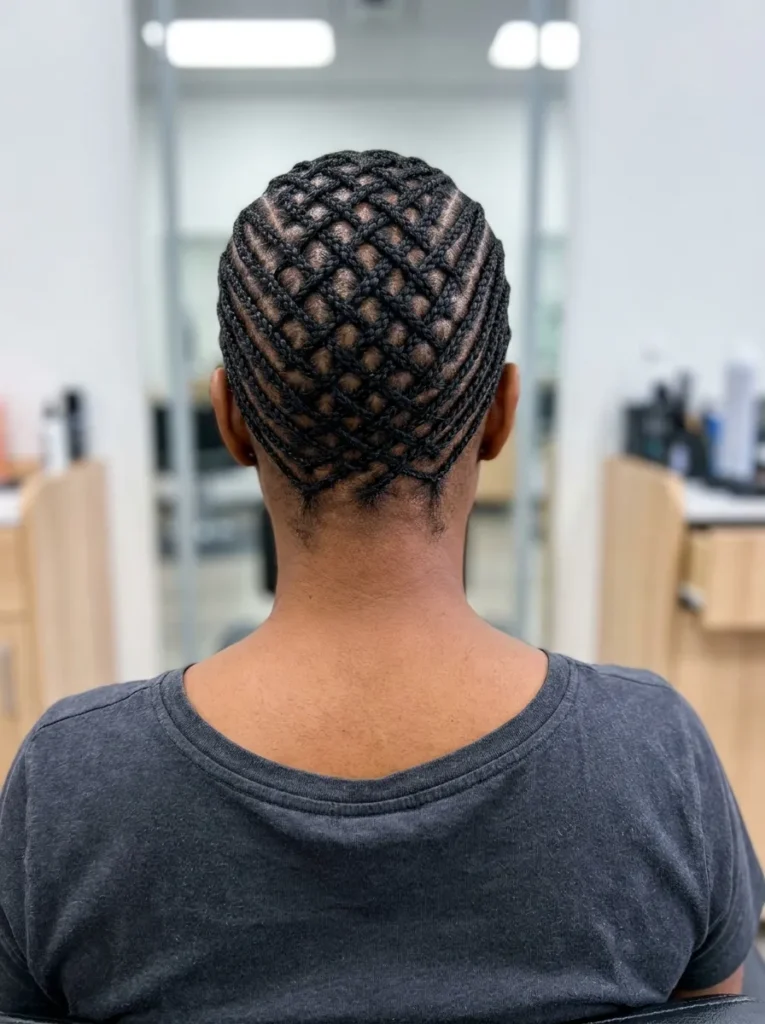
Very fine cornrows braided in two directions that cross over one another, forming a woven lattice across the scalp. Rows run diagonally left and diagonally right, and where they meet, the parting work creates a visible basket texture from crown to nape.
This is intricate, time-heavy work and priced accordingly, but the payoff is a style that stays sharp for weeks with almost no daily input. It suits hair that has been stretched or blow-dried first. Sleep in a bonnet rather than a scarf, since scarves flatten the raised weave pattern.
- Best For: Fine to medium hair that holds small partings cleanly
- Maintenance: Low — 4–5 weeks, no daily work at all
- Styling Time: Under 1 minute daily
- Face-Shape Fit: Close-to-scalp braiding exposes the whole face, which suits balanced oval and heart shapes best
- Pro Tip: Book a morning appointment — a full basket-weave takes five hours or more, and rushed crossings at the nape are where the pattern usually goes crooked
14. Braided Base Under a Curly Unit
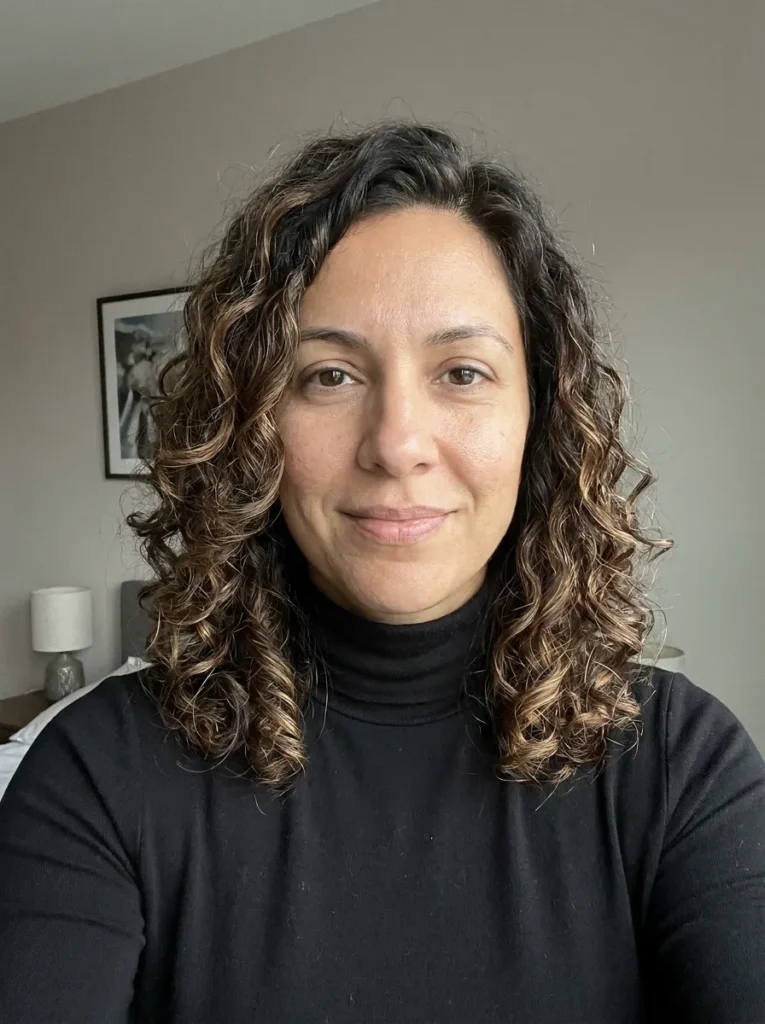
Your natural hair is cornrowed flat in a beehive or straight-back pattern, then covered with a curly wig secured at the perimeter. Nothing of your own hair is visible, and the curl pattern on top can be anything from a loose wave to a tight coil.
This is the most flexible option on the list, since you can remove the unit nightly and treat your scalp directly. Keep the braided base loose at the hairline, and alternate the parting pattern each time you re-braid so the same lines are not stressed repeatedly.
- Best For: Anyone who wants daily style changes without repeated manipulation
- Maintenance: Medium — re-braid the base every 2–3 weeks, wash the unit separately
- Styling Time: 5 minutes to secure and fluff
- Face-Shape Fit: Choose a middle part for square faces and a side part for round ones; the curl volume sits differently either way
- Pro Tip: Cornrow the base going backward, never forward — forward-facing rows create a ridge that shows through the unit at the crown
15. Chunky Halo Braid Without Extensions
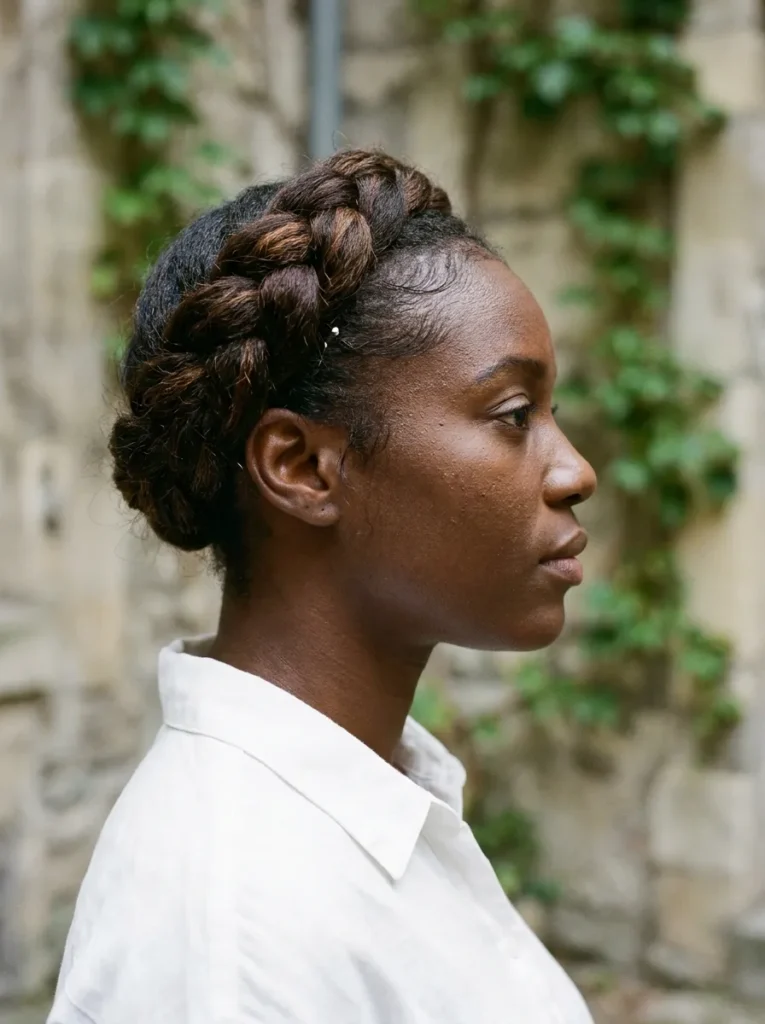
One thick three-strand braid taken from the nape, carried around the head just above the ears, and pinned back into itself. Each section is pancaked outward after braiding, so the braid looks fuller and softer than its actual thickness.
No added hair means no added weight, which makes this a genuinely gentle option for a rest week between installs. It needs mid-back length to circle the head fully. On shorter hair, run the braid halfway and pin the end behind one ear as a crown instead of a full loop.
- Best For: Longer natural hair taking a break from extensions
- Maintenance: Low — rebuild every 2–3 days
- Styling Time: 8 minutes
- Face-Shape Fit: The raised band adds structure above wide cheekbones and balances diamond shapes
- Pro Tip: Pancake only the outer edge of the braid, not both sides — widening the inner edge is what makes a halo braid stand away from the head instead of hugging it
Also Visit : 20 Lemonade Braids That Grow Out Without Losing Shape
16. Threaded African Hair Wrapping
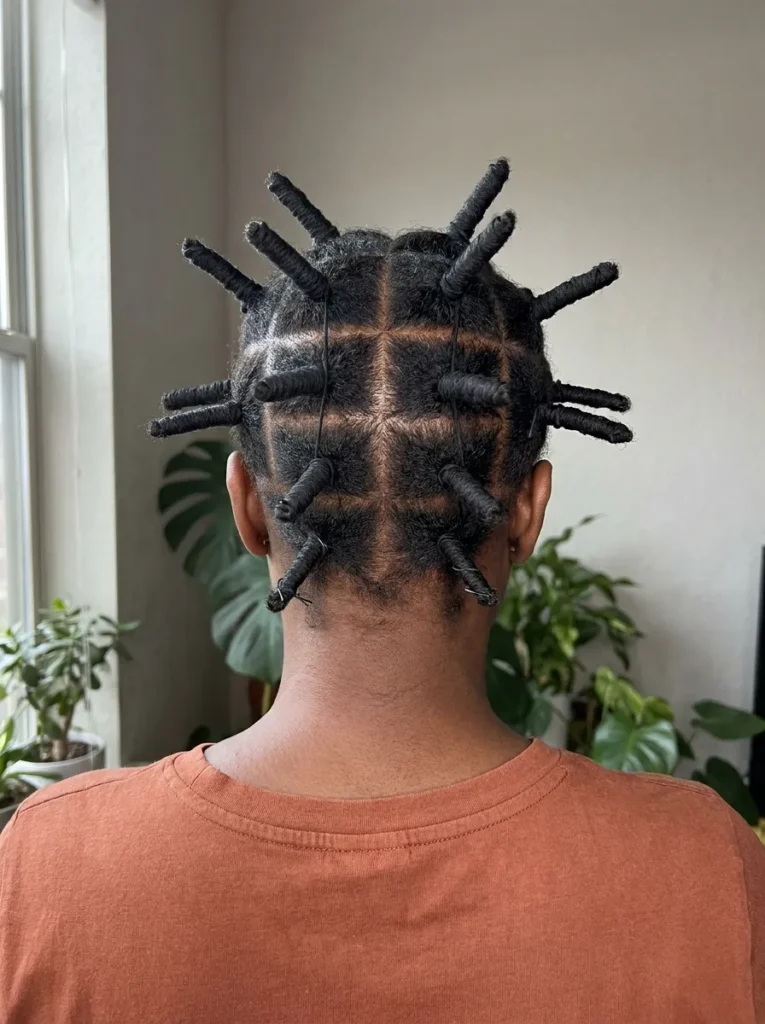
Sections of hair are wound tightly with black cotton thread from root to tip, forming stiff, standing spokes that can be left upright or bent and pinned into shapes. The technique, known as Irun Kiko, uses no extensions and no product at all.
Threading stretches hair without heat, which is why it keeps reappearing on natural hair boards. Wrap firmly but stop short of the scalp so the root can move. Leave it in under a week; unwrapped, the hair falls in a smooth, elongated stretch that is ready for twists or a braid-out.
- Best For: Fragile ends and anyone stretching hair without a blow dryer
- Maintenance: Low — wear 5–7 days, then unwind
- Styling Time: 40 minutes to wrap, none afterward
- Face-Shape Fit: Bending the spokes downward flatters long faces; leaving them upright suits shorter, rounder ones
- Pro Tip: Overlap the thread rather than winding it in a spiral gap — spaced wraps leave ridged dents in the hair when you unwind it
17. Lemonade Side-Swept Cornrows
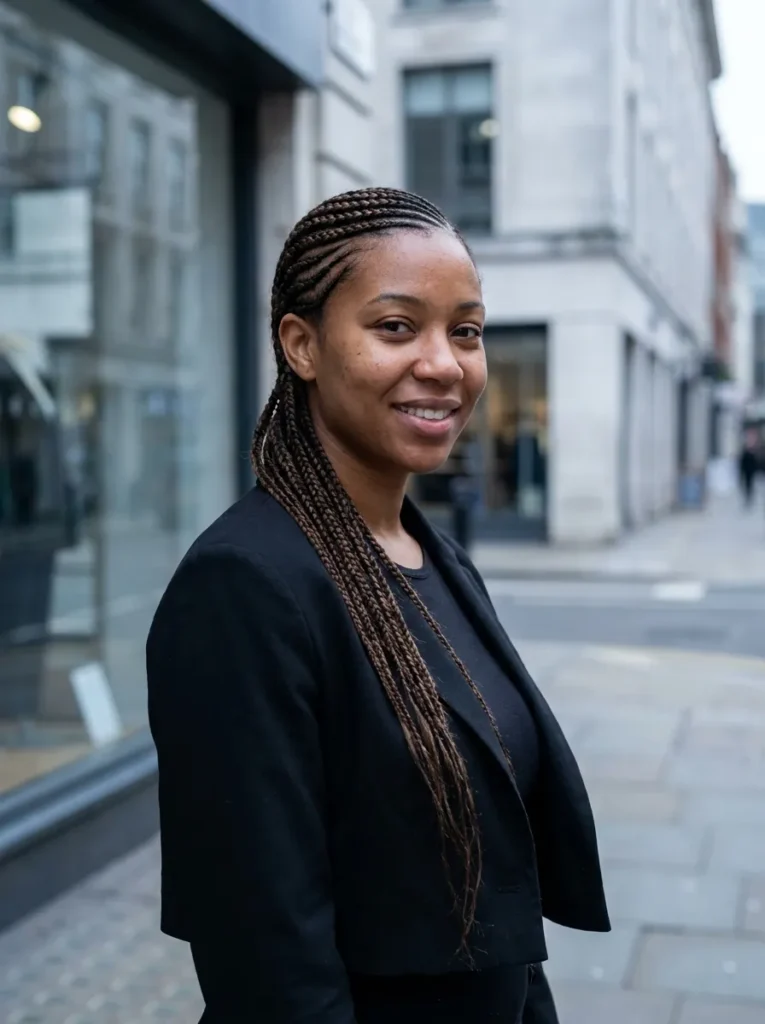
All cornrows travel horizontally to one side, starting at a deep side part and sweeping across the head before falling as free braids over one shoulder. The rows curve rather than run straight, and lengths often vary so the sweep looks layered.
The asymmetry is the whole appeal, and it changes your silhouette more than most braided styles. Because every row pulls in the same direction, ask for looser tension at the part itself. Rotate which side you part on at your next install rather than repeating the same direction each time.
- Best For: Medium to thick hair, and anyone wanting an asymmetric look
- Maintenance: Medium — 4 weeks, with the deep part fuzzing around week three
- Styling Time: 2 minutes daily
- Face-Shape Fit: The diagonal sweep breaks up symmetry, which flatters round and square faces
- Pro Tip: Have the braid nearest the part made slightly thicker than the rest — a thin first row exposes the scalp line and makes the whole sweep look sparse in photos
18. Double Coiled Space Buns
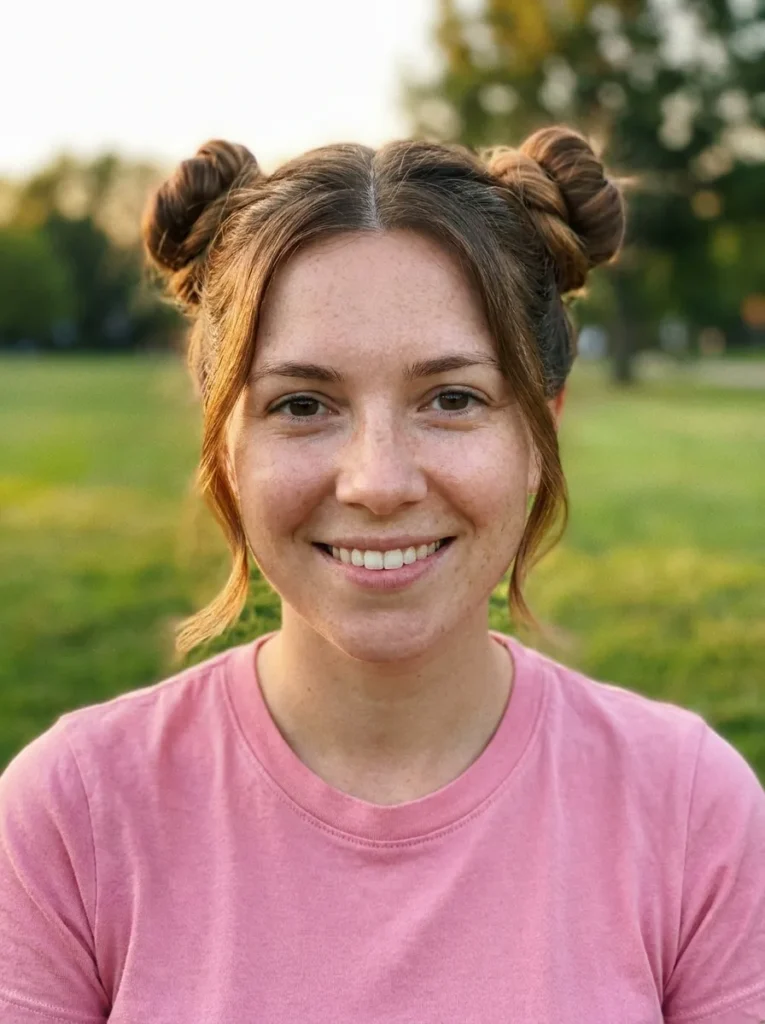
Hair is split down the centre, each half twisted from the root, then coiled into a rounded bun positioned high on either side of the head. Ends disappear inside the coil, and the twist pattern stays visible spiralling into the base of each bun.
Both buns can be built straight from a twist-out or from existing braids, which makes this a fast reset on day-four hair. Secure each with a fabric-covered elastic, then pin the coil edge rather than skewering through the middle. Loosen the front twists slightly for a softer hairline.
- Best For: Shoulder-length hair and second- or third-day styling
- Maintenance: Very low — holds 2–3 days
- Styling Time: 7 minutes
- Face-Shape Fit: Placing the buns further back suits round faces; higher and more forward works on oval shapes
- Pro Tip: Position the buns above your ear line but never directly on top — buns set too high tip forward through the day and drag the front sections with them
19. Yarn-Wrapped Twists
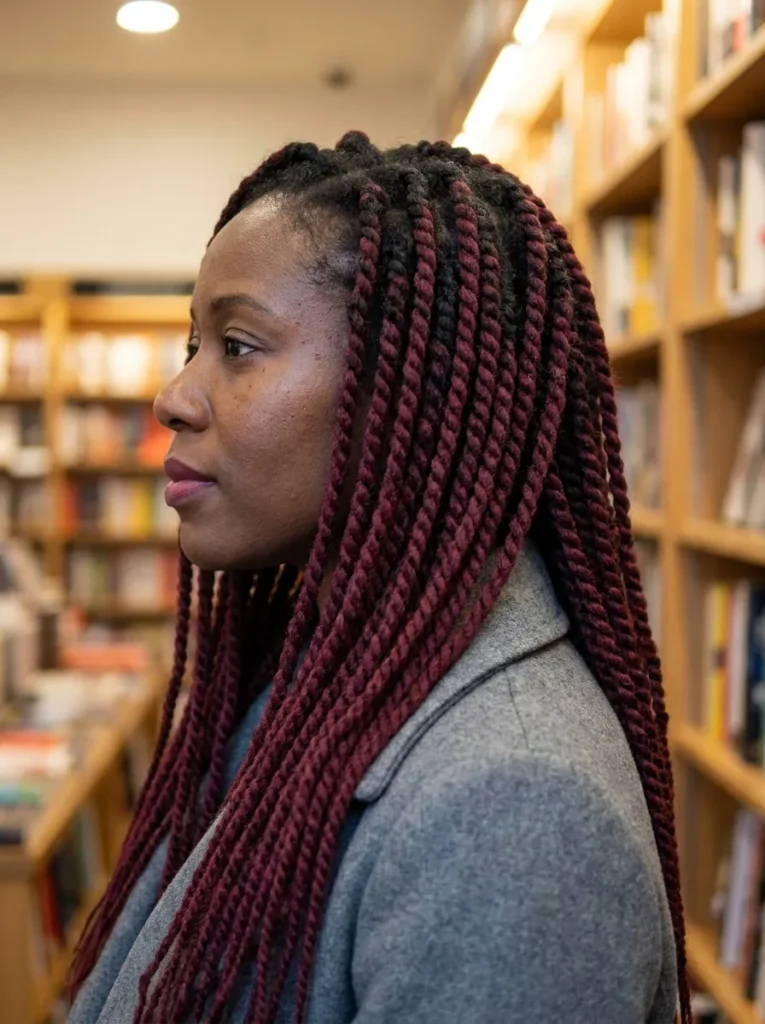
Acrylic or cotton yarn is twisted in with your own hair, producing matte, lightweight twists with a flat, fabric-like finish. Yarn holds colour intensely, so deep burgundy, rust or charcoal shows far more vividly than the same tone in synthetic hair.
Yarn weighs a fraction of kanekalon, which makes long lengths surprisingly comfortable. Choose cotton or acrylic rather than wool, which absorbs water and takes days to dry. Cut the ends bluntly and singe nothing — a knot at the tip is enough to keep the yarn twist sealed.
- Best For: Lightweight long styles and bold colour without dye
- Maintenance: Low — 4–6 weeks, though washing is slow
- Styling Time: 2 minutes daily
- Face-Shape Fit: Long, slim twists lengthen round faces and sit well with a centre part on oval ones
- Pro Tip: Wash with the twists gathered in a mesh laundry bag — loose yarn twists tangle around each other in the shower and take hours to separate
20. Roll, Tuck and Pin Updo
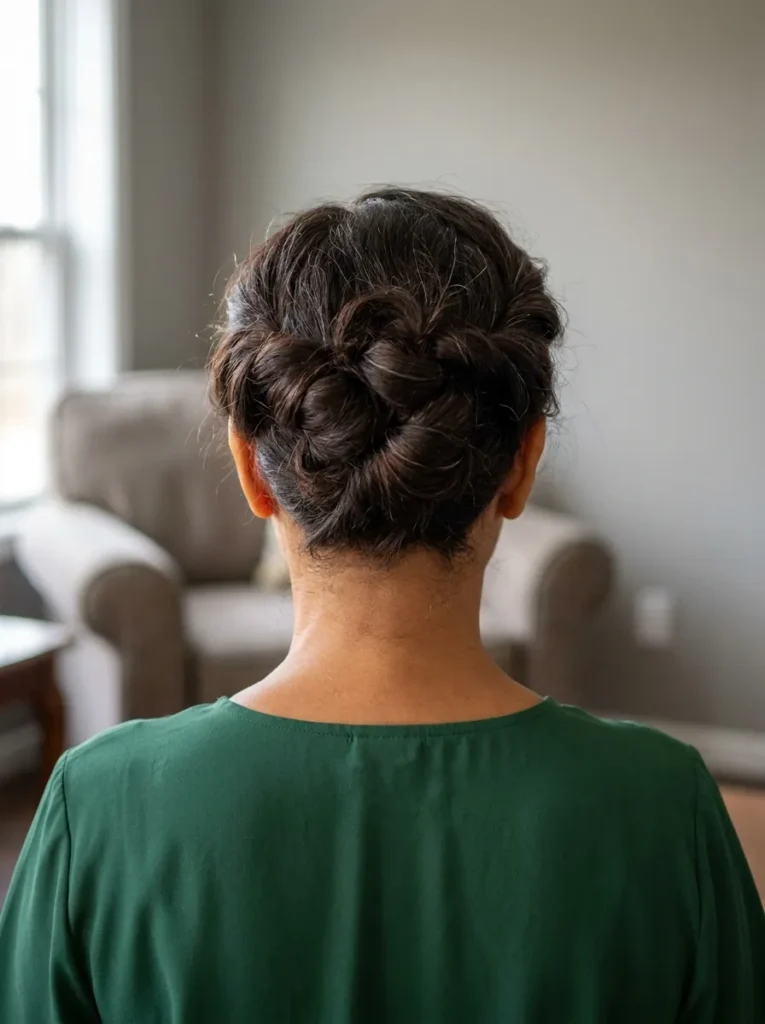
Loose sections of hair are rolled inward toward the scalp, tucked under, and pinned in place, forming a series of soft rolls with no visible ends anywhere. The finish is textured and slightly irregular rather than sleek, with the rolls varying in size across the head.
This is the salvage style for week-old braid-outs that have lost definition. Mist lightly, roll section by section from the perimeter upward, and pin each roll where it meets the one before. Because there is no tension and no added hair, it is one of the gentlest options here.
- Best For: Grown-out braid-outs and second-week natural hair
- Maintenance: Very low — holds 3–4 days with light re-pinning
- Styling Time: 10 minutes
- Face-Shape Fit: Keeping rolls low at the nape balances heart shapes; rolling higher lifts a rounder face
- Pro Tip: Roll the sections at your nape first while your arms are fresh — starting at the crown means the back rolls end up rushed and uneven, which is exactly where people see them
Frequently Asked Questions
How long should protective hairstyles stay in?
Four to six weeks is the practical window for most installs, and eight weeks is the outer limit. Beyond that, new growth at the root shifts the tension point and shed hair starts matting inside the braid. Styles with no added hair, like flat twists or threading, come out much sooner — usually within one to two weeks.
How much do these styles usually cost?
It varies widely by region and by braider, but knotless braids and faux locs typically fall in the $150–$300 range at most salons, with intricate work like basket-weave cornrows sitting higher because of the hours involved. Styles using your own hair — halo braids, flat-twist updos, threading — cost nothing beyond product and time.
Do protective hairstyles work on fine or low-density hair?
Yes, with adjustments. Choose knotless over knotted installs, keep sections medium rather than tiny, and avoid lengths past mid-back, since weight matters more than technique on fine hair. Threading, flat twists and roll-and-tuck updos are the gentlest options here because they add no external weight at all.
Will these styles actually help my hair grow?
They help you keep the length you already grow, which is a different thing. Tucking your ends away reduces daily combing, friction and breakage, so less hair snaps off between washes. That is genuine length retention. What protective styling cannot do is speed up growth at the follicle, and any style causing discomfort works against you.
How do I ask for a specific style at the salon?
Bring three photos from different angles rather than one front-facing shot, since the back and parting pattern are what braiders actually work from. State your preferred section size, finished length and part direction. Say clearly at the start if you want looser tension at the hairline — it is much easier than asking for a redo afterwards.
Choosing Your Next Style
The right pick usually comes down to how much you want to do each morning. If that is nothing at all, micro basket-weave cornrows or stitch feed-ins into a low bun will carry you for weeks. If you would rather stay flexible, threading or a roll, tuck and pin updo gives you a fresh look every few days with no salon chair involved. Try one style outside your usual rotation this season and see how your ends look after a month.