Hair Care Routine for Teens: Why Isn’t Yours Working?
The most common mistake in a teen hair routine isn’t a bad shampoo. It’s switching products every two weeks, so nothing ever gets a fair test. Your hair is also changing during these years, which makes guessing even harder.
Quick answer: A working hair care routine for teens is short. You wash with a gentle shampoo as often as your scalp needs, condition the lengths, and protect your hair from heat and rough handling. If it isn’t working, the cause is usually one of five things: washing too much or too little, products that don’t suit your hair type, sweat sitting on the scalp, heat without protection, or a scalp condition that needs proper treatment. The sections below help you work out which one it is.
What Changes in Teen Hair
Hormones ramp up the oil glands in your skin and scalp during puberty. That’s why hair that stayed fresh for days as a kid can look flat and greasy by the second morning. It’s normal. It doesn’t mean you’re washing badly.
Oil isn’t the only shift. Some people notice their texture changing too, so straight hair picks up a wave or curls loosen. Then come the new habits: sports, hats and helmets, hot tools, a first box of colour.
Sometimes a “routine problem” isn’t one at all. Constant itching and flakes are often dandruff, and the NHS guidance on dandruff and its treatment is a good place to start if that sounds familiar.
The Basic Hair Care Routine for Teens
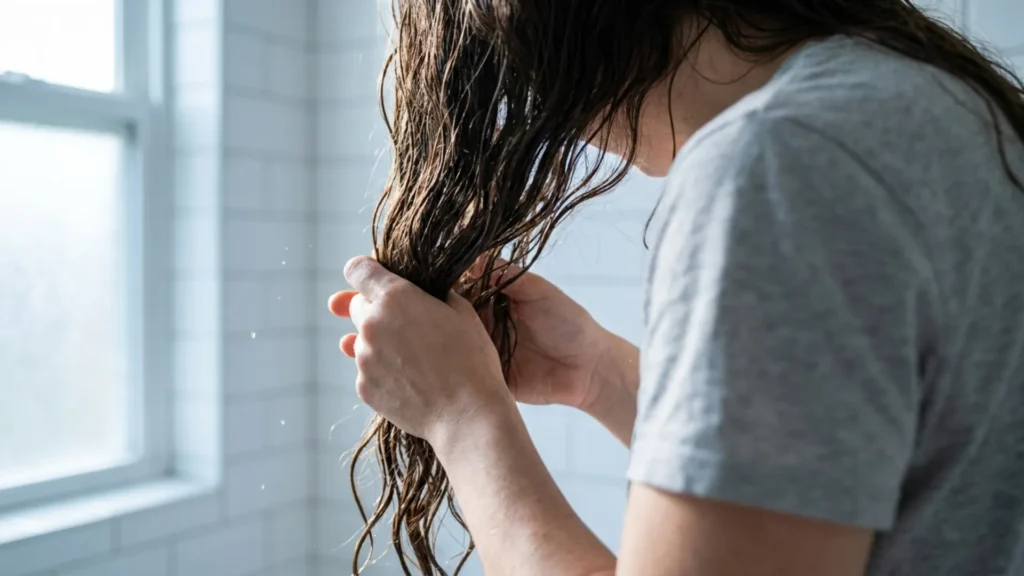
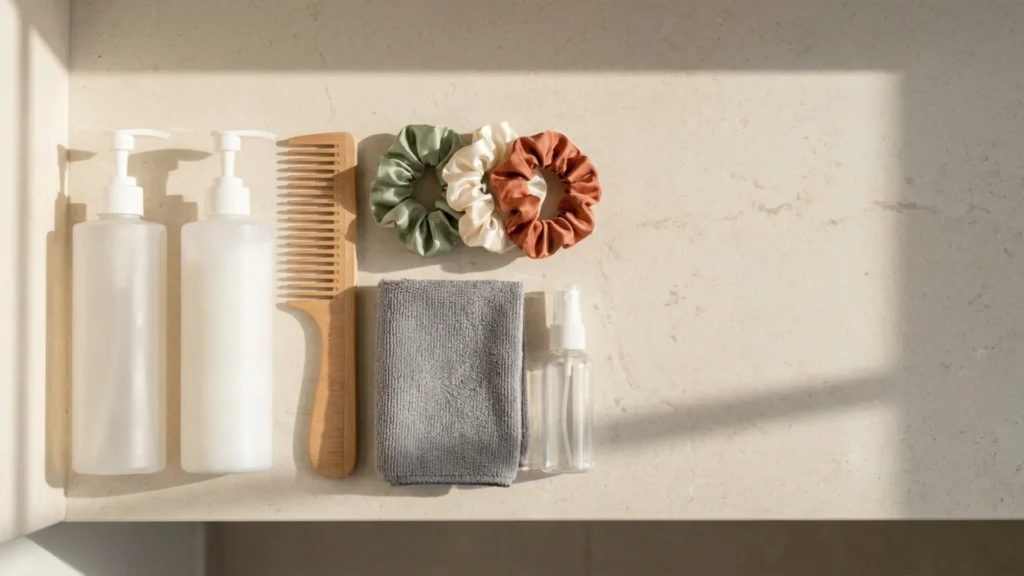
Start here before you troubleshoot anything. A hair care routine for teens only needs three products: a gentle shampoo, a conditioner, and a heat protectant if you use hot tools. Everything else is a bonus.
Wet your hair completely before the shampoo goes on. Use a coin-sized amount, rub it between your palms, and massage it into your scalp only. The suds that run down the lengths clean them well enough.
Rinse for longer than feels necessary. Leftover shampoo can leave the scalp itchy and the hair dull and coated.
Conditioner goes on from about ear level down. Skip the roots if your scalp gets oily fast. Leave it on while you wash the rest of you, then rinse.
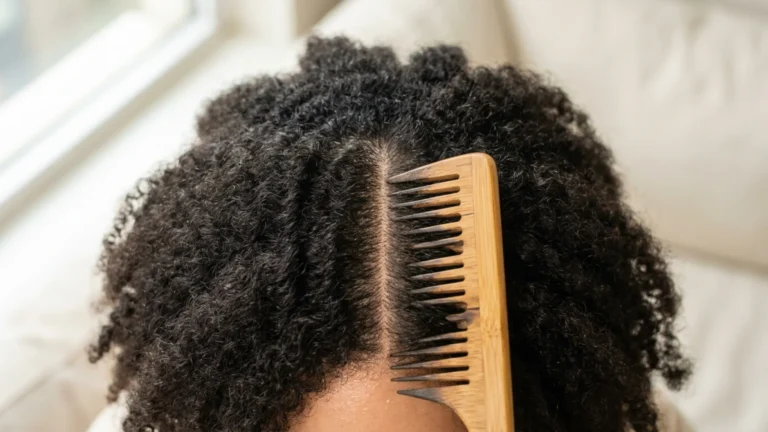
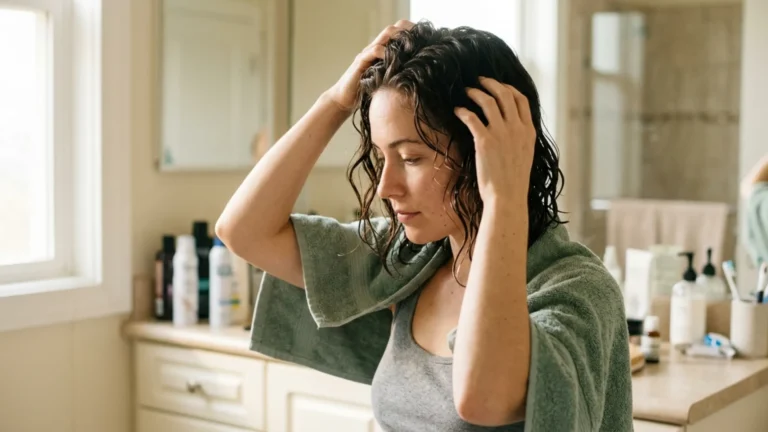
Drying matters more than most people expect. Squeeze water out with a soft cotton T-shirt or a microfibre towel instead of rubbing a rough towel over the surface. Detangle with a wide-tooth comb, starting at the ends and working up to the roots. Brushing wet hair from the top down is how a lot of breakage starts.
That’s the whole base routine. About once a week you can add a deeper conditioner if your ends feel dry, but you don’t have to.
Also Visit : Hair Care Routine After Wash: What Actually Matters First
Troubleshooting Your Routine, Symptom by Symptom
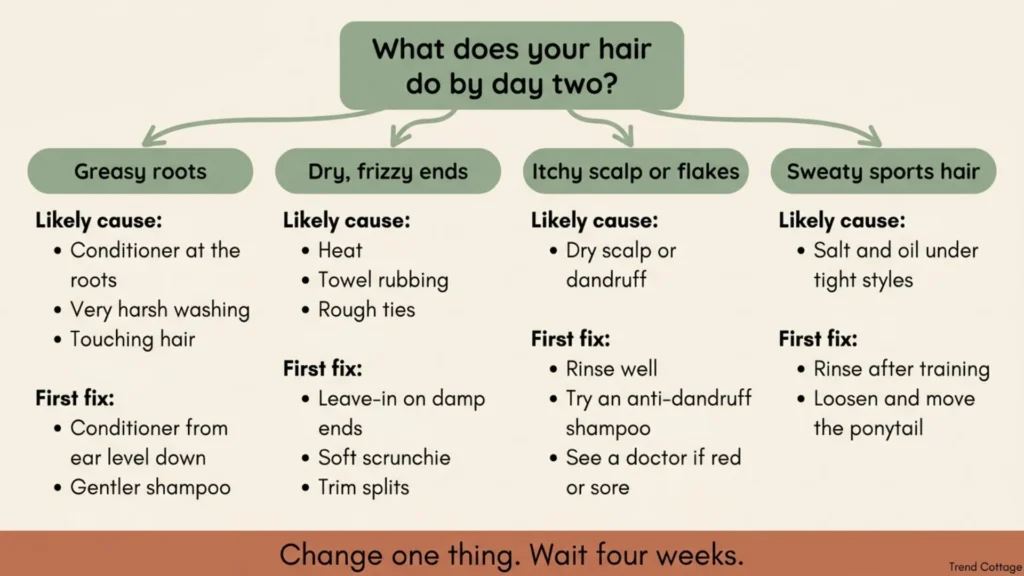
Find the symptom that sounds most like you, then change one thing at a time. Change three things at once and you’ll never know which one helped.
Greasy by the second day
Some oil by day two is normal. If your roots look greasy by lunchtime, check where your conditioner goes first, because product at the roots weighs hair down fast. Next, look at how you wash. A very strong shampoo used daily can leave a scalp feeling stripped, and some people find it then feels oily again quickly, so a gentler formula is worth a try. Last, watch your hands. Pushing your bangs aside all day moves oil from your fingers and skin into your hair.
Dry, frizzy ends
Frizz usually means the outer layer of each strand is rough and the hair is losing moisture. Hot tools, towel rubbing and elastics with metal joins all rough it up. Put conditioner on from ear level down, add a leave-in product to damp ends, and switch to a soft scrunchie or a coil-style tie. Split ends need a trim. No product glues a split back together.
Itchy scalp or white flakes
Dry scalp and dandruff look alike but aren’t the same thing. Dry-scalp flakes tend to be small and dry, and your skin often feels dry elsewhere too. Dandruff flakes tend to be larger and can look a bit oily. Mayo Clinic’s dandruff overview explains what causes dandruff.
Anti-dandruff shampoos with ingredients such as zinc pyrithione, salicylic acid or ketoconazole are sold in most pharmacies. Ask a parent or guardian to help you choose one. See a doctor if the scalp is red, sore or crusty, or if nothing improves after a few weeks.
Sweaty sports hair
Sweat on its own isn’t harmful. Trouble starts when salt and oil sit under a tight ponytail, hat or helmet all day. Rinse your hair with plain water after training if you can’t shampoo, and shampoo when it’s properly sweaty. Move your ponytail around, because a tight style worn in the same spot every day pulls on the roots and can break hairs along the hairline. Swimmers should wet their hair with clean water before getting in the pool, then rinse and condition straight after.
How Often to Wash by Hair Type
There isn’t one right schedule. Oil slides quickly down straight hair and struggles to travel along curls and coils, so the right wash rhythm in a hair care routine for teens depends on hair type. Use this table as a starting point, then adjust to how your scalp feels.
| Hair type | Starting point for washing | Watch out for |
|---|---|---|
| Straight or fine | Every day or every other day | Roots that go flat first |
| Wavy | Every two to three days | Frizz at the ends |
| Curly | Once or twice a week | Dryness and tangles |
| Coily or tightly textured | About once a week, sometimes less | Breakage; detangle with conditioner in |
If your scalp itches or looks flaky between washes, wash a bit sooner. If your hair feels stiff and squeaky afterwards, wash a bit less or use less shampoo. Sweaty days override the calendar for everyone.
Also Visit : What’s the Best Dyed Hair Care Routine for Color That Lasts?
Heat, Dye and Chemical Services
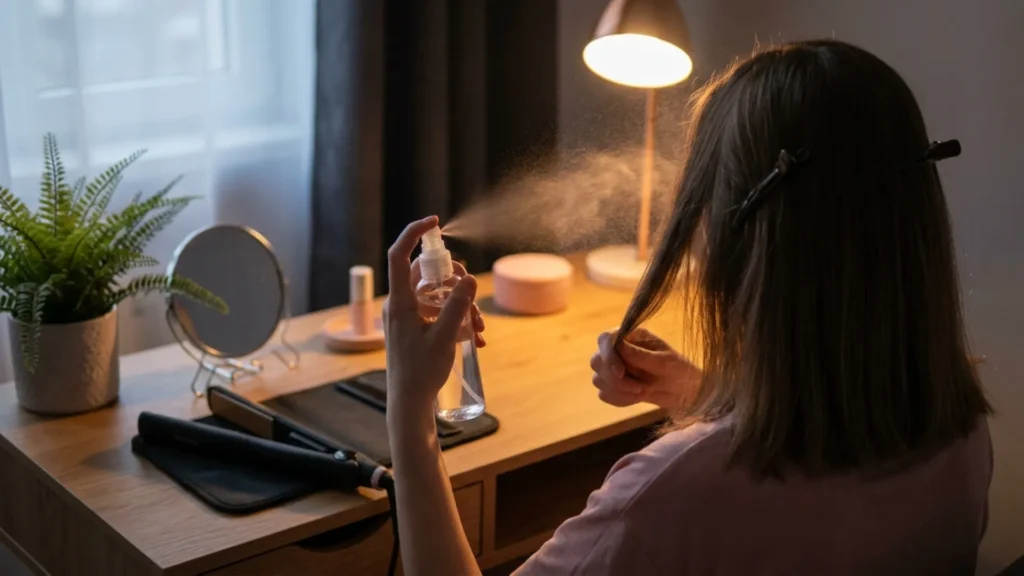
Flat irons and curling irons reshape hair with heat, and the same heat can dry out and weaken it. Use a heat protectant before every session and never straighten hair that’s still damp. Begin at the lowest temperature that does the job. Fine or already coloured hair usually needs less heat than thick, untreated hair.
Colour is where the risk jumps. Always patch test a box dye 48 hours before you use it, following the instructions on the box [EXTERNAL SOURCE NEEDED: a specific AAD or FDA page on patch-testing hair dye]. A rinse-out or semi-permanent colour is a gentler place to start than permanent dye.
Bleach and relaxers are stronger still. Left on too long or applied wrong, they can burn the scalp and snap hair. Talk to a parent or guardian first, and think about booking a stylist instead of doing it at home. Some smoothing treatments have also been flagged by regulators for releasing formaldehyde when heated, so ask a professional before trying one.
If you’ve already coloured or heat styled and your ends feel rough, cut back on both for a few weeks and add a deeper conditioner once a week.
A Four-Week Test Before You Change Anything
A hair care routine for teens needs a fair trial. Hair and scalp react slowly, so judging a product after two washes tells you very little. Here’s a simple plan.
- Week one: use only shampoo and conditioner, and stop trying new products.
- Week two: note how your roots look on day two and how your scalp feels between washes.
- Week three: if one problem remains, add one product aimed at it, such as a leave-in for dry ends.
- Week four: compare with week one. Keep what helped and drop what didn’t.
If flakes, itching or shedding get worse during the test, stop guessing and see a doctor. Persistent scalp problems aren’t something to fix with more products.
Also Visit : Hair Care Routine for Healthy Hair: Build Yours in 3 Steps
Products Worth Buying and Skipping
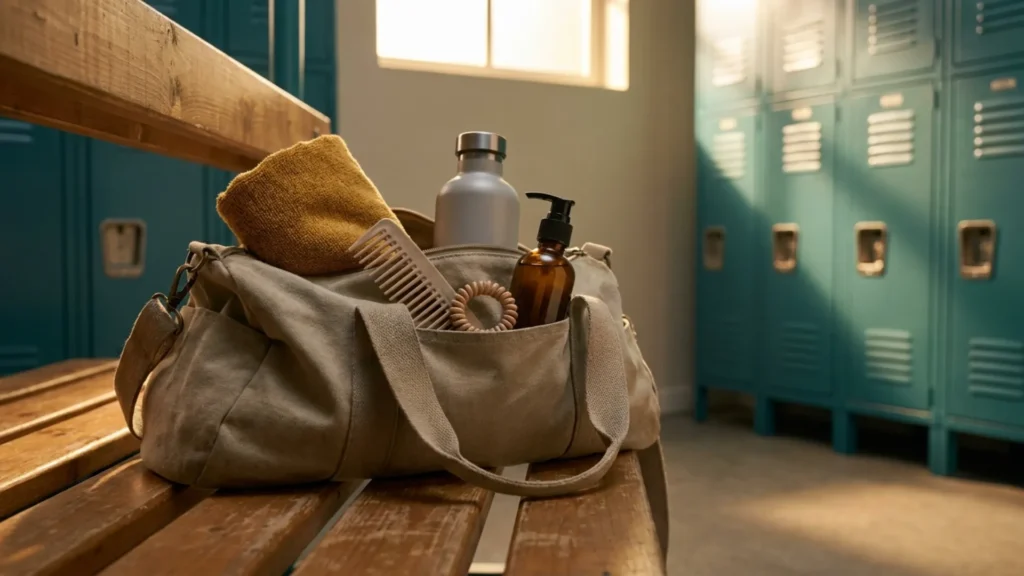
You need far less than the shelves suggest. A gentle shampoo, a conditioner, a wide-tooth comb, soft hair ties and a heat protectant cover almost everyone. A leave-in helps if your ends run dry.
Be wary of anything that promises to speed up growth. Hair grows from the follicle under the skin, and no rinse-off product changes how fast that happens. Daily dry shampoo is worth skipping too, because layers of it can build up on the scalp. Sulfate-free formulas suit some people, but they aren’t required unless a stronger shampoo leaves your scalp dry or itchy.
Questions Teens Ask
Can I use my parent’s shampoo?
Usually, yes, if it suits your hair type and doesn’t sting or itch. Medicated shampoos are built for specific problems, so ask before borrowing one.
Does cutting hair make it grow faster?
No. Growth happens at the follicle. A trim removes split ends, so hair breaks less and keeps its length.
Is it bad to sleep with wet hair?
It isn’t dangerous. Wet strands are fragile and tangle against a pillow, so you might wake up with knots and frizz. Let your hair dry mostly first, or loosen it into a braid.
Key Takeaways
- Give any hair care routine for teens four weeks, and change one thing at a time.
- Puberty oil is normal. Keep conditioner off the roots and wash by hair type and sweat, not the calendar.
- Small dry flakes usually point to dry scalp, larger oily ones to dandruff. A red, sore or crusty scalp means see a doctor.
- Use heat protectant every time, and talk to a parent or guardian before bleach, relaxers or smoothing treatments.
- Only a trim fixes split ends.
Which symptom sounds most like your hair? We’d love to hear it in the comments. Save this hair care routine for teens so the four-week test is ready when you need it.
This article is for general information only and isn’t medical advice. For persistent hair loss, scalp pain, or sudden shedding, see a dermatologist or trichologist.
Written by Anna Anderson for Trend Cottage.