Why Isn’t Your Hair Growing? A Natural Hair Growth Guide

You’ve cut out heat styling. You take your vitamins most days. You even switched shampoos twice this year, just in case. And when you check your length in the mirror, it looks exactly like it did six months ago. So what’s actually going on?
Quick answer: in most cases, hair growth hasn’t stopped at all — it’s just become invisible under shedding or breakage that’s happening at the same rate as the new growth. True stalled growth is less common than it feels, and it usually traces back to one of a handful of causes: a resting phase in the hair’s natural cycle, a nutrient gap, scalp stress, or damage that’s snapping hair off as fast as it grows. The fix depends on which one you’re actually dealing with.
What’s Actually Happening: The Hair Growth Cycle
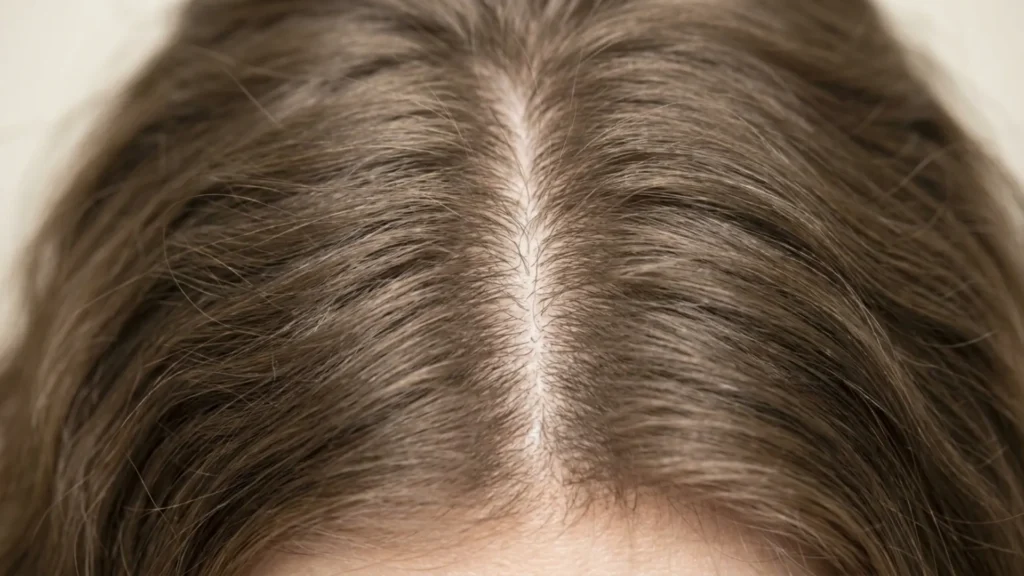
Every hair on your head is on its own private timeline. At any given moment, most of your strands, somewhere around 85 to 90 percent, are in the anagen phase, actively growing. This phase can last anywhere from two to seven years depending on genetics, which is also why some people can grow hair down to their waist and others plateau at their shoulders no matter what they do.
After anagen comes a short transition called catagen, lasting a few weeks, where the hair follicle shrinks and growth slows to a stop. Then telogen, the resting phase, kicks in for one to four months. The strand just sits there, not growing, until it eventually sheds to make room for a new one. At any point in time, roughly 10 to 15 percent of your hair is in this resting stage. That’s normal. It’s not a sign anything is wrong.
The problem is that from the outside, a hair in telogen looks identical to a hair that’s been damaged. You can’t tell by looking whether a strand simply hasn’t started growing yet or whether it’s stuck because something is interfering with it. That’s why the next section matters more than any product recommendation.
Also Visit : Natural Hair Growth Tips That Actually Move the Needle
Breakage, Shedding, or No New Growth? How to Tell the Difference
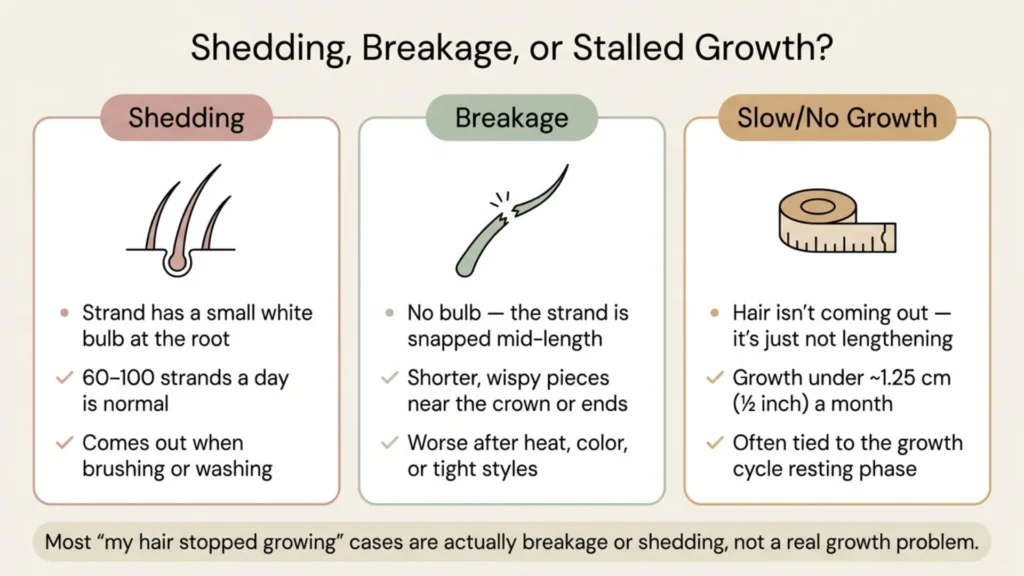
This is the part most natural hair growth advice skips, and it’s the part that actually tells you what to fix. Grab a few strands that have come out, either from your brush or the shower drain, and look closely.
If you see a tiny white or translucent bulb at one end, that’s a root. The strand went through its full cycle and shed naturally. Losing 60 to 100 hairs a day this way is completely normal, not a growth problem at all.
If the strand has no bulb and instead looks snapped, frayed, or uneven at one end, that’s breakage. Breakage is the single most common reason hair “won’t grow” past a certain length. New hair is coming in just fine at the root, but it’s snapping off further down before it ever gets the chance to get longer. Heat styling, chemical color, tight hairstyles worn often, and rough towel-drying are the usual suspects.
If neither is happening, and your hair genuinely isn’t lengthening at all over several months, that points toward something slowing the growth phase itself: a nutrient shortfall, a scalp issue, or a temporary shock to the system like illness, extreme stress, or rapid weight loss, which can push a larger-than-usual share of hair into the resting phase at once.
Knowing which of these three you’re dealing with changes everything about what you do next. A breakage problem needs less handling and more moisture. A shedding problem might need patience and time. A stalled-growth problem needs you to look at what’s happening beneath the surface.
The Biggest Blockers to Natural Hair Growth
A few causes show up again and again, and most of them are fixable without anything drastic.
Low iron and low protein intake are near the top of the list. Hair is built from a protein called keratin, and hair follicles are some of the most metabolically active cells in the body, which means they’re also some of the first to get deprioritized when the body is short on resources. If you’re chronically tired, notice more shedding than usual, or you’ve recently cut calories or animal protein significantly, that’s worth ruling out with a basic blood panel rather than guessing.
Scalp buildup is another quiet blocker. Dry shampoo, styling products, and natural oil can accumulate at the scalp over time and, in theory, crowd the follicle opening. The evidence for this directly slowing growth is thin, but a congested scalp is also less comfortable and can make styling damage worse, so keeping it clean is still worth doing on its own merits.
Tight styles worn constantly, think slicked-back buns, tight braids, or ponytails at the same spot every day, put ongoing tension on the follicle. Over years, this can cause traction alopecia, a form of hair loss along the hairline that starts as thinning and can become permanent if the tension continues. Rotating styles and giving the hairline a break isn’t just a comfort thing.
Thyroid conditions, certain medications, and hormonal shifts like postpartum changes or perimenopause can also push more hair into the resting phase than usual. This kind of shedding tends to be diffuse (thinning all over, not in one patch) and shows up two to four months after the trigger, which is why people are often confused about what caused it. According to the American Academy of Dermatology’s overview of hair loss types, this pattern, called telogen effluvium, is one of the more common and most treatable causes of sudden shedding.
Also Visit : How to Build a Hair Growth Oil Recipe for Your Hair Type
A Realistic Routine for Supporting Natural Hair Growth

There’s no single routine that fixes every cause above, but a few habits genuinely help most people, and they’re worth doing consistently rather than perfectly.
Start with how you handle wet hair, since it’s at its weakest right after a wash. Skip the rough towel-scrunching and switch to gentle squeezing with a microfiber towel or an old cotton t-shirt. Detangle from the ends upward with a wide-tooth comb, not a brush, before you ever reach for heat.
Scalp massage has a small but real research base behind it. A short study on standard scalp massage found it was associated with thicker hair over several months, likely by stretching the cells around the follicle and improving local blood flow. Two to five minutes a day, using your fingertips rather than nails, costs nothing and has essentially no downside.
Protect your ends specifically. They’re the oldest, most weathered part of every strand, so a light leave-in or oil sealed onto just the last few inches (not the scalp) reduces the friction that turns into breakage over weeks. If you sleep on cotton pillowcases, switching to satin or silk cuts down on the overnight friction that shows up as tangles and split ends by morning.
Finally, get a trim every 10 to 12 weeks, even if you’re trying to grow your hair, not despite it. Split ends travel up the shaft over time, and cutting them off early stops a small problem from turning into several inches of damage you’ll eventually have to remove anyway.
Popular Natural Remedies: What Actually Has Evidence Behind It

Natural hair growth advice is full of oils and supplements, and the honest answer is that the evidence varies a lot from one to the next.
| Remedy | What it’s claimed to do | What the evidence actually shows |
|---|---|---|
| Rosemary oil | Stimulates growth similarly to minoxidil | Small clinical trials show promising results, though most are short and use it alongside a carrier oil, not undiluted |
| Castor oil | Thickens and speeds up growth | No strong clinical evidence for growth specifically, but its thickness can reduce breakage by sealing the strand |
| Biotin supplements | Fixes thinning and slow growth | Only helps if you’re actually deficient, which is uncommon; excess biotin can also skew thyroid lab results |
| Onion juice | Boosts circulation and growth | One small trial showed benefit for patchy alopecia areata, not for general slow growth |
The pattern across most of these is the same: mild, plausible mechanisms, small studies, and a lot of anecdote filling in the gaps left by research that hasn’t been done at scale yet. None of them will out-perform addressing an actual deficiency or stopping ongoing breakage, but used realistically, several are low-risk enough to be worth trying alongside the basics.
Also Visit : Does Shampoo for Hair Growth Actually Work?
When to See a Professional Instead of Waiting It Out
Most slow growth resolves with time and a few habit changes. A few signs mean it’s worth getting checked rather than waiting: shedding that’s dramatically heavier than usual and lasts more than three months, a widening part or visible scalp in a specific spot rather than all-over thinning, or shedding that started right after starting a new medication. The NHS guidance on hair loss notes that patchy or sudden loss is more often linked to an underlying condition than gradual, all-over thinning is, which is part of why the two are worth treating differently.
A dermatologist can run bloodwork, check your scalp under magnification, and rule out things like alopecia areata or a thyroid issue in a single visit, which is faster than months of trial and error with products.
This article is for general information only and isn’t medical advice. For persistent hair loss, scalp pain, or sudden shedding, see a dermatologist or trichologist.
Key Takeaways
- Most “my hair stopped growing” complaints are actually breakage or normal shedding, not a stalled growth cycle.
- At any time, 10–15% of your hair is naturally resting, not growing — that’s expected, not a problem.
- Iron, protein, and thyroid function are the most common medical culprits behind genuinely slower growth.
- Rosemary oil has the strongest early evidence among natural remedies; most others help around the edges at best.
- Sudden, heavy, or patchy loss deserves a professional check rather than more waiting.
Frequently Asked Questions
How fast does hair actually grow per month?
On average, about 1.25 cm (half an inch) a month, though this varies by genetics, age, and health. That works out to roughly 15 cm (6 inches) a year for most people, which is why growth often feels slower than it actually is when you’re only checking every few weeks.
Can hair that’s thinned from stress or diet grow back?
In most cases, yes. Telogen effluvium, the diffuse shedding tied to stress, illness, or diet, is usually temporary once the underlying trigger is resolved, though regrowth can take several months to become visible.
Is scalp massage actually backed by research, or is it just a trend?
There’s a small but genuine research base showing consistent scalp massage is linked to thicker hair over time, likely through improved local blood flow and mechanical stretching of the follicle’s supporting tissue.
Does cutting hair often really make it grow faster?
No, trims don’t affect the rate hair grows from the scalp. What they do is remove split ends before the damage travels further up the strand, which prevents length loss that would otherwise offset new growth.
Should I stop washing my hair as often to help it grow?
Not usually. Washing itself doesn’t slow growth. What matters more is how gently you handle hair while it’s wet, since that’s when it’s most vulnerable to breakage.
Written by Anna Anderson for Trend Cottage.