Hair Growth Recipes That Actually Match Your Hair Problem
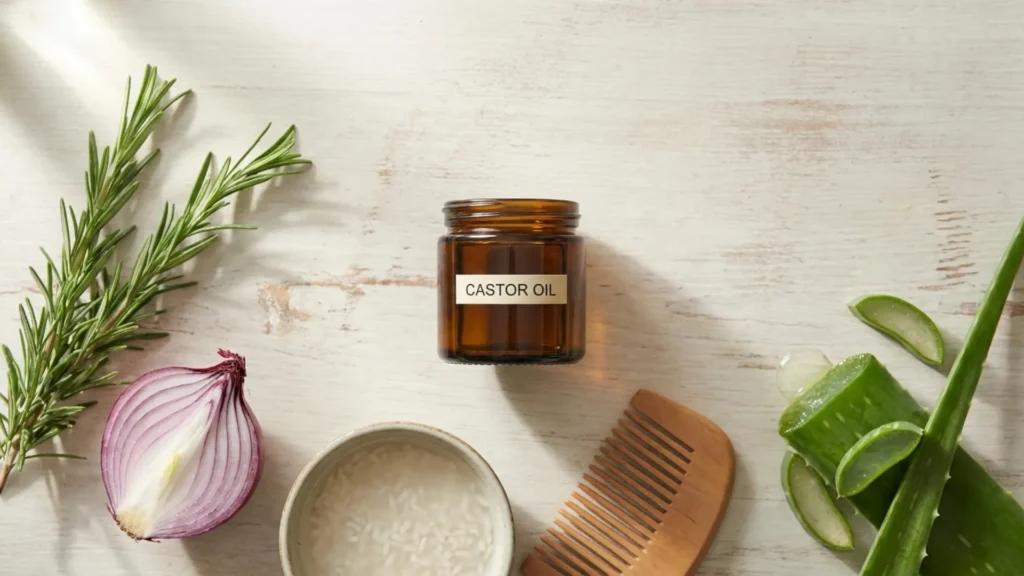
Most people pick a hair growth recipe the same way they pick a candle scent: whatever’s trending on Pinterest that week. Rice water one month, rosemary water the next, onion juice whenever someone posts a dramatic before-and-after. The problem is that these recipes aren’t interchangeable. A recipe built to calm a flaky scalp won’t do much for hair that’s snapping off at the ends, and a recipe meant to thicken a thinning hairline won’t fix hair that simply can’t hold onto length.
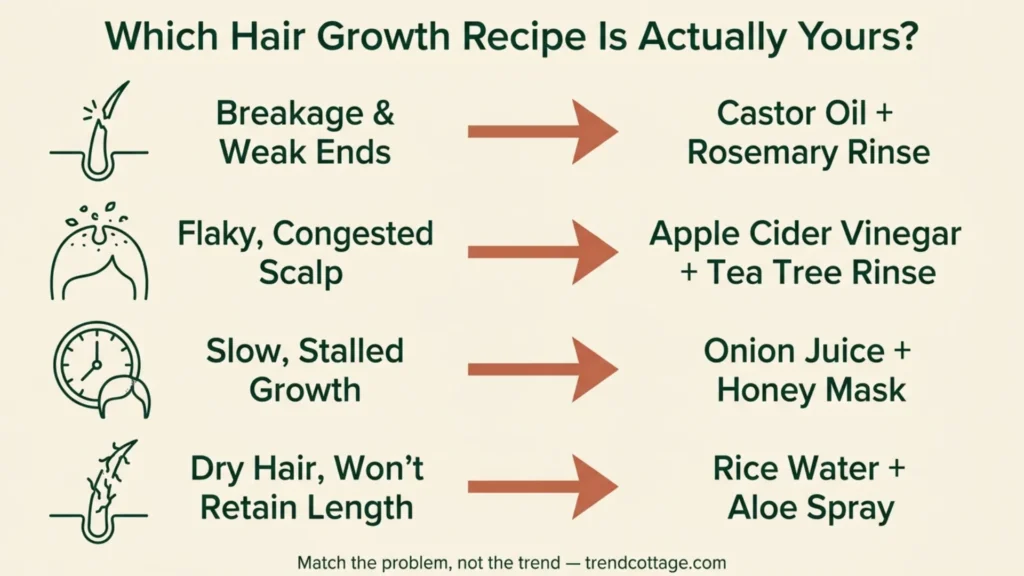
Quick answer: The most effective hair growth recipes are matched to what’s actually slowing your hair down — breakage, a congested scalp, stalled new growth, or dryness that keeps hair from retaining length. Below are four targeted recipes, one for each of these, plus a realistic timeline for when you’d actually notice a difference.
Why the “Right” Recipe Depends on What’s Actually Going On
Hair growth recipes work in one of a few ways: they can support the scalp environment new hair grows from, add slip and lubrication so strands break less, or simply moisturize hair that’s too dry to hold onto any length it does grow. None of them make hair grow faster in the literal sense — hair grows at roughly the same rate for almost everyone, about half an inch a month. What changes is how much of that growth you actually get to keep.
That’s the part most articles skip. If your ends keep snapping off, you can grow hair at a completely normal rate and still feel like it never gets longer. If your scalp is inflamed or flaky, that irritation can genuinely interfere with the hair follicle’s growth cycle. And if your hair is dry and brittle, it doesn’t matter how much new hair comes in at the root — it won’t survive long enough to show.
| What you’re noticing | Likely cause | What actually helps |
|---|---|---|
| Ends snap or split easily | Mechanical breakage, not slow growth | Oil-based recipe with slip, gentle detangling |
| Flaky, itchy, or oily scalp | Scalp buildup or mild inflammation | Clarifying, antimicrobial rinse |
| Thinning at the hairline or crown | Shortened growth phase at the follicle | Circulation-boosting, follicle-support recipe |
| Hair grows but never gets longer | Poor moisture retention, dry ends | Humectant-rich moisture treatment |
Also Visit : Hair Growth Spray Guide: What Actually Speeds
The Recipe for Breakage and Weak Ends
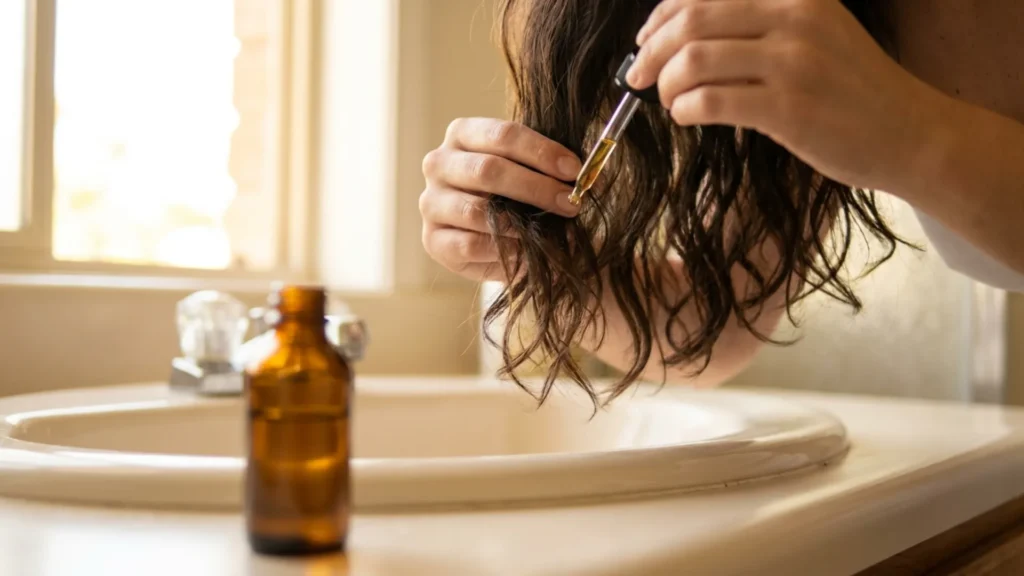
If your hair feels like it grows to a certain length and then just… stops, breakage is almost always the reason. This recipe leans on slip and lubrication rather than anything that claims to “feed” the hair, because the goal here is protection, not stimulation.
You’ll need: 2 tablespoons castor oil, 1 tablespoon jojoba oil, 3–4 drops rosemary essential oil. Warm the oils slightly between your palms, then work them through the mid-lengths and ends first, saving the scalp for last so you’re not sitting in oil any longer than needed. Leave it on for 30–45 minutes under a shower cap, then shampoo out thoroughly — castor oil is thick and will leave hair looking greasy if it’s not fully rinsed.
Rosemary oil has some of the more credible research behind it out of any popular hair ingredient. a clinical trial comparing rosemary oil to minoxidil found comparable improvement in hair count after six months, though it’s one small study, not a guarantee for everyone. Use it as a supporting ingredient here, not the main event.
Use this recipe once or twice a week. Any more than that and the oil buildup can actually make fine hair look flatter and feel heavier, which sometimes gets mistaken for hair “not growing.”
The Recipe for a Flaky or Congested Scalp
A scalp that’s constantly flaky, tight, or itchy isn’t a great environment for new hair to grow in. This recipe is meant to clarify, not moisturize, so don’t layer it with heavy oils on the same day.
You’ll need: 2 tablespoons apple cider vinegar, 1 cup water, 2–3 drops tea tree oil. Mix in a spray bottle or small bowl, apply directly to the scalp with a cotton pad or applicator bottle, and let it sit for 5–10 minutes before rinsing. The smell fades once hair is dry, so don’t judge it mid-application.
This works best as a once-weekly rinse rather than a daily habit. Apple cider vinegar is acidic enough that overusing it can leave a dry, tight scalp feeling even tighter, which defeats the point entirely.
If flaking comes with real soreness, patches, or persistent redness rather than mild dryness, that’s worth a second look beyond a DIY rinse. The Cleveland Clinic’s overview of dandruff causes is a decent gut check for whether what you’re dealing with is ordinary flaking or something that needs a medicated shampoo instead.
The Recipe for Slow, Stalled Growth
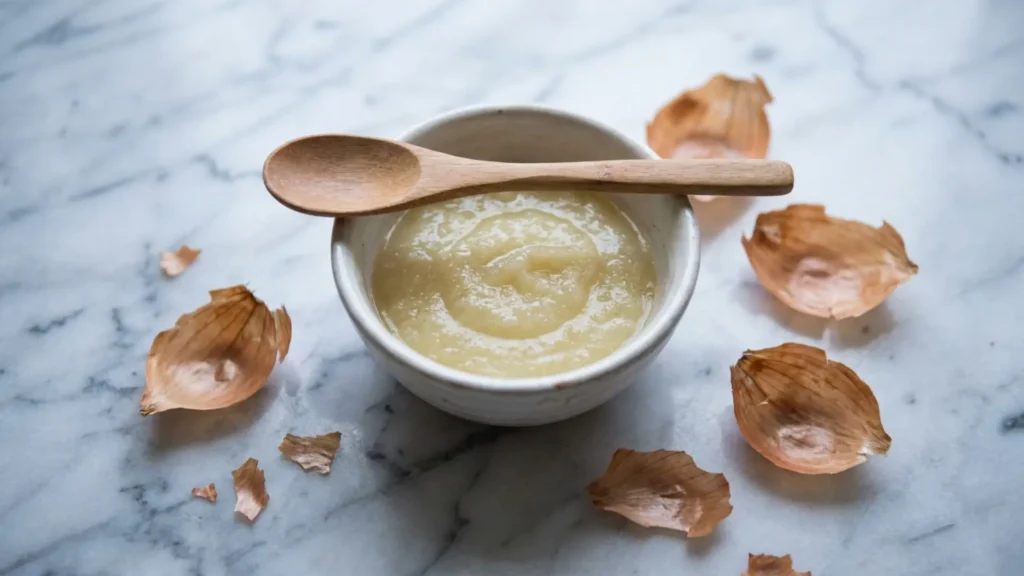
This is the recipe people reach for when they feel like hair simply isn’t coming in — thinning at the crown, a receding hairline, or new growth that seems to have paused. Onion juice is the least pleasant recipe on this list by a wide margin, but it also has some of the oldest research behind it for this specific use.
You’ll need: Half a small onion, blended and strained through a fine cloth to get pure juice, plus 1 teaspoon raw honey mixed in to cut the smell slightly and add some moisture back. Apply directly to the scalp with a cotton pad, focusing on thinning areas, and leave it on for 30 minutes before shampooing twice to fully clear the smell.
Small studies going back over two decades have looked at onion juice for patchy hair loss with some promising results, though the research pool is limited and mostly involves specific types of hair loss rather than general thinning. It’s reasonable to try, but it isn’t a guaranteed fix for every kind of shedding.
Realistically, give this one 8 to 12 weeks of consistent use, twice a week, before deciding whether it’s doing anything. Hair growth cycles are slow. Judging any scalp treatment after two weeks will always end in disappointment, no matter how good the recipe actually is.
Also Visit : Why Isn’t Your Hair Growing? A Natural Hair Growth Guide
The Recipe for Dry Hair That Won’t Retain Length

Sometimes the issue isn’t growth or the scalp at all — it’s that hair grows in dry, tangles easily, and breaks off before it ever gets the chance to show. This recipe focuses purely on moisture and slip.
You’ll need: 1 cup fermented rice water (rice soaked 24 hours, then strained), 1 tablespoon aloe vera gel, a few drops of a lightweight oil like grapeseed if your hair runs on the coarser side. Pour into a spray bottle, apply section by section after shampooing, and leave in rather than rinsing out — this one works as a leave-in rather than a rinse-out mask.
Rice water contains starches that coat the hair shaft temporarily, which is why hair often feels smoother right after using it. That smoothing effect is cosmetic and short-lived rather than a structural change to the hair, so don’t expect it to fix damage that’s already there. It genuinely does help reduce the day-to-day friction that leads to breakage, though, which over months adds up to visibly longer-looking hair simply because less of it is snapping off.
Use this two to three times a week. Because it’s a leave-in, there’s more room to experiment with frequency than with the rinse-out recipes above.
How Long Before You’ll Actually See Anything
This is the part nobody wants to hear, but it matters more than the recipe itself: hair grows in cycles, and a single strand spends years in an active growth phase before it ever rests and sheds. Nothing you mix in a bowl changes that biology overnight.
- Weeks 1–2: scalp feels different (less itchy, less oily, or less tight, depending on the recipe). No visible length change yet, and that’s normal.
- Weeks 4–6: less breakage in the shower drain or on your pillow, if the recipe was matched correctly to your actual problem.
- Weeks 8–12: visible difference in length retention, thickness at the hairline, or overall fullness, assuming consistent use two to three times a week.
If you’re not seeing any change by week 12 despite consistent use, the recipe probably isn’t the wrong ingredient — it’s likely the wrong category for your actual problem. Go back to the table earlier in this article and reconsider whether breakage, scalp health, stalled growth, or dryness is really the root issue.
When a Recipe Isn’t Enough
DIY recipes are genuinely useful for supporting healthy hair, but they have limits. Sudden, patchy hair loss, noticeable thinning that happens quickly, or a scalp that’s painful rather than just itchy are signs worth taking to a professional rather than working through with kitchen ingredients alone. The American Academy of Dermatology’s guide to hair loss types is a useful starting point for understanding whether what you’re experiencing fits a pattern that responds to home care, or one that needs medical treatment.
None of the recipes above are a substitute for that kind of evaluation. They’re a reasonable first step for ordinary breakage, dryness, and mild scalp issues — not for anything that looks or feels dramatically different from your normal.
Also Visit : How to Use Oil for Hair Growth (Properly)
Frequently Asked Questions
Do hair growth recipes actually work?
They can support healthier hair and reduce breakage, which makes existing growth more visible over time. They don’t speed up the biological rate at which hair grows from the follicle.
How often should you use a hair growth mask?
Most of the recipes above work best at one to three times a week, depending on the ingredients. Overusing oil-based or acidic recipes tends to backfire rather than speed anything up.
What’s the fastest natural recipe for hair growth?
There isn’t one that works quickly, because hair growth itself is slow. Recipes that improve moisture and reduce breakage tend to show visible results the fastest, simply because you stop losing length you already had.
Can you mix rice water and onion juice?
You can, but it’s rarely worth it. They target different problems, and combining a moisture treatment with a scalp treatment in one sitting can be more irritating than doing each on its own schedule.
Is it safe to use these recipes on color-treated hair?
Most are fine, though apple cider vinegar rinses can subtly fade semi-permanent color faster with repeated use. Patch test any new recipe on a small section first, and space out acidic recipes if your color is freshly done.
Key Takeaways
- Match the recipe to the actual problem — breakage, scalp health, stalled growth, or dryness — instead of picking whatever’s trending.
- Rosemary and onion recipes have some real research behind them, but the studies are small and don’t guarantee results for everyone.
- Give any recipe 8–12 weeks of consistent use before judging whether it’s working.
- Sudden or patchy hair loss deserves a dermatologist’s opinion, not just a kitchen remedy.
If one of these matched what you’re dealing with, save this one for your next wash day — and if you’ve found a recipe that worked for a specific problem of yours, it’s worth sharing in the comments for anyone else trying to figure out which one is actually theirs.
This article is for general information only and isn’t medical advice. For persistent hair loss, scalp pain, or sudden shedding, see a dermatologist or trichologist.
Written by Anna Anderson for Trend Cottage.