Hair Growth Tips for Black Women That Actually Work

Quick answer: hair growth tips for black women work best when they target breakage, not growth speed. Coily and kinky hair grows at close to a normal rate, but its shape makes it fragile at the bend points, so length gets lost as fast as it’s made. Fix the breakage and the length shows up on its own.
Most people searching for hair growth tips for black women have already tried the obvious things. Oil massages, a new vitamin, a “growth” shampoo. A few months pass, the hair still sits at the same length, and it feels like something must be wrong with the hair itself. It isn’t.
Why Most Hair Growth Tips for Black Women Miss the Real Problem
Here’s the part almost nobody explains clearly: hair on the scalp grows in tiny cycles, and every strand eventually rests, sheds, and starts again. A widely cited study measuring hair growth rate and shedding patterns found that African hair grows more slowly and enters its resting phase more often than Caucasian hair. That’s a real, measurable difference. But it’s a small one, and it doesn’t explain why so many women feel stuck at shoulder length for years.
The bigger factor is structural. Coily hair has bends built into the strand itself, and every bend is a weak spot. Brush it dry, twist it too tightly, or skip moisture for a week, and it snaps right there. So the hair isn’t failing to grow. It’s failing to survive long enough to show the growth.
That reframe changes everything about which habits actually matter. Length retention, not growth speed, is the lever worth pulling.
Also Visit : Hair Growth Recipes That Actually Match Your Hair Problem
Where Your Hair Actually Breaks
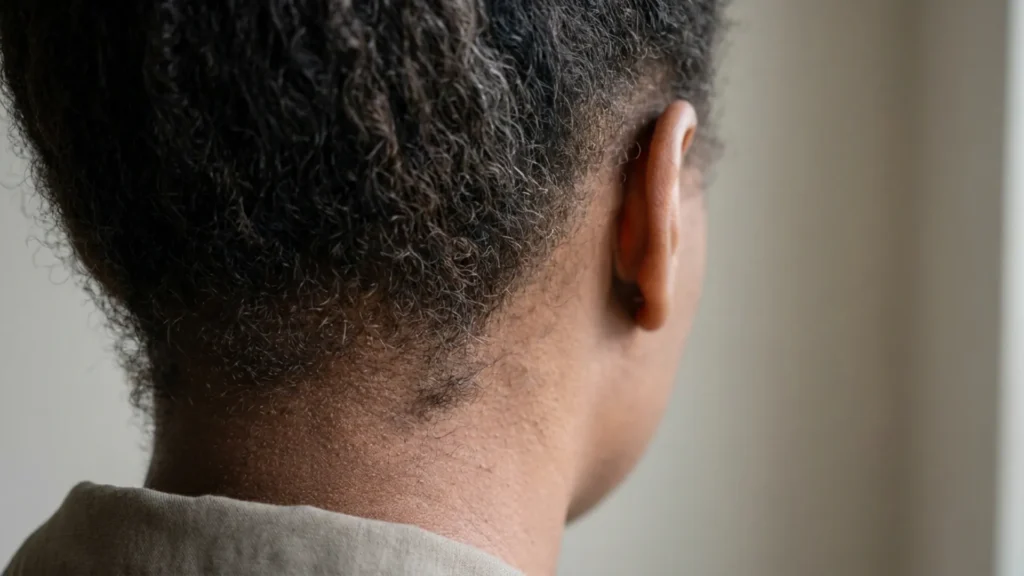
Breakage doesn’t happen evenly. It shows up in three predictable places, and each one has a different cause.
The nape, at the back of the neck, takes the most friction. It rubs against collars, scarves, and pillowcases all day and night, and it’s often the last section detangled and the first one rushed.
The edges, along the hairline, carry the most tension. Tight ponytails, ponytail holders doubled around thin hair, and edge control applied daily to “lay” baby hairs all pull on strands that are naturally finer than the rest of the head.
The crown thins for a quieter reason: dryness. It sits furthest from the scalp’s natural oils, so it’s usually the first area to feel brittle after a wash.
None of these three need a growth serum. They need less friction, less tension, and more moisture, in that order.
Building a Wash Day That Doesn’t Undo Your Progress
A rough wash day can erase a month of careful care in twenty minutes. Dermatologists who work with curly and coily hair recommend detangling hair while it’s wet and coated in conditioner, working in small sections from the ends upward, rather than starting at the root.
Section your hair into four to six parts before you even wet it. Wide sections mean less pulling per strand, and you’ll actually finish faster. Finger-detangle first to break up the biggest knots, then follow with a wide-tooth comb.
Skip daily washing. Most coily and kinky hair only needs a full wash every one to two weeks, since natural oils don’t travel down the shaft quickly. Washing more often than that just strips moisture your ends are already short on.
Rinse conditioner with cool or lukewarm water at the end. It won’t change your porosity permanently, but it does leave the hair feeling smoother right after the wash, which means less friction while you style.
The Moisture-Protein Balance Most People Get Backwards
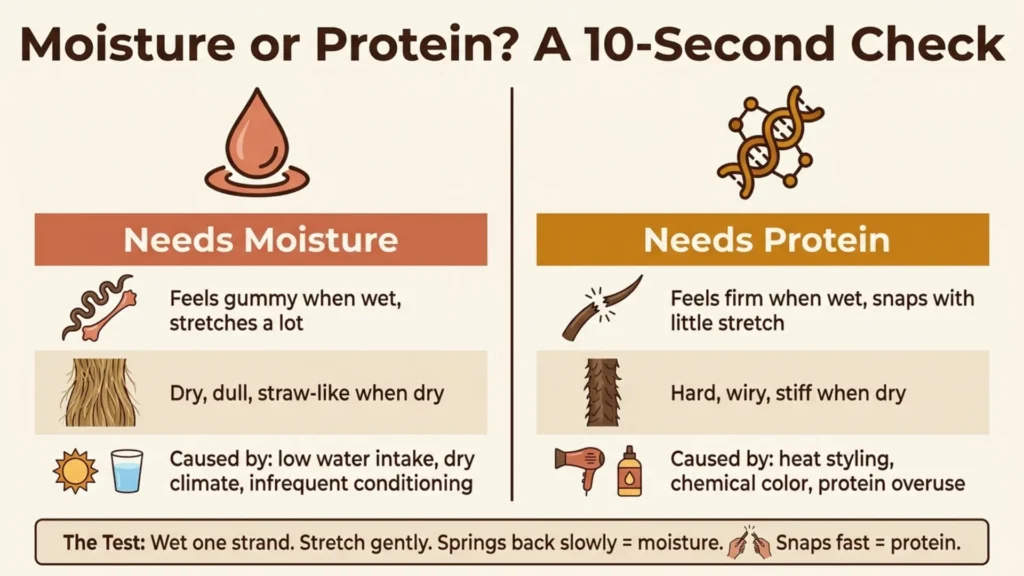
Hair is made almost entirely of a protein called keratin, and when that protein structure gets worn down by heat, color, or repeated manipulation, hair starts to feel mushy and stretchy when wet. The fix people reach for is more protein. Sometimes that’s right. Often it isn’t.
Too much protein without enough moisture behind it makes hair stiff, straw-like, and prone to snapping in a completely different way than dryness does. The two problems can look identical from the outside: both show up as breakage. Only one responds to a protein treatment.
| Sign | Likely needs moisture | Likely needs protein |
|---|---|---|
| Feel when wet | Gummy, stretches a lot before breaking | Firm, snaps with little stretch |
| Feel when dry | Dry, straw-like, dull | Hard, stiff, wiry |
| Common cause | Low water intake, dry climate, too few conditioning washes | Frequent heat styling, chemical color, over-use of protein products |
| What helps | Deep conditioner, leave-in, sealing oil | Light protein treatment, then a moisture follow-up |
Run the wet-stretch test before reaching for either one. Take a single strand, wet it, and pull gently. Hair that stretches a lot and doesn’t spring back needs moisture. Hair that barely stretches and snaps needs protein. Guessing wrong just trades one kind of breakage for another.
Also Visit : Hair Growth Spray Guide: What Actually Speeds
Protective Styles: How Long Is Too Long
Braids, twists, and weaves get credit for growth they didn’t cause. What they’re actually doing is removing daily manipulation, which is exactly why hair grows out looking longer underneath them. The style isn’t speeding anything up. It’s just getting out of the way.
The trouble starts when a protective style overstays its welcome or goes in too tight. The American Academy of Dermatology notes that hairstyles that repeatedly pull on the scalp can cause a permanent form of hair loss called traction alopecia, and the hairline is usually where it shows up first.
A reasonable rule: install for six to eight weeks, take a full week or two out between styles, and if your scalp is sore or tender within the first two days of a new install, it’s too tight, regardless of how “neat” it looks. Neat is not the same as healthy.
What Supplements and Diet Can (and Can’t) Do

Hair growth vitamins are one of the most heavily marketed products in this niche, and biotin is the ingredient most of them lean on. The catch: most people already get enough biotin from a normal diet, and there’s no strong evidence that extra biotin helps hair grow faster in someone who wasn’t deficient to begin with.
What diet actually affects is the quality of hair as it grows, not its speed. Iron, zinc, protein, and omega-3 fats all show up in research on hair shedding and hair shaft strength. Eggs, leafy greens, lentils, and fatty fish cover most of that ground without a single supplement bottle.
If you suspect an actual deficiency, especially with heavier-than-usual shedding, that’s worth a blood test and a conversation with a doctor, not a bigger bottle of the same vitamin.
Also Visit : How to Use Oil for Hair Growth (Properly)
A Simple Night Routine to Cut Breakage
Most breakage happens overnight, not during the day. Cotton pillowcases pull moisture out of hair and create friction with every turn of the head, which is why so much progress gets lost in sleep and nobody notices until wash day.
Switch to a satin or silk pillowcase, or wrap hair in a satin bonnet or scarf before bed. Gather hair loosely into a pineapple at the crown, or braid it in two or three big, loose sections, so it doesn’t tangle into a single knot by morning.
Apply a light leave-in or a few drops of oil to the ends specifically, since ends are the oldest, driest part of the hair and take the most damage from a full night of movement.
When to See a Dermatologist

Most slow growth and breakage responds to the changes above within a few months. Some signs don’t, and they deserve a professional opinion rather than another product.
See a dermatologist if you notice sudden, patchy shedding, a widening part that wasn’t there before, soreness or bumps along the hairline, or hair loss that keeps progressing despite a gentler routine. Traction alopecia caught early is often reversible. Caught late, it isn’t always.
This article is for general information only and isn’t medical advice. For persistent hair loss, scalp pain, or sudden shedding, see a dermatologist or trichologist.
Written by Anna Anderson for Trend Cottage. Last reviewed September 2026.
Key Takeaways
- The hair growth tips for black women that actually work target retention, not speed, since coily hair grows at close to a normal rate but breaks before it shows length.
- Breakage concentrates at the nape, the edges, and the crown, and each spot has a different cause.
- Guessing between moisture and protein makes breakage worse; the wet-stretch test tells you which one you actually need.
- Protective styles don’t grow hair faster. They just remove daily manipulation, so keep installs under eight weeks and give your scalp a break between them.
- Biotin rarely helps unless you’re actually deficient. Diet affects hair quality more than hair speed.
Frequently Asked Questions
Does black hair really grow slower than other hair types?
Slightly, on average, but the difference is small. Most hair growth tips for black women overstate this point; the much bigger factor in visible length is breakage, since coily hair’s shape makes it more fragile at every bend.
How often should I take down a protective style?
Most dermatologists suggest six to eight weeks as an upper limit, with a break of a week or two before installing again, longer if your scalp needs more recovery time.
Do biotin gummies actually help hair grow?
Only if you’re deficient in biotin to begin with, which is uncommon on a normal diet. For most people, the gummies do very little beyond a placebo effect.
How can I tell if my hair needs moisture or protein?
Wet a single strand and stretch it gently. If it stretches a lot without springing back, it needs moisture. If it barely stretches and snaps, it needs protein.
Is it normal to see a lot of shedding on wash day?
Some shedding is normal, especially after a week or two without washing, since shed hairs build up between washes. Sudden, heavier-than-usual shedding is worth mentioning to a dermatologist.
Written by Anna Anderson for Trend Cottage.