Hair Care Routine for High Porosity Hair: What Works?

Here’s the mistake that sinks most routines for high porosity hair. Your hair feels dry, so you add more oil, more butter, more layers. A week later it’s stiff, dull and still dry. The problem usually isn’t a lack of product. It’s the wrong product, in the wrong order, on hair that’s being handled roughly.
Quick answer: A good hair care routine for high porosity hair comes down to four habits. Wash gently and condition every time, put products on damp hair with water-based ones first and oil last, alternate moisturizing and light protein treatments, and cut back on rubbing and heat. Then adjust by how your hair feels, because no fixed schedule fits everyone.
What High Porosity Hair Actually Feels Like
Porosity is how easily water and products move in and out of each strand. On high porosity hair, the outer layer (the cuticle) sits raised or has gaps. Moisture gets in fast. It leaves just as fast.
Some people are born with it. For others it builds up from bleach, box dye, chemical straighteners, heat tools and rough detangling, which all lift the cuticle over time. Plenty of people have both: a natural tendency plus years of wear.
In daily life the signs are hard to miss. Your hair soaks up water in seconds, then dries quickly. It frizzes in humid air, tangles at the ends, and the leave-in that felt perfect last night has vanished by lunchtime.
The float test is the popular check. You drop a clean strand into a glass of water and see whether it sinks fast. Treat it as a hint, not a verdict, because leftover product, natural oils and how thick the strand is can all change the result. Your own history is a better guide. If your hair gets wet fast, dries fast and frizzes whatever you put on it, this routine fits.
One detail most guides skip: porosity often changes along a single strand. The ends are the oldest part of your hair, so they’re usually the most porous, while the roots sit closer to normal. That’s why most of the product in this routine goes on the lengths and ends, not the scalp.
Wash Day: A Hair Care Routine for High Porosity Hair

Start before you get in the shower, if you have time. A pre-wash oil is one of the few oil habits with any lab evidence behind it. In a 2003 study of hair strands, coconut oil reduced protein loss in hair when used before or after washing, while sunflower and mineral oil didn’t. The researchers worked for a hair oil company and tested strands, not people, so read it as a good sign rather than a promise. To try it, work a little coconut oil through dry hair, mostly on the ends, and leave it on for 20 to 30 minutes. Skip it if your hair turns greasy or stiff.
Shampoo your scalp, not your ends. Massage it in with your fingertips and let the suds run down the lengths as you rinse. Keep the water lukewarm, since very hot water is rough on hair that’s already dry.
Conditioner is the step you never skip. Smooth it generously from mid-length to the ends, then detangle with your fingers or a wide-tooth comb while it’s still in. Leave it for three to five minutes. High porosity hair drinks conditioner quickly, so you’ll usually need more than you’d expect. A cooler final rinse is optional. The evidence for it is thin, but plenty of people like how their hair feels afterwards.
Drying is where a lot of damage sneaks in. Don’t rub with a towel. Squeeze the water out with a microfibre towel or an old cotton T-shirt, then apply your products while the hair is still damp. That timing matters because your hair loses water fast, and you want moisture and a sealing layer in place before it dries.
Also Visit : Hair Care Routine: Build One That Actually Sticks
Layering Products Without Weighing Hair Down
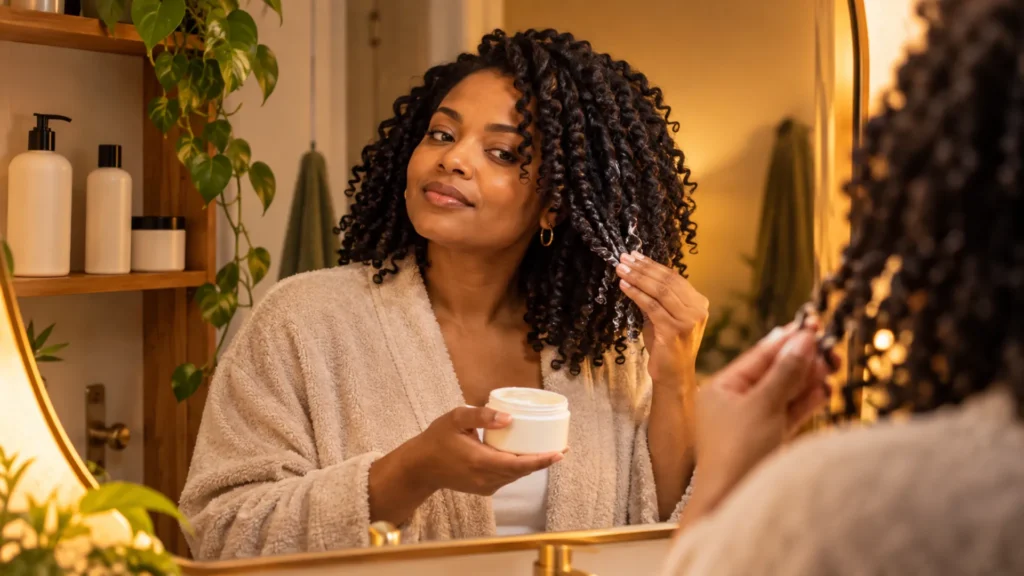
Order matters more than brand. To moisturize high porosity hair, the usual sequence is liquid, cream, oil, often shortened to LCO. The logic is simple:
- Liquid: water or a water-based leave-in spray. This is the moisture itself.
- Cream: a leave-in cream that holds the water in and adds slip for detangling.
- Oil or butter: a thin seal on top, so the water doesn’t escape as fast.
- Gel (optional): holds your shape while the hair dries and cuts frizz.
Some people do better with liquid, oil, cream (LOC), which tucks the oil under the cream. Start with LCO. If your hair is dry again by the next day, try LOC for a few washes. If it feels greasy or coated, go back and use less.
Amounts trip people up. Start with a small dollop of each layer and add more to the ends only. The roots need very little. Dull, heavy hair is more often a product pile-up than a moisture problem.
For sealing, heavier options such as shea butter or thick oils tend to stay put on high porosity hair longer than very light oils. That’s mostly hair-community experience rather than lab data, so test on one section before you commit to a whole head.
Protein and Moisture: Finding Your Balance
Protein treatments temporarily fill in gaps in a rough cuticle, which is why they help high porosity hair. Moisture-focused deep conditioners do a different job. They soften the hair and add slip. You need both, and too much of either one causes trouble.
A workable starting rhythm is a moisture-focused deep conditioner on most wash days and a light protein treatment every four to six washes. Look for hydrolyzed wheat protein, hydrolyzed keratin or silk amino acids on the label. Treat that rhythm as a starting point, not a rule. Your hair will tell you when to shift it.
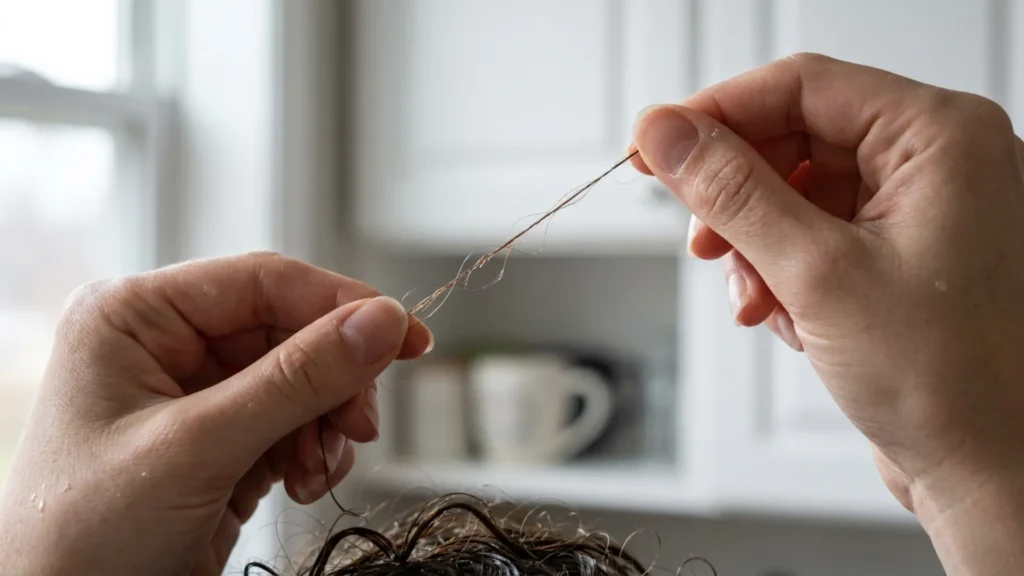
Here’s a home check that curly-hair communities use to read it. After washing, gently stretch one wet strand. If it stretches a little and springs back, you’re in a good place. If it stretches a lot, feels gummy and doesn’t bounce back, it probably wants protein. If it snaps quickly with barely any stretch, it probably wants moisture. It isn’t a clinical test, so weigh it alongside how your hair feels once it’s dry.
Go easy if your hair is bleached or heavily colored. Wet hair is at its weakest, and a hard tug can snap it. Follow the instructions on any protein or bond-repair product exactly, and patch test new products on a small area of skin first if yours is sensitive.
Also Visit : Simple Hair Care Routine That Actually Fits Your Week
Troubleshooting by Symptom
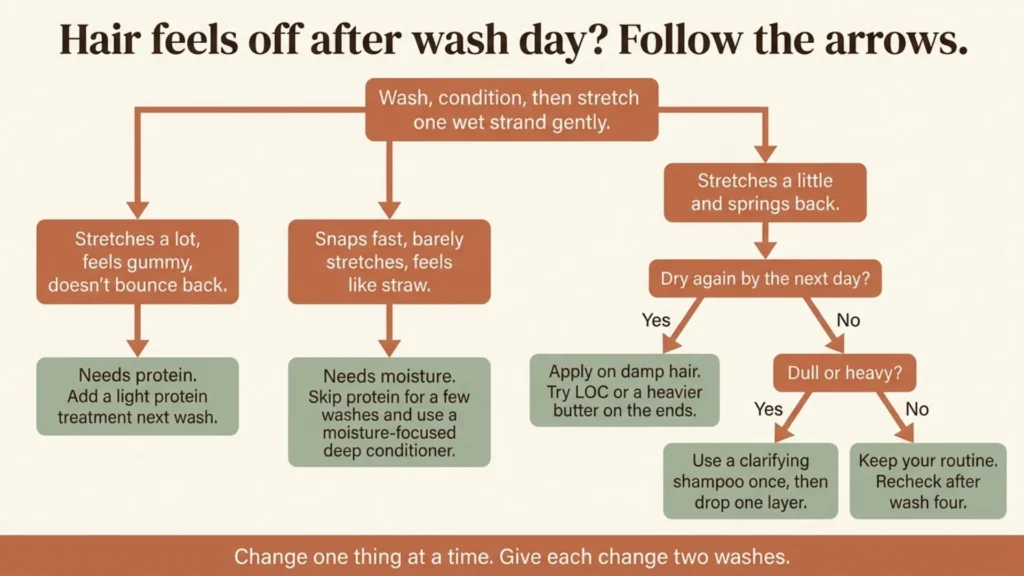
Most problems with a hair care routine for high porosity hair trace back to a handful of causes. Find the symptom that sounds like yours and start with the change beside it.
| What you notice | Likely cause | What to change |
|---|---|---|
| Dry again by the next day | Products applied after hair dried, or a seal that’s too light | Apply on damp hair, try LOC, or use a heavier butter on the ends |
| Stiff, straw-like, snaps easily | Too much protein | Skip protein for a few washes and use a moisture-focused deep conditioner |
| Limp, gummy, overly stretchy | Too much moisture, too little protein | Add a light protein treatment and ease off deep conditioning |
| Dull, coated, heavy | Product build-up | Use a clarifying shampoo once, follow with a deep conditioner, and drop one layer |
| Frizz after air drying | Touching the hair while it dries | Scrunch out the water, add a light gel, then leave it alone until fully dry |
| Knots at the ends | Dry, damaged ends | Detangle only with conditioner in, and trim ends that keep splitting |
Change one thing at a time and give it two washes before you judge it. If you swap three products at once, you’ll never know which one helped.
Between Washes and Overnight

You don’t need to repeat a full hair care routine for high porosity hair every day. On day two or three, mist your hair lightly with water, then smooth a little leave-in cream over the ends. Skip extra oil unless the hair feels bone dry. Piling oil onto hair that’s already sealed is how build-up starts.
Nights are hard on the ends. A cotton pillowcase creates friction on dry strands, so sleep on satin or silk, or wear a satin bonnet. Loose styles like a pineapple bun or two loose braids keep the ends tucked away.
Handling counts as much as products. One of the 10 habits dermatologists say damage hair is brushing it while wet. Straight hair snaps easily when wet, so let it dry a little first. Very curly and coily hair is different. It usually detangles best wet, with plenty of conditioner in and a wide-tooth comb or your fingers.
Heat is the last big variable. Use a heat protectant, keep tools on a low or medium setting, and give your hair days off between sessions. Heat can roughen the cuticle further, which works against everything else here.
Also Visit : Hair Care Routine for Dandruff That Actually Controls It
Your First Four Washes
Treat the first month of any hair care routine for high porosity hair as a test rather than a promise. On your first wash, follow the routine exactly and change nothing, then notice how your hair feels the next morning.
By the second wash you’ll have a clue. Pick one fix from the table above and try only that.
Use the third wash to run the stretch test and adjust your deep conditioner to match.
The fourth is your review. Ask whether your hair now holds moisture into day two. If it does, you’re close. If not, look at your sealant and at how damp your hair is when you apply it.
Be realistic about the limits, too. No product permanently repairs a raised cuticle. What changes is how your hair feels and how long it holds moisture. New growth is often less porous when damage caused the problem, and trimming the worst ends is the real reset for the oldest sections.
If you wear braids, weaves or extensions, they need their own plan. Dermatologists suggest you give your hair a break from extensions after two or three months at most, and keep conditioning while they’re in.
Key Takeaways
- High porosity hair takes in water fast and loses it fast, so apply products while it’s damp: water-based first, oil or butter last.
- Focus product on the ends, which are usually the most porous part of the strand.
- Rotate moisture-focused and light protein treatments, and use the stretch test plus how your hair feels to adjust.
- Change one thing at a time and give it two washes.
- Rough handling (rubbing with a towel, tugging wet straight hair, frequent heat) can undo good product work.
Frequently Asked Questions
How often should you wash high porosity hair?
There’s no single number, since it depends on your texture, scalp and lifestyle. Very curly or coily hair often does fine with a wash every one to two weeks, while fine or straight hair usually needs washing more often. Wash when your scalp feels unclean or product is building up, and use a conditioner-only rinse in between if you want a refresh.
Does high porosity hair need protein?
Usually a little, in rotation. Protein temporarily fills gaps in the cuticle, but too much makes hair stiff and brittle. Start with a light treatment every four to six washes and use the stretch test to adjust.
Can you fix high porosity hair for good?
Not entirely. If damage caused it, new growth often comes in less porous and trimming removes the worst sections. Until then, you manage it with gentle handling, regular conditioning and a seal that keeps moisture in.
Tried the stretch test after your last wash? Tell us in the comments what your hair needed, and save this page for your next wash day. A hair care routine for high porosity hair works best when you keep adjusting it.
Written by Anna Anderson for Trend Cottage.