
Hair Care Routine: Build One That Actually Sticks

Most hair care routines fall apart in the detail — not because the products are wrong, but because the steps are out of order, the treatments stack in ways that cancel each other out, and the whole thing gets rebuilt from scratch each time something new appears.
Quick answer: A hair care routine that actually sticks runs in three layers — a wash-day foundation, a post-wash layering sequence, and a weekly treatment schedule that rotates protein and hydration on separate weeks rather than piling them together. Getting that order right matters more than which specific products fill each slot.
Here’s how to build each layer, starting with the part most guides skip over entirely: why the order matters at all.
Why Routine Order Matters More Than the Products You Buy
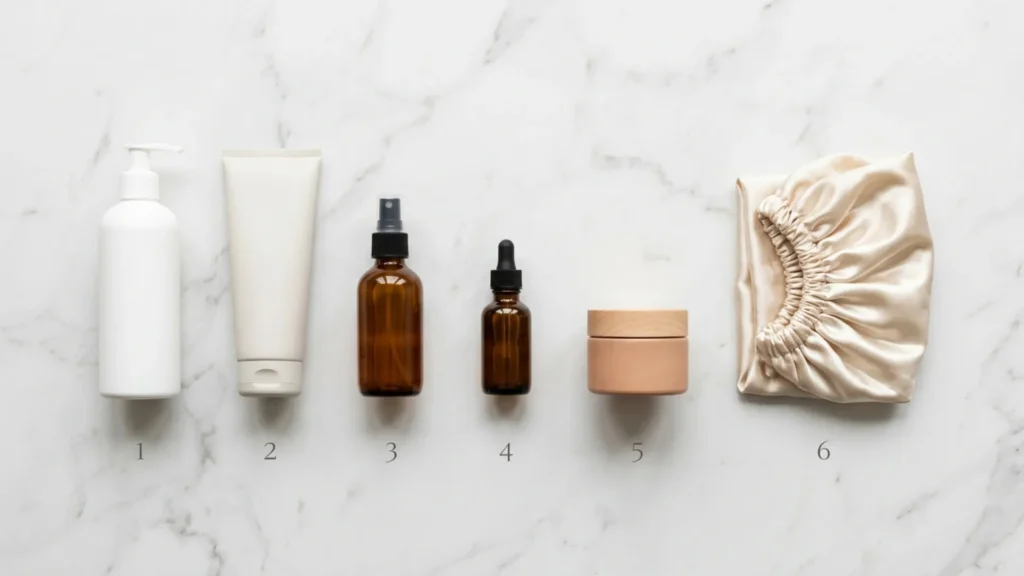
Hair has a cuticle — a layered outer surface made of overlapping scales that opens and closes depending on water, heat, and pH. When you shampoo, that cuticle lifts slightly. It’s still lifted when you apply conditioner immediately after, which is why conditioning works at that moment: the cuticle is open enough for the product to absorb.
Apply a thick sealing oil at that same point instead, and you’re closing an open cuticle with nothing inside it. The oil absorbs, the hair feels briefly smooth, and then dries out faster than before because there’s no moisture underneath the seal. The oil hasn’t failed. It was applied in the wrong order.
The same logic runs through treatments. Protein treatments fill weak points in the hair shaft using hydrolysed proteins that bond temporarily to the cortex. Deep conditioning masks add softness and weight through emollients — ingredients that smooth the shaft — and humectants, which draw water into the hair. They’re working in opposite directions: protein stiffens and reinforces; conditioning softens and relaxes. Use both in the same week and each one is partially undoing what the other just did. You’ve done twice the work to land roughly where you started.
Once the mechanism makes sense, the rest of the routine is just applying that logic at each step — which product needs an open cuticle, which one closes it, and which treatments need breathing room between them.
The Foundation: Cleansing and Conditioning
Shampoo does one job: remove buildup from the scalp. Not the lengths. Working it all the way down and scrubbing strips whatever moisture the shaft holds, which isn’t much to begin with. Apply it at the scalp, work it in, and let it rinse through the ends as the water runs out — that’s enough.
How often to shampoo depends on scalp oil production, not hair length or curl pattern. The American Academy of Dermatology’s guidance on hair and scalp care doesn’t name a single universal washing frequency — it varies by scalp. A fine, oily scalp usually needs cleansing every two to three days. A dry or low-oil scalp often manages well on once a week or less. Washing more often than the scalp actually needs can trigger more oil production, not less.
Co-washing — rinsing with conditioner instead of shampoo between wash days — works well for curly, coily, or dry hair. It won’t fully clear silicone-heavy product buildup, though. If your regular products contain silicones, a shampoo wash every week or two is still needed even if you co-wash most days.
Conditioner belongs on mid-lengths and ends, not the roots. The scalp produces its own oil, and layering conditioner on top adds weight and can make roots feel flat and heavy by midday. Leave it on for two to three minutes minimum — contact time matters more than quantity. One useful technique for hair that takes a long time to get wet: apply conditioner while the hair is still completely saturated, before the cuticle has started closing back down. It absorbs faster that way.
Also Visit : Hair Growth Tips That Actually Change Your Rate
Pre-Wash Treatments: Where They Actually Fit
Pre-shampoo oil treatments go before washing, not after. Applying a light oil — coconut, olive, or argan — to dry hair thirty to sixty minutes before shampooing reduces how much water the shaft absorbs during the wash. Hair swells when it gets wet; repeated cycles of swelling and contracting put stress on the cuticle over time, something commonly referred to as hygral fatigue [EXTERNAL SOURCE NEEDED: peer-reviewed study on hygral fatigue and repeated wetting cycles in hair — try International Journal of Cosmetic Science or Journal of the Society of Cosmetic Chemists]. Pre-oiling slows that absorption slightly and reduces friction during detangling.
This step isn’t necessary for everyone. It’s most useful for fine or fragile hair that tends to snap during detangling, or for anyone whose hair gets handled a lot during the wash itself. If your hair comes through wash day without much breakage, you can skip it entirely — it doesn’t need to be a fixed part of every routine.
Scalp-specific products — treatment oils, serums, or medicated formulas targeting dryness — work better applied to a clean scalp after shampooing. Putting them on before washing means they’re sitting on top of residue rather than contacting the skin directly.
Post-Wash Layering: Moisture First, Then Seal
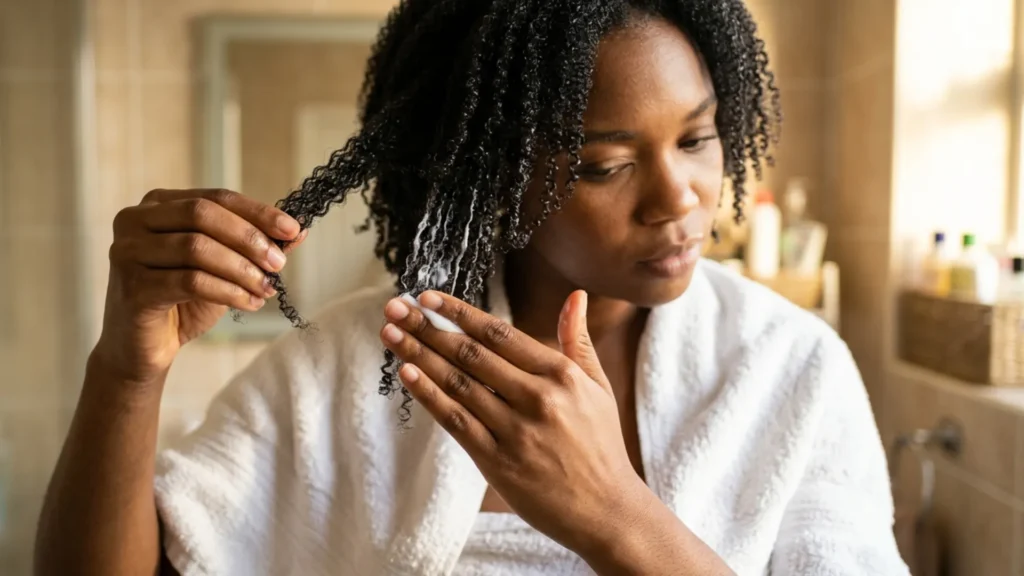
After rinsing out conditioner, the hair is wet, the cuticle is still slightly lifted, and there’s a short window where leave-in products absorb most readily. What gets applied in the next few minutes shapes how the hair holds moisture for the next two or three days.
The guiding principle is simple: moisture in first, then seal over it. A water-based leave-in conditioner adds hydration to the shaft. An oil or butter applied on top slows how fast that moisture escapes. Apply the oil first and then try to push a leave-in through it, and you’re working against yourself — oil and water don’t mix, and the cuticle is now partially blocked.
This is the basis of two methods: LOC (Leave-in, Oil, Cream) and LCO (Leave-in, Cream, Oil). Which one works depends on how porous your hair is:
- Low-porosity hair — the cuticle lies flat and tight; products tend to sit on the surface rather than absorb. LCO tends to work better here: a lighter leave-in, a cream to help drive it in, then a very light oil to seal.
- High-porosity hair — the cuticle has gaps and lets moisture in and out quickly. LOC tends to work better: leave-in first, oil next to fill the cuticle gaps, then a heavier cream to slow moisture loss.
- Normal or medium-porosity hair — either order can work. Test both on separate wash days and check how the hair feels the morning after, not the same evening.
How much product matters as much as the sequence. A pump of leave-in, a pea-sized amount of oil, a small scoop of cream — that’s typically enough for medium-length hair. Loading on more doesn’t mean more hydration; it means buildup that requires extra clarifying to remove and hair that feels heavy rather than soft.
The optimal layering sequence for different hair types is largely based on professional consensus rather than large clinical trials [EXTERNAL SOURCE NEEDED: peer-reviewed source on porosity and moisture retention in textured hair — try International Journal of Trichology]. The test-and-assess approach above is the most reliable guide.
Also Visit : 3 Things That Actually Affect Hair Growth
Weekly Treatments — and Why Timing Changes Everything
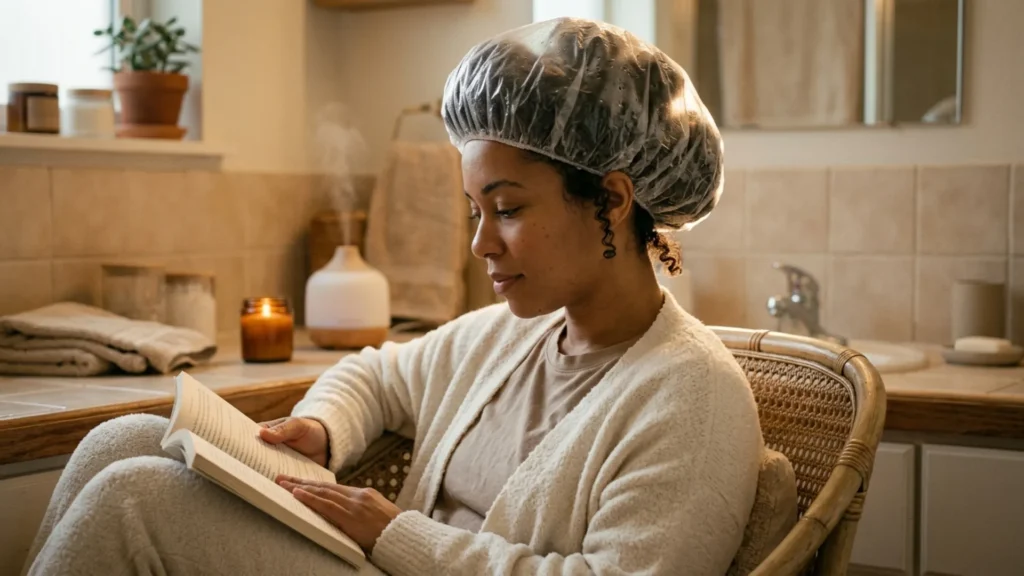
Treatments are the most misused part of a hair care routine. People tend to reach for them when the hair looks or feels bad — usually after a period of neglect or heat overuse — and layer them all in at once, hoping to undo months of damage in a single session.
Two types do most of the work. Protein treatments temporarily fill weak areas along the hair shaft using hydrolysed proteins that bond to the cortex. Deep conditioning masks add softness and weight through emollients and humectants. They work in opposite directions — protein firms and reinforces; conditioning softens and relaxes — so using both in the same week means each one spends its time undoing the other. Alternating them gives each one space to actually do its job.
| Treatment | How Often | Best For |
|---|---|---|
| Deep conditioning mask | Every 1–2 weeks | All hair types, especially dry or colour-treated |
| Light protein treatment | Every 3–4 weeks | Chemically treated, fine, or breakage-prone hair |
| Heavy protein treatment | Every 6–8 weeks | Severely damaged or heat-stressed hair |
| Co-wash | Between wash days as needed | Curly, coily, dry, or colour-treated hair |
| Clarifying shampoo | Every 4–6 washes | All types, especially with heavy product use |
| Scalp serum or treatment oil | Once a week or as needed | Dry scalp, dandruff-prone hair, or slow growth |
How the hair feels between sessions is the most reliable guide to adjusting the schedule. Hair that snaps quickly with little stretch, feels rough, or loses wave definition between washes tends to need more moisture and less protein. Hair that stretches a long way before breaking, feels soft but limp, or won’t hold a style usually needs more protein. Shift the frequency in the relevant direction and check back in four to six weeks — not four to six days.
Adjusting Your Hair Care Routine for Porosity and Hair Type
Most routine guides break things down by texture — fine, medium, coarse — or by curl pattern. Porosity is a more useful lens for deciding how to layer products and which treatments to prioritise.
Porosity describes how easily the hair absorbs and holds moisture. It’s partly genetic and partly the result of chemical processing, heat use, or physical damage, and it can vary along a single strand.
Low-porosity hair takes a long time to get wet, takes a long time to dry, and tends to have products sitting on the surface rather than absorbing. It benefits from heat during deep conditioning (a warm towel or heat cap), lighter leave-in formulas, and less frequent protein treatment — protein can also sit on the surface and make hair feel stiff without strengthening it.
High-porosity hair gets wet fast, dries fast, and tends toward frizz and tangles. The LOC layering method works well here, as does regular protein treatment to fill cuticle gaps. Night routines matter more for this hair type because it loses moisture overnight faster than low-porosity hair does.
Fine hair, regardless of porosity, responds better to lighter versions of most products: a diluted leave-in or a light spray instead of a cream, a drop of oil rather than a palmful, a lighter conditioning mask rather than a heavy butter. Each strand is physically smaller, and heavyweight products drag it down rather than nourish it.
Coarser or denser hair can handle richer products because the shaft itself is larger and takes more to saturate fully. Thicker conditioners, heavier oils, and longer conditioning times all tend to work better here than they do on fine or low-density hair.
Also Visit : How to Use Hair Growth Oil the Right Way
A Night Routine Worth Building
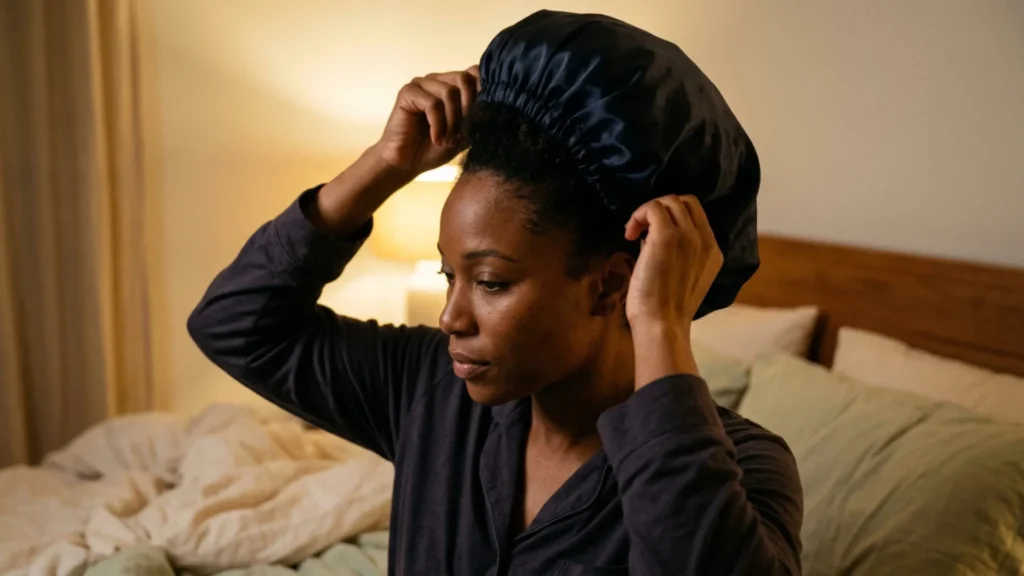
Sleeping on a cotton pillowcase is one of the most effective ways to undo a good hair care routine without realising it. Cotton pulls moisture from the hair shaft and creates friction along the cuticle, leading to frizz, tangles, and breakage by morning. None of that is the fault of what you applied the day before.
A satin or silk pillowcase cuts both friction and moisture loss. A satin bonnet does the same job more reliably since it stays in place through the night. Loose braids or a pineapple — gathering long hair at the very top of the head with a soft scrunchie — reduce tangling and preserve curl pattern without creating dents from tight elastics.
For high-porosity hair specifically, applying a small amount of leave-in and sealing with oil before putting on a bonnet helps compensate for overnight moisture loss. It’s not a step every hair type needs. But for hair that consistently looks drier and rougher in the morning than it did before bed, this addition makes a noticeable difference by the second or third day after washing.
The night routine doesn’t need to be a production. A bonnet and two minutes to secure the hair is a complete night routine — and that’s the version that actually gets done every night.
Frequently Asked Questions
Do I need to do every step in a hair care routine every wash day?
The foundation — shampoo and conditioner — happens every wash. Leave-in and sealing products go on every wash day too. Treatments rotate in on their own schedule: deep conditioning every one to two weeks, protein once a month or as needed. You’re not doing everything every session, and you’re not supposed to.
What’s the difference between a deep conditioner and a regular rinse-out conditioner?
Regular conditioner closes the cuticle and smooths the surface — it’s designed to work in two to three minutes and then rinse out. A deep conditioner works at the cortex level, adding softness and weight, and needs fifteen to thirty minutes of contact time, often with some heat, to do its job properly. They’re doing different things; one doesn’t substitute for the other.
How do I know if my hair needs more protein or more moisture?
Try the wet strand test: pull a single strand gently while it’s wet. Hair with enough protein snaps fairly quickly — under two centimetres of stretch — and springs back. Hair that needs protein stretches a lot before breaking and doesn’t spring back to shape. Hair that needs moisture tends to snap quickly but also feels dry and rough. Hair that needs both snaps with almost no stretch and feels brittle throughout.
How long before I notice results from a new routine?
Four to six weeks is a realistic window for most changes — reduced breakage on wash day, softer texture, less frizz. Scalp health and length retention take longer. If nothing is improving after eight weeks, the product choices or the sequencing probably need adjusting, not just more time.
Do I need separate products for a night routine?
Not usually. The leave-in and sealing oil you use on wash day work fine for the evening step too. The main addition is a physical barrier — a satin pillowcase or bonnet — rather than a separate product category.
Key Takeaways
- Apply moisture first, then seal: water-based leave-in before any oil or butter, every time.
- Shampoo belongs at the scalp; conditioner belongs at mid-lengths to ends — not roots.
- Protein and deep conditioning treatments cancel each other out in the same week — alternate them on a simple schedule.
- Porosity is a better guide to how to layer products than curl pattern or texture alone.
- A satin bonnet or pillowcase at night preserves wash-day work better than most additional products.
If there’s a step in this routine that isn’t working, leave a comment with what’s happening — what the hair does, what you’ve tried, and when in the week it tends to go wrong. The more detail you can share about your hair care routine, the easier it is to pinpoint what to adjust. Or save this page to come back to when you’re ready to set your schedule.
Written by Anna Anderson for Trend Cottage.