Biotin Hair Growth: What It Actually Does to Your Hair

“Biotin hair growth” is one of the most-searched hair topics online, and it’s easy to see why. Biotin supplements are cheap, sold everywhere, and promise something almost everyone wants: thicker, faster-growing hair with zero effort. Quick answer, before we go further: biotin does support hair growth, but mainly if your body is actually running low on it. If you’re not deficient, more biotin usually won’t change much. The exceptions are real, though, and worth understanding before you spend another month taking gummies that do nothing.
The “Biotin Fixes Hair Loss” Myth
Walk into any pharmacy and you’ll find biotin gummies stacked near the register, most of them promising fuller hair within weeks. That claim comes from a real biological fact stretched way past what it actually covers. Biotin genuinely helps your body build keratin, the protein your hair is made of. What the marketing leaves out is that your body only needs a tiny amount of biotin to do that job, and most people already get enough from food without trying.
A 2017 review published in Skin Appendage Disorders looked specifically at this question. The researchers found reported cases of biotin improving hair and nail growth, but every single case involved a person with an existing biotin deficiency or a related medical condition. None of the improvement showed up in people who started out with normal biotin levels.
That distinction matters more than anything else in this article. Biotin isn’t useless, and it isn’t a scam. It’s just aimed at a much smaller group of people than the supplement aisle suggests.
Also Visit : 3 Things That Actually Affect Hair Growth
What Biotin Actually Does Inside Your Body
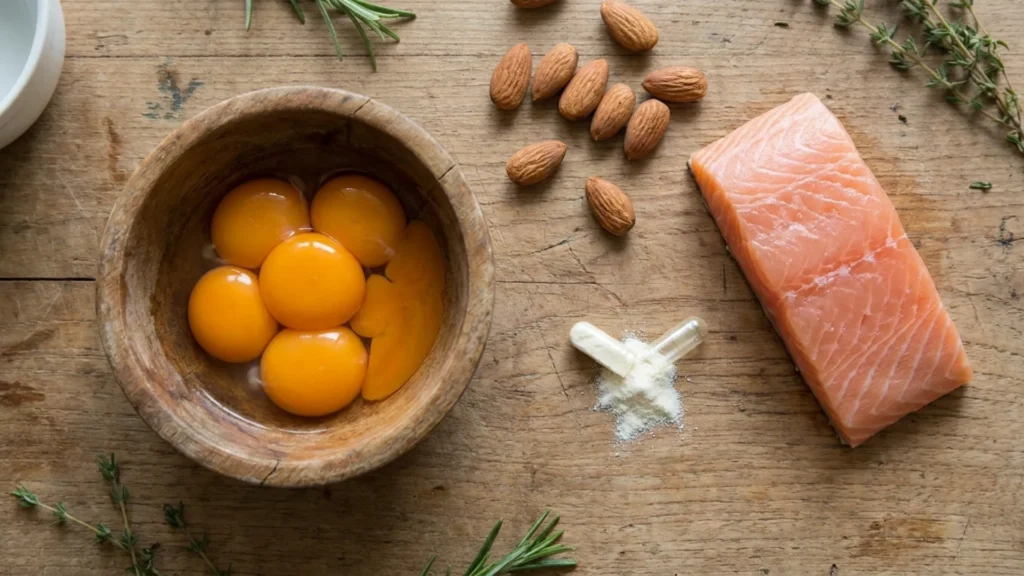
Biotin is a B vitamin, sometimes labelled vitamin B7 on supplement bottles. Your cells use it to help break down fats, carbohydrates, and proteins into usable energy. It also acts as a helper molecule for the enzymes that build keratin, the fibrous protein that makes up your hair, skin, and nails.
Here’s the part that gets skipped in most articles: your body doesn’t store much biotin, but it also doesn’t need much. Adults need around 30 micrograms a day, according to the National Institutes of Health’s dietary reference guidance. A single egg, a serving of salmon, or a handful of almonds can cover a meaningful chunk of that on its own. Compare that to the 5,000 to 10,000 micrograms often packed into a single gummy, and you can see the gap between what your body uses and what you’re being sold.
Extra biotin beyond what your body needs doesn’t get stored up for later use on your hair. It’s water-soluble, so the excess is simply flushed out. More isn’t better here. It’s just more.
The Only People Who Reliably See Hair Changes From It
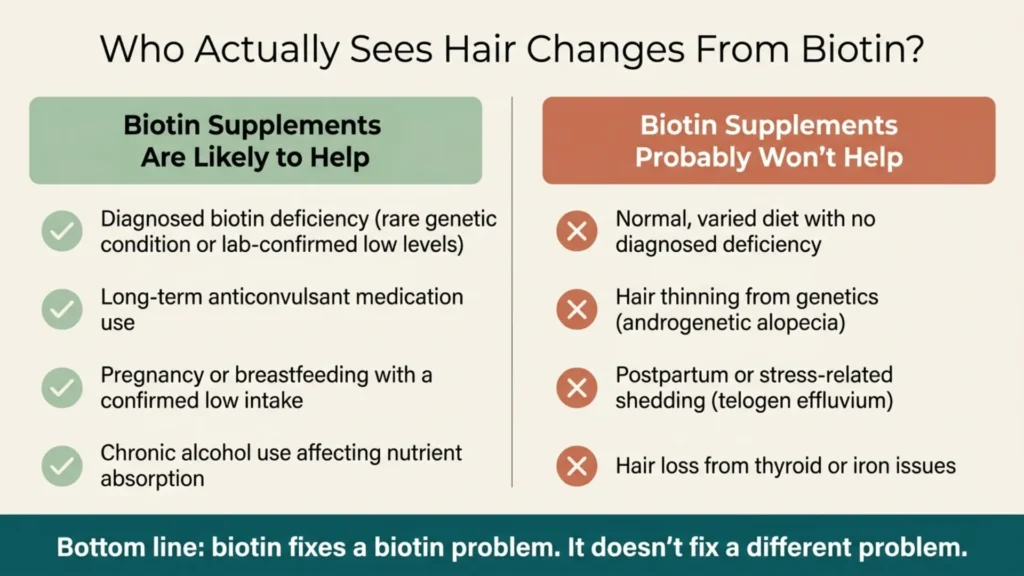
So who does biotin actually help? The honest answer is a fairly short list, and it starts with people who have a diagnosed deficiency. True biotin deficiency is genuinely rare. It shows up almost exclusively in a handful of situations: a rare inherited condition called biotinidase deficiency, long-term use of certain anti-seizure medications, chronic heavy alcohol use, or eating large amounts of raw egg whites over a long period, since raw egg white contains a protein that blocks biotin absorption.
Pregnancy and breastfeeding also increase biotin needs, and some women in this group run mildly low even while eating normally. If that’s you, this is a conversation worth having with your doctor rather than something to self-diagnose from a blog post.
Outside of these groups, hair thinning almost always has a different root cause. Genetics, thyroid changes, iron levels, and hormonal shifts after childbirth or illness are all far more common explanations for shedding than a vitamin gap. A 2024 literature review in the Journal of Clinical and Aesthetic Dermatology examined the highest-quality trial on biotin for hair growth and found no measurable difference between biotin and a placebo in people without a deficiency.
Also Visit : How to Track Your Hair Growth Journey Without Guessing
Are You Already Getting Enough Biotin?
Before spending money on supplements, it’s worth checking whether you’re already covering your needs through food. Most people are, without ever thinking about it.
| Food Group | Typical Biotin Level | Practical Notes |
|---|---|---|
| Organ meats (liver) | High | One of the richest natural sources; not a daily food for most people, but very effective occasionally |
| Eggs (cooked, whole) | Moderate to high | Cooking matters — raw egg white blocks biotin absorption |
| Salmon and other fatty fish | Moderate | Also brings in omega-3s that support scalp health generally |
| Nuts and seeds (almonds, sunflower seeds) | Moderate | Easy to add to breakfast or snacks without changing your diet much |
| Sweet potatoes, spinach, broccoli | Lower, but consistent | Useful as part of an overall balanced diet rather than a standalone fix |
If your diet already includes a rotation of these foods, you’re very likely covering your baseline needs without a supplement at all. A simple gut check: if you eat a fairly varied diet and have no diagnosed medical condition on the list above, biotin deficiency is an unlikely explanation for anything you’re seeing in the shower drain.
What to Expect If You Take Biotin Anyway

If you decide to try a biotin supplement, whether out of curiosity or because a doctor has flagged low levels, it’s worth knowing what a realistic timeline actually looks like. Hair grows slowly. Even in cases where biotin is genuinely addressing a deficiency, visible change in new growth typically takes two to three months to show up, since hair is already partway through its growth cycle by the time you notice thinning.
Biotin is considered low-risk at typical supplement doses, and serious side effects are uncommon. There is one practical issue worth knowing about: high-dose biotin can interfere with certain lab tests, including some thyroid panels, sometimes producing misleading results. If you’re having bloodwork done, mention any biotin supplement to your doctor beforehand so the results aren’t skewed.
Skin breakouts have also been reported anecdotally by some biotin users, though the evidence connecting the two directly is thin. If you notice new breakouts after starting a supplement, it’s reasonable to pause and see if they clear up.
When Hair Loss Isn’t a Biotin Problem at All
If you’ve read this far hoping biotin will explain your hair loss, here’s the redirect that actually matters. Diffuse thinning across the whole scalp often points to telogen effluvium, a temporary shedding phase triggered by stress, illness, childbirth, or a crash diet, usually resolving on its own within months. Thinning concentrated at the crown or hairline, especially with a gradual, patterned progression, is more consistent with androgenetic alopecia, which has a genetic and hormonal basis that no vitamin will change.
Patchy bald spots, scalp pain, redness, or sudden clumps of hair falling out are different again, and worth a dermatologist visit rather than a supplement aisle. Iron deficiency and thyroid imbalances are two other common, testable causes that get overlooked because biotin is easier to buy than a blood test is to schedule.
Also Visit : Hair Growth Tips That Actually Change Your Rate
Frequently Asked Questions
How long does biotin take to work for hair growth?
If biotin is actually addressing a real deficiency, most people need eight to twelve weeks before new growth becomes visible, since hair strands you can see today started growing months ago.
Can taking too much biotin cause side effects?
Biotin doses within typical supplement ranges are generally considered low-risk, but very high doses can throw off certain lab test results, particularly thyroid tests, so it’s worth telling your doctor if you’re taking a supplement before bloodwork.
Is it better to get biotin from food or from a supplement?
For most people without a diagnosed deficiency, food already covers daily biotin needs, which makes a supplement unnecessary. Food sources also come without the risk of an oversized dose skewing lab results.
Does biotin help with hair loss caused by stress?
Stress-related shedding, known as telogen effluvium, isn’t caused by a biotin shortage in most cases, so biotin supplements are unlikely to speed up recovery. Time and reduced stress are usually what resolves it.
This article is for general information only and isn’t medical advice. For persistent hair loss, scalp pain, or sudden shedding, see a dermatologist or trichologist.
Written by Anna Anderson for Trend Cottage.