How to Use Hair Growth Oil the Right Way
Most people don’t get slower results from hair growth oil because the oil is useless. They get slower results because they use it the wrong way: too much product, on an inconsistent schedule, or with the expectation that a bottle of oil will undo months of hair loss in two weeks.
Quick answer: hair growth oil can genuinely support a healthier scalp and, in some cases, help extend the hair’s active growth phase. But it works slowly, in small amounts, applied to the scalp rather than smeared down the lengths, and it won’t fix hormonal or medical hair loss on its own.
The Mistake That Undoes Most Oil Routines
The biggest mistake isn’t picking the “wrong” oil. It’s treating hair growth oil like a leave-in conditioner instead of a scalp treatment. People pour a tablespoon down the length of their hair, leave it in for three days straight, wash it out with a single shampoo, and then wonder why their hair looks greasy and flat with nothing to show for it.
A scalp treatment needs to actually reach the scalp. It also needs a realistic frequency. Two or three focused applications a week, left on for a set window and rinsed out properly, will do more than one heavy soak a month.
What Hair Growth Oil Actually Does to Your Scalp and Hair
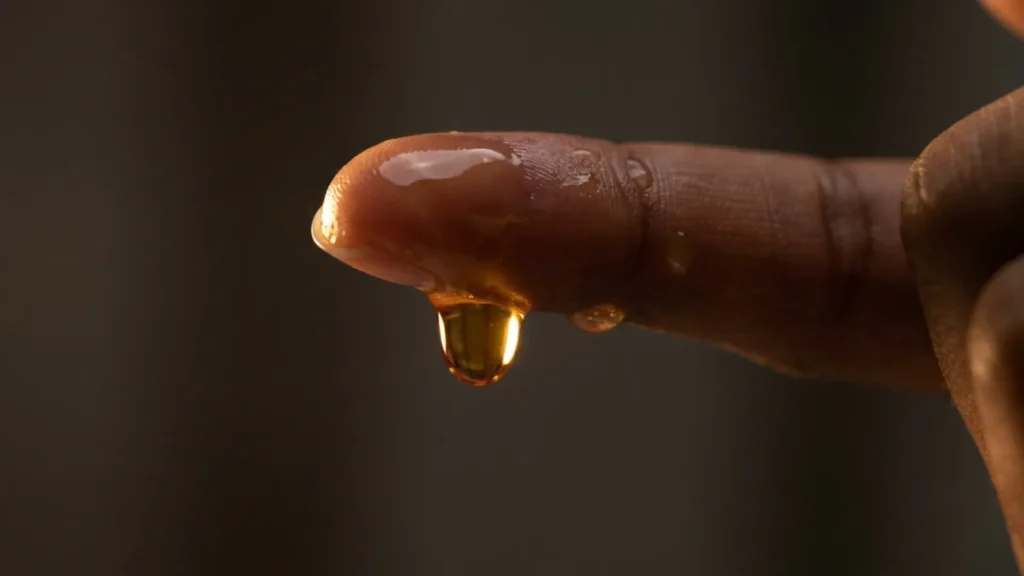
Oil doesn’t grow new follicles. What it can do is create better conditions for the follicles you already have: less scalp inflammation, less buildup, and in a couple of cases, a measurable nudge to how long hair stays in its growth phase.
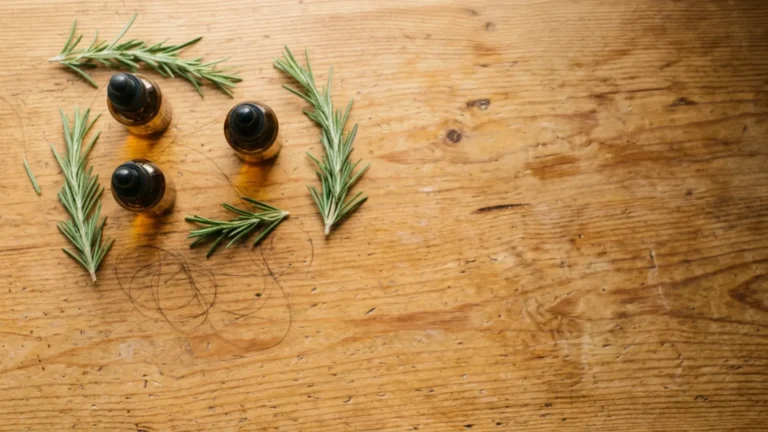
Rosemary oil has the most direct human evidence behind it. In a six-month trial comparing it against minoxidil 2%, both groups saw a real increase in hair count by the end of the study, with no significant difference between them. That doesn’t mean rosemary oil beats minoxidil. It means one small study found comparable results at the six-month mark, using pure rosemary essential oil applied twice daily, not a diluted blend or a rosemary-scented shampoo.
Castor oil works differently. It doesn’t have strong clinical evidence for regrowth on its own, but its main fatty acid, ricinoleic acid, has documented anti-inflammatory and antimicrobial activity, which is why it’s often used for a dry, flaky, or irritated scalp rather than as a standalone growth treatment.
Picking an Oil That Matches Your Hair and Scalp
The “best” oil depends on what your scalp actually needs, not on which bottle has the loudest packaging.
| Oil | Texture | Best For | What It Actually Does |
|---|---|---|---|
| Rosemary | Very light, watery | Fine or oily hair, general maintenance | Some evidence for supporting the hair growth cycle when used consistently |
| Castor | Thick, sticky | Dry or flaky scalp, coarse or textured hair | Calms irritation, seals moisture, mildly antimicrobial |
| Peppermint | Light, tingly | People who want a noticeable sensation and better spreadability of a carrier oil | Cooling effect from menthol; usually used diluted in a carrier oil |
| Jojoba | Light, closest to natural sebum | Sensitive or acne-prone scalps | Conditions without heavy buildup; often used to dilute stronger oils |
A peer-reviewed dermatology review of castor oil research notes that its benefits are mostly conditioning and anti-inflammatory rather than a direct trigger for new growth, which is a useful reality check before building an entire routine around it.
Also Visit : Does rice water for natural hair actually work? Find out
The Step-by-Step Application Method
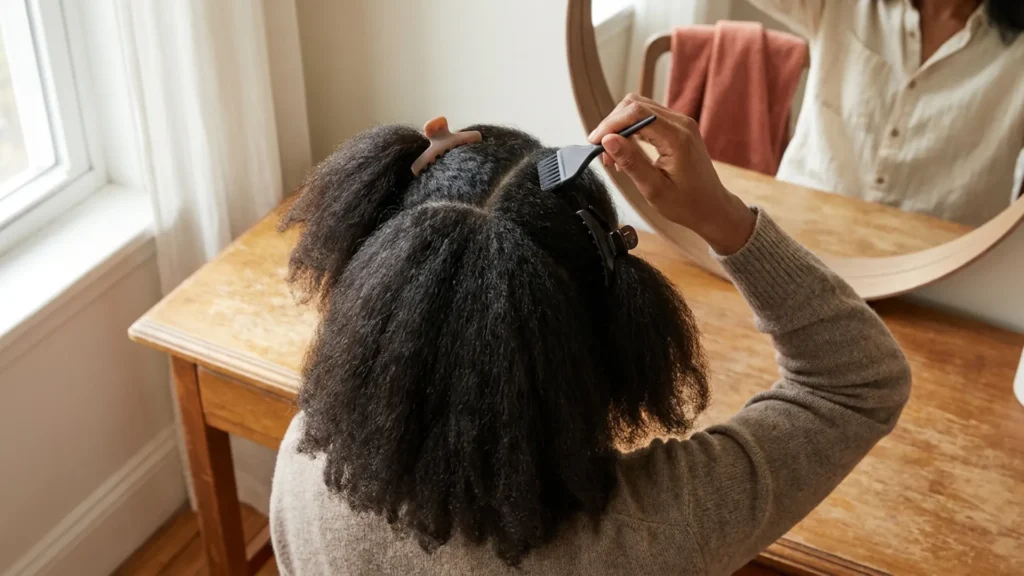
This is the part most tutorials skip past. Here’s a routine that actually gets the oil where it needs to go.
- Start on dry, unwashed hair, at least a day before your next wash. Applying oil to already-clean hair just means it slides off faster.
- Section the hair into four to six parts with clips. You can’t reach the scalp evenly through a full head of loose hair.
- Use a dropper or applicator brush, not your palm, to place small amounts directly along each part line. A little goes a long way — a few drops per section is enough.
- Massage in circular motions with your fingertips, not your nails, for two to three minutes total across the scalp.
- Leave it on for 30 to 60 minutes for a light oil like rosemary, or overnight under a shower cap for a heavier oil like castor. Overnight isn’t required for every oil.
- Shampoo twice if needed to fully remove the residue. One quick rinse usually isn’t enough for thicker oils, and leftover buildup is what causes the greasy, flat look people blame on the oil itself.
Do this two to three times a week. Daily use doesn’t speed anything up and just increases the odds of buildup and clogged follicles.
How Often to Use It and What to Expect Over Time
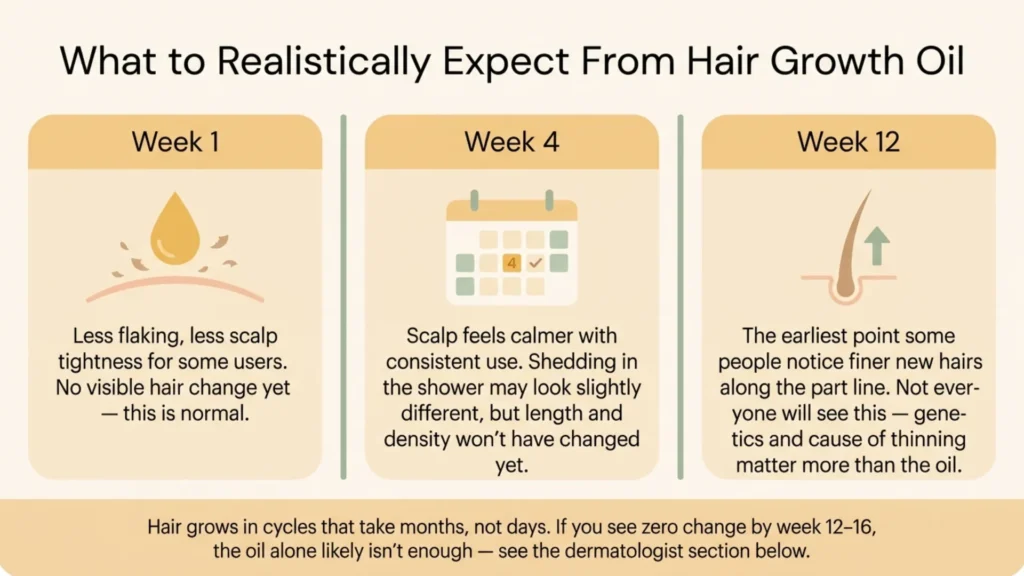
Hair grows in cycles, and those cycles are measured in months, not days. Expecting visible change inside two weeks sets you up to quit right before anything would actually show.
In the first week, some people notice a calmer, less flaky scalp. By week four, that calmness tends to hold, but hair density and length haven’t shifted yet — that’s normal, not a sign of failure. Week twelve is realistically the earliest point where finer new hairs might appear along the part, and even then, only for some people. Genetics, hormones, and the underlying cause of thinning matter far more than the oil itself.
If nothing has changed by sixteen weeks of consistent use, the oil alone probably isn’t the right tool for what’s going on.
Mistakes That Quietly Cancel Out the Benefits
A few habits show up again and again in people who feel like hair growth oil “didn’t work” for them.
Using too much is the most common one. More product doesn’t mean more benefit; it usually just means more buildup sitting on the scalp, which can trap dead skin and irritate the very follicles you’re trying to support. Switching oils every few weeks is another quiet saboteur — the scalp needs weeks of consistency to show any response, and constant switching resets that clock every time.
- Applying oil to already-oily roots instead of the scalp underneath
- Skipping the massage step, so the oil sits on top instead of working in
- Rinsing with one quick shampoo, leaving residue that flattens hair for days
Heat is the last one people underestimate. Blow-drying or straightening right after an oil treatment, before it’s fully rinsed and dried, can bake residue onto the hair shaft rather than letting the scalp absorb what it needs.
Also Visit : Hair Growth Tips That Actually Change Your Rate
When Oil Isn’t Enough and It’s Time to See a Dermatologist

Hair growth oil is a support tool, not a treatment for medical hair loss. If you’re noticing sudden shedding, a widening part, patchy bald spots, or scalp pain and redness alongside the thinning, that’s a different situation than everyday maintenance.
The American Academy of Dermatology’s guidance on diagnosing hair loss is clear that an accurate diagnosis, not a home routine, is the actual first step for anything beyond mild, gradual thinning. Conditions like androgenetic alopecia, alopecia areata, and telogen effluvium look similar on the surface but need very different treatment.
This article is for general information only and isn’t medical advice. For persistent hair loss, scalp pain, or sudden shedding, see a dermatologist or trichologist.
Frequently Asked Questions
How often should you use hair growth oil?
Two to three times a week, applied directly to the scalp, works better than daily use. Daily application mostly just adds buildup without speeding up results.
Do you leave hair growth oil in overnight or wash it out sooner?
It depends on the oil. Lighter oils like rosemary usually need 30 to 60 minutes. Heavier oils like castor are often left overnight under a shower cap, but that’s a preference, not a requirement for it to work.
Can hair growth oil clog your scalp or cause more shedding?
Yes, if it’s overused or not rinsed out thoroughly. Buildup can trap dead skin and oil around the follicle opening, which irritates the scalp rather than helping it.
How long before you see results from hair growth oil?
Realistically, 8 to 12 weeks of consistent use before you’d expect to notice anything, since hair growth cycles move slowly. Some people see nothing at all, especially if the thinning has a hormonal or medical cause.
Can you use hair growth oil if you have fine or oily hair?
Yes, but stick to a lighter oil like rosemary or jojoba and use even smaller amounts, since fine hair shows buildup faster than thick or coarse hair does.
Also Visit : Wondering how to grow hair fast in natural ways? Read on
Key Takeaways
- Hair growth oil supports scalp health and, for a couple of oils, may extend the hair’s growth phase — it doesn’t replace treatment for hormonal or medical hair loss.
- Small amounts on the scalp beat large amounts smoothed through the lengths.
- Give it 8 to 12 weeks minimum before judging results, since hair grows in slow cycles.
- Two to three consistent applications a week outperform one heavy, occasional soak.
Written by Anna Anderson for Trend Cottage.