Best Way to Take Care of Natural Hair (Simple Guide)
If you have been searching for the best way to take care of natural hair, you have probably noticed something frustrating: most advice online is either too vague to use or written for hair that behaves nothing like yours. Straight-hair rules do not transfer. Your curls need a completely different approach.
Here is the short version. Healthy natural hair comes down to five things done consistently: knowing your porosity, washing on a schedule that suits your hair, keeping moisture locked in, handling your strands gently, and protecting them at night. Everything else is a detail.
This guide walks you through all of it, step by step, in plain language. No 30-product routine. No expensive gadgets. Just a system you can actually keep up with.

What Makes Natural Hair Different
Natural hair is hair that has not been chemically straightened or permanently altered. It ranges from loose waves to tight coils, and its behaviour has a lot to do with its shape.
A straight strand is round in cross-section. A coily strand is more oval or flattened, and it twists as it grows. Every one of those twists is a bend, and every bend is a point where the outer layer of the hair, the cuticle, lifts slightly. Two things follow from that.
First, the natural oil your scalp produces cannot slide down a spiral the way it slides down a straight strand. So the ends stay dry even when the scalp feels oily. Second, every bend is a weak point where the strand can snap if you pull or brush roughly.
This is why coily and curly hair often feels dry and breaks easily, and it has nothing to do with the hair being weak by nature. It is a structural thing. Once you understand that, the whole routine below makes sense.
Step 1: Know Your Curl Pattern and Porosity
Before buying anything, spend ten minutes learning what your hair actually is. This one step saves people hundreds of dollars in products that were never going to work.
Your curl pattern
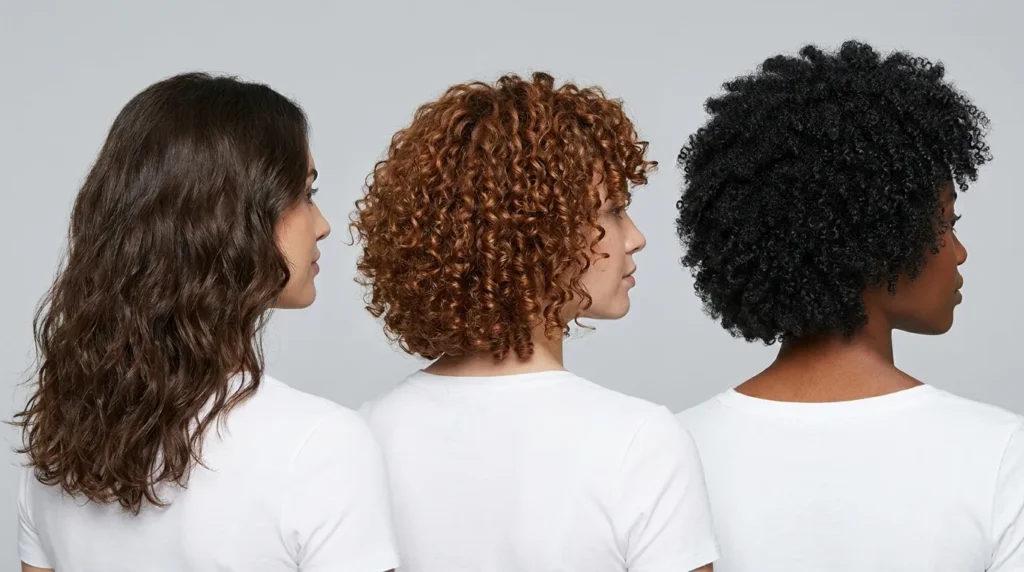
Curl pattern tells you how your hair looks and roughly how it behaves. It is a helpful starting point, though not the most important factor.
| Type | What It Looks Like | Main Need |
|---|---|---|
| Type 2 (Wavy) | Loose S-shaped waves, lies fairly flat | Lightweight products, avoid heaviness |
| Type 3 (Curly) | Defined loops, from loose spirals to tight corkscrews | Definition plus frizz control |
| Type 4 (Coily) | Tight coils or Z-shaped zigzags, often dense | Heavy moisture and very gentle handling |
Most heads have more than one pattern. It is completely normal to have looser curls at the front and tighter coils at the crown. Treat each section for what it is rather than forcing one product across everything.
Your porosity matters more
Porosity describes how easily your hair takes in and holds on to water. It is the single most useful thing to know, because it decides which products work and which just sit on top of your hair doing nothing.
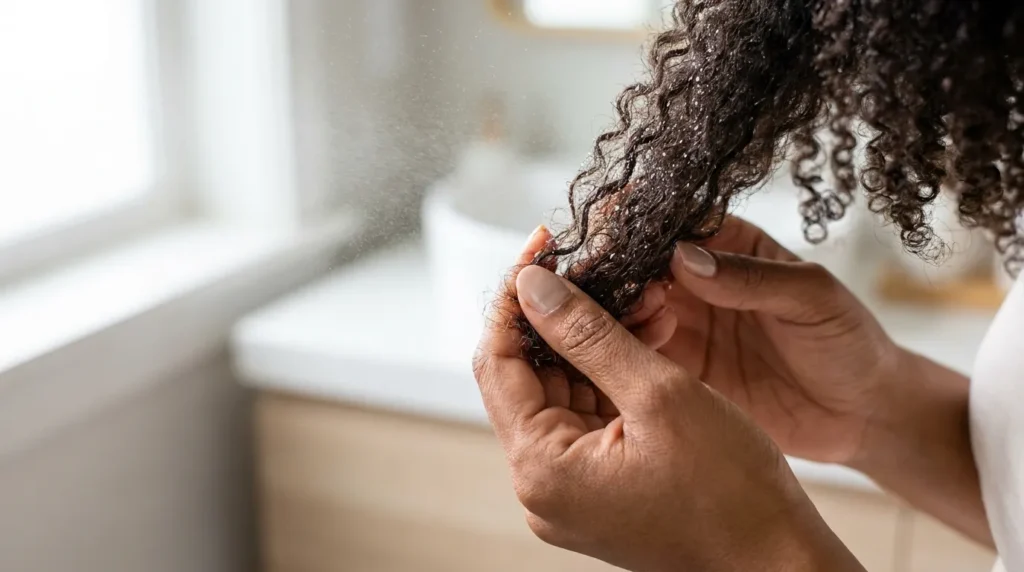
The strand test: take a clean, product-free strand of shed hair. Slide your fingers up it from tip to root. Smooth means low porosity. Slightly rough or bumpy means high porosity.
The spray test: mist a small clean section with water. If the droplets sit on the surface like beads for a while, your porosity is low. If they vanish almost instantly, it is high.
| Porosity | How It Behaves | What Helps |
|---|---|---|
| Low | Slow to get wet, slow to dry, products build up on the surface | Warm water, light liquids and creams, gentle heat while conditioning, clarify monthly |
| Medium | Absorbs water easily, holds style well, fairly forgiving | A balanced routine, occasional protein |
| High | Soaks up water instantly, dries fast, frizzes, feels dry hours later | Thicker butters and creams, sealing oils, regular protein, cool rinses |
High porosity is often the result of damage from colour, heat or relaxers, though some people are simply born with it. Either way, the fix is the same: seal aggressively and keep protein in the rotation.
Step 2: Build a Wash Day That Actually Works
Wash day has a reputation for taking forever. It does not have to. With a clear order of operations, most people finish in 60 to 90 minutes including drying time.
| Stage | Time | Purpose |
|---|---|---|
| Pre-poo | 20-30 min | Softens hair so shampoo cannot strip it bare |
| Cleanse | 5-10 min | Removes buildup, sweat and old product |
| Deep condition | 20-30 min | Restores softness, slip and strength |
| Leave-in and seal | 10-15 min | Locks moisture in before the hair dries |
| Style | 15-45 min | Sets the shape you will wear for days |
Pre-poo
Section your dry or slightly damp hair into four. Work a light oil or a cheap conditioner through each section, focusing on the ends. Clip it up and leave it for twenty minutes while you do something else. Skipping this step is fine occasionally, but on hair that snaps easily it makes a visible difference.
Cleanse
Use a sulfate-free shampoo and focus it on the scalp, not the lengths. Massage with the pads of your fingers, never your nails. The runoff will clean the rest of the hair as it rinses down.
Once a month, swap in a clarifying shampoo. Butters, gels and oils build up over time, and once that layer is thick enough, water cannot get through it. If your hair suddenly feels dry no matter how much product you apply, buildup is usually the culprit.
Co-washing, which means cleansing with conditioner instead of shampoo, works well between full washes if your hair is very dry. It is not a full replacement for shampoo, though. Your scalp still needs a proper clean.
Deep condition
This is the step people skip and then wonder why nothing improves. Apply a deep conditioner section by section, cover with a plastic cap, and leave it on for at least twenty minutes.
Adding gentle warmth helps a great deal, particularly on low porosity hair. A warm towel over the cap, a steamer, or simply sitting in a warm bathroom will do. Heat lifts the cuticle just enough for the conditioner to get inside.
Leave-in and seal
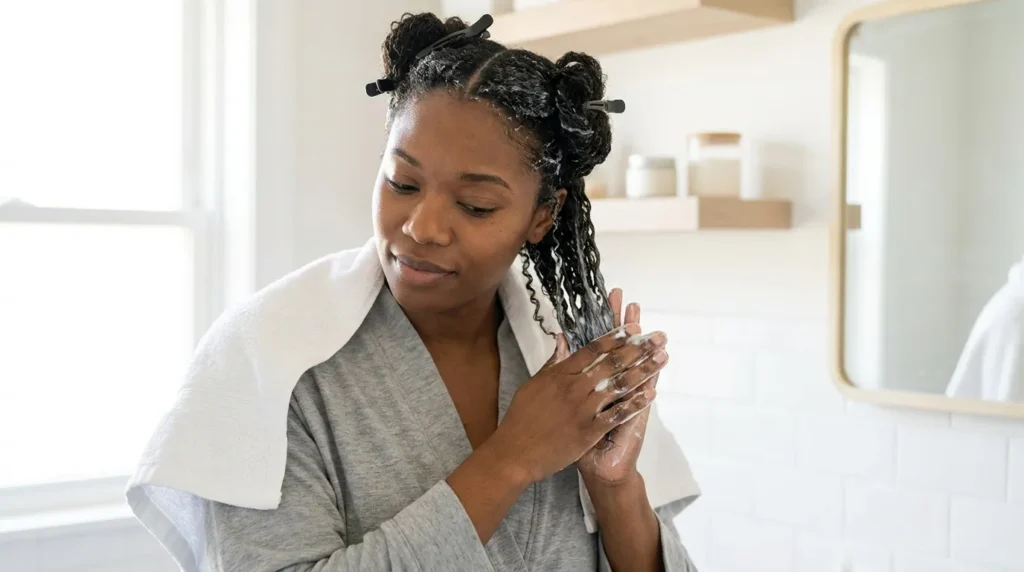
Apply your leave-in while the hair is still soaking wet. Not damp. Wet. You are trying to trap water inside the strand, and you cannot trap water that has already evaporated.
Step 3: Master Moisture With the LOC or LCO Method
Ask ten people what the best way to take care of natural hair is and most will say moisture. They are right, but moisture is not something you add. Water is the only real moisturiser. Everything else exists to keep that water from escaping.
That is what layering is for.
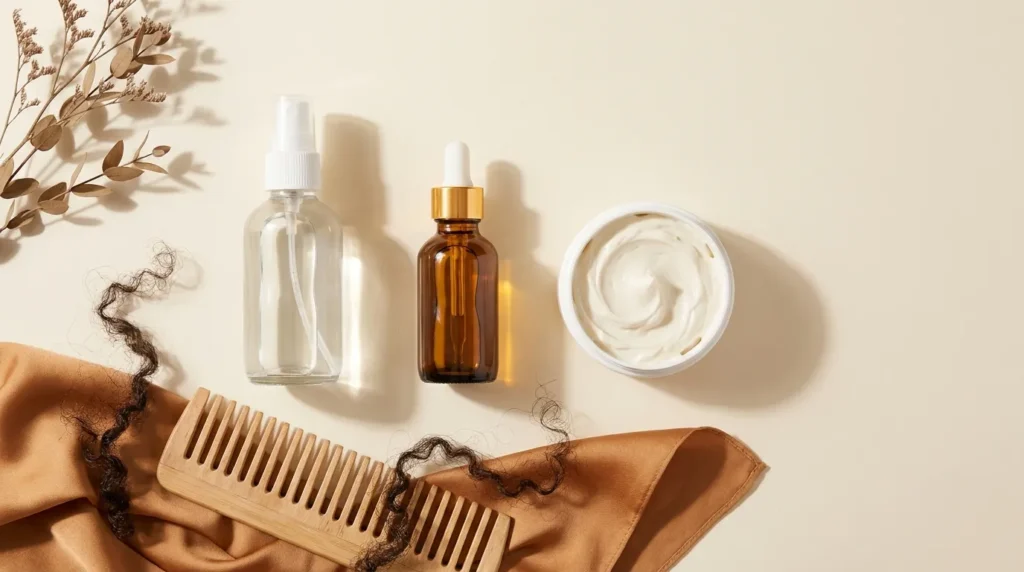
LOC means Liquid, Oil, Cream. Water or a water-based leave-in first, then an oil to seal it in, then a cream to hold everything in place.
LCO means Liquid, Cream, Oil. Same idea, but the cream goes on before the oil so the oil forms the final outer barrier.
Which one is better depends on your hair, not on which one is trending. As a general rule, LOC suits high porosity hair that loses water quickly, and LCO suits low porosity hair that struggles to let heavy products in. Try one for two weeks, then try the other, and see which leaves your hair softer on day three.
A rough guide on amounts: use more product than feels reasonable on the ends and much less near the roots. The ends are the oldest part of your hair and the most fragile. They earned the extra attention.
Step 4: Keep Protein and Moisture in Balance
Your hair needs both. Too much of either causes problems, and the symptoms are easy to mix up because both end up feeling like damage.
| Sign | What It Means | What To Do |
|---|---|---|
| Hair stretches a long way when wet, then snaps and feels mushy | Too much moisture, not enough protein | Use a protein treatment, then deep condition |
| Hair feels stiff, straw-like and breaks with almost no stretch | Too much protein, not enough moisture | Pause all protein, do back-to-back moisture treatments |
| Hair stretches, springs back and feels soft but strong | Balanced | Keep doing what you are doing |
Most people need a light protein treatment every four to six weeks. Colour-treated or heat-damaged hair usually needs it more often. Low porosity hair often needs it less, since it tends to be protein-sensitive.
Step 5: Detangle Without Losing Half Your Hair
More breakage happens during detangling than during any other part of the routine. The technique matters more than the tool.
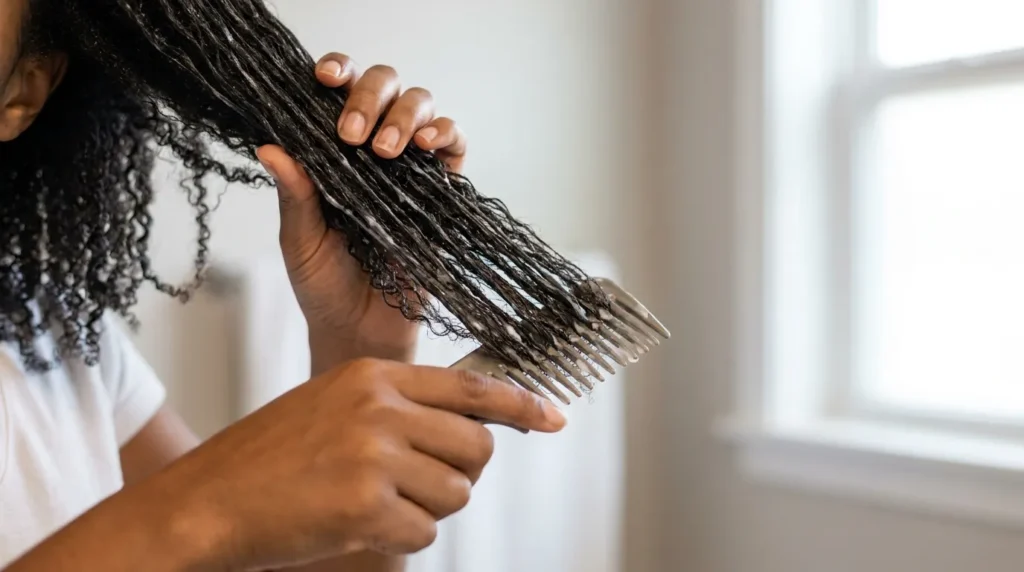
- Detangle only when hair is wet and coated with conditioner or a slippery leave-in. Never on dry hair.
- Work in four to six sections and finish one completely before moving on.
- Start at the ends and work upward in small stages. Starting at the root pushes every tangle down into one giant knot.
- Use your fingers first to find and separate the big tangles, then follow with a wide-tooth comb or a flexible detangling brush.
- If you hit a knot, stop pulling. Add more conditioner and gently ease it apart.
Some shedding is completely normal. Losing somewhere in the range of 50 to 100 strands a day is typical for most people. What is not normal is short broken pieces with no white bulb at the end. Those are breakage, and they mean something in your routine needs adjusting.
Step 6: Do Not Ignore Your Scalp
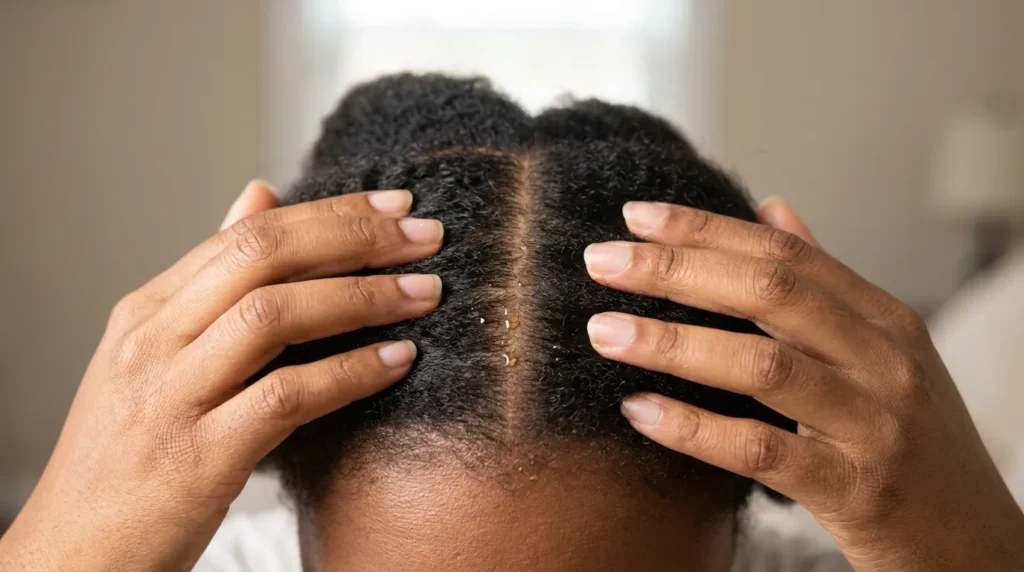
Hair grows out of skin, and that skin needs the same care you would give your face. A neglected scalp shows up eventually as flaking, itching, or slow growth.
Massage your scalp for a few minutes several times a week. Use your fingertips in small circles. It feels good, it helps loosen flakes, and increased blood flow to the follicles is thought to support healthier growth.
Keep it clean. There is a persistent myth that natural hair should rarely be washed. Product and sweat sitting on the scalp for weeks does no favours to anyone. Most people do well washing every 7 to 14 days.
Go easy on heavy oils directly on the scalp if you are prone to flaking or clogged follicles. A lightweight scalp oil applied sparingly is usually enough.
If you are dealing with persistent itching, painful bumps, or noticeable thinning at the edges or crown, that is worth a visit to a dermatologist rather than another product. Traction alopecia in particular is far easier to treat early than late.
Step 7: Protect Your Hair Every Single Night
Eight hours of friction against a cotton pillowcase undoes a lot of careful daytime work. Cotton pulls moisture out of your hair and roughs up the cuticle.
The fix is cheap and takes a minute.
- Wear a satin or silk bonnet, or sleep on a satin pillowcase.
- For loose hair, try the pineapple: gather everything loosely at the very top of your head with a soft scrunchie.
- For longer or thicker hair, two to six large twists keep the shape and prevent tangling.
- Refresh in the morning with a light water mist rather than reapplying heavy product.
This one habit alone tends to make a bigger difference in three months than most product switches do.

Step 8: Use Protective Styles the Right Way
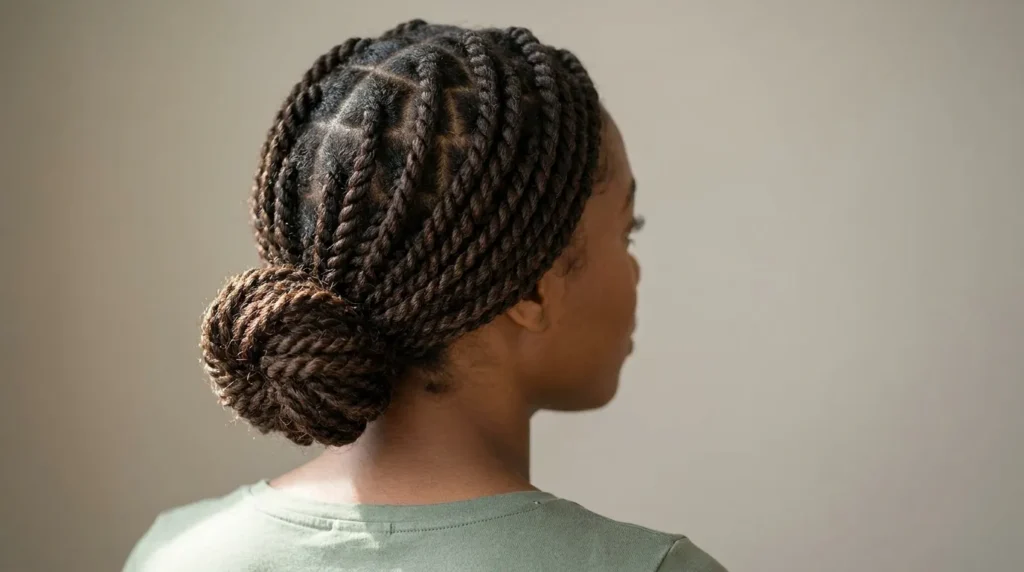
Braids, twists, buns and wigs tuck your ends away and cut down on daily handling. Used properly, they help enormously with length retention. Used badly, they cause the exact damage they were meant to prevent.
The rules:
- Never let a style be installed so tightly that it stings, throbs or creates small bumps along the hairline. Tension is the leading cause of edge loss.
- Keep a style in for four to eight weeks at most. Beyond that, shed hair matts at the roots and removal becomes a breakage event.
- Continue caring for your scalp while the style is in. Cleanse it with diluted shampoo and moisturise your exposed ends.
- Give your hair a week or two of rest between installs.
- Take styles down slowly, with plenty of conditioner and patience.
Step 9: Handle Heat and Trims Carefully
Heat is not forbidden, but coily hair is unusually vulnerable to heat damage, and damage to a curl pattern is permanent. Once a curl stops reverting, no product brings it back.
If you do use heat, always apply a heat protectant, keep the temperature under 180C or 356F, and limit it to a few times a year. Blow-drying on cool with a diffuser is far kinder than a flat iron.
On trims: dust your ends every three to four months, taking off roughly a quarter inch. Split ends travel upward if left alone, and you eventually lose more length than the trim would have cost. Trimming does not make hair grow faster, but it absolutely helps you keep the length you grow.
Step 10: Feed Your Hair From the Inside
Hair is one of the first things your body deprioritises when nutrition is short. No topical routine fully compensates for that.
Focus on adequate protein, since hair is largely made of keratin. Iron, zinc, vitamin D and biotin all play a part in normal hair growth. Drink water consistently through the day rather than in one go. Sleep and stress matter too, and significant stress can trigger noticeable shedding a few months later.
Before buying supplements, it is worth asking your doctor for a blood test. Correcting an actual deficiency helps. Taking high doses of something you were never short on generally does not.
Your Weekly and Monthly Schedule
Here is the whole routine collapsed into a schedule you can stick on your bathroom mirror.
| How Often | What To Do |
|---|---|
| Every night | Bonnet, satin pillowcase, pineapple or loose twists |
| Every 2-3 days | Light water mist, refresh curls, scalp massage |
| Every 7-14 days | Full wash day: pre-poo, cleanse, deep condition, leave-in, seal, style |
| Every 4-6 weeks | Protein treatment, clarifying wash |
| Every 3-4 months | Dust the ends, reassess what is working |
Ingredients Worth Knowing
You do not need to memorise a chemistry textbook, but a handful of ingredients are worth recognising on a label.
Helpful for most textured hair: shea butter, mango butter, jojoba oil, castor oil, coconut oil (better for low to medium porosity), glycerin and honey as humectants, aloe vera, panthenol, hydrolysed proteins for strength, and behentrimonium methosulfate for slip.
Approach with caution: sulfates such as sodium lauryl sulfate can be too stripping for weekly use. Drying alcohols high on the ingredient list, like isopropyl alcohol, can leave hair brittle. Non-water-soluble silicones build up unless you clarify. Petrolatum and mineral oil coat the strand without adding moisture, which some people like and others find suffocating.
One caveat on humectants like glycerin: they pull water from the air. In humid weather that is great. In very dry winter air, they can pull water out of your hair instead. Adjust seasonally rather than assuming a product failed.
7 Mistakes That Quietly Damage Natural Hair
- Applying products to dry hair and expecting moisture. Without water underneath, you are just coating the outside.
- Washing far too rarely. Buildup blocks moisture and irritates the scalp.
- Brushing dry curls. This is the fastest way to cause breakage and destroy definition.
- Product hopping every two weeks. Give anything six to eight weeks before deciding it does not work.
- Copying someone else’s routine exactly. Their porosity, density and climate are not yours.
- Tight styles worn constantly. Edges rarely recover once the follicles are damaged.
- Ignoring the ends. They are years old and need more of everything than your roots do.
What Has Changed in Natural Hair Care for 2026
The natural hair space has shifted in a few useful directions over the last couple of years.
Routines have got shorter. The ten-step wash day is out of fashion. Multi-use products that cleanse and condition, or moisturise and define, are dominating because people want a routine they can actually maintain on a work night.
Scalp care has moved to the centre. Exfoliating scalp scrubs, prebiotic serums and lightweight scalp oils have gone mainstream, borrowing directly from skincare. The thinking is straightforward: better skin, better growth conditions.
Bond-repair technology reached textured hair. Treatments originally built for bleached hair are now formulated for coils, and they genuinely help hair that has been through colour or heat.
Porosity-labelled products are everywhere. Brands now market by porosity rather than curl type, which is a more useful sorting system and makes shopping easier.
Protective styling has got gentler. Knotless braids, lightweight extensions and low-tension installs are now the standard rather than the premium option, largely because awareness of traction alopecia has grown.
Frequently Asked Questions
How often should I wash natural hair?
Most people do well washing every 7 to 14 days. Wash more often if you exercise heavily, use a lot of product or have an oily scalp. Wash less often if your hair is very dry or you are wearing a protective style.
What is the best way to take care of natural hair if I have very little time?
Cut it down to four non-negotiables: wash and deep condition every two weeks, apply leave-in to soaking wet hair, seal with an oil or cream, and cover your hair every night. That alone will improve most people’s hair within two months.
Why is my hair dry even though I moisturise daily?
Usually one of three things. You are applying product to dry hair instead of wet. You have product buildup blocking absorption, which a clarifying wash will fix. Or you are applying moisture without sealing it in, so it evaporates within hours.
Can I use coconut oil on natural hair?
It works well for many people, especially low to medium porosity hair, because it penetrates the strand rather than only coating it. Some people find it makes their hair stiff over time, which is a sign of protein sensitivity. If that happens, switch to jojoba or avocado oil.
How long does it take to see results?
Softness and manageability improve within two to four weeks. Reduced breakage becomes obvious around two to three months. Real length retention takes six months to a year, since hair grows roughly half an inch a month and the gain only shows once breakage stops.
Do I need a whole shelf of expensive products?
No. Five items cover almost everything: a sulfate-free shampoo, a deep conditioner, a leave-in, an oil or butter, and a styler. Technique and consistency beat product price every time.
Is protein really necessary?
For most people, yes, in moderation. Hair is protein, and everyday wear gradually depletes it. If your hair stretches a long way when wet and then snaps, you need it. If it already feels stiff, hold off.
Will trimming make my hair grow faster?
No, growth happens at the follicle and trimming has no effect on it. What trimming does is stop splits from travelling up the strand, so you keep more of the length you grow. That is why people who trim regularly often end up with longer hair than people who never do.
Final Thoughts
The best way to take care of natural hair is not a secret product or a complicated regimen. It is a small set of habits repeated consistently: understand your porosity, wash on a schedule, moisturise wet hair and seal it, detangle with patience, and protect your hair at night.
Start with two changes this week rather than all ten. Deep condition properly on your next wash day, and cover your hair tonight. Once those feel automatic, add the next thing.
Your hair does not need to be fixed. It needs to be understood, and then left alone to do its thing.
Also Visit : Home Remedies for Natural Hair Growth That Actually Work