Does Hair Growth Serum Really Work, or Is It Marketing?
The pitch for hair growth serum almost always sounds the same: a few drops every night, and within weeks you’ll see fine new hairs coming in along your part. That promise does most of the selling, and it’s mostly misleading — not because serums are fake, but because “serum” isn’t one product. It’s a texture, not a formula.
Quick answer: some hair growth serums genuinely work, but usually only the ones built around minoxidil, the one ingredient with strong clinical backing for regrowth. Serums built around peptides, caffeine, or botanical extracts can support scalp condition and hair quality, with caffeine having the most encouraging research of the group, but none of them replace a proven drug ingredient if what you’re actually dealing with is diagnosable hair loss.
Key Takeaways
- “Serum” describes a texture and delivery method, not an active ingredient — two products called serum can be in completely different regulatory categories.
- Minoxidil is the only ingredient in this space with strong, repeated clinical evidence for actual regrowth.
- Caffeine has real but modest evidence; peptides and botanical extracts mostly have conditioning evidence, not regrowth evidence.
- Give a serum a genuinely fair trial — 8 to 12 weeks for cosmetic formulas, 4 months to a year for minoxidil — before deciding it “doesn’t work.”
Two Very Different Categories Hiding Under One Label
Nothing in the word “serum” tells you what’s inside the bottle. It just means a lightweight, fast-absorbing liquid, as opposed to a thick oil or a cream. That single fact is why the “does it work” question can’t have one answer — it depends entirely on which category the bottle in front of you belongs to.
The FDA’s own explanation of the line between a cosmetic and a drug comes down to intended use. A product marketed to “beautify” or make hair look fuller is a cosmetic. A product marketed to actually treat or prevent a condition, like pattern hair loss, is legally a drug, and it has to prove that claim with real trial data before it can say so.
That’s the real split hiding under “hair growth serum.” One category is cosmetic: peptides, botanical extracts, vitamins, caffeine, sold with softer language like “supports the appearance of fuller hair.” The other is a genuine OTC drug: minoxidil, sold with a Drug Facts label, allowed to say “regrows hair” because it went through the trials to earn that claim. Two bottles can sit next to each other on a shelf, both called “serum,” and belong to entirely different legal categories.
Also Visit : Hair Growth Tips That Actually Change Your Rate
What the Evidence Actually Shows for Each Category
Minoxidil has the longest track record here. The NIH’s patient drug information on topical minoxidil is direct about the timeline: most people need to use it for at least four months, and possibly up to a year, before judging whether it’s working, and most new hair is lost again within months of stopping. It also notes plainly that it doesn’t help receding hairlines and works best for people under 40 with recent hair loss. That’s not marketing language, and it’s a much narrower promise than most product pages make.
Caffeine is the strongest performer among the cosmetic-category ingredients, though “strongest” here means something more modest than most bottles imply. A systematic review of nine clinical trials on topical caffeine, covering nearly 700 people, found consistent positive results for hair growth or reduced shedding, with minimal side effects. But the same review flagged real limitations: several studies lacked proper randomization or placebo controls, and none used a standardized method for counting hairs. The honest summary is “promising and safe, not proven at the level of minoxidil.”
Peptides and most botanical extracts sit at the weakest end. Copper peptides have solid evidence for wound healing and skin conditioning, and some lab studies suggest they may support the hair growth cycle, but independent human trials specifically on scalp regrowth are thin. Biotin, one of the most heavily marketed serum ingredients, only meaningfully helps people who actually have a biotin deficiency, which is uncommon in people eating a typical varied diet.
How to Read an Ingredient List Like a Skeptic
Before buying anything, it helps to know what tier an ingredient actually sits in. Marketing copy rarely makes this distinction on its own.
| Ingredient | Category | What Real Evidence Supports | Watch For |
|---|---|---|---|
| Minoxidil (2% or 5%) | OTC drug | Actual regrowth in androgenetic hair loss, with consistent use | Scalp irritation, a “shedding” phase in the first few weeks that’s usually normal |
| Caffeine | Cosmetic | Modest support for growth and reduced shedding | Concentration is rarely disclosed, which makes products hard to compare |
| Copper peptides | Cosmetic | Scalp conditioning; limited independent human regrowth data | Often paired with vague “clinically proven” claims not backed by a public study |
| Biotin | Cosmetic | Helps only if you’re actually deficient | Marketed heavily despite limited relevance for most users |
If a product’s marketing leans hard on words like “clinically proven” without naming the study, that’s usually a sign the evidence is thinner than the label suggests.
Also Visit : How to Use Hair Growth Oil the Right Way
Giving a Serum a Fair Trial
Most people quit a serum right before it would have had time to show anything. A fair trial has a few non-negotiables.
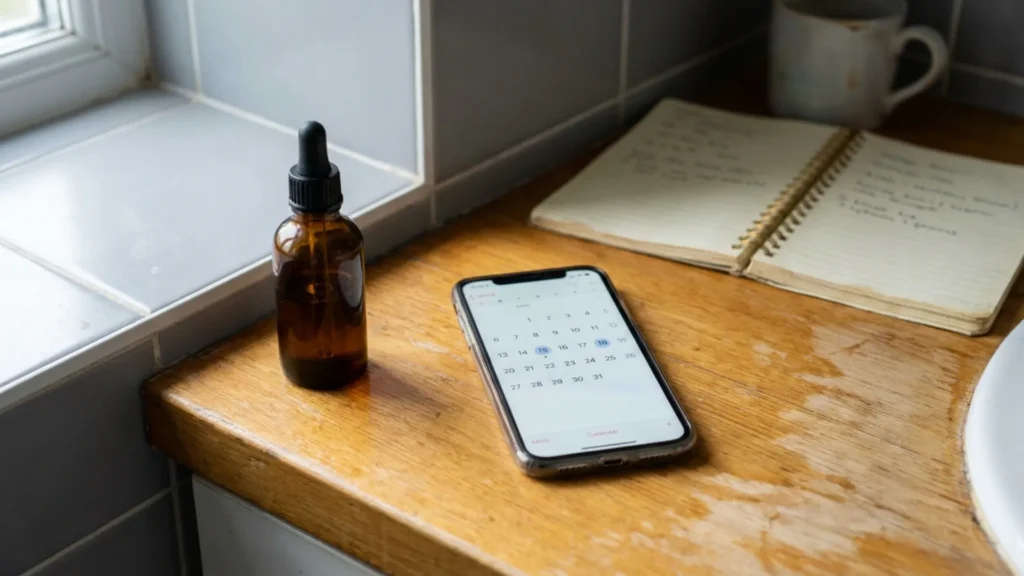
Apply it to the scalp, not down the lengths of the hair — that’s where the ingredient actually needs to reach. Use it at the frequency on the label, usually once or twice daily, and stay consistent; skipping several days a week resets the clock more than people expect. Take a photo under the same lighting, same angle, and same hair part once a month, since day-to-day memory isn’t reliable for spotting gradual change. And set a real end date before you start: 8 to 12 weeks for a cosmetic serum, 4 months minimum for anything minoxidil-based, before deciding whether it’s doing anything at all.
Serum vs Oil: Which Fits Your Situation
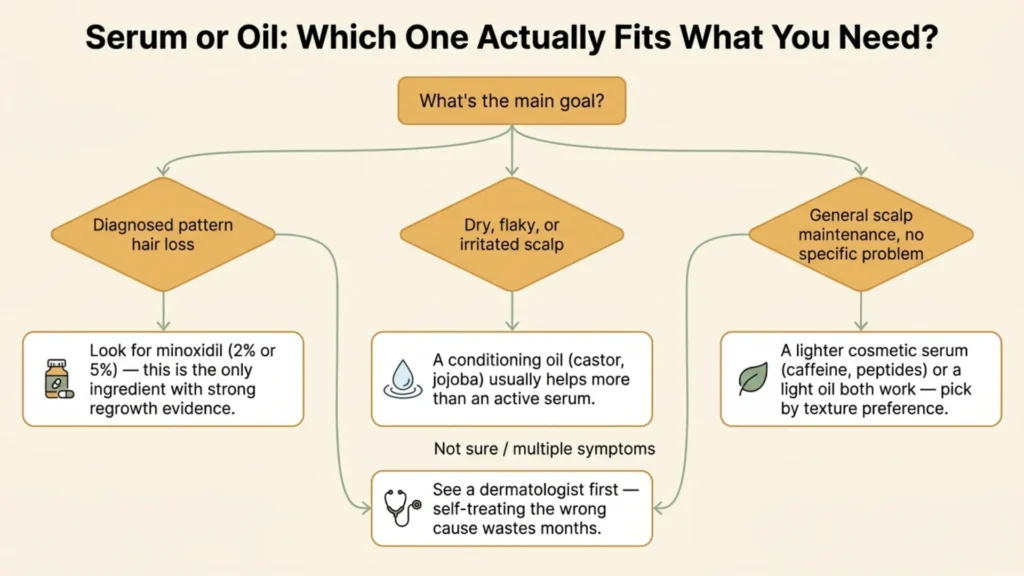
Oil and serum aren’t competing formats so much as tools for different jobs. Oil is thicker, sits on the scalp and hair longer, and tends to be better for dryness, flaking, or general conditioning. Serum is lighter, absorbs faster, and is the format that carries an actual clinically dosed active ingredient like minoxidil.
If you’re dealing with diagnosed or suspected pattern hair loss, a minoxidil serum or solution is the only one of the two with real evidence behind it. If your scalp is dry, irritated, or you just want a lower-maintenance conditioning routine, an oil is usually the better fit and a lot more forgiving to use. If neither problem applies and you just want general upkeep, the choice mostly comes down to texture preference, since the evidence for light cosmetic actives is similar whether they’re delivered in an oil or a serum base.
Also Visit : Natural Hair Tips for Beginners You Haven’t Tried Yet
When It’s Not Working, and What That Actually Means

If you’ve genuinely given a product its full trial period and photos show no change, that’s real information, not a personal failure. It usually means one of two things: the ingredient wasn’t strong enough for what’s actually causing the thinning, or the cause isn’t something a topical product can touch at all — hormonal shifts, thyroid issues, and nutritional deficiencies all show up as hair loss but need a different kind of treatment.
Scalp irritation, redness, or unexpected shedding that doesn’t settle after the first few weeks of a minoxidil product is also worth flagging to a dermatologist rather than pushing through alone, since allergic contact reactions to minoxidil formulations are a documented, if uncommon, issue.
This article is for general information only and isn’t medical advice. For persistent hair loss, scalp irritation, or sudden shedding, see a dermatologist or trichologist.
Frequently Asked Questions
Does hair growth serum really work?
It depends entirely on the ingredient. Minoxidil-based serums have strong evidence for regrowth. Cosmetic serums with caffeine, peptides, or botanicals can support scalp health and hair quality but have weaker evidence for actual new growth.
What’s the difference between a hair growth serum and a hair oil?
Texture and purpose, mainly. Serums are lighter and faster-absorbing and are the format that carries clinically dosed actives like minoxidil. Oils are thicker and generally better for scalp conditioning and dryness.
How long before a hair growth serum shows results?
For cosmetic serums, give it 8 to 12 weeks of consistent use. For minoxidil, plan on 4 months minimum, sometimes up to a year, before judging results.
Can you use a hair growth serum and an oil together?
Usually, yes, though it’s worth spacing them out (serum first, oil later or on alternating days) so the oil doesn’t sit on top and block the serum from reaching the scalp.
Is minoxidil in a serum safe to use long-term?
It’s generally considered safe for long-term use as directed, though most new hair is lost again within months of stopping, and some people experience scalp irritation that’s worth discussing with a dermatologist if it doesn’t settle.
Do you need a prescription for a hair growth serum?
No, if it’s a cosmetic serum or an OTC minoxidil formulation (2% or 5%), both are available without a prescription in the US. Prescription-strength options exist but are a separate category.
Written by Anna Anderson for Trend Cottage.