Do Hair Masks for Hair Growth Really Work?
Search “hair masks for hair growth” and you’ll find plenty of claims that a jar of avocado and coconut oil can wake up dormant follicles overnight. It can’t. No mask reaches deep enough into the scalp to trigger new hair at the root the way a prescription treatment or a dermatologist-directed plan can.
Quick answer: hair masks don’t grow hair from the follicle, but they can genuinely support growth by cutting down breakage, calming an irritated scalp, and keeping strands strong enough to actually reach the length you’re working toward. That’s a real result. It’s just not the one most product labels promise.
Where the “Grows Hair Overnight” Idea Comes From
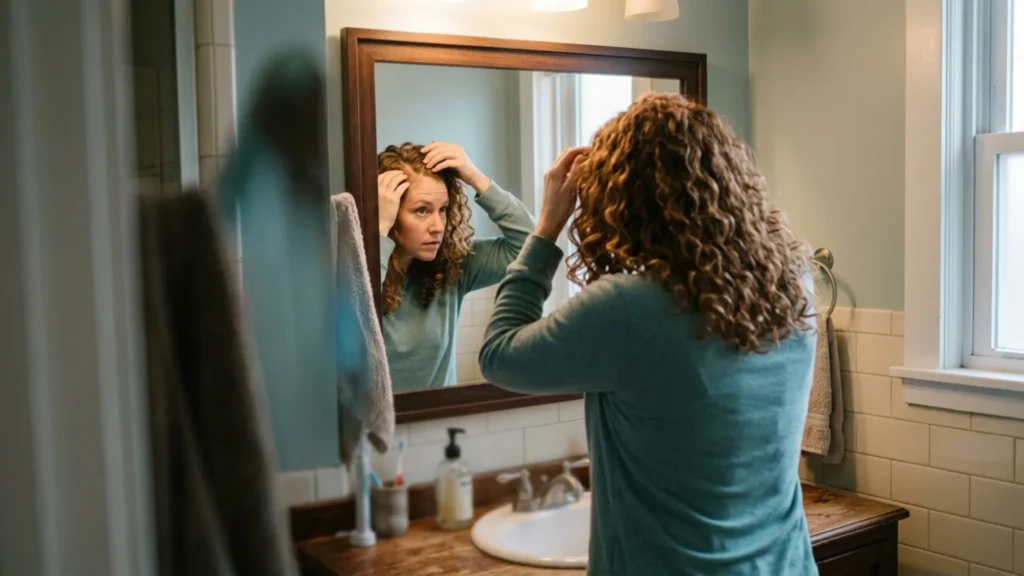
New hair growth happens at the follicle, a small structure buried under the scalp’s surface. It’s fed by blood vessels and shaped by hormones, genetics, and age. A hair mask sits on top of the scalp and along the hair shaft. It doesn’t get anywhere near that structure.
So why does the claim stick around? Partly marketing shorthand, and partly a real mix-up. When hair looks fuller after a few weeks of masking, it’s usually because fewer strands are snapping off, not because more strands are sprouting. The hair was already growing at its usual rate. It just wasn’t breaking as much along the way.
According to dermatologist-backed hair care guidance, most visible hair health comes down to washing habits, gentle handling, and product choice rather than any single miracle ingredient. A mask is one part of that picture, not a replacement for it.
What a Hair Mask Can Actually Do for Growth
Here’s the part that matters more than most articles admit: length retention. Most people’s hair grows at a fairly steady rate, somewhere around half an inch a month, though this varies by person. The reason hair doesn’t seem to get longer is usually breakage, not a growth problem.
A good mask reduces friction along the hair shaft. Ingredients like fatty alcohols, panthenol, and plant oils coat the strand and make it slide past itself instead of catching, tangling, and snapping. Less breakage means the hair you’re already growing sticks around long enough to show.
Scalp condition plays a role too. A dry, flaky, or irritated scalp can push more hairs into a shedding phase than usual. Masking the scalp with something soothing, and massaging it in for a minute or two while you apply, can ease that irritation and calm shedding tied to it. The massage itself briefly increases blood flow to the area, though this effect fades quickly and isn’t a substitute for anything more targeted.
None of this means a mask will out-grow genetics or a medical condition. It means a mask can protect the hair you already have while it grows, which for most people is most of the battle.
Also Visit : Which Hair Growth Methods Are Worth Your Time?
Ingredients With Some Real Evidence Behind Them
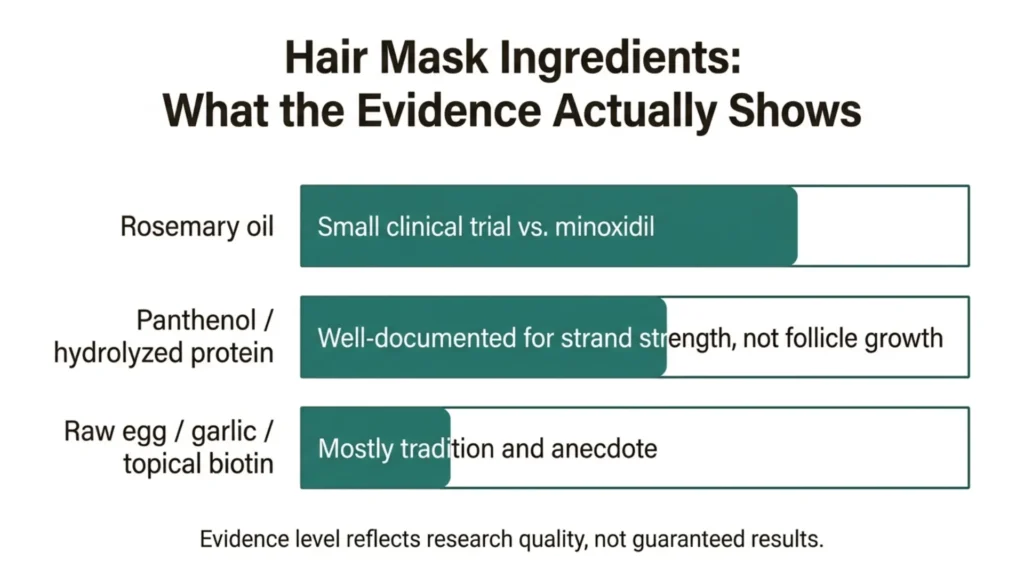
Rosemary oil has the strongest research of anything commonly used in a hair mask. A small randomized trial compared rosemary oil against 2% minoxidil in men with pattern hair loss over six months and found similar improvements in hair count between the two groups, with less scalp itching reported in the rosemary group. It’s one study with a small sample, but it’s a real, controlled comparison, which puts it ahead of almost everything else on this list.
Hydrolyzed proteins, like keratin or wheat protein, temporarily fill in gaps along damaged hair. They don’t build new hair, but they measurably improve strand strength and reduce breakage in the short term, which is exactly the mechanism that helps with length retention.
Panthenol, often listed as pro-vitamin B5, draws in moisture and coats the strand to reduce frizz and snapping. It’s one of the most well-studied cosmetic ingredients out there for softness and manageability, even if it isn’t doing anything at the follicle.
Caffeine shows up in a fair number of growth-focused masks. Early lab research suggests it may interfere with a hormone linked to pattern hair loss, but that work has mostly happened in isolated hair follicles in a lab setting, not in full clinical trials on real scalps. Treat it as promising, not proven.
Ingredients That Are Mostly Hype
Raw egg is the classic DIY growth mask, and it does contain protein. But whole-egg proteins are too large to actually penetrate the hair shaft in any meaningful way, so most of the benefit is a temporary coating effect, similar to a cheap conditioner. There’s also a small salmonella risk from handling raw egg on skin and in hair, worth knowing if you go this route.
Garlic gets recommended constantly for hair growth, mostly on the strength of tradition rather than research. Beyond a lingering smell and a chance of scalp irritation for sensitive skin, there isn’t solid evidence it does anything a gentler ingredient wouldn’t.
Biotin is probably the most overhyped name in the whole hair-growth conversation. Dermatologists note that biotin mainly helps people who are actually deficient in it, which is uncommon, and biotin molecules are large and don’t absorb well through skin anyway. A biotin-heavy mask is unlikely to do much that a biotin-free one wouldn’t.
Also Visit : Is Homemade Hair Growth Oil Worth Making Yourself?
How Often You Should Actually Use One
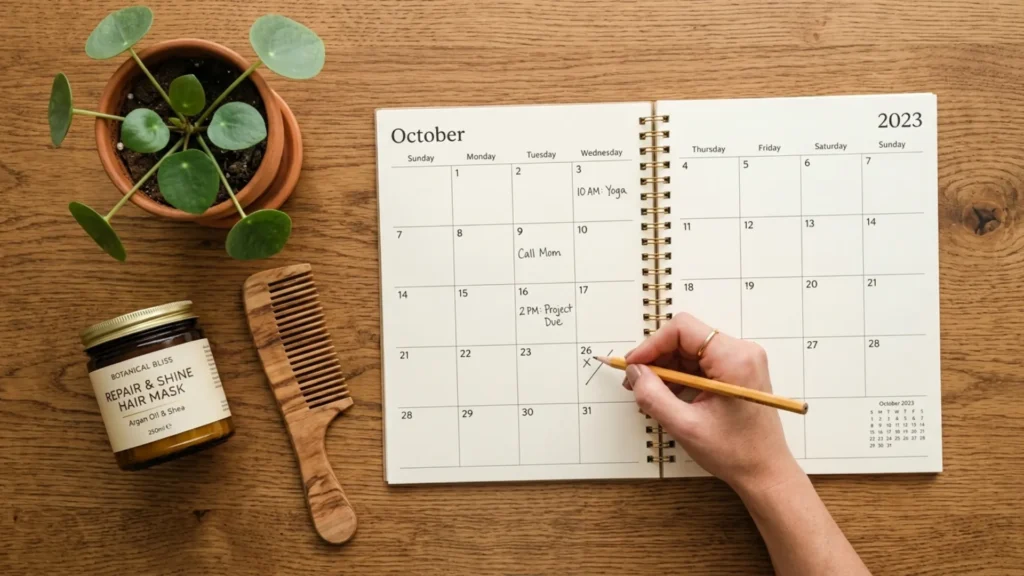
Frequency depends more on hair type than on how badly you want results. Fine or oily hair usually does best with a mask once a week. Heavier masking on fine hair can leave it weighed down and greasy faster than it helps.
Thick, dry, curly, or coily hair can usually handle a mask one to two times a week, since it tends to lose moisture faster and tolerates richer products without looking flat.
Protein-based masks are the exception. Because protein builds up on the strand over time, using one more than once every two to four weeks can lead to what’s often called protein overload: hair that feels stiff, brittle, and prone to snapping instead of stronger. If your hair suddenly feels like straw after a protein treatment, that’s usually the cause, and the fix is a moisture-focused mask to balance it back out.
How to Apply a Hair Mask So It Actually Helps
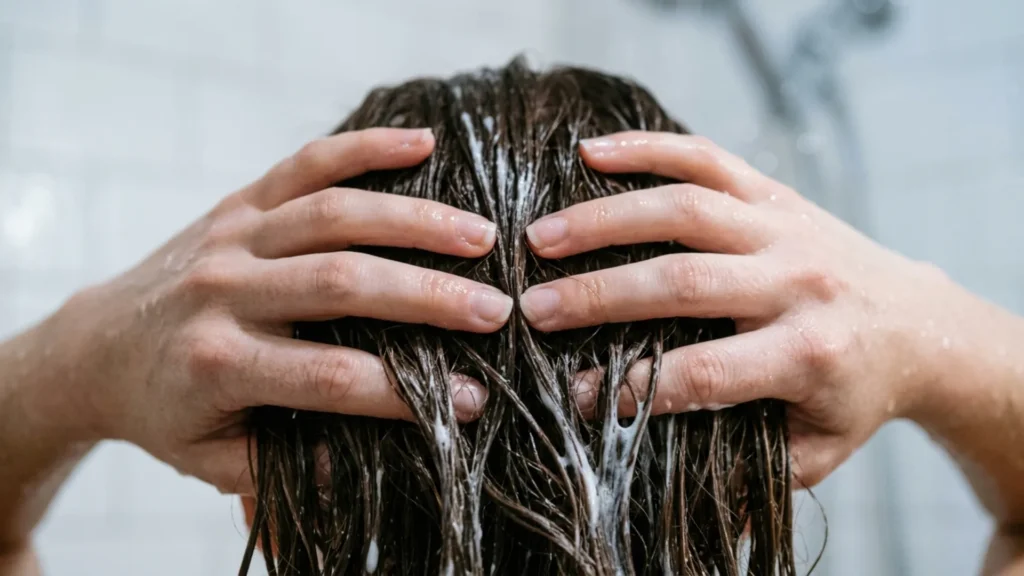
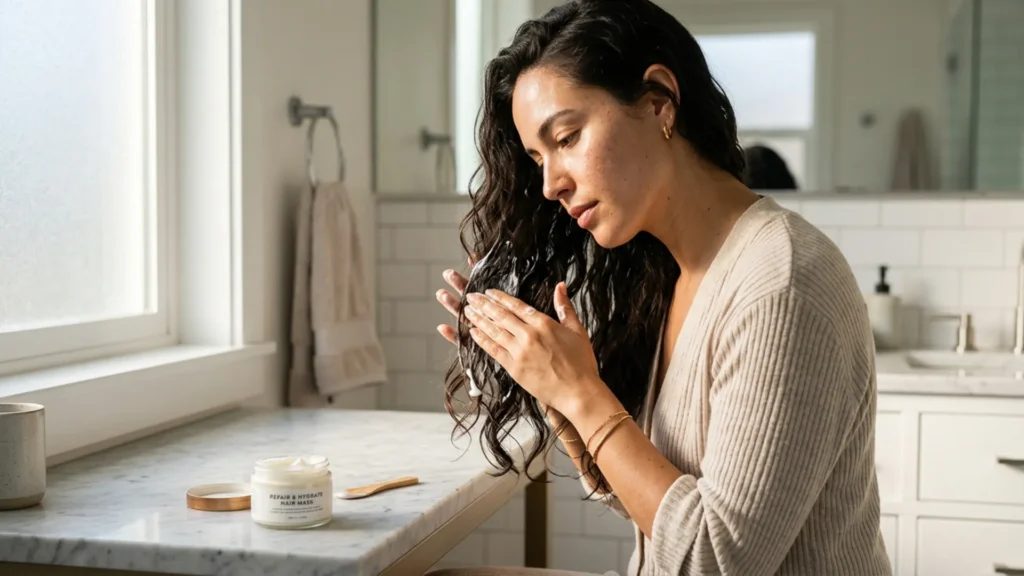
Start on clean, damp hair rather than soaking wet hair. Too much water dilutes the mask and makes it slide off before it can do anything.
Work moisture and repair masks from mid-length to ends, since that’s the oldest, most damaged part of the hair. Scalp-focused masks are the opposite: apply them directly to the scalp and skip the lengths if your hair doesn’t need it.
A gentle two-minute scalp massage while applying helps distribute the product and feels genuinely relaxing, which isn’t nothing. Cover with a shower cap for ten to twenty minutes if the label allows heat, since warmth helps some ingredients absorb better.
Rinse thoroughly. Leftover product is one of the most common causes of a flat, dull, or itchy scalp after masking, and it undoes a lot of the benefit you were going for.
One safety note worth taking seriously: if a mask contains concentrated essential oils, including rosemary or peppermint, patch test a small amount on your inner arm 24 hours before applying it to your scalp. Essential oils are a common cause of scalp irritation and allergic reaction, even in people who’ve used similar products before without issue.
Also Visit : Hair Growth Before and After: What’s Actually Realistic
When to See a Professional Instead
Sudden, patchy, or unusually heavy shedding isn’t something a mask can fix, no matter how good the ingredients are. Conditions like alopecia areata, thyroid-related shedding, and telogen effluvium have causes that live well below what any topical product can reach.
If you’re noticing bald patches, scalp pain, burning, or shedding that’s clearly outside your normal amount, that’s a signal to see a dermatologist rather than switch to a stronger mask. Catching these things early usually makes a real difference in how they’re treated.
Frequently Asked Questions
Do hair masks help hair grow faster?
Not directly. They don’t speed up how fast hair grows from the follicle. What they can do is reduce breakage and improve scalp condition, which helps existing growth show up as visible length.
How long should I leave a hair mask on?
Most masks work within ten to thirty minutes. Leaving one on longer than the label suggests rarely adds benefit and can sometimes cause buildup or irritation, depending on the ingredients.
Can I use a hair mask every day?
For most hair types, no. Daily masking can weigh hair down, cause product buildup, and for protein formulas specifically, lead to brittleness. A few times a week at most is plenty for nearly everyone.
Is coconut oil good for a hair growth mask?
Coconut oil is genuinely good at reducing protein loss during washing, which helps prevent breakage. It won’t grow new hair, but it’s one of the more evidence-backed oils for keeping existing strands intact.
Do hair masks help with hair loss from shedding, not just breakage?
Only indirectly, by supporting scalp health. If shedding is heavy, sudden, or patchy, that points to a cause a mask can’t address, and it’s worth talking to a dermatologist rather than relying on the mask alone.
Key Takeaways
- Hair masks don’t stimulate the follicle directly. Their main growth-related benefit is reducing breakage so existing length sticks around.
- Rosemary oil has the most credible research behind it among common mask ingredients, based on a small clinical comparison against minoxidil.
- Biotin absorbs poorly through skin, so a biotin-heavy mask does little that a biotin-free one wouldn’t.
- Match frequency to your hair type: about once a week for fine or oily hair, one to two times for thick or coily hair, and every few weeks for protein treatments.
- Sudden, patchy, or heavy shedding calls for a dermatologist, not a stronger mask.
This article is for general information only and isn’t medical advice. For persistent hair loss, scalp pain, or sudden shedding, see a dermatologist or trichologist.
Written by Anna Anderson for Trend Cottage.