Natural Hair Growth Tips That Actually Move the Needle

Picture this: you’ve been doing everything right for months. Rosemary oil twice a week. A biotin gummy every morning. Ten minutes of scalp massage before bed. Your hair feels softer, and it looks shinier under bathroom light. But when you check it against the same spot on your shirt collar three months later, it’s grown maybe half an inch. Maybe less.
Here’s the short answer: natural hair growth tips aren’t all created equal. Some genuinely support the growth cycle happening inside your scalp. Others only improve the texture and shine of the hair you already have, which is worth doing but won’t add length. If real growth is what you’re after, you need to know which is which, and where your time is actually worth spending. That’s what this guide sorts out.
Why Most Advice Skips the One Thing That Actually Matters
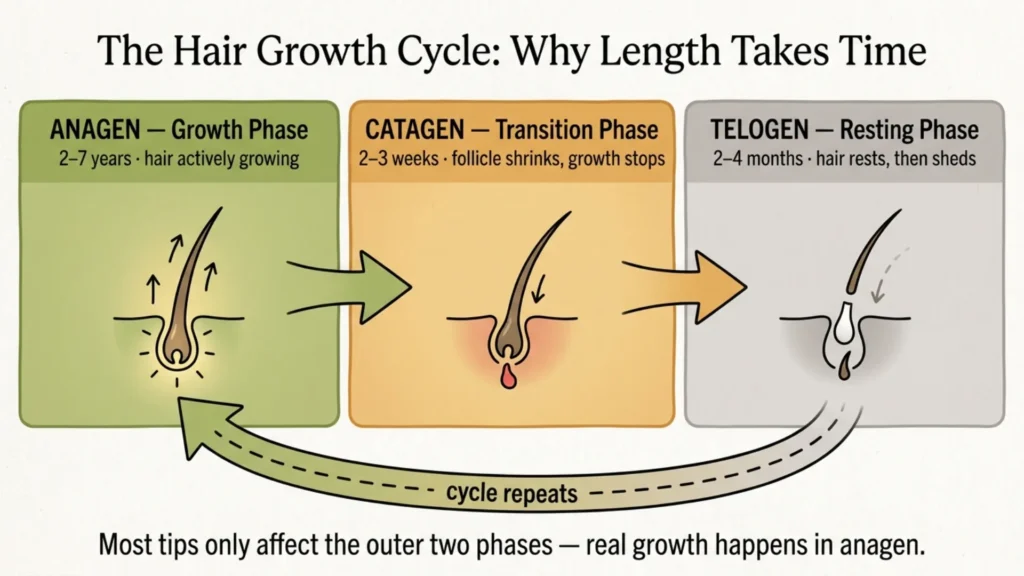
Every hair on your head cycles through three phases. Anagen is the active growth phase, and it can last anywhere from two to seven years depending on genetics. Catagen is a short transition, just a few weeks, when the follicle shrinks and growth stops. Telogen is the resting phase, when the hair sits in the follicle before it eventually sheds to make room for a new one.
Most of the hair on your scalp is in that growth phase at any given time, which is exactly why length can feel so slow to show up. You’re not growing new hair from scratch every day. You’re extending the growth window on hair you already have, follicle by follicle.
That’s why most natural hair growth tips only touch the outer two phases, or the surface of the hair shaft itself. A deep conditioner smooths what’s already there. A silk pillowcase reduces breakage while you sleep. Useful, but neither one lengthens the anagen phase or wakes up a follicle stuck in telogen. The tips that actually move length happen at the follicle level: blood flow to the scalp, nutrient supply, hormone balance, and how much damage the hair takes before it even gets the chance to grow long.
Natural Hair Growth Tips: Growth-Cycle Wins vs. Cosmetic-Only Wins
Not every tip that shows up under “natural hair growth tips” on Pinterest is lying to you. Most of them do something real. The question is whether that something reaches the follicle or just improves what’s already on your head. Here’s how the most common ones break down.
| Tip | What it actually changes | Growth-cycle or cosmetic-only |
|---|---|---|
| Scalp massage | Blood flow to the follicle | Growth-cycle (modest evidence) |
| Rosemary oil | Circulation and follicle stimulation | Growth-cycle (studied) |
| Castor oil | Seals moisture, adds shine | Cosmetic-only |
| Rice water rinse | Smooths the hair shaft | Cosmetic-only |
| Protein-rich diet | Raw material for keratin production | Growth-cycle |
| Biotin supplements | Helps mainly if you’re deficient | Growth-cycle, conditional |
| Silk pillowcase | Less overnight friction and breakage | Cosmetic-only (protects length) |
That last column is the part most lists skip. A tip can be completely true and still not do what you’re hoping for. Rice water rinses really do smooth the hair shaft, for instance, which is why hair looks glossier afterward. That’s a real result. It’s just not a growth result.
Scalp Care That’s Actually Worth Your Time
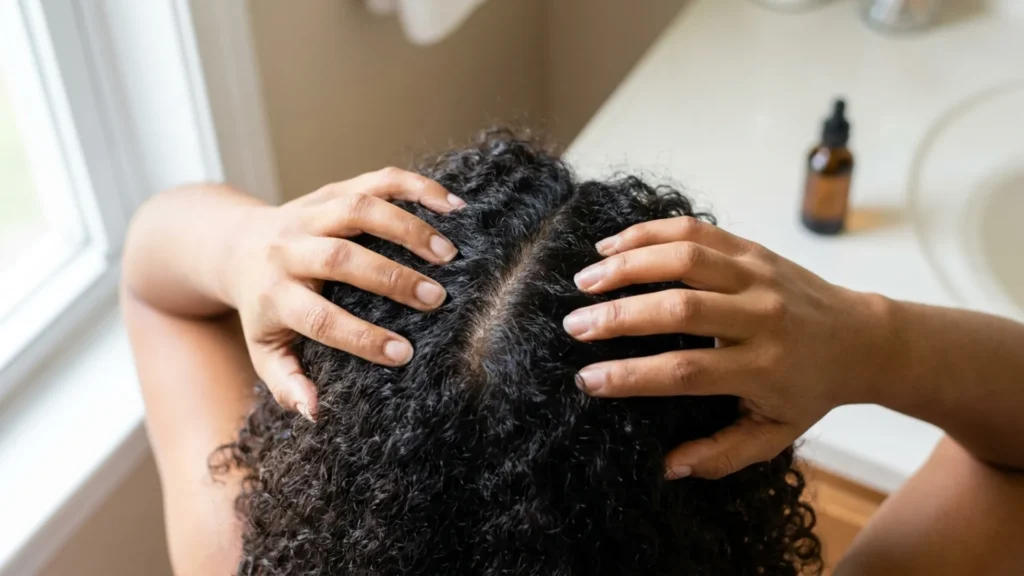
Massage is the one scalp habit with genuine, if modest, research behind it. Small trials have measured hair thickness increasing after several months of consistent daily massage, likely from improved blood flow feeding the follicle.
The technique matters less than the consistency. Use your fingertips, not your nails, and work in small circles across the whole scalp, not just the crown. Four or five minutes a day, most days, does more than twenty minutes once a week. You can do it dry, in the shower, or with an oil if you like the glide, though the oil itself isn’t doing the heavy lifting.
One caveat: don’t confuse pressure with progress. Scrubbing hard enough to feel sore afterward risks more breakage at the hairline than it’s worth.
Also Visit : Does Hair Growth Serum Really Work, or Is It Marketing?
What You Eat Shapes What Grows
Hair is mostly protein, so a diet that’s genuinely short on protein shows up in your hair before almost anywhere else, usually as slower growth and finer strands rather than outright loss. If you’re eating consistently but still seeing weak growth, iron is worth checking. Low iron stores are one of the most common, correctable causes of diffuse thinning in women, and a simple blood test can rule it in or out.
Biotin gets more attention than the evidence supports. It’s genuinely necessary for hair structure, but unless you’re one of the small number of people with an actual deficiency, taking more of it on top of a normal diet is unlikely to change much. The National Institutes of Health’s biotin fact sheet notes that solid evidence for biotin supplements improving hair health mostly comes from case reports in people who already had a diagnosed deficiency, not from healthy adults chasing extra growth.
Zinc, vitamin D and omega-3s round out the list of nutrients tied to healthy follicles, but stacking supplements you don’t need doesn’t add benefit. It just adds cost. If your diet already covers the basics, whole food sources like eggs, lentils, salmon and leafy greens do more than another bottle on the shelf.
Rapid or extreme calorie cuts are a separate problem. Losing weight quickly, or dropping calories too low for too long, can push a noticeable number of follicles into the resting phase at once. That shedding typically shows up two to three months after the diet change, which is why the timing often gets blamed on shampoo or stress instead of what was actually on the plate.
Natural Oils and Ingredients: Separating Signal From Noise
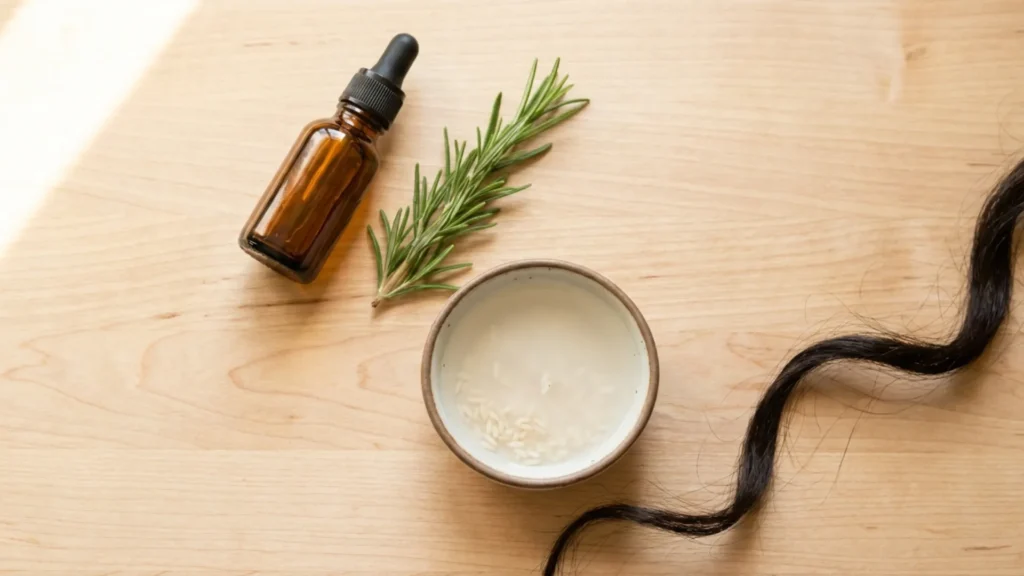
Rosemary oil has the strongest research of any natural oil for growth, not just folklore. A randomized trial comparing rosemary oil to minoxidil found comparable increases in hair count after six months, with less scalp itching in the rosemary group. That doesn’t make it a replacement for a dermatologist-prescribed treatment for diagnosed hair loss, but for general thinning, it’s one of the few oils with a real study behind it rather than just tradition.
Castor oil is thicker and does a genuinely good job sealing moisture into the strand, which is why hair often looks fuller and feels softer after using it. There’s no strong evidence it reaches the follicle or speeds growth itself. Rice water works the same way: it smooths the cuticle and adds shine through the starch content, not through anything that touches the growth cycle.
None of this makes castor oil or rice water pointless. Healthier-looking, less breakage-prone hair holds onto length better, which matters just as much as growing new length in the first place.
Also Visit : How to Choose Hair Growth Products That Fit Your Hair
A Realistic Timeline: Month 1, Month 3, Month 6
Hair grows about half an inch a month on average, and no natural tip changes that number dramatically. What changes is how much of your existing hair you keep instead of losing to breakage or shedding.
By month one, most people notice texture changes before anything else: less frizz, a softer feel, maybe less shedding in the shower drain if breakage was the real problem all along. Actual length is barely measurable yet.
By month three, consistent scalp care and better nutrition start showing up as slightly thicker regrowth along the hairline or part, especially if the starting point was diffuse thinning rather than complete follicle loss.
Month six is where most well-designed research checks in, including the rosemary oil trial above, because six months is roughly how long it takes a meaningful number of follicles to complete a growth cycle and show a visible difference. If nothing has changed by then, that’s a signal to talk to a dermatologist rather than switch to a new oil.
The Habits That Quietly Undo Your Progress
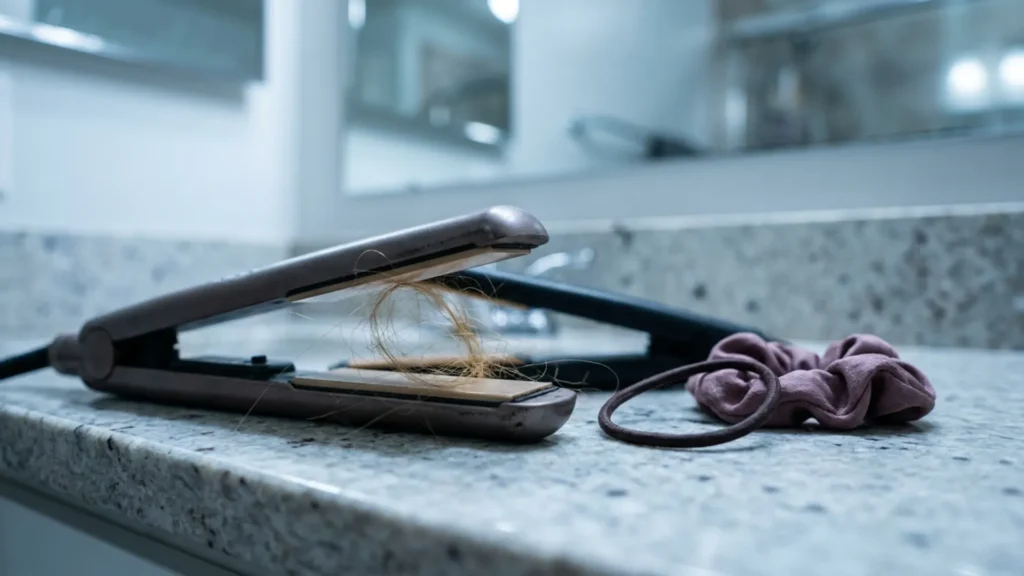
Heat styling above 300°F breaks down the protein bonds in hair, and that damage doesn’t reverse. It just gets cut off eventually, which is why hair that’s heat-styled daily seems to stop growing at a certain length. It isn’t stalled. It’s breaking as fast as it grows.
Tight hairstyles worn constantly, tight ponytails, slicked-back buns, braids pulled taut at the root, put steady tension on the follicle itself. Over months or years, that tension can cause a permanent type of hair loss along the hairline called traction alopecia, which doesn’t grow back the same way ordinary shedding does.
Over-washing strips the scalp’s natural oils and can leave it irritated, which isn’t friendly to follicles trying to do their job. Under-washing lets product and oil build up, which isn’t much better either. Somewhere in the middle, based on your own scalp type rather than a fixed schedule, tends to work best.
Also Visit : How to Pick a Hair Mask for Growth That Works
When Shedding Isn’t Normal Anymore
Losing some hair every day is normal. The average scalp sheds a noticeable amount as part of the telogen phase completing itself. What isn’t normal is sudden, heavy shedding, widening part lines that don’t fill back in, or bald patches with a defined edge.
Those patterns point toward causes that natural hair growth tips can’t fix: telogen effluvium triggered by illness, surgery or major stress, hormonal shifts, thyroid issues, or autoimmune conditions like alopecia areata. The American Academy of Dermatology’s overview of hair loss causes is a useful place to see how many different conditions can look like ordinary thinning from the outside.
If shedding has been heavy for more than a few months, or you’re noticing scalp pain, redness or patches, that’s the point to see a professional instead of adding another oil to the routine.
Frequently Asked Questions
How fast can hair actually grow with natural methods?
Natural methods don’t speed up the biological rate of growth, which averages about half an inch a month. What they can do is reduce how much length you lose to breakage, so more of that half inch actually shows.
Do natural oils really make hair grow faster, or do they just look healthier?
Most oils improve shine, softness and breakage resistance rather than growth speed. Rosemary oil is the exception with real clinical research behind it, though even there, the effect showed up over months, not weeks.
Is it normal for hair growth tips to take months to show results?
Yes. Growth happens at the follicle level over a cycle that runs for years, so any real change takes at least one full growth phase to become visible, usually three to six months.
Can stress really stop hair from growing?
Ongoing stress can push follicles out of the growth phase and into the resting phase early, which shows up as shedding two to three months later. It’s a real, well-documented pathway, not an exaggeration.
Should I stop using natural growth tips if I don’t see results in a month?
No. A single month rarely tells you anything, since hair growth runs on a slower timeline than most habits people track. Give a change at least three months before judging whether it’s working.
Key Takeaways
- Growth happens at the follicle level, in a cycle that runs for years, so most visible change takes three to six months minimum.
- Scalp massage and rosemary oil have real research behind them; castor oil and rice water mostly improve the hair you already have.
- Protein and iron gaps show up in hair growth before almost anywhere else, and a simple blood test can rule iron out.
- Heat damage and tight hairstyles can undo progress faster than any tip can create it.
- Sudden heavy shedding or a widening part that won’t fill back in is a signal to see a dermatologist, not a signal to try another oil.
If you’re already deep into your own hair growth routine, save this so you can check back at the three-month mark and see how your progress compares to the timeline above. And if you’ve found a natural hair growth tip that made a real difference for you, we’d love to hear about it in the comments.
This article is for general information only and isn’t medical advice. For persistent hair loss, scalp pain, or sudden shedding, see a dermatologist or trichologist.
Written by Anna Anderson for Trend Cottage.