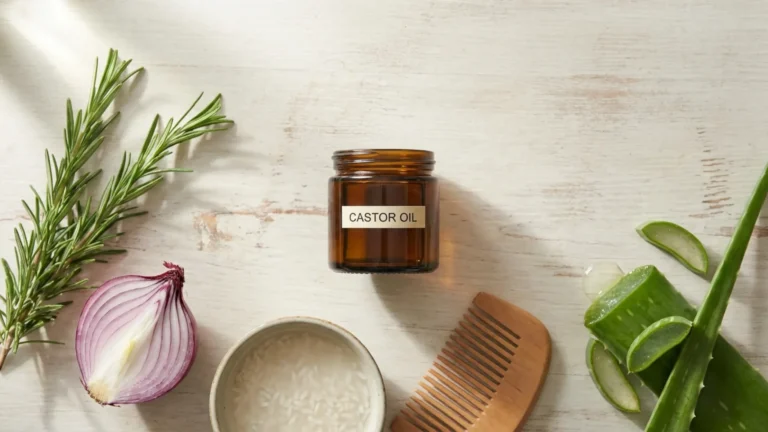
How to Use Oil for Hair Growth (Properly)
Rub a little oil into your scalp for a few weeks, see nothing change, and give up. That’s the exact routine that convinces most people oil for hair growth doesn’t work. It usually isn’t the oil that failed. It’s that almost nobody uses it in a way that gives it a real chance.
Short answer: no oil switches a shrunken follicle back on, and no oil beats a proven medical treatment for pattern hair loss. What oil can genuinely do is protect the hair you already have from breaking, calm a dry or irritated scalp, and in the case of a small number of ingredients like rosemary, mildly support the conditions that let existing follicles grow thicker strands. That’s a real benefit. It’s just smaller and slower than most bottles suggest.
The Mistake That Makes Oil Look Like It Doesn’t Work
Most people give up on oil within a month. They rub a small amount into their scalp, leave it in for ten or fifteen minutes, rinse it out, and wait for something to change. Ten or fifteen minutes rarely gives an oil enough contact time to do much of anything.
The bigger issue is what people expect it to do in the first place. A follicle that has already shrunk from years of pattern hair loss won’t switch back on because of a topical oil sitting on top of it. Oil works on the hair that’s already growing, not on follicles that have stopped producing hair altogether. Once you separate those two jobs, everything about how to use it gets more practical, and a lot less mysterious.
What Oil for Hair Growth Can Actually Do (And What It Can’t)
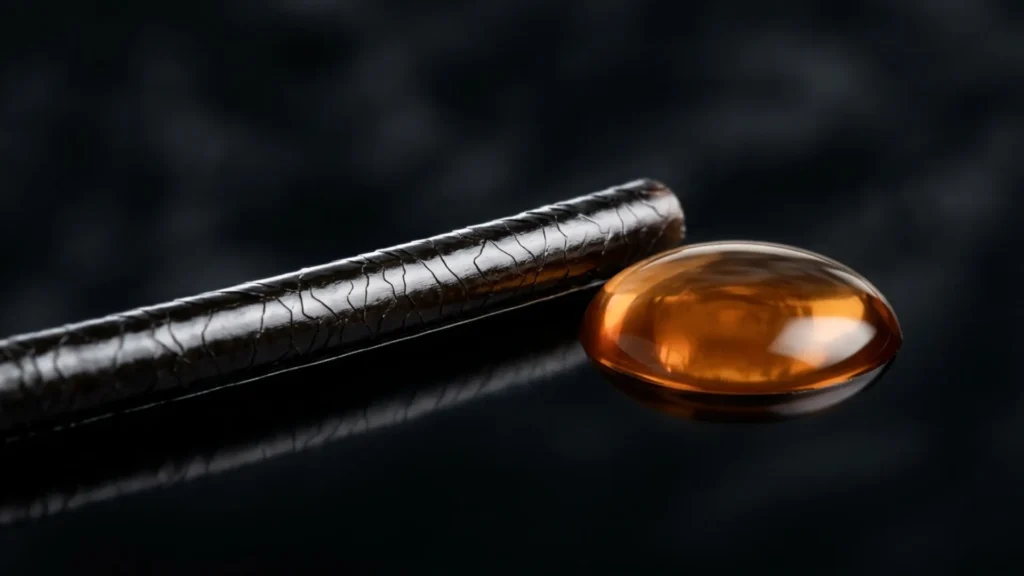
Oil earns its keep in three ways. It seals the hair shaft so moisture escapes more slowly, it reduces the friction that snaps strands during brushing and styling, and in a small number of cases, it may support a scalp environment that lets existing follicles grow slightly thicker hair. That third one is the closest thing to real growth research this ingredient category has. A six-month randomized trial found that rosemary oil produced hair count increases comparable to minoxidil 2% in people with pattern hair loss, though the change only became measurable after three months, not sooner.
Most other oils don’t come close to that level of evidence. What they have instead is solid research on damage prevention, and that matters more than it sounds like it should. Coconut oil, applied before a wash, measurably reduces protein loss from hair fiber during combing and shampooing, unlike mineral oil or sunflower oil tested in the same study. Less protein loss means less breakage. Less breakage is often exactly what people are noticing when they say an oil made their hair “grow” faster. The hair wasn’t growing any quicker. It was just staying attached longer.
Also Visit : Why Isn’t Your Hair Growing? A Natural Hair Growth Guide
Choosing the Right Oil for Your Hair and Goal

Not every oil does the same job, and picking one by its marketing claim instead of its actual chemistry usually ends in disappointment. Here’s a plain breakdown of the oils people reach for most, what the evidence supports for each, and who should be careful.
| Oil | Best For | What the Evidence Supports | Caution |
|---|---|---|---|
| Castor oil | Sealing ends, adding shine | Mostly anecdotal; no isolated growth trial exists | Very thick, can clog pores near the hairline |
| Rosemary oil | Scalp use for thinning hair | The strongest human trial of any oil on this list | Must be diluted in a carrier oil before scalp use |
| Coconut oil | Pre-wash treatment, damage prevention | Well-documented reduction in protein loss | Can build up fast on fine or low-porosity hair |
| Jojoba oil | Balancing an oily or flaky scalp | Chemically close to natural sebum; more theory than trial | Rarely irritating, but rarely dramatic either |
| Peppermint oil | A light, tingling scalp feel | Animal-model studies only so far, no strong human trial | Always dilute; can irritate a sensitive scalp |
If you’re only buying one oil, rosemary is the one with an actual comparative trial behind it. If breakage is your real problem rather than thinning, coconut oil solves a different, better-documented problem, and pairing the two isn’t unreasonable.
How to Apply Hair Oil the Right Way, Step by Step
- Start on dry, unwashed hair. Apply before your regular wash, not after.
- Warm the oil slightly by rubbing a small amount between your palms first.
- Part your hair into sections and apply the oil directly to the scalp using your fingertips, not your nails.
- Massage in small circles for three to five minutes, spending extra time on any spots that feel tight or tender.
- Work any oil left on your hands through the mid-lengths and ends, especially if they’re dry or damaged.
- Leave it in for at least 30 minutes. Longer, or overnight under a shower cap, gives it more time to work.
- Shampoo it out, possibly with two rounds of shampoo, then follow with your normal conditioner.
None of this needs to be complicated or expensive. What actually matters is contact time and consistency, not the specific ritual you build around applying it.
Also Visit : Does Shampoo for Hair Growth Actually Work?
How Often and How Long to Leave Oil In

Once or twice a week is enough for most hair types. Oiling every single day sounds thorough, but it usually just adds buildup at the roots without adding any extra benefit, since hair and scalp only absorb so much oil before the rest simply sits on the surface.
Leave-in time matters more than frequency does. A study using a standardized four-minute daily scalp massage over 24 weeks found a measurable increase in hair shaft thickness linked to mechanical stretching of the follicle’s support cells, independent of any oil used. It’s a small study with no control group, so treat it as a reasonable case for consistent massage rather than proof on its own. Combine that massage time with oil sitting on the scalp for thirty minutes or more, and you’re stacking two small, real effects instead of leaning on one big, unproven one.
Signs You’re Overdoing It
More oil isn’t automatically better. Small, itchy bumps along the hairline, a scalp that feels greasy within a day of washing, or hair that suddenly looks flatter and heavier are all signs you’re using too much, too thick an oil, or leaving it on too long for your hair type.
Shedding that increases and doesn’t settle down after a few weeks is a different problem, and oil won’t fix it. If you’re noticing noticeably more hair in the shower drain or brush over several weeks, that’s worth a proper look rather than another bottle. A board-certified dermatologist can work through the actual cause of hair loss before recommending treatment, which matters because the right fix depends entirely on what’s driving the shedding in the first place.
Also Visit : How to Build a Hair Growth Oil Recipe for Your Hair Type
What a Realistic Timeline Looks Like
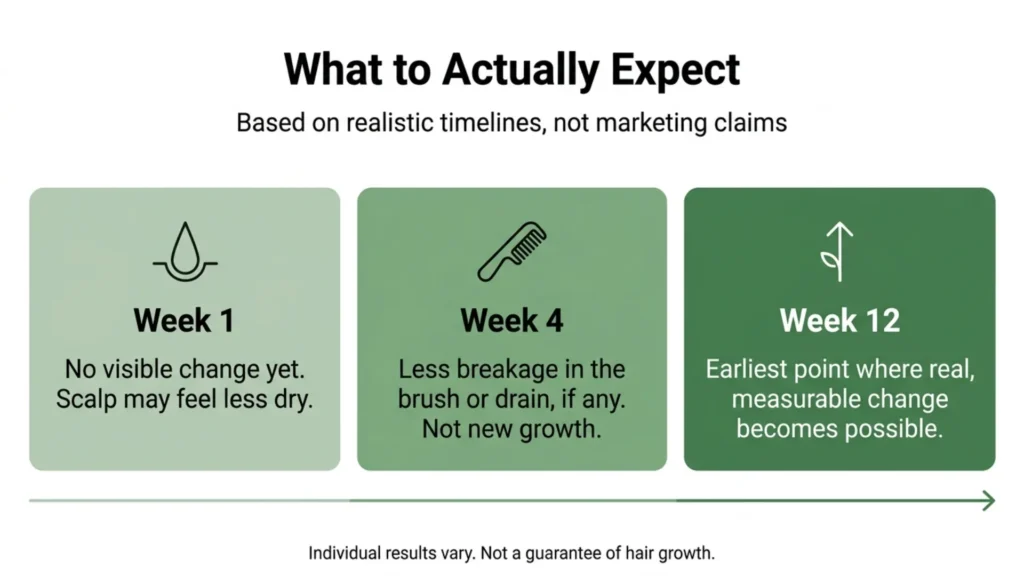
Week one won’t show much. Your scalp might feel less tight or dry if it was irritated before, and hair may feel softer to the touch, but there’s no visible change to expect this early. Hair doesn’t grow or shed on a weekly clock.
By week four, if oiling has actually cut down on breakage, you may notice less hair coming out when you brush or wash. That’s not new growth. That’s simply less loss, and from a distance the two can look similar.
By around week twelve, if you’re using a consistently applied option like rosemary oil, you’re at the point where the clinical trial mentioned earlier first found a measurable difference. Twelve weeks is also roughly how long it takes a resting follicle to shift back into an active growth phase, so it’s the earliest point where a real change, not just a placebo effect, becomes plausible.
Common Questions About Oil for Hair Growth
Can hair oil really make hair grow faster?
Not directly. Oil doesn’t speed up the biological rate at which a follicle produces hair. What it can do is reduce breakage, so the hair you already have stays on your head longer and appears to be growing faster than it actually is.
Which oil has the most real research behind it for growth?
Rosemary oil, based on the six-month trial against minoxidil discussed above. It’s still one study, not a mountain of evidence, but it’s more than most other oils can claim.
Should I apply oil to wet or dry hair?
Dry, unwashed hair works best for a pre-wash treatment, since it lets the oil coat the hair shaft fully instead of competing with water already inside the strand.
How long should I leave oil in before washing it out?
At least 30 minutes for a basic treatment. Overnight, under a shower cap or an old pillowcase, gives it more time without any extra effort on your part.
Can too much oil cause hair loss?
Oil itself doesn’t cause hair loss, but heavy buildup can clog follicles and irritate the scalp, which sometimes shows up as increased shedding. If shedding continues after you cut back, check with a dermatologist rather than adjusting the oil routine further.
Key Takeaways
- Oil mostly prevents breakage rather than switching on new growth from dormant follicles.
- Rosemary oil has the strongest human trial behind it, though it’s a single six-month study.
- Coconut oil’s best-documented benefit is reducing protein loss, not stimulating growth.
- Twice a week, left in for 30 minutes or more, beats a quick daily rub-in.
- Persistent shedding calls for a dermatologist, not a different oil.
This article is for general information only and isn’t medical advice. For persistent hair loss, scalp pain, or sudden shedding, see a dermatologist or trichologist.
Written by Anna Anderson for Trend Cottage.