
How to Track Your Hair Growth Journey Without Guessing

The Guessing Game That Derails a Hair Growth Journey
Most people start a hair growth journey with one “before” photo, then check the mirror every few days hoping to spot a difference. That’s the trap. Hair grows in millimeters, not inches, so daily or even weekly eyeballing almost never shows real change. It quietly convinces people to quit around week six, right before the actual results would start to show up in a photo.
Quick answer: track your hair growth journey with three fixed checkpoints instead of constant checking. Take a photo under the same light every four weeks, measure the same section of hair with a soft tape, and jot down anything that changed in your routine, sleep, or diet next to it. Four-week gaps are long enough to show real movement and short enough to catch a stalled routine before months slip by unnoticed.
The problem isn’t a lack of effort. It’s a measurement problem. A phone camera in different rooms, at different times of day, with hair styled differently each time, will lie to you constantly. One photo looks longer because of the angle. Another looks shorter because the hair was wet. None of that reflects your actual hair growth journey, it reflects lighting and posture.
So before you touch a single product or supplement, the real first step of any hair growth journey is deciding how you’ll measure change and sticking to that method without swapping it halfway through. Everything below walks through exactly how to do that, in an order you can actually follow.
Also Visit : Hair Growth Spray Guide: What Actually Speeds
What Actually Counts As Progress in a Hair Growth Journey
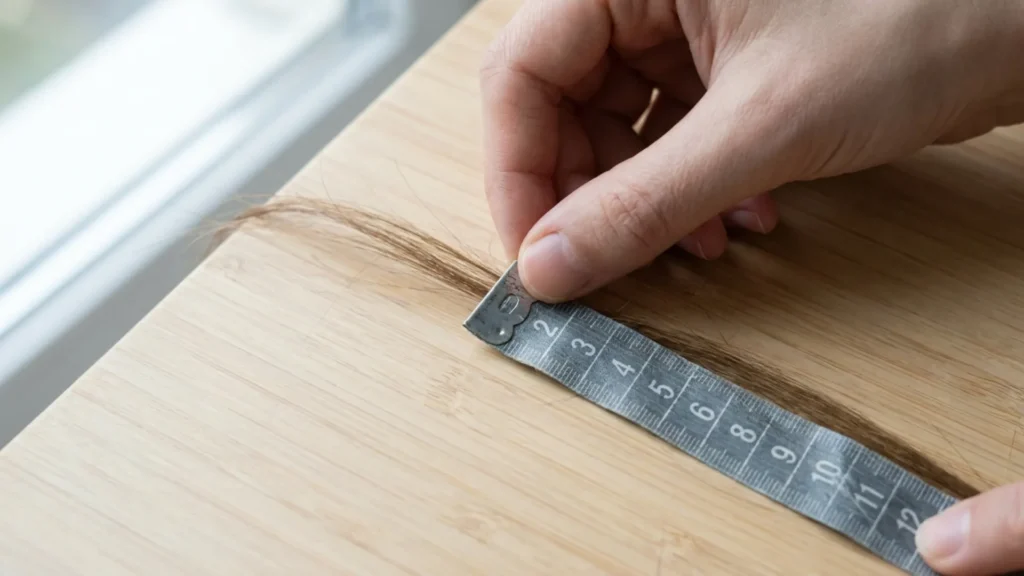
Before you can track anything, you need to agree with yourself on what “progress” actually looks like, because it isn’t only length. Scalp hair grows at roughly half an inch a month on average, though genetics, age, and health all shift that number up or down. That means a month of real growth might add less length than a single trim removes, which is why length alone is a shaky yardstick early on.
Three things are worth watching alongside length: how much new, finer hair shows up along the hairline or part (regrowth), how thick a ponytail feels in your hand compared to your baseline, and how much hair you’re shedding on an average day. A hair growth journey that only tracks length misses two of these three signals, and they often move first.
Don’t confuse thickness with length, either. Hair can look fuller within a few weeks simply because breakage has slowed down, even before any new length shows up. That’s still meaningful progress. It just needs a different kind of note in your log than “grew half an inch.”
Four Ways to Measure Hair Growth That Beat a Mirror Check
A mirror check relies on memory, and memory is unreliable over weeks. These four methods create an actual record for your hair growth journey that you can compare side by side, and you don’t need all four, just the ones that fit how you already take care of your hair.
| Method | What it tells you | Best for | How often |
|---|---|---|---|
| Fixed-point photo | Overall shape, thickness, and visible regrowth at the hairline | Anyone; works for all hair types | Every 4 weeks |
| Tape measure on a marked section | Actual length change in inches or centimeters | Straight to wavy hair, or a stretched curl section | Every 4 weeks |
| Shed count | Whether hair loss is within a normal range | Anyone noticing more hair than usual in the brush or drain | Weekly, briefly |
| Ponytail circumference | Density and thickness, independent of length | Hair long enough to gather | Every 4 weeks |
Pick two of these, not all four. Trying to log everything is how tracking gets abandoned by week three. A photo plus one measurement, done consistently, beats a spreadsheet with five columns that only gets filled in twice.
Setting Your Baseline in Week One
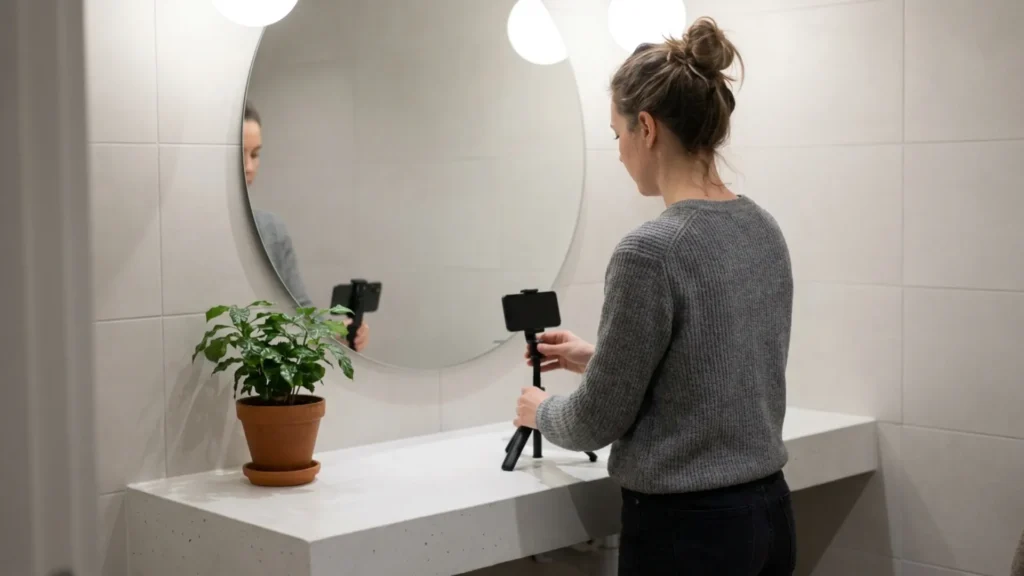
Everything you measure later only means something if week one is done properly. Rushing this step is the second most common reason a hair growth journey stalls out on paper, even when the hair itself is doing fine.
Pick one spot with consistent daylight, ideally near a window, and take your first photo there. Note the time of day, since morning and evening light change how hair reads on camera. Section off a small piece of hair near the same spot each time, mark it loosely with a soft elastic if that helps you find it again, and measure it while damp or dry, whichever you plan to repeat every month.
Write the date, the measurement, and one line about your current routine: what you’re using, how often you wash, whether you use heat. That single line matters more than people expect, because if growth speeds up or slows down later, that note is the only thing that tells you what might have changed.
Also Visit : Hair Growth Recipes That Actually Match Your Hair Problem
What To Log Every Four Weeks (And What To Skip)
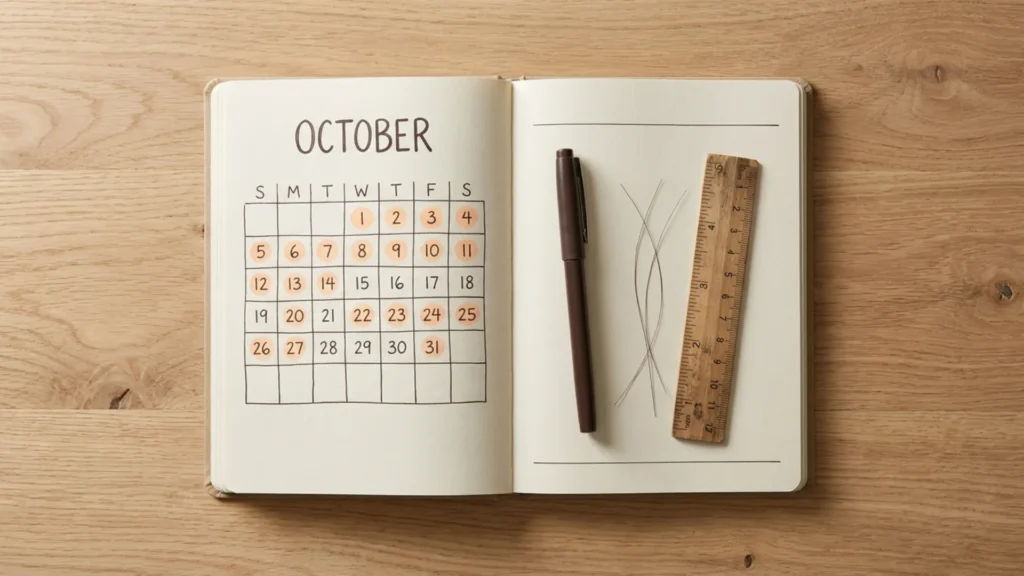
Once your baseline exists, the monthly check-in should take five minutes, not fifty. Log the photo, the measurement, and a shed estimate if you’re tracking that. Add a short note on anything unusual: a stressful month, a new medication, a change in diet, less sleep than normal. These factors genuinely affect hair, and a hair growth journey log that ignores them will look confusing later with no explanation for a dip.
Skip daily logging entirely. It adds noise without adding useful information, since hair doesn’t change enough day to day to justify it. Skip weighing individual products or timing exact minutes of a treatment unless you’re specifically testing that one variable. Most people don’t need that level of detail to see whether something is working.
A simple four-column note works for most people: date, photo taken (yes/no), measurement, one-line context. Anything more detailed than that usually gets abandoned within two months.
When The Numbers Stall: Tracking Error Versus a Real Problem

At some point in almost every hair growth journey, the log shows no change for a full month. Before assuming something is wrong, rule out tracking error first, since it causes most “stalls” that show up in a log.
Check the obvious culprits: did the photo get taken in different lighting or at a different time of day? Was the measured section actually the same one as last month, or close to it? Was hair wet in one photo and dry in the other? Any of these alone can hide or fake several weeks of change.
If the method was consistent and there’s genuinely no movement, look at what changed around that time: a new hairstyle pulling on the same section daily, a stressful stretch, a change in diet, a new medication, or a drop in sleep. Hair sheds more than usual roughly two to three months after a stressful event or illness, a pattern called telogen effluvium, and it typically resolves on its own once the trigger passes. Cleveland Clinic’s overview of telogen effluvium explains what that timeline usually looks like and when it settles down without treatment.
If shedding is heavy, sudden, or comes with visible thinning at the scalp rather than just a flat month in the log, that’s worth a real conversation with a dermatologist rather than another month of self-tracking.
Also Visit : Hair Growth Tips for Black Women That Actually Work
A Simple 12-Week Log You Can Copy
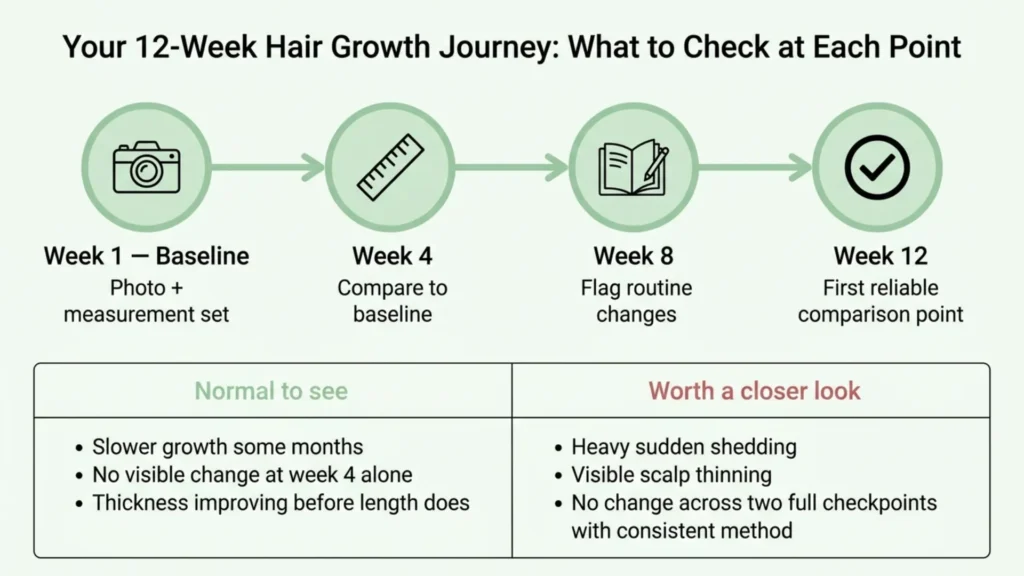
If you’d rather start with a ready-made structure than build your own, here’s a stripped-down version that works for most hair types and most goals. It uses three checkpoints after the baseline, spaced four weeks apart, which is enough time for real change to show without so much time passing that you forget what you were even comparing against.
Week 1 sets the baseline: photo, measurement, and routine notes. Week 4 repeats all three and adds a one-line comparison to week 1. Week 8 does the same and flags anything that changed in the routine since week 4. Week 12 repeats everything again and is usually the first point where a hair growth journey shows a difference that doesn’t need explaining, since three to four months typically covers one full pass through the resting-to-growing cycle for at least some of your hair.
Copy this into a notes app, a physical notebook, or the tracking template further down this site if you want something pre-built rather than starting from a blank page.
Frequently Asked Questions
How long does a hair growth journey usually take to show visible results?
Most people notice a real, photographable difference somewhere between eight and twelve weeks, since scalp hair grows about half an inch a month on average and shorter gaps are too easily hidden by lighting or styling. Some people see a change sooner in their hair growth journey if their starting point was breakage rather than a growth issue.
Is it normal to see no change for a full month?
Yes, especially in month one or two. Growth is continuous but slow, and small measurement inconsistencies can hide it completely. Check your method before assuming your routine has stopped working.
What’s the best way to measure length without cutting hair?
Section off the same small piece of hair each time, ideally near the crown where growth is easiest to isolate, and measure it with a soft fabric tape rather than a rigid ruler, which can flatten curls and give an inaccurate reading.
How much hair loss is considered normal during a hair growth journey?
Losing somewhere around 50 to 100 hairs a day is considered typical for most people and isn’t a sign anything is wrong. A sudden jump well above that, especially with visible thinning, is the point where it’s worth tracking more closely or asking a professional.
Do supplements or products actually speed up a hair growth journey?
Some, like biotin, only make a measurable difference if you’re actually deficient in them to begin with; in people who already get enough, extra amounts generally don’t add extra growth. The NIH Office of Dietary Supplements’ fact sheet on biotin is a useful starting point if you’re deciding whether a supplement is worth adding to your routine. A gentle, consistent hair care routine tends to matter more day to day; the American Academy of Dermatology’s healthy hair care guidance covers the basics worth getting right first.
Key takeaways
- Track your hair growth journey with fixed four-week checkpoints, not daily or weekly mirror checks.
- Length isn’t the only signal. Regrowth at the hairline, ponytail thickness, and shed count often move first.
- Pick two tracking methods, not all four. A photo plus one measurement, done consistently, beats an abandoned spreadsheet.
- Before assuming a stall is real, rule out lighting, timing, and measurement inconsistencies first.
- Heavy or sudden shedding with visible thinning deserves a dermatologist’s opinion rather than another month of self-tracking.
This article is for general information only and isn’t medical advice. For persistent hair loss, scalp pain, or sudden shedding, see a dermatologist or trichologist.
Written by Anna Anderson for Trend Cottage.