
Hair Growth Tips for Men That Are Actually Worth Trying

There’s a number worth knowing before any of this: half an inch a month. That’s roughly how fast men’s hair grows, and it’s largely set by biology, not by the length of your supplement list. Most of the advice circulating online doesn’t change that ceiling. What it can do is help you actually reach it.
Quick answer: The hair growth tips for men that actually move the needle don’t force faster growth — they remove whatever is stopping your hair from reaching its natural rate. That cause differs from person to person, which is why the same routine works for some men and does nothing for others.
The problem with generic tip lists is that they hand every reader the same ten suggestions regardless of what’s actually slowing their hair down. For some men the issue is the scalp itself. For others it’s diet, or more precisely, what they’re consistently not eating enough of. For others still, it’s handling habits that break hair faster than it can grow. Applying the wrong fix changes nothing.
That’s the frame this article uses: identify the bottleneck first, then apply the relevant fix.
Why Hair Growth Tips for Men Often Miss the Point
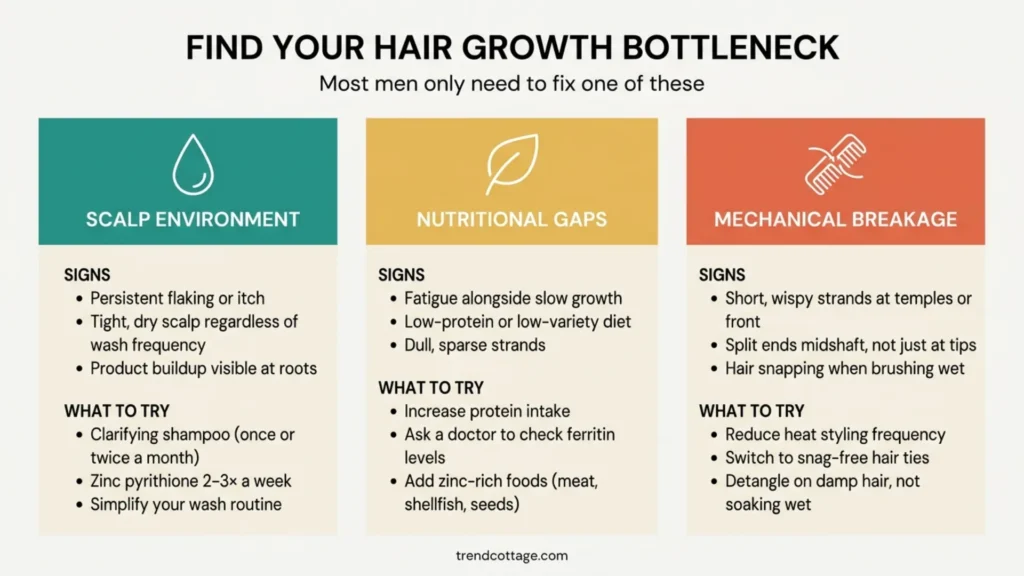
This is where most hair growth advice falls apart. The standard tips — biotin, scalp massage, fewer washes — aren’t wrong, but they’re not equally relevant to every reader. Applying all of them without knowing which matters for your situation is like troubleshooting an engine by swapping every part in reach.
Men who aren’t reaching their natural growth rate tend to fall into one of three categories.
Scalp environment. The follicle lives in skin, and skin that’s congested, inflamed, or stripped of natural oils isn’t an ideal growing environment. Persistent flaking, consistent scalp itch, or a tight dry scalp regardless of how often you wash — these are the signs to look for.
Nutritional gaps. Hair is one of the last tissues the body supplies when resources are short. Protein, iron, zinc, and certain B vitamins are all part of the growth cycle, and a sustained deficit in any of them can shift more follicles than usual into the resting phase. General fatigue alongside slow growth, or a diet that’s low in variety, is the pattern to notice.
Mechanical breakage. This one gets skipped in most growth articles because it isn’t a growth problem at all — it’s a retention problem. If hair is breaking at roughly the same pace it grows, length doesn’t accumulate even when the follicle is doing its job. Short wispy strands at the front or temples, or split ends midway up the shaft rather than just at the tips, are the giveaway.
Five minutes of honest observation is usually enough to narrow it down — and it makes every step that follows considerably more effective.
Also Visit : The Hair Growth Secrets Behind a Healthier Scalp
When the Scalp Needs Attention First
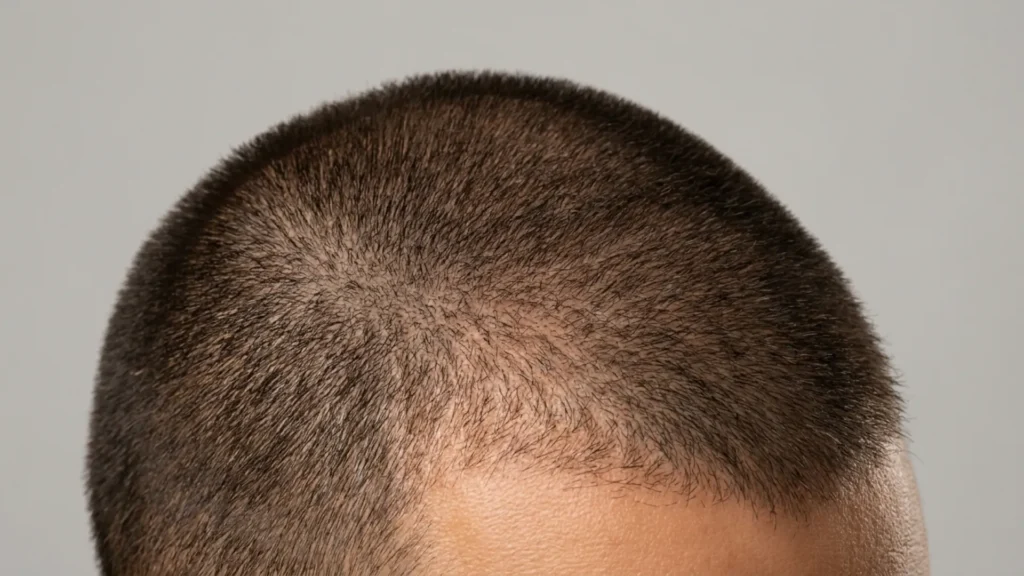
A follicle sitting in a congested or inflamed scalp has a harder job. Product buildup from pomades, wax, and dry shampoo accumulates around follicle openings over time. It doesn’t stop growth entirely, but it can slow things down and worsen daily shedding.
Seborrheic dermatitis — the condition behind persistent flaking and an itchy, greasy scalp — is worth treating as its own problem, separately from any growth goal. A zinc pyrithione or ketoconazole shampoo, used a few times a week, is the standard starting point and doesn’t need a prescription. If the flaking is heavy, spreading to the eyebrows or face, or not improving after a few weeks, a GP can help. It’s common and very treatable.
For a scalp that’s dry or mildly irritated without obvious dermatitis, simplifying your wash routine often helps more than adding products. Washing every other day with a gentle sulphate-free shampoo and cutting back on heavy styling products lets the scalp regulate its own oil production more easily.
One thing worth doing regardless of scalp type: rinse thoroughly. Conditioner and leave-in treatments can build up on the scalp without obvious signs for weeks. A clarifying shampoo used once or twice a month clears it quickly and costs very little.
Nutrition Gaps That Quietly Stall Growth
The connection between diet and hair growth isn’t overhyped — it’s physiology. Hair follicles are among the most metabolically active structures in the body, which makes them sensitive to shortages. Protein is the most consequential macro: hair is built almost entirely from keratin, a protein, so a diet consistently low in it gives the body less to work with.
Iron deficiency is one of the more commonly missed contributors to slow growth and increased shedding in men. The difficulty is that serum ferritin — the stored form of iron, and a more telling measure than serum iron alone — can sit low enough to affect hair while still falling within a standard lab “normal” range. The NIH’s iron fact sheet for health professionals explains the distinction between serum iron and ferritin, which is worth understanding if you’re investigating diet as a factor. If slow growth has coincided with general fatigue, asking a doctor to check ferritin specifically is a faster route than guessing.
Zinc plays a role in follicle structure and the oil glands around each follicle. A deficiency can contribute to increased shedding and dull, brittle strands. It’s found in red meat, shellfish (oysters have particularly high levels), seeds, and legumes. B vitamins, especially biotin, are marketed heavily for hair, but they’re unlikely to do anything if your levels are already adequate. They matter when there’s an actual deficiency, not as a general booster.
A varied, protein-sufficient diet does more than a cabinet full of supplements. If slow growth has come alongside other low-energy symptoms or a very restricted diet, bloodwork is the more direct next step.
How Styling Habits Hold Growth Back
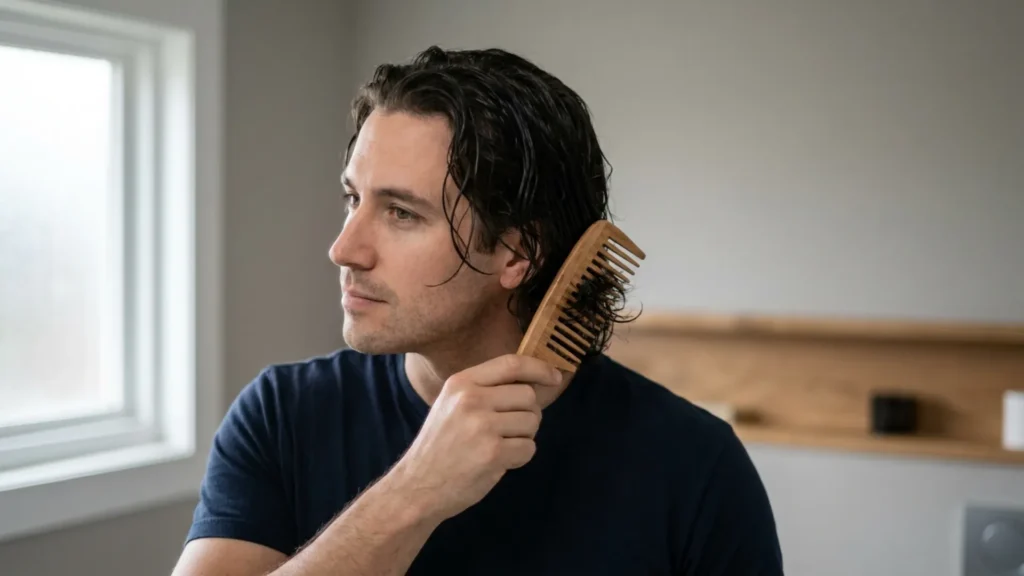
This bottleneck gets missed consistently because it doesn’t feel like a growth issue — it feels like a styling one. The distinction matters less than the outcome: if hair is breaking at the same pace it’s growing, length doesn’t accumulate regardless of what the follicle is doing.
Heat is the obvious factor. Blow-drying on a high setting every day, or using straighteners without a heat protectant, weakens the protein bonds in the shaft over time. The damage builds gradually and shows up as thinning ends and breakage partway down the strand rather than at the tip.
A few things men with longer styles on top often miss:
- Wet hair is far more fragile than dry or damp hair. Combing straight through soaking-wet hair snaps it easily. A wide-tooth comb used after a light towel dry causes much less damage than a fine-tooth brush on dripping hair.
- Tight styles create constant tension at the root. Wearing a tight bun or man bun daily puts sustained pull on the follicles at the hairline and temples. Worn long enough, this can cause traction alopecia — a form of hair loss driven by repeated mechanical stress. [EXTERNAL SOURCE NEEDED: specific AAD or NHS page on traction alopecia]
- The type of hair tie matters more than most men expect. Metal-clasp ties or standard thin elastic break hair at the contact point over time. A fabric scrunchie or snag-free spiral tie causes much less damage through repeated use.
None of these changes cost anything meaningful. They work regardless of what else you’re doing because they address the retention side of growth directly.
Also Visit : Hair Growth for Black Women: What Actually Works
The Hair Growth Tips for Men With Real Evidence
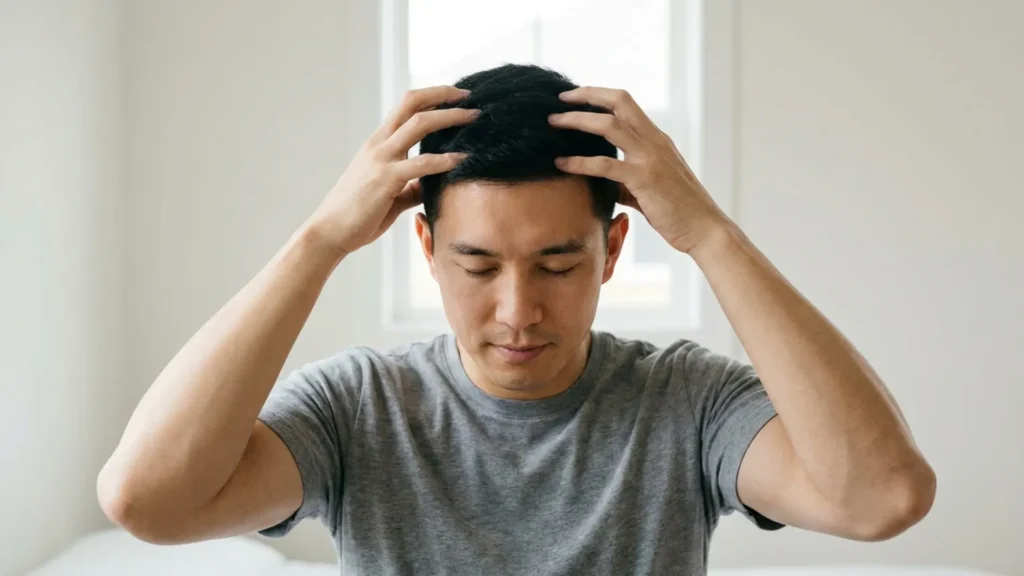
Beyond fixing the specific bottleneck, two habits have enough published research behind them to be worth building into a routine — not as replacements for the basics above, but as additions once the obvious causes are covered.
Scalp massage. A study published in ePlasty found that men who performed a standardised scalp massage for four minutes daily showed measurably increased hair thickness after 24 weeks. The researchers attributed this to mechanical stretching stimulating the dermal papilla cells that drive follicle activity. The Koyama scalp massage study is available in full on PubMed. The method used was fingertips only (not nails), circular motions across the whole scalp, four minutes daily. Results were for thickness, not length, and they took months — but this is the one widely recommended technique with peer-reviewed data behind it.
DHT management for genetic hair loss. Dihydrotestosterone (DHT) is the androgen responsible for androgenetic alopecia — the pattern that causes a receding hairline or a thinning crown. If your slow growth comes with one of those specific patterns, the follicles in those areas may be miniaturising from DHT sensitivity rather than from anything dietary or mechanical. The medically established options — finasteride and minoxidil — are covered clearly in the NHS’s guide to male hair loss. These are a medical decision, not a lifestyle tip, but understanding them is useful if the pattern fits.
Other commonly discussed approaches — rosemary oil, rice water, onion juice — have limited or early-stage evidence. Some may help in specific contexts; none have the consistency of the two above.
What a Realistic Timeline Looks Like

One of the most practical things you can do before starting any routine change is set an honest timeline. Men who see no visible difference after six weeks and quit are often stopping right as the first real change is forming.
Hair doesn’t grow continuously. Each follicle cycles through active growth (anagen), a short transition (catagen), and rest (telogen), and any change made today is affecting follicles that won’t produce visible results for weeks. That’s not a reason to wait — it’s a reason to start earlier and track in six-week blocks rather than day by day.
| Period | What’s happening internally | What you’ll likely notice |
|---|---|---|
| Weeks 1–4 | Scalp environment begins to stabilise; dietary changes reach active follicles | Little visible change. Itching or oiliness may ease. |
| Months 2–3 | New growth cycles begin under improved conditions | Slight reduction in daily shedding; possible density increase |
| Months 4–6 | First measurable length gains, especially if breakage has been reduced | Noticeably longer strands if retention has improved |
| Months 6–12 | A full hair cycle reflects the changes made | Clearer difference in thickness and length if the right bottleneck was addressed |
Progress that looks slow at month three is often confirmation you’re in the right phase. The biology doesn’t speed up for impatience.
Also Visit : Hair Growth Serum at Home: A Simple Recipe That Works
Frequently Asked Questions
How fast does men’s hair actually grow?
Around half an inch a month on average, or roughly six inches a year. This varies slightly between individuals but doesn’t shift much based on habits or products — what habits affect is whether the hair survives long enough to show that growth.
Does scalp massage work for hair growth?
For thickness, there’s published clinical support — though the research involved four minutes of massage daily for 24 weeks before results appeared. For length, the direct evidence is thinner, but a healthier scalp environment generally supports better follicle activity than a congested or inflamed one.
Can biotin supplements help men’s hair grow faster?
Only if there’s an actual biotin deficiency, which isn’t especially common. Biotin is a B vitamin involved in keratin production, but taking extra when your levels are already adequate doesn’t produce extra growth. A blood panel is a faster answer than a bottle of supplements.
How do I know if it’s hair loss or just slow growth?
Look at the shed hairs. Those shed through a normal rest cycle have a small white bulb at the root end. A sudden increase in shedding, hairs falling with dark pigmented roots and no white bulb, or a clearly defined patch that wasn’t there before — any of these are worth showing to a GP or dermatologist rather than waiting.
Is minoxidil a lifestyle tip or a medical treatment?
It sits closer to a medical intervention. Minoxidil is an established topical for androgenetic alopecia that works by prolonging the active growth phase. It has one of the stronger evidence bases in this space, but it’s not a general growth booster for men without pattern hair loss. The NHS covers what to expect from it in plain terms if you want to read further before making a decision.
If this article helped you narrow down where to focus, it’s worth saving for reference — the timeline table is useful to revisit at the three-month mark. Questions about your specific situation are open in the comments below.
Key Takeaways
- Men’s hair grows around half an inch a month — these tips work by helping you reach that rate, not exceed it.
- Most slow-growth problems fall into one of three categories: scalp environment, nutritional gaps, or mechanical breakage. Identifying yours makes everything else more effective.
- Scalp massage has clinical support — but the research required four minutes daily for 24 weeks before results appeared, not four minutes for a fortnight.
- Low ferritin is a frequently missed cause of slow growth in men. A blood test is a more direct answer than experimenting with iron supplements.
- If hair is short and wispy at the front or temples, breakage is likely the real problem — not growth rate.
This article is for general information only and isn’t medical advice. For persistent hair loss, scalp pain, or sudden shedding, see a dermatologist or trichologist.
Written by Anna Anderson for Trend Cottage.