Hair Growth Massage: Technique, Timing and Results
Most people who try a hair growth massage give up after a few weeks because nothing seems to be happening. The issue usually isn’t the technique — it’s that they’re doing it too briefly, too lightly, or not consistently enough to trigger the biological response the research describes.
Quick answer: Scalp massage can increase the thickness of individual hair strands and may reduce shedding when done consistently over several months. The mechanism isn’t blood flow (though that increases too) — it’s the physical stretching of cells at the base of each follicle. Pressure, duration, and consistency are what determine whether it works. A hurried rub in the shower doesn’t do it.
Here’s what the evidence actually supports, how to do it correctly, and what a realistic timeline looks like.
What the Research Actually Found
The most cited evidence for hair growth massage comes from a 2016 study conducted at the Aderans Research Institute in Japan [EXTERNAL SOURCE NEEDED: Koyama T et al., “Standardized Scalp Massage Results in Increased Hair Thickness by Inducing Stretching Forces to Dermal Papilla Cells in the Subcutaneous Tissue,” ePlasty 2016;16:e8 — believed to be indexed at https://www.ncbi.nlm.nih.gov/pmc/articles/PMC4740347/ — please verify this URL is live before publishing]. A small group of healthy adult men received a standardised scalp massage for four minutes per day over 24 weeks. By the end of the study, their hair shaft diameter had increased on average — meaning individual strands had grown measurably thicker.
Two things are worth being clear about. The study measured strand thickness, not follicle count or density. Scalp massage doesn’t appear to generate new follicles where none are active. What it can do is improve the quality of hair that’s already growing — making existing strands fuller and stronger. Second, the sample was small. The findings are promising and the mechanism is plausible, but the research hasn’t been replicated at larger scale. Worth knowing before treating this as a guaranteed outcome.
The mechanism the researchers proposed centres on dermal papilla cells — the structures that sit at the very base of each hair follicle and control the growth cycle. They signal to the follicle when to grow, when to rest, and when to shed. The study found that the physical stretching produced by firm scalp massage activates certain gene pathways in these cells in ways that support the elongation phase of hair growth. This fits with how dermal papilla cells behave in other biological contexts: they’re mechanosensitive, meaning they respond to physical force, not unlike how muscle fibre responds to resistance over time.
Blood circulation gets credited as the mechanism in most explanations of scalp massage, and massage does increase blood flow to the scalp. That’s a real and probably helpful secondary effect. But it’s likely a supporting factor rather than the primary driver. The cellular stretch explanation is more specific and more directly tied to what the study actually measured.
Also Visit : Black Hair Growth: Why Retention Is the Real Work
Why Most Hair Growth Massages Don’t Deliver
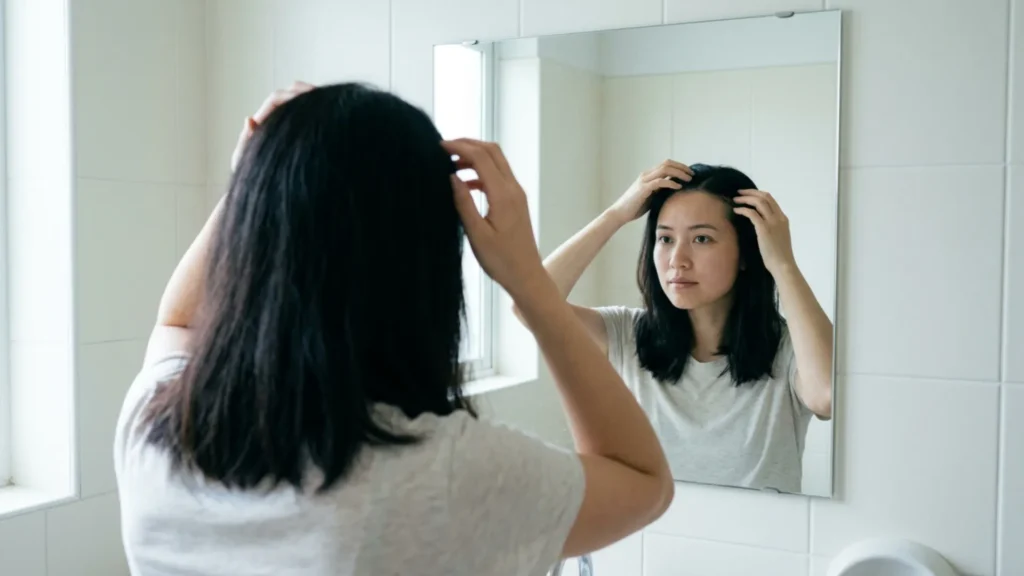
Pressure is almost always the problem. A light touch that moves your hair but not your scalp doesn’t do what needs doing. For the massage to work mechanically, the scalp skin itself needs to shift in small circles under your fingertips — not just the hair sitting on top of it. Think of the difference between stroking a surface and actually kneading it. The first is more comfortable. The second is what produces anything.
Duration trips up just as many people. Four minutes sounds easy, but most people who think they’ve been going for several minutes have actually stopped somewhere around 60–90 seconds. Set a timer the first few times. The four-minute figure from the published research wasn’t a rough approximation — it was the standardised protocol. Going much shorter probably doesn’t build the sustained mechanical stimulus the follicle cells need to respond to.
Then there’s consistency. Hair responds to things that happen repeatedly over months, not weeks. Doing seven days in a row, stopping for a fortnight, then picking it back up doesn’t accumulate into the same stimulus as a steady daily practice. The effect is slow and cumulative. Irregular effort tends to look a lot like no effort at all, in terms of results.
There’s also a mismatch in expectation. Scalp massage is unlikely to produce hair that looks noticeably denser within a month. Existing strands getting slightly thicker and feeling more substantial at the root over three to six months — that’s closer to what the evidence supports. People who expect something faster tend to stop right before anything would be perceptible.
How to Do a Hair Growth Massage Properly
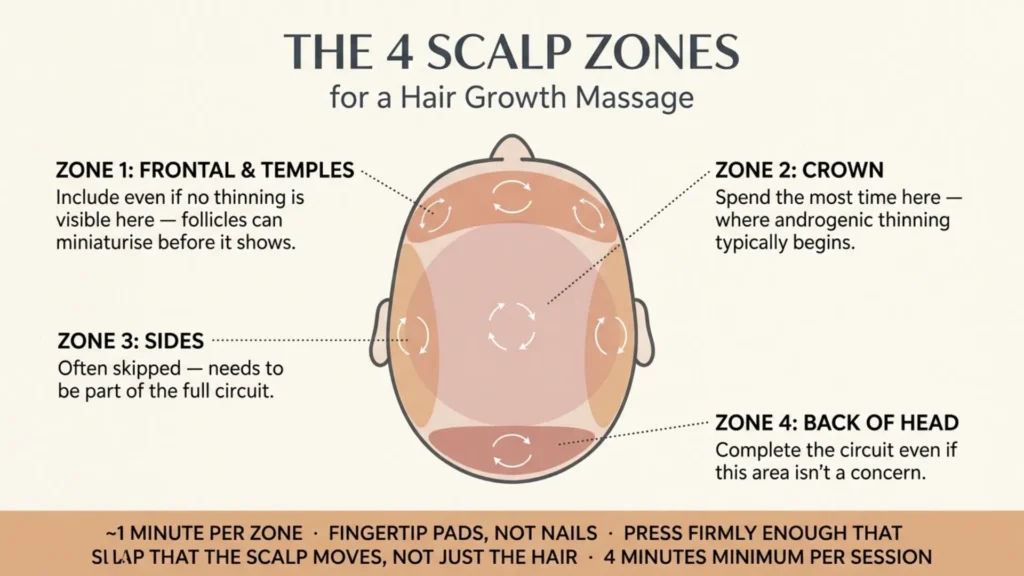
Start with dry hands on a clean, unstyled scalp — no product in the hair, no oil on your hands, ideally not straight out of the shower. Dry contact gives your fingertips much better grip on the scalp surface.
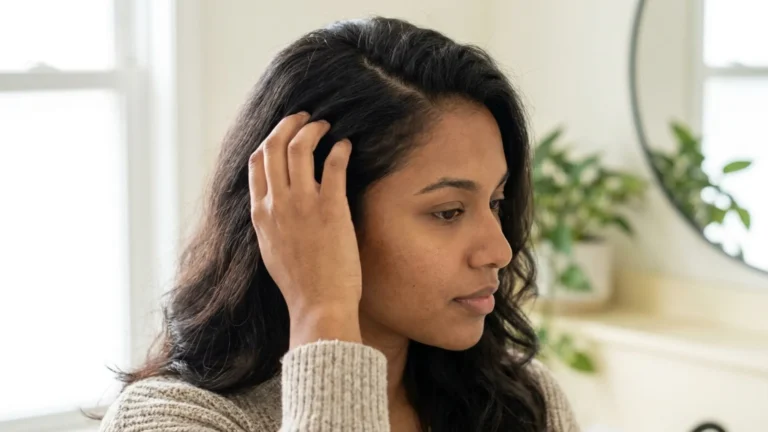
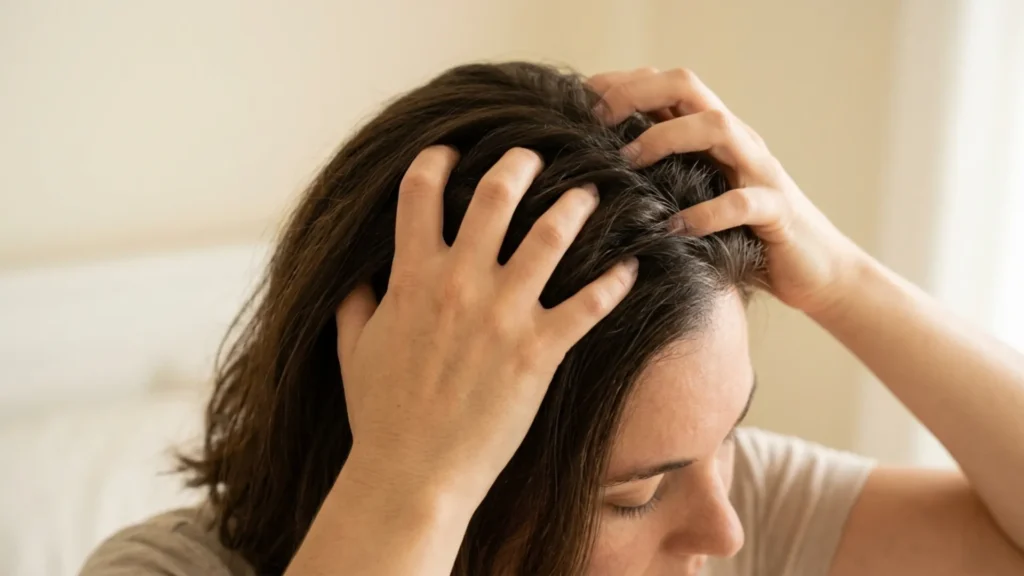
Place the pads of all ten fingertips flat against the scalp. Thumbs can rest near the temples. Press down firmly enough that you’re feeling the scalp skin itself, not just the hair above it. Then move in slow, small circles. The motion should drag the skin of the scalp slightly — you should feel it shift under your fingers rather than your fingers sliding freely through the hair. If your hands are moving through your hair without much resistance, the pressure isn’t deep enough.
Work through four rough zones: the frontal hairline and temples, the crown, the sides of the head, and the back. Spending about a minute in each zone covers the full scalp at the four-minute minimum. The crown tends to get extra focus in discussions of androgenic thinning because that’s typically where miniaturisation starts, but the full circuit matters — skipping the sides and back consistently won’t be as effective as covering the whole scalp.
You don’t need a tool. Fingertips give you more adaptable control over pressure than most handheld massagers, and you can vary the depth across different areas as you go. A firm rubber-tipped massager is a reasonable substitute if hand fatigue becomes a real issue or joint stiffness makes sustained finger pressure uncomfortable. Electric vibrating scalp devices are a different category — there’s no meaningful published evidence that vibration delivers the same mechanical stimulus as sustained manual pressure for this purpose.
One mistake worth naming: don’t grip the hair while you massage. Your fingers are working against the scalp itself. If you find yourself holding or pulling the hair at the same time, reposition and restart.
Dry or With Oil — What Actually Changes
The hair growth massage research that underpins most of what we know used dry scalps — no oil, just a standardised mechanical device. That detail matters more than most guides acknowledge.
Oil reduces friction between fingertips and scalp. Less friction means the scalp skin moves a little less freely during the circular motion — and that directly reduces the mechanical stretch to the dermal papilla cells. It’s a small difference, and the practical impact is unlikely to be dramatic. But if you’re trying to maximise the physical benefit, dry massage is probably more effective.
Rosemary oil is worth separating out from the rest. It’s been studied independently as a potential inhibitor of 5-alpha reductase — the enzyme that converts testosterone to DHT, the hormone central to androgenic hair loss in both men and women. The evidence for rosemary oil is preliminary but not negligible. If you want to use it, apply a few drops to the scalp after the dry massage rather than before it. That way you get the full mechanical benefit from the massage first, and the topical benefit of the oil separately — rather than combining them in a way that reduces both.
Most other commonly used scalp oils — coconut, argan, jojoba — have solid evidence for conditioning and protecting the hair shaft against damage and moisture loss. That’s worth doing for its own reasons. But they’re not growth treatments at the scalp level, and applying them during massage for hair growth purposes means doing two things at once without getting the full benefit of either.
Also Visit : Hair Growth Challenge: How to Build One That Works
Duration and Frequency
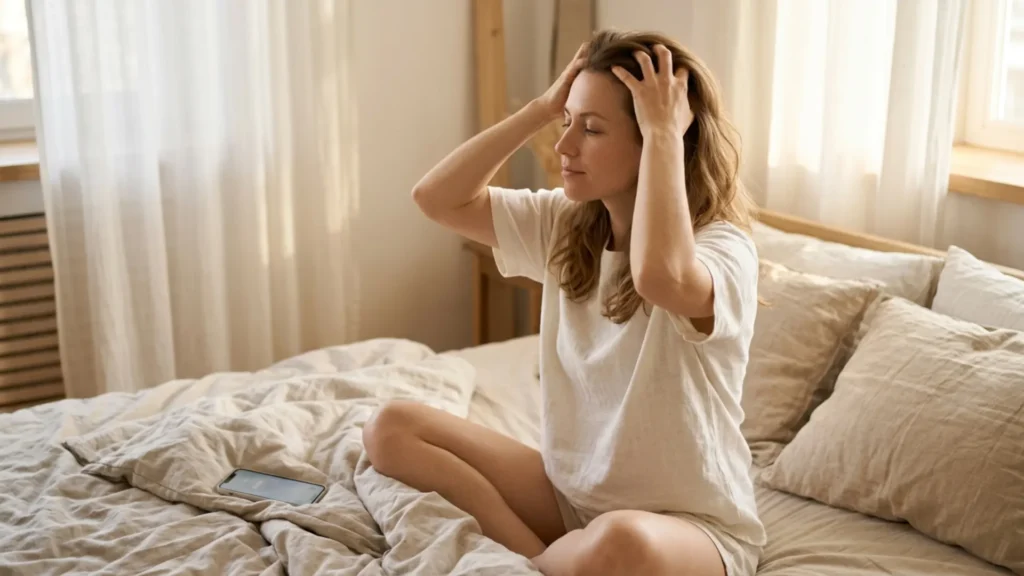
Four minutes per session is the benchmark. Not because it’s a magic number, but because it’s what the only properly designed study on this specific question used, and it gives you enough time to work through the full scalp at a considered pace. Less than that and you’re probably shortchanging the stimulus, especially if you’re also working through thick or long hair that slows you down.
Daily practice is what the study protocol called for. Whether every-other-day is close enough isn’t something any research has directly compared, so it’s impossible to answer with confidence. What’s safe to say is that the more consistent the habit, the more cumulative the effect — and that skipping several days at a stretch probably resets more of the benefit than missing a single day.
Time of day makes no difference the research has identified. What matters is that you can actually stick to the habit. Some people build it into a pre-shampoo routine, two or three times a week. Others do it nightly before bed. Wherever it fits reliably is the right slot — not the time of day that sounds most optimal in theory.
One thing that consistently doesn’t work: trading duration for pressure. A 90-second aggressive session isn’t the equivalent of a four-minute moderate one. The dermal papilla response is cumulative and relies on sustained mechanical force — not a brief spike of intensity. If you’re short on time on a given day, a shorter session is fine occasionally. It’s not something to compensate for by pressing harder.
What to Expect and When
The first sign that something is working usually isn’t visible. After several weeks of consistent practice, the scalp often feels less tight and more supple, and existing hair may start to feel slightly more substantial at the root. This is a tactile change, not a visible one — and it’s the phase where most people who haven’t been warned tend to give up.
| Timeframe | What you might notice | What’s actually happening |
|---|---|---|
| Weeks 1–4 | Scalp feels less tight; possible brief uptick in shed hairs | Circulation to the scalp increases; some follicles may move through their cycle faster |
| Weeks 4–12 | Slightly reduced daily shedding; possible fine hairs at the hairline | Follicles in the active growth phase may be responding to the mechanical stimulus |
| Weeks 12–24 | Existing strands feel thicker; slight increase in fullness at scalp level | Strand diameter increases as dermal papilla cells respond to continued pressure |
| Beyond 24 weeks | Visible change in fullness for some; maintained strand thickness | Sustained practice continues to support follicles in their growth phase |
A brief uptick in shed hairs during the first two to three weeks is common and tends to settle on its own. Follicles already in the late resting phase of their natural cycle may complete that phase sooner, which temporarily increases how many hairs you notice coming out. If heavier shedding continues well past the six-week mark, it’s worth looking at other causes separately from the massage.
It’s also worth being clear on what “results” actually means here. The primary outcome measured in the research was increased strand diameter — thicker individual hairs — not more follicles. For hair that’s been thinning because existing strands have gradually miniaturised over time, which is the most common pattern in androgenic thinning, thicker and stronger individual hairs are a meaningful and real improvement. For anyone hoping to generate growth in areas where no follicles are currently active, massage won’t deliver that.
When Massage Alone Won’t Help
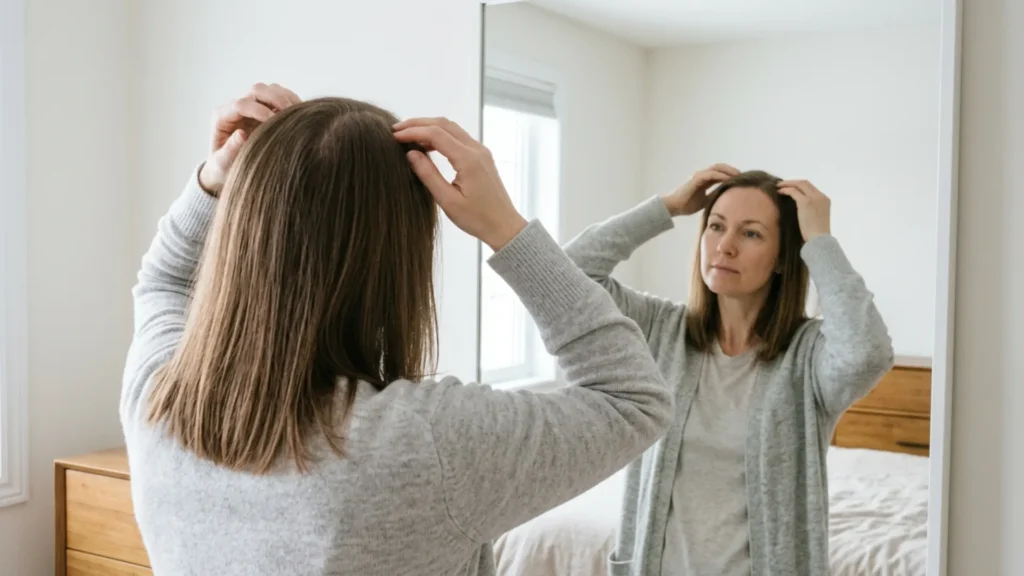
Scalp massage is best understood as a supportive habit — useful for gradual, diffuse thinning without a clear medical cause, and worth building into a routine early as a preventive measure. It’s not a treatment for the conditions responsible for most significant hair loss.
The American Academy of Dermatology identifies several types of hair loss that need proper medical assessment rather than a lifestyle adjustment: alopecia areata (an autoimmune condition causing patchy, sometimes sudden loss), frontal fibrosing alopecia, traction alopecia from prolonged mechanical stress on the follicle, and the diffuse shedding that can follow thyroid dysfunction, nutritional deficiency, or the hormonal shift after childbirth.
If hair is falling out in patches, if the hairline is visibly receding over a short period, or if shedding is clearly above your personal normal for more than two months, a scalp routine isn’t the right first response. A dermatologist or trichologist can identify the underlying cause — and for most of these conditions, earlier assessment tends to mean better options.
For androgenetic alopecia — pattern hair loss — scalp massage can sit alongside treatments like minoxidil as a supportive habit. It doesn’t interrupt the hormonal pathway on its own. It’s one part of a broader approach, not a replacement for it.
This article is for general information only and isn’t medical advice. For persistent hair loss, scalp pain, or sudden shedding, see a dermatologist or trichologist.
Also Visit : The Hair Growth Secrets Behind a Healthier Scalp
Frequently Asked Questions
Does scalp massage cause more shedding at first?
A brief increase in shed hairs during the first few weeks isn’t unusual and doesn’t mean the massage is causing damage. Follicles already in the late resting phase of their natural cycle may complete that phase sooner, temporarily increasing how many hairs come out. This typically settles by weeks four to six. If heavier shedding continues past that point, it’s worth investigating separately from the massage routine.
Can scalp massage regrow hair that has already fallen out?
Not in most cases. Massage can support active follicles that are producing thin or weakened strands — improving strand thickness over time. It doesn’t reactivate follicles that have permanently gone dormant through long-term androgenic damage. For regrowth in areas where follicles are no longer active, clinical treatments are a more appropriate route than a scalp routine.
What’s the difference between a relaxation massage and one for hair growth?
Primarily pressure and duration. A relaxation massage uses lighter, more variable contact aimed at relieving scalp tension. A hair growth massage uses sustained, firm pressure with the deliberate intention of moving the scalp skin (not just the hair) in small controlled circles, maintained for at least four minutes. The relaxation version feels better in the moment. The hair growth version requires more conscious effort and consistency to maintain — but that effort is what produces the mechanical stimulus.
Is fingertip massage as effective as using a scalp massager tool?
Fingertips are probably more effective for most people because you can adjust pressure precisely and feel exactly what the scalp is doing in real time. A firm rubber-tipped tool is a reasonable substitute if hand fatigue or joint stiffness makes sustained finger pressure difficult. Electric vibrating devices are a different category — there’s currently no strong research supporting vibration over manual sustained pressure for the specific outcome of hair thickness. A vibrating massager may feel pleasant without delivering the same cellular stimulus.
Can you do scalp massage on colour-treated or chemically processed hair?
Yes. The massage targets the scalp itself, so chemical treatments on the hair shaft don’t prevent it. One sensible precaution: wait until any scalp sensitivity or irritation from bleach, colour, or relaxer has fully resolved before returning to firm pressure. Massaging an irritated scalp won’t accelerate healing, and the discomfort tends to discourage the sustained pressure that makes the technique effective.
Key Takeaways
- Scalp massage works by physically stretching dermal papilla cells at the base of each follicle — not primarily through improved blood flow, despite what most explanations say.
- Four minutes per session is the minimum benchmark from the published research. Shorter sessions probably don’t build the sustained mechanical stimulus these cells need to respond to.
- Dry massage is more mechanically effective than oil-first massage. If you want to use rosemary oil, apply it after the massage, not before — you capture the benefit of both without letting one undermine the other.
- Expect to feel a difference before you see one. Strands getting thicker at the root is a tactile change first. Visible improvement takes 12–24 weeks of consistent daily practice.
- Patchy loss, visible recession, or shedding clearly above your normal baseline for more than two months call for a dermatologist, not a scalp routine. Massage is a supportive habit — not a medical treatment.
If you’ve tried a hair growth massage before and gave up, it’s worth revisiting with a timer and firmer pressure before ruling it out. Those two variables account for most of the gap between “this doesn’t do anything” and “this is actually working.” Save this article if the results timeline is the section you’ll want to come back to — that tends to be the part that matters most a few months in.
Written by Anna Anderson for Trend Cottage.