
What’s the Best Hair Care Routine for Wavy Hair?

Most wavy hair goes wrong the same way. Someone borrows a routine built for tight curls, piles on a rich cream, and ends up with waves that look flat and greasy by lunchtime. The routine isn’t the problem. The amount is.
Quick answer: The best hair care routine for wavy hair is a gentle scalp-first wash, a conditioner matched to how heavy your hair feels, one light styling product applied to dripping wet hair, and a hands-off dry. Wavy hair sits between straight and curly, so it needs moisture and definition without extra weight. Start light, then add product only when your waves ask for it.
Find Your Weight Budget
Wavy hair has a bend, but not a deep one. That in-between shape is what makes it tricky. It wants the moisture curly hair needs, yet it can’t carry the same load of product before the waves stretch out and lose their shape.
Think of it as a weight budget. Every conditioner, leave-in and gel in your hair care routine for wavy hair spends a little of it. Spend too little and the hair frizzes. Spend too much and the waves go limp. Where your budget sits depends on how thick and how dry your hair is.
The American Academy of Dermatology’s tips on where to put conditioner map neatly onto this idea. Conditioner goes on the ends of fine or straight hair, and on the full length of dry or curly hair. Wavy hair can land on either side of that line, so your budget decides which one you follow.
Here’s how the three budgets look in practice.
| Budget | What your hair looks like | Where conditioner goes | Styling products |
|---|---|---|---|
| Light | Fine strands, oily roots, waves that flatten by day two | Mid-lengths to ends | One light product, like a foam or mist |
| Middle | Medium thickness, some frizz, waves that hold most of the day | Below the ears, with extra on the ends | A light leave-in, then a small amount of foam or gel |
| Full | Thick or coarse strands, dry ends, frizz in humid weather | Full length, keeping the first inch of roots clear | Leave-in first, then gel in thin layers |
Not sure which row is yours? Check your hair on day two after a normal wash. Flat at the crown and a bit greasy? You’re light. Puffy and rough at the ends but fine at the roots? You’re closer to full. Most people land in the middle, and it’s normal to slide between rows as the seasons change.
Also Visit : Simple Hair Care Routine That Actually Fits Your Week
The Wash Day Hair Care Routine for Wavy Hair
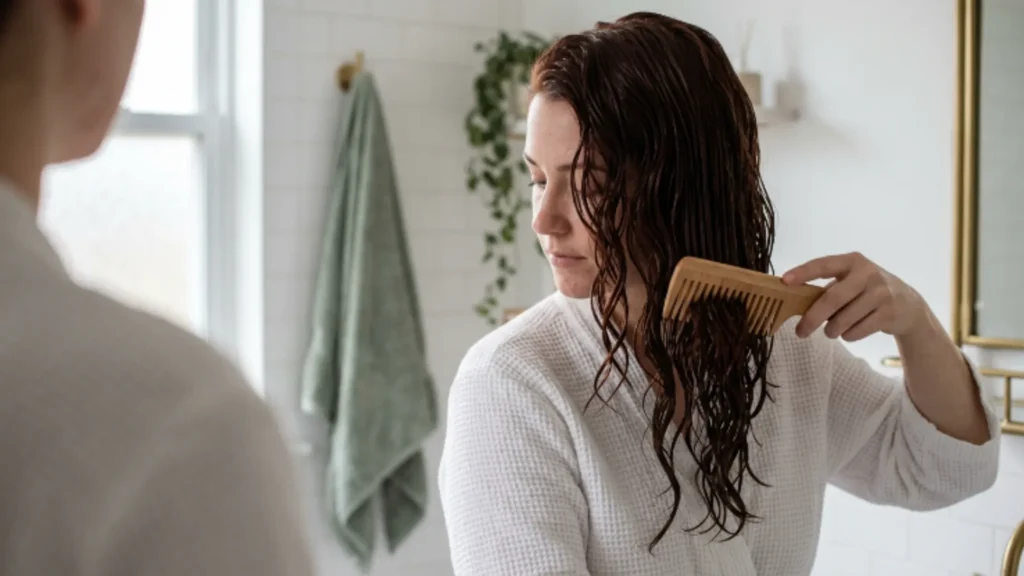
Wash day sets up everything that comes after it, so slow down here. Five steps cover it.
- Soak your hair with warm water until every section is wet through.
- Shampoo your scalp only. Work a small amount into your roots with your fingertips and let the suds run down the lengths as you rinse.
- Add conditioner by budget: mid-lengths to ends if you’re light, the full length minus the roots if you’re full.
- Detangle with the conditioner still in. Use a wide-tooth comb or your fingers, starting at the ends and working up.
- Rinse until the hair stops feeling slippery, but not until it squeaks.
Shampooing only the scalp feels odd at first. It makes sense once you think about where the dirt and oil sit. The roots collect them, while the lengths are the driest, oldest part of the hair. Scrubbing shampoo through the lengths just roughs them up.
How often you repeat all this depends on your scalp, not your waves. The AAD says oily scalps may need a wash every day, while people with dry, textured or thick hair can shampoo as needed, with at least one wash every two to three weeks. Wash when your roots feel greasy or itchy, not because the calendar says it’s time.
Style Wet Hair in the Right Order
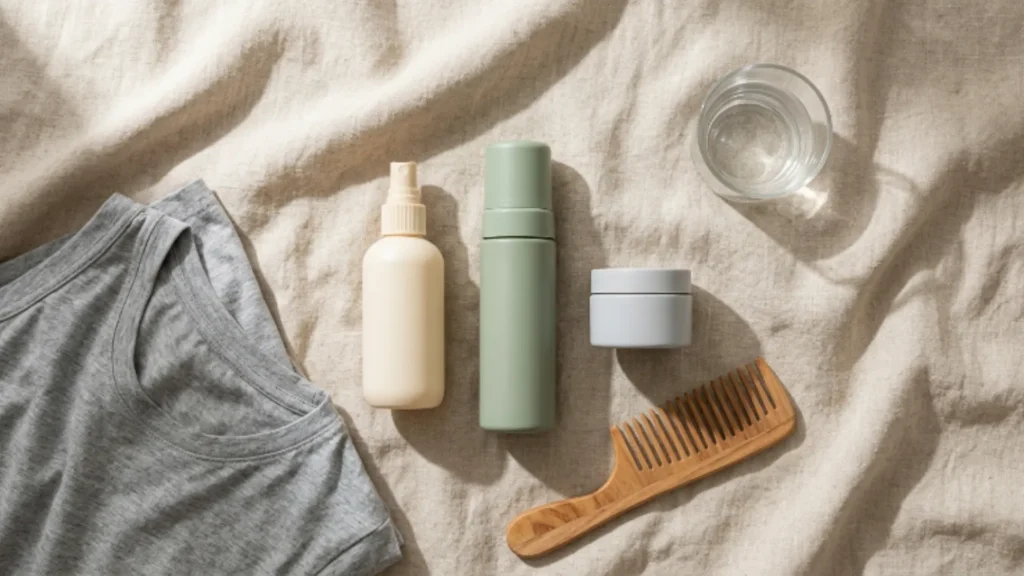
Waves set while the hair is wet. Once strands start to dry, any product you add just pushes frizz around. So style in the shower or right after it, while your hair is still dripping.
Go from lightest to heaviest. A leave-in spray or cream comes first, if your budget allows one. Foam or mousse comes next. Gel goes last, and only if you want hold.
Fine waves usually do best with foam alone, while thick, coarse waves often need cream under a gel to stay smooth. Each layer should feel barely there before you add the next.
Apply everything with cupped hands. Scoop your hair from underneath and squeeze upward toward the scalp, working around your head. Skip brushes and finger-raking at this stage, because both break the clumps apart before they’ve set.
Amounts matter more than brands. Start with less than feels right, roughly a grape-sized dollop of gel for shoulder-length hair. You can add more next wash day. You can’t take it back without washing.
Also Visit : Hair Care Routine: Build One That Actually Sticks
Dry It Without Breaking the Waves
The most damaging move at this stage is the rough towel rub. Dermatologists list rubbing hair dry with a towel among the common hair care habits that cause damage, and suggest wrapping hair to soak up water instead. A soft t-shirt or a microfiber towel does the job. Squeeze and press, don’t scrub.
Air drying is gentlest. If you’re short on time, a diffuser on low or medium heat, plus a heat protectant, keeps waves clumped better than a bare nozzle blowing them about.
Then leave your hair alone. Touching it while it dries pulls the waves apart before they’ve set. Once it’s completely dry, gently scrunch to crack the cast, which is the stiff shell gel leaves behind. Soft waves are underneath.
On day two or three, spritz a little water, scrunch, and let it dry again. If the ends feel thirsty, rub one drop of leave-in between your palms and press it over them first.
Fix Flat, Frizzy or Crunchy Waves
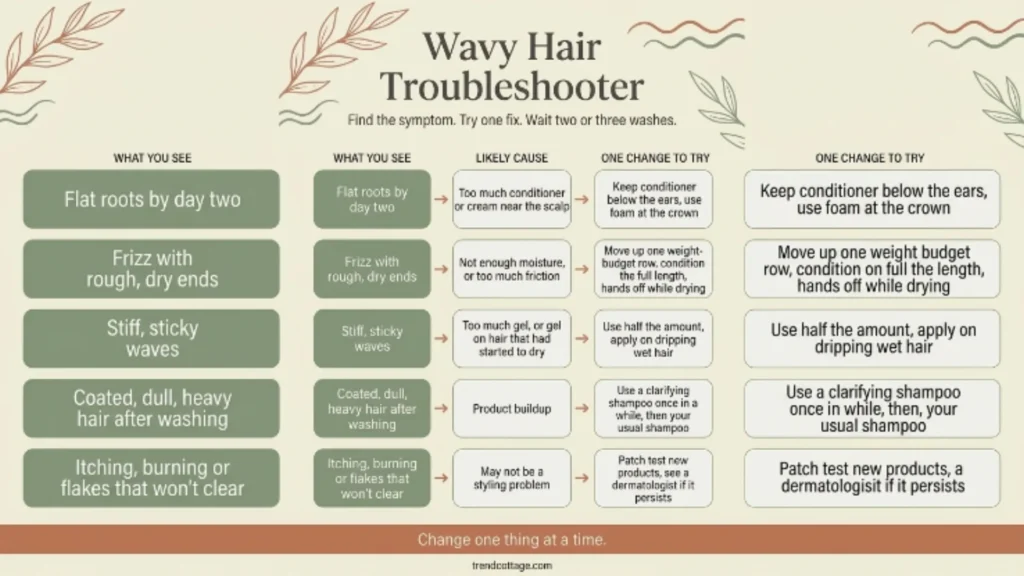
Change one thing at a time. If you swap products, wash less and change how you dry in the same week, you won’t know which move worked. Give each change two or three washes before you judge it.
Waves that go flat at the crown by day two are getting too much at the roots. Keep conditioner below your ears, use foam instead of cream near the scalp, and check whether an oily scalp needs washing more often.
Frizz with rough, dry ends usually means the hair wants more moisture or less friction. Move up one row on the weight budget, condition the full length, and stop touching the hair while it dries.
Stiff, sticky waves point to too much gel, or gel applied after the hair had already started to dry. Use half the amount next time and apply it while your hair is dripping.
Hair that feels coated, dull or heavy right after a wash may be holding product buildup. The AAD’s curly hair care tips from dermatologists suggest a clarifying shampoo before your moisturizing one if you style with gels, oils or creams. They’re written for curly hair, but the logic carries over to wavy hair that uses the same products. Use a clarifier once in a while, not every wash.
One safety note. Patch test any new product on a small spot behind your ear first. And if itching, burning or flaking sticks around after you’ve changed your routine, that’s a question for a dermatologist, not another product.
Jot down what you changed and how your hair looked on day two. It takes ten seconds and saves weeks of guessing.
Also Visit : Hair Care Routine for Hair Growth: Build It Right
Habits That Protect the Pattern

A hair care routine for wavy hair can be undone overnight, so the small habits count. Friction can rough up the outer layer of your hair while you sleep, and a satin or silk pillowcase cuts it down. So does gathering your hair loosely on top of your head with a soft scrunchie. A tight ponytail band pulls waves out of shape and leaves a dent you’ll spend all morning fixing.
Thin, fraying ends won’t hold a bend, so waves that used to sit neatly start to hang. Book a trim when your ends look see-through or stringy.
Heat is the last habit to watch. Flat irons and curling wands reshape hair for a day but dry it out. The AAD advises limiting heat, choosing low or medium settings, and using a heat protectant every time.
Frequently Asked Questions
How often should you wash wavy hair?
Go by your scalp. Wash when your roots feel oily or itchy. The AAD says flakes can mean you’re waiting too long, or that your conditioner or scalp moisturizer doesn’t suit you. If your scalp stays comfortable, you can stretch wash days further apart.
Does the Curly Girl Method work for wavy hair?
Parts of it do. Gentle cleansing, wide-tooth combing while wet, scrunching and skipping the towel rub all suit waves. The heavy layering of thick creams and gels that many curly routines rely on can flatten them, though. Borrow the habits, and skip the heavy stacking unless your hair is thick and dry.
Is oil good for wavy hair?
A few drops can help thick or dry ends. Oil coats the surface of a strand, so a little goes a long way. If your hair is fine or your roots get greasy, skip it or keep it well away from the scalp, since oil near the roots can weigh waves down.
Key Takeaways
- Wavy hair carries less product than curly hair before it flattens, so any hair care routine for wavy hair starts with a weight budget (light, middle or full).
- Shampoo the scalp only, then condition by budget: ends for light hair, the full length for full.
- Style on dripping wet hair, lightest product first, and scrunch upward instead of raking through.
- Blot dry, then leave the hair alone until it’s fully dry before you crack the gel cast.
- Change one thing at a time and give it two or three washes before you judge it.
If you try this hair care routine for wavy hair, we’d love to hear which row of the weight budget your hair landed in. Leave a comment, or save this post for your next wash day.
Written by Anna Anderson for Trend Cottage.