What’s the Best Hair Care Routine for Low Porosity Hair?
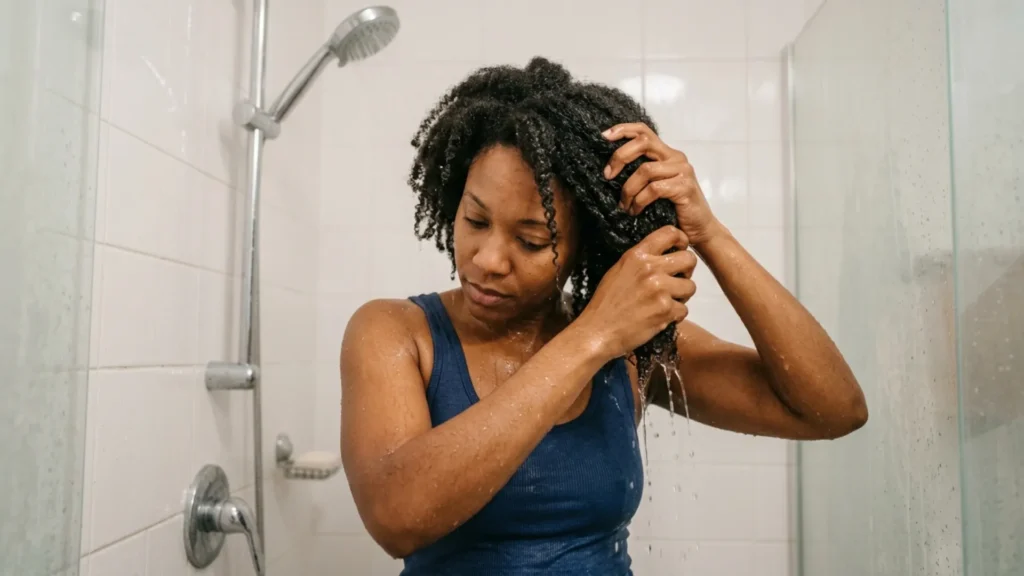
If your conditioner seems to slide right off, your hair takes an age to get properly wet in the shower, and every moisture-heavy product ends up sitting on your strands rather than absorbing — you don’t have a product problem. You have a sequence problem.
The best hair care routine for low porosity hair is built around one principle: the cuticle needs to be open when you apply moisture, and every step has to work with that window rather than against it. In practice, that means warm water throughout your wash, deep conditioning under heat every time, and lightweight products applied while hair is still warm. Most routines get the product types roughly right and completely miss the timing.
Low porosity hair isn’t damaged or unhealthy. The cuticle lies flat and tightly sealed, which is actually a sign of a structurally intact strand. The problem is that a sealed cuticle resists everything — water included. Once you understand that, the routine stops feeling like guesswork.
Why Low Porosity Hair Rejects Most Routines
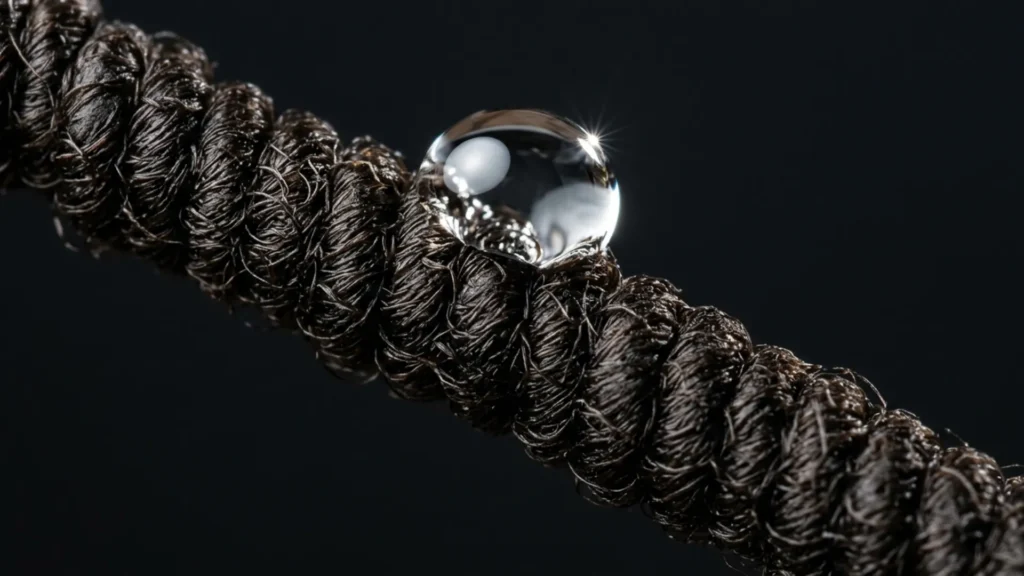
Hair porosity describes how easily your strands absorb and hold onto moisture. In low porosity hair, the cuticle — the outer layer of overlapping scales that protects each strand — lies almost completely flat and tightly pressed together, leaving very little gap for water or product to pass through. The American Academy of Dermatology’s guidance on avoiding hair damage describes the cuticle as the strand’s protective outer shield, and its condition directly determines how your hair responds to every treatment you give it.
When you apply conditioner to cool or un-warmed low porosity hair, you’re spreading product across a closed surface. It might smooth things slightly through surface coating, then gradually builds up without ever reaching the cortex — the inner layer where moisture actually does its work. That accumulation is part of why low porosity hair so often feels heavy and dull over time despite regular conditioning: the product is sitting on the outside, not nourishing the inside.
The routine advice that works for high porosity hair — rich butters, cold rinses to seal moisture in, protein masks to fill gaps in the cuticle — actively backfires on low porosity hair. High porosity hair has a raised, open cuticle that absorbs quickly and loses moisture just as fast, so heavy products and cold water make sense for it. Low porosity hair needs the opposite approach in almost every step.
Also Visit : Hair Care Routine for Curly Hair: Start With Porosity
The Heat Window: Why Timing Is Everything
Heat causes the hair cuticle to lift and expand slightly. Whether it comes from warm water, steam, or the enclosed warmth of a plastic cap and dryer, that lift is the window during which low porosity hair can actually absorb moisture. Miss it, or close it too early, and most of what you put on your hair becomes surface work.
Here’s where most shower routines go wrong. The water starts warm, cools down while you condition, then ends with a cold rinse to “lock moisture in.” On low porosity hair, the cold closes the cuticle before the conditioner has had time to penetrate. You’re locking product out, not in. research published on the National Institutes of Health platform on hair fiber and cosmetic interactions confirms that cuticle permeability is significantly affected by temperature — something most at-home routines don’t account for at all. [EXTERNAL SOURCE NEEDED: verify this PMC URL leads to a specific, relevant study on heat and cuticle permeability before publishing — search “hair cuticle temperature permeability PMC” as an alternative]
Keeping the water warm throughout the wash, or adding 20 to 30 minutes under a heat cap after applying conditioner, keeps the cuticle receptive long enough to make a real difference. You don’t need to skip a cool rinse entirely. Moving from warm to tepid rather than warm to cold is enough to let the cuticle close gradually while giving conditioner a few extra seconds to settle.
The Low Porosity Hair Care Routine, Step by Step
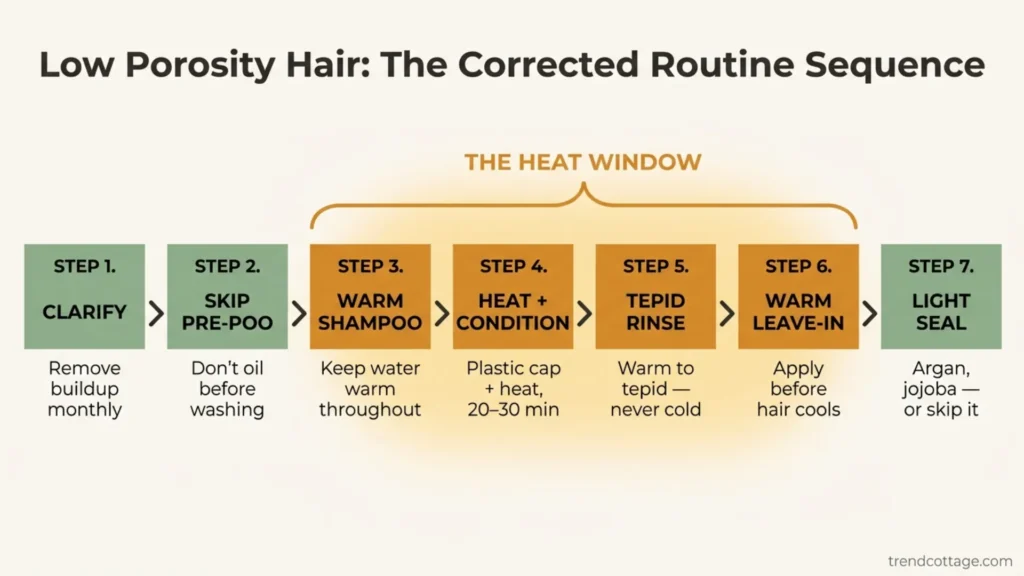
This isn’t about finding the right hero product. It’s about putting steps in the right order so your hair is actually open and ready to receive moisture at each stage.
Step 1: Clarify regularly. Buildup is the biggest obstacle for low porosity hair. Old product layered on the cuticle blocks absorption even when everything else in the routine is right. A clarifying shampoo used once a month — or more often if you style or use leave-in products frequently — removes residue and gives you a clean starting point. If your hair feels stripped after clarifying, add a few drops of lightweight leave-in to the final rinse water rather than skipping the clarifying step.
Step 2: Skip the pre-poo. Pre-pooing with oil before shampooing helps high porosity hair hold onto its own moisture during washing. For low porosity hair, it adds one more layer for moisture to fight through. Unless your hair breaks badly when dry, leave this step out.
Step 3: Shampoo with warm water and keep it warm. Start the shower warm and don’t let the temperature drop while you wash. Use a gentle, moisturising shampoo and concentrate it on the scalp rather than working it through the full length of the hair, which strips the ends without adding much cleansing benefit.
Step 4: Deep condition under heat, every single time. This is the step that changes the most for most people. Apply conditioner to damp hair, cover with a plastic cap, and sit under a hooded dryer or use a heat cap for 20 to 30 minutes. No dryer? A warm bathroom with a hot shower running, or a warm towel wrapped tightly around the cap, gets you part of the way there. The heat keeps the cuticle lifted while the conditioner has time to enter. Deep conditioning without any heat source on low porosity hair is mostly surface conditioning — it still does something, but it’s not the same thing.
Step 5: Rinse with tepid water, not cold. Move from warm to tepid rather than warm to cold. This allows the cuticle to close slowly, giving conditioner a few extra seconds to settle rather than being shut out abruptly.
Step 6: Apply leave-in while hair is still warm. Right out of the shower, before the hair cools, apply a lightweight water-based leave-in. Spray or milky formulas work far better than thick creams here. The strand hasn’t fully sealed yet and will accept lightweight product more readily now than it will a few minutes later once everything has cooled down.
Step 7: Seal lightly — or don’t bother. If you seal, choose a light oil: argan, jojoba, grapeseed, or sweet almond oil. Many people with low porosity hair find they don’t need a sealant at all if their leave-in already contains a small oil component. Heavy oils like castor oil used as a sealant sit on the cuticle and feed the buildup problem rather than solving anything.
Products That Work — and Ones to Skip
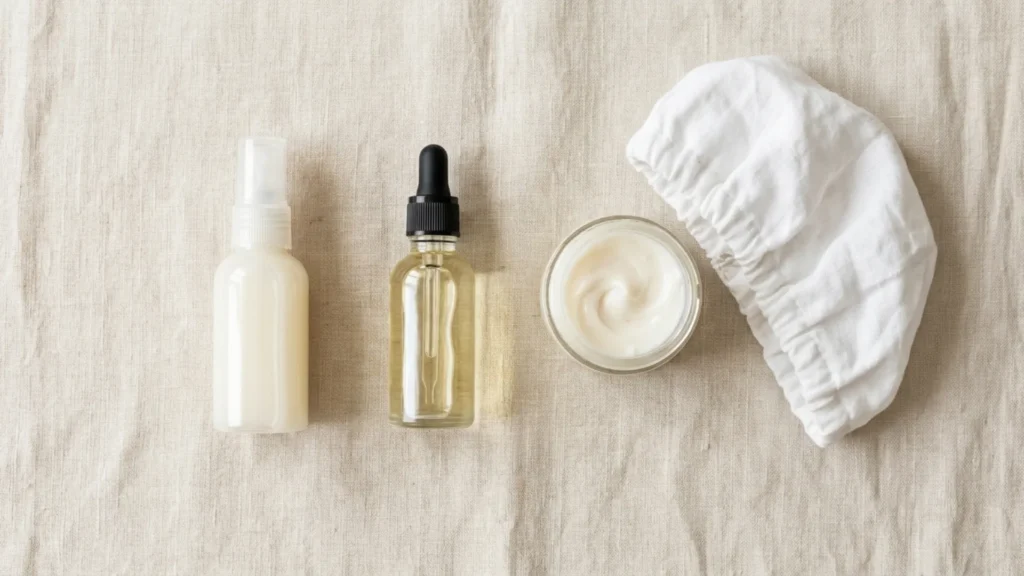
Product weight matters as much as ingredients for low porosity hair. A formula rich in shea butter or castor oil can genuinely nourish high porosity hair and create a near-impenetrable coating on low porosity hair. The guiding principle is simple: lighter texture means easier entry.
| Category | Use These | Skip These |
|---|---|---|
| Shampoos | Gentle moisturising formulas for regular washes; sulfate-based clarifying shampoo once monthly | Heavy protein-first formulas; dry shampoo as a regular wash substitute |
| Conditioners | Lightweight, water-rich rinse-outs | Butter-heavy or protein-heavy formulas used without heat |
| Deep conditioners | Humectant-based options: honey, aloe, glycerin (normal humidity only) | Protein treatments unless there are clear signs of breakage |
| Leave-ins | Spray or milky water-based leave-ins | Thick creams, whipped butters |
| Oils | Argan, jojoba, grapeseed, sweet almond | Castor oil or coconut oil as a primary moisturiser; shea butter |
| Styling products | Lightweight gels, light-hold mousse | Heavy pomades, thick edge controls, wax-based stylers |
One thing worth knowing about glycerin: it’s a humectant, meaning it pulls moisture from the surrounding air toward the hair. In normal-to-humid conditions, this genuinely helps low porosity hair hold onto water. In dry winter air — indoors with central heating running — glycerin can pull moisture out of the strand instead of in. If your hair behaves noticeably worse in winter using the same products that worked in summer, check whether glycerin sits high up in your leave-in’s ingredient list. Switching to a glycerin-free formula during colder months is worth trying before you overhaul everything else.
Also Visit : How to Follow an Urutan Hair Care Routine Properly
The Protein Question

Low porosity hair is protein-sensitive, and this is probably the most misunderstood part of looking after it. The tight, flat cuticle that defines low porosity hair does a good job of protecting the cortex — the hair’s inner structure. That means the protein inside each strand is usually intact. The hair doesn’t need extra protein added to it from outside. It needs moisture.
When protein accumulates on low porosity hair — through protein-heavy conditioners, bonding treatments, or styling products loaded with hydrolysed wheat, silk, or keratin proteins — the strands turn rigid and brittle. Protein-overloaded hair snaps rather than stretches when pulled wet. It feels rough and straw-like when dry. It won’t clump properly or hold a curl shape. These are signs to cut protein out of the routine almost entirely, not to layer moisture on top of a protein problem.
According to the American Academy of Dermatology’s published tips for maintaining healthy hair, working with the hair’s own existing structure rather than overloading it with treatments is the foundation of a sustainable routine. For low porosity hair, that means letting the cuticle do its protective job and choosing moisture-focused products rather than strengthening ones.
Check ingredient lists for: hydrolysed keratin, hydrolysed wheat protein, hydrolysed silk protein, hydrolysed collagen, and anything labelled as a “bonding” or “strengthening” treatment. None of these are bad ingredients in isolation — they’re just not what most low porosity hair needs, and they’re worth removing from your rotation if your hair consistently feels rigid or snaps unexpectedly.
If you do see genuine breakage — snapping mid-shaft, not just at the ends — a single, light protein treatment followed by a sustained moisture-only period can help reset things. That’s the exception for low porosity hair, not a regular scheduled step.
How Often Should Low Porosity Hair Be Washed?
Buildup accumulates faster on low porosity hair because products stay on the surface rather than absorbing. That makes wash frequency more important here than it is for higher porosity types.
For most people with low porosity hair using lightweight products and minimal styling, washing every 7 to 10 days works well. If you use heavier styling products, co-wash frequently, or live somewhere humid where environmental residue builds faster, washing every 5 to 7 days will keep the hair cleaner and more responsive between sessions. A monthly clarifying wash sits on top of whatever regular frequency you settle into.
Signs you’re not washing often enough: new products stop working after a day or two, hair feels coated rather than moisturised, and a clean strand dropped into a glass of water floats for a long time before sinking. Signs you’re washing too often: scalp feels dry and irritated, ends feel stripped despite conditioning. The right frequency is the one that controls buildup without stripping the scalp — and it’s worth adjusting seasonally.
Also Visit : What’s the Best Hair Care Routine for Wavy Hair?
Key Takeaways
- Low porosity hair resists absorption because the cuticle lies flat and closed — not because the hair is damaged or dry by nature.
- Heat is the most important tool in the routine. Warm water and heat during deep conditioning open the cuticle; that’s when moisture enters. Everything else is surface work.
- Apply leave-in and lightweight sealants immediately after the shower, while hair is still warm and the cuticle is gradually closing.
- Low porosity hair is protein-sensitive. Moisture-focused products are the default; protein treatments are a rare exception for genuine breakage, not a regular step.
- Clarify monthly (or more often) to stop product buildup from blocking absorption at every other step in the routine.
Frequently Asked Questions
Can low porosity hair get protein overload?
Yes, and it happens faster than with other porosity types. Because the tight cuticle limits how much product enters the strand, protein from conditioners, treatments, and styling products builds up on the surface quickly. Overloaded low porosity hair feels stiff and snaps when pulled wet, with a rough, straw-like texture when dry. If that sounds familiar, cut protein from the routine entirely for several washes before reassessing.
Is glycerin good or bad for low porosity hair?
It depends on the climate. In normal or humid conditions, glycerin draws moisture from the air into the hair and works well for low porosity types. In dry or cold air — typically indoors in winter — it draws in the opposite direction. Products with glycerin high in the ingredient list can leave low porosity hair drier in winter than it was in summer. A glycerin-free leave-in during colder months is often enough to fix this without changing the whole routine.
Does low porosity hair need protein at all?
Rarely. The intact cuticle protects the cortex, so most people with low porosity hair don’t have a protein deficit to address. If your hair snaps mid-shaft consistently rather than just at dry ends, a single light protein treatment can help — followed by an extended moisture-focused period. For most low porosity routines, though, protein is something to limit rather than add.
What’s the main difference between low and high porosity hair routines?
Almost everything is reversed. High porosity hair absorbs product easily but loses moisture fast, so it benefits from heavier products, protein to fill gaps in the cuticle, and cold rinses to slow moisture loss. Low porosity hair needs heat to open the cuticle, lightweight products that can enter during that heat window, and far less protein overall.
Can you change your hair’s porosity?
Natural porosity is largely genetic. It can shift toward higher porosity over time through chemical processing, repeated heat styling, or prolonged UV exposure — all of which lift or erode the cuticle. You can’t shift low porosity to high porosity through product use, and there’s no particular reason to want to: higher porosity brings its own set of challenges, and low porosity hair’s intact cuticle is genuinely something to work with rather than against.
Written by Anna Anderson for Trend Cottage.