Hair Care Routine for Curly Hair: Start With Porosity

The first question most curly hair guides ask is: what’s your curl type? It’s on Pinterest, it’s in every beginner video, and it feels like a logical shortcut — find your number, find your products. But curl type only describes the shape of your curl. It says almost nothing about how your hair handles moisture, and moisture is what actually determines whether a product absorbs or sits uselessly on top of your strands.
The better first question is: what’s your hair’s porosity?
Quick answer: A hair care routine for curly hair works best when it’s built around porosity first. Low porosity hair has a tightly closed cuticle that resists moisture — it needs warmth and lightweight products to let conditioning ingredients in. High porosity hair absorbs moisture fast but loses it just as quickly — it needs richer products and a sealing step to slow that loss. Once you know which type you’re dealing with, the routine largely writes itself.
What Hair Porosity Actually Means
The cuticle is the outermost layer of each hair strand — a sleeve of overlapping scales, similar in structure to roof tiles. How tightly those scales lie flat determines porosity. When they’re closed and compact, moisture has difficulty getting past them. When they’re raised or gapped, moisture gets in fast and escapes at the same speed.
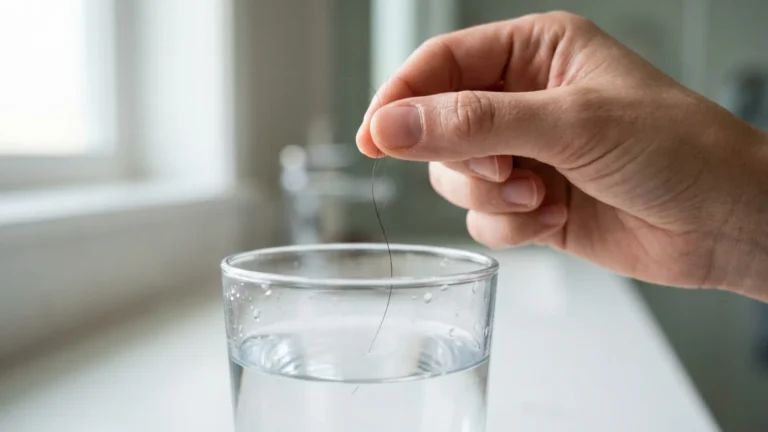
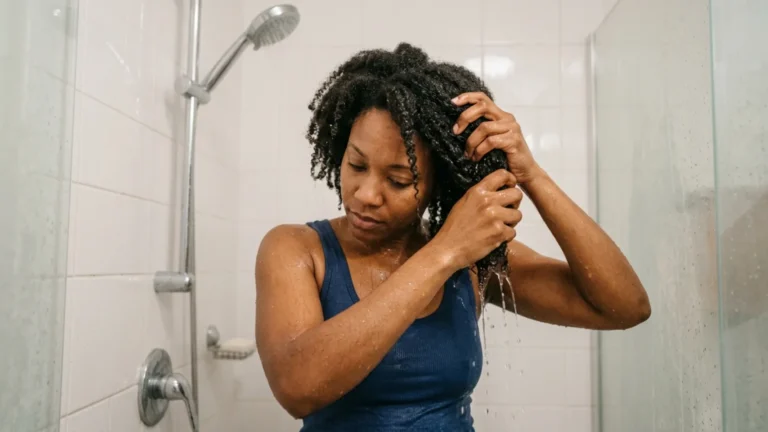
Two common methods give a starting read. The float test: drop a few clean, product-free strands into a glass of room-temperature water and watch for two to three minutes. Strands that stay near the surface suggest low porosity; ones that sink suggest high. Treat it as one signal rather than a verdict — old product residue can skew the result. The more reliable indicator is how your hair behaves on wash day. Does water bead off and take a long time to penetrate? Probably low porosity. Does your hair soak through in seconds, feel hydrated right after washing, then feel dry again within a few hours? Likely high.
Medium porosity sits between the two: cuticles that open readily and close well enough that moisture stays put without much extra effort. If that’s where you land, a solid curly hair care routine works without a lot of adjustment. The rest of this article focuses on the two ends of the scale, where getting the routine right makes a real difference. A hair care routine for curly hair that starts with porosity rather than curl type is more likely to give you results you can actually repeat.
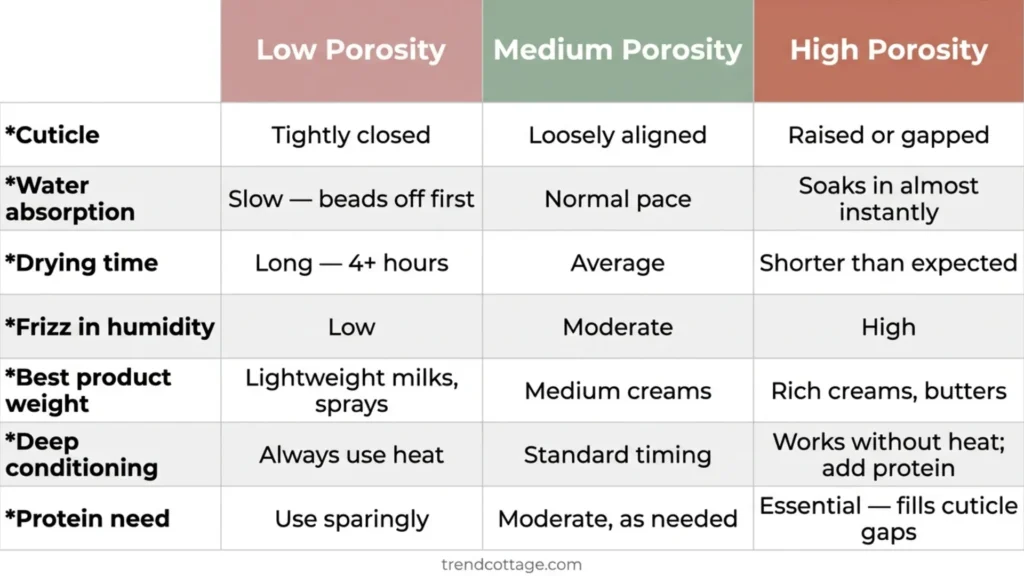
| Low Porosity | Medium Porosity | High Porosity | |
|---|---|---|---|
| Cuticle state | Tightly closed | Loosely aligned | Raised or gapped |
| Water absorption | Slow — water beads off first | Normal pace | Soaks in almost instantly |
| Drying time | Long — often 4+ hours | Average | Shorter than expected |
| Best product weight | Lightweight milks, sprays | Medium creams | Rich creams, butters |
| Deep conditioning | Always use heat — heat cap or steamer | Standard timing | Works without heat; add protein |
| Protein need | Low — use sparingly | Moderate, as needed | High — fills cuticle gaps |
Also Visit : How to Follow an Urutan Hair Care Routine Properly
Low Porosity Curly Hair — What the Routine Looks Like

Low porosity hair isn’t difficult — it’s closed. The cuticle does its job so effectively that even the ingredients you want inside the strand have trouble passing through. Products tend to sit on the surface rather than absorbing, and over time that builds into a film of residue that makes hair feel heavy and dull even right after washing.
Warmth is the main tool here. It gently lifts the cuticle scales enough to let water and conditioning agents through. Washing with warm (not hot) water, letting conditioner sit longer than you’d think necessary, and deep conditioning under a heat cap or hooded dryer for 20 to 30 minutes all work on the same principle. The heat does what you’re trying to get the product to do on its own: it opens the door.
Product choice follows the same logic. Low porosity hair works best with water-based, lightweight formulas — leave-in milks, light-hold gels, fine oils like argan or sweet almond. Thick butters and heavy creams coat the already-reluctant cuticle without penetrating it; the result is hair that looks greasy but feels dry underneath. Apply everything to soaking-wet hair. The water content already in the strand helps lightweight products distribute evenly rather than piling up in patches.
Clarifying matters more for this porosity type than any other. Because products sit on the surface rather than absorbing, buildup accumulates faster than it does on more porous hair. dermatologists note that product buildup on the strand reduces how well conditioning treatments absorb. A clarifying shampoo every two to three weeks clears the slate and lets your regular routine actually reach the hair.
One thing low porosity hair generally doesn’t need: frequent protein treatments. Protein fills structural gaps in the cuticle. But low porosity hair doesn’t have those gaps — adding protein when the cuticle is already tightly closed tends to leave the strand feeling stiff and brittle rather than stronger. Save protein for clear breakage or elasticity loss, and test with a lighter formula before committing to a heavier one.
High Porosity Curly Hair — A Different Set of Rules

High porosity curly hair absorbs water fast — which sounds ideal until you realise it releases moisture at the same speed. The cuticle is too open, either from genetics or from the accumulated effect of heat styling, chemical processing, and friction over time. Frizz in humidity, colour that fades quickly, and hair that feels dry again within a few hours of washing are all typical signs.
Every step in the routine is aimed at slowing that water loss. Start with a gentle, low-sulfate shampoo — published research on surfactants and hair fibre shows that harsher detergents lift the cuticle further, which makes long-term moisture retention harder. After conditioning, rinse with cool or cold water. Cold water encourages the cuticle scales to contract, reducing how much moisture escapes as the hair dries.
Protein is more useful for high porosity hair than for any other type. Hydrolysed proteins — listed on ingredient labels as hydrolysed wheat protein, silk amino acids, or keratin — are small enough to temporarily fill the gaps in a raised cuticle, reducing porosity for a few washes. Every two to four weeks is a reasonable starting frequency, depending on how much damage is present. Always follow a protein treatment with a moisturising deep conditioner — protein alone leaves the strand feeling stiff.
For styling, lean into richer textures. Heavy creams and butters take longer to absorb, which works in your favour here: they sit on the surface longer and help seal the cuticle while moisture sets in. After your leave-in, finish with a heavier oil — castor, avocado, or a shea-infused blend. Every layer in this routine should be working to slow moisture release, not only to add moisture.
Also Visit : Hair Care Routine: Build One That Actually Sticks
This is worth pulling out separately, because the physical steps of a curly routine don’t shift much based on porosity — the products do. Getting these steps right matters regardless of which type you’re in.
Wash frequency is genuinely individual. Most people with curly hair do well washing once or twice a week. Washing daily tends to dry out the curl pattern and strips natural oils that textured hair already struggles to hold. Your scalp is the real guide here, not your curl shape. If it gets oily quickly, twice a week usually fits; if it’s on the drier side, once is often enough.
Detangle while conditioner is in the hair, not before and not after. Curly hair is most elastic and has the most slip when it’s saturated and coated. Start from the ends and work upward in sections. A wide-tooth comb or fingers both work well. A brush on dry curly hair almost always creates more frizz than it solves.
Dry gently. Rubbing a regular towel over wet curly hair lifts the cuticle and separates curls before they’ve had a chance to clump and form properly. An old cotton T-shirt or a microfibre towel pressed and squeezed around sections — not rubbed — removes excess water without the friction. The curl pattern stays defined, and the cuticle stays calmer while it dries.
Does Product Order Actually Matter?
Yes — and the reason is practical rather than formulaic. You’re either trying to get moisture into a reluctant strand and hold it there (low porosity), or trying to stop moisture escaping from an over-open one (high porosity). Applying products in the wrong sequence for your porosity type either blocks absorption or skips the sealing step entirely.
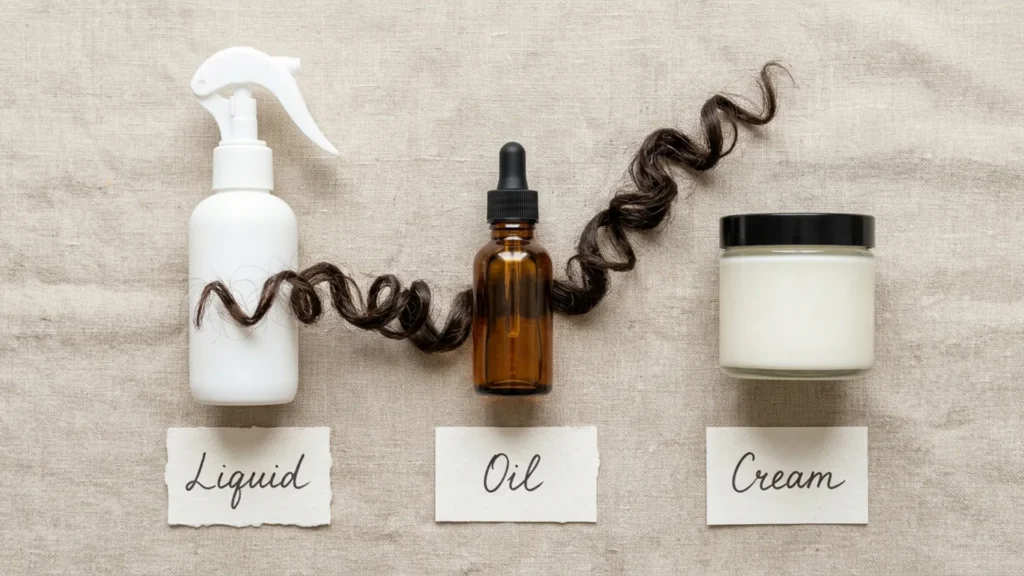
The LOC method — Liquid, Oil, Cream — is the most common recommendation for high porosity hair. A water-based leave-in adds moisture first. Oil goes on second as a partial barrier, slowing evaporation before much of that moisture can escape. Thick cream goes last as the outer seal. The oil layer sits between the water and the air, giving the hair more time to hold onto what it absorbed.
Low porosity hair often works better with LCO — Liquid, Cream, Oil. The difference is where the oil sits. Because the cuticle doesn’t open easily, putting oil on second would create a surface barrier that stops the cream from reaching the strand at all. Cream goes on while the hair is still soaking wet, helping spread the moisture that’s already there, and a lighter oil finishes as the thinnest final seal. If this still leaves your hair feeling greasy, reduce the oil amount or skip the sealing step — some low porosity hair holds moisture well enough without it.
One rule that applies to both: apply every product to soaking-wet hair. Most people wait until hair is merely damp before starting. The water already in the strand is what the rest of the routine is locking in. By the time hair is only damp, a significant portion of that moisture has already left.
Starting a Curly Hair Care Routine From Scratch
If you’re building from nothing, resist buying six products before you’ve washed your hair once. Curly hair shows you what it responds to — but only if you change one variable at a time. Change everything at once and you won’t know what helped and what didn’t.
Week one: Determine your porosity using the float test and wash-day observations above. Do one clarifying wash to remove old product residue, then apply only a conditioner — no leave-in, no gel, no styling products yet. Let your hair dry fully before drawing any conclusions. How long did it take? Did the curl look defined or frizzy? Did it feel moisturised or dry by the end of the day? These observations tell you more than any product review online.
Week two: Add a leave-in and one styling product — a gel or a cream, not both at once. Let your hair air dry completely before judging the result. Curly hair never shows its real result until it’s fully dry; judging it damp is a reliable way to draw the wrong conclusion. If you like what you see, keep the combination. If not, swap one element and test again on the following wash day.
Most routines settle into something reliable after four to six weeks of small adjustments. hair care specialists note that the strand takes weeks to reflect meaningful routine changes — which is why many people abandon a hair care routine for curly hair that was actually beginning to work, just a few wash days too early.
Also Visit : How to Pick Hair Care Routine Products What You Actually Need
Frequently Asked Questions
How often should you wash curly hair?
Once or twice a week works for most people, but your scalp is the actual guide — not your curl shape or porosity type. If your scalp gets oily quickly, aim for twice a week. If it stays drier and is prone to flaking, once a week is usually enough. Washing too often strips the natural oils that curly hair already struggles to hold, which tends to make frizz and dryness worse over time rather than better.
What is co-washing and does it work for all curl types?
Co-washing means using only conditioner to cleanse, skipping shampoo entirely. It works well for high porosity hair that dries out easily, and for coarser textures that need more moisture than a standard shampoo cycle provides. For low porosity hair, co-washing alone tends to cause buildup — the cuticle won’t release conditioner residue the way a detergent would clear it. If you co-wash regularly, alternate with a gentle shampoo every two weeks to keep the strand surface clear.
Can you have two different porosities on the same head?
Yes, and it’s fairly common. The ends of the hair are older and have been through more — heat, sun, and mechanical friction accumulate at the tips over months and years. You might have medium porosity roots and high porosity ends. This is one reason why applying a richer product to the ends than to the roots often gives better results: you’re treating two different surfaces with what each one actually needs, rather than using the same weight from root to tip.
Why does a curly routine stop working after a few weeks?
Usually it comes down to product buildup or a seasonal shift in humidity. Low porosity hair is especially prone to buildup — products accumulate on the surface over several wash cycles until hair feels heavy and dull even after washing. A clarifying shampoo resets it. Seasonal humidity changes also shift how much moisture your hair pulls from the air, so a routine that worked perfectly in winter can feel too heavy or sticky by summer. Lightening the product load is usually the fix, not scrapping the routine entirely.
Do you need a sulfate-free shampoo for curly hair?
For most curly hair, sulfate-free shampoos are the gentler everyday choice — they clean without disrupting the cuticle as aggressively as stronger surfactants do. That said, a clarifying sulfate shampoo used once a month can shift genuine product buildup that gentler formulas won’t touch. The practical approach for most people is a sulfate-free formula for weekly washing and a clarifying shampoo kept in reserve for monthly resets — especially important for low porosity hair, where surface buildup is a consistent issue.
Key Takeaways
- Porosity — not curl type — determines how your hair handles moisture and what the routine needs to do.
- Low porosity hair needs warmth, lightweight products, and regular clarifying to get past a cuticle that won’t easily open.
- High porosity hair needs rich creams, protein treatments, and a sealing step to slow how quickly moisture escapes.
- Product application order (LOC vs LCO) changes based on porosity — the difference is in where the oil sits in the sequence.
- Give any new routine four to six weeks before judging it. Most people quit a few wash days before the results actually show up.
If this shifted how you’re thinking about your hair care routine for curly hair, save this article for your next wash day — or share it with someone who keeps wondering why their products aren’t doing anything.
Written by Anna Anderson for Trend Cottage.