Hair Care Routine for Straight Hair That Actually Fights Grease

Here’s the mistake most people with straight hair make without knowing it: they treat their scalp and their ends like they need the same amount of product. Straight hair doesn’t work that way. Its smooth, uncurled shape lets oil slide down the shaft fast, which means the roots can look greasy while the ends stay dry — often on the same day.
Quick answer: a hair care routine for straight hair works best when you wash based on how fast your scalp actually gets oily (not a fixed schedule), keep conditioner off your roots, and use lightweight products that won’t weigh the hair down further. Get those three things right and most of the “flat by noon” problem disappears.
Why Straight Hair Gets Oily and Flat So Fast
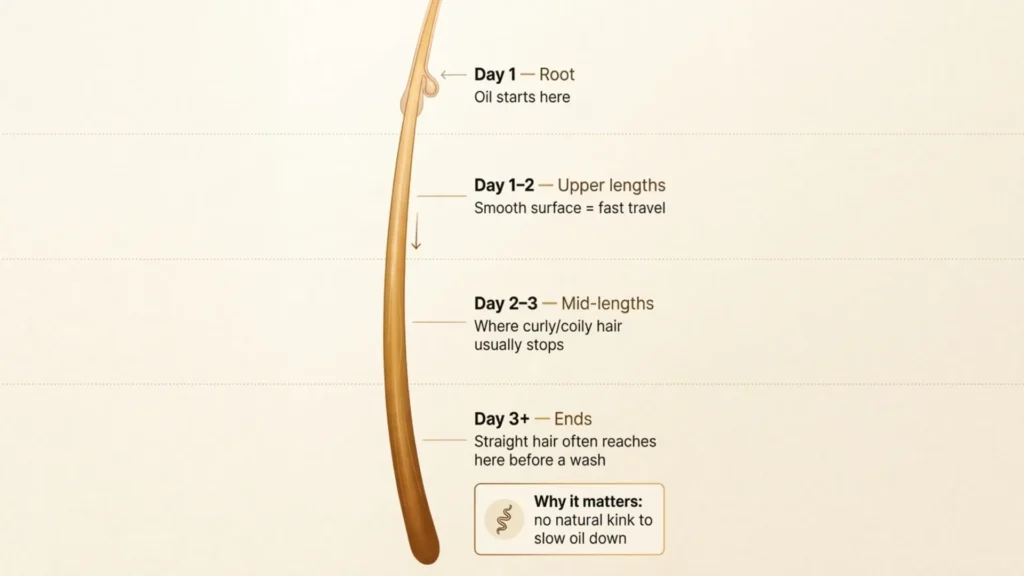
Every strand of hair has a sebaceous gland near the root that produces natural oil. On curly or coily hair, the bends and kinks in the strand slow that oil down, so it can take days to travel far from the scalp. Straight hair has no bends to slow anything. The surface is smooth end to end, so oil moves down the shaft almost like water down a straight pipe.
That’s why straight hair often looks shinier right after a wash and greasier sooner than other textures. It’s not a sign you’re doing something wrong. It’s just how the strand is built.
Fine straight hair feels this more than thick straight hair, because there’s less hair mass to absorb the oil before it reaches the surface. According to the American Academy of Dermatology’s hair care guidance, how often you should wash depends heavily on how much oil your scalp naturally produces, not on a one-size-fits-all rule.
How Often You Should Actually Wash Straight Hair
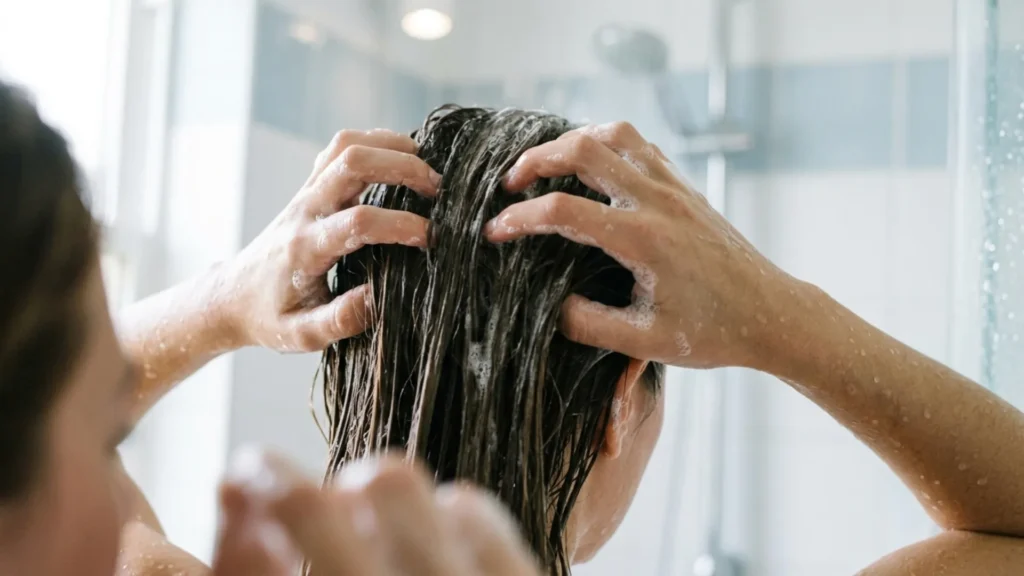
Forget the “wash every other day” advice you’ve probably seen a hundred times. The real answer depends on your scalp, your activity level, and how fine or thick your hair is.
- Fine, thin straight hair: often needs washing every 1–2 days
- Medium straight hair: usually every 2–3 days
- Thick or coarse straight hair: can often stretch to 3–4 days
- Very active or humid climate: move toward the shorter end regardless of thickness
If your roots look flat and slightly shiny by early afternoon, you’re probably washing less often than your scalp needs. If your ends feel dry and straw-like a day after washing, you’re likely washing more than they need. Straight hair almost always needs a routine built around the scalp’s oil output first, and everything else second.
Also Visit : Hair Care Routine Step by Step: Why the Order Matters
Where to Put Your Conditioner (and Where to Skip It)
This is where a lot of straight-hair routines go wrong. Conditioner applied at the roots adds weight exactly where you don’t need it, which speeds up that flat, greasy look.
Apply conditioner from your mid-lengths down to the ends only. Leave your roots and the first inch or two of hair completely bare. If your hair is fine, use a lightweight, water-based conditioner rather than a rich, creamy one. If it’s thick or coarse, you can afford a heavier formula in the same mid-length-to-ends zone.
Building the Right Routine for Your Straight Hair Subtype

Not all straight hair behaves the same way. Pin-straight, fine hair (often called 1A) needs a very different approach than thicker straight hair with a bit more body (1B or 1C). Here’s how the routine actually shifts by subtype.
| Straight hair subtype | Wash frequency | Best product weight | Where to focus product |
|---|---|---|---|
| 1A — pin-straight, fine | Every 1–2 days | Lightweight, volumising | Mid-lengths only, skip roots entirely |
| 1B — straight with some body | Every 2–3 days | Medium weight | Mid-lengths to ends, light amount at crown |
| 1C — straight, slightly coarse | Every 3–4 days | Richer, more hydrating | Ends and mid-lengths, small amount can reach roots |
The subtype matters more than most product marketing lets on. A rich, heavy conditioner marketed for “straight hair” in general can be exactly wrong for fine 1A hair while being genuinely useful for coarser 1C hair. Read your own hair’s behaviour over the label.
Also Visit : Simple Hair Care Routine That Actually Fits Your Week
Heat Styling Without Making the Grease Worse
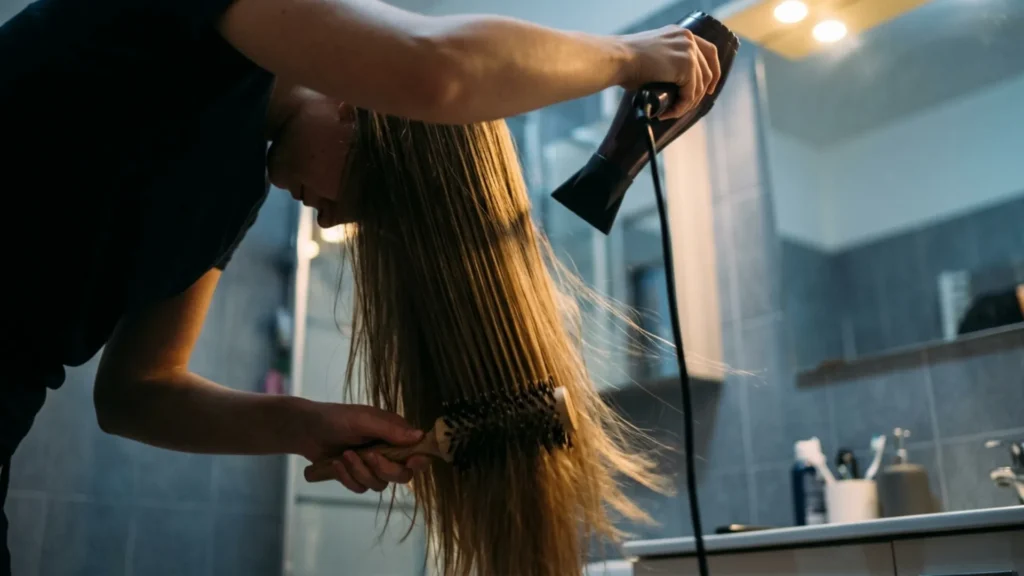
Heat styling isn’t the enemy here, but the order you do things in matters. Always apply a heat protectant to towel-dried hair before any hot tool touches it. Skipping this step doesn’t just risk damage — damaged, rough cuticle also traps more surface oil and grime over time, which works against everything else in your routine.
When blow-drying, point the nozzle downward, following the direction of the hair shaft. This keeps the outer layer of the strand smooth, which is part of what gives straight hair its shine in the first place. Rough, upward drying can leave the cuticle slightly raised, and a raised cuticle picks up more oil and dust throughout the day.
Use the lowest heat setting that still gets the job done. If you’re drying fine, straight hair, a cool shot at the end helps set the style without adding extra heat exposure.
Weekly Extras: Clarifying, Masks, and Dry Shampoo Timing
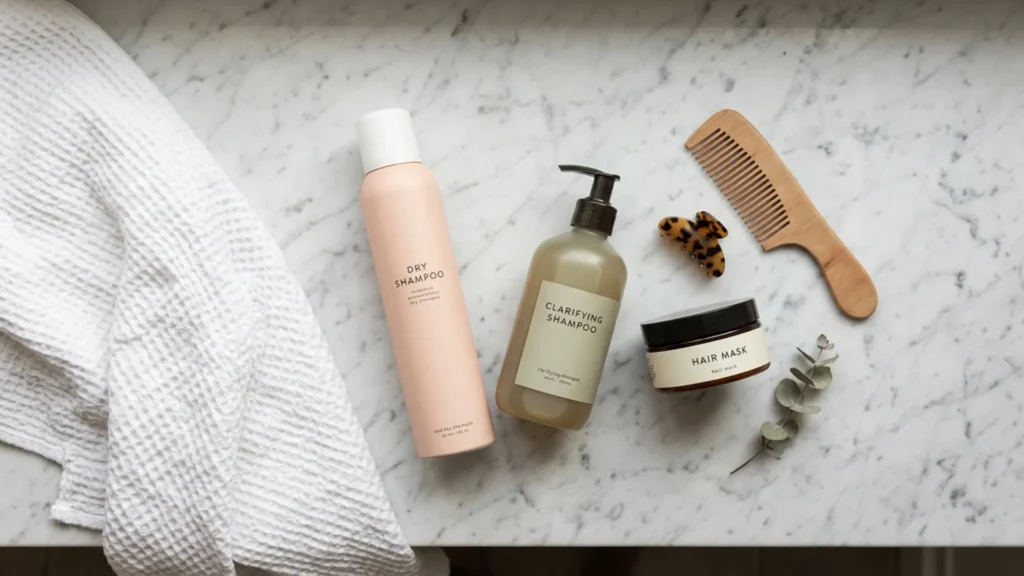
Straight hair holds onto product buildup fast because there’s no texture to hide it. A clarifying shampoo once a week (not more) removes that buildup without stripping the hair on the days you’re not using it. If you skip this step, dry shampoo and styling products can quietly build a dull, heavy layer that makes hair look greasy even right after washing.
A hydrating mask once a week is worth adding if your ends feel rough, even if your roots stay oily. That’s not a contradiction. Straight hair can genuinely need moisture at the ends and oil control at the roots at the same time.
Dry shampoo works best applied the night before you need it, not the morning of. It needs a little time to absorb oil rather than just sitting on top of it. For more on general upkeep between washes, the AAD’s everyday hair and scalp care page is a solid reference.
Also Visit : How to Pick Hair Care Routine Products What You Actually Need
Frequently Asked Questions
Why does my straight hair get greasy faster than my friend’s curly hair?
It comes down to the shape of the strand. Curls and coils slow oil’s path away from the scalp, while a straight strand lets oil travel quickly along its smooth surface.
Should I wash straight hair every day?
Only if your scalp genuinely produces that much oil. Most people with straight hair do better washing every 1–3 days, adjusted for hair thickness and activity level.
Is conditioner bad for straight hair?
No, but where you put it matters. Applying it to the roots is what usually causes the flat, weighed-down look people blame on conditioner in general.
Why does my straight hair look shiny one day and dull the next?
Shine right after washing comes from a smooth, clean cuticle. Dullness a day or two later usually means oil and light product buildup have started coating the surface.
Do I need different products for fine versus thick straight hair?
Yes. Fine straight hair usually needs lightweight, volumising formulas, while thicker straight hair can handle richer conditioners and masks without looking weighed down.
Key Takeaways
- Straight hair’s smooth surface lets oil travel from root to tip faster than curly or coily hair
- Wash based on how oily your scalp actually gets, not a fixed schedule
- Keep conditioner off the roots and focus it from mid-lengths down
- Clarify weekly to stop buildup from mimicking greasy roots
- Match product weight to your specific straight hair subtype, not general marketing
If you’ve been fighting the same flat-by-lunch cycle for a while, try adjusting just your wash frequency and conditioner placement for two weeks before changing anything else. It’s usually the biggest single fix. Save this one if you’re still figuring out your exact rhythm, and feel free to drop a comment with your hair type if you want more specific pointers.
Written by Anna Anderson for Trend Cottage.