What’s the Best Dyed Hair Care Routine for Color That Lasts?
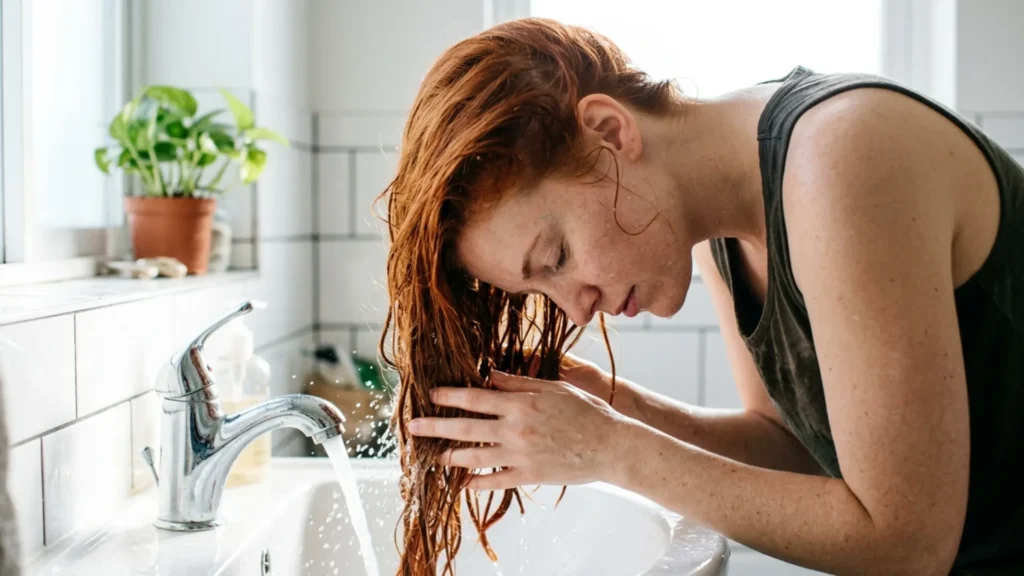
You leave the salon, or you rinse out a box dye at your bathroom sink, and for about ten minutes your hair looks exactly like the photo you saved. Then the questions start. How soon can you wash it? Does water temperature actually matter? Is that “color-safe” bottle doing anything, or is it just marketing sitting next to a higher price tag?
Here’s the short version: the best dyed hair care routine for color that lasts skips washing for the first two to three days, uses lukewarm-to-cool water and a sulfate-free cleanser after that, pairs every wash with a color-safe conditioner, adds UV protection whenever you’re outside, and keeps heat tools to a minimum during the first two weeks, when most of the fade actually happens. Everything past that is fine-tuning.
The First 48 Hours After You Dye Your Hair
Hair dye keeps reacting after you rinse it, whether it was done at a salon or in your kitchen sink. Permanent and semi-permanent dyes both continue oxidizing for roughly 48 hours, which is when the color molecules finish bonding and settle into the hair shaft. Wash too soon and you’re rinsing out pigment that hasn’t finished attaching yet.
Two to three days is the realistic window. If you can stretch it to three, do it. Dry shampoo, a loose braid, or simply accepting slightly oily roots for a weekend costs you nothing. Rinsing at hour six costs you noticeable color within the first week — that’s the first rule of any dyed hair care routine that actually works.
That’s the trade most people get wrong.
Why Color Fades Faster Than You’d Expect
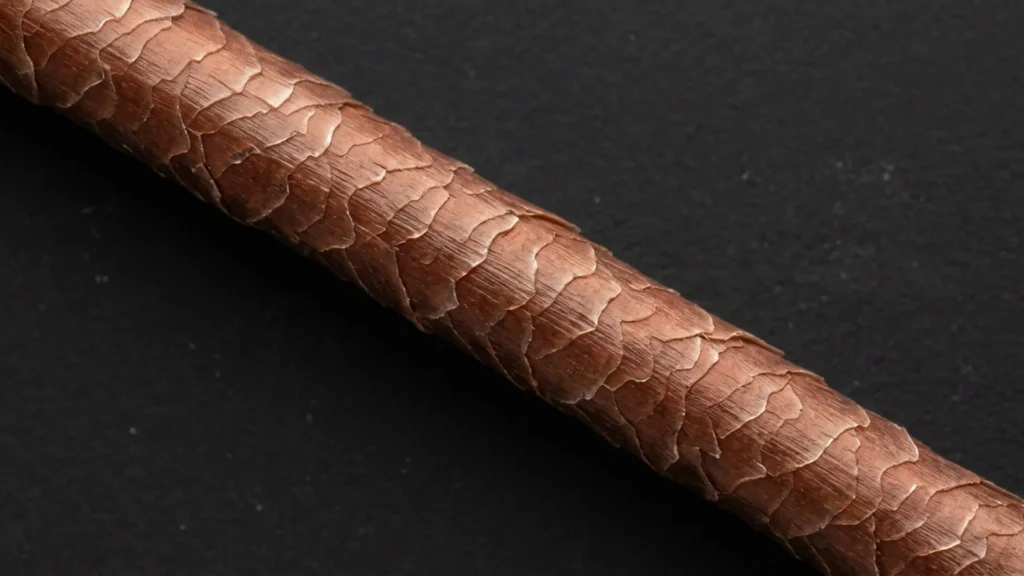
Dye doesn’t just sit on top of your hair. It has to get past the cuticle, the outer layer of overlapping scales, to reach the cortex underneath, where pigment actually lodges. Coloring opens that cuticle to let dye in, and it doesn’t close back down as tightly as it was before you started.
That’s the real reason dyed hair fades faster than natural hair: the cuticle is more porous afterward, so pigment molecules have an easier path back out every time water, sweat, or humidity hits your hair. The more processing your hair has had — bleach before color, multiple lightening sessions — the higher that porosity climbs, which is why heavily lightened hair tends to fade noticeably faster than a single-process dark shade.
Sunlight adds a second mechanism entirely. UV radiation breaks down the protein structure of the hair shaft itself, not just the surface color. a 2025 study on UV-exposed hair fibers found that untreated strands lost more than 14% of their tensile strength after prolonged UV exposure alone. That’s structural damage, not just cosmetic fade, and it happens to dyed and undyed hair alike — just faster on hair that’s already had its cuticle opened once.
None of this means your color is doomed. It means the routine matters more than the dye brand does.
Also Visit : Hair Care Routine for Healthy Hair: Build Yours in 3 Steps
The Wash-Frequency Rule Nobody Explains Well
Most advice just says “wash less.” That’s true, but it skips the part that actually matters: less, for your specific hair.
- Straight or fine hair with an oily scalp: every 2–3 days, never daily once color is in.
- Wavy or medium-thick hair: every 3–4 days works for most people.
- Curly, coiled, or textured hair: once every 1–2 weeks is realistic, and healthier for both hair and color.
- Any hair type, for the first month after a fresh color: add one extra day beyond your normal gap.
Fewer washes simply means fewer chances for color to slide back out of an already-open cuticle. If your natural gap between washes is two days, stretching it to three for the first month is often the single highest-impact change you can make, more than any product swap.
Building a Dyed Hair Care Routine: Week by Week
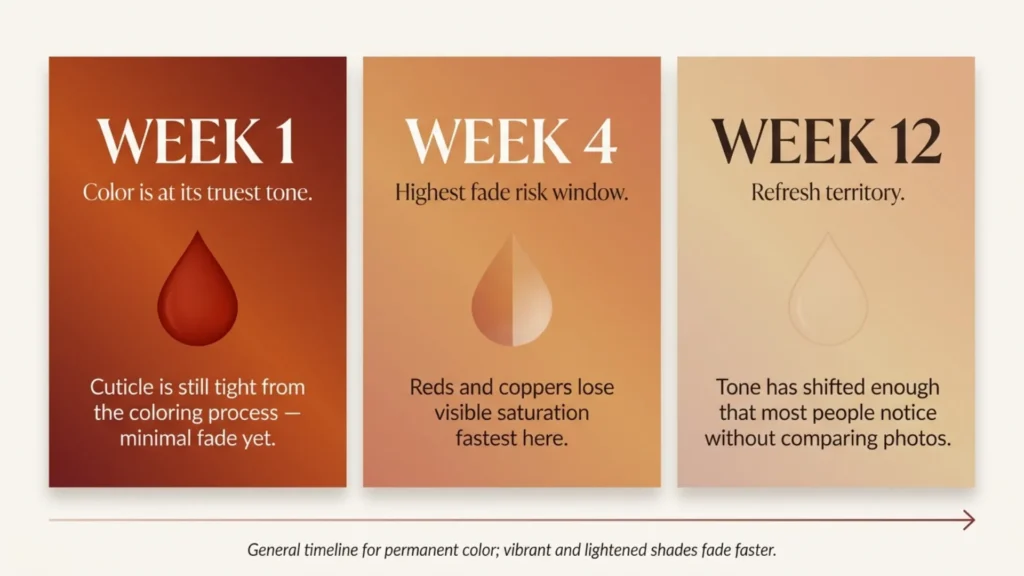
A routine that lasts isn’t one you follow forever without adjusting. It shifts as the color settles. Here’s how the first three months typically break down.
| Phase | Wash Approach | Water Temperature | What to Focus On |
|---|---|---|---|
| Days 1–3 | Skip washing if possible | N/A | Let color finish curing; avoid heat styling |
| Week 1 | 2–3 washes max | Lukewarm to cool | Sulfate-free shampoo, conditioner every wash |
| Weeks 2–4 | Stretch to every other day | Cool for the final rinse | Weekly hair mask, UV spray before sun exposure |
| Month 2+ | Normal schedule for your hair type | Cool-rinse habit | Gloss/toner top-up, trim split ends |
Notice that the products barely change. What changes is timing and restraint. Most of the “miracle” color-protecting product lines on shelves are solving a problem that a slower wash schedule already solves for free.
Weeks two through four deserve extra attention. Vibrant colors, especially reds and coppers, are typically the fastest to visibly fade because those pigment molecules are physically larger and harder for the hair to hold onto through repeated washing. Blondes and lightened shades fade differently — less about pigment loss and more about brassiness creeping in as the toner wears off. If you colored red or copper, treat weeks two through four like a probation period: no clarifying shampoo, no hot tubs, and one more skipped wash than you’d normally take.
What Actually Ruins Dyed Hair Fastest
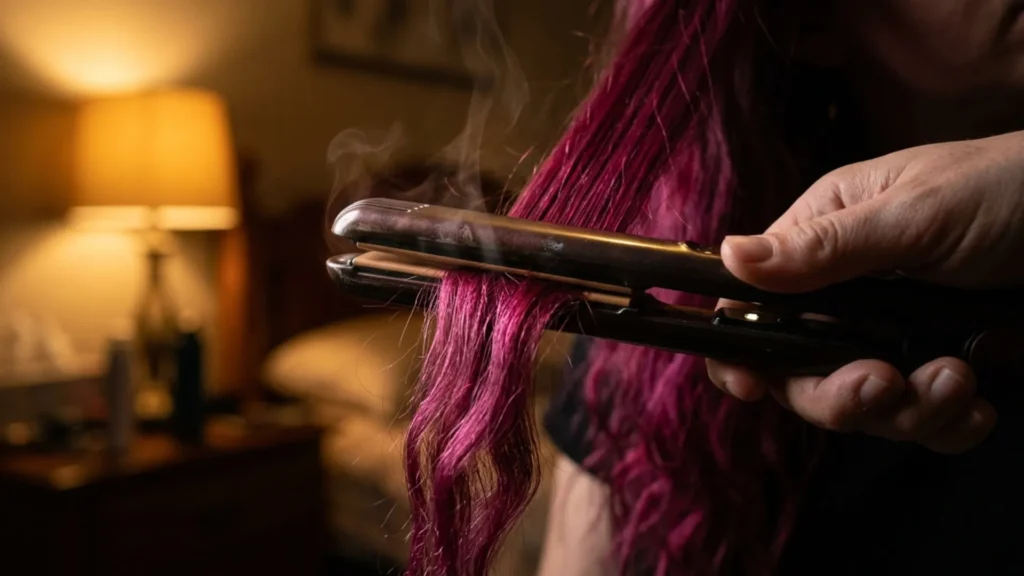
Some habits undo weeks of careful washing in a single afternoon. Chlorine is the obvious one. It doesn’t just dry hair out — it can react with copper and other minerals in pool water and pull warmth or brightness out of color within one swim, especially on lightened hair.
Heat styling is the quieter culprit. A flat iron run at 400°F does more cumulative damage to color-treated hair than a full afternoon in the sun, because it’s direct, repeated, and applied right at the cuticle. If you can’t skip heat tools, a heat protectant isn’t optional. It’s the one product in this whole routine that genuinely earns its price tag.
Clarifying shampoo is the third mistake, and it’s the one people reach for on purpose. It strips buildup, which sounds good, but it strips color along with it. Save clarifying washes for once a month at most, and never in the first two weeks after dyeing.
Also Visit : Hair Care Routine Tips Built Around Your Hair Type
What “Color-Safe” Really Means on a Label
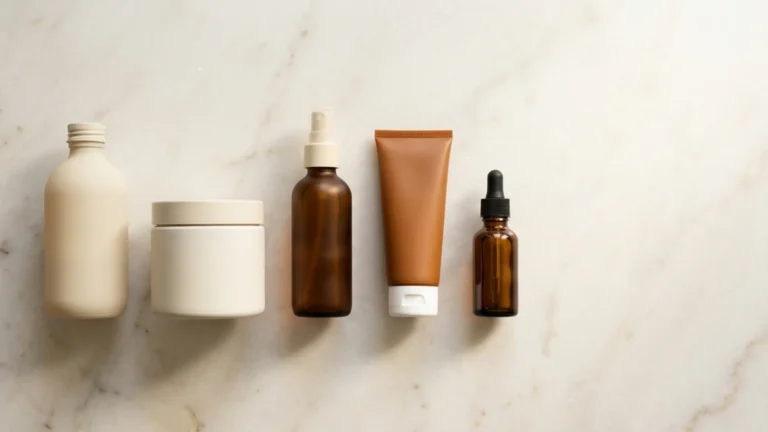
The phrase gets slapped on a lot of bottles that don’t do much differently from a regular formula. What actually matters is what’s missing, not what’s added.
Sulfates, specifically sodium lauryl sulfate and sodium laureth sulfate, are the detergents responsible for a shampoo’s foam. They clean thoroughly, which is exactly the problem: they clean color right out along with everyday dirt and oil. A genuinely color-safe shampoo swaps these for gentler surfactants that lather less but strip less too.
Alcohol is the second ingredient worth checking, but only certain kinds. Fatty alcohols like cetyl or stearyl alcohol are conditioning agents and are fine. Short-chain alcohols like SD alcohol or denatured alcohol show up mostly in hairsprays and gels, and they dry hair out fast, which speeds up fade indirectly by making the cuticle more porous.
Hydrolyzed proteins, including hydrolyzed keratin, are worth looking for too. Beyond the usual strengthening claims, some formulations are specifically designed to deposit a thin film on the cuticle that helps buffer UV exposure — which loops back to the same fade mechanism sunlight causes in the first place.
None of this requires memorizing an ingredient list every time you shop. Check for “sulfate-free” on the front of the bottle, then flip it over once to confirm sodium lauryl sulfate and sodium laureth sulfate aren’t sitting in the first five ingredients. That’s the whole check.
One Month In: Maintaining Without Overdoing It
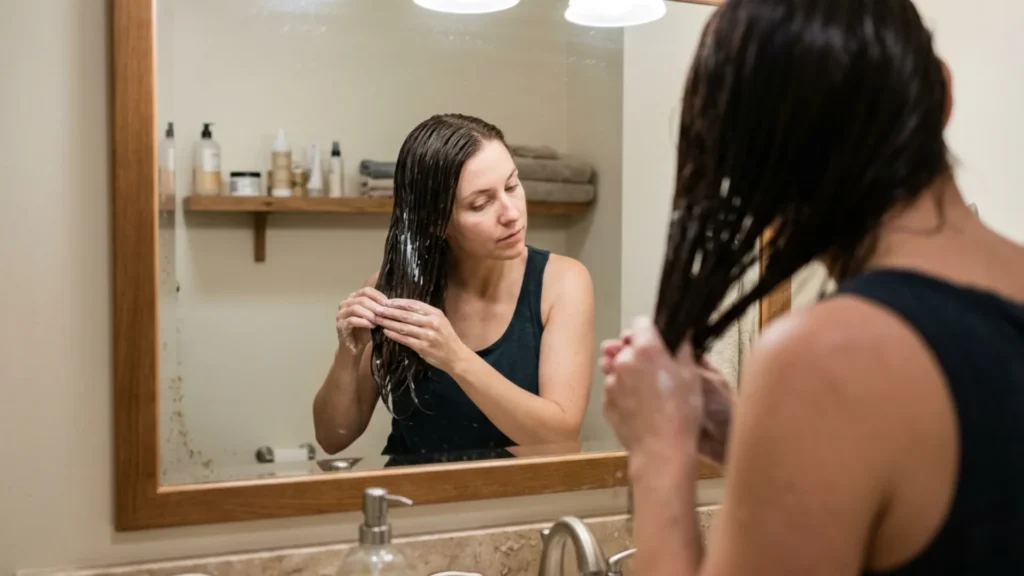
By week four, the routine loosens up. This is where a lot of people either get lazy and lose color faster than they need to, or overcorrect and buy six new products that don’t do anything the first four didn’t already cover.
Sun exposure is worth staying strict about even after the first month, since UV keeps working on hair color for as long as your hair is outside. the AAD’s guidance on protecting color-treated hair from the sun points specifically to a wide-brimmed hat, which sounds low-tech next to a UV spray, but it’s the version that can’t wash out or wear off partway through the day.
A weekly hair mask earns its place here too, not because it adds color back, but because it keeps the cuticle smoother, which slows how fast pigment leaves on the next wash. Fifteen minutes under a shower cap, once a week, is enough. Daily masking doesn’t add benefit — it just adds weight to hair that doesn’t need it.
If you’re on well water or notice a mineral buildup after washes, a shower filter attachment is worth the cost for anyone maintaining color long-term. Hard water minerals coat the hair shaft over time and dull both tone and shine in a way that no amount of conditioner fully corrects.
Also Visit : Hair Care Routine for Hair Fall That Actually Works
When It’s Time for a Color Refresh
Most permanent color holds a visible tone for four to six weeks before it needs attention, though vibrant or lightened shades often need it closer to three. Roots grow in at roughly half an inch a month regardless of what color you’re maintaining, so root touch-ups run on their own separate clock from tone refreshes.
A gloss or toner, rather than a full re-dye, is usually the right call at the halfway point. It corrects the tone without adding more chemical processing to hair that’s still recovering from the last round.
Frequently Asked Questions
How often should you wash dyed hair to keep it from fading?
Every 2–4 days depending on your hair type, stretched by one extra day during the first month after coloring. This single habit is the backbone of any dyed hair care routine — it matters more than any specific product you buy.
Does cold water really protect hair dye?
Not in the dramatic way it gets described. Cold water doesn’t forcibly “seal” the cuticle the way the old salon myth claims, but a cooler final rinse is still less aggressive than a hot one, so it’s worth doing as a precaution rather than expecting it to work miracles on its own.
What ingredients in shampoo make hair color fade faster?
Sulfates, mainly sodium lauryl sulfate and sodium laureth sulfate, are the main offenders, along with clarifying or “deep-cleaning” formulas and short-chain alcohols in styling products, all of which strip pigment along with everyday buildup.
Can you use regular conditioner on colored hair?
You can, but it’s missing the gentler surfactant profile that color-safe formulas are built around, so color will fade somewhat faster than it would with a formula made specifically for treated hair.
How long does hair dye typically last before it needs a refresh?
Four to six weeks for most permanent color, closer to three weeks for vibrant or lightened shades, with root touch-ups running on their own separate monthly schedule regardless of tone.
If you’ve found a step in your own routine that made a bigger difference than expected, it’s worth sharing in the comments below. That’s really the whole idea behind a dyed hair care routine — small, consistent choices, not expensive fixes.
Key Takeaways
- Skipping the first wash for 48–72 hours protects more color than any product does.
- Wash frequency, not product price, is the biggest lever for how long color holds.
- Weeks two through four are the highest-risk window, especially for red and copper tones.
- Heat styling damages color faster than sun exposure does in most routines.
- A gloss or toner refresh around the halfway mark keeps tone accurate without a full re-dye.
Written by Anna Anderson for Trend Cottage.