Best Natural Hair Products for Women Over 50 (Tried & Loved)
As we enter our 50s and beyond, our hair undergoes a quiet, subtle, yet undeniable evolution. Decreased estrogen levels, reduced natural sebum production from the scalp, and structural shifts in melanin can leave once-plump strands feeling dry, brittle, or noticeably thinner. If your go-to products from your 30s and 40s suddenly seem ineffective—or worse, leave your scalp irritated and inflamed—you are not alone.
The secret to restoring bounce, strength, and radiant shine does not lie in harsh chemical quick-fixes or heavy synthetic coatings. Instead, it lies in gentle, nutrient-dense, botanical ingredients designed to nourish mature follicles from the inside out. Synthetic chemicals, heavy non-water-soluble silicones, and harsh sulfates can strip mature hair of the precious moisture it desperately needs to thrive. In this guide, we have curated and vetted the best natural hair products for women over 50—from invigorating scalp serums and moisture-rich cleansers to deep restoration masks that celebrate every texture, whether you are rocking vibrant silver, color-treated locks, or natural curls.
Understanding Mature Hair: Why Clean, Botanical Formulas Are Essential After 50
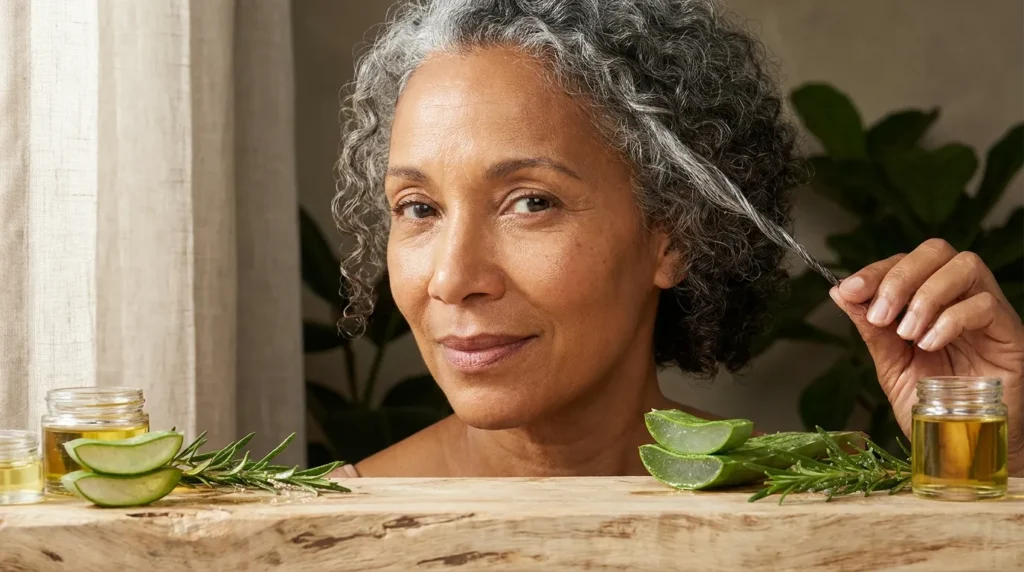
To choose the right products, we must first understand what is happening beneath the surface of the scalp. Hair aging is not merely about turning gray; it is a complex biological process influenced by hormonal changes, cellular slowing, and environmental exposure over decades.
1. Hormonal Shifts and Follicle Miniaturization
During perimenopause and post-menopause, systemic estrogen and progesterone levels decline significantly. Estrogen is a naturally protective hormone for hair follicles; it keeps strands in the anagen (active growth) phase for longer periods. As estrogen diminishes, the relative influence of androgens (like dihydrotestosterone, or DHT) increases. This shift shortens the growth cycle and causes follicle miniaturization—a process where individual hair follicles shrink, producing finer, shorter, and less dense hair strands over time.
2. Significant Scalp Sebum Reduction
According to landmark findings published in the Journal of Dermatological Science, scalp lipid (sebum) production decreases by up to 40% in women after the age of 50. Sebum is nature’s built-in conditioner; it coats the hair shaft, seals the outer cuticle layer, and locks in vital hydration. Without adequate sebum, mature hair becomes chronically dry, prone to static, and highly vulnerable to physical breakage during everyday brushing and styling.
3. The “Gray Hair” Structural & Texture Shift
Gray and silver hairs are not simply strands that lost their pigment—they undergo a complete structural alteration:
- Loss of Melanin: Melanin provides color, but it also acts as an internal protective shield against ultraviolet (UV) radiation. Without it, gray hair is significantly more susceptible to sun damage, yellowing, and oxidative stress.
- Porosity Changes: The outer cuticle layer of silver hair tends to grow coarser, more erratic, and higher in porosity. This means gray hair absorbs moisture quickly but loses it just as fast, leading to chronic frizz and a wire-like texture.
Why Harsh Synthetics Fail Mature Hair
Conventional hair care products often rely on Sodium Lauryl Sulfate (SLS) and Sodium Laureth Sulfate (SLES) for lather, combined with Dimethicone or other heavy silicones for artificial shine.
For women over 50, this combination creates a destructive cycle:
- Sulfates strip away the scarce natural lipids produced by aging scalps, causing micro-inflammation and tight, itchy skin.
- Heavy Silicones coat the hair shaft to create a temporary illusion of smoothness. However, because these silicones are not water-soluble, they build up on the scalp and suffocate already weakened hair follicles.
- The Result: Hair becomes weighed down, flat, and increasingly brittle beneath a synthetic film.
Transitioning to natural hair care for mature hair removes these artificial barriers, feeding the scalp biocompatible botanical oils, plant proteins, and antioxidant compounds that work in harmony with your body’s altered biology.
Top Gentle & Hydrating Natural Shampoos and Conditioners for Women Over 50
When shopping for cleansers and conditioners after 50, your goal should be twofold: gently lift impurities without disrupting the scalp’s fragile acid mantle, and deposit weightless moisture into the hair shaft. Below are three outstanding, clean-formulated duos tailored to specific mature hair concerns.
1. Best for Thinning Hair: Rosemary & Biotin Volumizing Cleanse
- Primary Focus: Hair density, follicle stimulation, and root lift.
- Key Botanicals: Organic Rosemary Leaf Extract, Water-Soluble Biotin, Aloe Vera Leaf Juice, Rice Protein.
- Why It Works: Thinning hair needs a cleanser that builds volume without dehydrating strands. Instead of harsh sulfates, this shampoo utilizes coconut-derived surfactants (such as Coco-Glucoside) that gently lift excess oil while aloe vera hydrates the epidermal layer. Rosemary extract acts as a natural micro-circulation stimulant, encouraging blood flow to dormant follicles, while hydrolyzed rice protein coats individual strands to temporarily increase diameter and overall appearance of density.
- Best Suited For: Fine, thinning, or limp mature hair seeking weightless volume.
2. Best for Dry & Coarse Gray Hair: Raw Shea Butter & Coconut Milk Moisture Replenish Duo
- Primary Focus: Intense lipid restoration, softening coarse wire-like textures, and smoothing frizz.
- Key Botanicals: Unrefined Raw Shea Butter, Cold-Pressed Avocado Oil, Organic Coconut Milk, Squalane.
- Why It Works: Coarse gray hair requires heavy-duty lipid replacement that mimics missing sebum. Unrefined shea butter provides rich stearic and oleic fatty acids that seep deep into high-porosity strands, repairing the lipid barrier. Coconut milk offers natural fatty acids and Lauric Acid, which has a low molecular weight capable of penetrating the hair shaft rather than just sitting on top of it.
- Best Suited For: Thick, coarse, unruly, or extremely dry gray and silver hair.
3. Best for Silver & White Hair Brightening: Natural Purple Clay & Blueberry Extract Shampoo
- Primary Focus: Neutralizing yellow hues, enhancing silver shine, and providing antioxidant defense.
- Key Botanicals: Brazilian Purple Clay, Organic Blueberry Extract, Sunflower Seed Extract, Vegetable Glycerin.
- Why It Works: Conventional “purple shampoos” rely heavily on Coal Tar dyes (such as D&C Violet No. 2), which can dry out mature hair and irritate sensitive scalps. This natural alternative uses mineral-rich purple clay paired with anthocyanin-dense blueberry extract to naturally tone down brassiness caused by heat styling, hard water minerals, and sun exposure.
- Best Suited For: Natural silver, white, gray, or cool-toned blonde hair needing clarity and brightness.
Clean Cleansers vs. Conventional Sulfates: Scalp Health Impact
| Feature | Natural Botanical Cleansers | Conventional Sulfate Shampoos |
|---|---|---|
| Cleansing Agent | Coco-Glucoside / Decyl Glucoside | Sodium Lauryl Sulfate (SLS/SLES) |
| Transepidermal Water Loss | Low (Preserves Scalp Barrier) | High (Strips Lipids & Moisture) |
| Scalp pH Compatibility | Balanced (4.5 – 5.5) | High/Alkaline (7.0+) |
| Follicle Accumulation | Zero Synthetic Residue | High Silicones & Wax Buildup |
Clinical dermatological studies evaluating scalp barrier function demonstrate that sulfate-free, glucoside-based botanical cleansers cause significantly less transepidermal water loss (TEWL) compared to SLS-based formulas. Preserving this moisture barrier is the single most vital factor in preventing age-related scalp itching and flaking.
Scalp-First Care: The Best Natural Serums for Thinning Hair and Hair Loss
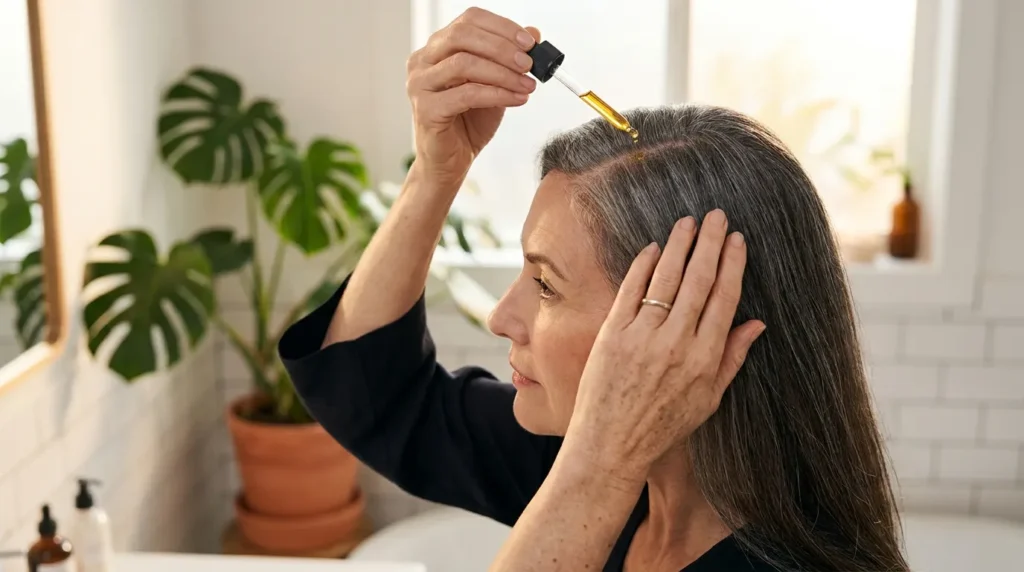
For decades, hair care focused entirely on the hair strand—the dead keratin output. Modern trichology, however, proves that dynamic hair growth starts in the scalp micro-environment. Just as healthy soil yields vibrant plants, a nourished, well-oxygenated scalp yields stronger, thicker hair strands.
If you are experiencing post-menopausal density loss, introducing high-potency scalp serums for thinning hair over 50 is non-negotiable.
Top Botanical Actives for Hair Density
1. Rosemary Essential Oil (Rosmarinus officinalis)
Rosemary oil is one of the most researched natural hair growth oils in modern botanical science. It stimulates cellular turnover, enhances microvascular circulation around the follicle bulb, and exhibits potent antioxidant properties.
The Clinical Proof: A 2015 randomized comparative trial published in the journal Skinmed compared Rosemary Essential Oil against 2% Minoxidil for the treatment of androgenetic alopecia. After 6 months of daily application, both groups showed a statistically significant increase in hair count, with the Rosemary group experiencing far less scalp itching than the Minoxidil group.
2. Saw Palmetto & Pumpkin Seed Oil (Topical 5-Alpha Reductase Blockers)
Systemic hormone changes after 50 allow the enzyme 5-alpha reductase to convert available testosterone into Dihydrotestosterone (DHT). DHT binds to susceptible hair follicles, causing them to shrink until they stop producing visible hair. Cold-pressed Pumpkin Seed Oil and Saw Palmetto extract contain phytosterols that topically inhibit 5-alpha reductase activity, slowing hormonal miniaturization.
3. Caffeine & Peppermint Essential Oil
Peppermint oil contains menthol, a natural vasodilator that opens blood vessels feeding the follicle root. Meanwhile, in vitro dermatological research shows that topically applied caffeine penetrates the hair follicle sheath within minutes, counteracting DHT-induced growth suppression and extending the active growth phase.
Top Product Spotlights
- Organic Scalp Density Elixir (Rosemary + Saw Palmetto Blend): Apply 4–5 drops directly onto the scalp along hair partings at bedtime. Massage using light circular pressure and leave in overnight to combat hormonal thinning.
- Leave-In Caffeine & Peptide Botanical Serum: Spray directly onto clean, towel-dried scalp after washing. Lightly pat in with fingertips for an instant root lift and increased localized blood flow.
Deep Restoration: Natural Hair Masks and Oils to Repair Dry, Brittle Strands
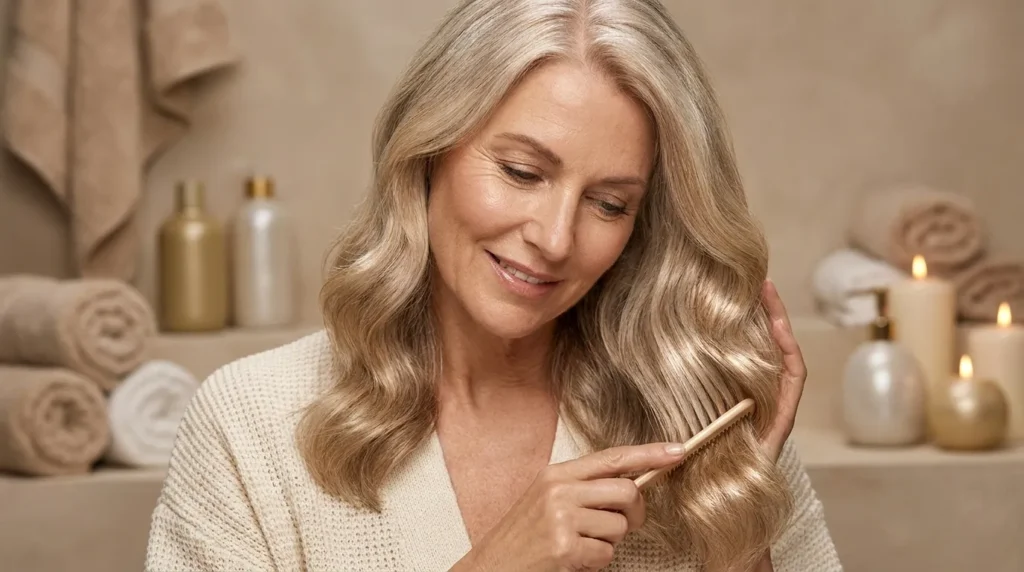
Because mature hair produces fewer natural lipids and often exhibits uneven porosity, daily conditioning alone may not suffice. Integrating deep-restoration treatments and natural sealing oils restores elasticity, repairs microscopic cuticle damage, and prevents breakage.
The Science of Protein-Moisture Balance
A common mistake women over 50 make when treating dry hair is overloading it with intense protein treatments. While hair is composed of keratin protein, aging hair that lacks moisture will become stiff, hard, and snap off if treated with excessive protein.
Mature hair requires a 70/30 ratio of moisture to protein:
- Plant-Derived Lipids (70%): Oils rich in monounsaturated fatty acids penetrate the cuticle layer to make strands pliable and elastic.
- Hydrolyzed Plant Proteins (30%): Low-molecular-weight proteins—such as Hydrolyzed Quinoa, Baobab, or Rice Protein—fill in tiny cracks along the damaged cuticle without making the hair brittle.
Lightweight Natural Hair Growth Oils for Daily Use
| Oil Type | Key Nutrients | Best Application |
|---|---|---|
| Jojoba Oil | Liquid Wax Esters, Vitamin E Complex | Scalp balancing & lightweight ends seal |
| Cold-Pressed Argan Oil | Omega-6 Fatty Acids, Tocopherols | Frizz tame, heat styling, smoothing shine |
| Rosehip Seed Oil | Trans-Retinoic Acid, Essential Lipids | Protecting gray hair from UV oxidation |
| Marula Oil | High Oleic Acid, Vitamin C & E | Deep hydration for dense, coarse textures |
Step-by-Step Deep Conditioning Protocol
- Shampoo Thoroughly: Wash hair with a sulfate-free, warm-water cleanse to lift surface buildup and gently open the hair cuticle.
- Apply Deep Mask: Squeeze out excess water until hair is damp. Distribute a quarter-sized amount of a botanical mask from mid-lengths to ends.
- Thermal Activation: Cover hair with a shower cap or warm towel for 15–20 minutes to allow plant lipids to penetrate deep into the hair cortex.
- Lukewarm Rinse: Rinse thoroughly with lukewarm-to-cool water to seal the cuticle layer flat.
- Lock with Oil: Warm 2–3 drops of pure Jojoba or Argan oil between your palms and smooth over damp ends before drying.
Buyer’s Checklist: Ingredients That Feed Your Hair vs. Ingredients That Damage It
Use this simple reference guide when shopping for clean hair care products to avoid predatory “greenwashing”:
| Ingredient Category | Safe & Beneficial Ingredients (Look For) | Damaging & Stripping Ingredients (Avoid) |
|---|---|---|
| Cleansers & Surfactants | Coco-Glucoside, Decyl Glucoside, Sodium Cocoyl Isethionate, Aloe Vera Juice Base | Sodium Lauryl Sulfate (SLS), Sodium Laureth Sulfate (SLES), Ammonium Lauryl Sulfate |
| Moisturizers & Emollients | Raw Shea Butter, Organic Jojoba Oil, Cold-Pressed Argan Oil, Botanical Hyaluronic Acid | Dimethicone, Cyclopentasiloxane, Mineral Oil / Petrolatum, Synthetic Paraffin |
| Active Hair Density Compounds | Rosemary Extract / Oil, Saw Palmetto Extract, Pumpkin Seed Oil, Peppermint & Caffeine | Synthetic Fragrances (“Parfum”), Phthalates, High-Denatured Alcohols (Alcohol Denat) |
| Preservatives & Stabilizers | Potassium Sorbate, Sodium Benzoate, Benzyl Alcohol, Ethylhexylglycerin | Parabens (Methyl-, Propyl-, Butyl-), DMDM Hydantoin, Methylisothiazolinone (MI) |
Simple Anti-Aging Hair Care Routine for Women Over 50
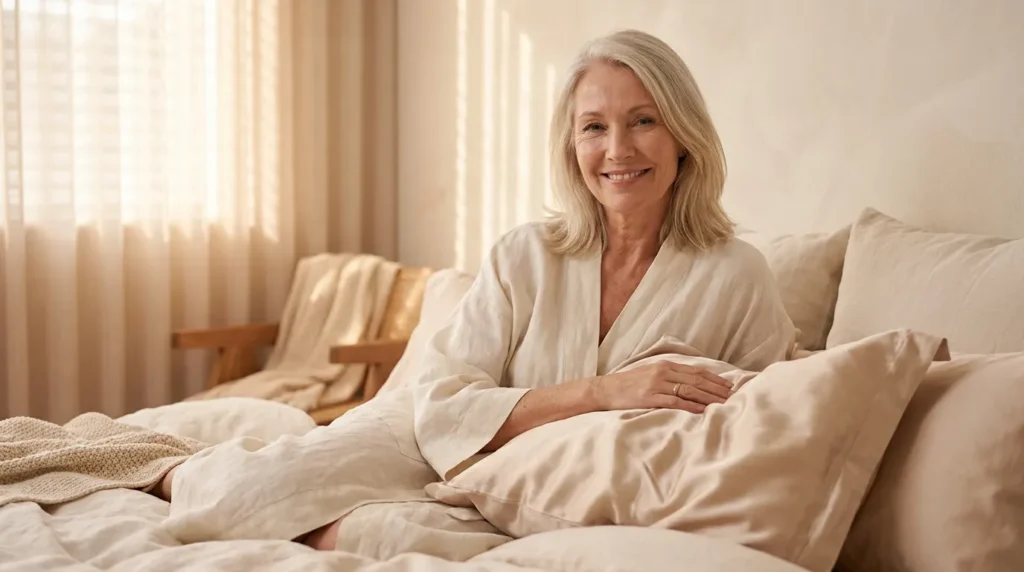
Creating an effective anti-aging hair routine does not require dozens of complicated steps. Consistency, gentleness, and protective habits make all the difference:
- Optimize Washing Frequency (2–3 Times Per Week): Washing your hair every day strips away the minimal sebum your scalp produces post-50. Limit shampooing to two or three times a week.
- Implement the 4-Minute Daily Scalp Massage: Apply gentle circular pressure across your entire scalp for 4 minutes daily to stimulate blood circulation to hair follicles.
- Upgrade to 100% Mulberry Silk Pillowcases: Switch to silk or satin to reduce overnight friction, preventing breakage and moisture loss.
- Adjust Thermal Styling Parameters: Keep hot tools below 350°F (175°C) and always apply a botanical heat protectant before styling.
Frequently Asked Questions About Natural Hair Care After 50
Q1: How can I make my gray hair softer and less frizzy naturally?
Answer: Gray hair is naturally coarser and more porous due to the absence of melanin. To soften it naturally, incorporate a weekly deep-conditioning mask rich in raw shea butter and jojoba oil. Finish your style with 2–3 drops of pure Argan oil on damp ends to lock in moisture and flatten the outer cuticle.
Q2: Do natural hair growth serums really work for post-menopausal thinning?
Answer: Yes, provided they contain clinically backed botanical actives like Rosemary Essential Oil, Saw Palmetto, Pumpkin Seed Oil, and Caffeine. Clinical studies demonstrate that daily consistency over 90 to 180 days produces visible improvements in hair density and scalp health.
Q3: Should women over 50 use sulfate-free shampoo?
Answer: Absolutely. Sulfates strip away essential surface lipids. Because scalp lipid production drops by up to 40% after age 50, sulfate shampoos aggravate dryness, cause scalp tightness, and make fragile strands far more prone to breakage.
Reclaim Your Hair’s Vitality, Naturally
Aging is a natural privilege, and your hair care routine should reflect love and respect for the hair you have today. By moving away from harsh synthetic chemicals, stripping sulfates, and pore-clogging silicones, you create the ideal environment for your scalp and strands to flourish.
Take the first step today: Audit your shower shelf, retire harsh sulfate cleansers, and give your scalp the clean, plant-based nourishment it deserves.
Also Visit : How to Protect Natural Hair From Heat Damage (2026 Guide)