Coconut Oil for Natural Hair Growth Moisture and Strength
Coconut oil for natural hair has been both praised as a miracle ingredient and blamed for some of the worst breakage stories in the natural hair community. The truth lies in the science — coconut oil works differently from every other oil you’ll ever put on your hair, and understanding exactly why it does what it does is the difference between using it correctly and watching your hair snap off at the ends. This guide breaks down the science, the six best ways to use it, who should approach it with caution, and two DIY recipes that actually work.
Why Coconut Oil Works Differently Than Every Other Hair Oil
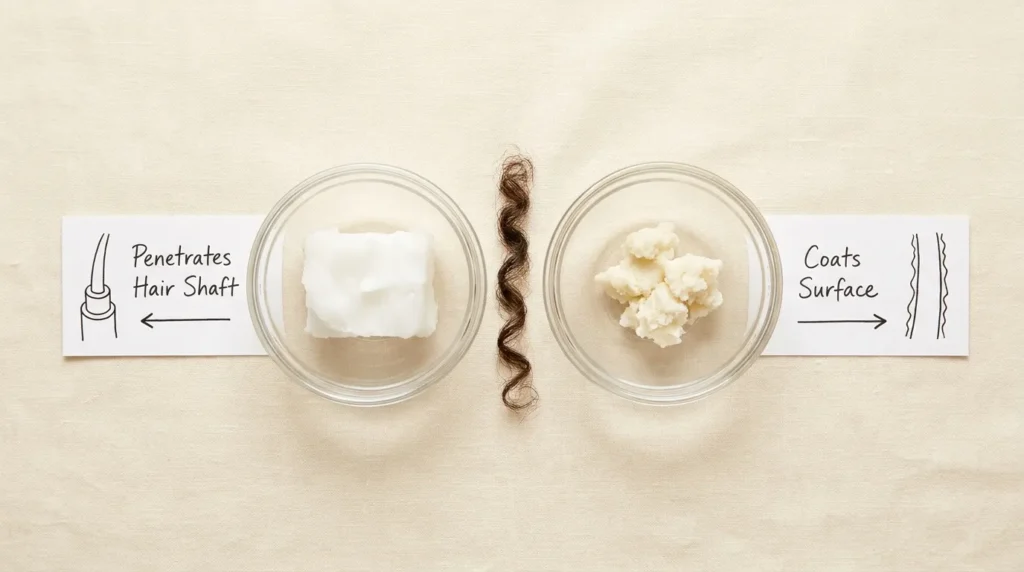
Most oils — argan oil, castor oil, shea butter, grapeseed — sit on the outside of the hair strand. They coat the cuticle, add shine, and reduce moisture loss from the surface. That is genuinely useful, but it is surface-level work. Coconut oil does something fundamentally different: it actually goes inside the hair shaft.
The reason is lauric acid — the dominant fatty acid in coconut oil, making up roughly 50% of its composition. Lauric acid has a medium-chain molecular structure that is small enough to pass through the overlapping scales of the hair cuticle and penetrate into the cortex — the inner layer that gives hair its strength and elasticity. Most other fatty acids, including the oleic acid dominant in argan and olive oil, have molecules too large to get through.
A 2003 study in the Journal of Cosmetic Science proved this directly: coconut oil applied before and after washing reduced protein loss in both damaged and undamaged hair significantly more than mineral oil and sunflower oil. Protein loss during washing is one of the primary causes of weakening and breakage in natural hair. Coconut oil reduces it. That is the core reason it belongs in a serious natural hair routine — used correctly.
That same penetration ability is also why overusing coconut oil causes problems. Too much lauric acid accumulating inside the hair shaft over repeated applications can tip the protein-moisture balance into protein overload — making hair feel hard, stiff, and brittle rather than strong and elastic. The solution is not to avoid coconut oil but to understand the right amount and timing for your specific hair type.
Refined vs Unrefined Coconut Oil — Which One Is Worth It
Walk into any grocery store and you will find both refined and unrefined coconut oil on the shelf, often at very different price points. Here is what the difference actually means for your hair:
| Feature | Unrefined (Virgin / Extra Virgin) | Refined Coconut Oil |
|---|---|---|
| Processing | Cold-pressed from fresh coconut meat, minimal processing | Heat-processed to remove impurities and odor |
| Lauric Acid Content | Full natural profile preserved | Slightly reduced by processing |
| Antioxidants (Vitamin E) | Intact — supports scalp health | Reduced by heat during refining |
| Scent | Strong coconut aroma | Odorless |
| Best For Hair? | ✅ Yes — maximum benefit | Acceptable — still penetrates |
| Choose If… | You want the full nutrient profile | You are scent-sensitive or on a budget |
Bottom line: Unrefined virgin coconut oil is the better choice for hair care because it retains its full lauric acid profile and natural antioxidants. If the strong coconut scent is a dealbreaker for you, refined coconut oil still delivers the penetration benefit — it just comes without the extras.
Coconut Oil vs Other Popular Natural Hair Oils
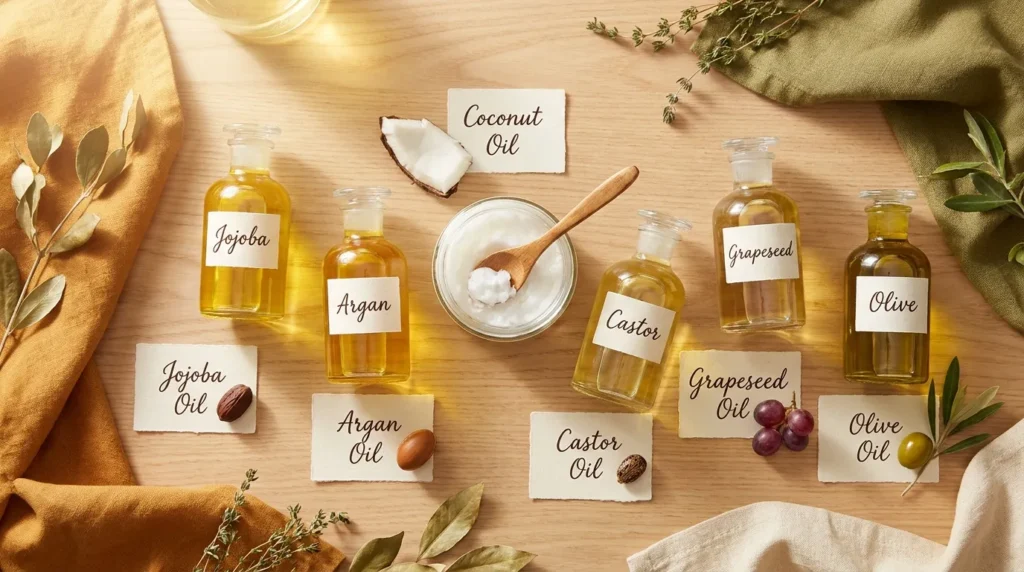
Understanding where coconut oil fits in relation to other oils helps you use each one for what it actually does best — rather than treating them as interchangeable.
| Oil | Penetrates Hair Shaft? | Best Use | Buildup Risk | Protein Loss Reduction |
|---|---|---|---|---|
| Coconut Oil | ✅ Yes — documented | Pre-poo, protein protection | Medium (if overused) | ✅ Clinically proven |
| Jojoba Oil | Partial — sebum-like | Daily scalp oil, LOC sealing | Very Low | Indirect |
| Argan Oil | Partial — moderate | Finishing, UV protection | Low | Indirect |
| Olive Oil | Partial — slow | Hot oil treatment, pre-poo blend | Medium | Some benefit |
| Castor Oil | ❌ No — surface only | Scalp stimulation (diluted) | High | None |
| Shea Butter | ❌ No — surface only | Heavy sealant, ends treatment | Medium–High | None |
| Grapeseed Oil | Partial — lightweight | Daily sealing, LOC method | Very Low | Minimal |
Is Coconut Oil Right for Your Hair Type? Use This Guide First
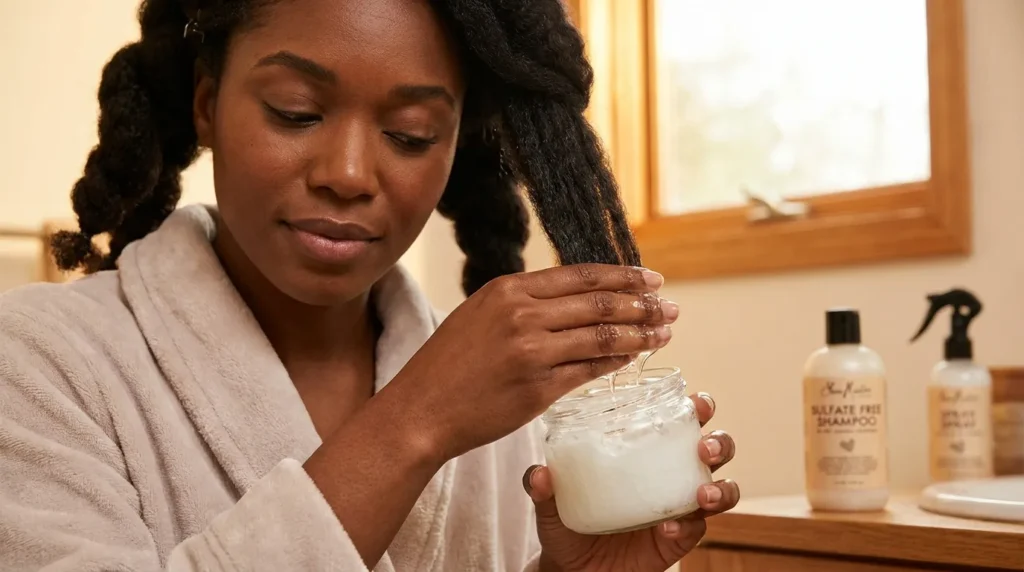
This is where most people go wrong. Coconut oil for natural hair is not universally beneficial — your porosity and hair type determine whether it works brilliantly for you or quietly causes damage over time. Check where your hair falls before you start.
| Hair Type / Porosity | Suitability | Best Use | Key Caution |
|---|---|---|---|
| High Porosity Hair | ✅ Excellent | Pre-poo + post-wash sealing | Watch for protein overload with daily use |
| Medium Porosity Hair | ✅ Good | Pre-poo, occasional sealing | Use moderately — weekly pre-poo is enough |
| Low Porosity Hair | ⚠️ Caution | Pre-poo only — warm before applying | Closed cuticle resists penetration; excess sits on surface and builds up fast |
| Protein-Sensitive Hair | ⚠️ Caution | Small amounts, infrequently | Penetrating oil increases protein retention — can cause brittleness quickly |
| 4a / 4b / 4c Coily Hair | ✅ Good — with moderation | Pre-poo primarily | Most commonly overused on these types — less is always more |
| Fine / Thin Hair | ⚠️ Sparingly only | Tiny amount in pre-poo blend | Weighs down fine strands noticeably even with moderate amounts |
| Transitioning Hair | ✅ Good for pre-poo | Pre-poo focusing on relaxed ends | Helps protect the fragile line of demarcation between two textures |
6 Proven Ways to Use Coconut Oil for Natural Hair
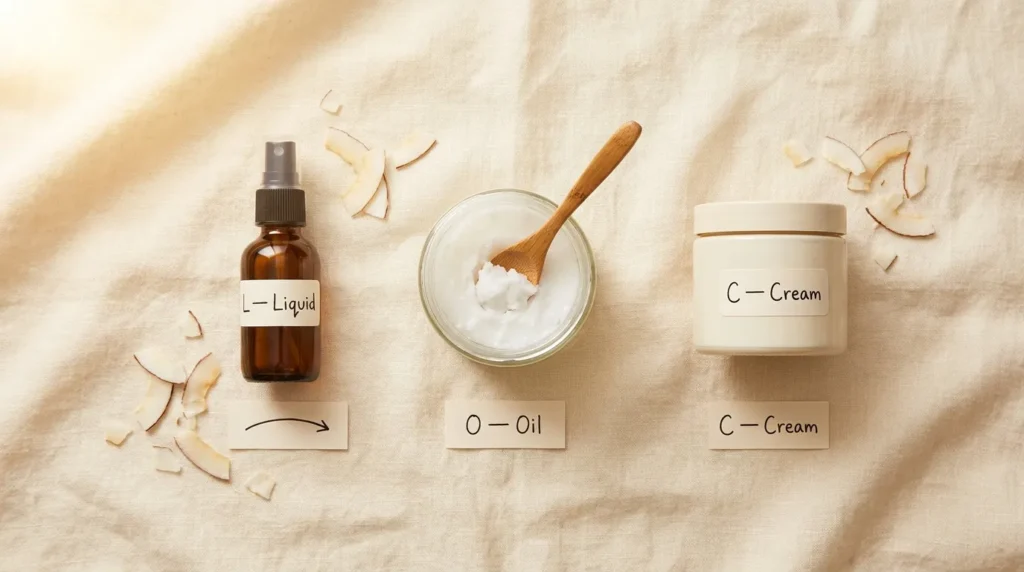
1. Pre-Poo — The Most Important Use (Start Here)
If you only use coconut oil one way, make it this one. Applying it to dry hair before shampooing is where its penetration ability does the most measurable good — protecting the hair shaft from the protein loss that washing causes.
- Apply coconut oil generously to completely dry hair in sections, coating from roots to ends.
- Cover with a plastic shower cap and leave for 30 minutes minimum — up to 2 hours or overnight for very dry hair.
- Do not rinse before shampooing. Apply shampoo directly over the oil — the shampoo emulsifies and removes it during washing while the lauric acid that has penetrated inside stays and does its protective work.
- Follow with your regular deep condition and styling routine.
2. Hot Oil Scalp Treatment — For Growth and Scalp Health
Warm coconut oil combined with scalp massage addresses two growth-limiting factors at once: poor scalp circulation and chronic scalp dryness. The warmth of the oil opens the scalp’s pores slightly and increases blood flow to the follicles — delivering more oxygen and nutrients to the root where growth actually happens.
- Warm the coconut oil by placing the sealed jar in a bowl of hot water for 3 to 5 minutes until fully liquid.
- Part hair in sections and apply warm oil directly to the scalp using a dropper applicator bottle.
- Massage firmly in circular motions for 5 to 10 minutes across the entire scalp.
- Cover with a shower cap and leave for 30 to 60 minutes, then wash out thoroughly with shampoo.
- Frequency: Once weekly — not more often than this on the scalp.
3. Deep Conditioning Blend — Adds Penetrating Power to Your Conditioner
Adding a small amount of melted coconut oil to your regular deep conditioner gives it the ability to penetrate the hair shaft rather than just coat the surface — a meaningful upgrade for high porosity hair that loses conditioning benefits quickly between wash days.
- Mix 1 tablespoon of melted coconut oil into your regular deep conditioner portion in a bowl before applying — not a full jar, just your per-session amount.
- Apply to freshly washed, damp hair in sections.
- Cover with a shower cap and sit under a hooded dryer for 25 to 30 minutes.
- Rinse with cool water only — cool water closes the cuticle and locks the treatment in.
- Alternate this with a protein-free deep conditioner every other wash day — using it every single week can tip hair toward protein overload over time.
4. LOC / LCO Sealing Step — For Moisture Retention Between Wash Days
A pea-sized amount of coconut oil can serve as the oil step in your LOC method after washing — but the keyword here is pea-sized. This is where most people overdo it and start wondering why their hair feels stiff by Thursday.
- Apply your water-based leave-in conditioner to damp hair (Liquid step).
- Melt 2 to 3 drops of coconut oil between your palms until fully liquid and work through the mid-lengths and ends only (Oil step).
- Follow with your cream or butter sealant (Cream step).
Keep the coconut oil amount minimal here — it is not your primary sealant, it is a penetrating layer that improves how well the leave-in bonds to the hair before your cream seals everything in.
5. Overnight Moisture Treatment — For Very Dry or Damaged Hair
For hair that is struggling — whether from over-manipulation, heat damage, or severe dryness — an extended overnight soak with coconut oil provides the longest window for lauric acid penetration and recovery.
- Mist dry hair lightly with water first to slightly raise the cuticle.
- While hair is still damp, apply coconut oil generously from roots to ends.
- Braid or twist into 4 to 8 sections to minimize tangling and breakage overnight.
- Cover with a satin bonnet (not a plastic cap overnight — extended plastic coverage can cause hygral fatigue with repeated use).
- Wash out thoroughly in the morning with shampoo, followed immediately by a moisturizing deep conditioner.
- Limit to once per week for damaged hair, once every two weeks for healthy hair maintenance.
6. Chemical Service Protection — Before and After Color or Relaxer
Chemical treatments and coloring permanently open the hair cuticle and accelerate protein loss. Applying coconut oil before a chemical service — and again immediately after the final rinse — provides a layer of protection that reduces the protein loss the process causes without interfering with the chemical’s effectiveness.
- Apply a light coat of coconut oil to hair 30 minutes before your appointment. Inform your stylist so they can adjust if necessary.
- After the treatment and final rinse, apply a light coating of coconut oil to damp hair before the post-treatment deep conditioning session.
- Follow with a protein-free moisturizing deep conditioner immediately after to balance the protein input from the oil.
The Overuse Problem — How Much Is Too Much
The most common coconut oil mistake is simply using too much of it, too often. Because it penetrates the hair shaft, it accumulates inside — and excessive accumulation of lauric acid progressively increases the protein content of the hair past the point where moisture can balance it. The result is what the natural hair community calls protein overload.
Signs you have used too much coconut oil:
- Hair feels hard and stiff even immediately after washing and conditioning
- Hair snaps when you gently stretch it rather than stretching slightly first
- Hair feels like it refuses to absorb moisture no matter how much leave-in you apply
- Scalp has a persistent heavy, greasy feeling between wash days
- Hair looks dull and flat rather than healthy and shiny
If this sounds familiar: Stop all coconut oil use immediately for 4 to 6 weeks. Clarify with a clarifying shampoo to remove surface buildup, then focus exclusively on protein-free moisturizing deep conditioners for the next 3 to 4 wash cycles. Your hair’s elasticity will gradually return as the protein-moisture balance restores itself. When you reintroduce coconut oil, start with pre-poo only — once per week, moderate amount, always washed out.
2 DIY Coconut Oil Hair Mask Recipes That Actually Work
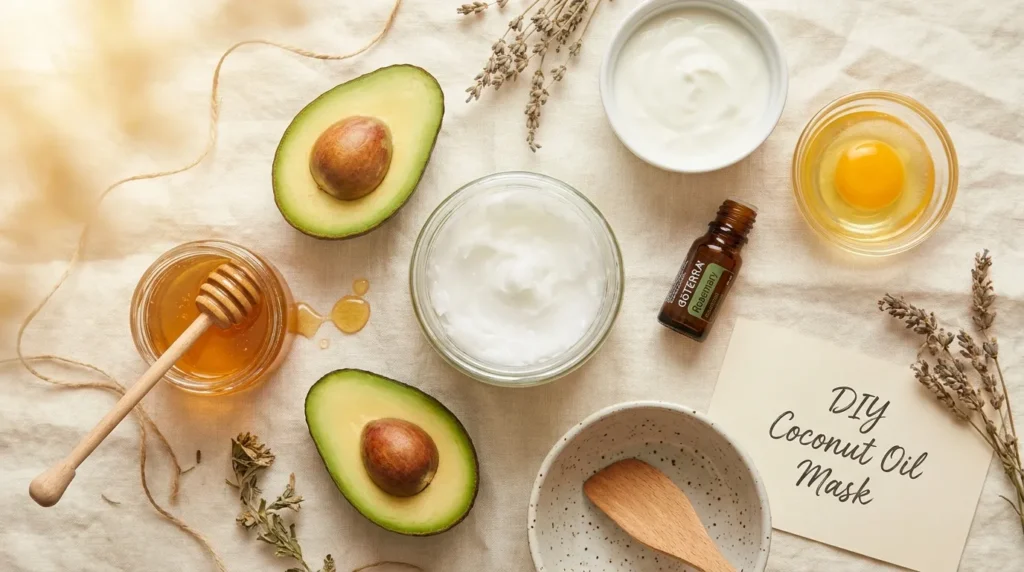
Recipe 1 — Moisturizing Avocado + Coconut Oil Deep Conditioning Mask
Best for: Dry, high porosity hair that needs both penetrating moisture and surface sealing
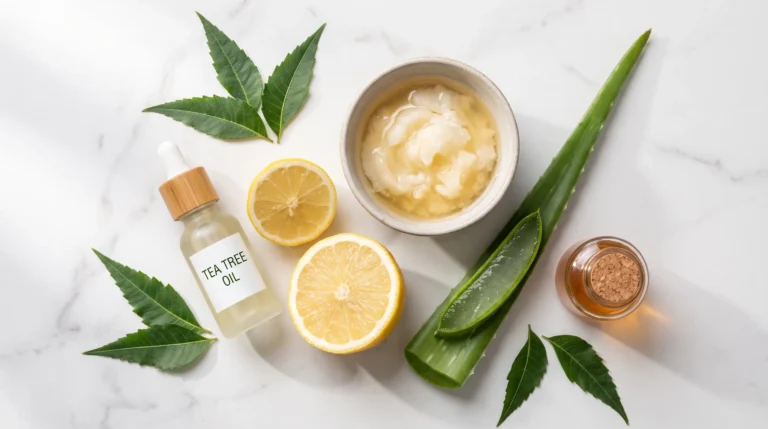
- 2 tablespoons melted coconut oil
- ½ ripe avocado, mashed completely smooth
- 1 tablespoon raw honey
- 1 tablespoon pure aloe vera gel
- Blend all four ingredients together — use a blender or immersion blender, not just a fork, to ensure the avocado is completely smooth with no lumps that will be impossible to rinse out of natural hair.
- Apply to freshly washed, damp hair from roots to ends in sections.
- Cover with a plastic shower cap and sit under a hooded dryer for 25 to 30 minutes, or wrap in a warm towel for 40 minutes.
- Rinse thoroughly with cool water. Follow with leave-in conditioner and your usual LOC method.
Why it works: The avocado contributes oleic acid that penetrates the hair alongside coconut oil’s lauric acid. The honey acts as a humectant, drawing moisture into the hair shaft during the treatment. The aloe vera gel adds water-based moisture that the oils seal in — you get penetration, humectant moisture draw, and sealing all in one treatment.
Recipe 2 — Protein-Strengthening Egg + Coconut Oil Mask
Best for: Weak, breakage-prone hair with low elasticity — use once monthly only
- 2 tablespoons melted coconut oil
- 1 whole egg
- 1 tablespoon plain full-fat yogurt
- 5 drops rosemary essential oil (optional — for scalp circulation benefit)
- Whisk all ingredients until fully combined and uniform.
- Apply to dry hair — not wet. Dry hair allows the egg protein to bond more effectively to the hair shaft than damp hair application.
- Cover with a plastic shower cap and leave at room temperature for 20 to 30 minutes — absolutely no heat on this mask, which would cook the egg in your hair and create a protein film that is nightmarish to remove.
- Rinse with cool or lukewarm water only, then follow immediately with a moisturizing, protein-free deep conditioner. This balancing step is not optional — the egg mask adds significant protein and must be followed by moisture.
- Use once monthly maximum. This is a protein treatment, not a moisturizing mask, and weekly use will cause protein overload faster than anything else.
Frequently Asked Questions
Is coconut oil actually good for 4c hair?
Yes — but primarily as a pre-poo treatment applied before washing, not as a styling or leave-in product. The protein loss reduction that lauric acid provides is especially valuable for 4c hair because it is the most fragile curl type and loses the most protein during the friction of detangling and washing. However, 4c hair is also the type most commonly damaged by coconut oil overuse — because it is already protein-sensitive in many cases, and its tight coil pattern means products accumulate faster. Start with pre-poo only, once weekly, in moderate amounts. Monitor your hair’s elasticity (the gentle stretch test — hair should stretch slightly before breaking, not snap immediately) and reduce frequency if you see signs of protein overload.
Can I leave coconut oil in my hair without washing it out?
Only in very small amounts — specifically the 2 to 3 drop amount used in the LOC method oil step on damp hair. That amount is small enough not to cause buildup with regular washing. The pre-poo application, the hot oil treatment, and the overnight mask should always be washed out — these are treatment amounts that are too large to leave in without creating the protein accumulation and surface buildup that causes problems.
Why does coconut oil make my hair hard?
Two different causes produce this same complaint. First: coconut oil solidifies below 76°F (24°C), so if your hair cools significantly after application, the oil itself physically hardens around the hair strands. This resolves with warmth and is not damage. Second: protein overload from cumulative use — too much lauric acid has accumulated inside the hair shaft, increasing its rigidity. The first problem resolves with warmth; the second requires stopping coconut oil use for 4 to 6 weeks and doing intensive moisture treatments to restore elasticity.
Does coconut oil make natural hair grow faster?
Not directly. Hair growth rate is primarily controlled by genetics and scalp health — no topical oil changes the biological rate at which hair grows from the follicle. What coconut oil does contribute to is length retention — the practical ability to keep the hair that already grows rather than losing it to breakage. When naturals report their hair growing faster after introducing coconut oil, they are almost always actually experiencing less breakage, which means more of the hair they grow is being retained. The hot oil scalp massage method additionally supports healthy follicle function through improved circulation, which keeps the growing environment optimal.
How often should I use coconut oil on natural hair?
For most hair types, once per week as a pre-poo treatment on wash day is the ideal frequency. Protein-sensitive hair may do better at once every two weeks. Low porosity hair should limit use to once every 2 to 3 weeks and always apply with heat to aid the absorption of an oil that the tightly closed cuticle resists. As a LOC method oil step, tiny amounts (2 to 3 drops) every wash day is generally fine because the amount is too small to cause accumulation — but only if you are also clarifying monthly to remove any product buildup.
Final Word — Start Right, Monitor Always
Coconut oil for natural hair is one of the most scientifically supported ingredients in natural hair care — and also one of the easiest to misuse. The pre-poo treatment, applied weekly in appropriate amounts and always washed out, is where the documented benefits are clearest and the risks are lowest. Start there. Monitor your hair’s elasticity and softness. If it responds well, it is telling you the protein-moisture balance is right. If it starts feeling stiffer or snapping more, your hair is telling you to pull back. Natural hair care is ultimately a conversation between you and your hair — coconut oil is one of the most useful tools in that conversation when you know how to listen.
Also Visit : Oils for Healthy Natural Hair You Should Start Using Today