How to Protect Natural Hair From Heat Damage (2026 Guide)
If you love switching between straight styles and your natural curl pattern, heat damage is probably your biggest fear. One pass with a flat iron at the wrong temperature, and months of moisture and elasticity work can disappear in seconds.
The good news is that heat damage is almost always preventable. It’s not about avoiding heat tools completely — it’s about using them the right way, with the right prep, and knowing when to give your hair a break.
Quick answer: To protect natural hair from heat damage, always apply a heat protectant before styling, keep tools under 350°F for most hair types, limit heat styling to once every 1-2 weeks, deep condition weekly, and let hair air-dry to at least 70% before using direct heat.
Below, we’ll go through this in detail — including how to tell if your hair is already damaged, and how to choose the right settings for your specific hair type.
Why Heat Damages Natural Hair in the First Place
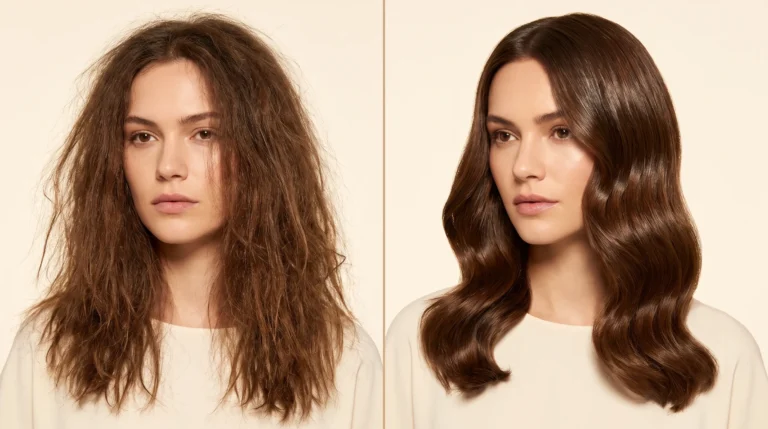
Your hair is made mostly of a protein called keratin, held together by hydrogen and protein bonds that give your curls their shape. High heat breaks these bonds. When they reform as your hair cools, they don’t always snap back into their original curl pattern — this is why heat-damaged hair often looks permanently straighter in certain sections, even after washing.
Heat also evaporates the natural moisture inside the hair shaft. Natural hair is already more prone to dryness because its curl pattern makes it harder for scalp oils to travel down the strand. Add high heat on top of that, and the result is brittle, straw-like hair that breaks easily.
Understanding this is the first step to preventing it — you’re not just avoiding “damage” in a vague sense, you’re protecting the actual protein and moisture balance inside each strand.
Signs Your Hair Already Has Heat Damage
Before jumping into prevention, it helps to know what you’re watching for. Common signs include:
- Sections of hair that stay straight even after a wash-and-go
- Hair that feels limp, thin, or “cottony” instead of springy
- Increased breakage and shedding, especially near the ends
- Dullness or lack of shine even after conditioning
- Split ends that reappear quickly after a trim
If you’re noticing two or more of these, it’s worth cutting back on heat styling for a few weeks and focusing on repair (more on that below) before continuing with hot tools.
1. Always Apply a Heat Protectant First
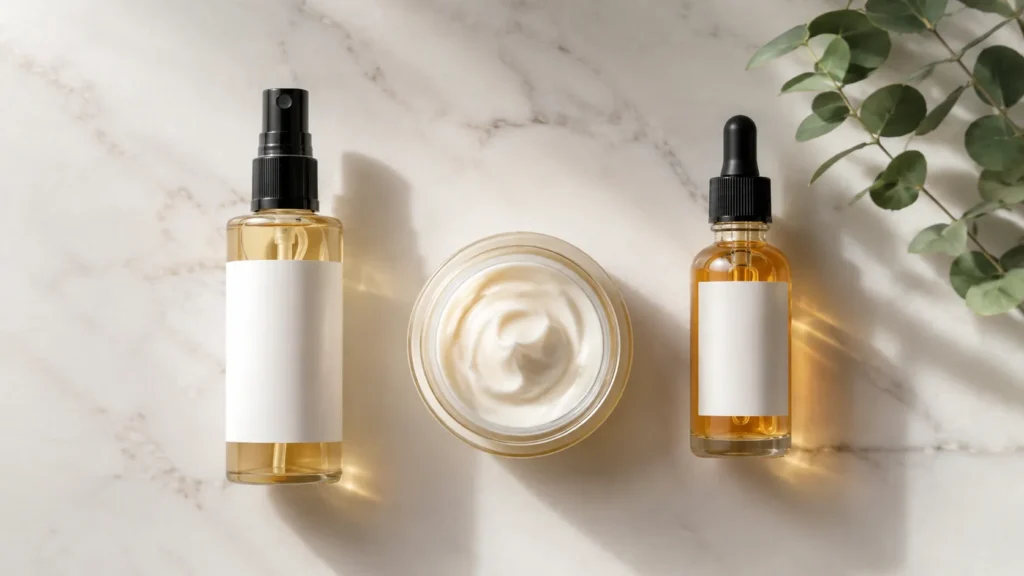
This is non-negotiable. A heat protectant coats each strand and creates a barrier that reduces how much direct heat reaches your hair’s inner layers.
[IMAGE PROMPT 2: Flat lay photo of three different heat protectant products (spray bottle, cream jar, serum bottle) arranged neatly on a marble surface, natural daylight, product photography style. — Negative prompt: no brand logos, no text on labels, no cartoon style, no cluttered background]
What to look for in a good heat protectant:
- Silicones like dimethicone, which smooth the cuticle and reduce friction
- Lightweight oils such as argan or grapeseed oil for added slip
- A formula suited to your hair’s density — lighter for fine hair, richer for coarse hair
Apply it to damp or dry hair in small sections so every strand is coated, not just the surface layer. Skipping sections is one of the most common reasons people still get damage even while “using” a protectant.
2. Match Your Heat Settings to Your Hair Type and Porosity
Most guides just say “use low heat,” but the right number depends on two things: your hair’s thickness and its porosity (how easily it absorbs and loses moisture).
| Hair Type | Recommended Temperature |
| Fine or color-treated hair | 250°F – 300°F |
| Medium, normal-porosity hair | 300°F – 330°F |
| Coarse or low-porosity hair | 330°F – 380°F (with heat protectant) |
If you’re not sure about your porosity, try this: drop a clean strand of hair in a glass of water. If it sinks fast, you likely have high porosity hair (more heat-sensitive). If it floats for a while, you have low porosity hair, which usually needs slightly more heat to style — but still with protection.
Also pay attention to your tool’s plate or barrel material. Ceramic and tourmaline plates distribute heat more evenly than basic metal ones, which reduces the “hot spots” that cause the most damage.
3. Limit How Often You Use Heat
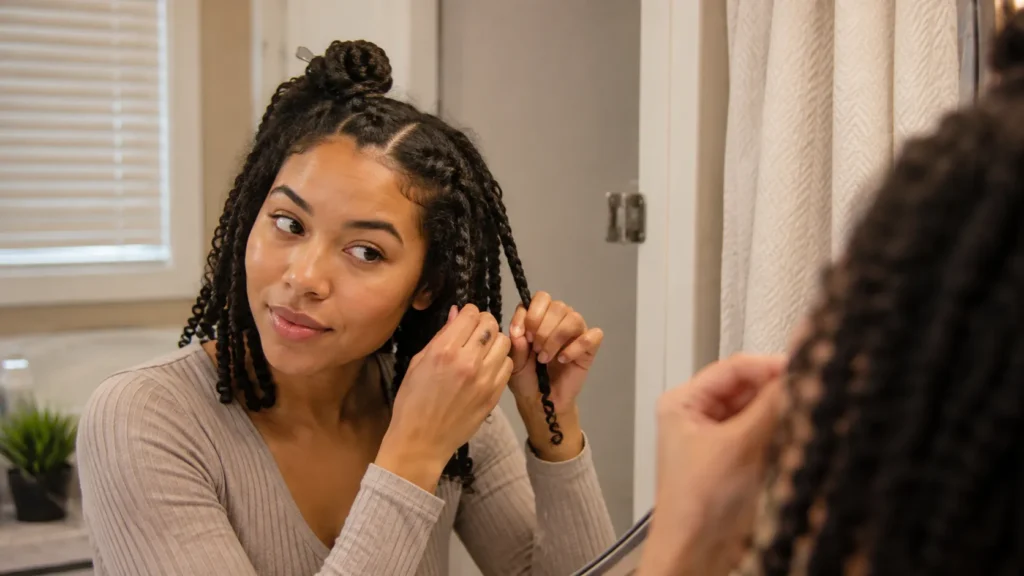
Even with a protectant, heat use adds up. Give your hair time to recover between sessions.
- Once every 1–2 weeks is a safe range for most natural hair types
- Between sessions, try heatless styles that still give you stretched, defined hair:
- Twist-outs — twist damp hair in sections, let dry, then unravel for defined waves
- Braid-outs — similar to twist-outs but gives a slightly looser wave pattern
- Flexi-rod sets — great for uniform curls without any heat at all
- Bantu knots — small coiled sections that release into defined spirals
These methods stretch your natural curl pattern, which is often what people actually want from straightening — without the risk.
4. Deep Condition Weekly
Deep conditioning strengthens the hair shaft, which makes it more resistant to heat in the first place. Think of it as reinforcing the structure before you put it under stress.
- Use a moisture-rich mask with shea butter, honey, or coconut oil
- Apply gentle heat (hooded dryer or a warm towel) so the product penetrates rather than sitting on the surface
- Aim for once a week, and always after a heat styling session
Hair that’s well-moisturized before styling needs less direct heat to smooth out — which itself reduces damage.
5. Let Hair Air Dry Before Using Direct Heat
Wet hair is more elastic and more fragile than dry hair, so putting a flat iron or curling wand directly on soaking wet hair is one of the fastest ways to cause breakage.
Let your hair air dry to at least 70–80% before introducing any hot tool. If you’re blow-drying first, use a comb attachment on a low-medium setting and keep the dryer moving instead of holding it on one section.
6. Repair and Aftercare After Heat Styling
This step gets skipped in most guides, but it matters just as much as prevention.
- Sleep on a satin or silk pillowcase (or use a silk bonnet) to reduce friction and moisture loss overnight
- Do a protein treatment every 4-6 weeks if you heat style regularly — this helps rebuild the bonds heat can weaken
- Trim split ends every 8-10 weeks so damage doesn’t travel up the hair shaft
Frequently Asked Questions
How often can I straighten natural hair without damage?
Once every 1-2 weeks is generally considered safe when you’re using a heat protectant and appropriate temperature settings. Going longer between sessions gives your hair more time to recover.
Can heat-damaged natural hair be fully repaired?
Not completely — heat damage changes the hair’s protein structure permanently in the affected sections. Deep conditioning and protein treatments can improve texture and reduce breakage, but the healthiest long-term fix is trimming damaged ends and preventing further damage.
Is a blow dryer as damaging as a flat iron?
It can be, especially on high heat settings held too close to the hair. Using a diffuser attachment on low-medium heat is generally gentler than direct concentrated airflow.
Final Thoughts
Heat isn’t the enemy — unprotected, unmonitored heat is. With a good heat protectant, the right temperature for your hair type, regular deep conditioning, and reasonable breaks between styling sessions, you can enjoy sleek looks without sacrificing your curls’ health long-term.
Also Visit : Master Your Look: The Ultimate “How to Do Hairstyles” Step-by-Step Guide