Hair Growth Before and After: What’s Actually Realistic
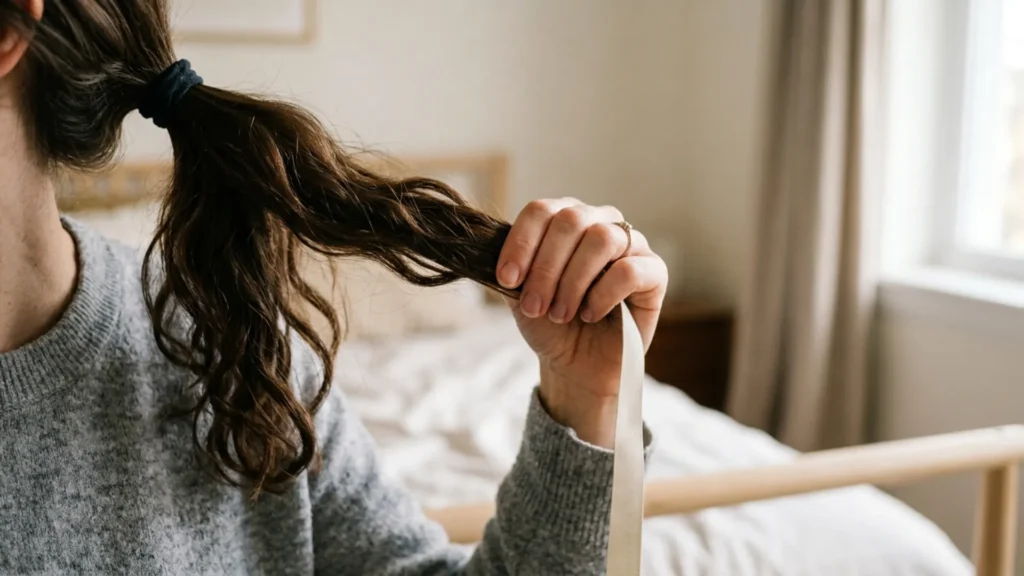
The biggest mistake people make with hair growth before and after comparisons is expecting one dramatic photo to prove months of effort. Real hair growth doesn’t work that way. It shows up slowly, unevenly, and often in ways a single photo hides completely.
Quick answer: most healthy scalp hair grows about half an inch a month, so a genuine hair growth before and after gap of 8 to 12 weeks usually shows a small, believable difference in length, not a dramatic transformation. If a photo shows far more growth than that in a short window, something else is going on: different lighting, wet versus dry hair, a new part, extensions, or a longer gap between photos than stated.
That gap between expectation and reality is where most disappointment starts. You compare your own slow progress to someone else’s photo, assume you’re doing something wrong, and give up right before the visible change would have shown up. Understanding what’s actually happening in these photos fixes that.
Why Most Before-and-After Photos Are Misleading
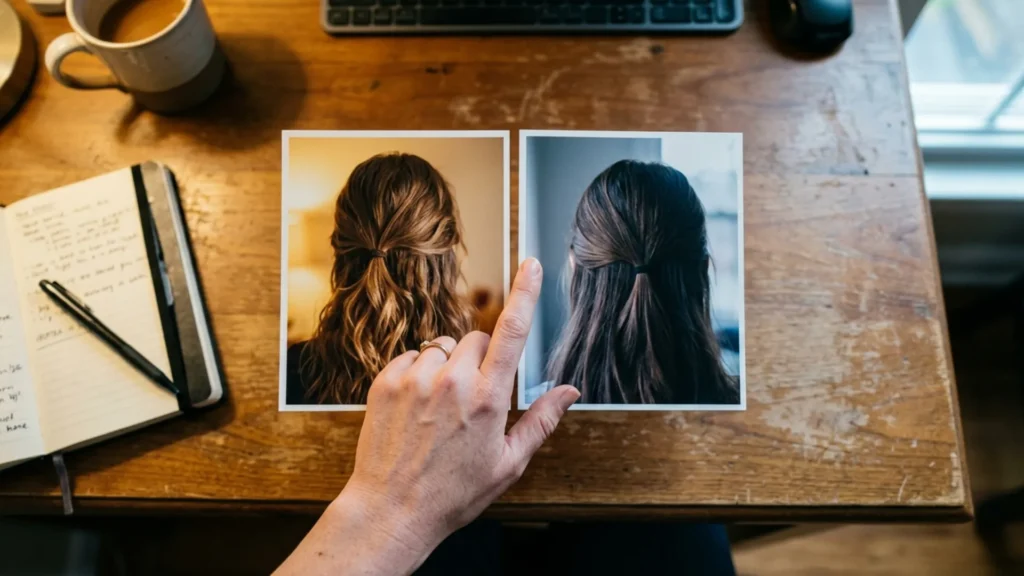
A photo isn’t a neutral record. Lighting alone can add or remove the appearance of thickness. Warm, low-angle light casts shadows that make hair look fuller and darker. Flat, overhead light does the opposite, flattening color and exposing the scalp. Put the same head of hair under both, and you’d swear you were looking at two different growth stages.
Camera distance changes things too. A lens held close distorts proportions slightly, which can make a ponytail look shorter or thicker than it is. Zoom in from farther away with a slight crop, and the same hair reads differently again. None of this is necessarily dishonest. Most people don’t realize how much these small choices shift what a photo shows.
Research on how the hair growth cycle actually works makes the underlying issue clearer: hair doesn’t grow in a straight, uniform line you can capture in two snapshots. Different strands sit in different phases of growth and rest at any given time, so a photo taken on the wrong day can catch a temporary lull that has nothing to do with your actual progress.
Also Visit : Which Hair Growth Methods Are Worth Your Time?
What Hair Growth Actually Looks Like, Month by Month
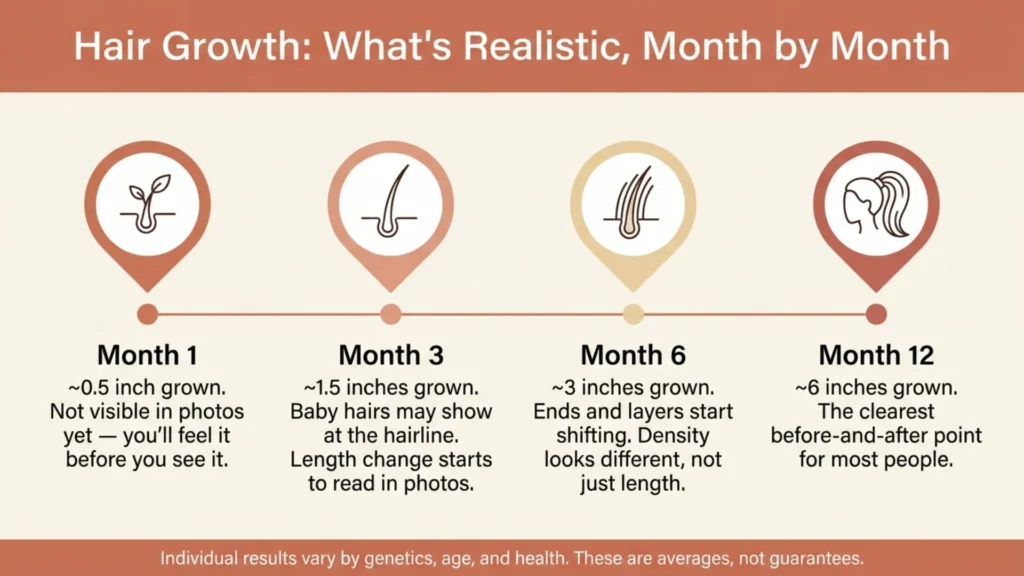
Here’s a realistic timeline, based on average growth rates rather than best-case scenarios. Genetics, age, hormones, and overall health all shift these numbers, so treat them as a general shape, not a personal guarantee.
Month 1
You’ll grow roughly half an inch. It won’t be visible in a photo yet. You’ll notice it more by feel, catching a strand behind your ear that used to fall short, or a wisp that finally tucks behind your glasses.
Month 3
Around an inch and a half has grown in total. This is often the first point where a side-by-side photo shows something real, especially near the hairline, where shorter, newer strands start to stand out from the rest.
Month 6
By now you’re looking at roughly three inches. Length isn’t the only thing shifting. Layers that used to sit close together start separating, and the overall shape of a cut begins to change, which is often what people actually notice first, not the length itself.
A full year in, most people reach somewhere around six inches, though thicker or coarser hair types can look like more because of how the strands sit together. This is usually the clearest, most convincing point for a hair growth before and after comparison, simply because there’s finally enough of a gap for a photo to tell the truth.
The Difference Between Length, Density, and Fullness
People use these three words interchangeably, but a before-and-after photo can show a change in one without the other two moving at all. Confusing them is a big reason growth progress feels slower than it is.
| Term | What it actually measures | How it shows up in photos |
|---|---|---|
| Length | How far a strand has grown from root to end | Easiest to fake with angle or zoom; hardest to fake over a real 6+ month gap |
| Density | How many hairs grow per square inch of scalp | Barely changes short-term; genetics-driven and slow to shift either way |
| Fullness | How thick hair looks and feels, including strand diameter and styling | Changes fastest, often within days, from products, blow-drying, or a fresh trim |
A lot of dramatic-looking “after” photos are really a fullness change, not a length or density one. That’s not a scam. It just means the photo is answering a different question than the one you think it’s answering.
How to Take a Before-and-After Photo You Can Trust
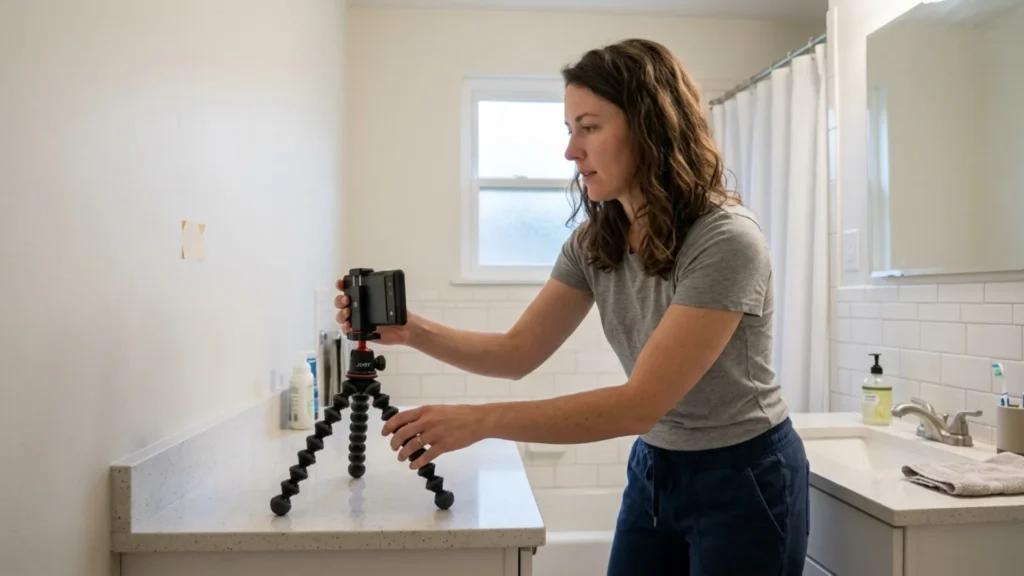
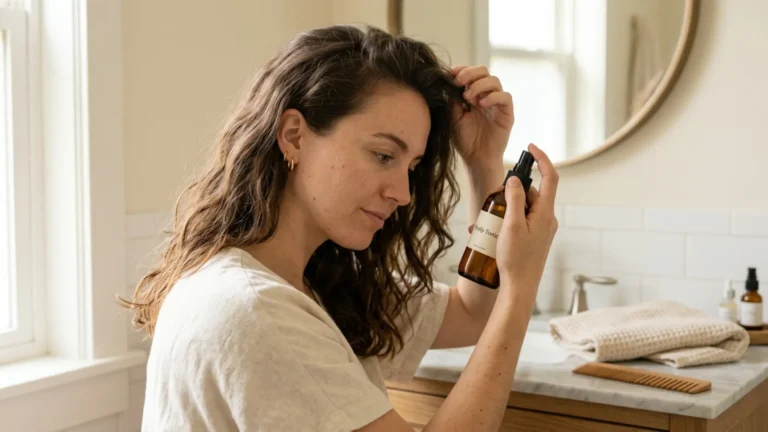
If you want your own progress photos to mean something in three or six months, the setup matters more than the camera. A few small habits make the difference between a photo you can trust and one that only tells you what you want to hear.
Use the same light source every time, ideally daylight from the same window at the same time of day. Stand the same distance from the camera, and mark that spot with tape if you need to. Dry your hair fully and style it the same simple way each time, no fresh blowout for the “after” shot and damp hair for the “before.” Keep the background plain and unchanged, and date each photo the day you take it, not the day you remember to upload it.
Also Visit : Is Homemade Hair Growth Oil Worth Making Yourself?
Common Tricks That Fake Faster Results
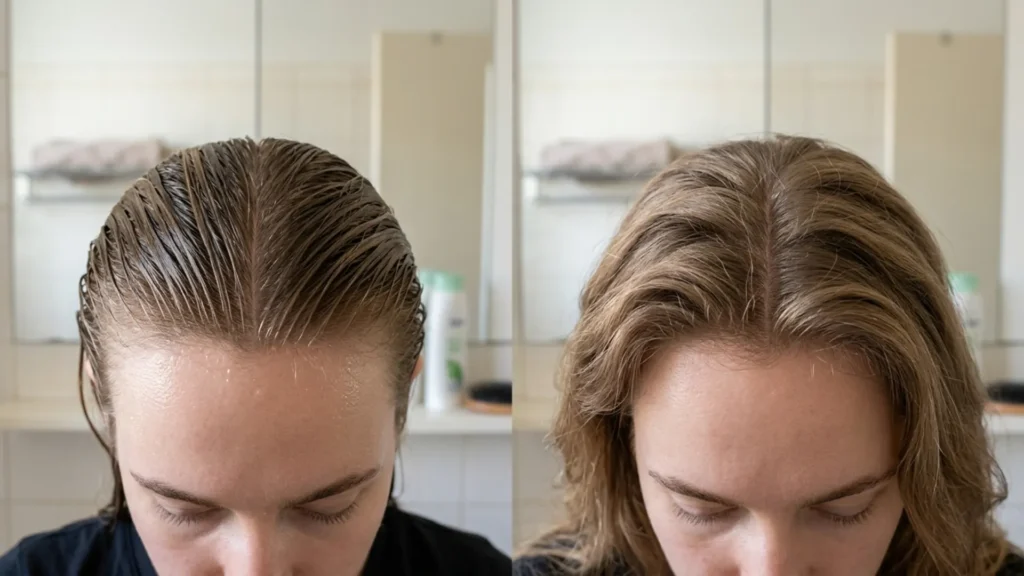
Some of this is deliberate marketing. A lot of it is just people unknowingly stacking small choices in one direction. Either way, these are the details worth watching for, in your own photos and anyone else’s.
Wet hair is one of the biggest culprits. A closer look at clinical standards for photographing hair growth points out that wet hair clumps together and reveals more scalp, which makes a “before” photo look thinner than it really is, exaggerating whatever comes after it. A tighter part does something similar, widening the visible gap between sections of hair.
Beyond that, watch for a change in camera angle between shots, a crop that cuts off the same amount of hair differently, filters that add warmth or contrast selectively, and clip-in extensions used only in the “after” photo. None of these make the growth itself fake. They just mean the photo is measuring more than growth alone.
When Before-and-After Photos Signal a Real Problem
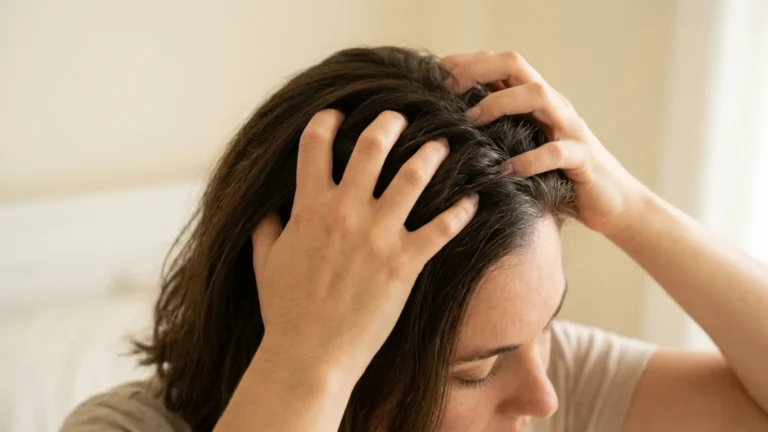
Sometimes a comparison isn’t about slow progress at all, it’s pointing at something worth paying attention to. A widening part, noticeably more scalp visible in even, bright light, or a sudden jump in the amount of hair on your brush are different from the ordinary ups and downs of a growth cycle.
The American Academy of Dermatology’s guidance on hair shedding notes that losing 50 to 100 hairs a day is normal, and that noticeably heavier shedding often follows a specific trigger like illness, stress, or a major change in diet.
This article is for general information only and isn’t medical advice. For persistent hair loss, scalp pain, or sudden shedding, see a dermatologist or trichologist.
Also Visit : Biotin Hair Growth: What It Actually Does to Your Hair
How to Judge Someone Else’s Before-and-After Photos
Whether it’s a Pinterest post, a product page, or a friend’s transformation photo, a few quick checks separate a believable comparison from a staged one. Look for a stated, specific timeframe, not a vague “look at this progress.” Check whether the lighting and angle genuinely match between the two shots. Notice if the hair is wet in one and dry in the other. And ask whether extensions, a new cut, or a color change might be doing some of the visual work that’s being credited to growth.
None of this means every impressive before-and-after is fake. Real, dramatic growth happens, especially over a full year. It just means a photo alone isn’t proof of anything until you know the conditions it was taken under.
If you’re tracking your own hair growth before and after right now, save this as a reference for what to expect at each stage, and feel free to drop a comment with where you are in your own timeline.
- Average hair growth is about half an inch a month; visible photo change usually needs a 3-month gap at minimum.
- Lighting, wet versus dry hair, and camera angle change how “before” and “after” look more than most people realize.
- Length, density, and fullness are three different things, and photos usually capture fullness first.
- A trustworthy progress photo needs the same light, distance, and hair condition every time, not just the same person.
- Sudden heavy shedding or a widening part is a different signal than slow, ordinary growth, and worth a professional opinion.
Frequently Asked Questions
How long does it take to see real hair growth results in a photo?
Most people need at least 3 months before a photo shows a believable difference, and 6 to 12 months for a clear, convincing hair growth before and after comparison.
Why does my hair look thinner in progress photos than it does in person?
Flat or overhead lighting often exposes more scalp than warm, angled light does. It’s usually a lighting effect, not an actual change in density.
Can wet hair make a before-and-after photo misleading?
Yes. Wet hair clumps together and shows more scalp, which can make a “before” shot look worse than it is and exaggerate whatever improvement follows.
Is half an inch of growth a month normal for everyone?
It’s an average, not a fixed rule. Genetics, age, hormones, and overall health can push individual growth rates faster or slower than that number.
What should I do if I notice sudden or patchy shedding instead of growth?
Ordinary shedding is 50 to 100 hairs a day. A sudden increase, a widening part, or patchy thinning is worth mentioning to a dermatologist rather than waiting it out.
Written by Anna Anderson for Trend Cottage.