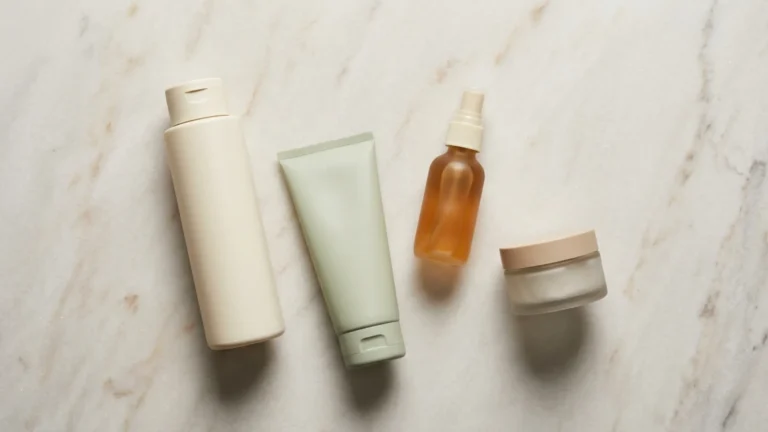
The Hair Care Routine for Men That Actually Works

Most men wash their hair every day. It’s a habit that starts somewhere in adolescence and never gets examined — you’re in the shower anyway, so in goes the shampoo. The problem is that daily washing strips the scalp of its natural oils faster than they’re replaced, which usually makes the hair feel greasier between washes over time, not cleaner.
The core of a good hair care routine for men is simpler than most guides suggest: wash two to three times a week, use conditioner every time you shampoo, pay some attention to the scalp, and apply styling product to damp hair rather than dry. That’s most of it. The sections below walk through each step in order, including where routines typically break down and why.
Where Men’s Hair Care Routines Go Wrong
Hair care mistakes in men tend to cluster into three areas: washing at the wrong frequency, skipping conditioner on short hair, and treating the scalp as an afterthought.
Frequency errors run both ways. Wash too often and the sebaceous glands (the glands that produce sebum, the natural oil that coats and protects each hair shaft) ramp up production to replace what’s been stripped. The result is hair that gets greasy faster than it should, which leads to washing more often, which makes the cycle worse. Wash too infrequently and product residue, dead skin cells, and accumulated sebum weigh the hair down, block follicles, and leave the hair looking flat and dull. Neither extreme works.
The conditioner argument is the one most men push back on. If the hair’s only an inch or two long, what’s the point? It’s a reasonable question, but it misunderstands what conditioner actually does. Conditioner isn’t a softener designed for long hair. It deposits a thin film onto the hair shaft that smooths the outermost cuticle layer — which reduces friction between strands, cuts static, and makes the hair respond better to styling. Short hair still has a cuticle. It still benefits from being smoothed.
Scalp health is the biggest gap. Most men give their face at least a passing thought in the shower. The scalp, which is also skin, gets nothing. It sheds dead cells, produces oil, and can become irritated, dry, or infected in ways that affect how the hair grows and looks. Treating it properly doesn’t take much time, but it does take something.
Step One — Washing, and How Often
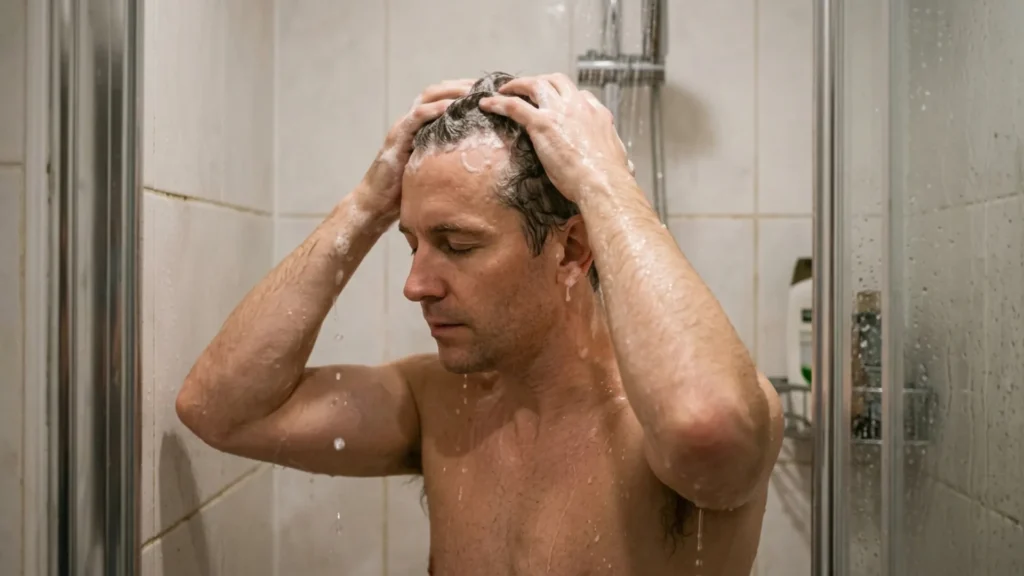
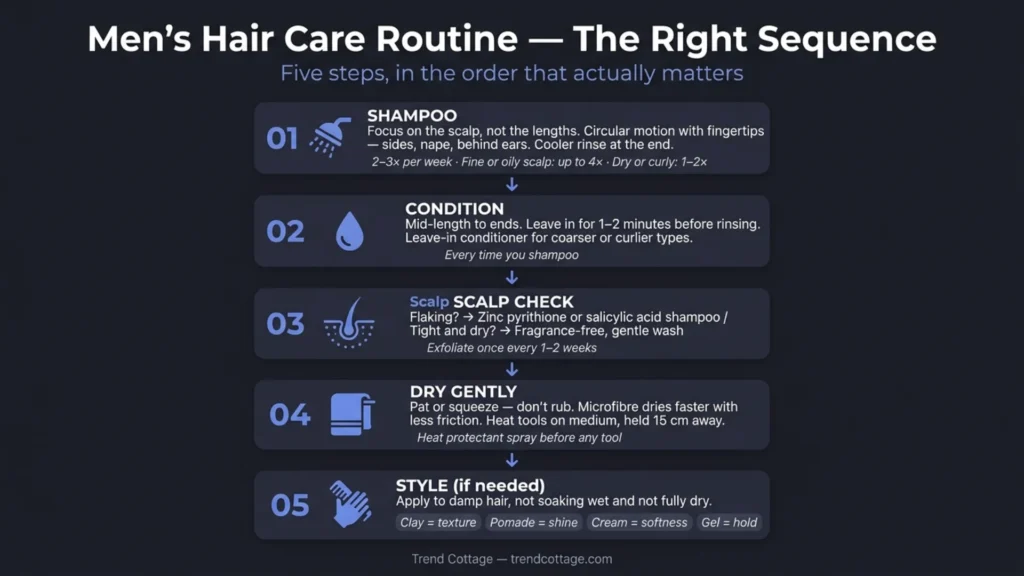
For most men — average hair density, fairly normal scalp, moderate use of daily styling product — two to three washes a week is the right baseline. Fine hair or an oily scalp can handle three or four times a week without the stripping problem. Thick, coarse, or naturally dry hair, which includes most curly and textured types, typically does better at once or twice a week. These aren’t rigid rules; they’re starting points to adjust from based on what you observe.
When you shampoo, focus on the scalp rather than the length. Work your fingertips in small, firm circles across the whole scalp — not just the top, but also the sides, the nape of the neck, and behind the ears. Whatever lather runs through the length of the hair during rinsing cleans the shaft without you needing to work product through it. Loading shampoo into the lengths just strips moisture unnecessarily.
Water temperature is worth adjusting. A hot shower opens the cuticle, which is useful for lifting product buildup, but the scalp dries out faster than most people expect when heat runs throughout the whole wash. A cooler rinse at the end — not cold, just noticeably less hot — closes the cuticle back down and leaves the hair lying flatter and shinier.
On shampoo types: sulfate-free formulas clean without stripping, which suits dry or sensitive scalps well. Clarifying shampoos go deeper and are useful if you use heavy wax or pomade regularly, but they’re strong enough that once a month is usually the right frequency for those. AAD dermatologists recommend choosing products matched to your specific hair type
Also Visit : How to Pick Hair Care Routine Products What You Actually Need
The Conditioner Question
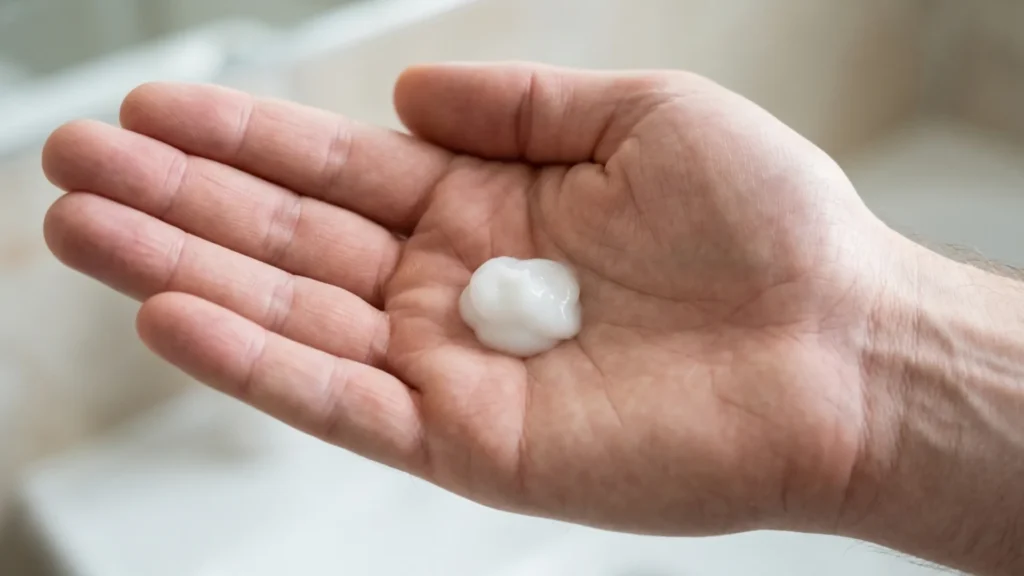
Conditioner works by depositing a layer of ingredients — typically fatty alcohols, silicones, or cationic compounds — onto the hair shaft. Those ingredients smooth the cuticle, reduce friction between strands, cut frizz, and make the hair easier to comb and style. On short hair, the scale of those effects is smaller, but they’re still real, especially at the hairline and nape where the hair tends to be finer and more prone to dryness.
Apply it from mid-length to ends. If the hair’s very short, distributing a small amount from root to tip is fine — just avoid loading it onto the scalp itself. Conditioner sitting on the scalp can clog follicles, and for men with oily hair it speeds up the greasiness that builds between washes. Leave it in for one to two minutes, then rinse thoroughly.
Men with coarser, curlier, or naturally drier hair often get better results from a leave-in conditioner than a rinse-out version. Those textures are more porous — they lose moisture faster between washes. A lightweight leave-in applied to damp hair after the shower replaces that moisture steadily without requiring extra steps during the week.
What Your Scalp Actually Needs
The scalp is skin. It sheds dead cells, produces oil, and responds to microbial changes, dryness, and irritation the same way skin anywhere else on the body does. The difference is that the scalp is covered, rarely examined, and almost never given its own routine step.
Two things change that. The first is scalp exfoliation — once every week or two, not every wash. A shampoo containing salicylic acid works well for oily or flaky scalps; salicylic acid dissolves excess sebum and loosens dead skin before it can accumulate. For drier scalps, a gentle physical scrub — some brands make dedicated scalp scrubs, and a small amount of sugar worked into conditioner is a simple alternative — does the job without chemical exfoliation.
The second is time. Most men apply shampoo and rinse within thirty seconds. The product barely contacts the scalp, and the one thing that consistently shows up in scalp research — firm circular massage with the fingertips, for sixty to ninety seconds — never happens. That massage isn’t just useful for distributing product. It improves blood flow to the follicles and dislodges buildup before the rinse.
If flaking is a regular occurrence and a gentle, fragrance-free shampoo doesn’t improve it within a few weeks, the cause is more likely dandruff than dry scalp. The distinction matters because the treatment is completely different. Dandruff is driven by a yeast-like fungus (Malassezia), not by dryness, and a moisturising shampoo won’t clear it. AAD dermatologists recommend a shampoo with antifungal active ingredients — zinc pyrithione, selenium sulfide, or ketoconazole — specifically for dandruff. Persistent flaking, scalp redness, or tenderness is worth a dermatologist visit.
Also Visit : A Hair Care Routine for Dry Frizzy Hair That Actually Works
Drying, Heat, and Between Washes
How you dry the hair after a wash creates more cumulative damage than most men expect. The default approach — grab a towel and scrub dry — roughs up the cuticle and breaks strands over time, especially on longer or textured hair. Pat or squeeze instead of rubbing. Microfibre towels dry faster than cotton and create much less friction in the process.
If you use a blow dryer, keep it moving rather than holding it in one spot, use medium heat rather than maximum, and hold it at least fifteen centimetres from the scalp. High, direct heat degrades the protein bonds inside the hair shaft — that’s what causes the dullness, brittleness, and split ends that build up gradually with regular heat tool use. A heat protectant spray applied to damp hair before the dryer creates a barrier that limits that damage.
On non-wash days, most hair doesn’t need much. If it looks flat or feels dry, a small amount of lightweight oil — argan and squalane suit most hair types without feeling heavy — applied to the lengths (not the scalp) refreshes it without needing a full wash cycle.
If You Style Your Hair
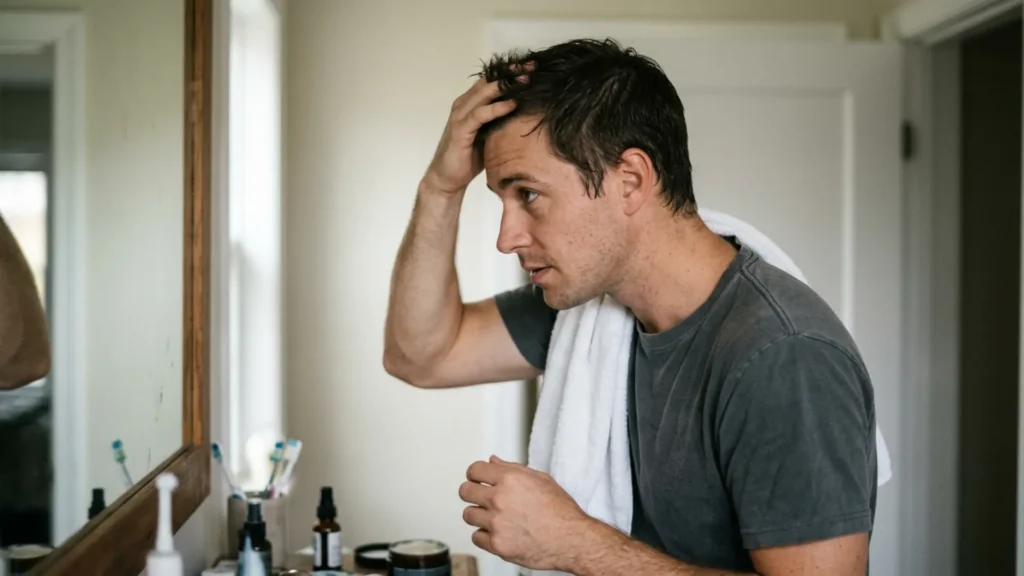
Styling product works best on damp hair. Not soaking wet, and not fully dry. Wet hair dilutes the product before it can grip properly. Dry hair means the product sits unevenly on the outer surface rather than spreading through the strands. The window after gentle towel drying — when the hair is damp but no longer dripping — is when it takes product most consistently.
Different products suit different goals:
- Clay or matte paste — textured hold, low shine; works best on short to medium hair and suits thicker, coarser types
- Pomade — higher shine, more flexible hold; suits slicked-back or side-parted styles and finer hair that needs movement without stiffness
- Cream — light hold, softness, minimal shine; a good choice for naturally textured or curly hair, and for styles that shouldn’t look fixed
- Gel — firm hold, high shine; sets hard as it dries, so it’s better suited to styles you’re placing and leaving rather than adjusting through the day
One thing worth knowing: most waxes and oil-based pomades don’t clear fully with water alone. If a heavy product goes on daily, the scalp needs a proper shampoo wash to prevent buildup. That’s part of why washing when the hair needs it beats washing on a fixed daily schedule — particularly for men who style regularly.
Also Visit : Hair Care Routine for Hair Growth: Build It Right
Adjusting for Your Hair Type
The hair care routine for men above applies broadly, but wash frequency, product weight, and conditioning approach all shift based on what the hair actually does. This table covers the main variables:
| Hair type | Wash frequency | Conditioner approach | Styling notes |
|---|---|---|---|
| Fine or flat | 3–4× per week | Lightweight; mid-length to ends only | Volumising mousse or light pomade; avoid heavy waxes at root |
| Curly or coily | 1–2× per week | Rich rinse-out or leave-in; detangle while conditioner is in | Curl cream or gel applied on wet hair |
| Thick or coarse | 2–3× per week | Standard; lengths and ends | Serum or cream for shine and control |
| Dry or sensitive scalp | 1–2× per week | Gentle, fragrance-free; keep off scalp | Lightweight oil on the lengths only |
| Oily scalp | 3–4× per week | Lightweight; ends only | Matte clay or paste; avoid heavy waxes |
If the hair is thinning, the core routine still applies — consistent washing, conditioning, scalp massage — but heavy products at the root can make sparse areas look worse. Thickening shampoos with biotin or caffeine produce a visible volumising effect for some hair types, though the evidence for actual regrowth from those ingredients is limited. For anything beyond a cosmetic improvement, a dermatologist or trichologist is the right starting point.
Frequently Asked Questions
How often should men actually wash their hair?
Two to three times a week works for most hair types. Fine or oily hair may need three or four washes; dry, coarse, or textured hair usually does better at once or twice. Washing daily strips natural oils faster than the scalp replaces them, which often leads to more oiliness over time, not less.
Do men with short hair need conditioner?
Yes. Short hair still has a cuticle, and conditioner smooths that cuticle — reducing friction, cutting static, and making the hair easier to style at any length. Apply from mid-length to ends and rinse after one to two minutes.
What order should products go in?
Shampoo first on the scalp, then conditioner from mid-length to ends, then rinse both out properly. After the shower: pat dry gently, apply heat protectant if you’re using any tools, then apply styling product to damp hair.
What’s the difference between dandruff and a dry scalp?
A dry scalp produces small, powdery flakes and often feels tight or itchy. Dandruff produces larger, oilier flakes — sometimes with visible redness — and is caused by a fungal imbalance, not dryness. Dandruff needs an antifungal ingredient like zinc pyrithione to clear. A moisturising shampoo addresses dry scalp, not dandruff, so using the wrong one won’t help.
Can men use the same shampoo and conditioner as women?
Yes. Hair structure doesn’t differ meaningfully by sex. What matters is whether the formula suits the hair type and scalp — not the demographic printed on the label.
Key Takeaways
- Washing two to three times a week is the right baseline for most hair types — daily washing strips natural oils and typically makes oiliness worse over time
- Conditioner matters even for short hair; it smooths the cuticle and makes styling easier at any length
- The scalp needs active attention: regular massage, occasional exfoliation, and a shampoo matched to your scalp type rather than just your hair type
- Styling product belongs on damp hair — not soaking wet, not fully dry
- Dandruff and dry scalp aren’t the same condition and don’t respond to the same products
If your hair type sits between two rows in the table above — oily scalp but dry lengths, say, or curly but fine — drop it in the comments. It’s worth a dedicated follow-up.
This article is for general information only and isn’t medical advice. For persistent hair loss, scalp pain, or sudden shedding, see a dermatologist or trichologist.
Written by Anna Anderson for Trend Cottage.