Hair Care Routine for Dandruff That Actually Controls It
The fastest fix for a dandruff-prone scalp isn’t a new shampoo. It’s a consistent routine built around what’s actually causing your flakes — because three completely different scalp problems can all look like dandruff on your shoulders but need different approaches to clear up.
Quick answer: A hair care routine for dandruff that works starts with identifying your flake type, applies an active-ingredient shampoo to the scalp with proper contact time, spaces washes around your oil production, and keeps conditioner off the scalp entirely. Most people see a real improvement within three to four weeks of following it consistently.
The Most Common Reason Dandruff Routines Fail
Most people reach for an anti-dandruff shampoo, use it for a week or two, watch the flakes ease off, and then switch back to their regular shampoo. A fortnight later, the flakes are back. The product gets the blame.
The product usually isn’t the issue. Dandruff driven by Malassezia — a yeast that lives on most scalps and causes problems when it grows out of balance — doesn’t disappear when the visible symptoms settle. The American Academy of Dermatology notes that seborrheic dermatitis needs consistent, long-term management rather than short treatment courses. Stopping the active shampoo the moment your scalp looks clear is the single most common reason dandruff routines stop working.
The second mistake is treating all dandruff the same way. Applying an antifungal shampoo to a dry, dehydrated scalp often makes the flaking worse, not better. Before anything else, it’s worth working out which kind of dandruff you’re actually dealing with.
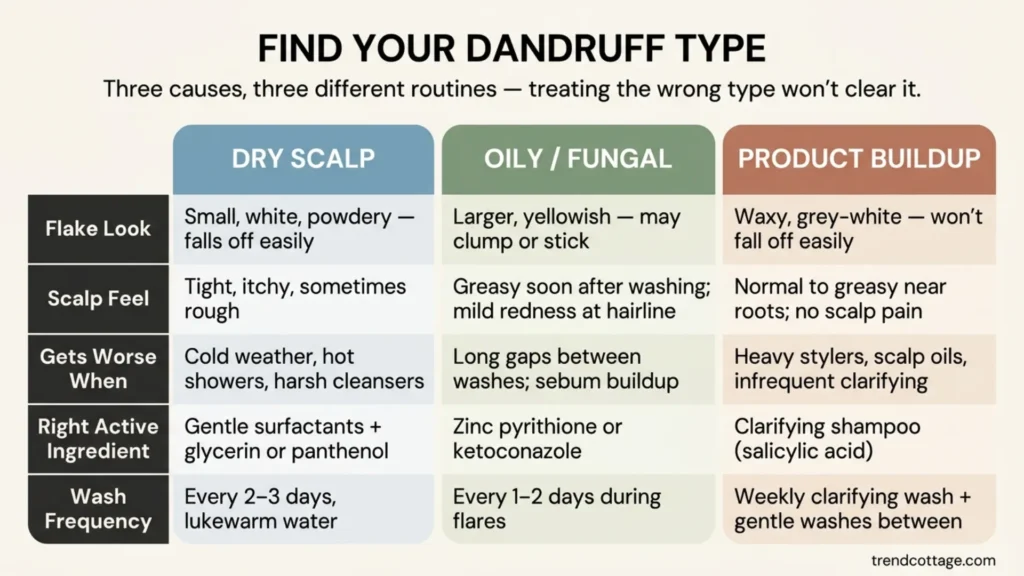
Three Types of Dandruff, Three Different Fixes
Dry Scalp Flaking
Small, white, powdery flakes that come off easily — often worse in winter or after washing with hot water. The scalp feels tight or itchy but doesn’t look greasy. The cause is a disrupted skin barrier and a lack of moisture, not a fungal overgrowth. A strong antifungal shampoo can strip the scalp further and actually deepen the problem.
Oily, Malassezia-Driven Dandruff
Larger, yellowish flakes that may clump and stick near the scalp. The scalp tends to feel greasy fairly soon after washing, and there’s sometimes mild redness around the hairline or behind the ears. This is the pattern that antifungal shampoos are built for. Zinc pyrithione, ketoconazole, and selenium sulfide all target the Malassezia yeast that triggers this cycle.
Product Buildup Flaking
Waxy, grey-white flakes that don’t fall off the way dry or oily dandruff does. You sometimes have to part the hair and dislodge them manually. They cluster near the roots, around wherever you apply dry shampoo, thick oils, or heavy stylers. The scalp isn’t producing these — they’re residue from products that didn’t rinse out fully. An antifungal shampoo won’t clear them. A clarifying wash will.
If you’re genuinely unsure which type applies, or if your scalp is sore, visibly red, or significantly worse than usual, see a dermatologist before committing to a routine. Seborrheic dermatitis can look similar to scalp psoriasis, and getting the distinction right saves considerable trial and error.
Also Visit : What’s the Best Hair Care Routine for Low Porosity Hair?
The Wash Frequency Question
No single wash schedule works for every dandruff type, despite how confidently most articles recommend one.
For oily, Malassezia-driven dandruff, washing more frequently helps. The yeast feeds on the sebum the scalp produces, so letting oil accumulate between washes gives it more to work with. During an active flare, washing every day is reasonable for an oily scalp. The idea of training your scalp to produce less oil over time isn’t well-supported for dandruff-prone scalps specifically.
For dry-scalp flaking, the logic goes the other way. Washing too often — especially with hot water — strips the lipids that protect the skin barrier and worsens the cycle. Every two to three days is a better starting point, and water temperature matters more than most people account for. Lukewarm water rinses just as effectively without the strip.
For product buildup, the pattern that works is one clarifying wash per week or every ten days, alongside a gentler shampoo for the remaining washes. Clarifying every wash dries the scalp out; never clarifying lets buildup compound. Finding the right balance between those two extremes usually takes two to three weeks of adjustment.
Structuring Your Hair Care Routine for Dandruff
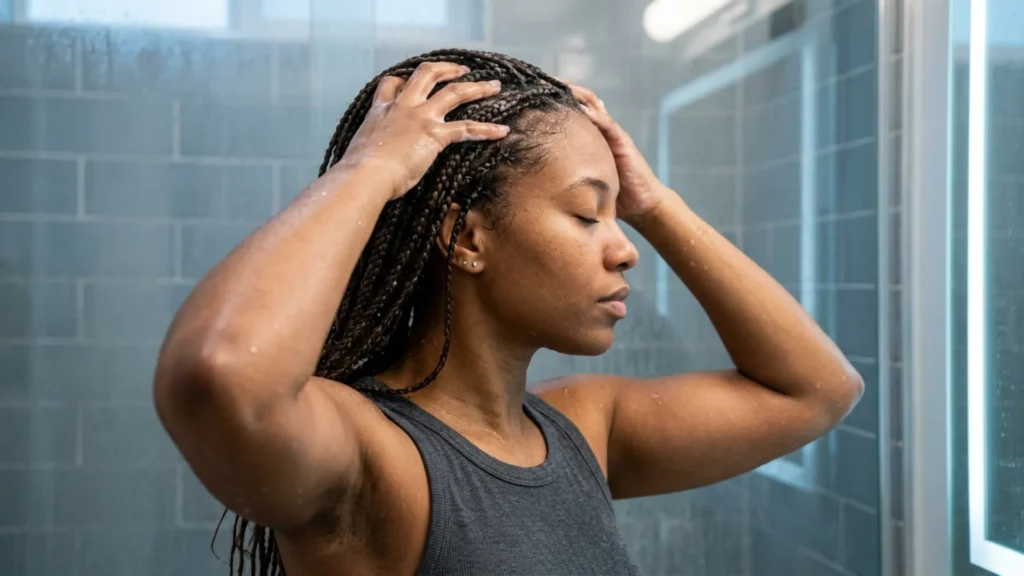
The steps below apply across all three types. The differences come in which products and ingredients you choose for each step, not in the sequence itself.
Pre-wash (optional). If your scalp leans dry, apply a small amount of a light oil — jojoba or squalane work well — to the scalp only, about 30 minutes before washing. This creates a thin barrier that stops the shampoo stripping the skin too aggressively. Skip this step entirely for oily dandruff. Adding more oil before a wash designed to reduce oil doesn’t help.
Shampoo on the scalp, not the lengths. Apply your shampoo directly to the scalp and massage with your fingertips — not your nails — for at least 60 seconds. Then let it sit for two to three minutes before rinsing. The active ingredients in anti-dandruff shampoos need contact time with the scalp skin to do anything useful. Rinsing immediately after lathering is one of the most common mistakes people make in a dandruff hair care routine.
Rinse longer than it feels necessary. Incomplete rinsing leaves product residue near the scalp, which irritates skin and feeds the flaking cycle. A full 60 seconds of rinsing is a reasonable benchmark, regardless of how complete it already feels.
Condition the lengths only. More on this in the next section, but the short version: conditioner from mid-lengths to ends, rinsed out fully, nothing reaching the scalp.
Air dry or use low heat. High heat concentrated on the scalp can increase oil production and irritate a reactive skin barrier. If you use a dryer, keep it moving on a medium setting rather than holding it in one spot.
Also Visit : Hair Care Routine for Curly Hair: Start With Porosity
Conditioner and Dandruff
The belief that conditioner worsens dandruff usually comes from applying it in the wrong place. Conditioner is made for the hair shaft, not for skin. The ingredients that make it effective — heavier emollients, silicones, fatty alcohols like cetyl alcohol — can sit on the scalp surface, block follicles, and create conditions where Malassezia is more likely to grow unchecked.
The fix isn’t to skip conditioner. It’s to keep it off the scalp. Apply from the ears down, work it through the lengths with your fingers, and rinse thoroughly. Leaving conditioner too close to the root — whether as a rinse-out product applied near the hairline or a leave-in that migrates up over time — is what causes flaking, not the conditioner itself.
Skipping conditioner entirely tends to make the overall cycle harder to manage, particularly for dry-scalp flakers. Dry, brittle hair creates more friction during detangling, which worsens scalp irritation. Using conditioner correctly on the lengths protects the hair without adding anything to the scalp that doesn’t belong there.
Ingredients Worth Looking For
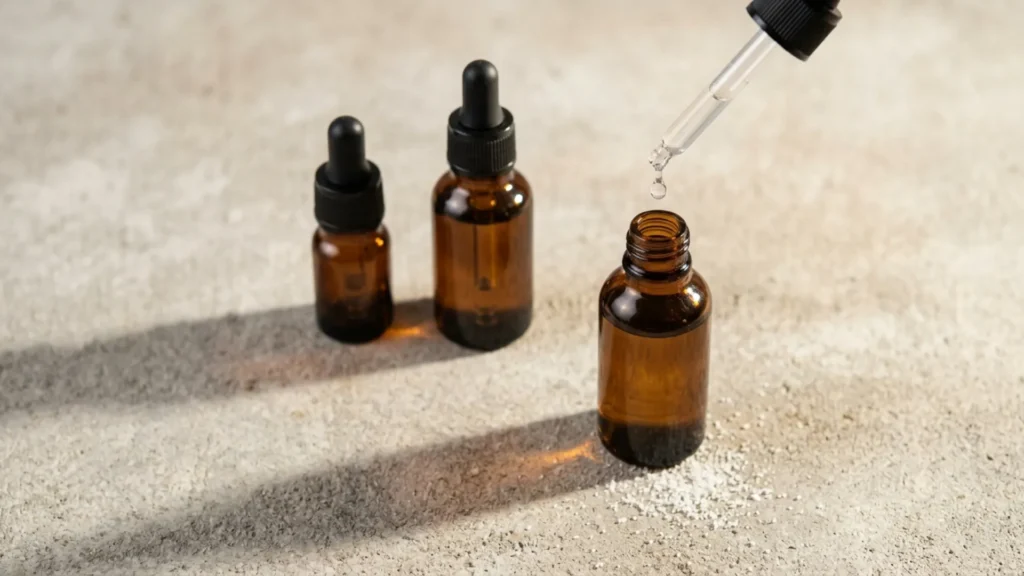
For Malassezia-driven dandruff, four active ingredients appear most consistently in clinical guidance:
- Zinc pyrithione — antifungal and antibacterial, found in over-the-counter shampoos at concentrations up to 2%. It’s one of the most thoroughly studied ingredients for dandruff control, available without a prescription in most countries.
- Ketoconazole — a stronger antifungal available at 1% over the counter and 2% on prescription. NHS treatment guidance for seborrheic dermatitis of the scalp lists ketoconazole shampoo as a standard recommendation. At prescription strength, it’s often the first thing a dermatologist suggests when standard products haven’t cleared things up.
- Selenium sulfide — slows the rate at which scalp cells turn over, which reduces visible flaking. It can dull colour-treated hair with repeated use.
- Coal tar — one of the oldest antidandruff actives. It’s anti-inflammatory, slows cell turnover, and has antifungal properties. Effective, but with a strong smell and the potential to temporarily discolour lighter hair.
For dry-scalp flaking, none of those are the right starting point. Look instead for shampoos with gentle surfactants — cocamidopropyl betaine is a common example — paired with humectants like glycerin or panthenol that draw moisture into the skin. Salicylic acid at around 1.8 to 2% gently lifts dry flake buildup without taking the antifungal route.
What to Remove From Your Routine
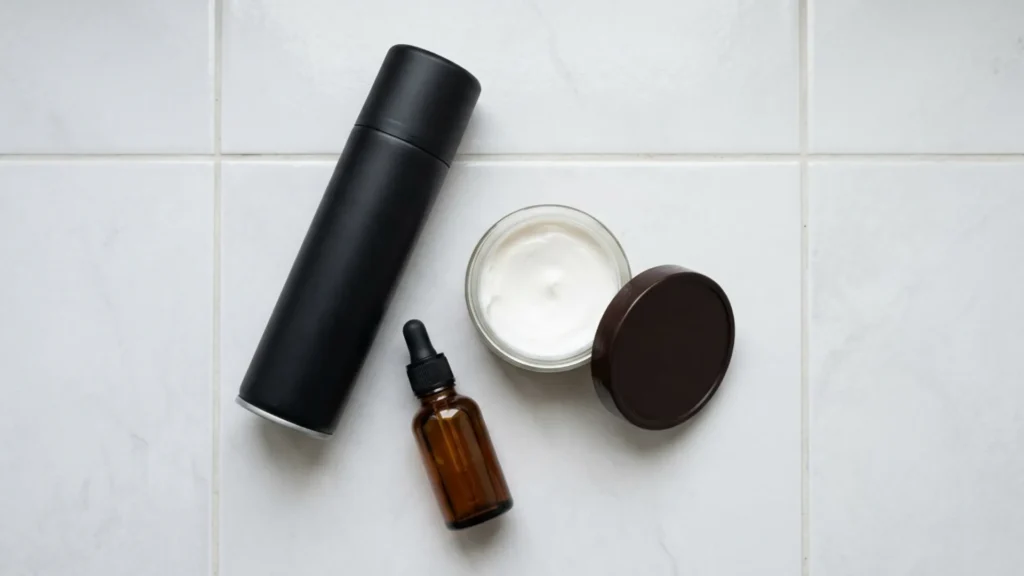
Some products that feel helpful actively work against a hair care routine for dandruff.
Heavy scalp oils and butters left on overnight. Coconut oil, castor oil, and thick butters applied to the scalp and left for hours can feed Malassezia yeast by adding the fatty acids it thrives on. If you want the pre-wash oil benefit, use something light and rinse it out completely. Don’t leave it sitting on the scalp.
Dry shampoo used too often. Dry shampoo absorbs surface oil but doesn’t remove the sebum — it coats it. With regular use, the buildup compounds and gets harder for a regular shampoo to clear. One or two uses between washes is manageable for most scalps; more than that, and you’re adding to the problem the next wash has to solve.
Scalp scrubs overused. A gentle scalp scrub every couple of weeks can loosen dry, stuck flakes. Used more often, it disrupts the skin barrier and causes more irritation than it resolves. For Malassezia-driven dandruff, physical exfoliation isn’t the right tool anyway — the yeast doesn’t scrub away, it needs antifungal treatment to clear.
Hot water. The scalp responds to being stripped by producing more oil to compensate. For oily dandruff types especially, this sets up a cycle that’s hard to break. Lukewarm water cleans just as effectively and doesn’t trigger the same rebound.
Also Visit : How to Follow an Urutan Hair Care Routine Properly
Frequently Asked Questions
Can your hair routine cause dandruff?
Yes, in a few specific ways. Going too long between washes lets sebum accumulate, giving Malassezia more to grow on. Applying heavy oils or thick butters directly to the scalp has the same effect. Leaving shampoo or conditioner incompletely rinsed irritates the scalp skin over time. The routine isn’t always to blame, but product habits and wash timing are worth reviewing when dandruff flares without a clear external cause.
How long does a dandruff routine take to show results?
For Malassezia-driven dandruff, most people following a consistent hair care routine for dandruff with an active shampoo notice a real reduction in flaking within two to four weeks. Dry-scalp flaking often improves faster — sometimes within one to two weeks of switching to a gentler routine and cooler water. Product buildup clears up after one or two proper clarifying washes, though the scalp underneath may take a few more weeks to fully settle.
Is dandruff contagious?
No. The Malassezia yeast involved in seborrheic dandruff is present on most human scalps — it only causes visible symptoms when conditions allow it to grow out of balance. Sharing combs, hats, or pillows doesn’t spread dandruff from one person to another.
Should you use a scalp serum if you have dandruff?
It depends on the formula. Serums with salicylic acid, niacinamide, or tea tree oil can complement a dandruff routine on some scalp types. Serums that contain heavy silicones or thick occlusive oils applied directly to the scalp are more likely to feed the problem. Check the first five ingredients on the label before adding any leave-on product near the roots of a dandruff-prone scalp.
Can dandruff cause hair loss?
Dandruff itself doesn’t directly cause hair loss, but severe, persistent scalp inflammation from untreated seborrheic dermatitis can disrupt the follicle environment and contribute to temporary shedding in some people. Repeated scratching of an itchy scalp can also damage the hair shaft and root over time. If you’re noticing noticeable thinning alongside dandruff, see a dermatologist to have both assessed together rather than trying to manage them separately.
If this helped you identify what your scalp has been dealing with, save it for the next time you’re rebuilding your wash-day shelf — or drop a comment below if you’re working through a stubborn case.
Key Takeaways
- Identify your flake type before choosing any products — dry scalp, oily/fungal, and product buildup look similar but need completely different fixes.
- Anti-dandruff shampoos need two to three minutes of contact time on the scalp, and they need to keep being used after symptoms clear.
- Conditioner doesn’t worsen dandruff when it stays off the scalp and gets fully rinsed from mid-lengths to ends.
- Wash frequency should follow your oil production: more often for oily scalps, every two to three days for dry ones.
- Heavy overnight oils, excessive dry shampoo use, and hot water are the most common routine habits that feed the problem.
This article is for general information only and isn’t medical advice. For persistent scalp flaking, visible redness or inflammation, pain, or any sudden worsening, see a dermatologist or trichologist.
Written by Anna Anderson for Trend Cottage.