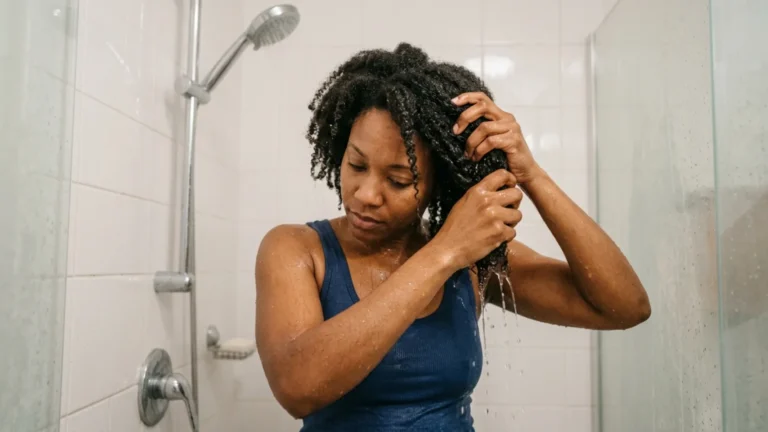
Hair Care Routine Step by Step: Why the Order Matters
A hair care routine step by step isn’t about doing more. It’s about doing things in the right order. If your hair stays dry despite regular conditioning, or feels weighed down even straight after a wash, the issue is often sequence, not the products themselves. The right order lets each step work the way it’s supposed to. The wrong order can neutralise what you just applied, or stop the next product from reaching the hair at all.
Quick answer: A complete hair care routine step by step runs: pre-wash oil (optional) → shampoo → protein treatment if needed → conditioner → gentle drying → leave-in → cream → sealant oil. That order isn’t arbitrary. Each step either prepares the hair shaft for what follows, or locks in what came before. The rest of this article explains the logic so you can adapt it — and troubleshoot when something isn’t working.
The Real Problem Isn’t Skipping Steps

Most hair care guides hand you a checklist. They don’t explain what happens when you put a step in the wrong place. A protein treatment applied to a product-coated strand can’t penetrate properly. A hair oil applied before leave-in conditioner traps the leave-in on the surface and stops moisture getting through. Shampoo on dry, unprotected hair strips the scalp’s natural oils faster than on hair that’s been briefly pre-treated first.
This matters because hair products work in layers. The cuticle — the outermost layer of each strand, made up of overlapping scales — opens and closes depending on water, pH, and heat. Some products need it open to do anything. Others are designed to close it. Use a cuticle-closing product too early and you’ve sealed out everything you apply afterward.
Think of it like applying sunscreen over moisturiser in the wrong order. Neither product can reach the skin properly, and neither does its job. Swap them, and both work. Hair care follows the same principle. Once you see it that way, you can diagnose almost any routine problem without buying a single new product.
Building a Wash Day Sequence That Actually Works
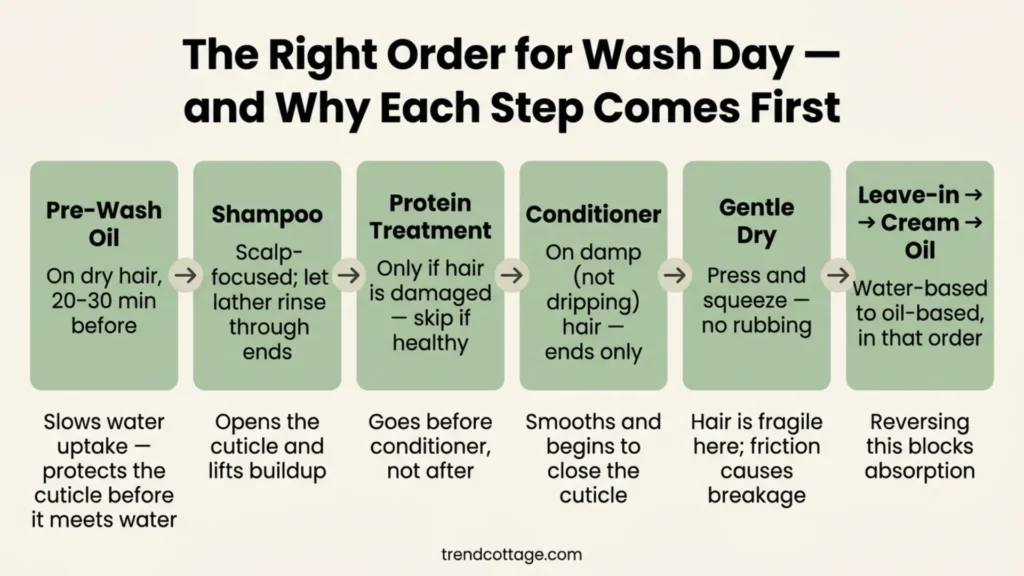
Wash day is where most sequence mistakes happen, because there are more steps to get out of order. Here’s the reasoning behind each one.
Pre-wash treatment
Applying a penetrating oil to dry hair 20–30 minutes before shampooing reduces how much water the strand absorbs during washing. Hair that soaks up water too fast swells and contracts repeatedly — and that mechanical stress accumulates over time, especially at the ends where the cuticle is oldest and most worn. The oil slows that absorption. It also gives the shampoo something specific to lift, rather than letting it strip the hair’s own lipid layer directly.
Coconut oil works well here because its molecular structure is small enough to enter the cortex rather than just sitting on the surface. Olive oil is a reasonable alternative. Fine hair that loses volume easily can skip this entirely, or apply a small amount to the ends only — the mid-shaft and scalp don’t need it.
Also Visit : Hair Care Routine for Dandruff That Actually Controls It
Shampoo
Shampoo works by attracting oil and being rinsed away with it. For that to happen efficiently, it needs real contact with the scalp, not a thorough scrub all the way to the ends. Work it in with your fingertips at the scalp — no nails — and let the lather travel down the lengths as you rinse. That’s enough to cleanse the mid-shaft and ends without over-stripping them. The American Academy of Dermatology’s guidance on how often to shampoo recommends focusing lather at the scalp and setting your frequency based on how quickly your scalp actually produces oil — not based on a fixed weekly schedule.
Double-shampooing is useful if you’ve used heavy oils or a lot of styling products — the first pass breaks down the buildup, the second actually cleanses. On low-manipulation or colour-treated hair, one round is enough.
Protein treatment timing
If your hair is both damaged and dry, you’ll likely need both a protein treatment and a deep conditioner at some point. These don’t go on together. Protein first, conditioner second. Protein fills in the gaps of a weakened cuticle. Conditioner then smooths and seals over it. Applying conditioner first and protein second is like painting over filler before the filler has set — the protein can’t bond to a strand that’s already coated. Rinse the protein treatment out completely before reaching for the conditioner.
Healthy hair doesn’t need protein treatments frequently. Too much protein makes hair feel stiff and snap rather than stretch. If your hair feels like straw after a treatment, the issue is over-treating with protein, not under-conditioning.
Conditioner
Squeeze out the excess water after rinsing before you apply conditioner. Soaking-wet hair dilutes the product before it has a chance to work. Damp hair lets it make actual contact with the cuticle. Apply from mid-lengths to ends and avoid the scalp — conditioner used regularly on the scalp leaves residue that can build up around follicles over time.
The Drying Window

Nobody names this as a step. It is one. What you do to your hair between rinsing the conditioner and applying post-shower products changes everything that follows.
Wet hair is more elastic than dry hair — but more fragile too. The proteins in the cortex rearrange slightly when water enters the shaft, which makes the strand pliable and also more susceptible to mechanical stress. Rubbing with a towel stresses the raised cuticle and breaks it before you’ve even started styling. The better approach is pressing and squeezing moisture out with a microfibre towel or a cotton T-shirt, moving from the root area downward rather than scrubbing back and forth.
If you use a diffuser or blow-dryer, the AAD’s advice on reducing hair damage from heat tools is to keep the dryer moving and use the lowest effective heat setting. Concentrated heat sitting on one section for more than a few seconds causes more structural damage than slightly higher heat that keeps moving. Letting hair reach about 80% dry before introducing any heat tool also reduces the total heat exposure needed.
Also Visit : Simple Hair Care Routine That Actually Fits Your Week
What Goes on After the Shower
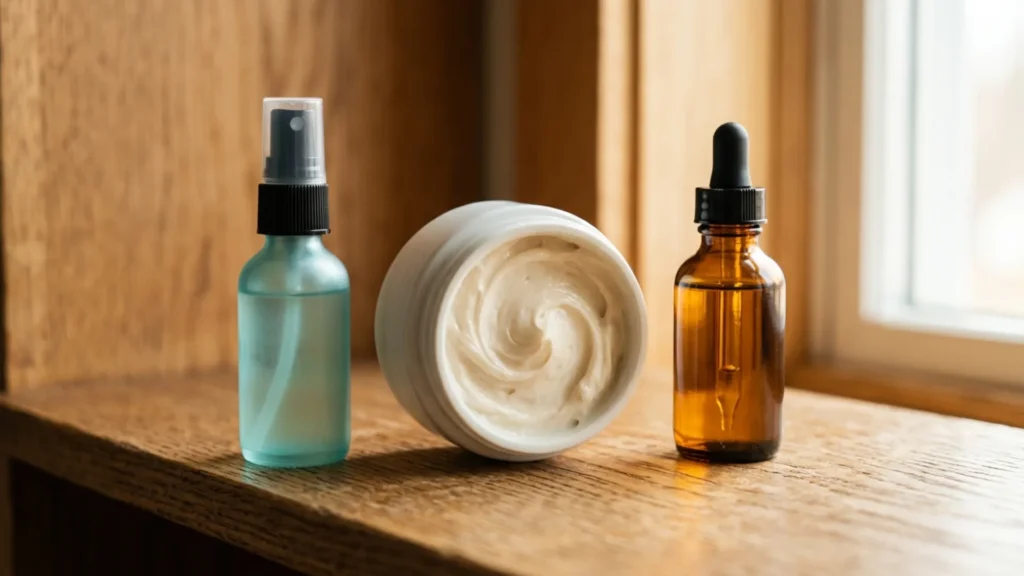
This is the part of the hair care routine step by step where the most sequence errors happen — specifically, where oil goes before leave-in and blocks everything.
Leave-in first, then cream, then oil
The logic moves from water-based to oil-based. Leave-in conditioners (water-based or mostly water) need to reach the hair shaft directly to add or hold moisture. Creams sit over those and provide emollient smoothing and some hold. Oils come last because they’re sealants — they lock in what’s underneath and protect the cuticle from friction and moisture loss through the day.
Applying oil first and leave-in second puts a barrier between the leave-in and the hair it needs to reach. The leave-in then sits on top of the oil, doesn’t absorb, and either flakes off or builds up. A review of hair cosmetic penetration published in the International Journal of Trichology confirms that molecular weight determines how deep a product can enter the cortex — which is the biochemical reason lighter, water-based products need first contact with the strand before heavier ones go on top.
Whether cream goes before or after the oil is the LOC versus LCO question, and it comes down to porosity. High-porosity hair, which loses moisture fast, often benefits from the oil placed before the cream to slow absorption slightly. Low-porosity hair, which resists moisture uptake, tends to do better with cream before oil so there’s less barrier to work through. Run one method for four wash days, then switch if it isn’t working. The difference is usually clear within two weeks.
Between Wash Days
A hair care routine step by step doesn’t end on wash day. The days in between are where the protective work happens, and skipping them means wash day has to undo more damage each time.
Light scalp oils or serums — jojoba, squalane, or a targeted scalp serum — can go directly onto the scalp on dry hair between washes. These absorb rather than coat, and they don’t interfere with the next wash if used in small amounts. A thick, heavy hair oil applied to the scalp is a different product for a different purpose. Scalp skin behaves like the skin on your face; heavy occlusives can clog follicles and aggravate a dry or sensitive scalp rather than help it.
Mechanical friction causes more daily breakage than most people connect to their routine. Protective styles — loose buns, braids, soft twists — reduce how much hair rubs against clothing and itself. A satin or silk pillowcase overnight cuts the friction on the hair shaft during the 6–8 hours you’re asleep. Over weeks and months, that compounds. Ends retain more length, and you’ll see fewer broken strands on your brush each morning.
Dry shampoo buys time but it accumulates. It absorbs oil but doesn’t remove it. After two days on the scalp, it starts to build up and can contribute to sensitivity and dullness at the root. Use it as a bridge, not a replacement.
Also Visit : What’s the Best Hair Care Routine for Low Porosity Hair?
Wash Day vs. Between-Wash Days at a Glance
| Step | Wash Day | Between Washes |
|---|---|---|
| Pre-wash treatment | Optional — oil on dry hair 20–30 min before | Not applicable |
| Cleansing | Shampoo (scalp-focused, 1–2 rounds) | Skip — or co-wash for very dry textures only |
| Conditioning | Rinse-out conditioner on damp hair, ends only | Refresh spray or leave-in mist only |
| Treatment | Protein or deep conditioner — not both every wash | Not needed |
| Post-shower layering | Leave-in → cream → oil (water-to-oil order) | Light oil or serum on lengths if dry |
| Scalp | Cleanse thoroughly; keep conditioner off it | Scalp serum or jojoba if dry or tight |
| Heat protection | Apply to damp hair before any tool | Apply again if styling with heat between washes |
Hair Care Routine Step by Step for Different Hair Types
The sequence above is the foundation. Adapting it to your hair type comes down to a few specific adjustments — not a different routine from scratch.
Fine hair does better without the pre-wash oil and with a lightweight, spray-format leave-in rather than a cream. Heavy products sit on fine strands rather than absorbing, and the result feels greasy without actually moisturising anything. If your hair collapses after conditioning, try halving the amount of conditioner and keeping it strictly on the last two inches of the ends.
Thick or coily textures generally need longer conditioning times — 5–10 minutes rather than the time it takes to shave your legs — and a heavier sealant after the shower. The cream step in the post-shower sequence isn’t optional for very coily hair; it’s what slows moisture loss between wash days. For defined curls, applying leave-in and curl cream to soaking-wet hair and then scrunching out the water (rather than pressing or rubbing) gives more definition than applying to towel-dried hair.
Colour-treated hair needs one timing adjustment: wait at least 72 hours after a colour service before using a protein treatment. The hair shaft is temporarily more porous right after colouring, and heavy protein applied too soon makes strands feel stiff and brittle rather than stronger. It’s also worth extending wash intervals after a colour appointment — less frequent cleansing preserves colour noticeably longer, as the Cleveland Clinic explains in its guide to how often you should wash your hair.
Key Takeaways
- Apply any pre-wash oil to dry hair before shampooing — not to wet hair, and not after.
- Squeeze out excess water before applying conditioner. Soaking-wet hair dilutes the product.
- If using both protein treatment and conditioner, protein goes first. It fills the cuticle; conditioner seals over it.
- Post-shower layering goes water-based to oil-based: leave-in first, sealant oil last. Reversing this blocks absorption.
- Between wash days, a light scalp serum, protective styles, and a satin pillowcase do more work than most people realise.
Frequently Asked Questions
Does the order of hair care products actually make a difference?
Yes — and it’s noticeable quickly. Products work in layers, and a heavier or oil-based product applied first creates a barrier lighter products can’t get through. Most people see a difference in texture and dryness within two or three wash days of correcting the sequence, without changing the products at all.
Can I apply hair oil before leave-in conditioner?
Generally, no. Oil applied before leave-in creates a barrier that stops the water-based leave-in from reaching the hair shaft. Apply leave-in to damp hair first, let it settle for a minute, then seal with oil. The one exception: a very light oil used specifically as a heat protectant before blow-drying, which goes on before any styling products.
How often should each step in the routine be done?
Shampoo as often as your scalp genuinely needs it — for most people that’s every 2–4 days, not daily. Condition every wash. Use a protein treatment or deep conditioning mask every 2–4 weeks, not every session. Between-wash habits like scalp serums and protective styles can be used daily if helpful.
Where does heat protectant fit in the sequence?
Heat protectant goes on damp or mostly-dry hair before any heat tool — always before, never after. It needs to coat the strand to form a barrier before heat is applied. Applying it after a blow-dry and then straightening again means the first and largest heat exposure happened with no protection at all.
What if my hair feels worse after following a correct routine?
Check three things: product quantity (too much of anything — even in the right order — causes buildup and heaviness), protein-moisture balance (too much protein makes hair stiff and snappy; too much moisture makes it limp with no bounce-back), and porosity match (a high-porosity formula used on low-porosity hair often sits on top without absorbing). Strip back to three products for two weeks, then reintroduce one at a time.
Written by Anna Anderson for Trend Cottage.