Hair Care Routine Tips Built Around Your Hair Type
You copy a routine from someone with your exact haircut on Pinterest, buy the three products they used, follow the same order, and your hair does the opposite of what it’s supposed to. That’s the problem with most generic hair care routine tips: they’re built for someone else’s hair, not yours.
A routine that actually works isn’t one set of steps everyone follows in the same order. It comes down to three things: how your hair absorbs and holds moisture (its porosity), how often your scalp really needs a wash, and the climate you live in. Get those three right and most of the guesswork disappears, no more chasing whatever routine went viral this week.
This isn’t a list of universal rules. It’s a way to figure out which rules apply to you, and just as importantly, which ones don’t.
Start With What Your Hair Actually Does, Not What Instagram Does
Before you touch a single product, it helps to know three things about your own hair. First, its porosity, how easily it takes in and holds onto water and moisture. Second, how quickly your scalp actually gets oily or flaky, which decides how often you should wash. Third, the climate and water you live with, because a routine built in a dry, cold city behaves differently in a humid one.
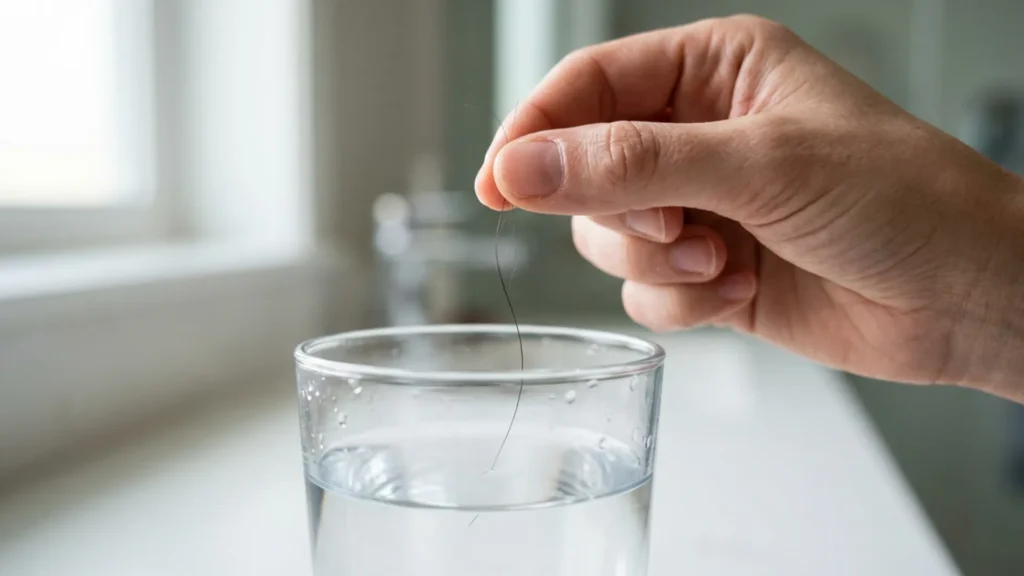
None of these require a lab. You can test porosity with a strand of clean hair dropped in a glass of water: it floats if the cuticle is tight and resists moisture (low porosity), sinks if the cuticle is more open and takes in water fast (high porosity), or hovers somewhere in between (medium porosity). Watch your scalp for two weeks without changing anything, and you’ll notice your real wash cycle instead of the one you think you’re supposed to follow.
Once you know where you land on those three, the hair care routine tips ahead are just filling in the blanks that fit you.
How Porosity Changes Every Step You Take
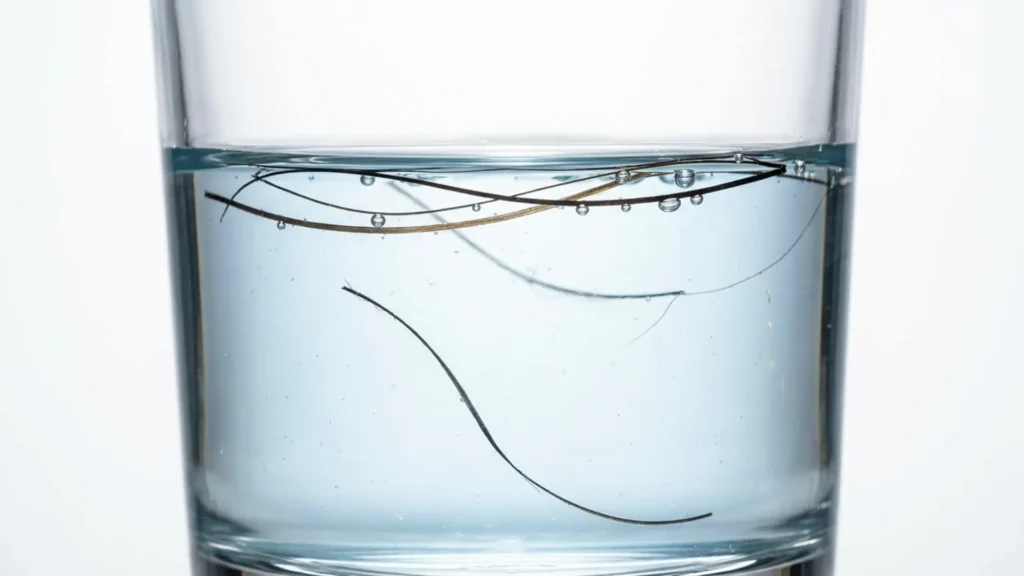
Porosity decides almost everything downstream. Low porosity hair has a tight cuticle, so products tend to sit on top instead of soaking in, which shows up as buildup, greasy roots, or hair that never quite feels clean after a rinse. Warm, not hot, water and lighter, water-based leave-ins work better here, because heat helps lift the cuticle just enough for product to get in.
High porosity hair takes in moisture fast and loses it just as fast. It usually needs richer conditioners, a leave-in every time you wash, and a light oil sealed over the top to slow down how quickly that moisture escapes. Skipping the sealing step is the single biggest reason high porosity hair looks great right after washing and rough by the next morning.
Medium porosity sits in the middle and tolerates more product variety, but it’s still worth checking every few months, since porosity can shift after heat damage, coloring, or a harsh clarifying shampoo used too often.
Also Visit : Hair Care Routine for Hair Fall That Actually Works
Hair Care Routine Tips for Every Wash Frequency

Wash frequency gets treated like a moral question online, as if washing daily or once a month says something about how well you take care of yourself. It doesn’t. It’s a scalp-oil question, and the answer is almost always specific to you.
An oily scalp with fine, straight hair often needs a wash every day or two, because sebum travels down thin strands fast and weighs them flat. The American Academy of Dermatology recommends basing your wash frequency on scalp oil rather than a fixed schedule everyone follows. Thicker, curlier, or coilier hair produces a similar amount of scalp oil, but it has to travel much further down a curved strand, so two to three washes a week, sometimes just one, keeps it clean without stripping it dry.
| Hair Type | Typical Porosity | Wash Frequency | One Adjustment That Helps |
|---|---|---|---|
| Fine, straight | Low to medium | Every 1–2 days | Skip heavy oils near the roots; they flatten fine hair fast |
| Wavy | Medium | Every 2–3 days | Rinse conditioner with cooler water to cut down on frizz |
| Curly | Medium to high | Every 4–7 days | Detangle while soaking wet, with conditioner still in |
| Coily or tightly coiled | Low to high, varies a lot | Every 1–3 weeks | Shampoo the scalp directly, moisturize the length daily between washes |
These numbers are starting points, not rules. If your scalp gets itchy or flaky before the “expected” wash day, that’s your body telling you the schedule is wrong for you specifically, not a sign you’re doing something wrong.
Where Water and Climate Quietly Wreck a “Perfect” Routine
A routine that worked perfectly in one city can fall apart after a move, and it’s rarely the products’ fault. Hard water, water with a high concentration of calcium and magnesium, leaves a residue on hair that makes it feel coarse and look dull. Research into how hair absorbs minerals from hard water has found that these minerals settle into the outer cuticle layer, changing how the fiber behaves over time. If your shampoo suddenly won’t lather the way it used to, or you notice a chalky film after rinsing, hard water is worth checking before you blame your products.
Humidity works in the opposite direction from porosity. High porosity hair swells and frizzes fast in humid air because the open cuticle lets moisture in from everywhere, not just your shower. Low porosity hair, meanwhile, often looks its best in humidity and dries out fast the moment the air turns cold and dry, which is why a routine built for August can leave the same hair brittle by January.
A simple fix for hard water is a monthly clarifying rinse or a shower filter. For seasonal humidity swings, switch between a lightweight gel for summer and a heavier cream or butter for winter, rather than trying to force one product to do both jobs.
Also Visit : How to Build a Natural Hair Care Routine That Actually Holds
A Week, Adjusted for Three Different Hair Types
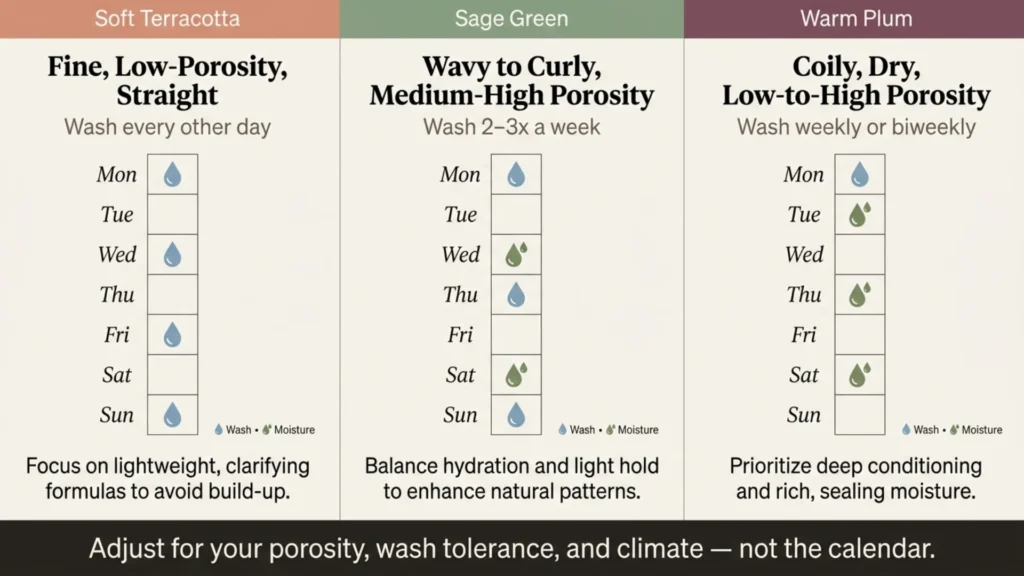
Here’s what a week actually looks like once porosity, wash tolerance, and climate are factored in, for three different starting points.
Fine, low-porosity, straight hair
Wash every other day with a lightweight, clarifying-adjacent shampoo to stop product buildup from weighing down thin strands. Skip heavy conditioner near the roots; apply it from mid-length down instead. On non-wash days, dry shampoo at the roots and a light leave-in on the ends keep things fresh without adding weight.
Wavy to curly, medium-to-high porosity hair
Wash two to three times a week with a moisturizing shampoo, and condition every single time, since this hair type rarely gets “too much” conditioner. Detangle in the shower while conditioner is still in, apply a leave-in and a curl cream on soaking wet hair, then seal with a small amount of oil on the ends only.
Coily, low-to-high porosity, dry hair
Wash once a week, or every other week if the scalp tolerates it, and always with the shampoo focused on the scalp rather than the length. The American Academy of Dermatology notes that thick, curly, coily hair typically only needs washing every two to three weeks at minimum for scalp and hair health. Between washes, a daily leave-in and a light oil massage keep the scalp and ends from drying out, and a satin bonnet or pillowcase protects overnight moisture.
The Order Products Actually Need to Go On
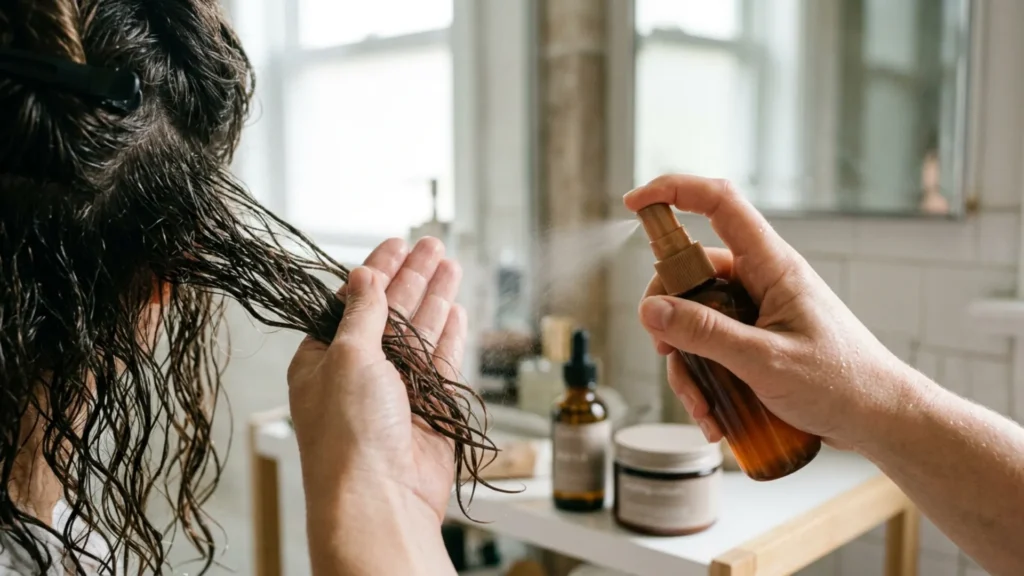
Layering products in the wrong order is a quiet way to waste good products. The general rule: thinnest to thickest, water-based before oil-based, and heat protectant always goes on before any hot tool, never after.
On damp hair, that usually looks like this: leave-in conditioner first, since it’s mostly water and needs to reach the hair shaft while the cuticle is still slightly open from washing. Next comes any styling product like a curl cream, mousse, or gel, which shapes the hair while it’s still pliable. Oil goes last, if you use one, because its job is to sit on the outside and seal in everything underneath. Putting it on first just blocks the water-based products from getting through at all.
If heat styling is part of the routine, the heat protectant goes on right before the flat iron, curling iron, or blow dryer touches the hair. Applying it earlier and letting it sit under other products can weaken how well it actually protects.
Also Visit : Hair Care Routine for Hair Growth: Build It Right
Signs Your Routine Isn’t Actually Working

A routine can look right on paper and still be wrong for your hair. Here’s how to spot it by symptom instead of guessing.
- Constant buildup or a waxy feel. Usually low porosity hair rejecting heavier products; switch to lighter, water-based formulas and add a monthly clarifying wash.
- Frizz that shows up hours after styling. Often a humidity mismatch; a humectant works in dry air but backfires in humid air, so check what’s actually in your product.
- Hair that feels dry right after conditioning. A sign the conditioner isn’t rich enough for your porosity, or that it’s not staying on long enough to work.
- Breakage concentrated at the same spot every time. Check hair ties, pillowcases, or a heat tool setting that’s too high before assuming it’s the products.
- Flat roots by midday. Often too much product too close to the scalp, not a diet or health issue; move product application further down the length.
Most of these fix themselves within two to three washes once the actual cause is addressed, rather than just the symptom.
Key Takeaways
- Porosity, wash frequency, and climate decide more about your routine than any product brand does.
- A float test with a clean strand of hair gives a rough porosity read in about five minutes.
- Hard water and seasonal humidity can undo a routine that worked fine somewhere else.
- Product order matters: water-based leave-in first, styling product next, oil last if you use one.
- Most “my routine stopped working” problems trace back to one mismatched step, not a total overhaul.
Frequently Asked Questions
How do I know my hair’s porosity without buying a test kit?
Drop a clean, product-free strand of hair into a glass of room-temperature water and watch it for a few minutes. Floating suggests low porosity, sinking suggests high porosity, and hovering in the middle suggests medium porosity.
Can I use the same shampoo year-round if my climate changes a lot?
You can, but you’ll likely need to change how much conditioner, oil, or leave-in you layer on top as humidity shifts. The shampoo matters less than what you build around it.
Is washing hair every day actually bad for it?
Not inherently. It depends on your scalp’s oil production and hair type. Fine, straight, oily hair often handles daily washing fine, while thicker or curlier hair usually doesn’t need it and can dry out from it.
Why does my routine work at home but not on vacation?
Water hardness and humidity change by location, and both affect how products behave on your hair. A travel-size clarifying shampoo and a lightweight leave-in cover most of that gap.
How long should I try a new routine before deciding it’s not working?
Give it two to three full wash cycles. Hair needs time to shed old product buildup and adjust, so judging a routine after one wash usually leads to switching too soon.
If you’ve figured out your own porosity or wash rhythm through trial and error, it’s worth sharing in the comments. The fixes that work are almost always specific, and someone with your exact hair type is probably reading this looking for exactly that.
Written by Anna Anderson for Trend Cottage.