Soft Hair Care Routine: What Actually Makes Hair Softer

The most common mistake with rough hair is adding more conditioner and hoping for the best. It feels logical. Hair seems dry, so you add moisture. But rough hair has several causes, and only one of them is dryness. A soft hair care routine works when it targets the cause, not just the feeling.
Quick answer: A soft hair care routine has three jobs. It cleans the scalp without scrubbing the lengths, it puts conditioner where the hair is driest, and it cuts the friction from towels, brushes and heat. If your hair still feels rough after a few weeks of that, buildup or hard water is the likelier culprit than dryness.
Below, you’ll work out which cause is yours, then match the routine to it. One honest limit first: hair that’s already damaged can’t repair itself. You’re smoothing what’s there and protecting what grows in.
Why Rough Hair Stays Rough
Every strand is wrapped in an outer layer called the cuticle, made of flat cells that overlap like roof tiles. When the tiles lie flat, light bounces off evenly and the hair feels slippery. When they lift or chip, the surface catches on your fingers, your comb and the neighboring strands.
That catch is the roughness you feel. A dermatology review of hair cosmetics describes this layered structure and how shampoos and conditioners act on it. Lifted cuticles aren’t the only route, though. A film of product or minerals can coat the surface and make hair feel stiff or waxy even when the cuticle is fine.
It explains why one conditioner can work wonders for your friend and do nothing for you. Before you buy anything, read what your hair is telling you.
Also Visit : Hair Care Routine Tips Built Around Your Hair Type
Match the Feel to the Cause
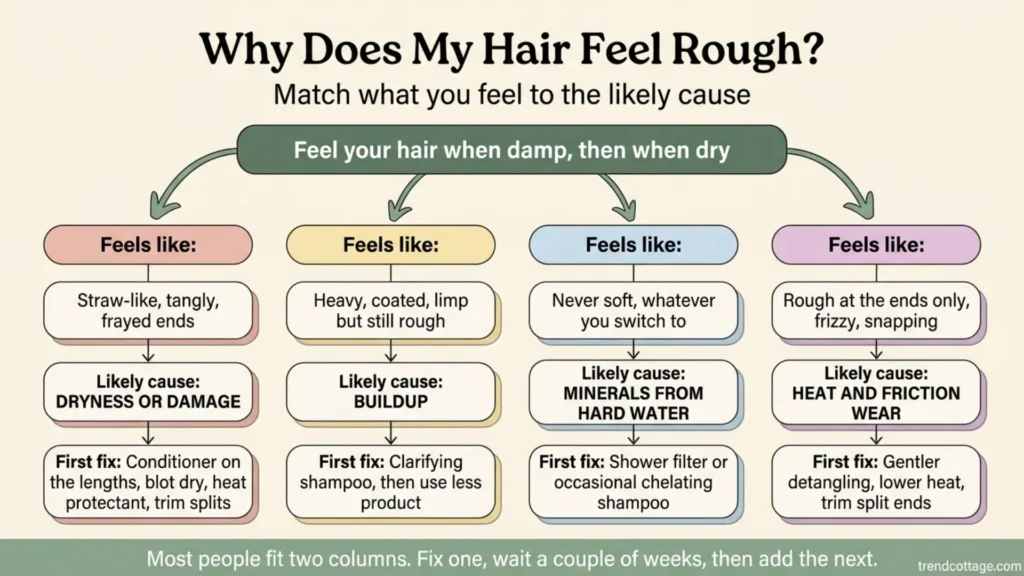
Run your fingers down a damp section of hair, then again once it’s dry. Which of these sounds like yours?
Straw-like hair that tangles and frays
This is classic dryness or damage. The hair soaks up water fast and loses it just as fast, and the ends look thin or split. Bleach, color, flat irons and years of brushing all chip the cuticle. No routine rebuilds those strands, but a good one smooths the surface so they snag less and stops the damage creeping higher.
Heavy, coated and limp but still rough
If your hair looks dull, goes flat by midday and feels faintly waxy, suspect buildup. Silicones, oils, butters and leave-in creams can pile up faster than a mild shampoo clears them, especially if you wash every week or two. More conditioner just adds another layer. A clarifying shampoo resets the surface, and using less product afterward keeps it that way.
Never quite soft, whatever you switch to
When three different conditioners fail, look at your water. Hard water carries dissolved minerals, and they can leave a thin film that makes hair feel stiff and look dull. Soap scum on the shower door is one clue. A shower filter or an occasional chelating shampoo (one made to bind minerals) is a fairer test than a fourth conditioner, though it won’t transform everyone’s hair.
Rough at the ends only, with frizz and snapping
Here the cause is usually wear, not moisture. Heat tools, a ponytail at the same spot every day, towel rubbing and brushing wet hair all wear the outer layer down over time. The fix is mostly habit. Detangle gently, turn the heat down, and trim ends that have already split, because splits can travel up the strand.
Most people fit two of these. That’s normal. Start with the closest match and add the next fix after a couple of weeks, so you can tell what’s working.
Build a Soft Hair Care Routine You’ll Actually Keep

This base routine suits most hair types. Change how often you do it, not the order.
- Rinse first. Spend a full minute under lukewarm water before any product touches your hair. It loosens dirt and helps shampoo spread with less rubbing.
- Shampoo the scalp only. Use your fingertips, and let the suds slide down the lengths as you rinse. Scrubbing the lengths roughs up the cuticle.
- Condition the lengths. Fine or straight hair usually does best with conditioner on the ends only. Dry, thick or curly hair can take it from roots to ends. Leave it in for a couple of minutes.
- Detangle with conditioner still in. Use a wide-tooth comb or your fingers, starting at the ends and working up.
- Rinse well. Leftover conditioner sits on the hair and feels heavy later.
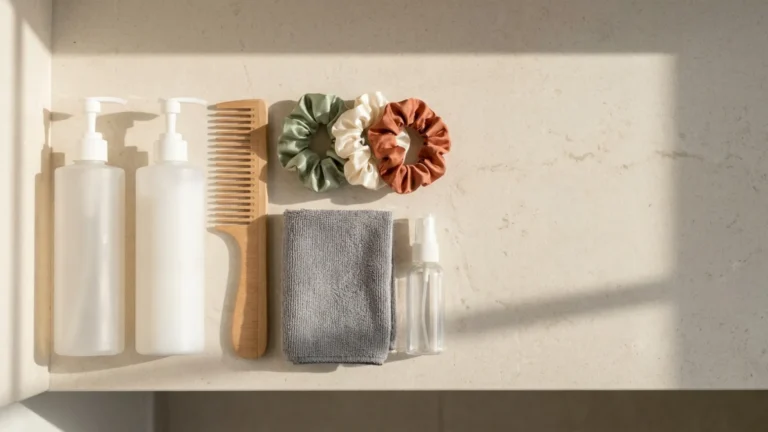
- Blot, don’t rub. Press water out with a soft cotton T-shirt or a microfiber towel, then leave the hair alone until it’s damp-dry.
Most of this follows dermatologist-backed tips for healthy hair, which also suggest a wide-tooth comb for wet hair and conditioner along the full length for dry or curly hair.
How often should you do it? Wash when your scalp needs it, not when the calendar says so. Oily scalps may want a wash every day or two, while dry, thick or curly hair can go far longer between washes. If you’re not sure, stretch the gap by a day and see how your scalp feels.
Choosing products is simpler than the shelf makes it look. A gentle shampoo and a conditioner made for your hair type will do. Judge them by how your hair feels two or three washes later, not by how it feels in the shower.
Stick with this soft hair care routine for a few weeks before judging it. Hair changes slowly, and switching products every wash muddies the results.
Also Visit : Build a Hair Care Routine for Thick Hair Step by Step
Habits That Quietly Undo the Work

You can follow every step above and still fight your own habits. A soft hair care routine lives or dies on the small daily stuff more than on the shampoo you pick.
- Brushing hair while it’s soaking wet, when it stretches and snaps most easily.
- Rubbing hair with a towel, which lifts the cuticle and adds frizz.
- Using flat irons or curling irons with no heat protectant, and always at the hottest setting.
- Sleeping with hair loose on a rough pillowcase or tied tight in a high ponytail. Some people find a silk or satin pillowcase cuts morning tangles, and a loose braid keeps strands from rubbing together.
- Layering serum, oil and cream on the same day, then wondering why hair feels heavy.
Pick the two that sound most like you and fix those first. Perfect isn’t the goal.
Small Upgrades Worth Adding
Once the base routine feels automatic, three extras are worth trying, one at a time.
Deep conditioners and hair masks suit dry or damaged lengths. They work on the same idea as your regular conditioner, just with more of it. In a review of hair conditioning agents, researchers note that heat and rough handling strip hair of its smooth look, and that conditioners are the main way to bring it back. Try one weekly, and drop back if your hair starts to feel limp.
Leave-in cream or a few drops of oil on damp ends slows moisture loss and helps strands glide past each other. Use far less than feels right. Too much sends you straight back to the coated hair described earlier.
Clarifying shampoo every few weeks clears buildup if your hair feels coated. Test any new product on a small patch of skin first, and stop if it stings or itches. DIY kitchen masks are fine if you enjoy them, but they mostly rinse away, so don’t count on them to change how your hair feels long term.
Also Visit : Simple Hair Care Routine That Actually Fits Your Week
What to Expect Over the First Two Months

A soft hair care routine shows up in stages. These are rough editorial expectations, not results from a study, and hair varies a lot from person to person.
In the first few washes, the surface should feel smoother and detangle faster, especially if buildup or towel rubbing was the problem. It’s the quickest win, because you’re removing things, not growing anything.
Around a month in, ends look less frizzy and hair holds its softness longer between washes. If you tried a shower filter or chelating shampoo, you’ll know by now whether it made a difference.
By two months, new growth is coming in undamaged, and the gap between it and your oldest ends starts to show. That’s a good moment for a trim, which makes everything else feel softer.
If nothing has changed after two months of steady care, or your hair suddenly turns rougher or starts shedding, talk to a dermatologist. A sudden change in texture is worth a professional look.
Questions People Ask
How can I make my hair soft naturally?
Start with handling, not ingredients. Blot instead of rubbing, comb gently, keep heat low and trim split ends. Lukewarm water and a mild shampoo on the scalp help too. Kitchen oils and masks can add slip, but they won’t fix roughness caused by minerals or buildup.
How often should I wash for soft hair?
It depends on your scalp and texture. Oily scalps often need frequent washing, while dry, thick or curly hair usually needs it less. Stretch the gap until your scalp tells you it’s too long. Washing too rarely can leave buildup, and that can feel just as rough as dryness.
Why does my hair still feel rough after conditioner?
Conditioner only fixes roughness that comes from dryness. If a film of product or minerals is coating your hair, more conditioner won’t get through it. Try a clarifying wash, then reassess. Check that you’re rinsing the conditioner out fully, too.
Key Takeaways
- Rough hair has four common causes: dryness, buildup, minerals in water and wear. Conditioner only helps with the first.
- Shampoo the scalp, condition the lengths, detangle with conditioner in, and blot dry.
- Damaged ends can’t heal. They can only be smoothed or trimmed off.
- Change one thing at a time and give it a few washes before judging.
- A soft hair care routine stays simple. Extra products often work against it.
Which of the four causes sounds like your hair? Tell us in the comments, and save this post for your next wash day. If your soft hair care routine needs a fresh start, our other hair care guides are a good next read.
Written by Anna Anderson for Trend Cottage.