
Tips to Repair Damaged Hair Fast Without Cutting It All Off
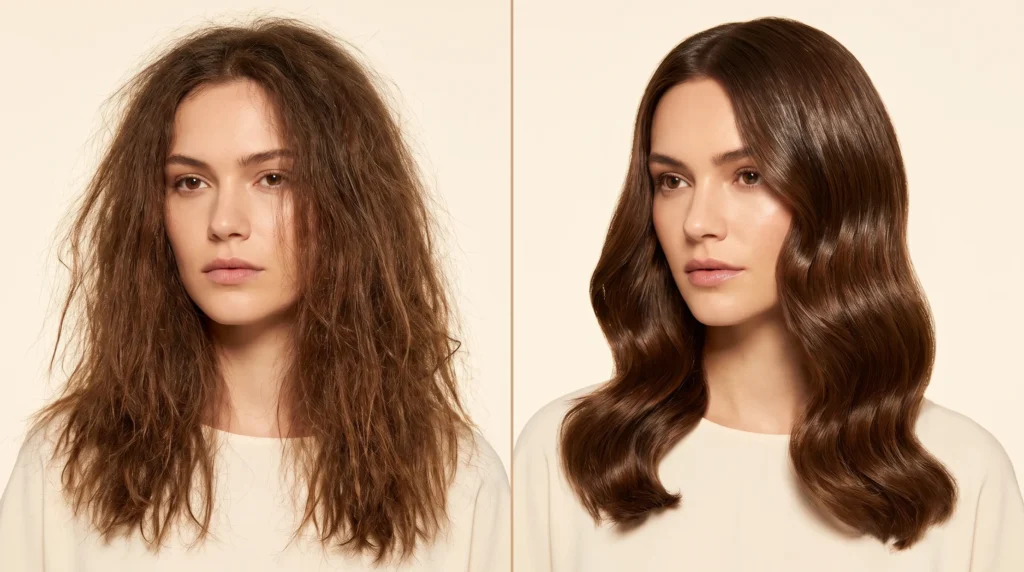
If your hair snaps when you stretch it, feels like straw after washing, or has split ends crawling up the shaft, you are dealing with hair damage — and you need the right tips to repair damaged hair before the problem gets worse. The good news is that most damage is reversible when you understand what is happening inside the hair strand and approach the repair correctly. You do not have to cut everything off to start over.
This guide gives you a science-based, step-by-step approach to recovering damaged hair — from understanding what kind of damage you have, to the protein and moisture treatments that restore strength, to DIY masks you can make tonight. Every tip here is practical and specific, not vague or generic.
What Hair Damage Actually Is — Cuticle vs Cortex
To repair damaged hair effectively, you need to understand what you are actually repairing. Hair has three layers: the cuticle (outer layer of overlapping scales), the cortex (middle layer that gives strength and elasticity), and the medulla (inner core, mostly absent in fine hair).
Cuticle damage is the most common and the most repairable. The cuticle scales lift when exposed to heat, chemical treatments, rough towel drying, or alkaline products. Lifted cuticles make hair look frizzy and dull, and they allow moisture to escape quickly. This type of damage responds well to deep conditioning, protein treatments, and pH-balancing rinses.
Cortex damage is more serious. It happens when heat, bleach, or chemical relaxers break the internal protein bonds (keratin bonds) that hold the hair’s structure together. Hair with cortex damage stretches too much before breaking, feels mushy when wet, and has no elasticity. This requires bond repair treatments and consistent protein work — and in severe cases, cutting is the only real solution.
The first step in using these tips to repair damaged hair is knowing which type of damage you have.
The Elasticity Test — Check Your Damage Level First
Before applying any treatment, do this test: take a single wet strand of hair and stretch it gently between two fingers. Healthy hair stretches about 30% of its length before springing back. Here is how to read the results:
- Strand springs back immediately after stretching: Healthy hair with good protein-moisture balance. Use maintenance treatments.
- Strand stretches a little then returns slowly: Mild damage — moisture depleted. Focus on deep conditioning and moisture restoration first.
- Strand stretches a lot without returning (mushy, limp): Severe protein loss and cortex damage. Prioritize protein treatments immediately before adding moisture.
- Strand snaps immediately with no stretch: Over-proteinized or very brittle. Needs intensive moisture treatment — avoid protein treatments until moisture is restored.
This test tells you exactly where to start. Misidentifying your damage type and applying the wrong treatment (protein when you need moisture, or moisture when you need protein) makes damaged hair significantly worse.
Protein-Moisture Balance — The Most Important Concept to Understand
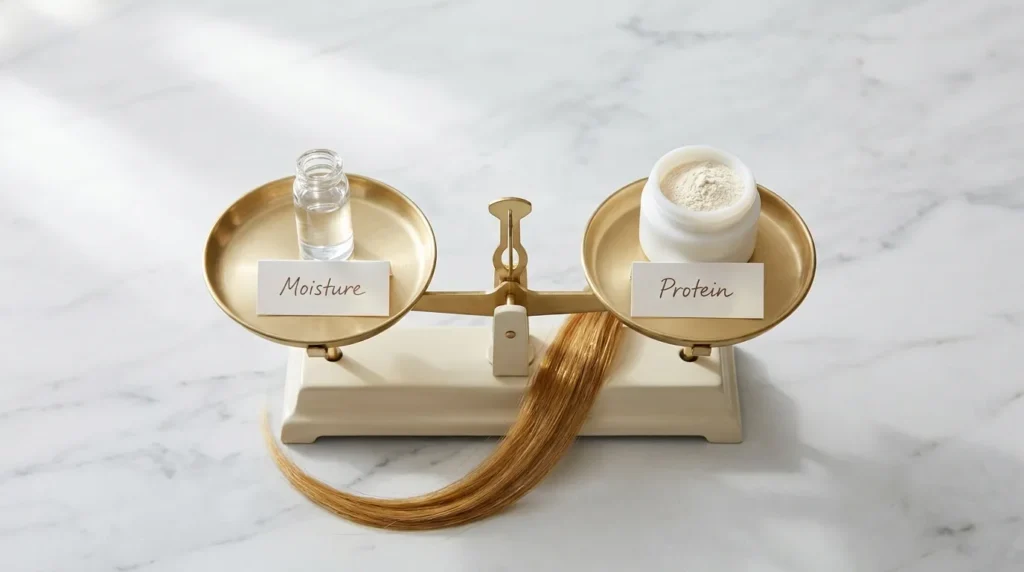
The most critical concept behind every tip to repair damaged hair is protein-moisture balance. Healthy hair contains both — protein for structure and strength, moisture for flexibility and softness. Damaged hair has lost one or both.
When hair is protein-deficient (too much moisture, not enough protein), it stretches too easily, feels limp and mushy, and breaks under minimal tension. When hair is moisture-deficient (too much protein, not enough moisture), it feels hard, stiff, and snaps sharply without any stretch.
Your repair plan depends entirely on which side of the balance your hair has fallen toward. Most heat-damaged hair needs moisture first. Most chemically processed or bleached hair needs protein first. Use your elasticity test results from the section above to decide your starting point — then alternate between protein and moisture treatments to move back toward balance.
Protein Treatments — Rebuild the Structure of Damaged Hair
If your elasticity test showed that your hair stretches too much or feels mushy, your first priority is a protein treatment. Protein temporarily fills in the gaps and cracks in damaged cuticles and cortex, restoring strength and reducing breakage while your hair continues to grow in healthier.
There are two types of protein treatments: light (used for mild damage, weekly) and heavy (used for severe damage, once every 4 to 6 weeks). Using a heavy protein treatment too often makes hair stiff and brittle — always follow every protein treatment with a moisturizing deep conditioner.
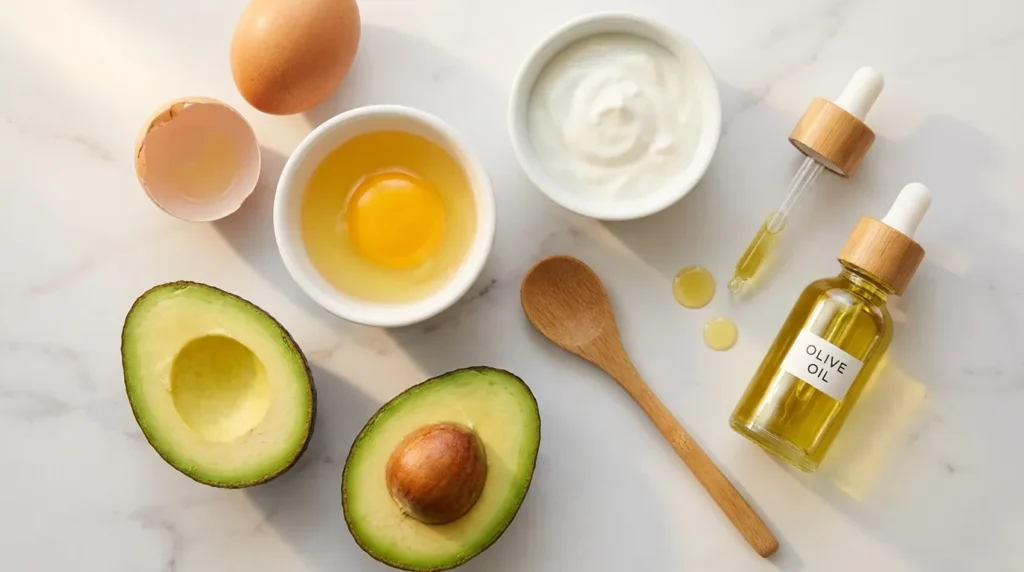
DIY Egg and Yogurt Protein Treatment (Light — for mild damage):
- Beat 2 eggs thoroughly in a bowl — whole eggs for dry hair, whites only for oily hair.
- Add 3 tablespoons of plain unsweetened yogurt and 1 tablespoon of olive oil.
- Mix until smooth and consistent.
- Apply to dry hair from root to tip, coating every section.
- Cover with a plastic shower cap and leave for 30 minutes.
- Rinse with cool water first, then shampoo with a gentle sulfate-free shampoo. Never rinse egg with warm or hot water — it will cook in your hair.
- Immediately follow with a deep moisturizing conditioner for 20 minutes.
DIY Avocado and Honey Protein Mask (Medium — for moderate damage):
- Mash one ripe avocado until completely smooth — no chunks.
- Add 1 tablespoon of raw honey and 1 tablespoon of coconut oil.
- Apply generously throughout hair, focusing on the most damaged sections (usually mid-lengths to ends).
- Cover with a shower cap and sit under a hooded dryer for 20 to 30 minutes, or wrap a warm towel around the cap.
- Rinse with cool water and follow with a moisturizing deep conditioner.
Frequency guide: Light protein treatments — once a week. Medium protein masks — every two weeks. Always alternate with a moisture treatment the following wash day.
Deep Conditioning for Damaged Hair — Done Differently Than Normal
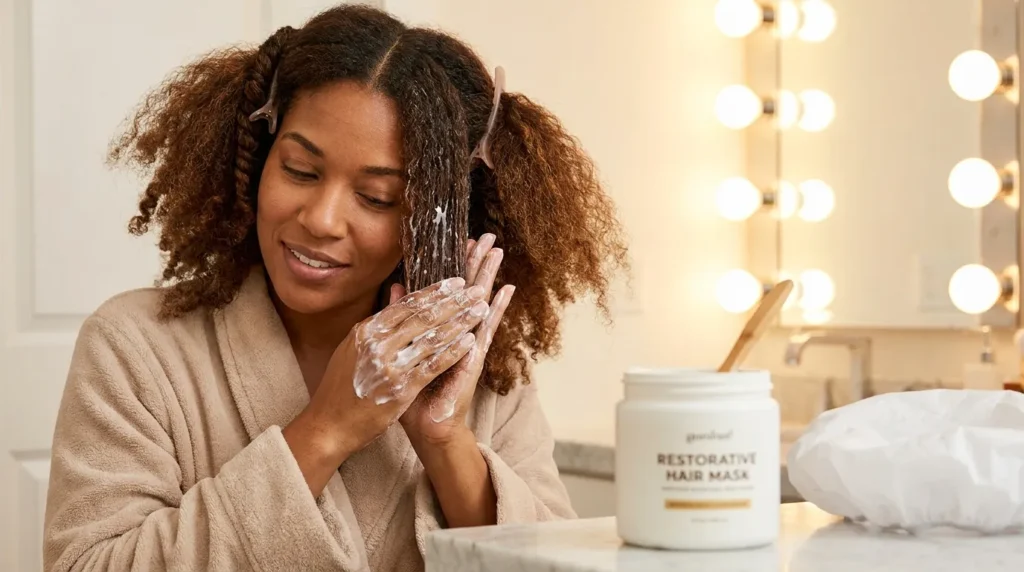
Regular deep conditioning and deep conditioning for damaged hair are not the same thing. When you are in repair mode, every single wash day must include a deep conditioning treatment — not every other week, not occasionally, but every time you shampoo. Damaged hair loses moisture exponentially faster than healthy hair because the cuticle cannot hold it in.
For damaged hair, look for deep conditioners that contain: hydrolyzed proteins (for filling cuticle gaps), glycerin (humectant that draws moisture into the shaft), panthenol (provitamin B5 that smooths and adds shine), aloe vera (balances pH and adds moisture), and ceramides (help rebuild the lipid barrier that damaged cuticles lose).
How to deep condition for maximum repair:
- After shampooing, squeeze out excess water and apply deep conditioner generously from root to tip on damp hair — do not apply to soaking wet hair, as water dilutes the product.
- Use your fingers to gently detangle while the conditioner is in, working from ends toward roots.
- Put on a plastic shower cap. The trapped heat opens the cuticle and allows the conditioner to penetrate deeply.
- For significantly better results, sit under a hooded dryer or use a heated conditioning cap for 20 to 30 minutes. Heat dramatically improves absorption.
- Rinse with cool water only — never warm or hot. Cool water causes the cuticle to close, sealing the conditioner inside.
Frequency: Every wash day without exception until your hair’s elasticity and texture have normalized — typically six to twelve weeks of consistent treatment.
Bond Repair — The Science That Goes Deeper Than Conditioner
One of the most effective modern tips to repair damaged hair is bond repair treatment — a category of products that works at the cortex level to rebuild the disulfide bonds that bleach, relaxers, and heat break permanently. Unlike conditioners that coat the surface, bond-repair formulas (found in products like Olaplex, K18, and their drugstore alternatives) actually reconnect broken protein bonds inside the hair shaft.
For severely chemically damaged or bleached hair that is not responding to protein treatments alone, a bond repair treatment applied before every shampoo session can produce dramatic improvements in elasticity, strength, and manageability within four to six weeks.
You do not need salon-priced products for this. Look for bond-building treatments that contain maleic acid or bis-aminopropyl diglycol dimaleate (the active bond-repair compound found in Olaplex No. 3 and its alternatives). Apply to damp hair before shampooing, leave for 10 minutes, then wash and deep condition as normal.
Switch to Co-Washing — Give Damaged Hair a Break From Shampoo
One of the simplest but most impactful tips to repair damaged hair is replacing most of your shampoo washes with co-washing — washing with conditioner only. Shampoo, even sulfate-free formulas, strips some natural oils and moisture from the hair every time. Damaged hair is already critically low on both, and removing them further with weekly shampooing slows recovery significantly.
Co-washing with a cleansing conditioner or a regular conditioner removes sweat, light product buildup, and environmental residue without stripping natural oils. It leaves the hair significantly softer and more pliable after each wash — a critical condition for damaged hair that is prone to snapping during detangling.
When to shampoo vs co-wash during repair:
- Shampoo (sulfate-free only): Once every 10 to 14 days, or when you have heavy product buildup or sweat.
- Co-wash: All other wash sessions between shampoo days.
- Always follow every co-wash with a leave-in conditioner and sealing oil.
Trimming Strategy — How Much and How Often
You do not have to cut off all your length to repair damaged hair — but strategic trimming is non-negotiable. Split ends travel. A split that starts at the tip of your hair does not stay there — it travels up the shaft and splits the entire strand, causing breakage higher and higher up the hair. Leaving split ends in place means losing more length in the long run, not less.
The approach that preserves the most length while preventing split end travel is micro-trimming: removing only the visibly damaged ends — typically one quarter to one half inch — every six to eight weeks. This is different from cutting an inch or more at a time, which is only necessary if the damage has traveled significantly up the shaft.
How to assess how much to trim:
- Stretch a single strand of hair taut under good lighting and examine the end.
- If the split is less than half an inch from the tip — micro-trim.
- If the split has traveled more than an inch up the shaft — trim to just above where the split ends.
- If more than 50% of your strands show splits traveling more than 2 inches — a significant cut is the most efficient way to stop the damage cycle.
Trim with sharp hair scissors only. Kitchen scissors or blunt scissors create fraying at the cut point, which starts a new split immediately after trimming.
Protect Damaged Hair While It Recovers
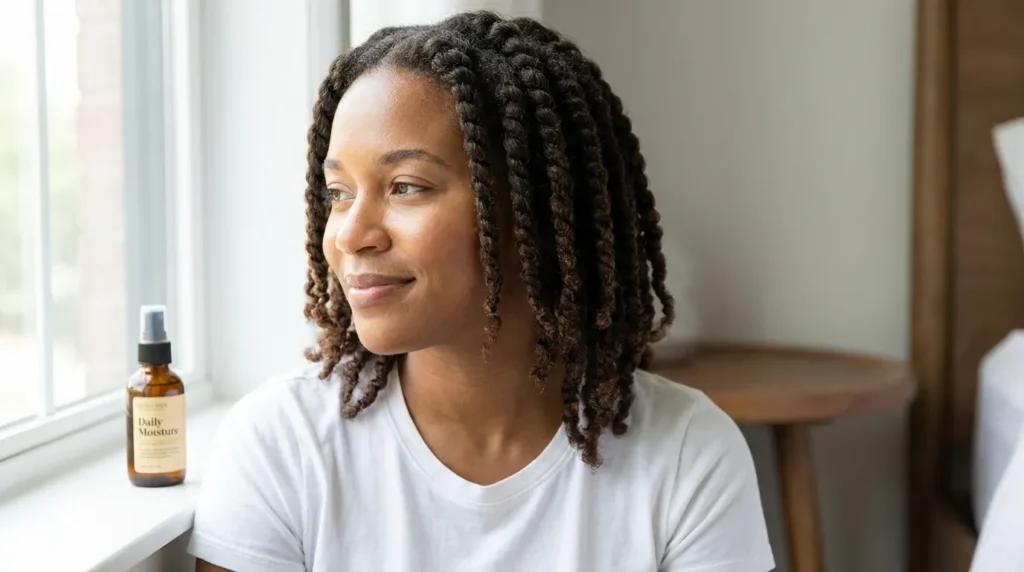
Damaged hair needs protection from manipulation and friction while your treatments are rebuilding it. Protective styling — two-strand twists, flat twists, low buns, and braids — keeps the most fragile parts of your hair (the ends) tucked away from daily friction, detangling, and environmental stress. This dramatically reduces the rate of breakage while treatments are working.
Keep styles in for no more than six to eight weeks, and keep the hair moisturized underneath with a light leave-in spray every two to three days. Remove protective styles gently — never pull or rush the takedown process, as this is when the most breakage occurs.
Sleep on a satin pillowcase or in a satin bonnet every night. Cotton creates friction against damaged hair that further roughens the already compromised cuticle, increasing tangling and breakage overnight.
DIY Repair Masks for Damaged Hair
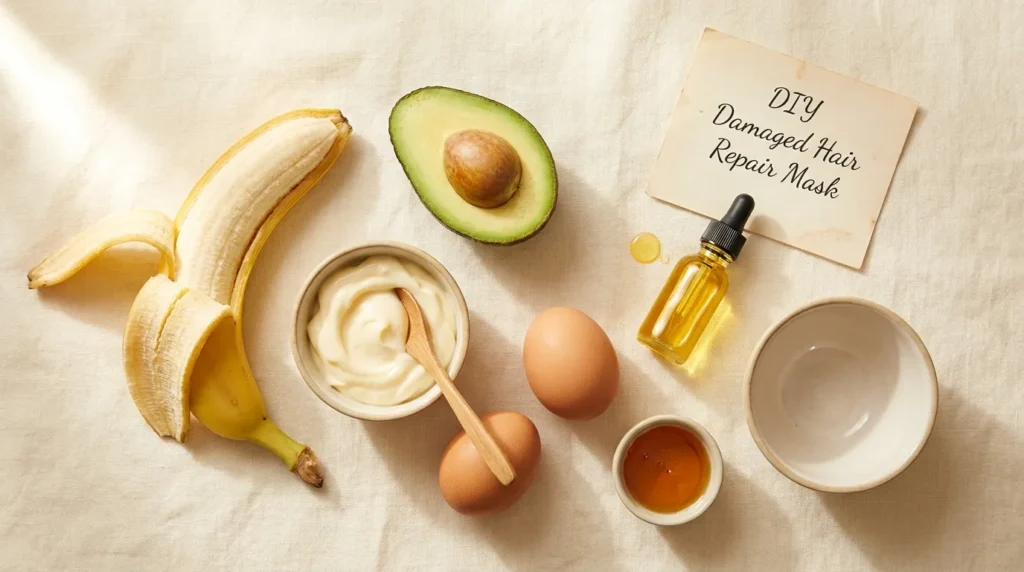
These are the most effective homemade treatments you can make tonight — each targets a specific aspect of hair damage repair:
Banana and Honey Elasticity Mask: Banana is rich in potassium, natural oils, and carbohydrates that restore flexibility and elasticity to brittle hair. Honey is a humectant that draws moisture into the hair shaft and has antibacterial properties that benefit the scalp.
- Blend one fully ripe banana until completely smooth — lumps will get stuck in hair.
- Mix in 2 tablespoons of raw honey and 1 tablespoon of olive oil.
- Apply to clean damp hair and leave for 30 minutes under a shower cap.
- Rinse with cool water and condition as normal.
Full-Fat Mayonnaise Deep Repair Mask: Mayonnaise is made of eggs (protein), oil (moisture and shine), and vinegar (pH balancing). This combination makes it one of the most complete single-ingredient repair masks available. It sounds unusual but works exceptionally well.
- Apply 4 to 6 tablespoons of full-fat mayonnaise (not low-fat) directly to dry hair from scalp to ends.
- Cover with a shower cap and leave for 30 to 45 minutes.
- Rinse thoroughly with cool water and shampoo once with a gentle sulfate-free shampoo.
- Follow with a light conditioner — the mayonnaise is rich enough that a heavy conditioner is unnecessary afterward.
Aloe Vera and Argan Oil Cuticle Sealing Treatment: Aloe vera’s proteolytic enzymes remove dead skin cells from the scalp and help close the cuticle layer. Combined with argan oil’s vitamin E content, this treatment smooths the cuticle surface and locks in moisture.
- Mix 3 tablespoons of pure aloe vera gel with 5 to 7 drops of argan oil.
- Apply to clean damp hair after washing, focusing on the mid-lengths and ends.
- Leave on for 20 minutes, then rinse with cool water.
- No shampooing needed after this treatment — it is light enough to leave partially in as a leave-in if desired.
When Hair Is Too Damaged to Repair — Knowing When to Cut
There are situations where these tips to repair damaged hair will slow decline but cannot reverse it — and recognizing this point is important. Hair that has been bleached more than three levels in a single session, relaxed over previously relaxed hair repeatedly, or severely heat-damaged for years may have cortex damage so extensive that protein treatments only temporarily mask the problem.
Signs that cutting is the more practical choice:
- Hair stretches to more than double its length before breaking even after protein treatments
- Hair disintegrates or develops a gummy texture when wet
- Hair breaks off in large sections during gentle detangling despite treatments
- The texture of the damaged sections feels completely different from new growth even after months of treatment
Cutting severely damaged sections is not failure — it is the fastest path to genuinely healthy hair. New growth treated correctly from the beginning will be measurably stronger than hair that has been held together with treatments for months while continuing to break.
Frequently Asked Questions
How long does it take to repair damaged hair?
Mild to moderate damage with consistent treatment shows visible improvement in texture, elasticity, and reduced breakage within four to six weeks. More severe damage takes eight to twelve weeks of consistent weekly protein and moisture treatments. Complete recovery means waiting for new healthy hair to grow in — hair grows approximately half an inch per month, so full turnover takes twelve to twenty-four months depending on your length. The goal of treatments is to stop the damage from progressing and make the existing hair as manageable as possible in the meantime.
Can I repair heat-damaged hair without cutting it?
Mild heat damage — where the curl pattern has been loosened but not eliminated — can often be recovered with intensive moisture treatments, protein treatments, and time away from heat. Severe heat damage that has permanently altered the hair’s protein bonds cannot be fully reversed with at-home treatments. Bond repair products like those containing maleic acid can improve the situation significantly, but complete recovery of the original texture is not always possible in severely heat-damaged hair.
Should I use protein or moisture to repair damaged hair?
Do the elasticity test first. If your hair stretches too much before breaking (limp, mushy when wet) — start with protein. If your hair snaps immediately with zero stretch (stiff, hard, brittle) — start with moisture. Most damaged hair needs protein first, followed immediately by moisture. Applying only moisture to severely protein-deficient hair does not rebuild strength — it only adds temporary softness while the hair continues to break.
Is mayonnaise actually good for damaged hair?
Yes. Full-fat mayonnaise contains eggs (protein), vegetable oil (moisture and shine), and vinegar (acetic acid that helps close the cuticle and balance pH). Together, these provide protein, moisture, and cuticle sealing in a single treatment. The concern most people have is the smell — which completely disappears after shampooing. Use only full-fat, not low-fat or vegan mayo, which have different compositions and are not effective as hair treatments.
Can I repair damaged hair while still coloring it?
Yes, but with significant modifications. If you must continue coloring, switch to a demi-permanent or semi-permanent color instead of permanent, which uses significantly less damaging chemistry. Space coloring sessions at least eight weeks apart. Apply a bond-repair treatment in the week before each color application. Deep condition immediately after every color session. Avoid bleaching over previously bleached hair until the hair has recovered elasticity.
Consistency Is What Repairs Damaged Hair — Not One Magic Treatment
The most important thing to understand about these tips to repair damaged hair is that no single treatment produces dramatic overnight results. Hair repair is cumulative. One protein treatment does not rebuild the cortex. One deep conditioning session does not restore elasticity. But six weeks of weekly protein and moisture treatments, consistent satin protection, reduced manipulation, and no heat — that produces real, visible change.
Start with the elasticity test tonight. Identify your damage type. Apply your first treatment this wash day. Build a consistent routine from there. Your hair’s response to proper care is reliable — give it what it needs consistently, and it will show you the results.
Also Visit : Oils for Healthy Natural Hair You Should Start Using Today