Best Oils for Flat Ironing Natural Hair (Without Damage)
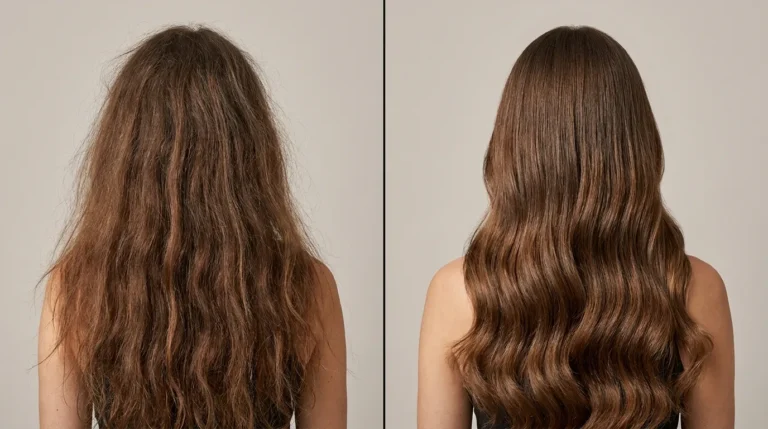
If you’ve ever pulled a flat iron through your natural hair only to watch it snap, frizz, or feel dry and brittle days later, you’re not alone. Heat styling can leave natural hair looking sleek for a day — and damaged for months. The problem isn’t always the flat iron itself. It’s often what (or what isn’t) on your hair before the heat touches it.
Not every oil sitting in your cabinet actually protects your strands. Some simply add shine and slip, while others create a real barrier against heat above 150°C (300°F) — the temperature where hair protein starts to break down. Knowing the difference can be the line between a healthy silk press and a set of split ends.
In this article, you’ll learn exactly how heat-protectant oils work at the strand level, which oils actually hold up under high heat, how to apply them correctly before flat ironing, and the common mistakes that quietly undo all that protection. By the end, you’ll know exactly what to reach for the next time you heat style.
Why Oil Matters Before Flat Ironing Natural Hair
Does Oil Really Protect Hair From Heat Damage?
Natural hair is more porous than straight or relaxed hair. That means it has more tiny gaps in the outer layer (the cuticle), which lets moisture escape faster — and lets heat reach the inner hair shaft more easily. When a flat iron passes over dry, unprotected strands, the protein inside the hair (keratin) starts to break down. Research on hair fiber has shown that keratin structure begins to weaken once temperatures climb past 230°F, and by 450°F, the damage becomes visible: dryness, split ends, and long-term breakage.
This is where oil comes in — but not just any oil. There’s a real difference between a true heat-protectant oil and one that’s just there for shine.
- Heat-protectant oils create a light barrier that slows down heat transfer into the hair shaft, buying your strands a little extra protection before the damage sets in.
- Purely cosmetic oils sit on the surface for shine and softness but don’t do much to shield hair from heat — some can even burn or smoke at flat-iron temperatures, making things worse.
The difference usually comes down to the oil’s smoke point — the temperature at which it starts to break down and burn. An oil with a low smoke point can scorch the moment it meets a hot flat iron, which is the opposite of protection.
Understanding this difference is the first step to picking the right oil — which is exactly what we’ll break down next.
What Makes an Oil Good for Heat Styling
5 Traits of a True Heat-Protectant Oil
Not every oil belongs in your pre-flat iron routine. Before reaching for whatever’s on your shelf, look for these traits:
- High smoke point — The oil should be able to handle flat iron temperatures (often 300–450°F) without burning, smoking, or giving off that telltale singed smell.
- Lightweight, non-greasy texture — A good heat-protectant oil absorbs quickly instead of sitting heavy on the hair. Oils that are too thick can cause buildup, weigh hair down, or attract dust and lint over time.
- Penetrates the hair shaft — The best oils don’t just coat the surface; they absorb into the strand itself. Coconut oil, for example, is known for penetrating the hair shaft, while mineral oil mostly just sits on top and does little for internal protection.
- Rich in fatty acids — These help reinforce the hair’s natural structure, supporting elasticity so strands are less likely to snap under heat and tension.
- Contains antioxidants — Natural antioxidants help defend hair from the oxidative stress that heat and daily styling can cause over time, keeping strands healthier in the long run.
When an oil checks most of these boxes, it’s doing more than making your hair shine — it’s actively working to reduce the damage heat styling can cause. Next, let’s look at which specific oils hit the mark.
Top Oils for Flat Ironing Natural Hair (Ranked)
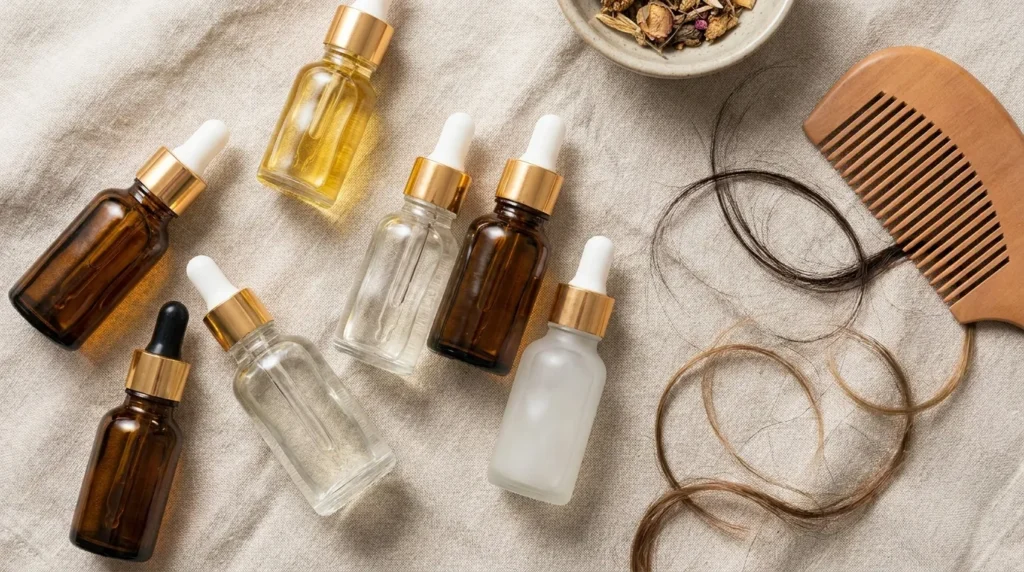
6 Best Oils Ranked by Heat Protection
1. Coconut Oil
Smoke point: ~350°F. Known for its ability to penetrate the hair shaft rather than just sit on top, coconut oil helps reduce protein loss during heat styling. Works well for coarse, thick natural hair types that need deeper conditioning.
2. Argan Oil
Smoke point: ~350–400°F. Rich in vitamin E and fatty acids, argan oil is lightweight enough for fine to medium hair while still offering solid heat protection and shine without buildup.
3. Grapeseed Oil
Smoke point: ~390–420°F. One of the lightest oils on this list, grapeseed oil absorbs quickly and suits fine natural hair or anyone who wants heat protection without any greasy feel.
4. Jojoba Oil
Smoke point: ~400°F. Chemically similar to the natural oil (sebum) your scalp produces, jojoba oil is gentle, non-greasy, and a good fit for most hair types, including sensitive scalps.
5. Marula Oil
Smoke point: ~380–400°F. High in antioxidants and fatty acids, marula oil is a lighter alternative to coconut oil for medium to fine natural hair that still needs strong protective benefits.
6. Sweet Almond Oil
Smoke point: ~410°F. A solid all-around option, almond oil offers decent heat resistance and adds softness without the heaviness of thicker oils — a good pick for everyday use.
A quick note on smoke points: heat resistance matters, but so does how the oil is used. Even a high smoke-point oil applied too heavily can create excess buildup — which brings us to how to actually apply it.
How to Apply Oil Before Flat Ironing (Step-by-Step)
Step-by-Step: Applying Oil the Right Way
Even the best oil won’t help much if it’s applied the wrong way. Follow these steps for the best protection with the least risk of buildup or damage:
- Start with clean, freshly washed hair. Oil works best on a clean canvas — applying it over dirty hair or old product buildup traps residue against the scalp and strands.
- Apply a leave-in conditioner first. This adds a layer of moisture underneath the oil, giving your hair something to hold onto before heat is introduced.
- Add a small amount of oil, focusing on mid-lengths to ends. A little goes a long way — a dime-sized amount is usually enough for most hair lengths. Avoid pouring oil directly onto the roots or scalp.
- Section your hair before styling. Working in small, manageable sections helps the oil distribute evenly and ensures every strand gets protected, not just the top layer.
- Flat iron each section slowly and evenly. Avoid going over the same section repeatedly, which increases heat exposure and can undo the oil’s protective effect.
Common mistake to avoid: Using too much oil. Excess oil on the hair can actually cause a sizzling or steaming effect when it meets the flat iron plates, which can lead to more damage — not less. More isn’t better here; a light, even layer is all your hair needs.
Oils and Ingredients to Avoid
What NOT to Put in Your Hair Before Heat Styling
Not everything that makes hair shiny or smooth is safe to use before a flat iron. A few common ingredients can actually make heat damage worse rather than prevent it:
- Mineral oil. This oil sits entirely on the surface of the hair instead of absorbing into the strand. Since it doesn’t penetrate the shaft, it offers little real heat protection — and can trap moisture (or the lack of it) against the hair, leading to a “fried” texture after styling.
- Petroleum-heavy products. Similar to mineral oil, petroleum-based products create a coating rather than genuine protection. Under high heat, this coating can overheat and contribute to a burnt smell, along with buildup that’s hard to wash out.
- Alcohol-based sprays combined with oil. Many styling sprays contain drying alcohols that strip moisture from the hair. Layering oil over these sprays doesn’t cancel out the effect — the alcohol can dry hair out first, leaving strands more vulnerable to breakage the moment heat is applied.
The common thread with all three: they either fail to penetrate the hair shaft or actively strip moisture, leaving strands exposed right when they need protection the most. When in doubt, check the ingredient label before your flat iron routine — not just the description on the front.
Bonus Tips for Protecting Natural Hair During Flat Ironing
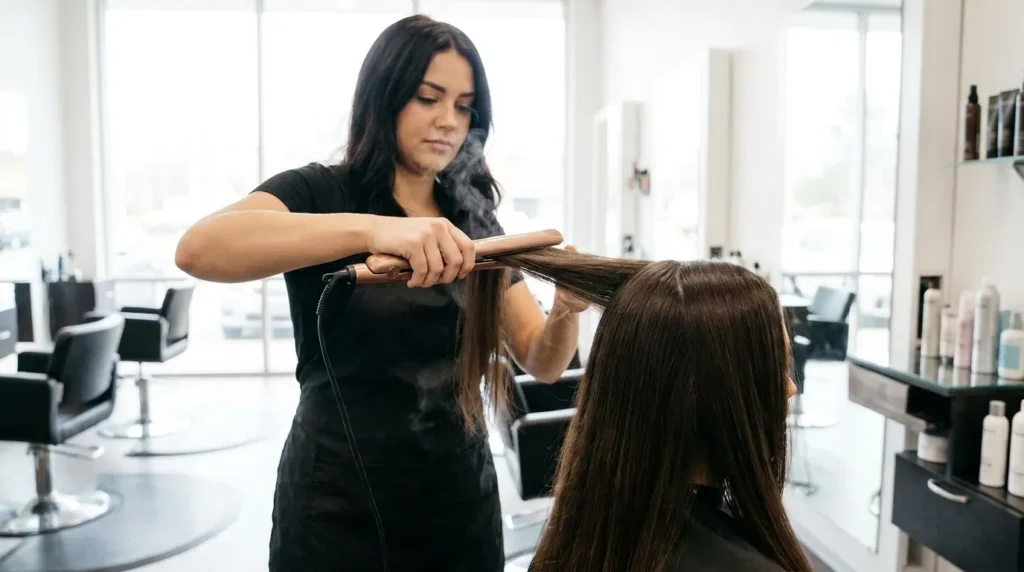
Extra Ways to Keep Your Hair Healthy While Heat Styling
Oil is a strong first line of defense, but a few extra habits can make a real difference in how much damage your hair takes over time:
- Match your heat setting to your hair type.
- Fine hair: 250–300°F is usually enough — higher heat isn’t necessary and increases damage risk.
- Medium hair: 300–350°F typically works well for a smooth result without overdoing it.
- Coarse or thick hair: 350–400°F may be needed, but always start on the lower end and increase only if necessary.
- Don’t flat iron every day. Daily heat styling doesn’t give hair time to recover between sessions. Most natural hair holds up best when flat ironed no more than once every 1–2 weeks, with protective styles in between.
- Let hair cool down before touching or styling it further. Hair is more fragile immediately after heat exposure. Giving it a few minutes to cool locks the style in place and reduces unnecessary stress on the strands.
- Avoid re-applying heat to the same section. If a section didn’t come out straight the first time, resist the urge to go over it again right away. Let it cool, then reassess — repeated heat on the same strands is one of the fastest ways to cause damage.
FAQ Section
Can I flat iron natural hair every day?
It’s not recommended. Daily flat ironing doesn’t give hair enough time to recover between heat sessions, which increases the risk of dryness and breakage over time. Most natural hair does better with flat ironing once every 1–2 weeks, with lower-heat styling or protective styles in between.
Does oil replace heat protectant spray?
Not entirely. Oil can offer a real layer of protection, especially oils with a high smoke point, but a dedicated heat protectant spray is formulated specifically to shield hair at high temperatures. For extra protection, many people use both — a leave-in or spray first, then a light layer of oil.
Which oil is best for 4C hair specifically?
Coconut oil is often the top pick for 4C hair because of its ability to penetrate the hair shaft and its added conditioning benefits, which suit the density and dryness-prone nature of tighter curl patterns. Argan oil is a good lighter alternative if coconut oil feels too heavy.
Conclusion
Flat ironing natural hair doesn’t have to mean choosing between sleek results and healthy strands. The right oil makes all the difference — and as we’ve covered, coconut oil, argan oil, and jojoba oil consistently stand out for their heat protection, lightweight feel, and hair-shaft penetration. Pair the right oil with proper application, the right heat setting, and a little patience between styling sessions, and you can enjoy a smooth silk press without sacrificing your hair’s health.
The next time you reach for your flat iron, skip whatever oil is closest and reach for one that’s actually doing the work. Your strands will thank you.
Got a go-to heat protectant oil that’s worked for you? Drop it in the comments below — and if this helped, save it to Pinterest for your next wash day!
Also Visit : Best Oils for Flat Ironing Natural Hair (Without Damage)