Dandruff Treatment at Home That Clears Flakes Fast
Dandruff is one of those problems that feels impossible to escape. You wash your hair, you use the right shampoo, and two days later the flakes are back — sometimes worse than before. The frustrating truth is that most people treat dandruff the wrong way because they do not understand what is actually causing it.
The good news is that an effective dandruff treatment at home does not require expensive salon products or harsh chemicals. The right ingredients, applied the right way, can clear flakes and calm your scalp faster than most store-bought shampoos. This guide covers the remedies that are backed by research, explains exactly why each one works, and gives you clear step-by-step instructions so you are not guessing.
Let’s start with understanding what you are actually dealing with.
What Causes Dandruff — And Why It Keeps Coming Back
Dandruff is not simply dry skin. That is the most common misconception and the reason so many people keep reaching for the wrong solutions. Dandruff is primarily caused by an overgrowth of a naturally occurring yeast-like fungus called Malassezia on the scalp. This fungus feeds on the natural oils your scalp produces and triggers an inflammatory response that speeds up skin cell shedding. Those shed skin cells clump together with scalp oil and fall as the white or yellowish flakes you see.
Several factors make this worse: oily scalp, infrequent shampooing, hormonal changes, stress, cold and dry weather, certain hair products, and nutritional deficiencies. Stress, in particular, is a major trigger — it does not cause dandruff directly, but it weakens your immune system’s ability to control the Malassezia fungus, allowing it to grow more aggressively.
Understanding this is important because it tells you that the best dandruff treatment at home should have antifungal, antibacterial, or anti-inflammatory properties — not just moisturizing properties. Many people make the mistake of just adding moisture when the actual issue is fungal overgrowth.
Two Types of Dandruff You Need to Identify First
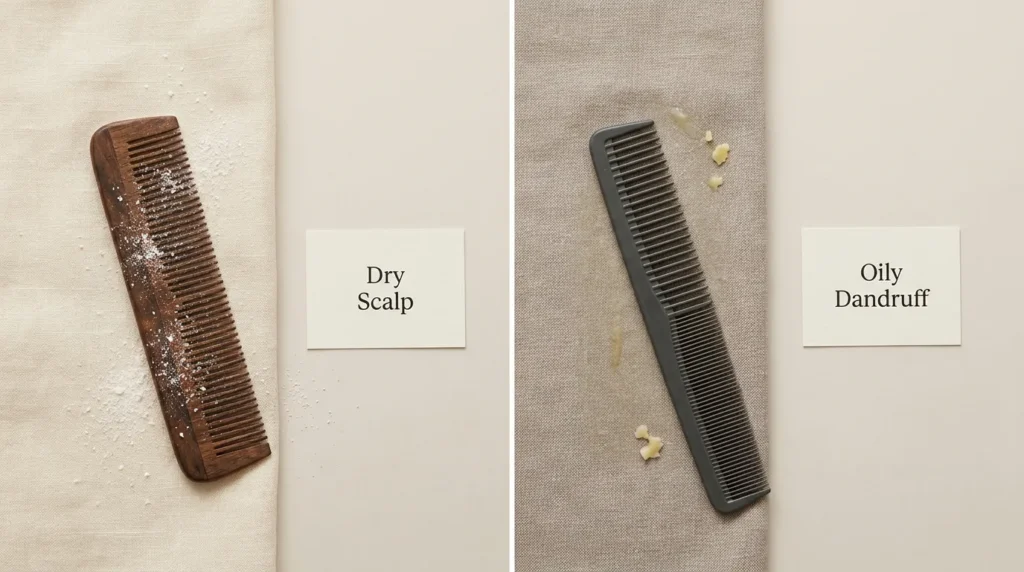
Before choosing your dandruff treatment at home, you need to know which type of dandruff you have. Using the wrong remedy can make things worse.
Type 1 — Dry Scalp Dandruff: Flakes are small, white, and powdery. They fall off easily when you scratch or comb. Your scalp feels tight and itchy, especially in cold weather. This type is more common in winter and in people who over-wash or use harsh shampoos. The root cause here is moisture loss, not fungal overgrowth.
Type 2 — Oily or Seborrheic Dandruff: Flakes are larger, yellowish, and slightly greasy. They tend to stick to your scalp and hair instead of falling freely. Your scalp looks oily and red, and the itching is more intense. This is the true fungal dandruff caused by Malassezia overgrowing on an oily scalp. It requires antifungal treatments, not just moisturizers.
The remedies below work for both types, but for oily dandruff, prioritize the antifungal options — tea tree oil, apple cider vinegar, and neem. For dry scalp dandruff, start with the moisturizing and soothing options — coconut oil, aloe vera, and rosemary oil.
Tea Tree Oil — The Most Studied Natural Antifungal for Dandruff
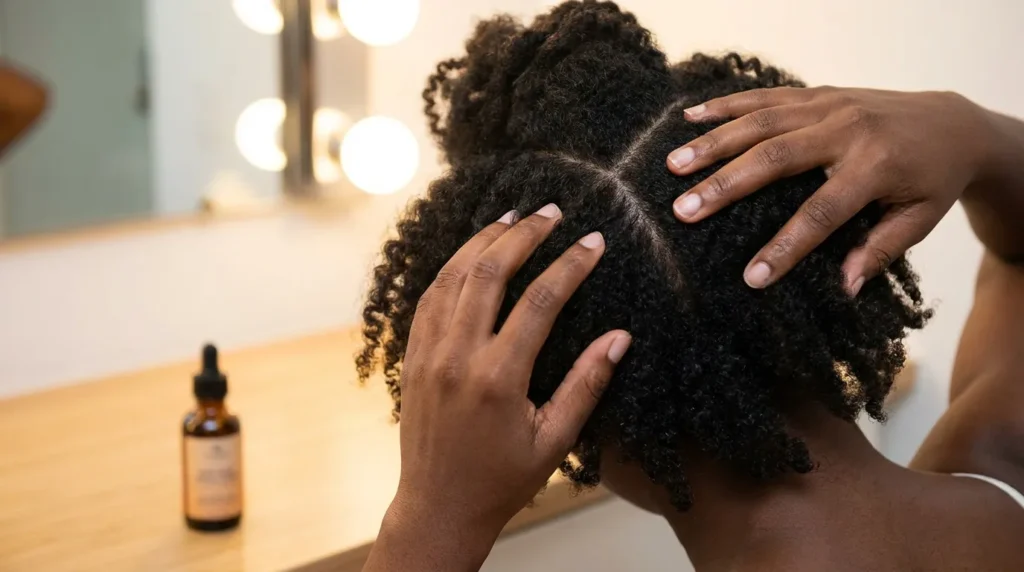
Tea tree oil is the most researched natural dandruff treatment at home and the one with the strongest evidence behind it. A clinical study found that a shampoo containing just 5% tea tree oil reduced dandruff severity by 41% over four weeks. Tea tree oil works because it contains terpinen-4-ol, a compound with powerful antifungal and antibacterial properties that directly targets the Malassezia fungus responsible for dandruff.
Why it works: Tea tree oil disrupts the cell membrane of the fungus, stopping it from growing and reproducing on your scalp. It also reduces the inflammation and itching caused by the fungal reaction.
How to use tea tree oil for dandruff:
- Never apply tea tree oil directly to your scalp without diluting it first. Pure tea tree oil will cause irritation and can burn sensitive skin.
- Mix 5 to 10 drops of tea tree oil with 2 tablespoons of a carrier oil — coconut oil, jojoba oil, or olive oil all work well.
- Part your hair into sections and apply the mixture directly onto your scalp using your fingertips or a small applicator bottle.
- Massage gently for two to three minutes to increase blood flow and product absorption.
- Leave it on for at least 30 minutes. For stronger results, leave it on for one to two hours or overnight.
- Wash out with a gentle sulfate-free shampoo.
How often: Two to three times a week for the first two weeks, then once a week as maintenance.
Important note: If you have sensitive skin, do a patch test first. Apply a small amount of the diluted mixture to your inner arm and wait 24 hours. If no irritation appears, proceed with scalp application.
Apple Cider Vinegar — Balances pH and Fights Fungus
Apple cider vinegar (ACV) works differently from tea tree oil but is equally effective. The Malassezia fungus thrives in an environment that is too alkaline. Many common hair products — including most shampoos and conditioners — have an alkaline pH, which creates exactly the conditions dandruff needs to flourish. Apple cider vinegar has a pH of around 3, which is acidic enough to restore the scalp’s natural slightly acidic environment, making it much harder for fungus to grow.
ACV also has natural antifungal properties and helps remove the buildup of dead skin cells and product residue that can trap fungus on the scalp.
How to use apple cider vinegar for dandruff:
- Always dilute ACV before applying it to your scalp. The ratio should be 1 part ACV to 2 parts water — no stronger.
- Mix 4 tablespoons of apple cider vinegar with 8 tablespoons of water in a spray bottle or small bowl.
- After shampooing and rinsing your hair, apply the diluted ACV directly to your scalp. You can use a spray bottle for even distribution or pour it slowly over sections.
- Massage it gently into your scalp for two minutes.
- Leave it on for 5 to 10 minutes.
- Rinse thoroughly with cool water.
How often: Once or twice a week. Do not use more frequently as repeated acidic application can dry out the scalp over time.
What to expect: You may notice reduced itching within the first two applications. Visible reduction in flakes usually appears within two to three weeks of consistent use.
Coconut Oil and Aloe Vera — The Soothing Duo
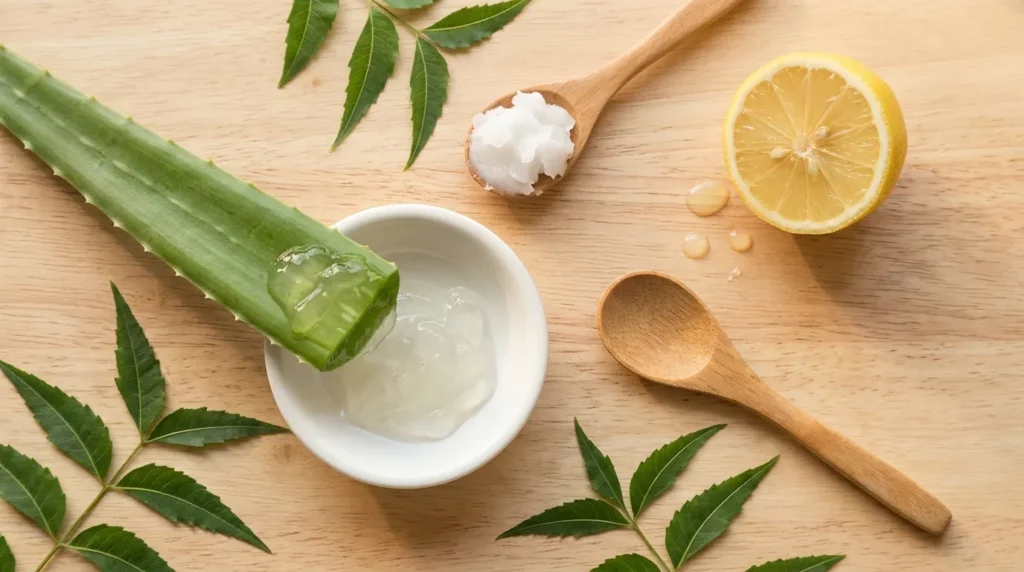
Coconut oil and aloe vera are the best combination for dry scalp dandruff. On their own, both are powerful. Together, they moisturize, soothe inflammation, and provide antifungal action all at once.
Coconut oil contains lauric acid, a medium-chain fatty acid with strong antifungal and antimicrobial properties. It penetrates the hair shaft and scalp deeply, providing lasting moisture while simultaneously limiting fungal growth. A study published in the Journal of Medicinal Food found that coconut oil was effective against Candida species of fungus, which are closely related to the Malassezia that causes dandruff.
Aloe vera contains proteolytic enzymes that remove dead skin cells from the scalp, reducing the buildup that feeds dandruff-causing fungus. It is also deeply anti-inflammatory, providing immediate relief from itching and redness, and has natural antibacterial properties that support a clean scalp environment.
How to make and use the coconut oil and aloe vera treatment:
- Scoop 2 tablespoons of fresh aloe vera gel directly from a leaf or use store-bought 100% pure aloe vera gel.
- Mix it with 1 tablespoon of melted extra virgin coconut oil.
- Add 5 drops of tea tree oil for extra antifungal power (optional but highly effective).
- Stir well until combined into a smooth mixture.
- Part your hair into four sections and apply the mixture directly to your scalp, working it in with your fingertips.
- Leave on for 30 to 45 minutes under a shower cap.
- Rinse and shampoo as normal.
How often: Once or twice a week. This treatment is especially effective as a pre-wash scalp mask before your regular shampoo routine.
Neem and Onion Juice — Two Powerful Remedies Most Guides Skip
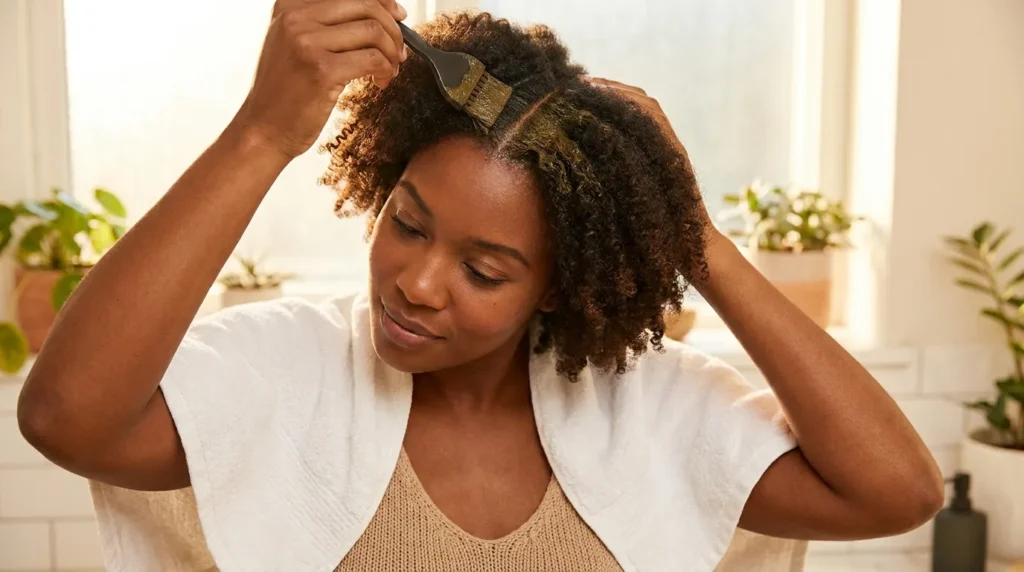
Neem has been used in traditional medicine for centuries, and modern science confirms why. Neem contains nimbidin and nimbin, two compounds with strong antifungal and antibacterial properties. Research has shown that neem extract directly inhibits the growth of Malassezia, the fungus responsible for dandruff. It also reduces scalp inflammation and has natural antiparasitic properties that help with seborrheic dermatitis.
How to use neem for dandruff:
- Boil a large handful of fresh neem leaves in 500ml of water for 10 to 15 minutes until the water turns a deep green color.
- Let it cool completely and strain out the leaves.
- Use this neem water as a final scalp rinse after shampooing — pour it slowly over your scalp and work it in with your fingers.
- Leave it on without rinsing for 10 to 15 minutes, then rinse with plain cool water.
- Alternatively, blend fresh neem leaves into a paste, apply directly to the scalp, leave for 20 minutes, and wash out.
Onion juice is one of the most underestimated dandruff treatments. It contains quercetin, a powerful antifungal flavonoid, as well as sulfur compounds that promote scalp circulation and kill bacteria. The smell is strong and temporary — and the results are worth it.
How to use onion juice for dandruff:
- Peel and roughly chop one medium onion.
- Blend it and strain the juice through a fine cloth or strainer. You should get about 3 to 4 tablespoons of juice.
- Apply the juice directly to your scalp using a cotton ball or your fingertips, working through sections.
- Leave on for 30 to 45 minutes under a shower cap.
- Wash out thoroughly with a gentle shampoo. You may need to shampoo twice to remove all traces of smell.
How often: Once a week for neem, once a week for onion juice. Do not use both on the same day.
Baking Soda — Effective but Use With Caution
Baking soda has antifungal properties and acts as a gentle exfoliant that removes dead skin cell buildup from the scalp. It also has alkaline properties that can temporarily disrupt the environment in which Malassezia thrives. However, baking soda also has a high pH of around 9, which can be harsh and drying on the scalp if overused.
How to use baking soda safely:
- Mix 1 teaspoon of baking soda with your regular shampoo in your palm — do not use it alone as a scalp scrub.
- Massage it gently into your wet scalp for one to two minutes.
- Rinse thoroughly with cool water.
- Always follow with a conditioner or deep conditioner to restore moisture balance.
Important caution: Do not use baking soda more than once a week. Overuse will strip your scalp of its natural oils and disrupt the scalp’s pH, potentially making dandruff worse. If your scalp feels tight or dry after use, reduce frequency or stop completely.
What You Eat Also Determines How Much Dandruff You Have
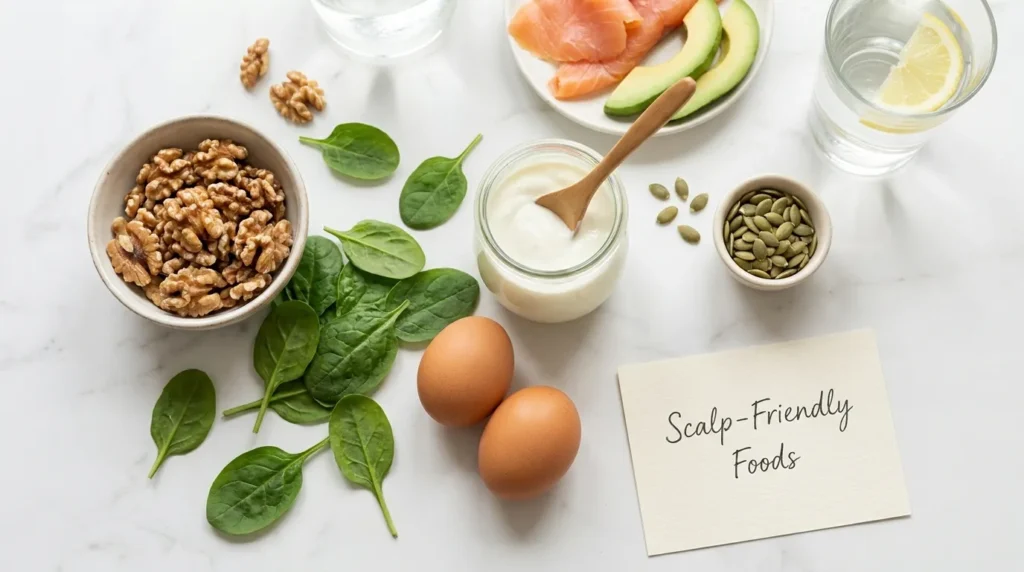
A bright and appetizing flat lay of foods that support scalp and hair health arranged artistically on a clean white marble surface, including a small bowl of walnuts, a handful of fresh spinach leaves, two whole eggs, a small jar of natural yogurt with a wooden spoon, a few slices of fresh salmon or avocado, a tiny ramekin of pumpkin seeds, and a glass of water with a lemon slice, soft natural daylight from above, a minimal handwritten note card in the corner reading “Scalp-Friendly Foods” in simple cursive, fresh green and cream color palette, high resolution food and lifestyle photography quality, editorial and aspirational aesthetic, everything styled with care and intention, no artificial props.
Negative prompt: junk food visible, dark background, cluttered frame, cartoon, 3D render, blurry, person or hands visible, low resolution, artificial overhead harsh lighting, overcrowded composition.
The most overlooked part of any dandruff treatment at home is what you eat. Your scalp is skin, and your skin’s health is directly tied to your diet. Certain nutritional deficiencies are strongly linked to dandruff — and no topical remedy can fully compensate for what is missing internally.
Nutrients that directly affect dandruff:
- Zinc: Zinc deficiency is one of the most common triggers of dandruff. Zinc has antifungal properties and regulates oil production on the scalp. Add zinc-rich foods like pumpkin seeds, chickpeas, eggs, and red meat to your diet.
- B Vitamins (especially Biotin and B6): B vitamin deficiency causes dry, flaky, irritated skin. Eggs, leafy greens, nuts, and whole grains are excellent sources.
- Omega-3 Fatty Acids: These healthy fats reduce scalp inflammation. Salmon, walnuts, flaxseeds, and chia seeds are great choices.
- Probiotics: A healthy gut microbiome helps control fungal overgrowth throughout the body, including the scalp. Add yogurt, kefir, sauerkraut, or a probiotic supplement to your daily routine.
What to reduce or avoid:
- Sugar and refined carbohydrates: These feed the Malassezia fungus and make dandruff significantly worse. Reducing white bread, pastries, sugary drinks, and processed foods can make a noticeable difference within weeks.
- Alcohol: Alcohol dehydrates the scalp and can worsen inflammation.
- Dairy (for some people): Some people find that reducing dairy intake reduces the oiliness of their scalp and the severity of their dandruff. This varies by individual.
When to Stop Home Remedies and See a Doctor
A dandruff treatment at home works well for most cases, but there are situations where home remedies are not enough and professional medical treatment is needed.
See a dermatologist if:
- Your dandruff does not improve after six to eight weeks of consistent home treatment
- Your scalp becomes red, swollen, or develops sores or open wounds from scratching
- You notice hair thinning or patchy hair loss alongside the dandruff
- The flaking extends to your eyebrows, the sides of your nose, or your ears — this may indicate seborrheic dermatitis, which requires prescription treatment
- The itching is severe enough to disrupt sleep or daily life
A dermatologist can prescribe medicated shampoos containing ketoconazole, selenium sulfide, or zinc pyrithione, which are significantly stronger than over-the-counter options and can clear stubborn dandruff quickly. There is no shame in using medical treatment — sometimes that is exactly what the scalp needs.
Frequently Asked Questions About Dandruff Treatment at Home
How long does it take for home remedies to clear dandruff?
Most people start to notice reduced itching within the first one to two applications of antifungal remedies like tea tree oil or apple cider vinegar. Visible reduction in flakes typically takes two to four weeks of consistent treatment. Complete clearing of dandruff can take four to eight weeks depending on the severity and the remedy used. Consistency is key — skipping treatments slows results significantly.
Can I use multiple remedies at the same time?
Yes, but be strategic about it. Using tea tree oil on your regular wash days and ACV as a post-wash rinse is an effective combination. However, do not apply two strong treatments to your scalp on the same day — for example, onion juice and baking soda together. Space them out across different days to avoid over-irritating your scalp.
Does dandruff mean my hair is dirty?
No. Dandruff is caused by a fungal imbalance on the scalp, not by poor hygiene. However, infrequent washing can allow product buildup and excess oil to accumulate, which makes the Malassezia fungus thrive. Washing your hair regularly — every five to seven days for most natural hair types — is part of managing dandruff, but it does not replace antifungal treatment.
Is dandruff contagious?
No. Dandruff is not contagious. While the Malassezia fungus lives on most people’s scalps naturally, dandruff only develops when the fungus overproduces due to individual factors like oily skin, hormones, diet, or immune function. You cannot catch dandruff from another person.
Can stress cause dandruff to get worse?
Yes, significantly. Stress weakens your immune system, which reduces its ability to keep Malassezia in check. Many people notice dandruff flare-ups during periods of high stress — exams, work pressure, personal problems. Managing stress through exercise, sleep, and relaxation techniques is a genuinely useful part of treating dandruff from the inside out.
What is the fastest dandruff treatment at home?
For fastest results, combine tea tree oil scalp treatment with an apple cider vinegar rinse in the same week — just on different days. Tea tree oil has the most clinical evidence behind it and has shown results within a few weeks. Adding ACV helps balance the scalp’s pH simultaneously. Together, these two remedies target dandruff from two different angles and tend to show visible results faster than any single remedy used alone.
The Right Dandruff Treatment at Home Makes All the Difference
Dandruff is frustrating — but it is also very fixable. The reason most people stay stuck in the same cycle of flares and temporary relief is that they treat the symptoms without understanding the cause. Now you understand that dandruff is driven by a fungal imbalance, and you have the right tools to correct it.
Start with one or two of the remedies that match your dandruff type. Stay consistent for at least four weeks. Add the dietary changes. Track your results. Most people who approach dandruff treatment at home with this level of consistency and understanding see lasting improvement — not just temporary relief.
If one remedy does not show results after three to four weeks, switch to another. Your scalp is individual, and what works quickly for one person may need more time for another. The key is staying consistent and giving each approach enough time to actually work before moving on.
Also Visit : Palm Oil for Hair: Benefits, How to Use It, and What to Expect