Hair Care Routine After Wash: What Actually Matters First

If you want a hair care routine after wash that actually helps instead of just being a habit, the order you do things in the first ten minutes matters more than any product you buy. Rinse with cool water, detangle before your hair starts drying, layer products from thinnest to thickest, and skip the rough towel scrub. Get that sequence right and everything else — styling, frizz, how long your color holds — gets easier.
Most people step out of the shower and go straight for a towel and a comb, then wonder why their ends look rough by the end of the week. A few small adjustments right after you rinse fix that, and none of them cost you extra time.
The Mistake Most People Make Right After Washing
The single biggest problem isn’t a missing product. It’s the towel. Grabbing a regular terry towel and rubbing your scalp and hair the way you’d dry your hands creates friction on strands that are already at their weakest point. Wet hair swells slightly and stretches more than dry hair, so scrubbing it raises the outer cuticle layer and roughs up the surface before you’ve even reached the styling step. The dermatologist-recommended fix for towel drying is simple: wrap and press, don’t rub.
This one habit alone accounts for a lot of the frizz and split ends people blame on products. Fix it and you’ve already improved the routine before adding a single new bottle to your shelf.
The First Two Minutes: Rinse Temperature and Why It Matters
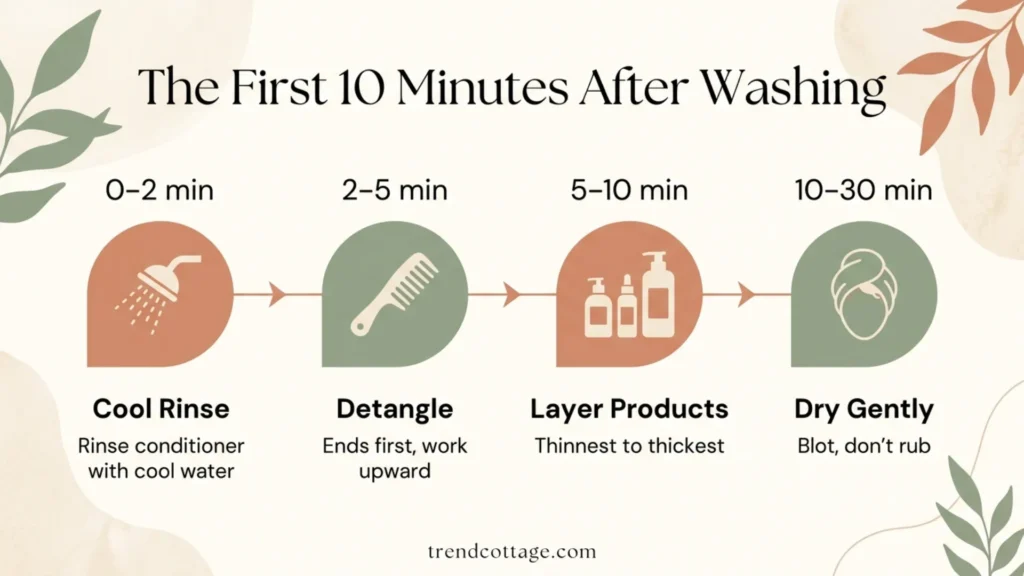
This is where a good hair care routine after wash actually starts, and it costs nothing. Finish your conditioner rinse with cool or lukewarm water instead of hot. Heat opens the outer cuticle layer wider, and a cool final rinse helps it lie flatter, which is part of why hair looks glossier right after a salon rinse than after a rushed home shower.
You don’t need ice-cold water, and there’s no need to suffer through it. Lukewarm is enough. The goal is just to avoid finishing on hot, since that’s the part that leaves hair feeling rough once it dries.
Rinse gently at this stage too. Let water run through the lengths rather than scrubbing your scalp with your fingertips the way you did during shampoo. Your scalp needed that friction to lift oil and buildup. Your strands don’t.
Minutes Two to Five: Detangling Wet Hair the Right Way
Wet hair is more elastic than dry hair, which sounds like a good thing until you realize elastic also means it stretches further before it snaps. That’s why yanking a brush through soaking wet hair from the roots down causes more breakage than almost anything else in a normal routine.
Work from the ends upward instead. Hold a section a few inches above where you’re combing to take the tension off the root, and clear small knots before moving higher. If you have thick, curly, or coily hair, detangling while conditioner is still in your hair with a wide-tooth comb or your fingers makes the job noticeably easier, since the slip helps the comb glide instead of catching. If your hair is fine or straight, you can usually wait a minute or two after stepping out of the shower and comb it once it’s merely damp rather than dripping.
Either way, do this before you towel-dry, not after. Once hair starts drying into its natural texture, knots tighten instead of loosening.
Also Visit : What’s the Best Dyed Hair Care Routine for Color That Lasts?
Minutes Five to Ten: The Order You Apply Products In
The middle stretch of a hair care routine after wash is where most people either lock in the work from the first five minutes or undo it. The rule that matters here is thinnest to thickest. Water-based products go on first, creams next, oils or serums last.
Apply anything oil-based too early and it coats the strand before water-based leave-ins or creams can even reach it, so they end up sliding around on top instead of absorbing. Save oil for the very end, when it’s sealing moisture in rather than blocking it out.
How that plays out depends on your hair:
- Fine or oily hair: a lightweight leave-in spray applied mostly to the mid-lengths and ends, kept away from the scalp, with little to no additional oil.
- Thick or dry hair: a richer leave-in cream worked through the full length, followed by a small amount of oil focused on the ends where dryness shows up first.
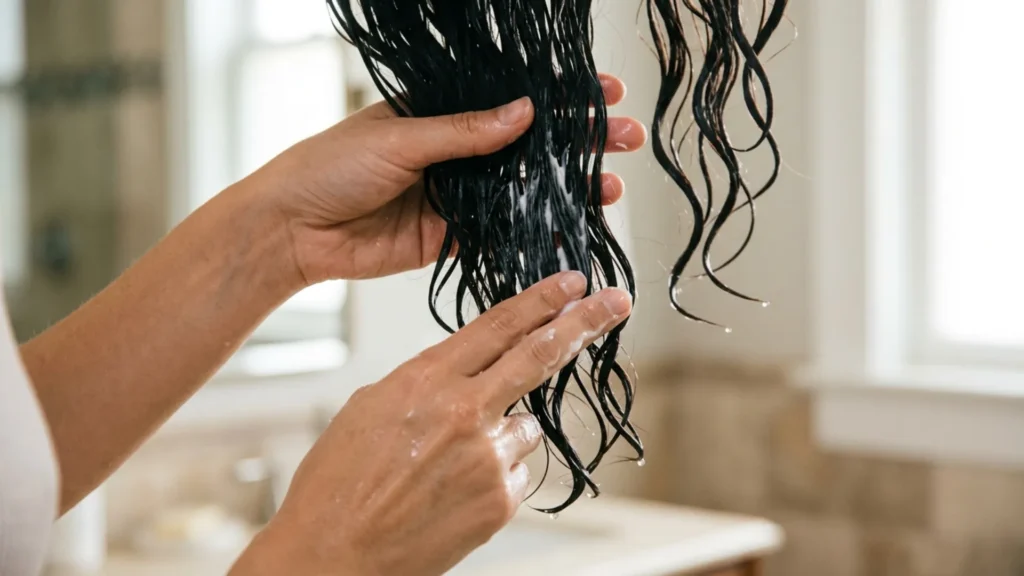
- Curly or coily hair: product applied while hair is still soaking wet rather than towel-dried first, often using the “praying hands” method — smoothing product downward between flat palms — to avoid disturbing curl clumps.
Drying Without Undoing the Work You Just Did

Swap the regular towel for a microfiber one or an old cotton t-shirt. Both create far less friction than terry cloth, which is rough at a microscopic level and grabs onto the raised cuticle you just smoothed down with a cool rinse. Blot and press instead of rubbing, the same as the earlier fix.
If you have curly or coily hair, plopping — gathering hair on top of the head inside a wrapped microfiber towel or t-shirt for ten to fifteen minutes — helps curls set their shape instead of getting pulled straight by their own weight while dripping.
Let hair air-dry partway before reaching for heat, if you’re using it at all. Hair that’s still fully saturated takes longer to style and is more prone to heat damage, since the water inside the strand can essentially boil under high heat. Wrapping hair to absorb moisture before using any heat tool gives you a shorter, gentler blow-dry.
Also Visit : Hair Care Routine for Healthy Hair: Build Yours in 3 Steps
What a Hair Care Routine After Wash Looks Like by Hair Type

Every step above shifts slightly depending on your hair type. Here’s a quick side-by-side so you’re not guessing.
| Hair Type | Rinse | Detangle When | Product Order | Drying |
|---|---|---|---|---|
| Fine / Oily | Cool, quick | Just after towel-blot, damp not dripping | Light leave-in only, ends focus | Microfiber, air-dry mostly |
| Thick / Dry | Cool, thorough | Before rinsing conditioner out | Cream, then oil on ends | Microfiber, partial air-dry, low heat if needed |
| Curly / Coily | Cool, gentle | With conditioner in, soaking wet | Cream + oil, praying hands method | Plopping, then diffuse on low or air-dry |
Small Mistakes That Quietly Wreck the Routine
A few habits undo everything above without you noticing why your hair suddenly looks worse than usual.
Sleeping on fully wet hair is a common one. Hair spends hours rubbing against a pillowcase while it’s at its weakest, which shows up as frizz and tangles by morning. A loose braid or a satin bonnet helps far more than people expect.
Pulling damp hair into a tight ponytail the same night is another. Wet hair holds tension differently than dry hair, and it can set a crease or stress point right at the elastic.
Applying heat while hair is still soaked rather than partly dry is a third. The water trapped inside the strand needs somewhere to go, and forcing it out too fast with a flat iron or blow dryer set high is rougher on hair than the same tool used on damp, not dripping, sections.
Also Visit : Hair Care Routine: Build One That Actually Sticks
Common Questions About Hair Care After Washing
What should I put on my hair right after washing?
The first product in any hair care routine after wash should be a water-based leave-in or detangling spray, applied while hair is still damp, before anything creamier or oil-based goes on top.
How long after washing should I detangle?
Detangle within the first five minutes, ideally while conditioner is still in for thick or curly hair, or once hair is merely damp for fine or straight hair. Waiting until it’s mostly dry makes knots harder to remove without breakage.
Should you apply products to wet or damp hair?
Leave-ins and creams work best on wet to damp hair, since that’s when hair absorbs the most product. Oils are the exception — they seal rather than absorb, so they work fine on slightly drier hair too.
Is a cold-water rinse actually necessary?
Ice-cold isn’t required. Lukewarm to cool is enough to help the cuticle lie flatter than a hot rinse would, which is really what you’re after.
Can you sleep with wet hair?
It’s better to let hair dry at least partway first. If you must sleep with it damp, a loose braid and a satin or silk pillowcase reduce the friction that causes tangles and frizz.
Key Takeaways
- The first ten minutes after rinsing matter more to hair health than most products do.
- Finish with a cool rinse, detangle from ends up before drying, and layer products thinnest to thickest.
- Towel-scrubbing and brushing from the roots down cause more breakage than almost anything else in a normal routine.
- Curly and thick hair generally benefits from detangling and product application while still soaking wet; fine hair usually does better slightly drier.
- That’s really the whole hair care routine after wash in miniature — sequence and gentleness, not extra products.
If you’ve been skipping straight to a comb and a blow dryer, try adjusting just the order this week and see how your ends feel by day three. Feel free to drop a comment with your hair type if you want the sequence adjusted further.
Written by Anna Anderson for Trend Cottage.