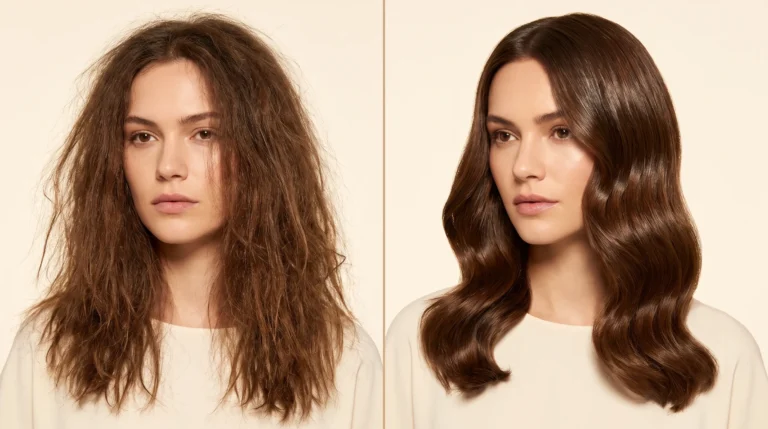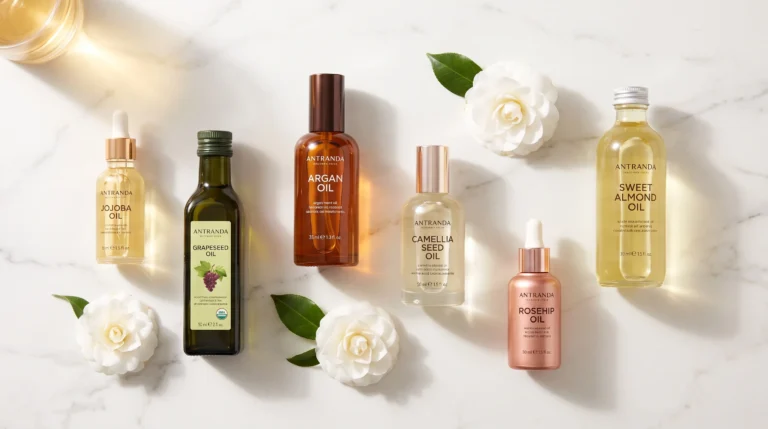
Oils for Healthy Natural Hair You Should Start Using Today
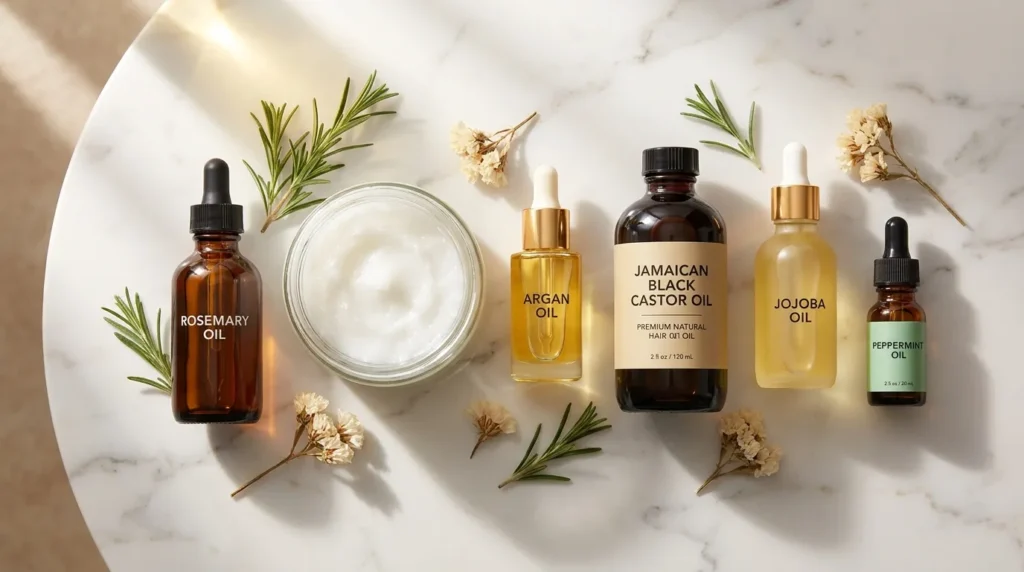
Not all oils do the same thing for hair — and using the wrong oil the wrong way is one of the most common reasons people feel like oils are not working for them. If you want oils for healthy natural hair that actually deliver results, you need to understand what each oil is designed to do, which ones match your hair’s needs, and exactly how to apply them. This guide covers all of that in one place.
We will go through the eight most effective oils for natural hair, explain the science behind why each one works, give you step-by-step application instructions, and finish with a hair porosity guide and DIY blend recipes so you can build a routine that is specific to your hair.
Penetrating vs Sealing Oils — The Most Important Concept First
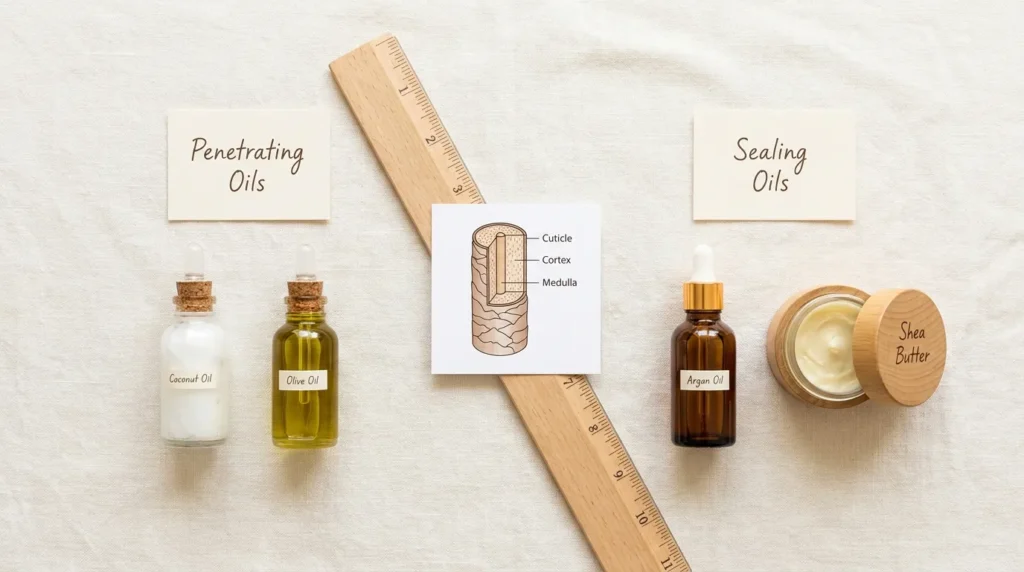
Before choosing any oil, you need to understand the difference between penetrating oils and sealing oils. This is the concept that most oil guides completely skip — and it explains why some people use oil and still have dry, dull hair.
Penetrating oils have small enough molecular structures to actually pass through the hair cuticle and absorb into the cortex — the inner core of the hair strand. They add moisture, strengthen the protein bonds inside the hair, and reduce internal damage. The most well-known penetrating oils are coconut oil, olive oil, and avocado oil.
Sealing oils sit on top of the hair cuticle and create a barrier that slows down moisture loss. They do not add moisture themselves — they lock in whatever moisture is already in the hair. Argan oil, jojoba oil, grapeseed oil, and sweet almond oil are all sealing oils.
The practical implication of this: always apply water or a water-based leave-in conditioner to your hair first. Then apply a penetrating oil while the hair is still damp. Then seal with a sealing oil or cream. This is the LOC (Liquid-Oil-Cream) method, and it works because it uses each oil type in the correct order. Applying a sealing oil to dry hair simply traps in dryness — not moisture.
Rosemary Oil — The Most Evidence-Backed Oil for Natural Hair Growth
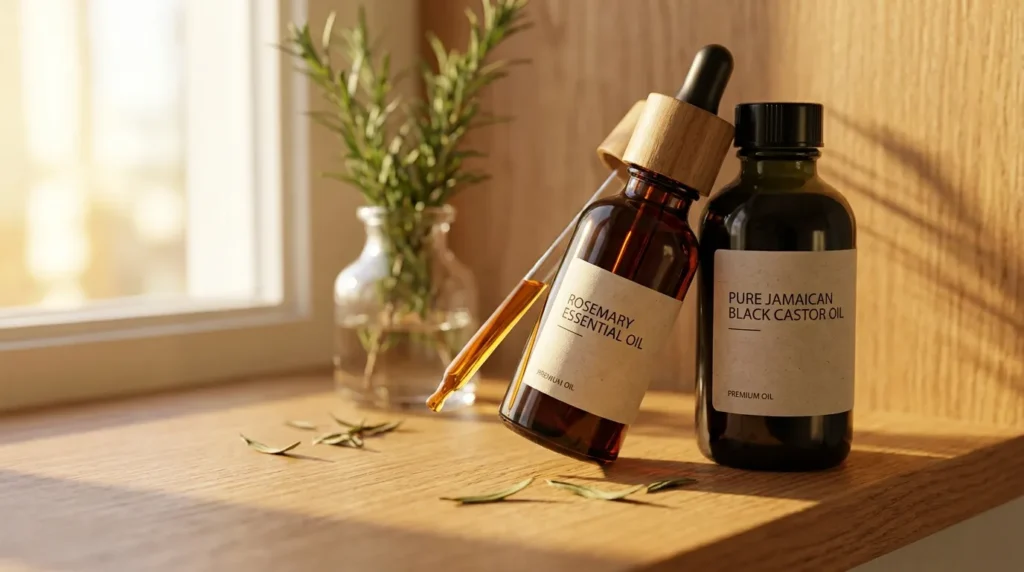
Rosemary oil is the most researched natural oil for hair growth and one of the best oils for healthy natural hair that you can add to your routine immediately. A landmark 2019 clinical study published in Skinmed Journal found that rosemary oil performed equally well to 2% minoxidil — a pharmaceutical hair growth drug — in promoting hair regrowth, with significantly fewer side effects. The active compound responsible is carnosic acid, which stimulates nerve growth factor and directly activates follicle stem cells to re-enter the growth phase.
Rosemary oil also increases scalp circulation, delivering more oxygen and nutrients to the follicle, and has anti-inflammatory properties that reduce the scalp inflammation that can slow follicle activity.
How to use rosemary oil:
- Rosemary is an essential oil — always dilute it before applying to the scalp. Never use undiluted essential oils directly on skin.
- Mix 5 to 7 drops of rosemary essential oil with 1 tablespoon of a carrier oil (jojoba, sweet almond, or coconut oil).
- Part your hair into sections and apply the blend directly onto your scalp using a dropper bottle or your fingertips.
- Massage firmly in circular motions for 3 to 5 minutes to boost absorption and circulation.
- Leave on for at least 30 minutes or overnight for best results. Wash out with your regular shampoo.
Frequency: Three to four times per week. Consistent use over eight to twelve weeks produces the most visible results in growth and density.
Castor Oil — Best for Thickness and Scalp Health
Castor oil is one of the most popular oils for healthy natural hair because it targets two of the biggest concerns simultaneously: hair thinning and scalp health. Its primary active compound, ricinoleic acid, is a natural DHT blocker — DHT (dihydrotestosterone) is a hormone that causes follicle miniaturization and progressive thinning. By reducing DHT activity at the scalp level, castor oil helps preserve follicle size and promotes the growth of thicker strands over time.
Jamaican Black Castor Oil (JBCO) is the most effective version for natural hair because its roasting process produces ash that raises the pH slightly, opening the cuticle and allowing deeper scalp penetration. It also has strong antibacterial and antifungal properties that keep the scalp clean and follicles healthy.
How to use castor oil:
- Because castor oil is very thick and viscous, always dilute it with a lighter carrier oil — a 1:1 ratio of castor oil to jojoba or sweet almond oil.
- Warm the mixture slightly by placing the bottle in warm water for two minutes.
- Apply directly to the scalp in sections and massage firmly for 5 minutes.
- Apply any remaining mixture to the ends of your hair to seal in moisture and prevent split ends.
- Cover with a shower cap and leave on for 2 hours minimum — overnight for best results.
- Wash out thoroughly. You may need two rounds of shampoo to fully remove castor oil.
Frequency: Two to three times per week as a scalp treatment. Once a week as an overnight treatment.
Coconut Oil — The Deep Penetrating Moisture Powerhouse
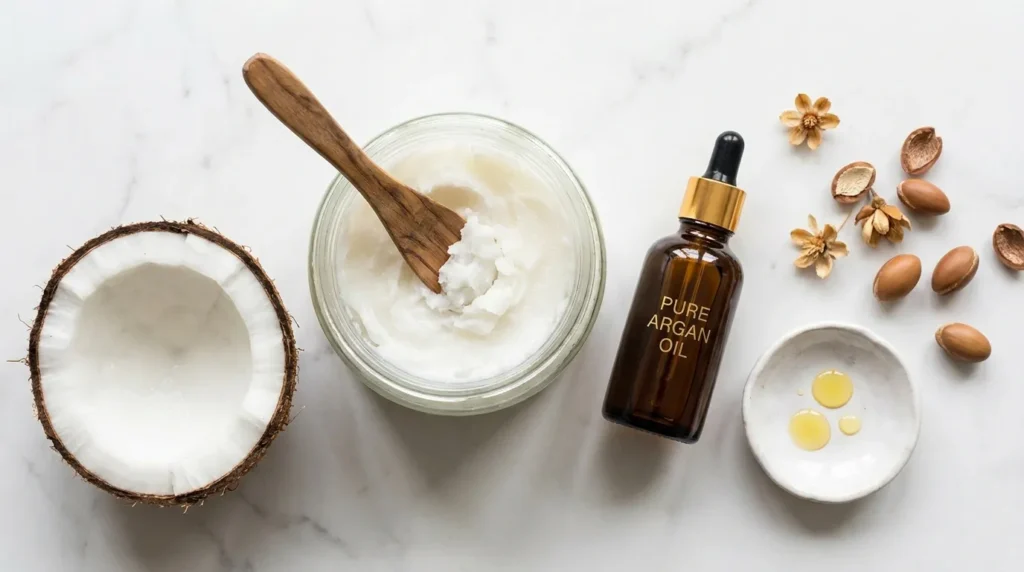
Coconut oil is the most studied of all the oils for healthy natural hair, and its effectiveness is backed by multiple published studies. Its unique molecular structure — rich in medium-chain fatty acids, primarily lauric acid — gives it the ability to penetrate deep into the hair shaft and bind to the natural hair proteins from the inside. A study published in the Journal of Cosmetic Science found that coconut oil was the only tested oil that significantly reduced protein loss in hair, both when applied before and after washing.
This makes coconut oil the best pre-wash (pre-poo) oil available. Applied before shampooing, it protects the hair shaft from the protein loss caused by water swelling (hygral fatigue) during washing. It also works as a deep moisturizing treatment for dry, brittle hair and has antifungal properties that benefit the scalp.
Important note on coconut oil and hair porosity: Coconut oil works best for medium to high porosity hair. For low porosity hair, coconut oil can actually sit on top of the hair instead of penetrating — causing buildup rather than moisture. If your hair tends to stay wet for a long time after washing (sign of low porosity), use a lighter oil like jojoba or grapeseed instead.
How to use coconut oil:
- As a pre-poo: Apply to dry hair before washing, section by section from root to tip. Cover with a shower cap and leave on for 30 minutes to overnight. Shampoo directly over it without rinsing first.
- As a deep conditioning boost: Add 1 tablespoon of melted coconut oil to your regular deep conditioner to enhance penetration.
- As a sealant (for medium-high porosity hair): Apply a small amount to damp hair after leave-in conditioner to seal in moisture. Use sparingly on the ends.
Frequency: Once a week as pre-poo. As needed for end sealing.
Argan Oil — Best Finishing Oil for Shine and Frizz Control
Argan oil, often called “liquid gold,” is one of the most effective oils for healthy natural hair shine and frizz control. It is a sealing oil, which means it does not penetrate the hair shaft — instead, it coats the cuticle with a thin, smooth layer of oleic and linoleic fatty acids that creates an incredibly sleek surface. This surface reflects light evenly and dramatically, giving hair an immediate glossy, polished appearance without any greasiness when used in the right amount.
Argan oil is also rich in vitamin E, which protects the hair’s outer cuticle layer from oxidative damage caused by UV exposure, heat styling, and environmental pollution. Regular use preserves the cuticle’s integrity and keeps hair looking healthy and shiny long-term.
How to use argan oil correctly:
- Less is always more with argan oil. Start with two to three drops maximum — you can always add more, but too much will make hair look greasy.
- Warm the drops between your palms by pressing them together.
- Smooth your palms lightly over the surface of your styled hair, focusing on the mid-lengths and ends. Avoid the roots and scalp — applying oil here causes buildup.
- For frizz control on dry hair, apply one drop to your fingertips and lightly smooth over any frizzy sections.
Frequency: After every wash day as a finishing step. Can also be used as a daily or mid-week frizz tamer in very small amounts.
Jojoba Oil — Best Oil for Scalp Balance and Low Porosity Hair
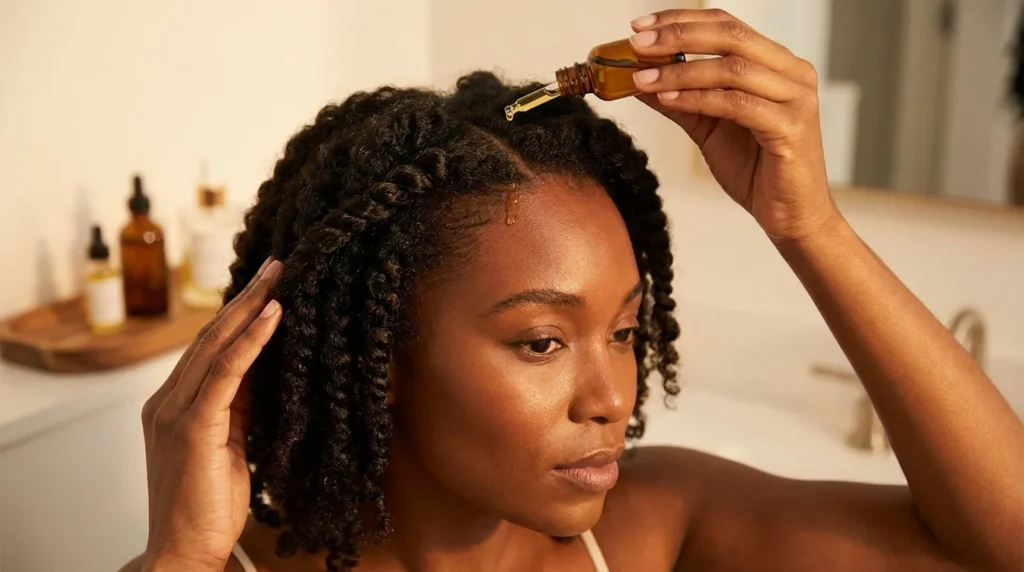
Jojoba oil is technically a liquid wax, not an oil — and this distinction is what makes it so uniquely effective. Its molecular structure is almost identical to the sebum that the human scalp naturally produces. This means the scalp recognizes it as “its own” and absorbs it without triggering the overproduction of natural oils that can happen when you apply foreign oils to the scalp.
For people who struggle with a dry or imbalanced scalp, jojoba oil is the most effective scalp-specific oil available. It regulates oil production, moisturizes without clogging follicles, and creates the ideal scalp environment for healthy hair growth. It is also an excellent choice as the carrier oil for essential oils like rosemary and peppermint, because its lightweight texture allows the active compounds in the essential oils to penetrate the scalp easily.
For low porosity hair specifically, jojoba is the best carrier oil because it is lightweight enough to actually enter the cuticle (unlike heavy oils like coconut or castor oil, which tend to sit on top of low porosity hair).
How to use jojoba oil:
- As a scalp treatment: Apply 4 to 5 drops directly to the scalp, massage in circular motions for 3 minutes, and leave overnight without washing out.
- As a carrier for essential oils: Mix your rosemary or peppermint oil into jojoba oil for scalp massages.
- As part of LOC method: Apply to damp hair after leave-in conditioner as your sealing oil — a lightweight option that does not weigh hair down.
Frequency: Two to three times per week as a scalp treatment. After each wash day as part of your moisture sealing routine.
Peppermint Oil — Proven Follicle Stimulator
Peppermint oil is one of the most exciting essential oils for natural hair growth. A well-cited 2014 study compared peppermint oil, jojoba oil, minoxidil, and saline solution for hair growth effects — and peppermint oil actually outperformed minoxidil in several key measurements, including follicle depth, follicle number, and hair thickness. The mechanism is menthol, the active compound in peppermint, which creates a vasodilating effect that significantly increases blood flow to the scalp and delivers more nutrients directly to the follicles.
The cooling sensation you feel on your scalp when applying peppermint oil is not just a pleasant sensation — it is a direct sign of increased circulation happening in real time.
How to use peppermint oil:
- Like all essential oils, peppermint must always be diluted before scalp application. Use 3 to 5 drops per tablespoon of carrier oil — less than rosemary because peppermint is more potent.
- Mix with jojoba or sweet almond oil and apply to the scalp in sections.
- Massage for 3 to 5 minutes and leave on for at least 30 minutes before washing out.
- If you feel excessive burning or irritation, rinse off immediately and dilute further next time. Sensitive scalps may need only 2 drops per tablespoon.
Frequency: Two to three times per week. Can be combined with rosemary oil in the same blend for a powerful growth-stimulating combination.
Grapeseed and Sweet Almond — The Lightweight All-Rounders
Grapeseed oil and sweet almond oil are the most underrated oils for healthy natural hair — particularly for people with fine hair, low porosity hair, or hair that gets weighed down by heavier oils.
Grapeseed oil is one of the lightest hair oils available. It absorbs almost instantly, leaves zero residue, and works beautifully as both a light sealant and a carrier oil for essential oils. It is rich in linoleic acid, which strengthens the hair shaft without adding weight. It also has natural astringent properties that benefit oily scalps and can reduce dandruff with regular scalp application.
Sweet almond oil is slightly richer than grapeseed but still lightweight enough for daily use. It is rich in vitamins E, A, and B, oleic acid, and linoleic acid — a combination that moisturizes the scalp, reduces inflammation, and adds a soft shine to the hair. It is particularly effective for reducing scalp dryness and flaking without causing greasy buildup.
Both oils are excellent daily moisturizers for the ends of hair and gentle enough to use on sensitive scalps. Use them as carrier oils, as part of your LOC method, or as lightweight daily end sealers.
How to Match Oils to Your Hair Porosity
Hair porosity — how easily your hair absorbs and retains moisture — determines which oils will work best for your specific hair. Using an oil that does not match your porosity is one of the main reasons people feel like oils do not work for them.
Low porosity hair (hair that repels water and takes a long time to get wet): The cuticle is tightly closed, so thick, heavy oils cannot penetrate and instead sit on top creating buildup and dullness. Best oils: grapeseed, sweet almond, jojoba, argan. Always apply oils to warm, damp hair to open the cuticle slightly before application.
Medium porosity hair (the ideal — water absorbs relatively easily): Can handle most oils well. Coconut oil, jojoba, and argan all work effectively. Focus on the LOC method and weekly deep conditioning with a coconut oil boost.
High porosity hair (hair that absorbs moisture quickly but loses it just as fast — common with chemically treated or heat-damaged hair): Needs heavy sealant oils to slow down moisture loss. Best oils: castor oil, coconut oil, olive oil. Apply generous amounts of sealing oil and cream after every moisture application. Protein treatments help close the cuticle gaps that cause high porosity.
Simple porosity test: Drop a clean strand of hair into a glass of water. If it sinks within 2 minutes: high porosity. If it floats on top: low porosity. If it slowly sinks after a few minutes: medium porosity.
DIY Oil Blend Recipes
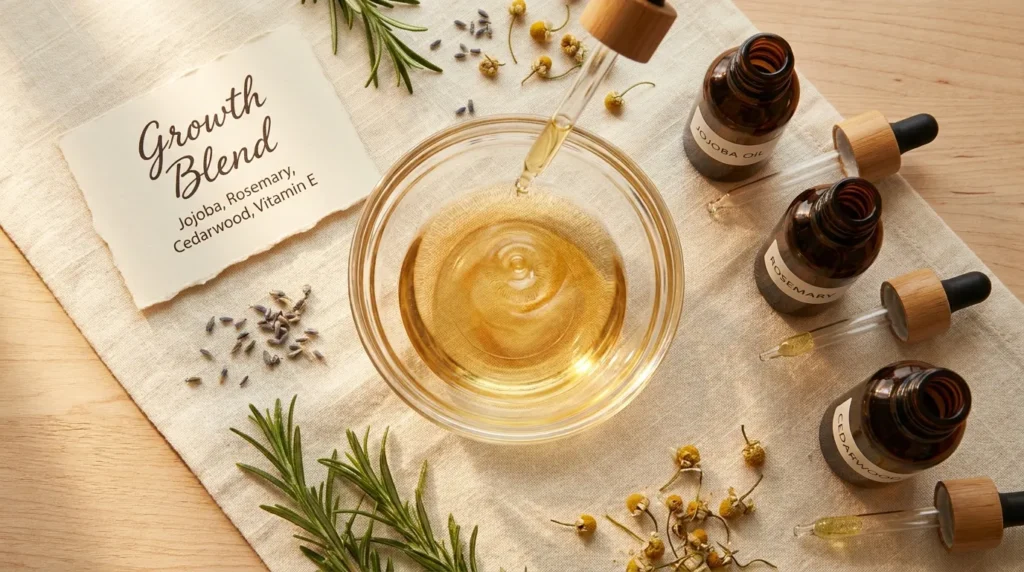
Instead of using oils individually, blending them maximizes their benefits. Here are three targeted blends:
Growth Stimulating Blend:
- 2 tablespoons jojoba oil (carrier)
- 1 tablespoon castor oil
- 7 drops rosemary essential oil
- 4 drops peppermint essential oil
Mix in a small dark glass bottle and shake well before each use. Apply to scalp 3x per week, massage for 5 minutes, leave overnight, wash out in the morning.
Moisture Sealing Blend (for medium-high porosity):
- 2 tablespoons coconut oil
- 1 tablespoon sweet almond oil
- 5 drops lavender essential oil (optional — promotes scalp health and relaxation)
Apply to damp hair after leave-in conditioner as your sealing step in the LOC method.
Lightweight Daily Blend (for low porosity or fine hair):
- 2 tablespoons grapeseed oil
- 1 tablespoon argan oil
- 3 drops rosemary essential oil
Use a few drops to seal ends after moisturizing, or as a light scalp treatment. This blend absorbs fast and leaves no residue.
Frequently Asked Questions
Should I apply oil to dry or wet natural hair?
For moisturizing purposes, always apply oils to damp hair. Oils do not add moisture — they seal it in. Applying oil to dry hair traps in dryness, not moisture. The only exception is when using oil as a finishing product for shine (like argan oil), which can be applied lightly to dry styled hair. Always start with water or a leave-in conditioner, then seal with oil.
Which oil is best for natural hair growth?
Rosemary oil has the strongest clinical evidence for promoting hair growth and is the top recommendation. Combine it with castor oil for a blend that both stimulates follicle activity and blocks the DHT that causes thinning. Peppermint oil is a strong secondary choice with its own supporting research. All three should be used as scalp treatments diluted in a carrier oil — not applied to the hair strands themselves.
Can I use too much oil on my natural hair?
Yes. Overusing oil is one of the most common mistakes in natural hair care. Too much oil creates buildup that blocks the hair cuticle, makes hair look greasy and dull, and eventually clogs follicles. Use oils in small amounts as directed, and clarify with a clarifying shampoo once a month to remove any accumulated buildup.
How long does it take to see results from using hair oils?
Immediate results (shine, softness, reduced frizz) happen from the first application when using argan or jojoba as finishers. Growth-related results from rosemary, castor, and peppermint oil typically become visible between eight and twelve weeks of consistent use three times per week. Hair grows at approximately half an inch per month — results require patience and consistency.
Is it okay to mix essential oils with carrier oils?
Yes — and it is necessary. Essential oils like rosemary, peppermint, and tea tree are highly concentrated and should never be applied directly to the scalp without dilution in a carrier oil. The standard dilution rate is 2 to 3% — approximately 5 to 7 drops of essential oil per tablespoon (15ml) of carrier oil. For sensitive scalps, use 2 to 3 drops per tablespoon.
Start With One Oil — Build From There
The best oils for healthy natural hair are not all needed at once. Start with rosemary oil mixed into jojoba as your weekly scalp treatment — this one combination addresses growth, circulation, scalp health, and moisture sealing simultaneously. Once that becomes a consistent habit, add argan oil as your post-wash finishing step for shine. Then experiment with the other oils based on your hair’s specific needs and porosity type.
The key with oils for healthy natural hair is not using more — it is using the right ones, in the right order, on the right parts of the hair, consistently. That approach produces results that stay.
Also Visit : Tips for Shiny Healthy Natural Hair That Really Work