Make Hair Thick and Strong From Roots Naturally at Home

Thin, weak hair that breaks easily at the roots is one of the most frustrating hair problems — and also one of the most fixable. If you want to make hair thick and strong from roots, the solution is not an expensive salon treatment or a chemical-filled product. It starts with understanding why your roots are weak in the first place, and then consistently applying the right natural remedies and habits that rebuild strength from the inside out.
This guide covers everything — from the science of why hair thins at the roots to seven proven home remedies that genuinely work, the right foods to eat, and the daily habits that make or break your results. Everything here is practical, affordable, and uses ingredients you likely already have at home.
Why Hair Becomes Thin and Weak at the Roots
Your hair grows from follicles embedded in your scalp. Each follicle produces one hair strand, and the size and health of that follicle determines the thickness, strength, and growth rate of the strand it produces. When follicles shrink or become damaged, they produce thinner, weaker strands — and eventually, they stop producing hair altogether.
Several factors cause follicle damage and root weakness:
- Nutritional deficiencies: Iron, zinc, biotin, and protein deficiencies directly impair the follicle’s ability to produce strong, thick hair. This is one of the most common and most overlooked causes of thinning hair.
- DHT (dihydrotestosterone): A hormone produced in the body from testosterone. Excess DHT binds to follicle receptors and causes them to shrink progressively. This is the primary cause of pattern hair thinning in both men and women.
- Poor scalp circulation: Follicles need a steady supply of oxygen and nutrients delivered by blood. Poor circulation — caused by stress, inactivity, or tight hairstyles — starves follicles and weakens the hair they produce.
- Chronic stress: Stress triggers a condition called telogen effluvium, which pushes a large number of follicles into the resting phase simultaneously, causing sudden shedding and noticeable thinning.
- Product buildup: Heavy product residue on the scalp clogs follicle openings, preventing normal growth and leading to weak, limp hair at the root.
- Heat and chemical damage: Repeated heat styling and chemical treatments damage the hair shaft and can cause the follicle to produce progressively weaker strands over time.
Understanding which of these applies to you will help you target the right remedies. Most people dealing with thin, weak roots have a combination of nutritional gaps and poor scalp circulation — both of which respond very well to the natural approaches below.
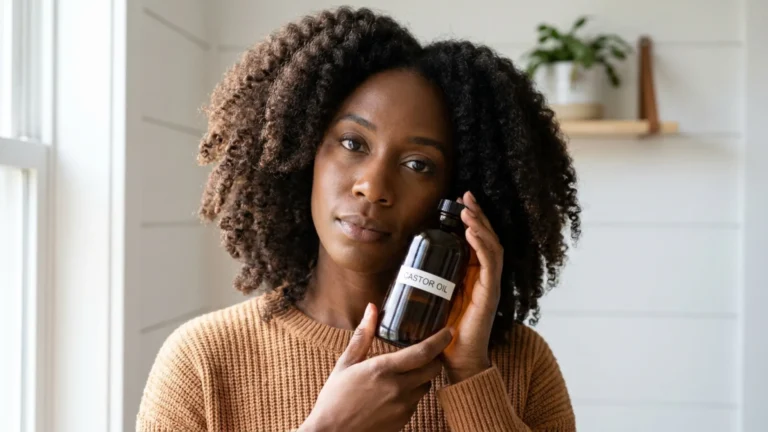
Castor Oil — The Most Powerful Root Strengthener
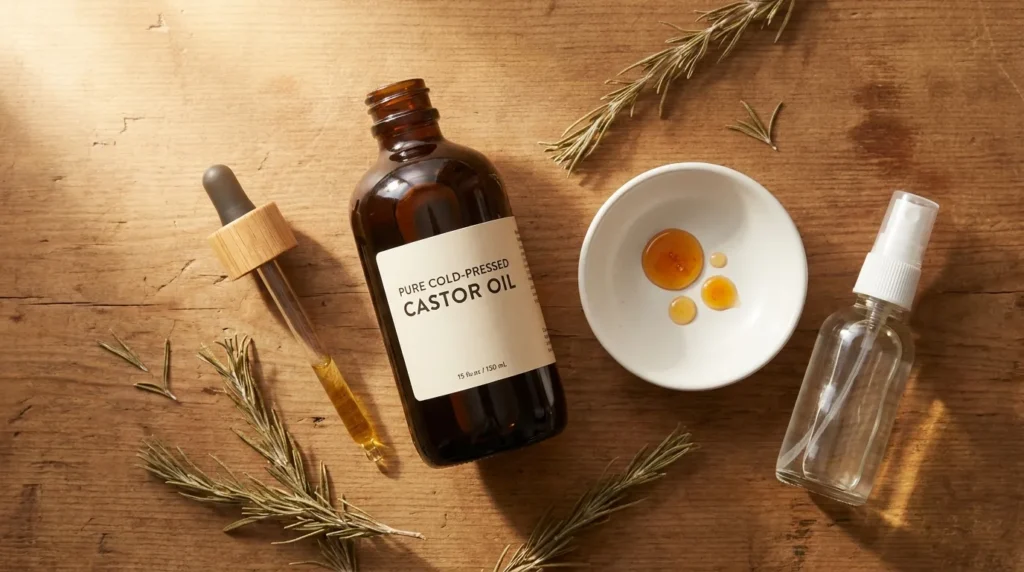
Castor oil is the single most effective natural oil for strengthening hair at the roots, and it has been used for this purpose across cultures for centuries. It works through several mechanisms simultaneously: its ricinoleic acid content is a natural DHT blocker, which means it directly fights one of the leading causes of follicle shrinkage and hair thinning. It also has powerful antifungal and antibacterial properties that keep the scalp clean and follicles unclogged, and its thick consistency creates a seal over the scalp that improves moisture retention at the roots.
Research published in the Journal of Cosmetic Science confirmed that ricinoleic acid penetrates the scalp and improves circulation to the follicles, nourishing them with more oxygen and nutrients. This is why consistent castor oil use produces visibly thicker hair over time — it feeds the follicle directly.
How to use castor oil to make hair thick strong from roots:
- Because castor oil is very thick, always mix it with a lighter carrier oil first. A 1:1 ratio of castor oil with jojoba oil, sweet almond oil, or coconut oil works well.
- Warm the mixture slightly by placing the bowl in warm water for two minutes. Warm oil penetrates the scalp more effectively than cold oil.
- Part your hair into sections and apply the warm oil blend directly to your scalp, not just the hair strands.
- Massage firmly in circular motions for five full minutes, covering your entire scalp. Use the pads of your fingers, not your nails.
- Cover with a plastic shower cap and leave on for at least two hours. For best results, leave overnight.
- Wash out with a gentle sulfate-free shampoo. You may need to shampoo twice to fully remove castor oil.
Frequency: Two to three times per week. Consistency for at least eight weeks is needed before visible thickening becomes apparent.
Egg and Yogurt Protein Mask — Rebuilds Hair Strength From Inside
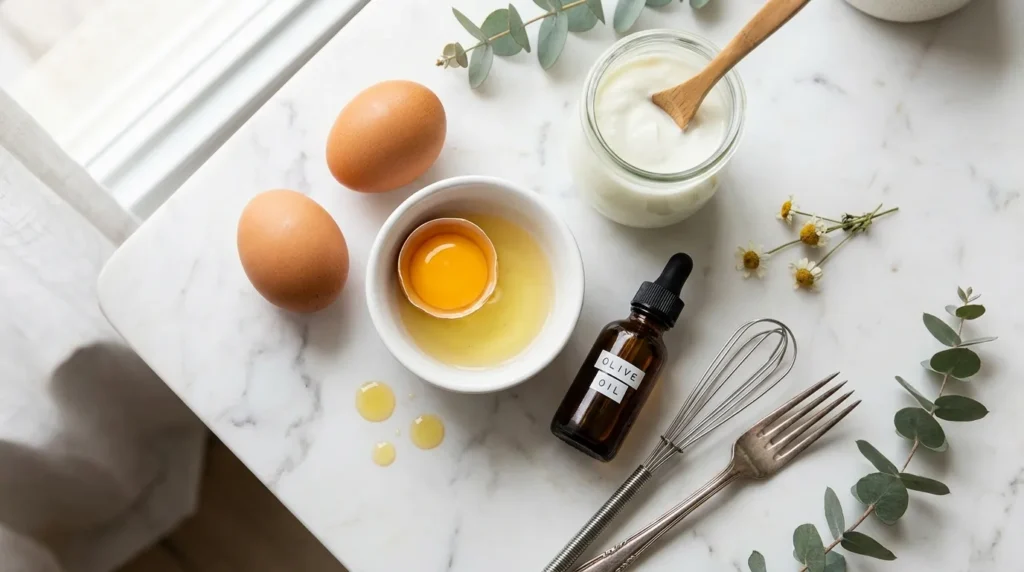
Hair is made almost entirely of a protein called keratin. When your hair lacks enough protein — either from a deficient diet or from damage — it becomes thin, brittle, and prone to breakage right from the root. Eggs are one of the most bioavailable sources of complete protein available, meaning the protein in eggs closely matches what your hair is actually made of, making it extremely effective for rebuilding hair structure.
Plain yogurt adds lactic acid, which gently exfoliates the scalp to remove dead skin buildup from follicle openings, and probiotics that support a healthy scalp microbiome. Together, this mask directly addresses the protein deficit that causes thin, weak hair.
How to make and use the egg and yogurt protein mask:
- Crack 2 eggs into a bowl and beat them well.
- Add 3 tablespoons of plain unsweetened yogurt and mix until combined.
- Add 1 tablespoon of olive oil for additional moisture and scalp conditioning.
- Mix everything into a smooth, consistent paste. If the mixture is too runny, add one more tablespoon of yogurt.
- Apply the mask generously to your scalp first, working it in section by section, then smooth it through the length of your hair.
- Cover with a plastic shower cap and leave on for 30 to 45 minutes.
- Rinse with cool water first — never hot water, as heat can cook the egg and make it difficult to rinse out. Follow with your regular shampoo.
Frequency: Once a week. Do not use more frequently as too much protein can make hair stiff and prone to breakage.
Fenugreek Seed Mask — The Most Underrated Root Treatment
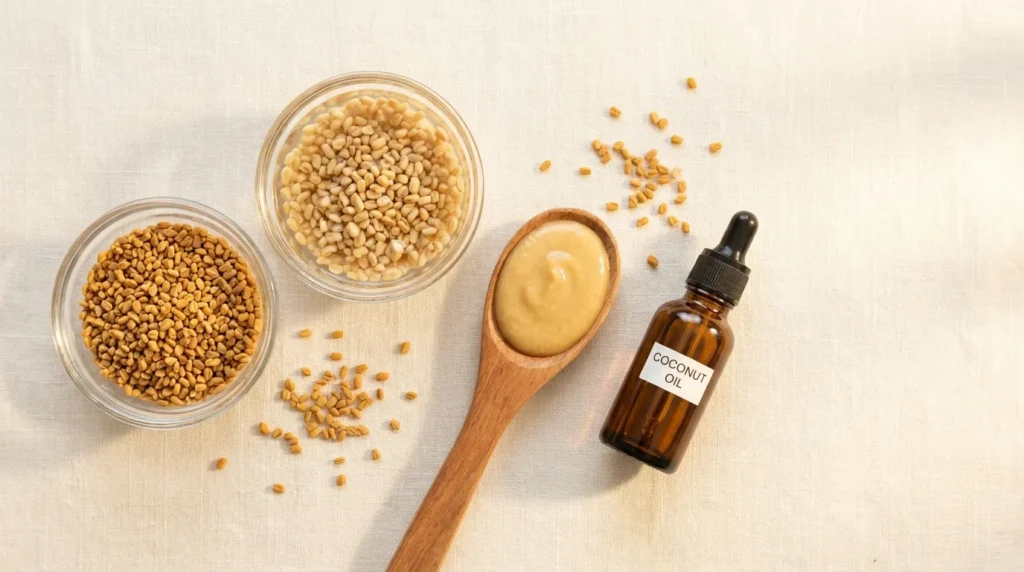
Fenugreek seeds are one of the most effective — and most underused — natural treatments for thin, weak hair. They are packed with compounds that directly address the root causes of hair thinning: lecithin moisturizes the scalp and strengthens the hair shaft, diosgenin is a natural DHT blocker that helps prevent follicle miniaturization, and nicotinic acid improves blood circulation to the scalp. Fenugreek seeds also contain protein and amino acids that feed the follicle and produce stronger, thicker strands.
Studies have shown that fenugreek seed extracts promote hair growth and increase hair diameter over consistent use — meaning the actual strand itself becomes thicker, not just longer.
How to make and use a fenugreek seed mask:
- Measure 3 tablespoons of fenugreek seeds and soak them in a bowl of water overnight — at least 8 to 10 hours. They will absorb water and become soft.
- Drain the soaking water (you can also use this water as a scalp rinse — it is rich in beneficial compounds).
- Blend the soaked seeds into a smooth paste. Add 1 to 2 tablespoons of coconut oil to make it easier to blend and improve the mask’s moisturizing effect.
- Apply the paste directly to your scalp, section by section, massaging it gently into the roots.
- Cover with a shower cap and leave on for 30 to 60 minutes.
- Rinse thoroughly with cool water and wash with a mild shampoo.
Frequency: Once or twice a week. Results become visible typically between four and eight weeks of consistent use.
Onion Juice — Clinically Proven for Thicker, Stronger Hair
Onion juice is one of the few natural hair treatments with direct clinical evidence behind it. A study published in the Journal of Dermatology found that applying crude onion juice to the scalp twice daily for six weeks resulted in significantly greater hair regrowth compared to a control group. The mechanism is quercetin — a powerful antifungal and anti-inflammatory flavonoid in onions that combats scalp infections — combined with the high sulfur content, which is an essential building block of keratin and directly feeds the follicle to produce thicker strands.
Sulfur also promotes collagen production in the scalp, which improves the structural integrity of the hair follicle and the surrounding tissue, leading to stronger anchoring of each hair strand at the root.
How to use onion juice to make hair thick strong from roots:
- Peel and roughly chop one medium to large onion.
- Blend the pieces and strain through a fine cloth or cheesecloth, squeezing out as much juice as possible. A medium onion yields approximately 3 to 4 tablespoons of juice.
- Apply the juice directly to your scalp using a cotton ball, applicator bottle, or your fingertips, working methodically through sections to cover the entire scalp.
- Massage gently for two minutes to improve absorption and increase circulation.
- Leave on for 30 to 45 minutes under a shower cap.
- Wash out thoroughly with a gentle shampoo. You may need to shampoo twice to fully remove the smell. A few drops of tea tree oil or lavender oil in your shampoo can help neutralize the odor.
Frequency: Twice a week. The smell is strong but temporary, and the results within four to six weeks are genuinely significant for most people.
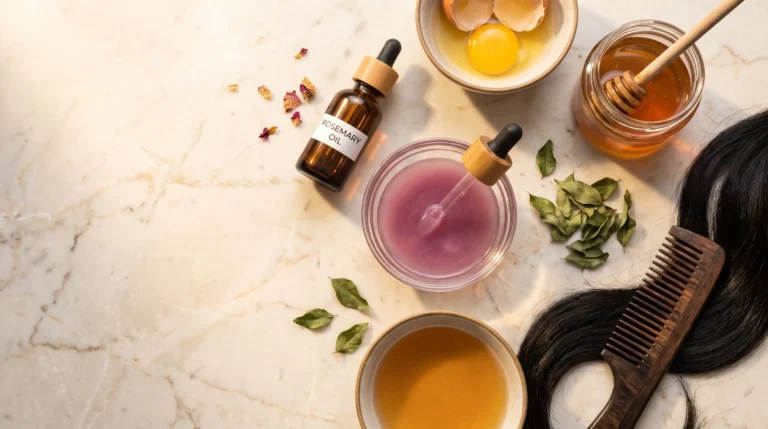
Aloe Vera and Rosemary — Scalp Cleansing and Follicle Activation
Aloe vera and rosemary work together as a powerful combination for both scalp health and follicle activation. Aloe vera’s proteolytic enzymes break down dead skin cells and product buildup that clog follicles and prevent healthy hair production. Its alkalizing properties balance scalp pH, creating a healthier environment for hair growth. Rosemary, as mentioned in clinical research, stimulates follicle activity and improves hair thickness over time through its carnosic acid content — comparable in effectiveness to pharmaceutical minoxidil in some studies.
How to make the aloe vera and rosemary treatment:
- Scoop 3 tablespoons of fresh aloe vera gel from a leaf or use 100% pure store-bought gel with no added colors or fragrances.
- Add 5 to 7 drops of rosemary essential oil and mix well.
- Apply the mixture directly to your scalp in sections, massaging it in for two to three minutes.
- Leave on for 20 to 30 minutes.
- Rinse with cool water. This treatment is light enough that you may not need to shampoo afterward — you can simply rinse and condition if your hair is not oily.
Frequency: Two to three times per week. This is one of the gentlest treatments in this guide and can be used more frequently without the risk of over-drying.
The Right Diet to Make Hair Thick and Strong From Roots
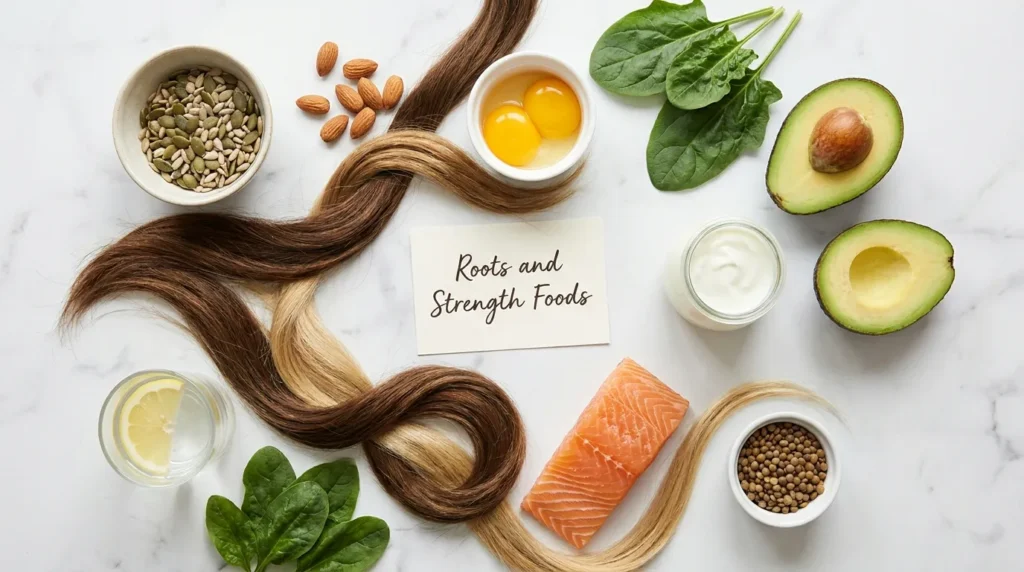
No topical treatment can compensate for nutritional deficiencies that are causing thin, weak hair from the inside. If your body does not have the raw materials it needs to build strong hair, the follicle cannot produce it — regardless of what you apply externally. The right diet is not optional if you want to make hair thick strong from roots permanently.
The nutrients your follicles need most:
- Protein: Hair is 95% keratin, which is a protein. Without adequate daily protein, your body prioritizes vital organs over hair production. Aim for eggs, chicken, fish, lentils, beans, and Greek yogurt daily. A minimum of 50 grams of protein per day is needed for healthy hair; many women who experience thinning hair are consuming significantly less.
- Iron: Iron deficiency is one of the most common causes of hair thinning in women, particularly those with heavy periods. Iron is needed to carry oxygen to the follicle. Low iron = starved follicles = thin, weak hair. Add spinach, lentils, red meat, dark chocolate, and pumpkin seeds to your diet. Pair with vitamin C foods (citrus, bell peppers) to improve absorption.
- Biotin (Vitamin B7): Essential for keratin production. Deficiency directly causes thin hair and slow growth. Find it in eggs, sweet potatoes, nuts, and seeds. If dietary intake is low, a supplement of 2500 to 5000 mcg daily is commonly recommended.
- Zinc: Regulates oil gland function around the follicle and is essential for cell repair and reproduction. Pumpkin seeds, chickpeas, cashews, and beef are excellent sources.
- Silica: Often overlooked but crucial for hair strength. Silica strengthens the hair shaft at a structural level. Found in oats, cucumbers, green beans, and mango.
- Omega-3 Fatty Acids: Reduce scalp inflammation that disrupts follicle function. Salmon, walnuts, chia seeds, and flaxseeds are the best sources.
Foods to reduce: Sugar and refined carbohydrates spike insulin levels which increases DHT production — directly contributing to follicle miniaturization and thin hair. Reducing processed foods, sugary drinks, and white bread has a measurable positive impact on hair thickness over time.
Scalp Massage and Daily Habits That Strengthen Roots

The remedies above are powerful, but they work best when supported by the right daily habits. These are the lifestyle practices that make the biggest difference in whether your roots stay thin or get stronger over time.
Daily scalp massage: A landmark 2016 study found that just four minutes of daily standardized scalp massage increased hair thickness significantly over 24 weeks. Scalp massage stretches the cells of the hair follicle, stimulating them to produce thicker strands, while also increasing blood flow that delivers nutrients directly to the root. You do not need oil to benefit — dry massage works. But combining your massage with castor oil or rosemary oil multiplies the results.
Sleep on satin or silk every night: Cotton pillowcases create friction that weakens hair at the root over time. Switch to a satin bonnet or satin pillowcase to eliminate nightly damage.
Reduce stress actively: Chronic stress elevates cortisol, which disrupts the normal hair growth cycle and pushes follicles into a resting phase prematurely. Exercise, sleep, and mindfulness practices are not optional extras — they directly affect your hair’s thickness and health at a hormonal level.
Limit heat styling: Every time you apply high heat to your hair, you weaken the protein bonds that make hair strong and thick. Use heat no more than once a month, always with a heat protectant, and at a temperature below 350°F (175°C).
Wash your scalp properly: Shampoo your scalp — not your hair length — and do it every one to two weeks. Product buildup on the scalp clogs follicles. Clean follicles produce stronger hair.
What to Stop Doing Immediately
Some habits actively thin hair from the roots and undo all the work you are doing with remedies and diet. Stop these as soon as possible:
- Tight hairstyles: Ponytails, buns, braids, and extensions that pull on the roots cause traction alopecia — a form of hair loss from repeated mechanical tension. Give your hairline regular breaks and never style so tightly that you feel scalp tension.
- Shampooing every day: Daily shampooing strips the scalp of natural oils that protect and nourish the follicle. Wash every five to seven days for most hair types.
- Using heat without protection: Unprotected heat creates protein damage at the follicle level, producing progressively weaker and thinner hair with each styling session.
- Scratching your scalp: Fingernail scratching creates micro-tears in the scalp skin, causing inflammation that disrupts follicle health and can cause scarring over time.
- Chemical treatments without recovery time: Frequent relaxers, bleaching, and perming weaken the hair at its attachment point to the follicle. Space chemical treatments at least 8 to 10 weeks apart and always deep condition after every treatment.
Frequently Asked Questions
How long does it take to make hair thick strong from roots naturally?
Most people start to notice reduced shedding and improved texture within two to four weeks of consistent treatment. Visible thickening of the hair shaft — where new hair growing in is noticeably fuller — typically appears after six to twelve weeks. Full results from lifestyle and dietary changes take three to six months because the follicle needs time to respond and produce new, healthier strands from scratch.
Which oil is best for strengthening hair roots?
Castor oil is the most effective single oil for root strengthening due to its ricinoleic acid content, which is a natural DHT blocker and circulation booster. For the strongest results, combine it with rosemary essential oil — which has clinical evidence for follicle stimulation — diluted in a carrier oil like jojoba or sweet almond oil. This combination addresses both circulation and DHT simultaneously.
Can thin hair at the roots become thick again?
Yes — in most cases, thinning at the roots is reversible. If the follicle has not completely closed (permanent alopecia), consistent treatment can revive its ability to produce thicker hair. The earlier you start treating the root cause and applying strengthening remedies, the better the results. Follicles that have been producing thin hair for many years can still respond well to consistent natural treatment.
Is it better to apply treatments to dry or wet hair?
For oil-based treatments like castor oil and the rosemary blend, apply to dry or slightly damp hair for best absorption — oil does not penetrate well through fully water-saturated hair. For water-based or gel treatments like aloe vera, apply to damp hair immediately after washing. Mask treatments like the egg mask and fenugreek paste should be applied to dry hair before washing.
Does scalp massage actually make hair thicker?
Yes. A 2016 Japanese study demonstrated that standardized scalp massage performed for four minutes daily over 24 weeks produced measurably thicker hair strands. The mechanical stimulation causes dermal papilla cells in the follicle to stretch and respond by producing more robust hair. Combined with growth oils, the effect is significantly enhanced.
Start With One Remedy — Then Build Your Routine
You do not need to do everything in this guide at once. Start with one remedy this week — castor oil massage is the best starting point because it directly targets the most common causes of root weakness simultaneously. Add the egg mask the following week. Introduce the dietary changes gradually. Build from there.
The goal is to make hair thick strong from roots through consistent, sustainable habits — not through occasional intensive treatments. A routine you can maintain every week for three months will produce more visible results than an ambitious routine you follow for two weeks and abandon.
Your roots respond to care. Give them the right inputs consistently, and the change you want will come.
Also Visit : Palm Oil for Hair: Benefits, How to Use It, and What to Expect