Is Coconut Oil Good for Low Porosity Hair? Find Out Here
If you have low porosity hair, finding the right natural oil can feel like an overwhelming game of trial and error. You have likely heard endless praise for coconut oil across beauty blogs and social media as the ultimate natural hair elixir. But when you slathered it onto your coils, instead of soft, hydrated curls, you were left with stiff, greasy, straw-like strands that felt drier than before.
So, is coconut oil good for low porosity hair? The short answer is: it depends, but for most people with low porosity hair, using raw coconut oil as a daily leave-in moisturizer does far more harm than good.
Because low porosity hair features tightly sealed cuticles that already struggle to absorb water, heavy oils like raw coconut oil tend to sit on top of the hair shaft, blocking essential moisture from getting in. However, that does not mean you have to banish coconut oil from your shelf entirely. In this comprehensive guide, we break down the molecular science of why coconut oil behaves this way on low porosity hair, how to use it safely without causing buildup, and the best lightweight alternative oils your curls will actually love.
Is Coconut Oil Good for Low Porosity Hair? The Molecular Truth
To understand why coconut oil causes such drastic, mixed reactions within the natural hair community, we must first look at the unique biological structure of low porosity hair cuticles combined with the chemical composition of coconut oil itself.
1. Low Porosity Cuticle Anatomy
Hair porosity refers to your hair shaft’s ability to absorb and retain moisture, which is determined by the condition of your outer cuticle layer. Cuticles are microscopic, overlapping shingle-like scales that cover the inner core (cortex) of each hair strand.
On low porosity hair, these cuticle scales lay extremely flat, tight, and seamless. This tight structure creates a natural protective shield that makes it difficult for external moisture (water) to penetrate the hair shaft. However, once moisture does manage to get inside low porosity hair, the flat cuticles lock it in for a long time. The challenge is getting that hydration past the sealed cuticle barrier in the first place.
2. The Chemical Structure of Coconut Oil (Lauric Acid)
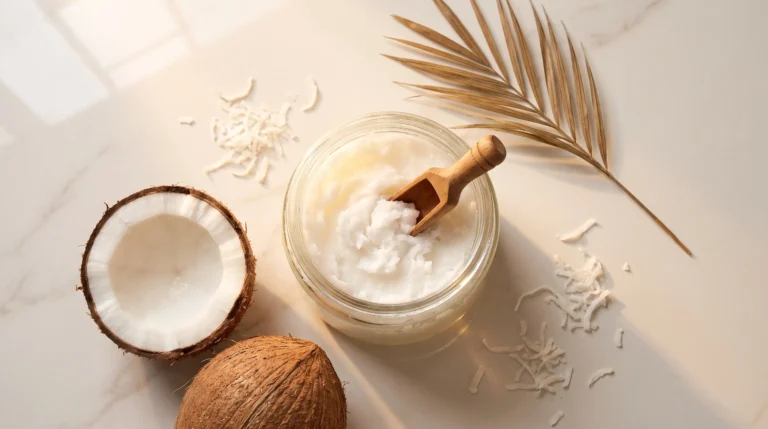
Unlike many vegetable and plant-based oils that simply coat the surface of your hair, raw virgin coconut oil is uniquely rich in Lauric Acid—a medium-chain fatty acid. Because lauric acid has a straight molecular structure and a low molecular weight, it has a high natural affinity for hair proteins (keratin).
Dermatological research published in the Journal of Cosmetic Science demonstrates that coconut oil is one of the few natural oils capable of penetrating deep into the hair cortex rather than remaining strictly on the surface.
3. The Penetration vs. Sealing Paradox
For high porosity hair—which has wide, open gaps along the cuticle—this deep penetration is a blessing because it plugs damaged holes and prevents excess water absorption. But on low porosity hair, this penetration creates a major paradox:
- Internal Stiffness: As lauric acid binds tightly to the keratin proteins inside your low porosity cortex, it reinforces the hair shaft so rigidly that the strand loses its natural flexibility and softness.
- External Blockade: The excess unabsorbed coconut oil resting on the tight, flat outer cuticle creates an impermeable, water-repellent (hydrophobic) film.
The “Coconut Oil Trap”: Why It Causes Stiffness and Buildup
If you have ever applied coconut oil to damp or dry curls and noticed your hair feeling brittle, crunchy, or straw-like within hours, you have experienced what natural hair stylists call the “Coconut Oil Trap.” Here is why this reaction happens specifically on low porosity hair:
1. The “Protein Mimicry” Effect
Although coconut oil contains no actual protein, its unique ability to bind to hair keratin and prevent protein loss makes it behave on textured hair much like a heavy protein treatment. When you apply coconut oil repeatedly to low porosity hair, it creates a stiffening effect identical to protein overload.
Because low porosity hair usually has intact, undamaged protein structures to begin with, it does not need heavy protein reinforcement. Piling coconut oil onto healthy low porosity strands causes them to lose their natural elasticity, making them snap easily under pressure or during routine detangling.
2. The Moisture Blockade (Hydrophobic Barrier)
True hair hydration comes from water, not oil. Oils are emollients designed to seal in moisture, not create it. When coconut oil coats flat low porosity cuticles, it creates a waterproof seal.
If you apply coconut oil to dry low porosity hair—or apply it before your leave-in conditioner—it prevents liquid water and water-based moisturizers from entering the hair shaft. Over days and weeks, your hair becomes severely dehydrated from the inside out, despite appearing shiny or greasy on the surface.
3. Scalp Buildup & Clogged Follicles
Unrefined virgin coconut oil has a high melting point of roughly 76°F (24°C). At room temperature, it solidifies. When applied to a cool scalp or fine low porosity strands, unabsorbed coconut oil hardens, leading to heavy product buildup, itchy scalp irritation, and clogged hair follicles that can slow down healthy root growth.
How to Use Coconut Oil for Low Porosity Hair Without Causing Buildup

If you love coconut oil or already have a jar in your kitchen, you do not necessarily have to throw it away. While raw coconut oil is generally not recommended as a daily leave-in styler or sealant for low porosity hair, you can still enjoy its protective benefits by altering how and when you apply it.
Here are four proven methods to incorporate coconut oil into your low porosity regimen without triggering dryness, stiffness, or heavy product buildup:
1. The Warm Pre-Poo Treatment (Pre-Shampoo Method)
A pre-poo coconut oil low porosity treatment is the safest way to use this oil. Applying warm coconut oil to dirty hair before washing protects your strands from hygral fatigue (the damage caused by hair swelling and contracting as it absorbs water during washing).
- How to do it: Warm 1 to 2 tablespoons of coconut oil until liquid. Apply it evenly to dry or slightly damp hair, focusing on the ends. Cover with a shower cap and apply gentle indirect heat (a warm towel or thermal cap) for 15 to 20 minutes. The heat helps temporarily lift tight cuticles so the oil can work its magic.
- The Key Step: Wash the oil out completely using a clarifying or sulfate-free cleansing shampoo. This removes all surface oil while leaving the hair shaft protected.
2. Switch to Fractionated Coconut Oil (Liquid Coconut Oil)
Unlike raw virgin coconut oil—which solidifies at room temperature—fractionated coconut oil undergoes a process that removes long-chain fatty acids, leaving only light, medium-chain triglycerides that remain liquid indefinitely.
Fractionated coconut oil has a significantly lower viscosity, absorbs far quicker into low porosity cuticles, and will not cause the heavy, greasy coconut oil low porosity hair buildup associated with raw coconut butter.
3. Dilute with Lightweight Carrier Oils
If you insist on using raw coconut oil, never apply it full-strength. Dilute it with lighter, high-linoleic acid carrier oils to reduce its heavy coating effect.
A safe ratio for low porosity hair is 70% lightweight oil (such as Jojoba or Grapeseed oil) mixed with 30% coconut oil. This allows you to gain the protective benefits of lauric acid without suffocating your hair cuticles.
4. Always Use Indirect Heat When Deep Conditioning
If your favorite deep conditioner contains coconut oil low on the ingredient list, always use a thermal heat cap, steamer, or warm towel during processing. Indirect heat causes flat low porosity cuticles to open slightly, allowing the product to penetrate the cortex instead of sitting on top of the hair shaft and hardening.
5 Best Oil Alternatives for Low Porosity Hair (That Won’t Cause Buildup)
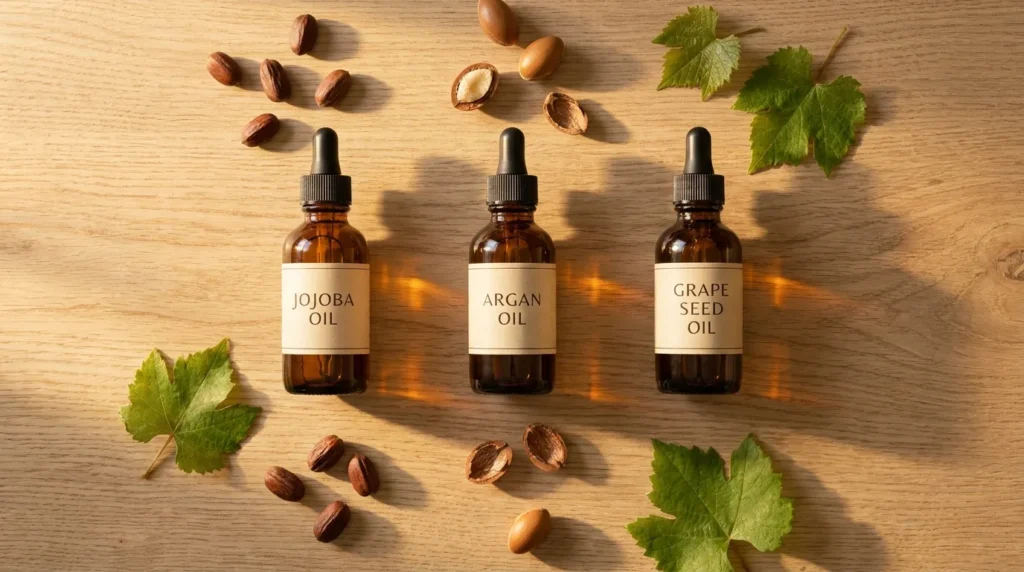
If you want to replace coconut oil entirely with oils that low porosity hair readily absorbs, focus on lightweight, low-viscosity, non-comedogenic oils. These oils easily slip past flat cuticles, sealing in moisture without leaving a greasy or stiff residue behind.
1. Jojoba Oil (The Sebum Mimic)
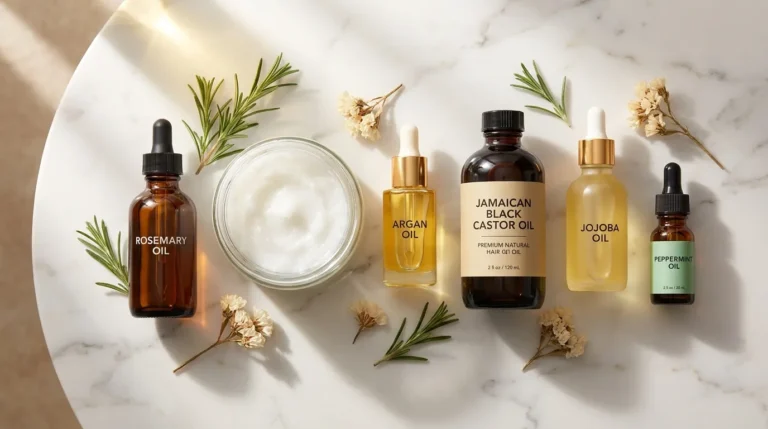
Jojoba oil is technically a liquid wax ester that closely resembles the natural sebum produced by your scalp. Because of its light molecular structure, jojoba oil coats low porosity hair without weighing it down, making it an exceptional daily sealant for fine or low porosity coils.
2. Cold-Pressed Argan Oil (Liquid Gold)
Rich in Vitamin E, antioxidants, and essential fatty acids, argan oil has a silky, non-greasy consistency. It smooths flat cuticles, tames stubborn frizz, and imparts radiant shine to low porosity strands without causing buildup.
3. Sweet Almond Oil (Softening & Lightweight)
Sweet almond oil is packed with Vitamin A, B, and E. It has a light-to-medium viscosity that penetrates low porosity hair better than heavy butter-based oils, helping to soften coarse textures and improve curl elasticity.
4. Grapeseed Oil (High Linoleic Acid & Heat Protectant)
Grapeseed oil is one of the lightest natural oils available. High in linoleic acid, it absorbs rapidly into low porosity hair shafts without leaving a oil film. Additionally, grapeseed oil has a high smoke point (up to 420°F / 215°C), making it an excellent natural thermal protectant before blow-drying.
5. Rosehip Seed Oil (Scalp & Strand Repair)
Extracted from wild rose bushes, rosehip seed oil is a dry oil that absorbs almost instantly upon contact. It is rich in trans-retinoic acid and essential fatty acids, making it ideal for low porosity scalp massages and soothing itchy, dry scalps without clogging hair follicles.
Oil Selector Guide: Heavy Oils to Avoid vs. Light Oils to Choose
| Category | Heavy Oils (Avoid or Use Minimal) | Lightweight Oils (Best for Low Porosity) |
|---|---|---|
| Molecular Weight | High / Medium-Chain Heavy Lipids | Low / High Linoleic Light Molecules |
| Hair Effect | Creates a hydrophobic barrier, causes stiffness & buildup | Absorbs quickly, seals moisture, adds shine |
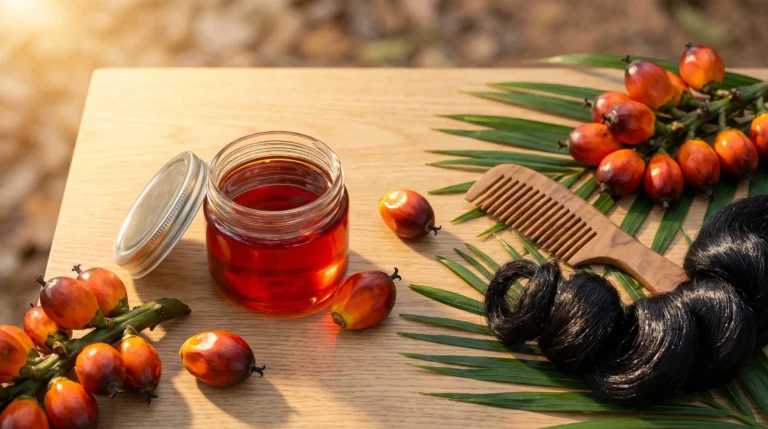
| Specific Examples | • Raw Coconut Oil • Castor Oil (Black Castor Oil) • Heavy Olive Oil • Palm Oil | • Jojoba Oil • Argan Oil • Grapeseed Oil • Sweet Almond Oil • Rosehip Seed Oil |
The Water Float Test: How to Know If You Have Low Porosity Hair
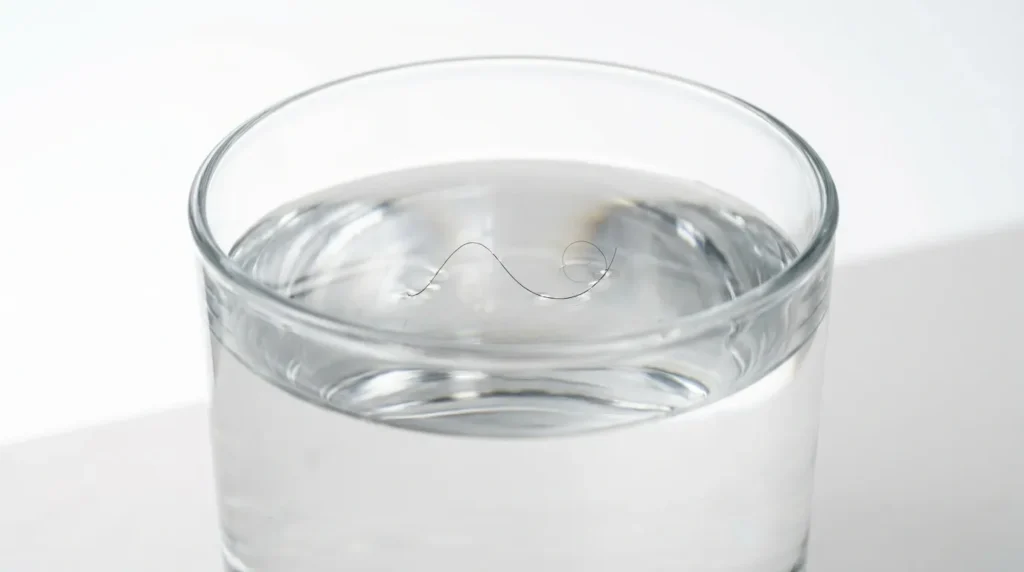
Before changing your entire hair care routine, it is essential to confirm whether your hair is actually low porosity. The simplest way to test your porosity at home is the classic **Water Float Test**.
Step-by-Step Porosity Test:
- Wash Your Hair: Wash a section of your hair thoroughly with a clarifying shampoo to remove all leave-in conditioners, gels, and oils. The test only works on completely clean hair.
- Pluck a Shed Strand: Take one or two clean, shed hair strands from your comb or brush.
- The Water Glass Test: Drop the clean hair strand into a clear glass filled with room-temperature water.
- Observe for 3 to 5 Minutes:
- Low Porosity: The strand floats at the top of the glass indefinitely because its flat cuticles repel water.
- Medium Porosity: The strand floats slowly toward the middle of the glass.
- High Porosity: The strand sinks to the bottom of the glass within seconds because its open cuticles absorb water immediately.
Frequently Asked Questions About Coconut Oil and Low Porosity Hair
Q1: Can coconut oil cause hair breakage on low porosity hair?
Answer: Indirectly, yes. While coconut oil does not directly damage hair follicles, its heavy lauric acid content binds tightly to natural hair proteins. On low porosity hair, this creates a rigid coating that repels water. Over time, your hair becomes chronically dehydrated beneath the oil layer, causing strands to lose elasticity, become brittle, and snap during normal combing or styling.
Q2: Is fractionated coconut oil better for low porosity hair than raw virgin coconut oil?
Answer: Absolutely. Fractionated coconut oil remains liquid at room temperature because heavy long-chain fatty acids have been removed. It has a significantly lower viscosity, absorbs faster into low porosity cuticles, and is far less likely to cause the stiff, crunchy buildup associated with solid raw coconut butter.
Q3: How do I remove coconut oil buildup from low porosity hair?
Answer: To strip away heavy coconut oil buildup, wash your hair with a warm-water clarifying or chelating shampoo containing gentle sulfonate or glucoside surfactants. Warm water helps melt solid surface oils, allowing the shampoo to lift them away. Always follow up immediately with a protein-free, moisturizing deep conditioner to restore hydration.
Final Verdict: Should You Use Coconut Oil on Low Porosity Hair?
So, is coconut oil good for low porosity hair? While coconut oil is a miracle worker for high porosity or damaged hair, it requires extreme caution if your cuticles are naturally flat and low in porosity. Using raw coconut oil as a leave-in moisturizer often leads to stiff, dry, and crunchy curls due to moisture blockade and protein mimicry.
If you still want to use coconut oil, restrict it to a warm pre-shampoo (pre-poo) treatment, switch to fractionated coconut oil, or dilute it with lighter carrier oils. Otherwise, swap coconut oil for low-porosity favorites like Jojoba, Argan, or Grapeseed oil—your curls will stay soft, hydrated, and effortlessly bouncy!
Also Visit : Best Oils for Flat Ironing Natural Hair (Without Damage)