Ethiopian Butter for Hair Benefits Uses and How to Make It
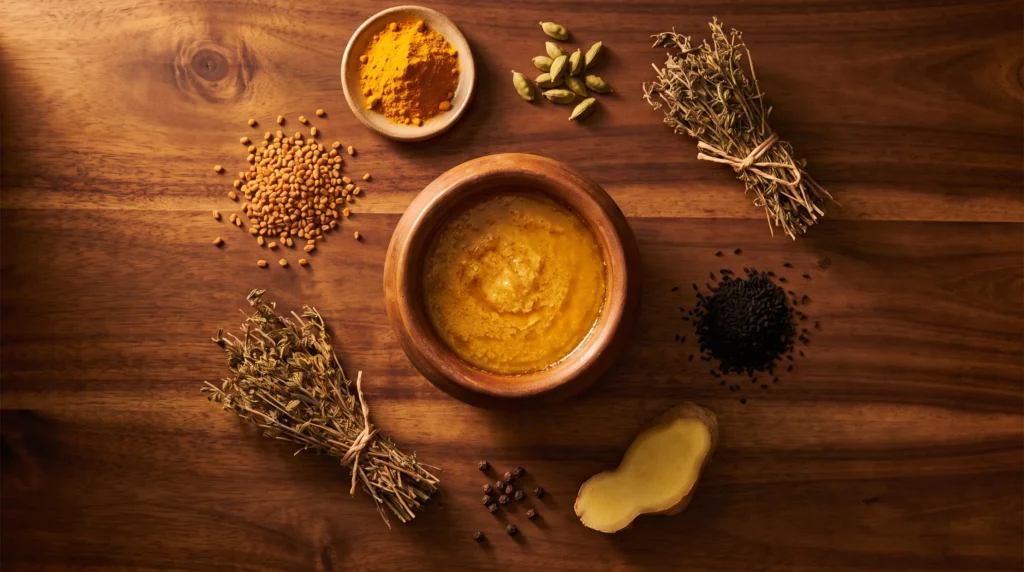
Ethiopian butter for hair has been a staple of East African hair care for centuries — long before the natural hair movement made ancestral beauty practices popular worldwide. Known in Ethiopia as Niter Kibbeh, this spiced clarified butter is traditionally used in cooking, but its rich blend of fatty acids, vitamins, and active plant compounds from infused herbs and spices makes it one of the most complete natural hair treatments available. This guide explains what Ethiopian butter actually is, why each ingredient works, how to make it correctly at home, and exactly how to use it on your hair.
If you have been looking for a deep moisturizing, growth-supporting hair treatment rooted in tradition and backed by the science of its ingredients, Ethiopian butter for hair is worth understanding properly.
What Is Ethiopian Butter — Niter Kibbeh Explained
Niter Kibbeh is Ethiopia’s version of clarified butter — similar to Indian ghee but infused with a unique blend of aromatic herbs and spices during the clarification process. The base is high-quality cow’s butter that is slowly heated to separate the milk solids from the pure butterfat, then filtered to leave behind only the golden clarified oil. During this process, spices and herbs are added to infuse the oil with their active compounds.
When used in hair care, the clarified butter base provides deep moisture and sealing properties, while the infused spices — turmeric, fenugreek, black cumin, cardamom, and ginger — add anti-inflammatory, growth-stimulating, and scalp-nourishing benefits that plain butter cannot provide. The result is a treatment that moisturizes at the cuticle level, conditions the scalp, and supports healthier, stronger hair growth simultaneously.
Ethiopian women have historically applied Niter Kibbeh to their hair and scalp as a weekly treatment, attributing their long, thick, healthy natural hair in part to this practice. The tradition has now spread globally as the natural hair community has discovered its results.
Key Ingredients and Their Hair Benefits
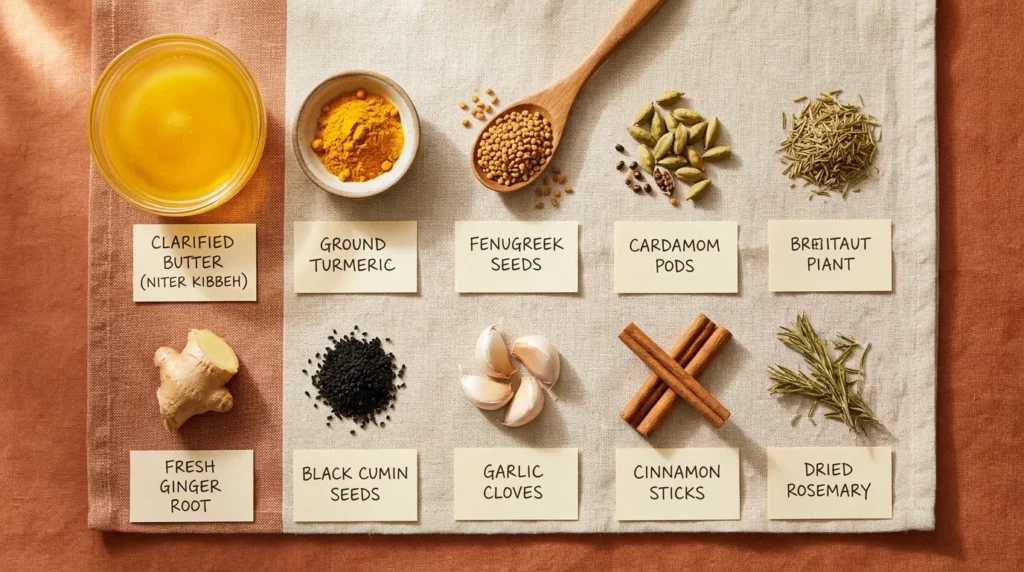
The power of Ethiopian butter for hair comes from its ingredient list. Here is what each component contributes:
| Ingredient | Active Compounds | Hair Benefit |
|---|---|---|
| Clarified Butter (base) | Butyric acid, Vitamins A, D, E, K, Omega-3 and Omega-6 fatty acids | Deep moisture, scalp nourishment, cuticle sealing, anti-inflammatory |
| Fenugreek Seeds | Lecithin, proteins, nicotinic acid, saponins | Strengthens hair shaft, reduces hair fall, stimulates follicles, conditions scalp |
| Turmeric | Curcumin (powerful anti-inflammatory and antioxidant) | Reduces scalp inflammation, fights dandruff-causing fungi, protects follicles |
| Black Cumin (Nigella sativa) | Thymoquinone, essential fatty acids | Clinically shown to reduce hair loss, stimulates growth, antibacterial on scalp |
| Fresh Ginger | Gingerols, zingerone, essential oils | Increases scalp circulation, stimulates follicles, antifungal properties |
| Cardamom | Cineole, terpinene, antioxidants | Scalp cleansing, fights bacterial buildup, adds natural fragrance |
| Garlic (optional) | Allicin, sulfur compounds | Keratin production support, antibacterial scalp treatment, reduces shedding |
| Cinnamon (optional) | Cinnamaldehyde, procyanidins | Increases scalp blood circulation, follicle stimulation |
Ethiopian Butter vs Shea Butter vs Coconut Oil
Many people already use shea butter or coconut oil as their primary hair butter. Here is how Ethiopian butter compares and where it has advantages:
| Feature | Ethiopian Butter (Niter Kibbeh) | Shea Butter | Coconut Oil |
|---|---|---|---|
| Primary Base | Clarified cow’s butter (butterfat) | Karite tree fat | Coconut fruit fat |
| Key Fatty Acids | Butyric, oleic, palmitic, stearic | Oleic, stearic, linoleic, palmitic | Lauric (large molecule) |
| Penetration | Medium — penetrates and seals | Low — primarily seals surface | High penetration (lauric acid) |
| Scalp Benefits | Excellent — spices add anti-inflammatory, antifungal, circulation-boosting | Good — mild anti-inflammatory | Good — antifungal (lauric acid) |
| Growth Stimulation | Strong — fenugreek, black cumin, ginger all support follicle health | Mild | Mild |
| Moisture Level | High — rich in vitamins A, D, E | High — very emollient | Moderate — better as pre-poo |
| Best for Hair Type | Medium to high porosity, 4a–4c hair | All types, especially dry/coarse | Medium porosity, protein-deficient |
| Low Porosity Suitability | Use sparingly with heat | Avoid — too heavy | Avoid — causes buildup |
| DIY or Store-Bought | Primarily DIY or specialty stores | Widely available | Widely available |
| Scent | Warm spiced, pleasant and unique | Mild, nutty | Strong coconut |
Ethiopian butter wins most significantly in the scalp health and growth stimulation categories — its infused spice profile gives it benefits that neither shea butter nor coconut oil can replicate with their single-ingredient composition.
7 Proven Benefits of Ethiopian Butter for Hair
- Deep scalp moisturization: The butyric acid and fat-soluble vitamins in clarified butter (A, D, E, and K) penetrate the scalp and nourish the follicle environment, creating the ideal conditions for healthy hair production. The fatty acids also reduce scalp dryness and flaking that leads to itchiness and dandruff.
- Reduces hair shedding and breakage: Fenugreek is one of the most researched natural ingredients for hair loss reduction. Its high lecithin content strengthens and lubricates the hair shaft from root to tip, reducing the mechanical breakage that causes shedding. Studies on fenugreek seed extract have shown significant reductions in hair fall with consistent topical use.
- Anti-inflammatory scalp treatment: Chronic scalp inflammation from product buildup, stress, environmental exposure, or fungal overgrowth is one of the most underrecognized causes of hair thinning. Curcumin from turmeric and thymoquinone from black cumin are both powerful anti-inflammatory compounds that, when applied to the scalp consistently, reduce the follicle inflammation that silently causes hair miniaturization over time.
- Stimulates hair growth circulation: Ginger and cinnamon both contain compounds that create mild vasodilation — increasing blood flow to the scalp and delivering more oxygen and nutrients to the hair follicles. Improved circulation is directly linked to faster hair growth rates and stronger new growth.
- Conditions and defines curls: The rich fat content of Ethiopian butter coats each hair strand with a smooth, flexible layer that makes curls easier to define, reduces frizz, and adds a natural sheen without the heavy coating that shea butter or castor oil can leave.
- Natural scalp antimicrobial: Garlic (allicin), turmeric (curcumin), and cardamom all have documented antimicrobial and antifungal properties that help keep the scalp free from the bacterial and fungal overgrowth that causes dandruff, itchiness, and product buildup that blocks follicles.
- Seals and protects the cuticle: As a rich butter, Niter Kibbeh creates an effective physical seal over the hair cuticle that slows down moisture loss — particularly important for high porosity natural hair that loses moisture quickly between wash days. Used after a water-based leave-in conditioner, it significantly extends how long hair stays moisturized.
How to Make Ethiopian Butter for Hair — Two Recipes
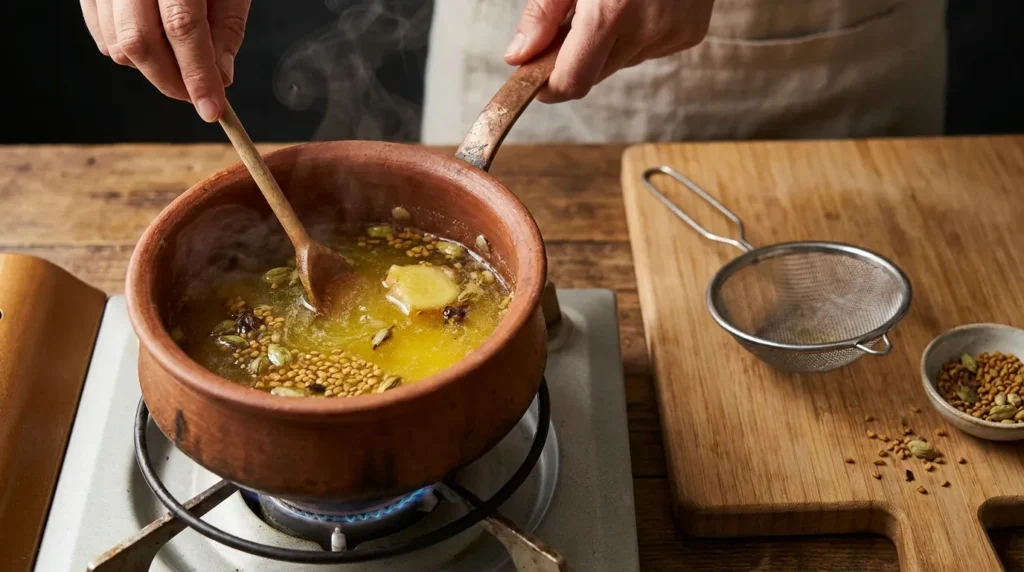
There are two versions you can make at home — a simple basic version using just the butter base, and the full traditional Niter Kibbeh recipe with all the hair-beneficial spices.
Recipe 1 — Simple Ethiopian Clarified Butter (Beginner-Friendly)
Best for: First-time users, sensitive scalps, those who want a milder scent
Ingredients:
- 250g (about 1 cup) unsalted, high-quality grass-fed butter
- 1 teaspoon fenugreek seeds
- 1 teaspoon ground turmeric
Steps:
- Cut the butter into pieces and place in a small, heavy-bottomed saucepan over very low heat.
- Allow the butter to melt slowly without stirring. As it melts, a white foam will rise to the top — this is the milk solids separating.
- Add the fenugreek seeds and turmeric to the melting butter and allow them to infuse gently for 15 to 20 minutes on the lowest heat setting. The butter should simmer very gently — never boil or bubble aggressively.
- Once the milk solids have separated and sunk to the bottom and the liquid is clear and golden, remove from heat.
- Strain through a fine mesh strainer or cheesecloth into a clean glass jar, discarding the milk solids and spice particles.
- Allow to cool completely before sealing. The butter will solidify as it cools.
Recipe 2 — Full Spiced Niter Kibbeh (Traditional Ethiopian Hair Butter)
Best for: Experienced users, maximum hair growth and scalp health benefits, 4a–4c hair types
Ingredients:
- 500g (about 2 cups) unsalted grass-fed butter
- 1 tablespoon fenugreek seeds
- 1 teaspoon ground turmeric
- 1 teaspoon black cumin seeds (nigella sativa)
- 3 cardamom pods, slightly crushed
- 1 thumb-sized piece of fresh ginger, sliced
- 3 cloves of garlic, halved (optional — for scalp focus)
- 1 small cinnamon stick
- 5 whole cloves
- 1 small onion, quartered (used in traditional recipe, strained out)
Steps:
- Place butter in a heavy-bottomed saucepan over the lowest possible heat. Allow to melt completely without stirring.
- Once melted, add all the spices, ginger, garlic, and onion. The mixture should barely simmer — keep heat very low throughout.
- Allow to infuse for 25 to 35 minutes, stirring very gently every 10 minutes. The milk solids will sink to the bottom; the liquid should remain mostly clear and golden above them.
- The butter is ready when the milk solids at the bottom are lightly golden (not burnt) and the liquid is clear, fragrant, and a deep warm amber-gold color.
- Remove from heat and allow to cool slightly for 5 minutes.
- Strain twice through a fine mesh strainer lined with cheesecloth, pressing the spices to extract all the infused oil.
- Pour into clean, sterilized glass jars and allow to cool completely with the lids off. Seal once fully cooled.
Yield: Approximately 350ml of finished Ethiopian butter. This is enough for approximately 6 to 8 weekly hair treatments.
How to Apply Ethiopian Butter for Hair
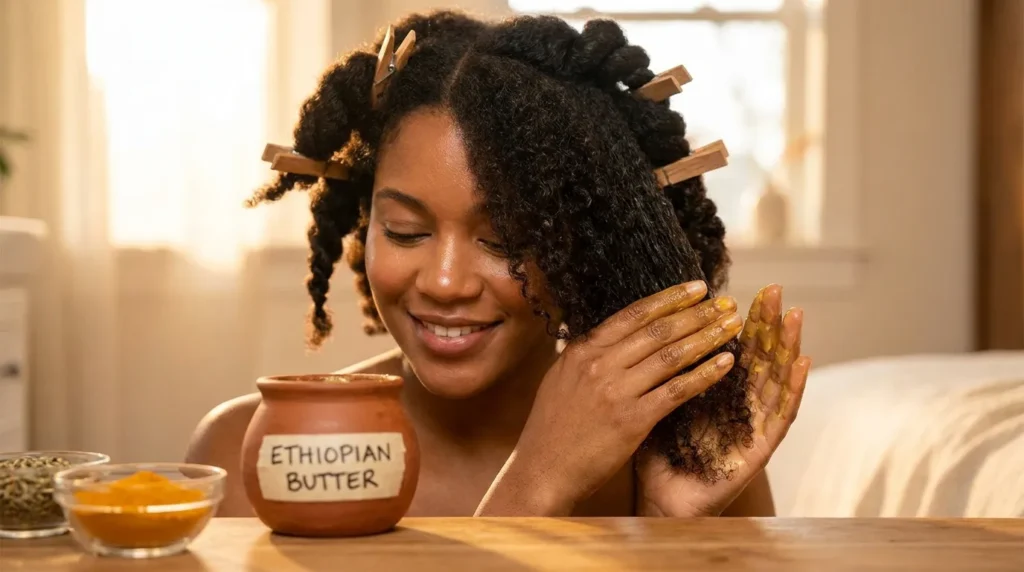
There are three effective application methods depending on your goal:
Method 1 — Pre-Wash Scalp Treatment (Best for growth and scalp health):
- Warm a small amount of Ethiopian butter by placing the jar in a bowl of warm water for 2 to 3 minutes until it liquefies slightly.
- Part dry hair into sections and apply directly to the scalp using your fingertips or a dropper bottle.
- Massage the scalp firmly in circular motions for 5 minutes to stimulate circulation and absorption.
- Cover with a shower cap and leave for a minimum of 2 hours — overnight for best results.
- Wash out with your regular sulfate-free shampoo. You may need two rounds of shampoo to fully remove the butter.
- Deep condition as normal after shampooing.
Method 2 — Post-Wash Moisture Sealing (Best for moisture retention between wash days):
- After washing and applying your leave-in conditioner to damp hair, scoop a very small amount of Ethiopian butter (about the size of a pea) and warm between your palms.
- Apply through the mid-lengths and ends of your hair as your sealing step in the LOC method.
- Style as normal. The butter seals the moisture from your leave-in conditioner and extends the time between wash days.
Method 3 — Overnight Deep Treatment (Best for very dry or high porosity hair):
- Apply Ethiopian butter generously throughout dry hair from scalp to ends, ensuring every strand is coated.
- Braid or twist hair into a few large sections to minimize tangles while sleeping.
- Cover with a satin bonnet or satin pillowcase.
- Wash out in the morning with a sulfate-free shampoo and deep condition as normal.
Who Should Use Ethiopian Butter — Hair Type Guide
| Hair Type / Concern | Suitability | Recommended Method |
|---|---|---|
| 4a, 4b, 4c Coily Hair | ✅ Excellent match | Pre-wash treatment + moisture sealing |
| 3b, 3c Curly Hair | ✅ Good — use moderate amounts | Post-wash sealant, use sparingly on ends |
| High Porosity Hair | ✅ Excellent — seals cuticle gaps well | Overnight treatment + post-wash sealing |
| Medium Porosity Hair | ✅ Good — use as needed | Pre-wash scalp treatment once weekly |
| Low Porosity Hair | ⚠️ Use with caution — can cause buildup | Pre-wash only with heat, very small amounts |
| Dry Scalp / Dandruff | ✅ Excellent — turmeric + black cumin target root causes | Scalp-focused pre-wash massage |
| Hair Thinning / Hair Loss | ✅ Strong — fenugreek + black cumin support growth | Weekly scalp treatment, consistent use 8+ weeks |
| Damaged / Chemically Treated | ✅ Good moisture and sealing | Overnight treatment + post-wash sealant |
| Fine or Thin Hair | ⚠️ Use sparingly — can weigh hair down | Scalp only, avoid applying to hair strands |
Storage and Shelf Life
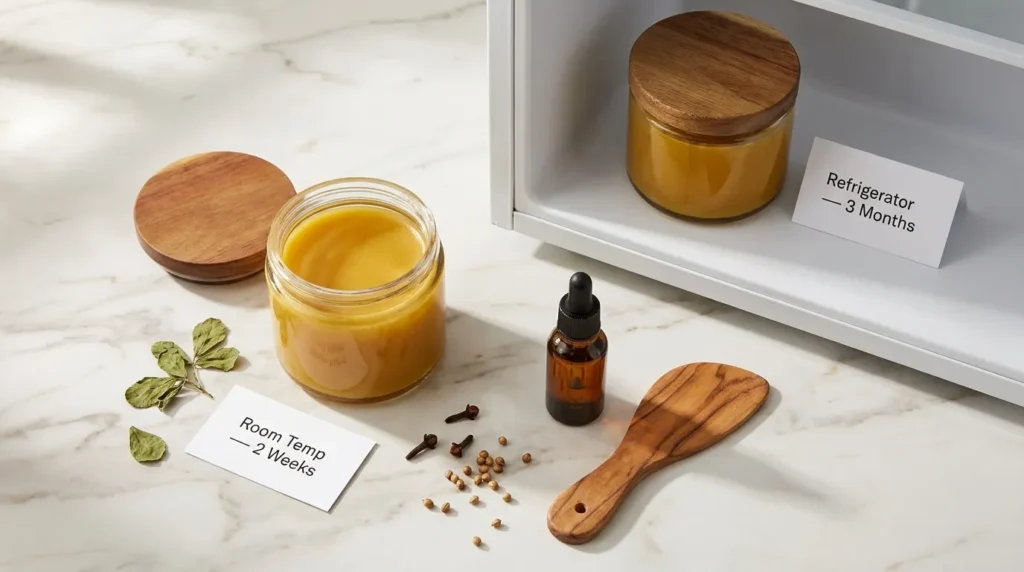
Proper storage is important because Ethiopian butter is a dairy-based product and will spoil if stored incorrectly.
- Room temperature: Properly clarified Ethiopian butter with milk solids fully removed can be stored in a sealed glass jar at cool room temperature for up to two weeks. Keep away from direct sunlight and heat.
- Refrigerator: Stored in an airtight glass jar in the refrigerator, Ethiopian butter keeps for 2 to 3 months. Remove the amount you need before each use and allow it to come to room temperature or warm gently before applying.
- Freezer: For longer storage, Ethiopian butter can be frozen for up to 6 months. Freeze in small portions (ice cube trays work well) so you can thaw only what you need without refreezing.
- Signs of spoilage: A sour, off smell, visible mold, or significant color darkening indicates the butter has spoiled and should be discarded. Properly clarified butter rarely molds, but any remaining milk solids accelerate spoilage.
Application tip: Always use a clean, dry spatula or spoon to scoop from the jar. Introducing water or wet hands to the jar promotes bacterial growth and shortens shelf life significantly.
Frequently Asked Questions
Is Ethiopian butter the same as shea butter?
No. Ethiopian butter (Niter Kibbeh) is clarified cow’s butter infused with herbs and spices — it is dairy-based. Shea butter comes from the fat of the African karite tree and is completely plant-based. They have different fatty acid profiles, different textures, different scents, and different benefit sets. Ethiopian butter has significantly more active compounds from its infused spices, while shea butter is more widely available, vegan, and longer-lasting. Both are excellent for natural hair, but they are not interchangeable.
Can vegetarians or vegans use Ethiopian butter for hair?
Ethiopian butter in its traditional form is dairy-based and not vegan. However, the concept can be replicated with a vegan base — mango butter or kokum butter can be melted and infused with the same fenugreek, turmeric, black cumin, and ginger to produce a plant-based version with similar benefits. The spices are what provide most of the active hair care compounds, so the vegan version retains most of the growth and scalp benefits even without the dairy base.
How long before I see results from using Ethiopian butter for hair?
Moisture-related results — softer, shinier, more manageable hair — are typically noticeable from the first or second application. Growth-related results require consistent use: the fenugreek, black cumin, and ginger compounds that support follicle health and reduce shedding typically show measurable results within 8 to 12 weeks of weekly scalp treatments. Hair grows at approximately half an inch per month, so dramatic length retention improvements become visible over three to six months of consistent use.
Can I use Ethiopian butter on a relaxed or color-treated hair?
Yes. Ethiopian butter is an excellent treatment for chemically processed hair because its fatty acids help restore the moisture and lipid layer that chemical processing strips from the cuticle. The anti-inflammatory spices also help soothe the scalp irritation that can follow chemical treatments. Avoid applying immediately after a fresh relaxer on an irritated scalp — wait at least one week after any chemical service before applying Ethiopian butter.
Does Ethiopian butter smell bad on hair?
When properly made with quality spices, Ethiopian Niter Kibbeh has a warm, pleasantly spiced aroma — similar to a gentle curry or warm spice blend. Most people find it pleasant. The scent fades significantly after the butter is rinsed out. If the scent is a concern, the simple recipe with just fenugreek and turmeric produces a much milder aroma. Adding a few drops of lavender or rose essential oil to the finished butter before storing also helps create a more floral final scent while adding additional scalp benefits.
An Ancient Remedy Worth Adding to Your Routine
Ethiopian butter for hair is not a trend or a gimmick — it is a centuries-old practice rooted in a culture that has long understood the hair care power of clarified butter, herbs, and spices working together. The science behind each ingredient confirms what Ethiopian women have known through tradition: fenugreek reduces shedding, black cumin supports growth, turmeric fights inflammation, and the butter base delivers all of these compounds deep into the scalp and hair shaft.
Make the simple recipe this week. Apply it as a pre-wash scalp treatment. Notice the difference in your scalp feel and hair texture after the first use. Then build the full spiced Niter Kibbeh recipe as it becomes part of your regular routine. Consistent weekly use over two to three months is where the real results — reduced shedding, stronger strands, and healthier scalp — become undeniable.
Also Visit : Tips to Repair Damaged Hair Fast Without Cutting It All Off